A sextant measures one thing: the angle between two objects you can see, usually a star or the Sun and the horizon. With that angle, an accurate clock and a set of tables, a navigator could fix the ship's position far out at sea. Soviet ships carried the SNO-T (СНО-Т), a micrometer drum sextant packed in a wooden case with its papers. This guide explains how its two mirrors work, how to take a Sun sight, how to read the arc and drum, and what to check before buying one.
OCTOBER 2026•14 MINUTE READ
by Marwen Yahyaoui
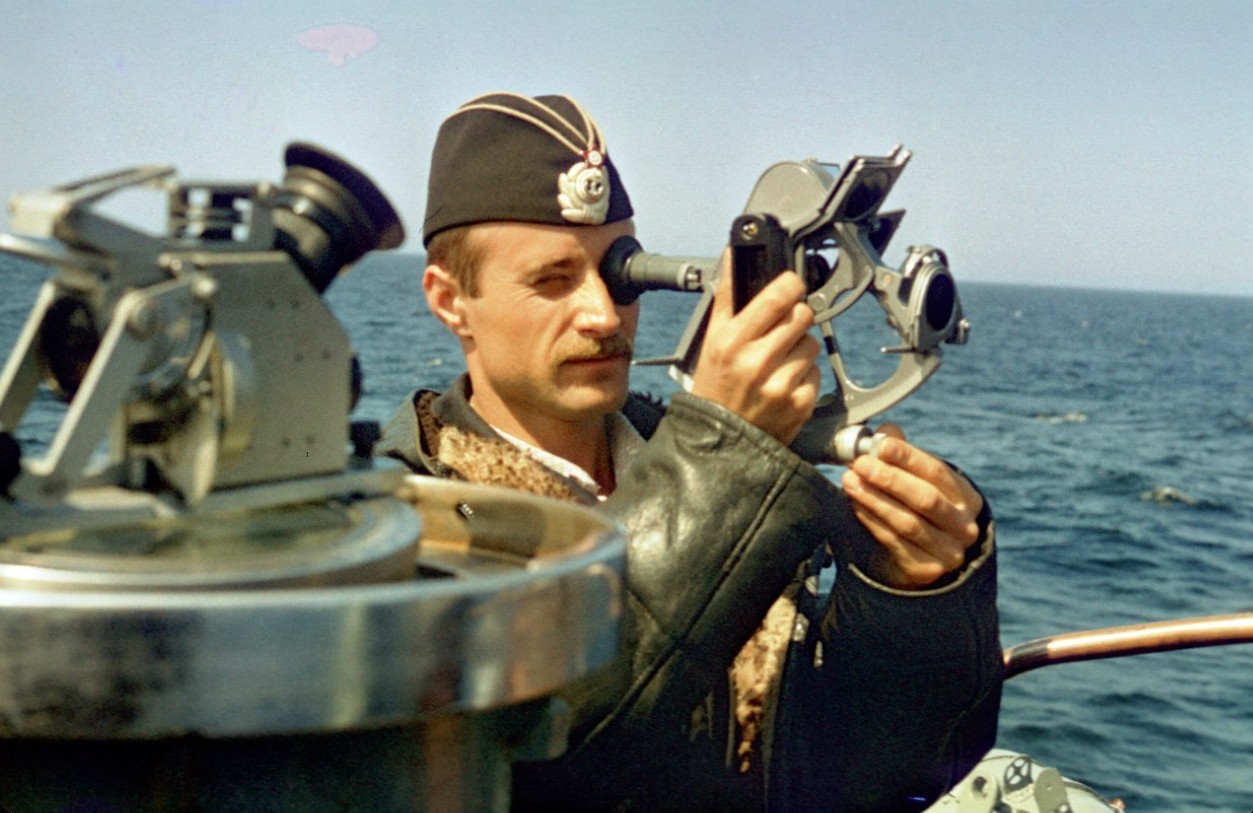
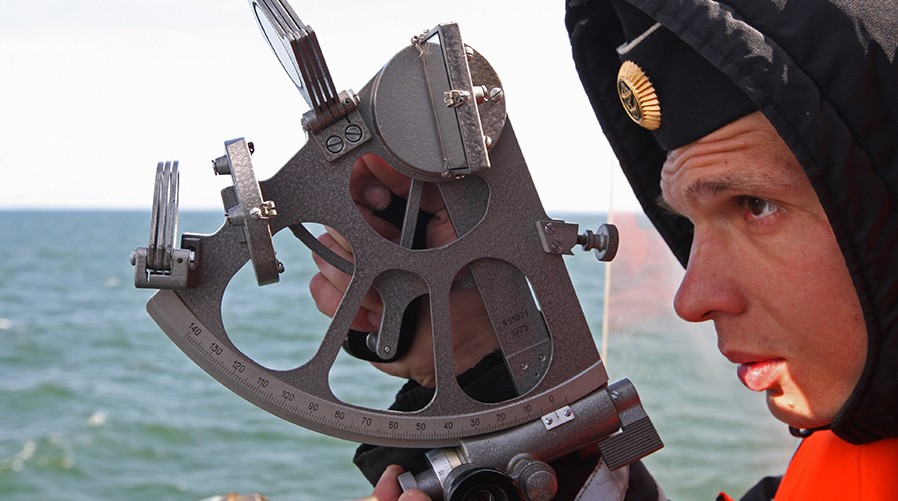
Soviet Navy officer taking a sight with an SNO-M sextant.
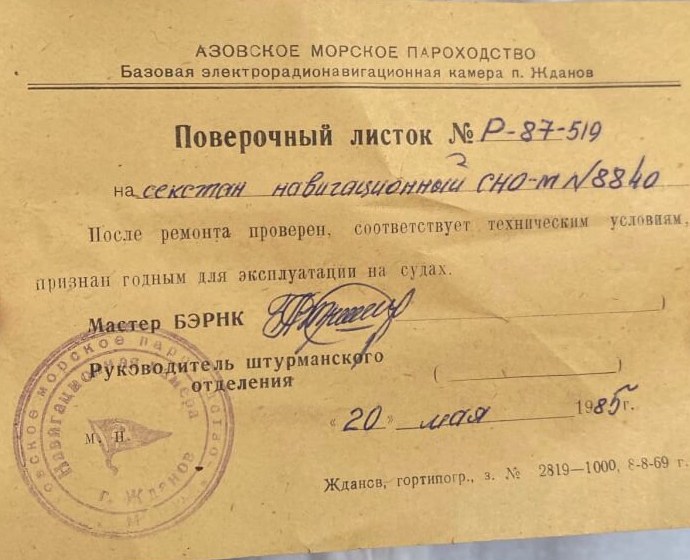
On 20 May 1985, at Zhdanov on the Sea of Azov, the navigation workshop of the Azov Shipping Company took in an SNO-M (СНО-М) marine sextant, no. 8840, which had left the factory in 1968. It was back from repair. The workshop checked it and signed an inspection slip, поверочный листок (poverochny listok): “after repair, checked, meets the technical specifications, declared fit for use on ships”. Zhdanov was the name of Mariupol from 1948 to 1989. The slip stayed with the sextant all the way to our shop.
Azov Shipping Company inspection slip, Zhdanov, 20 May 1985, for SNO-M no. 8840.
Fourteen Soviet sextants have passed through our shop: four SNO-M, dated 1962 to 1973, and ten SNO-T (СНО-Т), dated 1980 to 1989. Several, like no. 8840, still have their shipboard paperwork. This guide uses them to explain what a sextant measures, how you read one, and what its papers tell you.
What a sextant measures
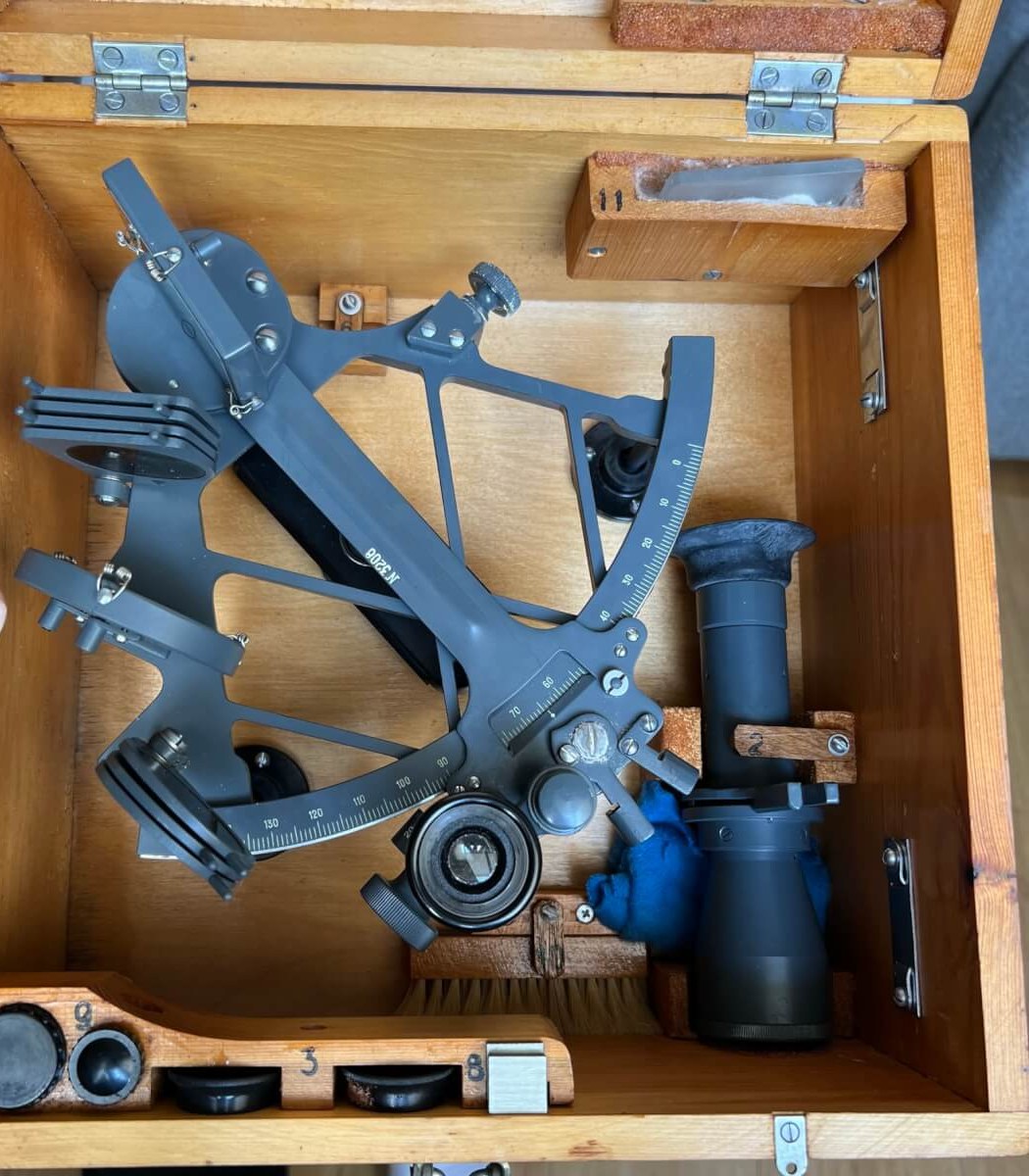
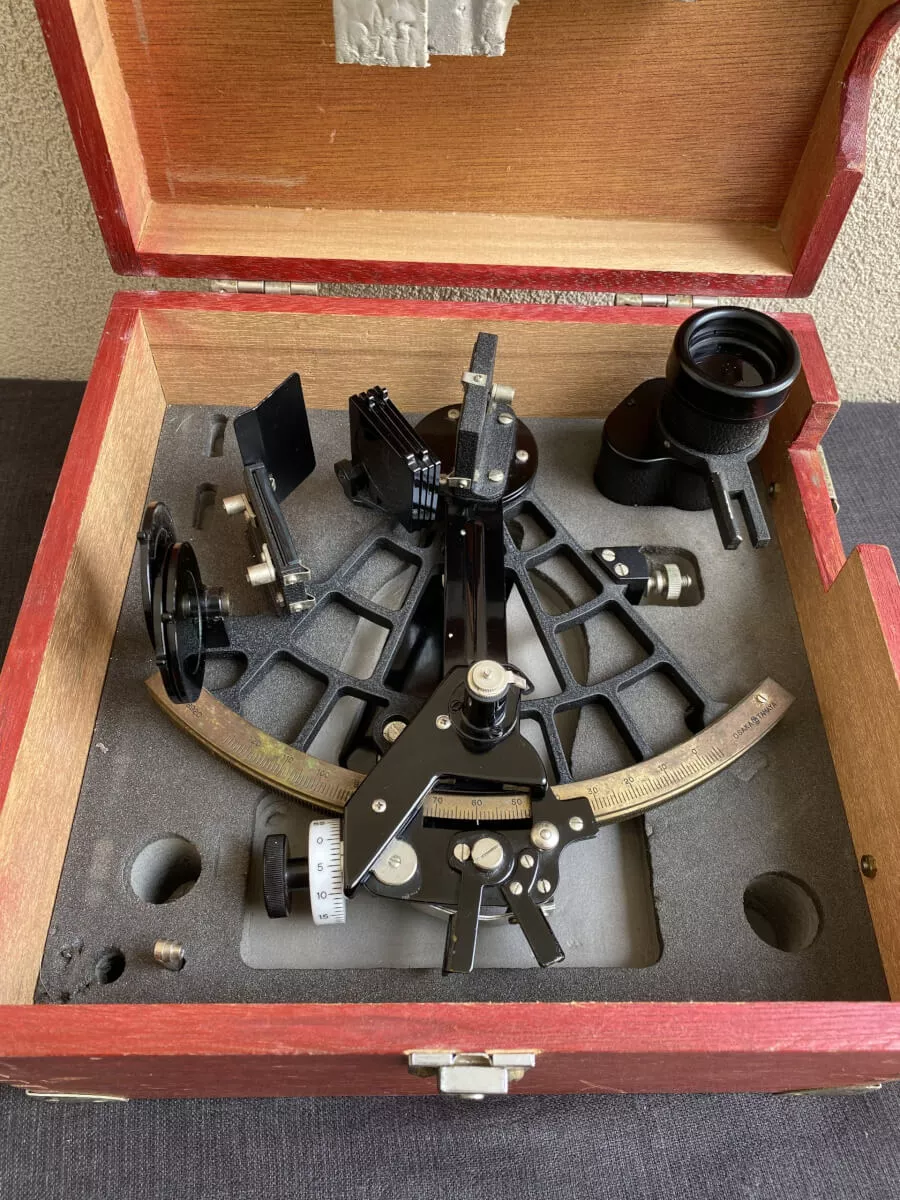
SNO-M (СНО-М) sextant, 1973, in its varnished wooden case.
A sextant, секстан (sekstan) in Russian, measures the angle between two visible objects. At sea, that is usually the altitude of a celestial body above the horizon: the Sun at noon, a star at twilight. The SNO-T factory manual adds the angles between visible objects on land, again to fix the observer’s position. The name comes from the Latin sextans, a sixth: the arc of the early instruments covered one sixth of a circle, 60 degrees. The SNO-T’s arc is a little longer: it is graduated up to 140 degrees, and the manual gives a measuring range of 0 to 120 degrees.
The idea of measuring an angle with two mirrors goes back to Isaac Newton, who described it in 1699 but never published it. The instrument was developed independently around 1730 to 1731 by John Hadley in England and Thomas Godfrey in America. Its great strength is that it can be used by hand on a rolling deck. The SNO-T manual gives an instrumental error of ±12 seconds of arc, a fifth of a minute.
Two mirrors: how double reflection works
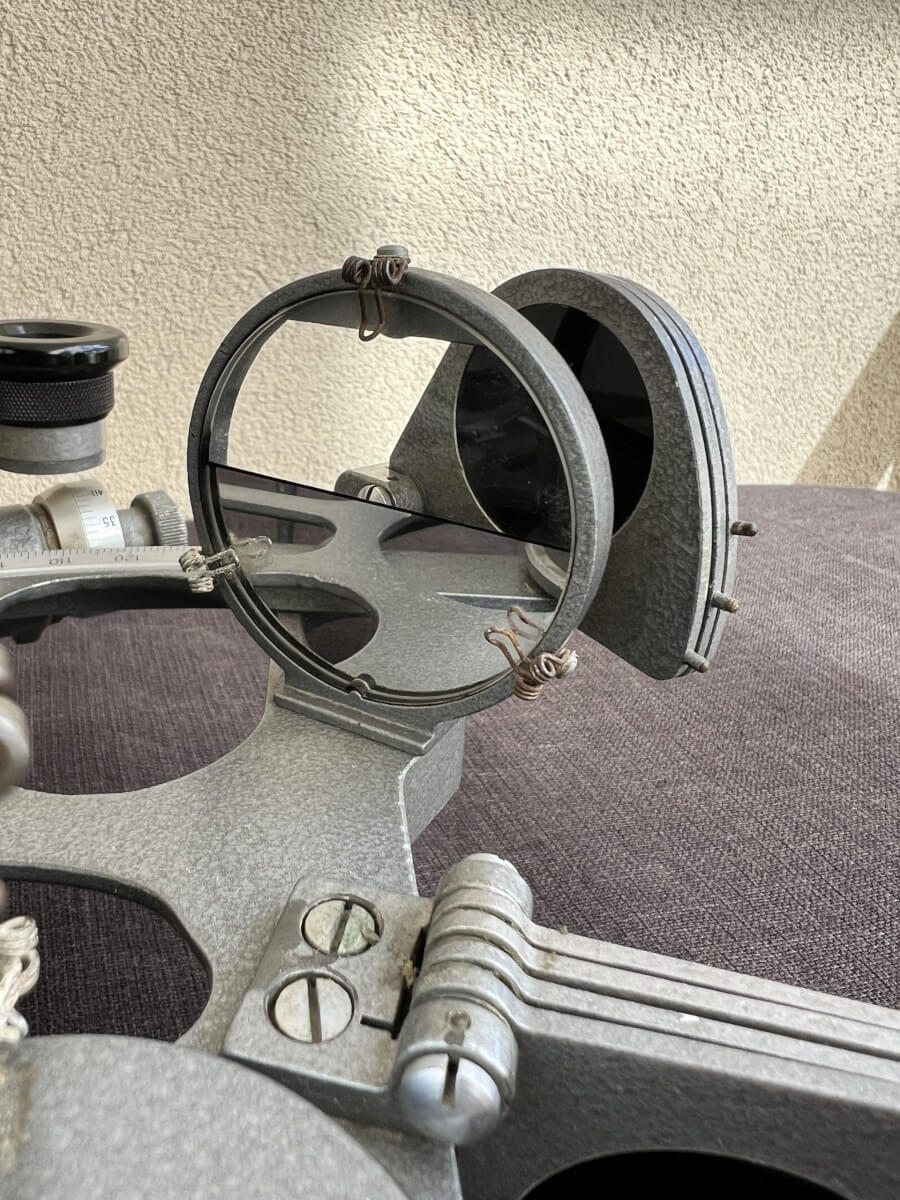
Everything depends on two mirrors. The index mirror, большое зеркало (bolshoe zerkalo, large mirror), sits at the top of the index arm, the moving arm. The horizon mirror, малое зеркало (maloe zerkalo, small mirror), is fixed to the frame, facing the telescope. On our SNO-T sextants this horizon mirror is round and divided by a line across the middle. In all likelihood, as on most marine sextants, one half lets you see the horizon directly while the other reflects the image sent by the index mirror: the Sun or a star.
When the two mirrors are parallel, the two images coincide and the sextant reads zero. Swing the index arm and the image of the body comes down to the horizon: the angle on the arc is then its altitude. Because the light is reflected twice, the image turns twice as fast as the arm. When the index arm moves through 10 degrees, the measured angle is 20 degrees, and the arc is graduated to read that double directly.
In the diagram, slide the index arm until the Sun appears in the telescope, then finish with the drum to set its lower limb on the horizon.
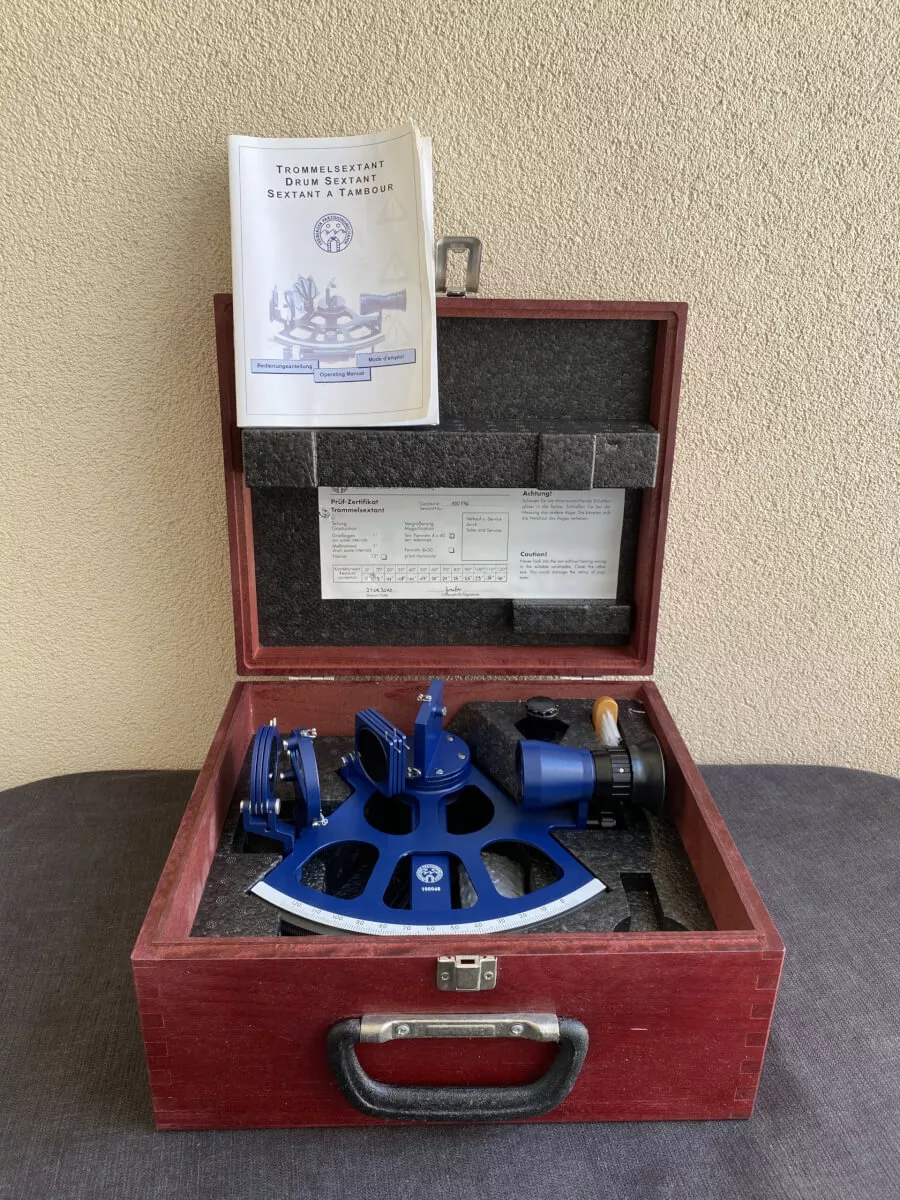
SNO-T (СНО-Т) sextant, 1981, in its case with its manual.
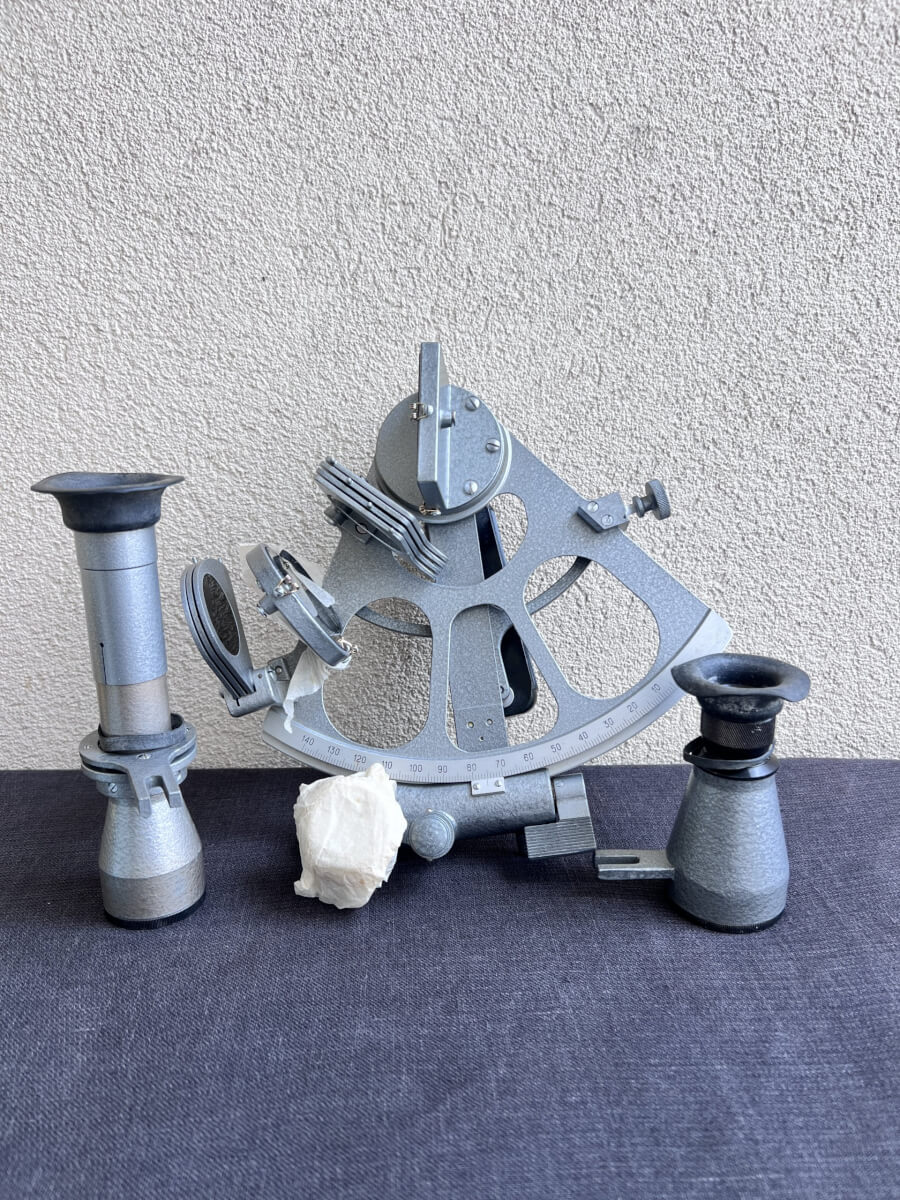
1987 SNO-T with its two telescopes.
The full name heads its manual: навигационный секстан СНО-Т с осветителем в тропикоустойчивом исполнении (navigatsionny sekstan SNO-T s osvetitelem v tropikoustoychivom ispolnenii), “SNO-T navigational sextant with illuminator, tropicalised version”. The same manual lists its parts:
Frame, рама (rama), with its arc, лимб (limb), graduated in degrees.
Index arm, алидада (alidada), carrying the index mirror and ending in the drum.
The two mirrors and their shades, светофильтры (svetofiltry), tinted glasses swung in front of the mirrors for a Sun sight.
Two telescopes, fitted in turn into the frame bracket: a Galilean telescope, труба Галилея (truba Galileya), magnifying 3 to 4 times with a wide 6 to 8 degree field, and an astronomical telescope, астрономическая труба (astronomicheskaya truba), magnifying 6 to 7 times.
Illuminator, осветитель (osvetitel), a magnifier carried by the index arm for reading the scales, at night too.
Handle, ручка (ruchka), on the back of the frame.
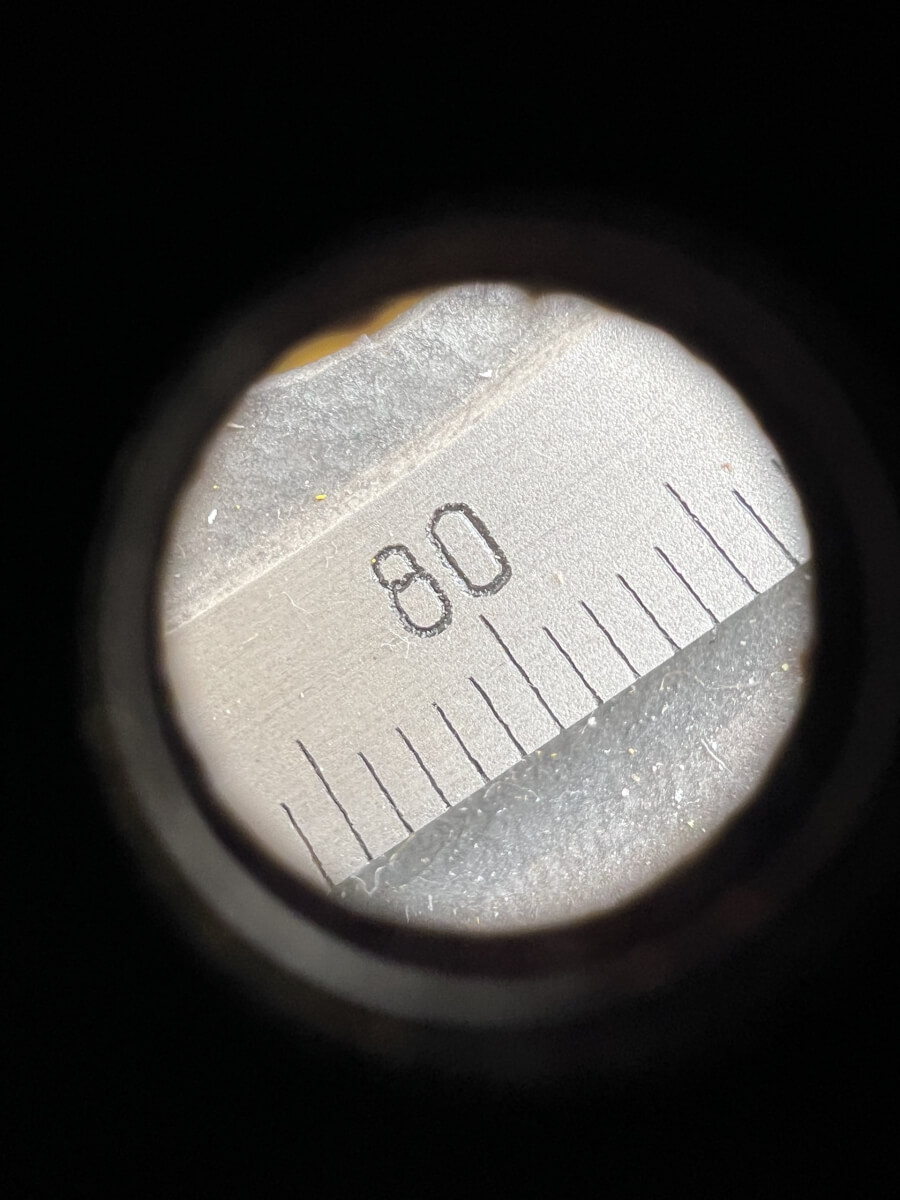
The arc graduation seen through the magnifier of a 1982 SNO-T.
According to Bill Morris, author of The Nautical Sextant blog, a reference on marine sextants, the magnifier carries a paint that charges in light and then glows in the dark. The SNO-T weighs 1.5 kg on its own, 4.5 kg in its case. The cases, painted grey outside and yellow inside, also hold a spare mirror, a brush, adjusting keys and screwdrivers, with an inventory glued inside the lid.
How to take a Sun sight, step by step
The method is the same on every marine sextant.
Swing the shades into place: never look at the Sun with the naked eye.
With the index arm at zero, aim at the Sun, then lower the sextant until the horizon shows below it.
Release the index arm and push it towards higher readings until the image of the Sun reappears near the horizon.
Turn the drum until the Sun’s lower limb just touches the horizon.
Rock the sextant gently about the axis of the telescope, to make sure it is held vertical at the moment of the sight.
Note the exact time of the sight and the height of your eye above the water, then read the angle.
The time matters as much as the angle: the position is worked out from both. That is why a sextant never went to sea without a marine chronometer. Our Poljot watch guide covers the Moscow factory that also built ships’ chronometers.
How to read a sextant: degrees on the arc, minutes on the drum
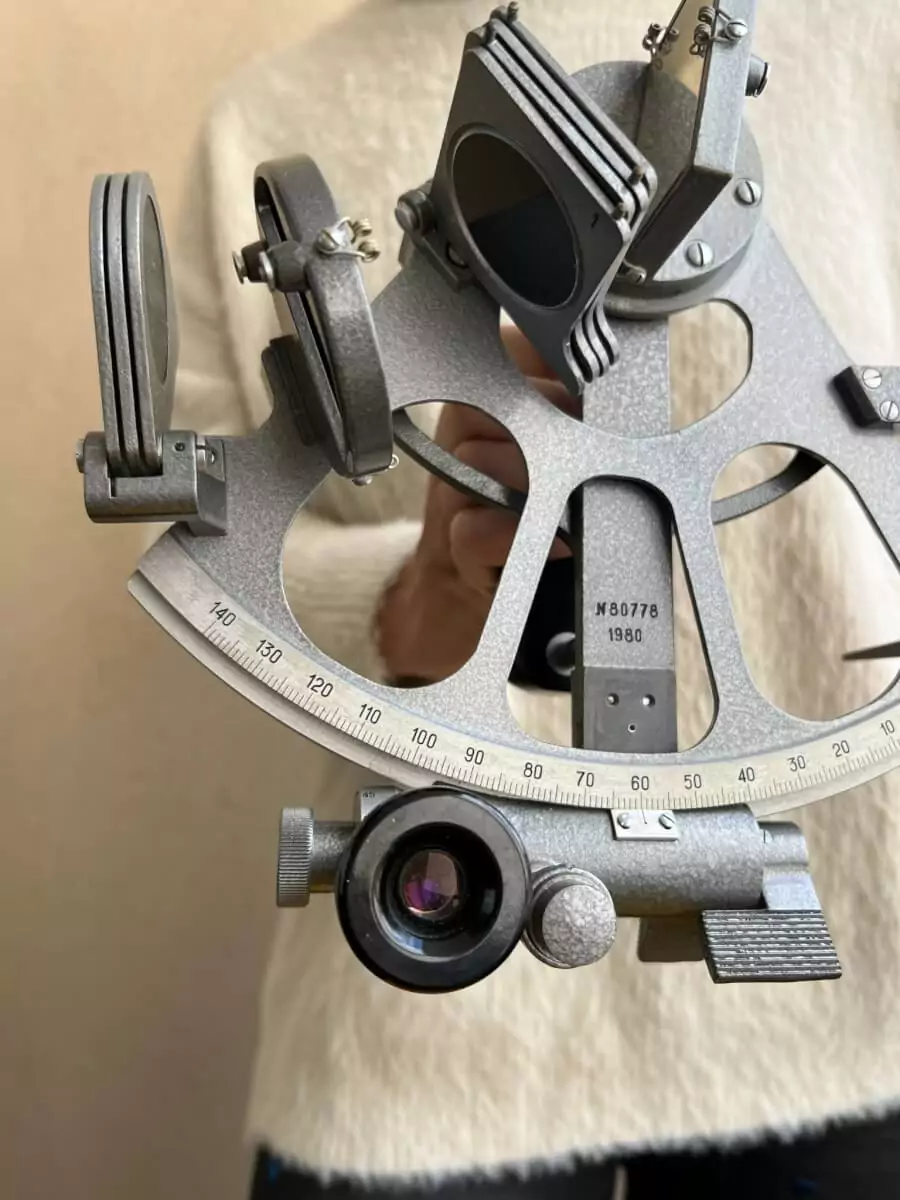
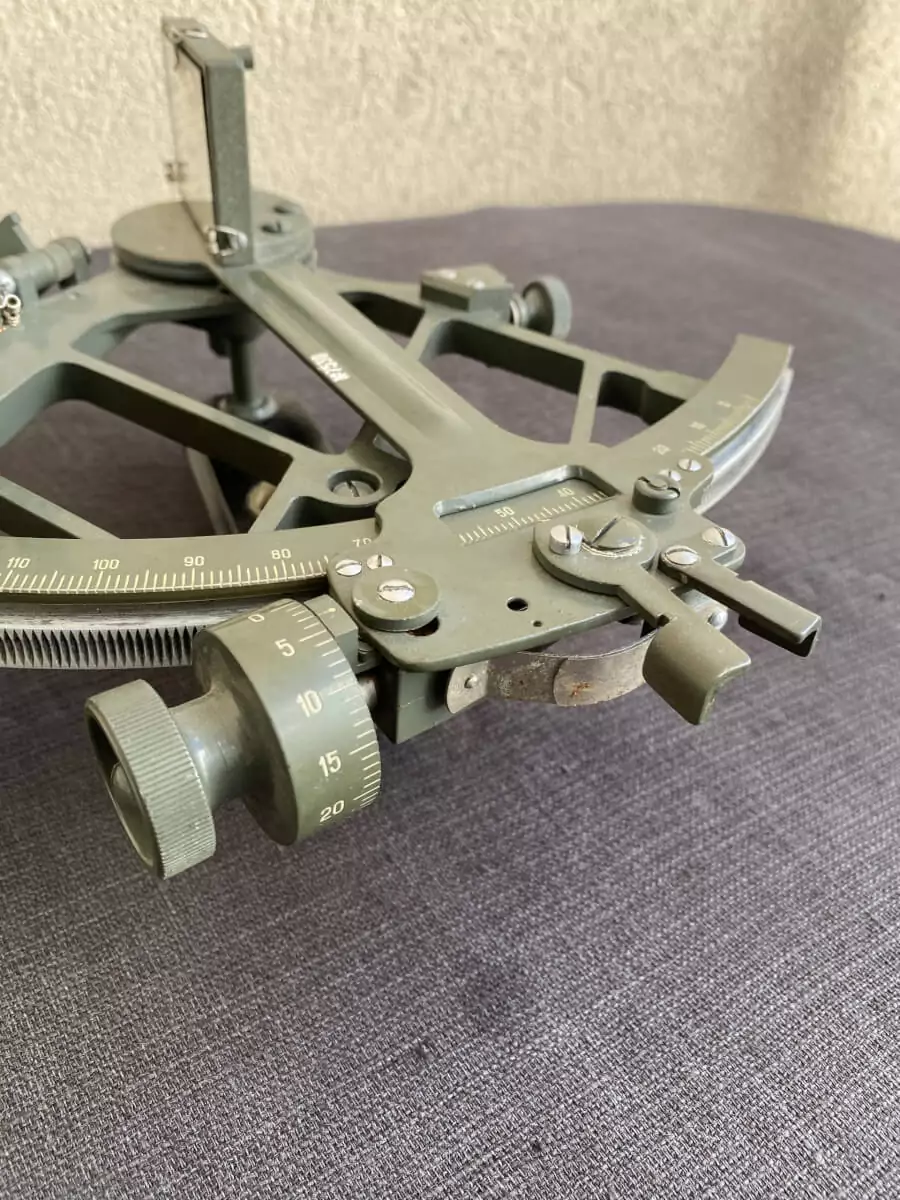
The arc of a 1980 SNO-T, numbered to 140°, with serial and year engraved on the index arm.
Reading a sextant takes two steps.
Degrees on the arc. An index line is engraved at the end of the index arm. Read the last whole degree it has passed. Each arc division is 1 degree.
Minutes on the drum. The drum has 60 one-minute divisions, so one full turn moves the index arm by one degree. Read the minutes opposite the drum mark.
Example: the arc index has passed 34 but not reached 35, and the drum shows 20. The reading is 34° 20′. That is the reading the diagram gives when you press Solution. For the SNO-T, the manual gives a drum reading error of ±6 seconds, and Bill Morris notes that the magnifier lets you estimate tenths of a minute.
The angle read on the sextant is not yet the true altitude. The navigator applies several corrections, including the instrument’s own and one for the height of the eye above the water, before going to the tables.
Before every series of sights: index error
The round horizon mirror of a 1980 SNO-T, divided in two halves.
A sextant is only accurate if its mirrors are properly adjusted. There are three classic faults.
Index error. At zero, the two mirrors should be parallel. Check by sighting the horizon, or a star at night: the direct and reflected images should merge. If they only merge at a reading other than zero, that offset is the index error. Correct it with the adjusting key, or note it and apply it to every sight.
Perpendicularity of the index mirror. Look at the arc directly and in the index mirror at the same time. The two views should line up without a step.
Side error. It comes from a horizon mirror that is not perpendicular to the frame. It is usually small.
What remains are the small errors specific to each instrument, which you measure rather than adjust: the SNO-T manual allows up to ±36 seconds.
A ship’s sextant and its paperwork
Black Sea Shipping Company correction card for SNO-T no. 81145, 19 January 1995.
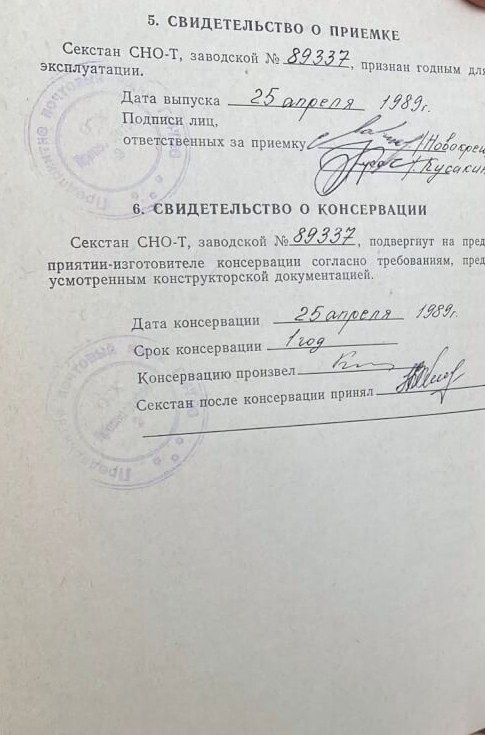
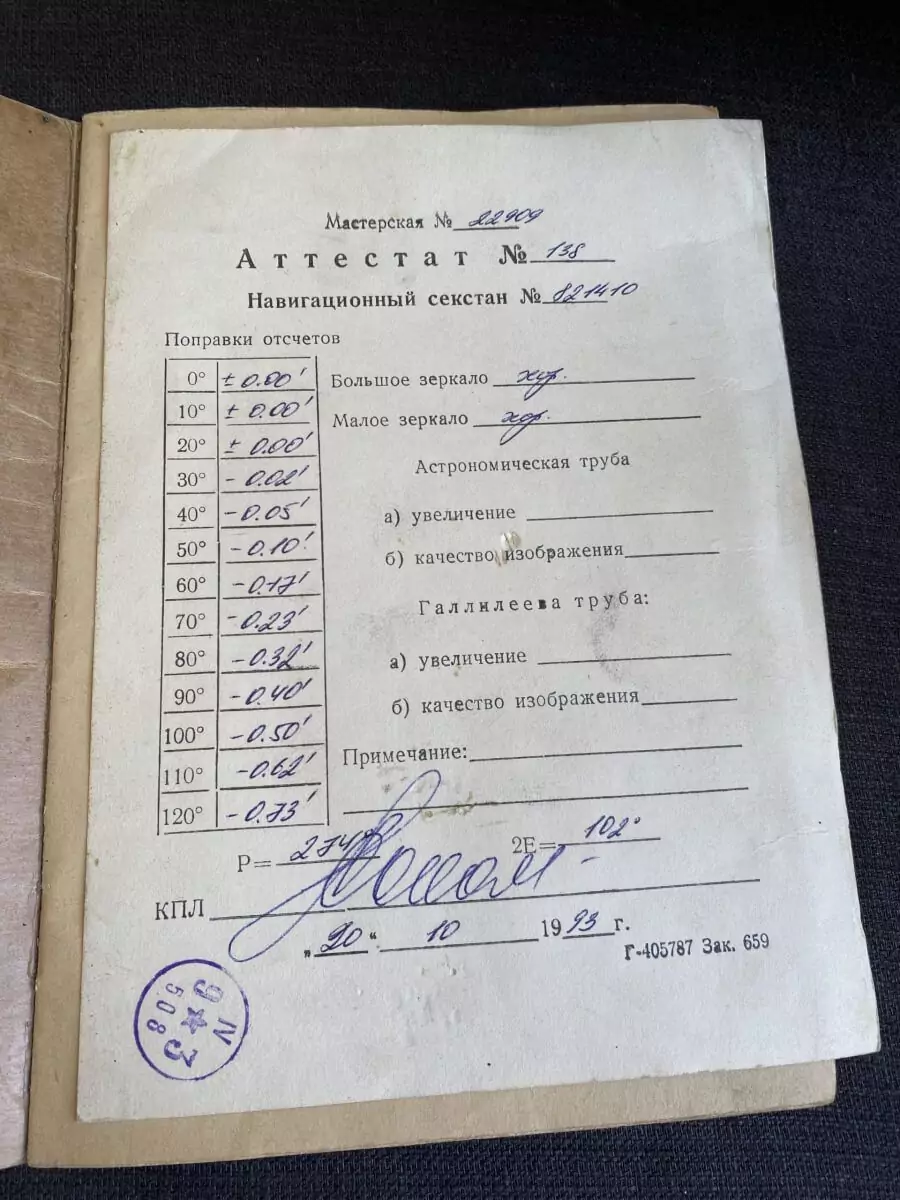
The factory logbook, формуляр (formulyar), contains the acceptance certificate, свидетельство о приёмке (svidetelstvo o priyomke). The one for SNO-T no. 81718 gives a release date of 28 May 1981; the one for no. 89337, 25 April 1989, next to a certificate of preservation for one year. Further on, a table is used for the “check of the sextant correction” every 5 degrees from 0 to 120, with a tolerance of ±30 seconds: on no. 81718, three checks were signed, on 12 November 1987, 28 March 1991 and 19 January 1995.
The shipping companies had their own instrument workshops: the Azov Shipping Company’s signed the 1985 slip for SNO-M no. 8840 described at the top of this guide. On 19 January 1995, the navigation workshop of the Black Sea Shipping Company, for many years one of the largest fleets in the world, issued a correction card for SNO-T no. 81145, every 5 degrees from 0 to 120. The card gives, handwritten, the name of the motor ship that carried it, which we read as В. Барсова (V. Barsova). On the same day, SNO-T no. 81718 had its own check: in all likelihood, the two sextants served on the same ship.
From the SNO-M to the SNO-T
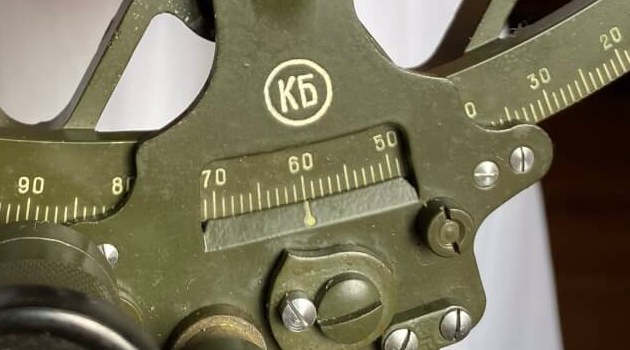
The КБ logo on the index arm of a 1962 SNO-M.
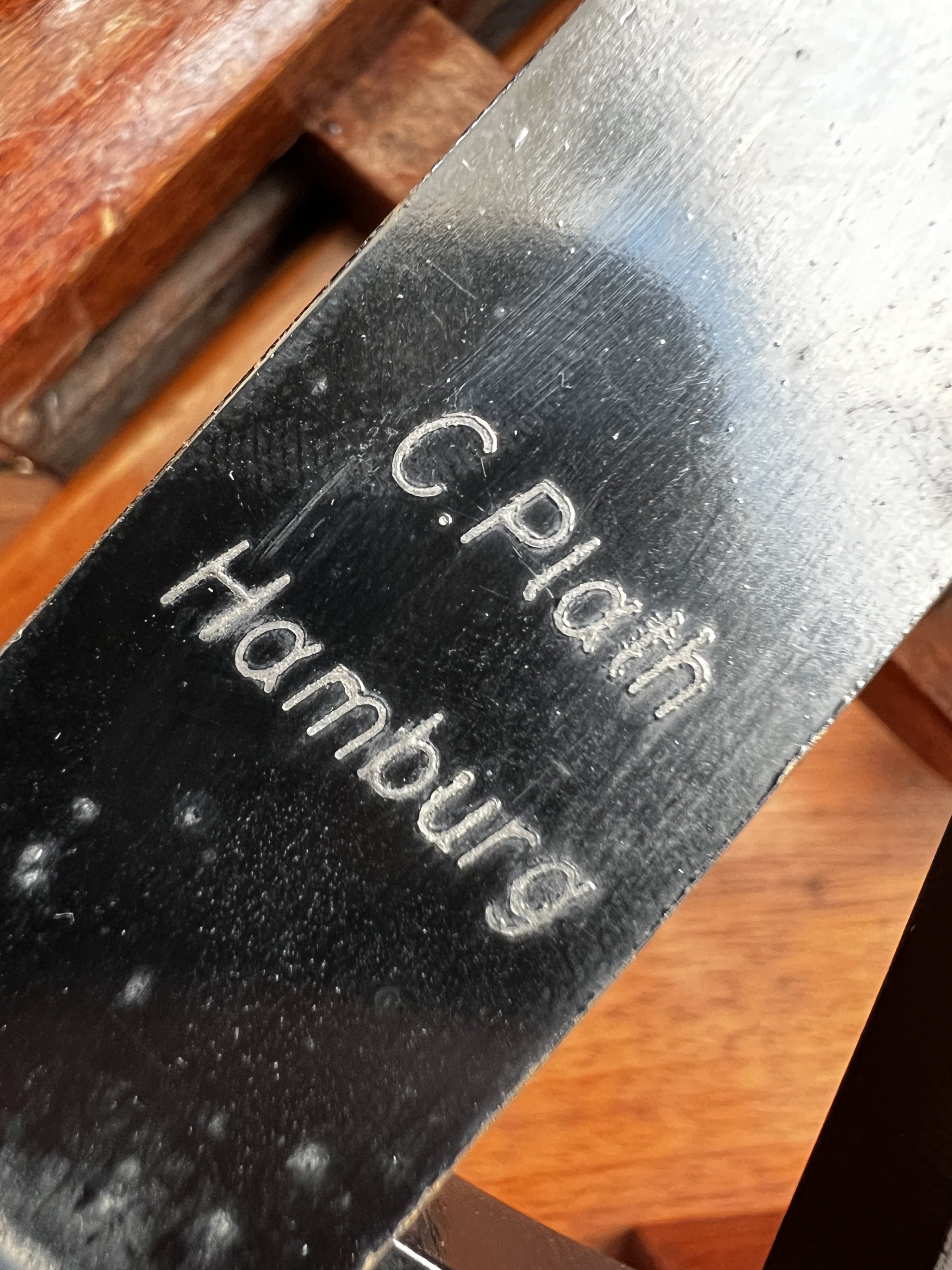
The SNO-M follows the micrometer drum sextant made by C. Plath of Hamburg and used by the Kriegsmarine in the Second World War. Bill Morris, who compared the two part by part, describes it as almost identical to the Plath. The SNO-T succeeded it around 1976, according to Morris; the National Museum in Szczecin, which holds one, also presents it as the SNO-M’s replacement in the Soviet Navy. The SNO-T is a modified version of the SNO-M.
The SNO-T is still in service: a Russian Navy sailor taking a sight.
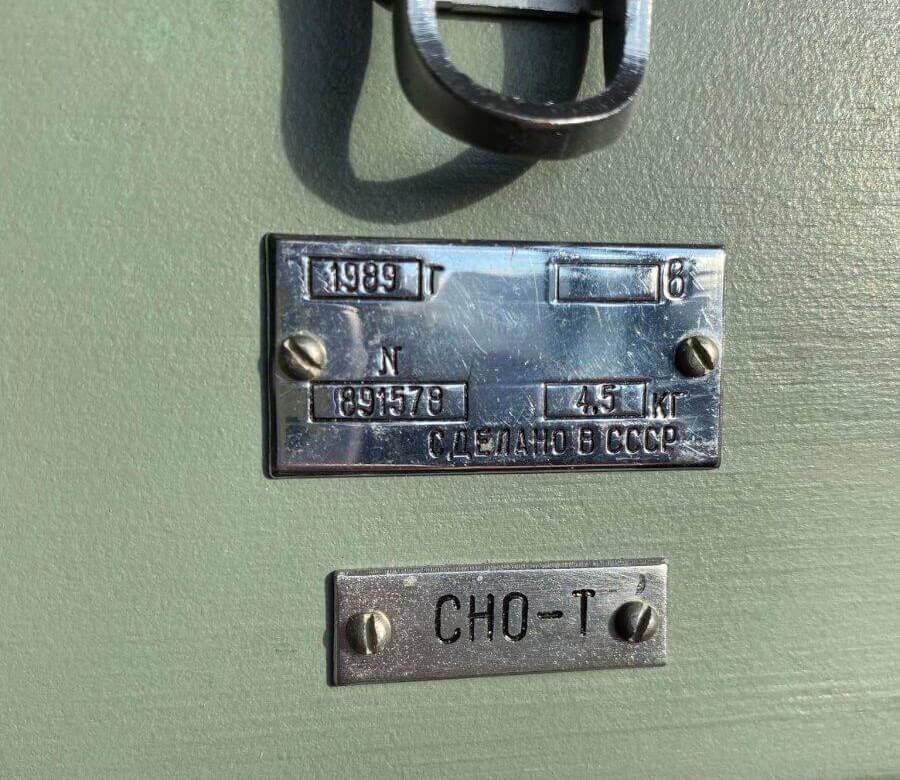
On our examples, the two models are easy to tell apart. SNO-M sextants come in a varnished wooden case with a plate giving year, number, weight and a КБ logo in a circle, a logo also found on the index arm. SNO-T sextants come in a grey-painted case, yellow inside, with a plate reading Сделано в СССР (sdelano v SSSR, made in USSR) and a second plate reading СНО-Т. On each of our SNO-T sextants, the serial number and year are also engraved on the index arm.
Case plates of a 1989 SNO-T: year, number, weight, Сделано в СССР.
Who made the SNO-T?
Acceptance certificate of a 1989 SNO-T, with the post-office box enterprise stamp.
The question is still open. The acceptance certificates of our 1981 and 1989 SNO-T sextants carry the stamp of an enterprise identified only by a post-office box, предприятие почтовый ящик (predpriyatie pochtovy yashchik), like many Soviet defence plants. On the 1981 one, the number is fully legible: Г-4728 (G-4728). An online directory assigns this code, from 1966 to 1983, to optical plant no. 297 at Yoshkar-Ola. No other source we consulted links that plant to sextants, and Western sources place SNO-T production in Leningrad, without naming a factory.
A call to our readers
Our SNO-M sextants and our ZG star globes carry a КБ logo in a circle, and the certificate of one of our 1981 SNO-T sextants the stamp п/я Г-4728. No document we consulted names the factory behind that logo or that code.
If you know where the SNO-M and SNO-T were made, write to us at inquiries@sovietinparis.com. Any serious lead will be added to this article and credited.
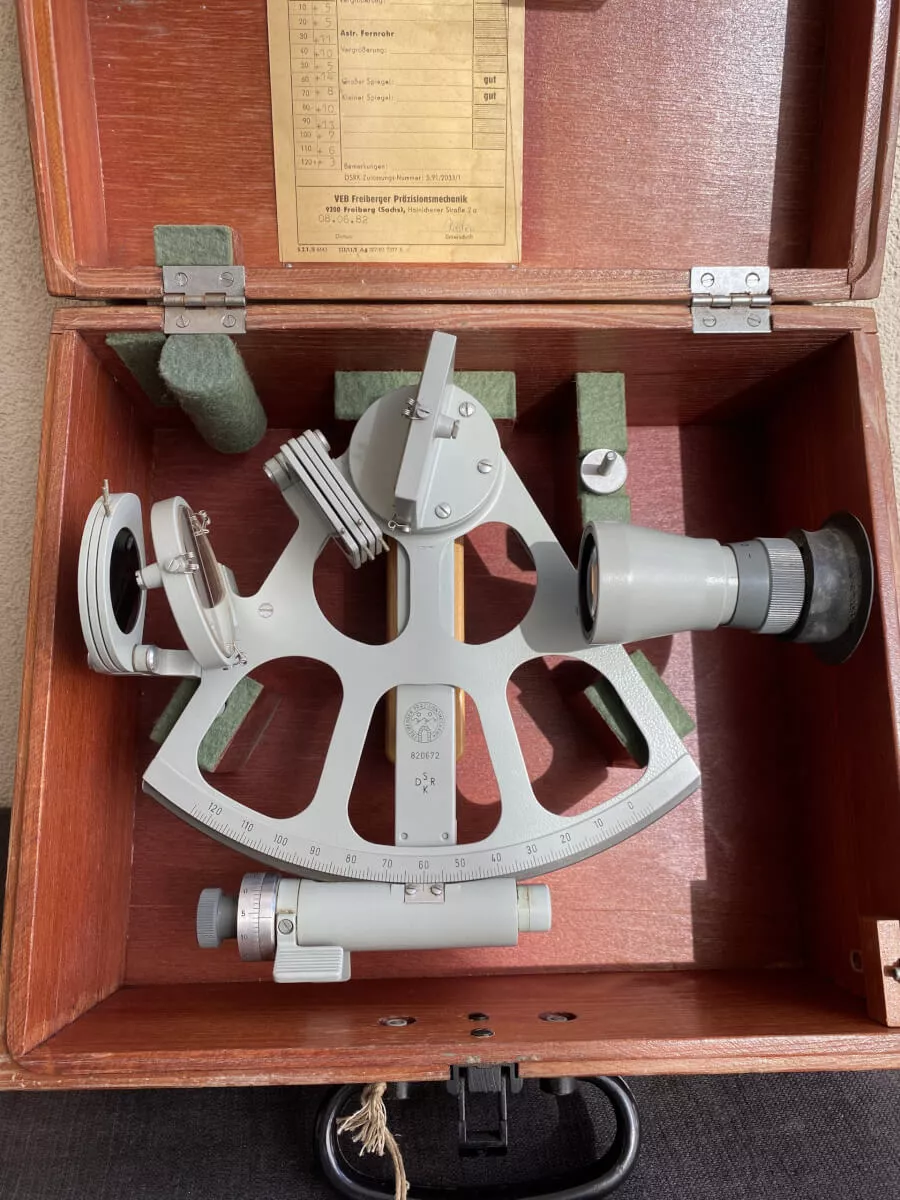
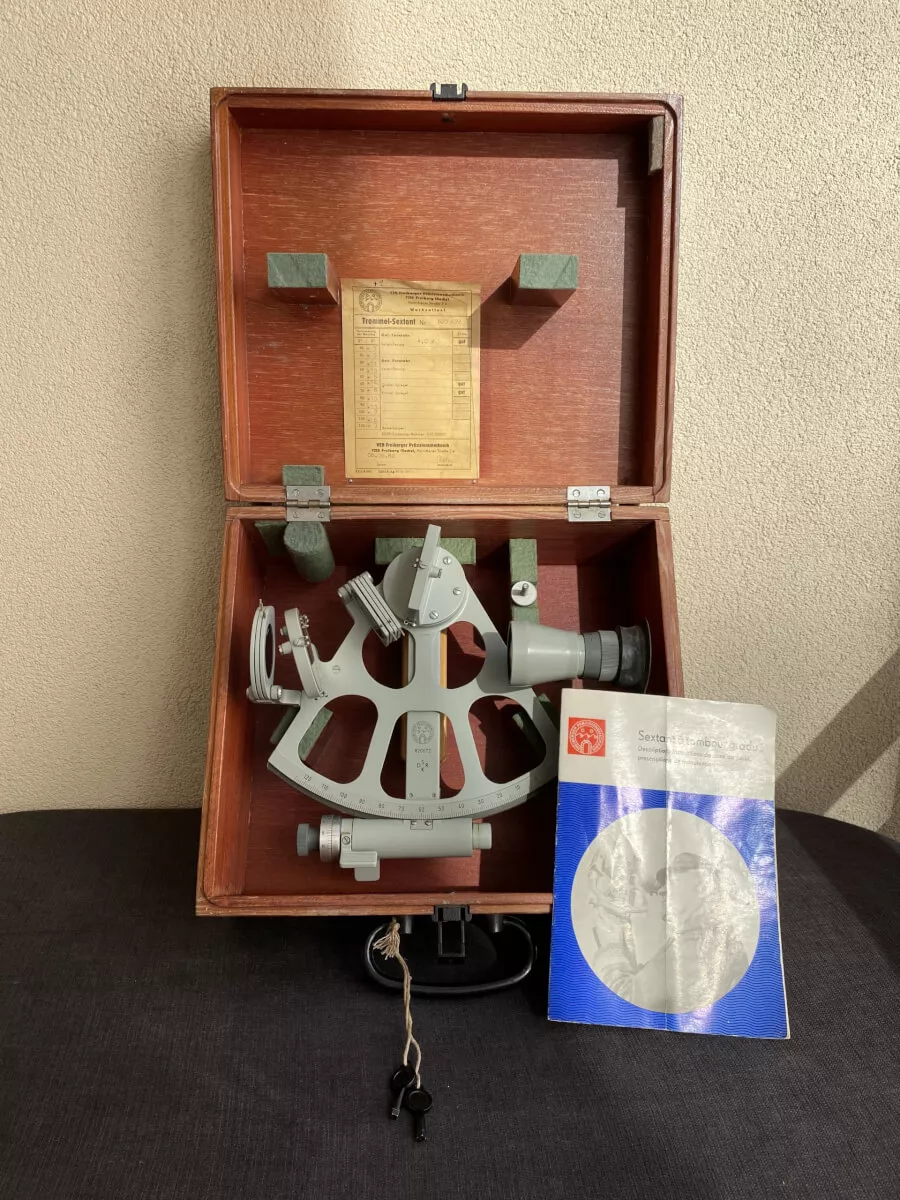
1982 Freiberger drum sextant, East Germany, with its factory certificate in the lid.
In East Germany, the Freiberg works, founded in 1771, became VEB Freiberger Präzisionsmechanik and built marine sextants, which became well known among yachtsmen after the fall of the Berlin Wall. We have two in stock. The 1982 one still has its factory certificate, the Werksattest, in the lid, dated 8 June 1982, with its corrections every 10 degrees. The other dates from 2010.
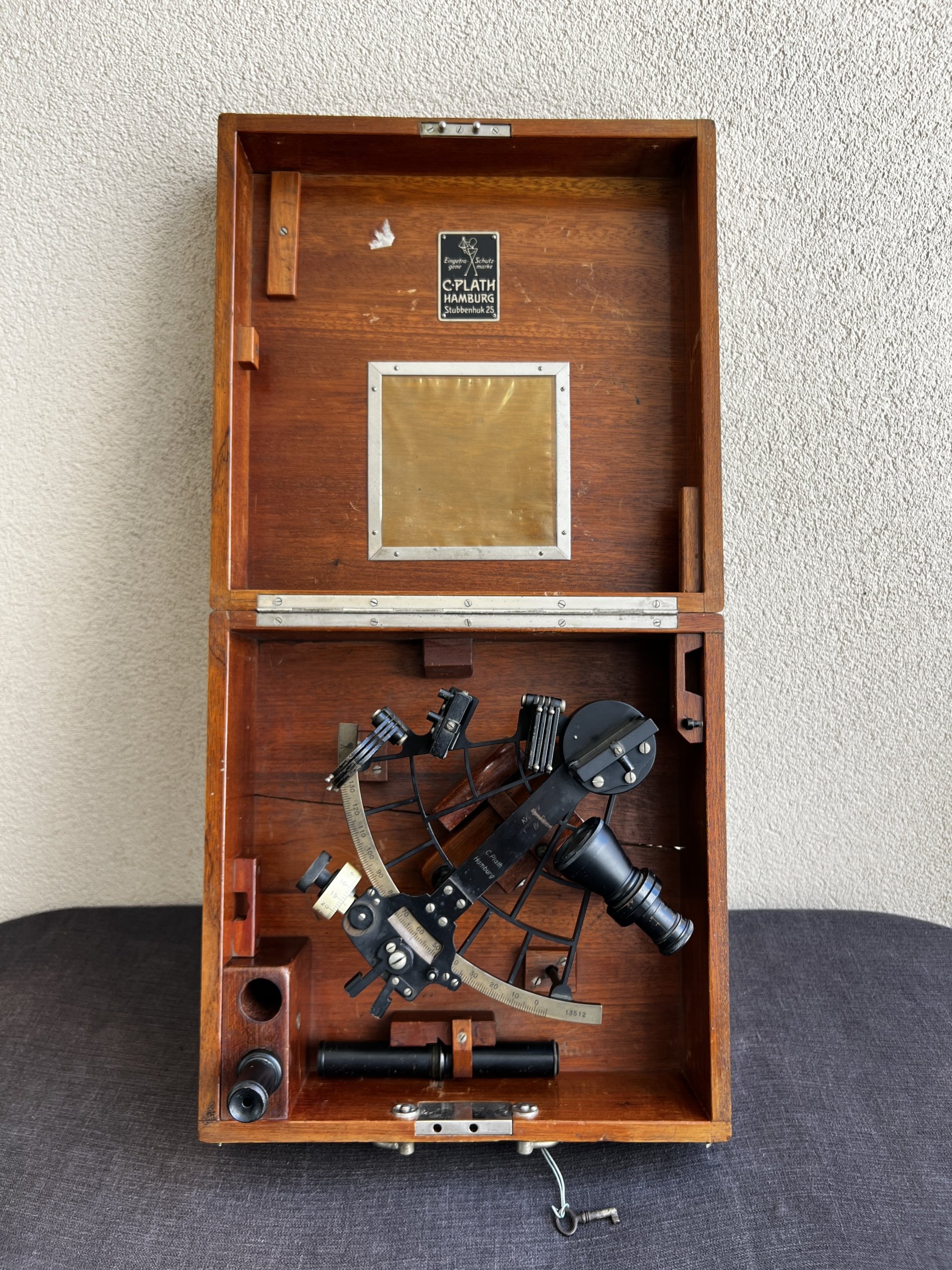
The C. Plath Hamburg engraving on sextant no. 13512, from the interwar years.
The interwar C. Plath no. 13512 in stock shows the German line behind the SNO-M. It carries the marking of the Royal Yugoslav Navy, the Kraljevska Mornarica.
The sextant’s companions
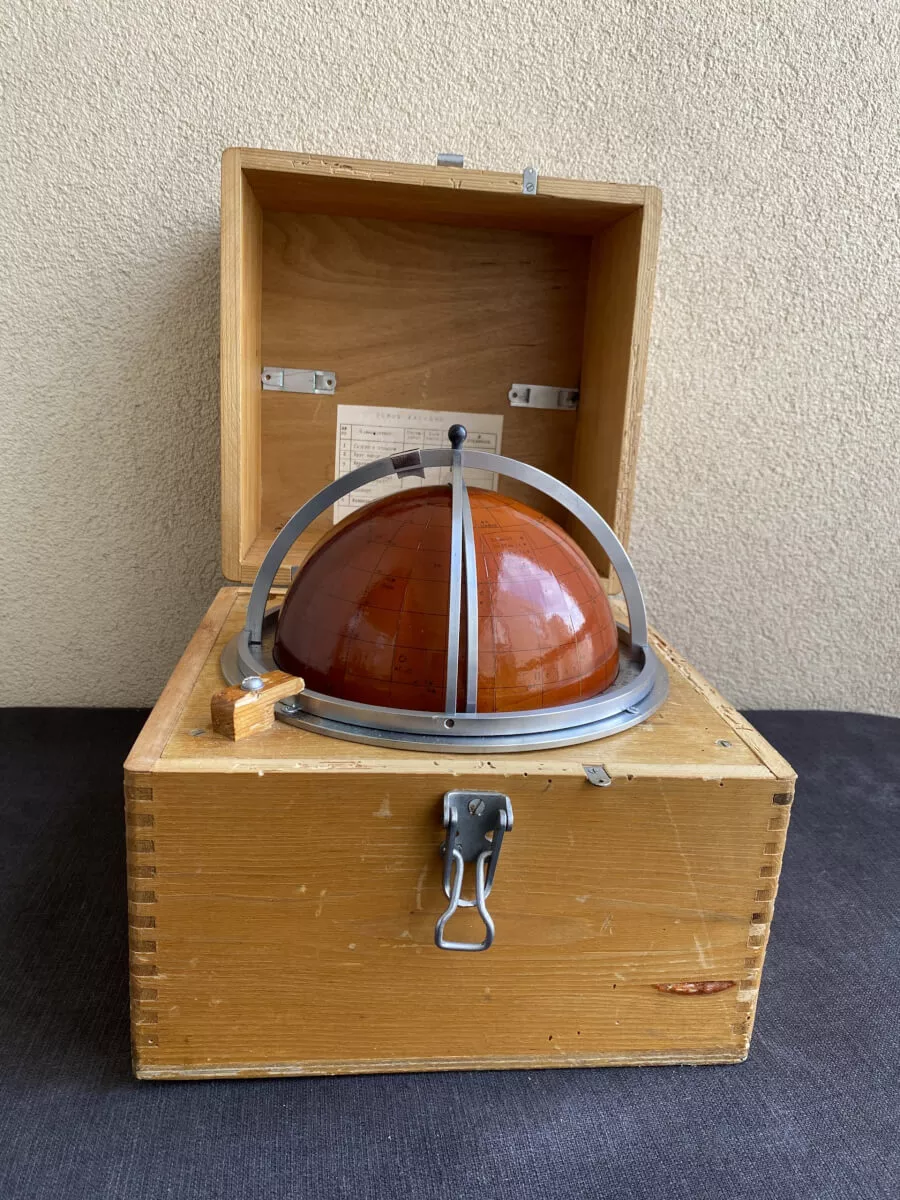
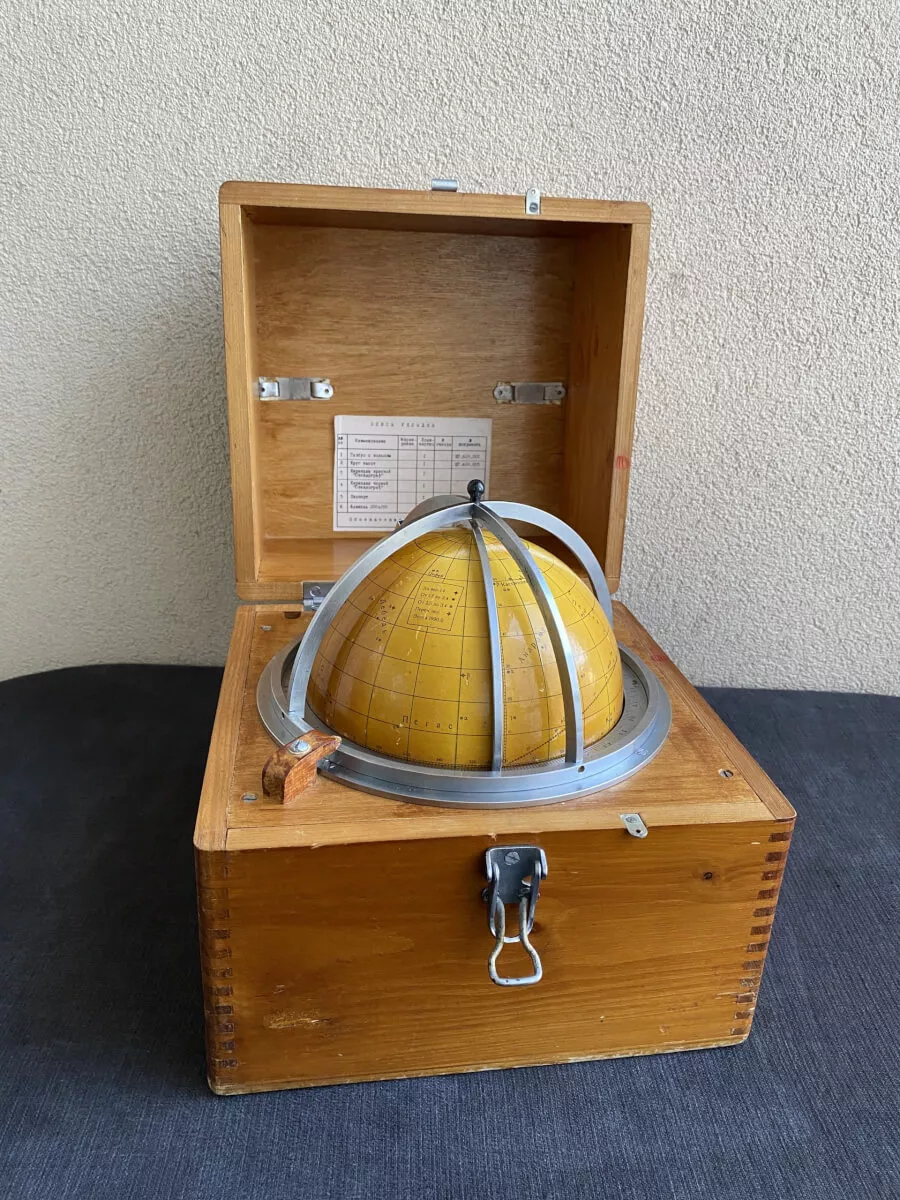
ZG (ЗГ) star globe, 1977, in its case.
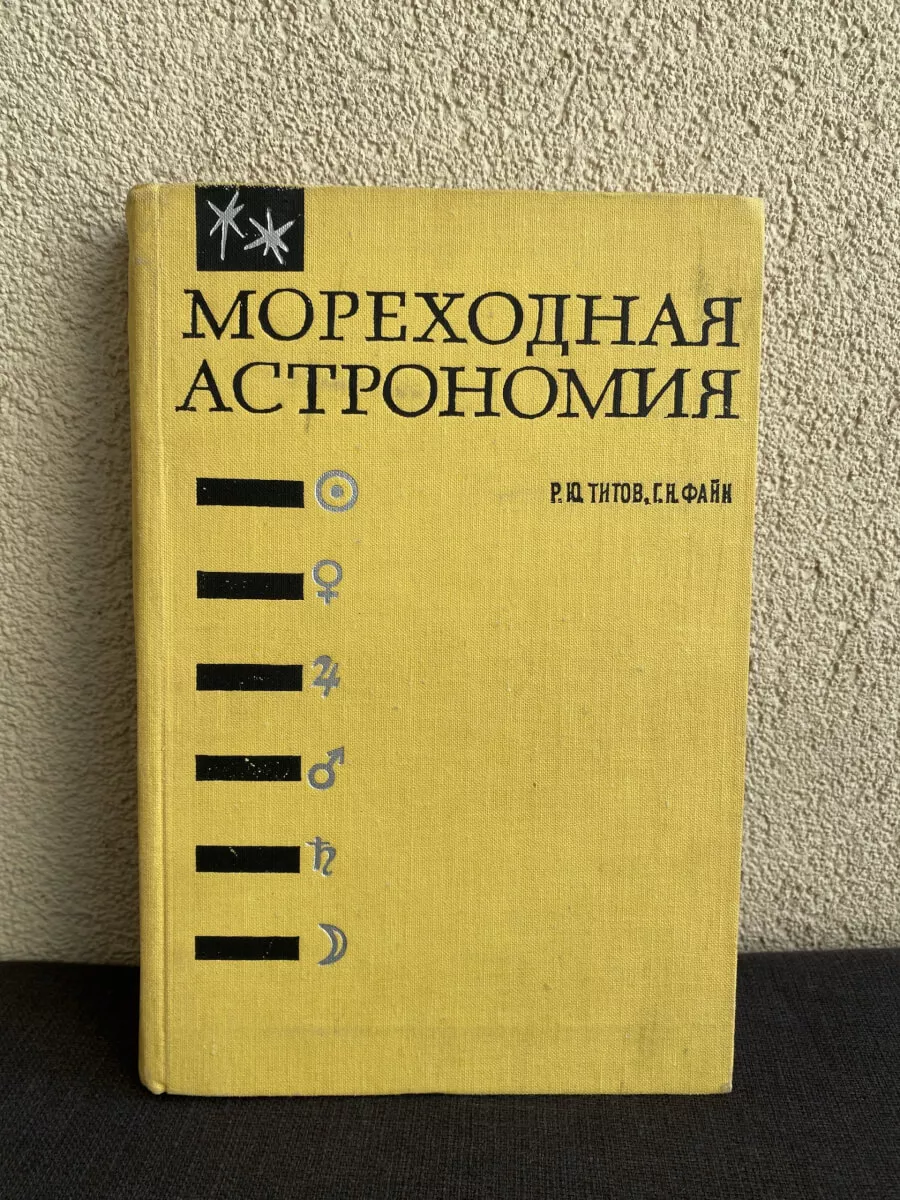
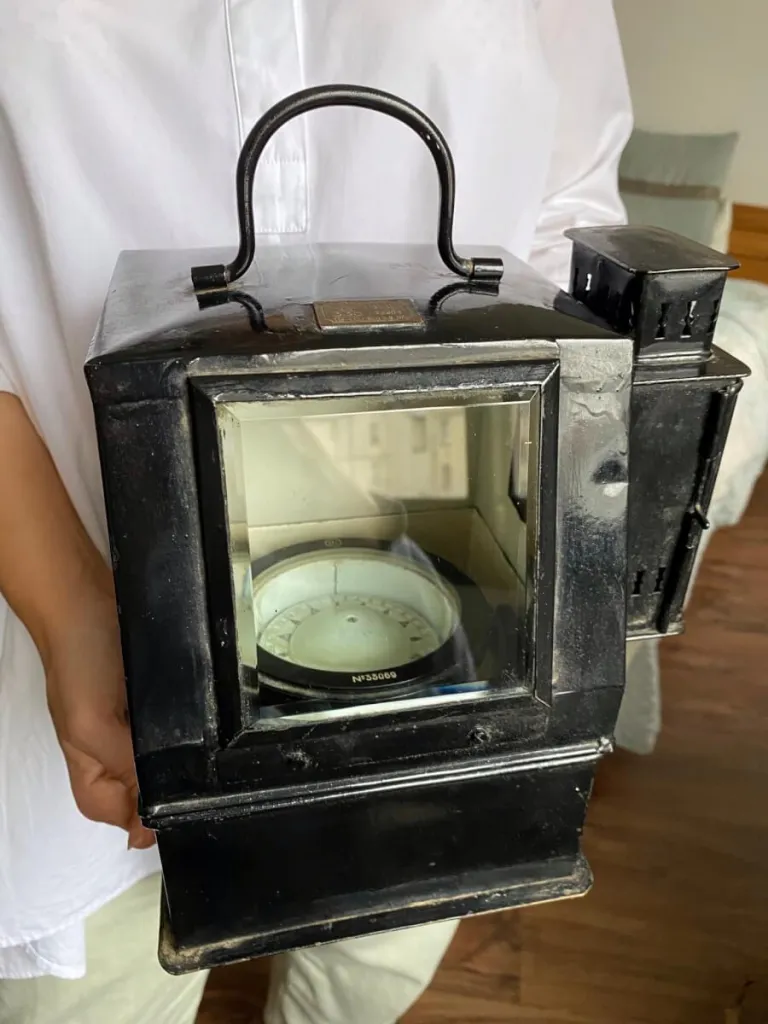
On board, the sextant was one tool in a set. For night navigation it was used alongside a star globe. We have two Soviet Navy ZG (ЗГ) star globes in stock, dated 1975 and 1977. The 1977 globe gives star positions for epoch 1990, and the plate on its case carries the same КБ logo as our SNO-M sextants. R. Yu. Titov’s 1969 manual of nautical astronomy, also in stock, devotes its chapters to the star globe, the deck chronometer and the sextant.
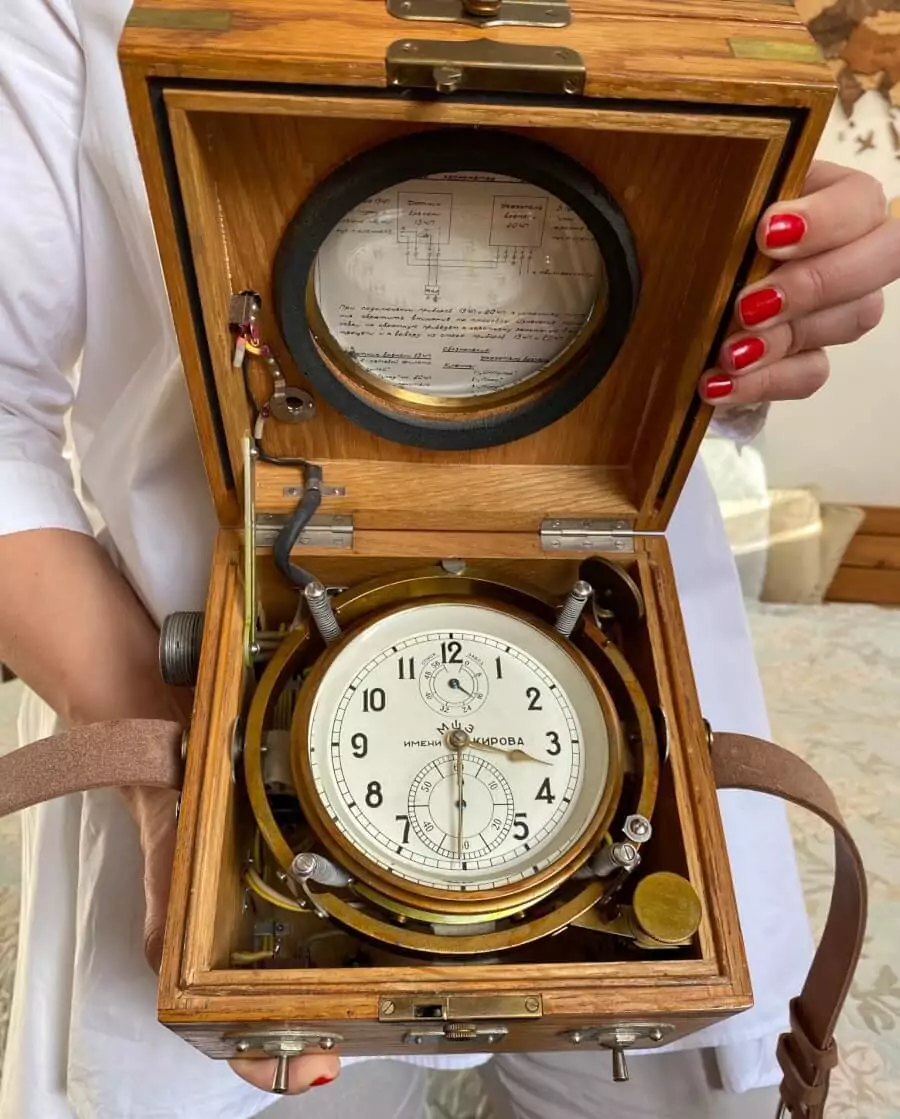
13ChP (13ЧП) aviation chronometer, 1961, in its case: the wiring diagram is glued inside the lid.
The sextant flew too: Soviet bomber crews fixed their position on the stars just as ships did. The diagram glued inside the lid of the 1961 13ChP (13ЧП) aviation chronometer in stock shows how. Its contact closes every second towards a 20ChP (20ЧП) indicator, two of whose terminals, 1st star and 2nd star, received the pulse from the авиасекстант (aviasekstant), the aircraft sextant. It is a different instrument from the SNO-T, but works on the same principle.
Buying a Soviet sextant: what to check
Workshop certificate of a SNO-T, 1993, with its corrections from 0 to 120°.
Model and year. SNO-M or SNO-T, and the year, engraved on the SNO-T index arm and stamped on the case plate. On our examples, the SNO-M runs from the 1960s to the early 1970s, the SNO-T from 1980 to 1989.
Paperwork. Logbook with acceptance certificate, correction card or workshop certificate, case inventory: they date the piece and tell its service history.
Case. A complete SNO-T has both telescopes, its illuminated magnifier, a spare mirror, the keys, the screwdrivers and the brush. An accessory is often missing all the same, and that is normal. A large ship or a naval base held several sextants: when an accessory was broken or lost, it was taken from another sextant’s case, including the case of one kept in reserve. We find sextants that stayed in store and were never used, yet lack the screwdriver, borrowed for some other job, or the spare mirror. A sextant with nothing at all missing is very rare.
Condition. A sharp image in both mirrors, index arm and drum turning without tight spots, index error checked on the horizon. Dried-out grease can be renewed: that was the case on a 1968 Freiberger that passed through the shop.
SNO-M drum, divided into whole minutes: a period Plath drum is divided into half minutes.
The known fake does not target the SNO-T but the German sextant. Bill Morris has found that sextants sold as wartime Kriegsmarine C. Plath instruments, with Nazi insignia and serial numbers dated 1942 and 1943, are in all likelihood doctored SNO-Ms. His checks: a Plath drum is divided into half minutes, an SNO-M drum into whole minutes; SNO-M shade knobs are plain cylinders; its index arm is a one-piece pressing with a stiffening rib; Plath mirror brackets have C. P. part numbers cast inside, absent on the SNO-M. For the SNO-T itself, no copy is reported in the sources we consulted. On the other hand, Russian marine suppliers still list the SNO-T for sale today, without saying whether these are recent production or old stock: the Сделано в СССР plate and the engraved year settle it.
As with any collector’s piece, research thoroughly, compare several examples and rely on trusted collectors’ sites and buying guides. See also our guide to the Soviet diving helmet and the one on Soviet 24-hour watches, worn at sea and at the poles.
The ДП-5В (DP-5V) is the field radiometer of Soviet civil defence: a green Bakelite console, a probe with a rotating gamma, beta and check-source shield, headphones and a manual that explains operation and maintenance. The one in this article served in an industrial bakery in Chișinău and was serviced in March 1991. Its owner shared his photos and documents with us, and we turned them into a tool that lets you operate it on screen, step by step.
The Moscow Games, from 19 July to 3 August 1980, boycotted by some sixty countries, produced more objects than any Soviet event: a bear cub, Misha, drawn by Viktor Chizhikov, an emblem made of running tracks, five thousand torches, watches from every factory, platinum coins, rings, tea glass holders, posters. This guide tells the story of the Games and reviews the objects, with the marks that authenticate them and the prices.
The 3017 chronograph of the First Moscow Watch Factory carries a five-digit number on the balance cock. The most common dating method reads it as a single series, from 1959 to 1979. Four factory passports show there are two, and that the same number can point to two watches made ten years apart. Here is how to read the number, the dial, the logo and the bridge, with a decoder to date your Strela, Poljot or Sekonda.
This website uses cookies to improve your experience while you navigate through the website.
Out of these cookies, the cookies that are categorised as necessary are stored on your browser as they are essential for the working of basic functionalities of the website.
We also use third-party cookies that help us analyse and understand how you use this website.
These cookies will be stored in your browser only with your consent.
You also have the option to opt out of these cookies.
But opting out of some of these cookies may affect your browsing experience.
Necessary cookies are absolutely essential for the website to function properly. This category only includes cookies that ensure basic functionalities and security features of the website. These cookies do not store any personal information.
Cookies that are not strictly necessary for the website to work and that are used specifically to collect personal data through analytics, ads and other embedded content are called non-necessary cookies. User consent is required before these cookies run on the website.
✕
Soviet in Paris
Online. We answer in person, no AI and no chatbot. Reply right away, 20 min at most.
Hello 👋 A question about an item, an order or shipping? Write to us.
Your email is used only to reply to you.
Subscribe to our newsletter and get 10% off your first order.
Subscribe
★ New pieces before anyone else
★ New blog articles
★ Soviet in Paris news and updates
Join the Party
10% off your first order
Receive your welcome card and our next arrivals.
Your code appears here and is also sent to you by email. You can leave the Party in one click, at any time.