This guide tells the twelve-bolt Soviet diving helmet from the three-bolt, shows how to read the factory plate and presents what completed the helmet: boots, NV-1 knife, compass, lamp and 191ChS watch. It also gives the points to check before buying, with so many helmets made in the 2000s.
OCTOBER 2026•8 MINUTE READ
by Marwen Yahyaoui
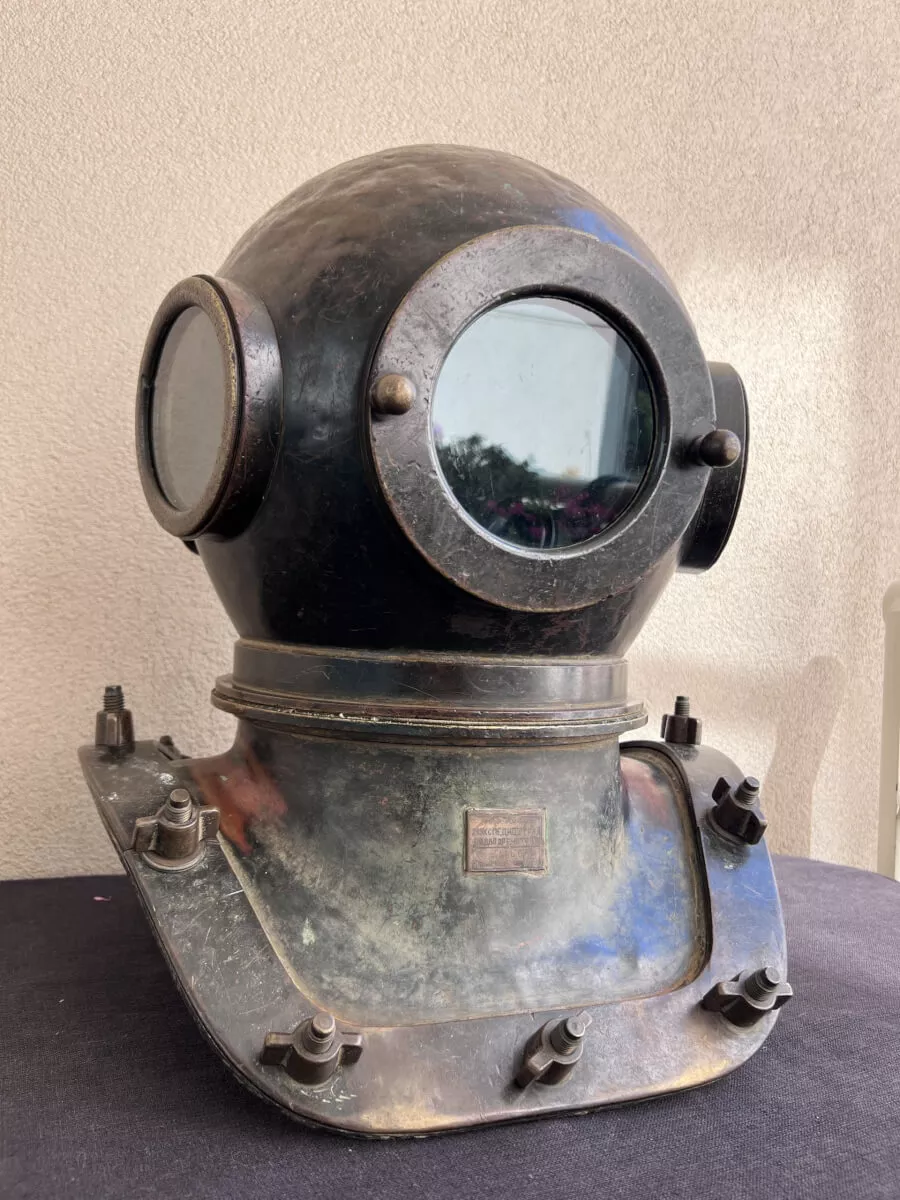
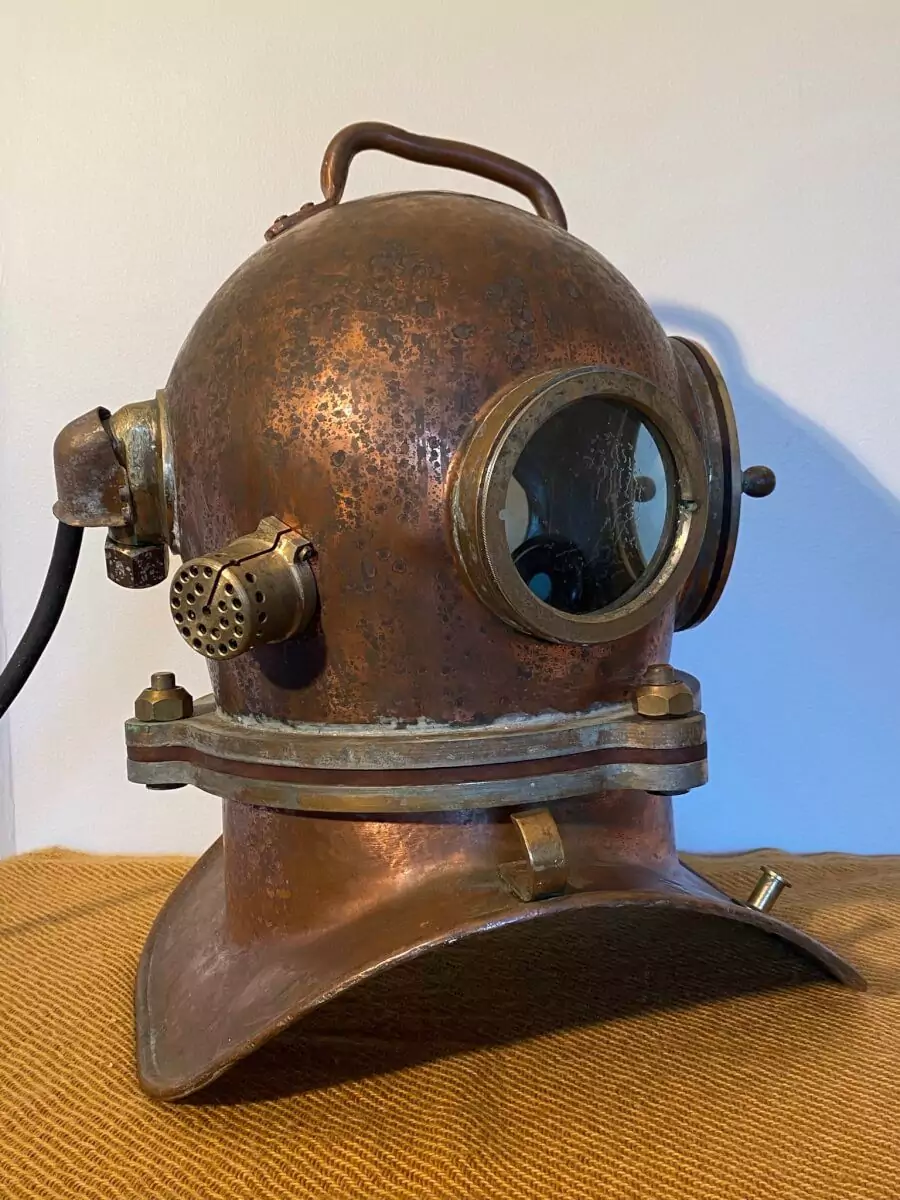
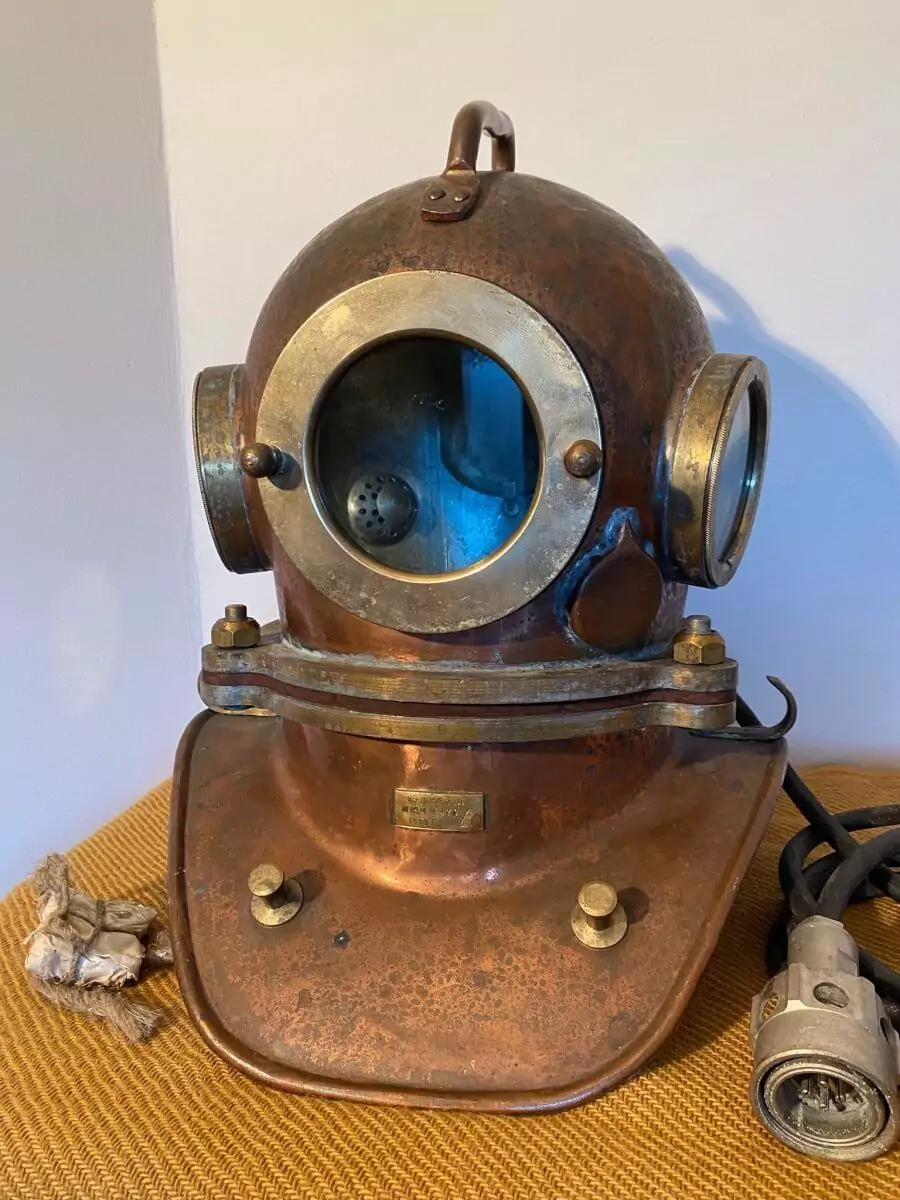
Twelve-bolt helmet, Leningrad, 1964.
A Soviet diving helmet is a copper sphere weighing fifteen to twenty kilos, with three glass viewports, fixed to a corselet that rests on the diver’s shoulders. It belongs to the kit of the “heavy-foot” divers: the diver walks on the seabed, linked to the surface by an air hose, and weighted with lead so that he does not float up.
We find these helmets in the ports of the former USSR: Murmansk, Odessa, Saint Petersburg and others. The twelve-bolt helmet of 1964 opens this guide. It is available in the shop, like several pieces of the kit shown below.
This guide explains where these helmets come from, how to tell a twelve-bolt from a three-bolt, how to read a plate, and what completed the helmet on the diver: boots, knife, instruments.
Where the helmet comes from
The idea is old in Russia. In 1829, at Kronstadt near Saint Petersburg, the naval technician E. K. Gauzen built a “diving machine”: an air-supplied metal helmet with a leather suit. The Russian Navy used it for underwater work until 1880.
According to Russian sources, factories in the country were already making twelve-bolt equipment in the 1860s. The three-bolt, nicknamed “трёхболтовка” (trekhboltovka), later became the Navy’s standard. Its official designation, УВС-50, stands for improved ventilated equipment, model 1950: the number is the year of adoption. A recent Russian source says it is still in service in some armies.
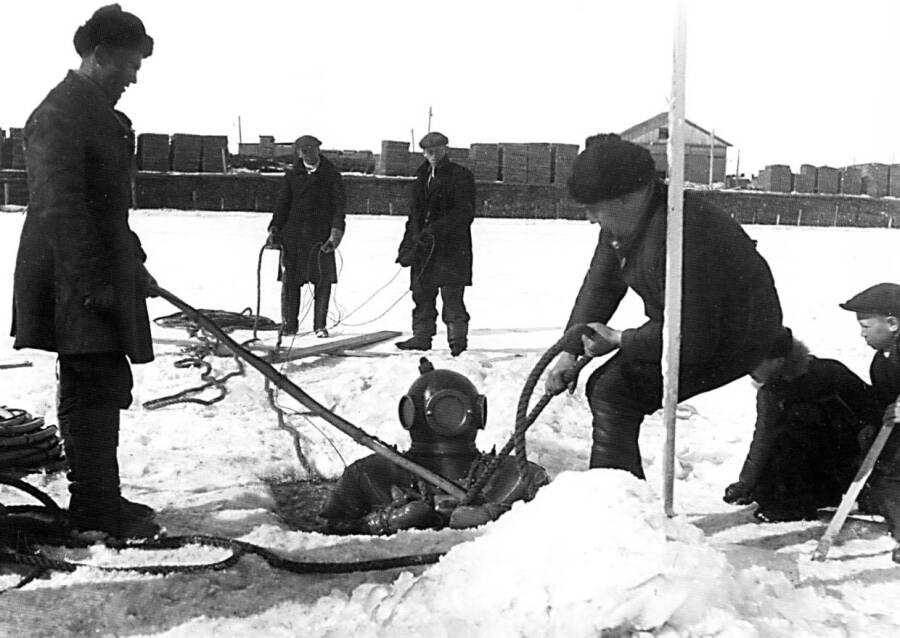
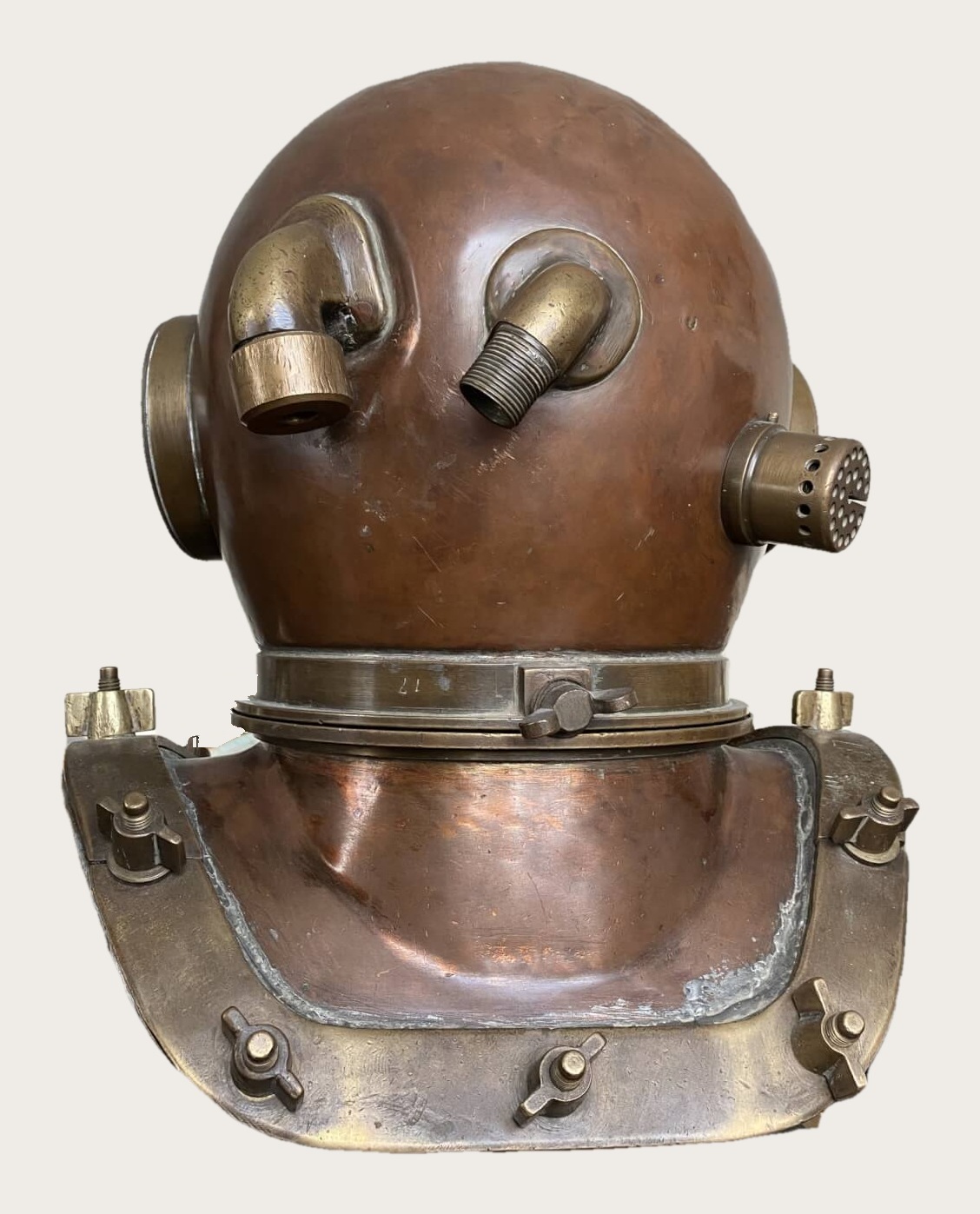
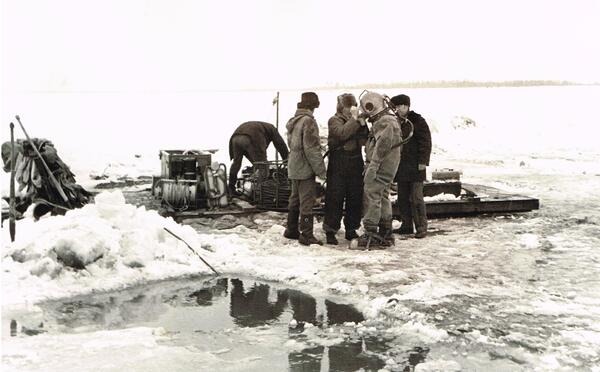
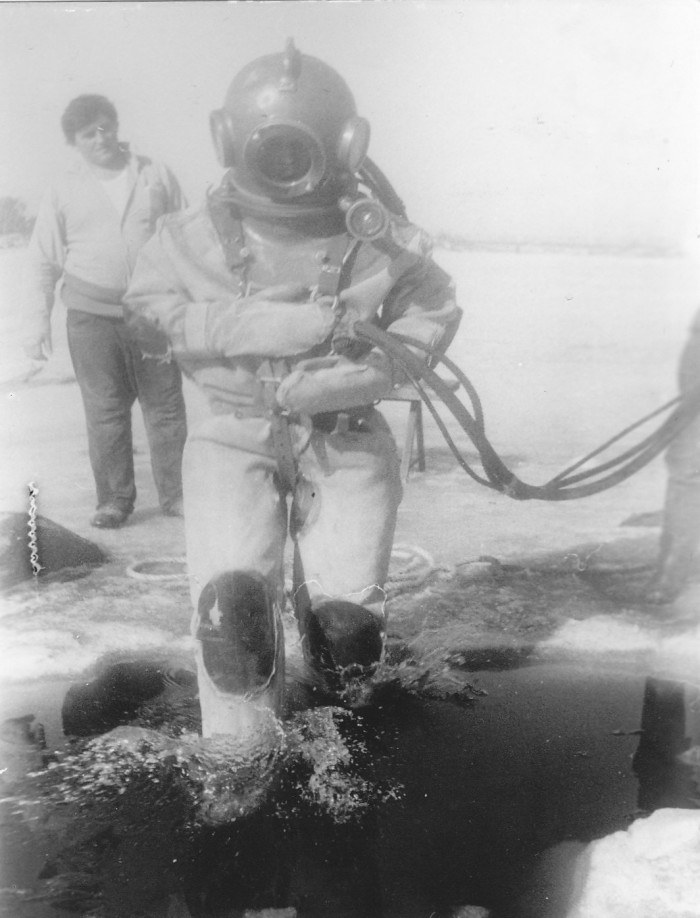
Descent under the ice: the diver is in the hole, men hold the lines from the surface. Black-and-white archive photograph, date not given.Twelve-bolt helmet from the 1940s: air and telephone enter through two separate fittings.
Early helmets are recognised by this feature: one inlet for the air and one for the telephone. It is found on Soviet helmets from before the war. On the three-bolt, the two inlets share a single housing.
Twelve bolts or three bolts
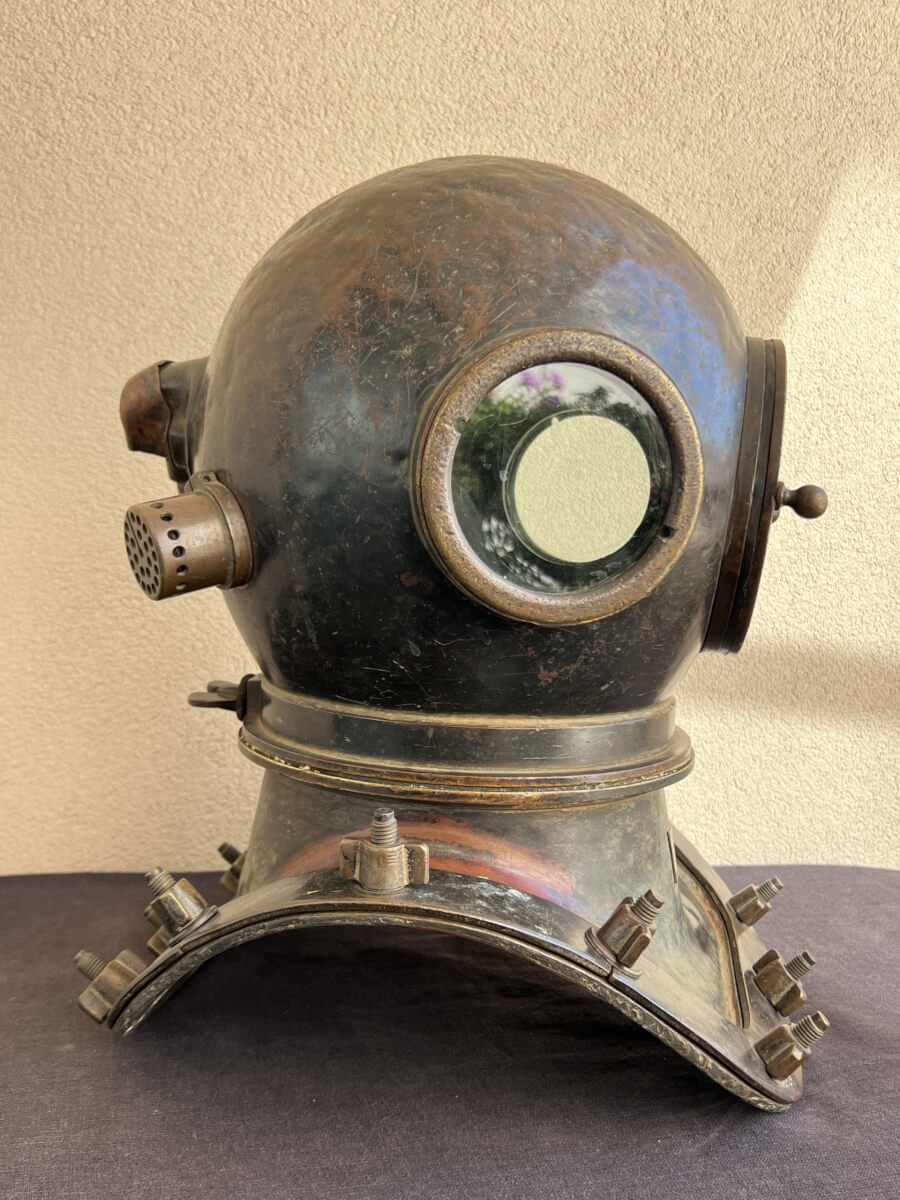
The difference lies in how the helmet is fixed to the canvas suit. On the twelve-bolt, twelve wing nuts clamp the rim of the corselet onto the suit’s gasket, and the dome screws onto the corselet. On the three-bolt, the dome sits on the corselet and only three bolts clamp the rubber collar of the suit between their two flanges.
Twelve bolts, 1964.
Three bolts, 1990.
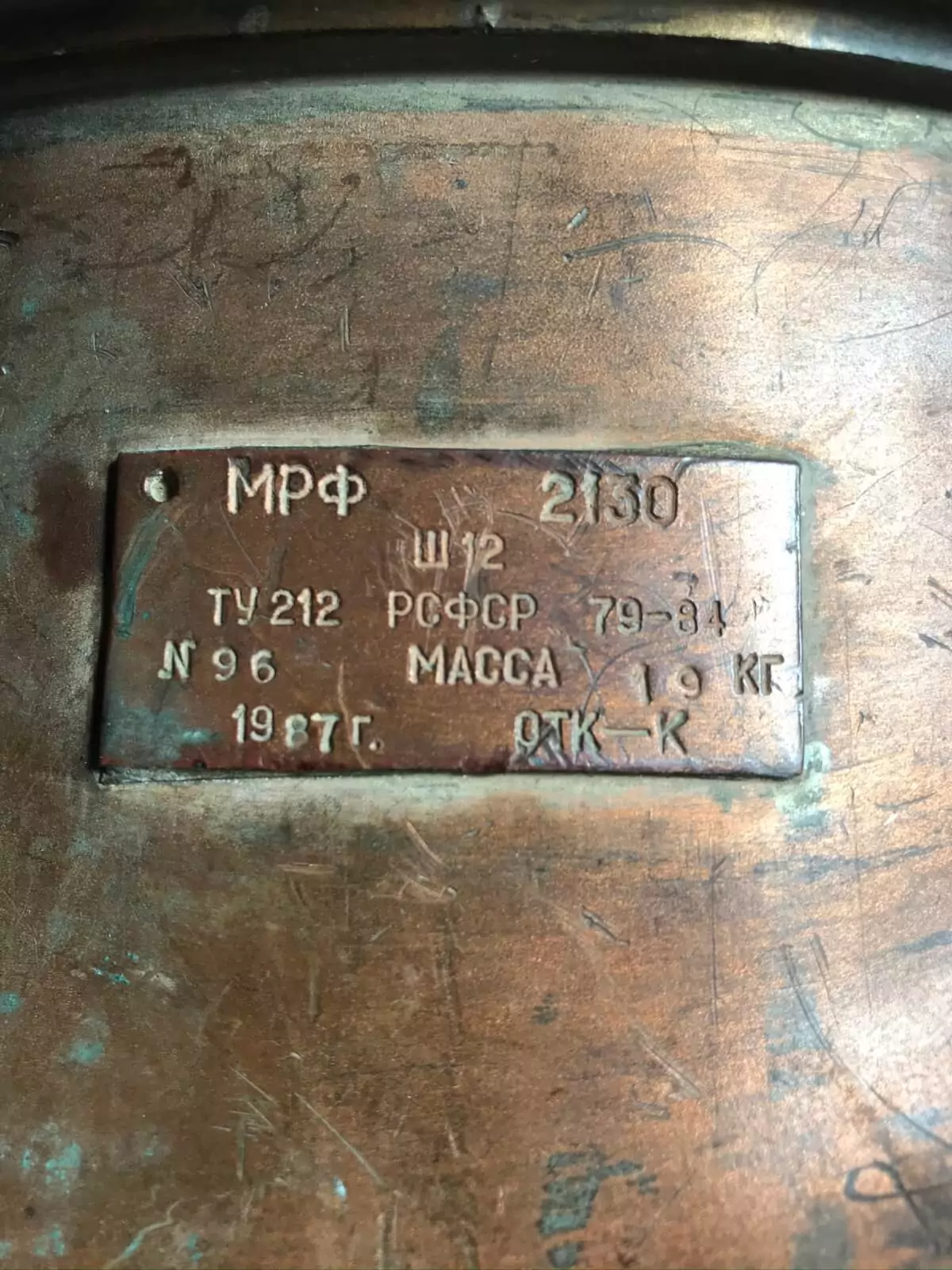
The twelve-bolt is rarer. Its design is older, its assembly more complex, and it is the more impressive of the two. It did not disappear for all that: the plate of a 1987 helmet that went through the shop is that of a twelve-bolt, and the two types were made side by side for decades.
On the three-bolt, the two side viewports are fixed and the front one is removable. Excess air leaves through a valve that the diver opens with his head.
Reading the plate
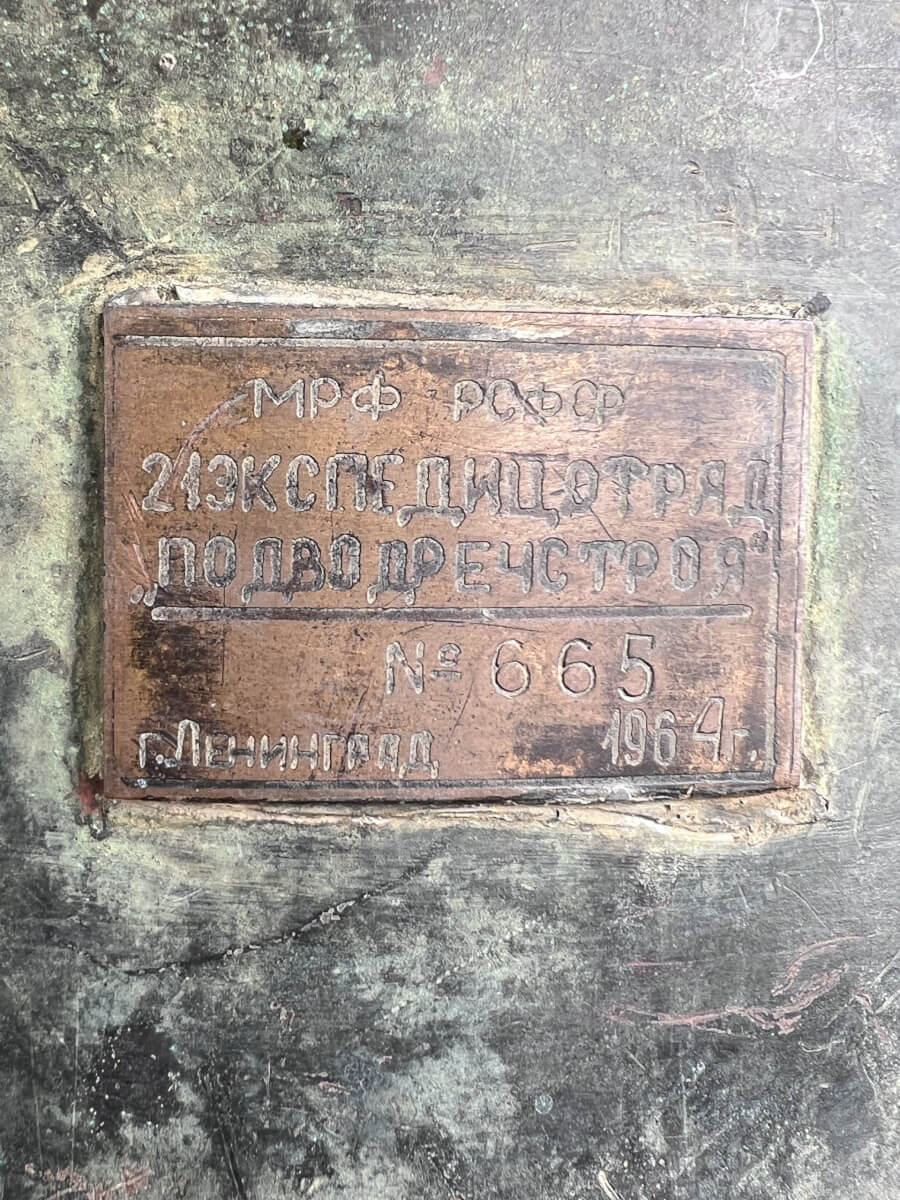
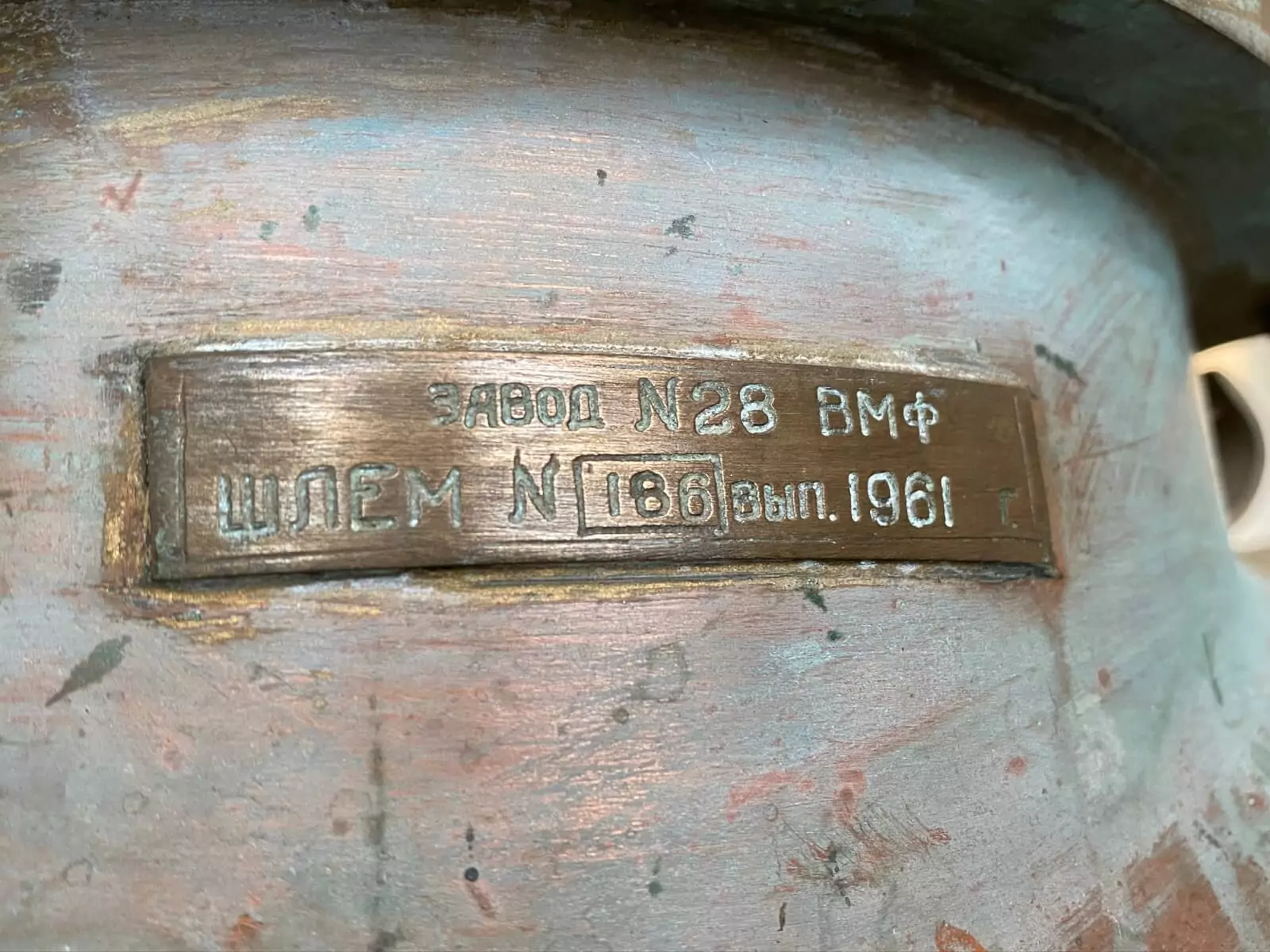
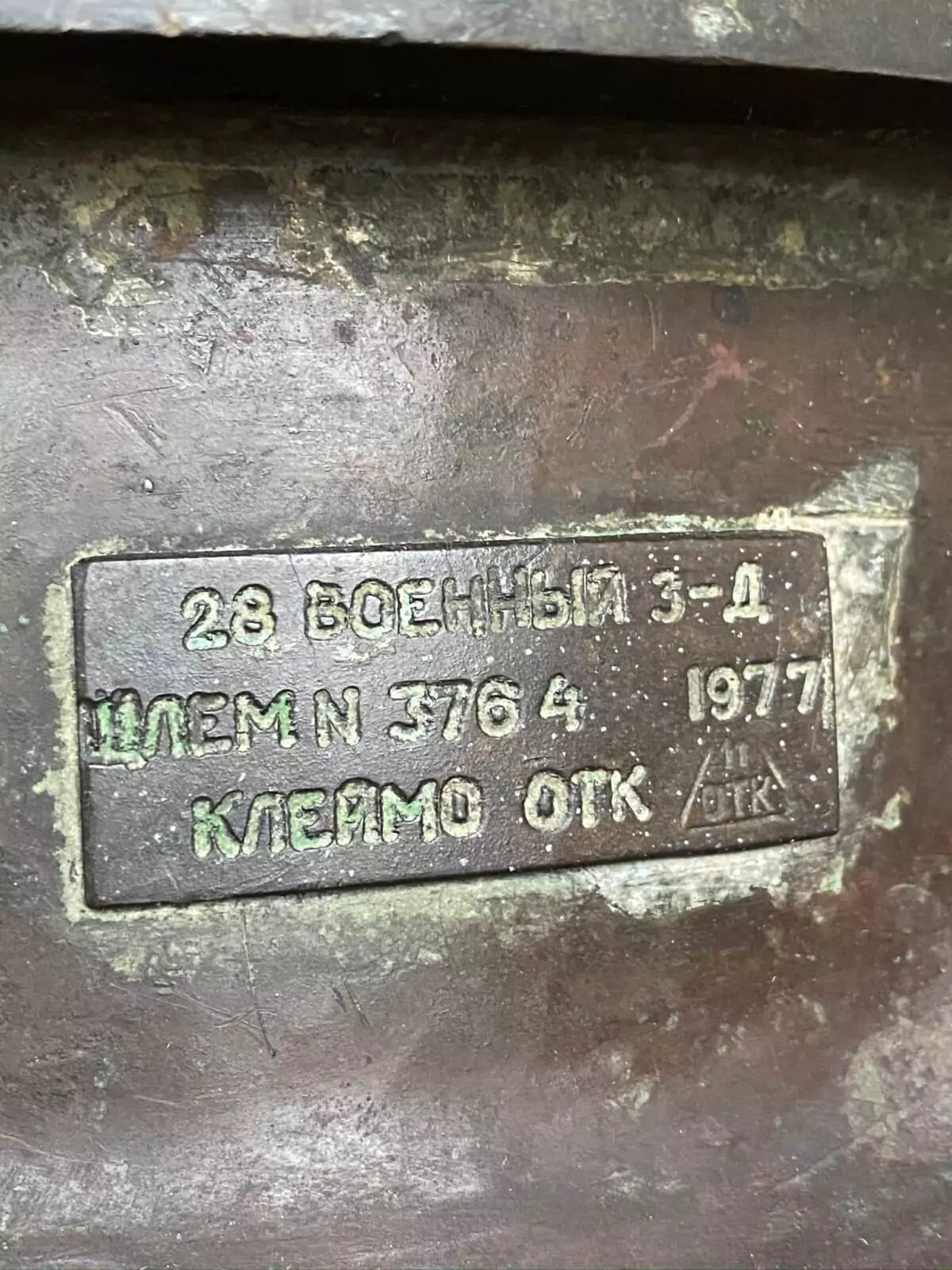
Every helmet carries a plate on the corselet giving the factory, the number and the year. It is the first thing collectors look at.
1964: 21st expedition detachment of Podvodrechstroy, Leningrad, No. 665.
1961: Navy factory No. 28, helmet No. 186.
Two clients appear on the plates of our collection: the military Navy and the Ministry of the River Fleet of the RSFSR. The plate “Завод № 28 ВМФ” or “28 военный з-д” is that of Navy factory No. 28. The 1964 one carries the abbreviation МРФ, for the Ministry of the River Fleet, and the name of Podvodrechstroy, the ministry’s underwater works organisation.
1987: МРФ mark, mass 19 kg, No. 96.
1977: military factory No. 28, helmet No. 3764.
The 1987 plate also gives the mass of the helmet, 19 kg, and the technical specifications for its manufacture (ТУ). The helmets in the shop weigh between 15 and 20 kg.
What connoisseurs look at
Connoisseurs look first at what is missing. Then come the patina, the condition, the rarity, the added features, and the plate with its information and its year.
Three-bolt helmet from 1990, new old stock, with its cable and plug.
This 1990 helmet comes from old stock and has never been in the water. It keeps its cable, its spare gaskets and its spare bolts. It comes from Navy factory No. 28.
The parts of the helmet
Tap the numbers to discover each part, then start the exercise. The two buttons switch between the twelve-bolt and the three-bolt.
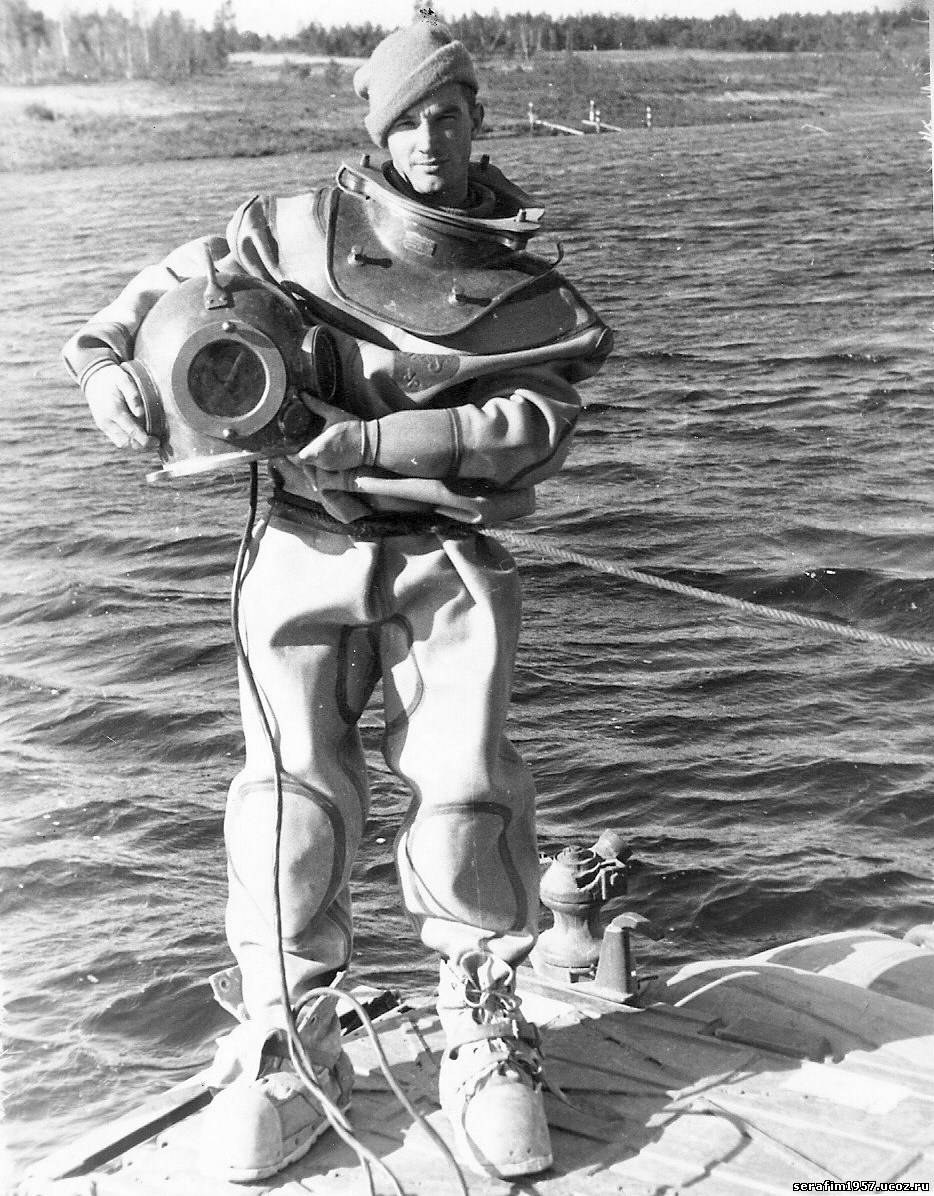
A heavy diver holding his helmet, the corselet on his shoulders. Black-and-white photograph, date not given. Source: serafim1957.ucoz.ru (site name visible on the photo).
The heavy diver’s kit
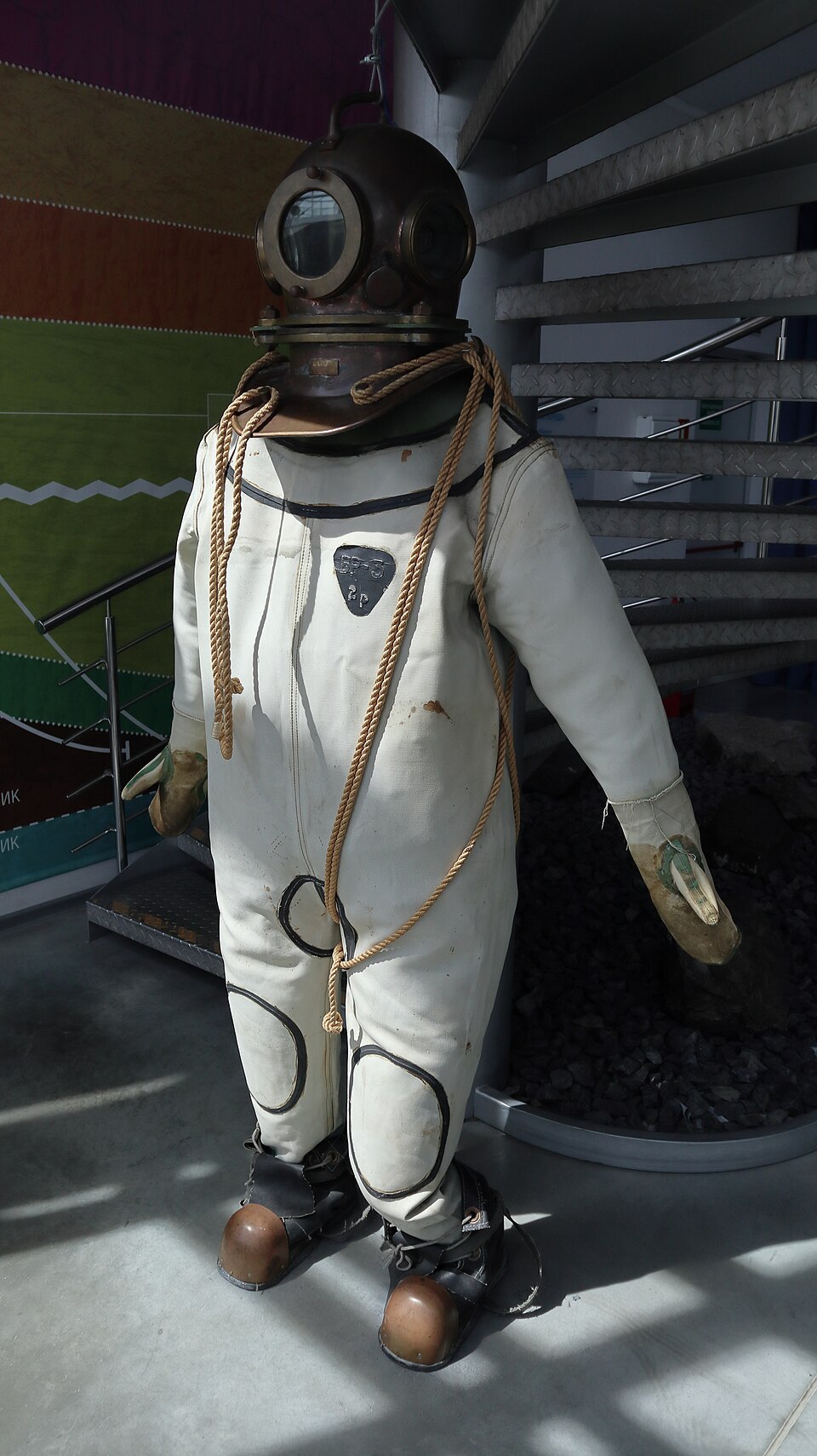
The helmet is only one part of the kit. A complete kit includes the helmet and its corselet, the canvas suit, the boots, two lead weights for chest and back, the knife, the air hose or a hose-cable, a signal line and the underwear. According to Russian sources, the two weights, in lead or cast iron, weigh 16 kg each. For the УВС-50, the whole kit comes to about 80 kg. The air comes from the surface, through a pump.
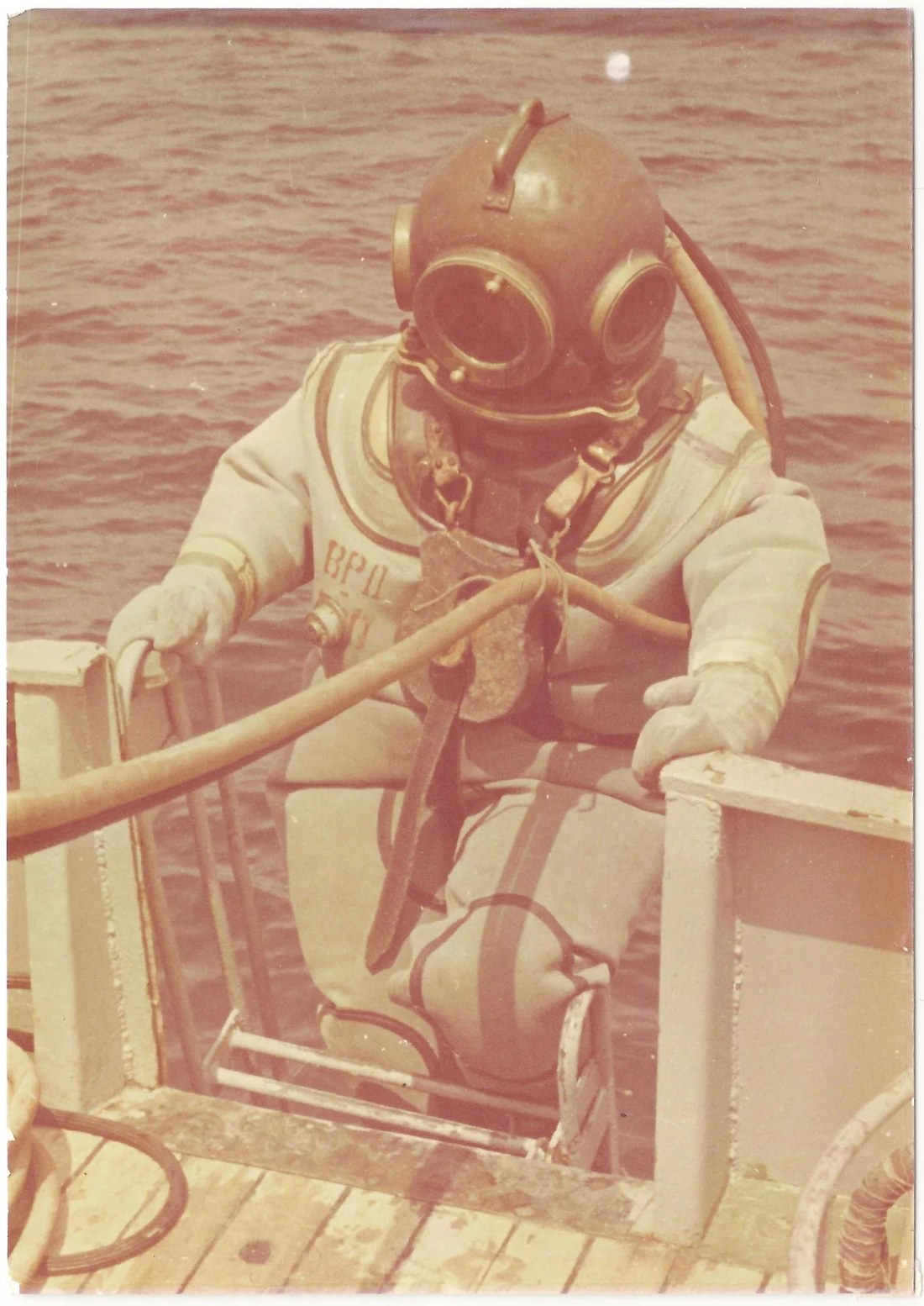
A heavy diver in full kit with his team before the descent. Black-and-white photograph, date not given. Source: Nefteyugansk museum, Artefact project (ar.culture.ru), inv. МК КП-6912/1.Three-bolt equipment of the 1980s worn by a mannequin: canvas suit, weighted boots, helmet. Photo: Александр Сигачёв, Wikimedia Commons, CC0.A heavy diver in a canvas suit, with his air hose, at the side of a boat. Colour photograph, date not given.
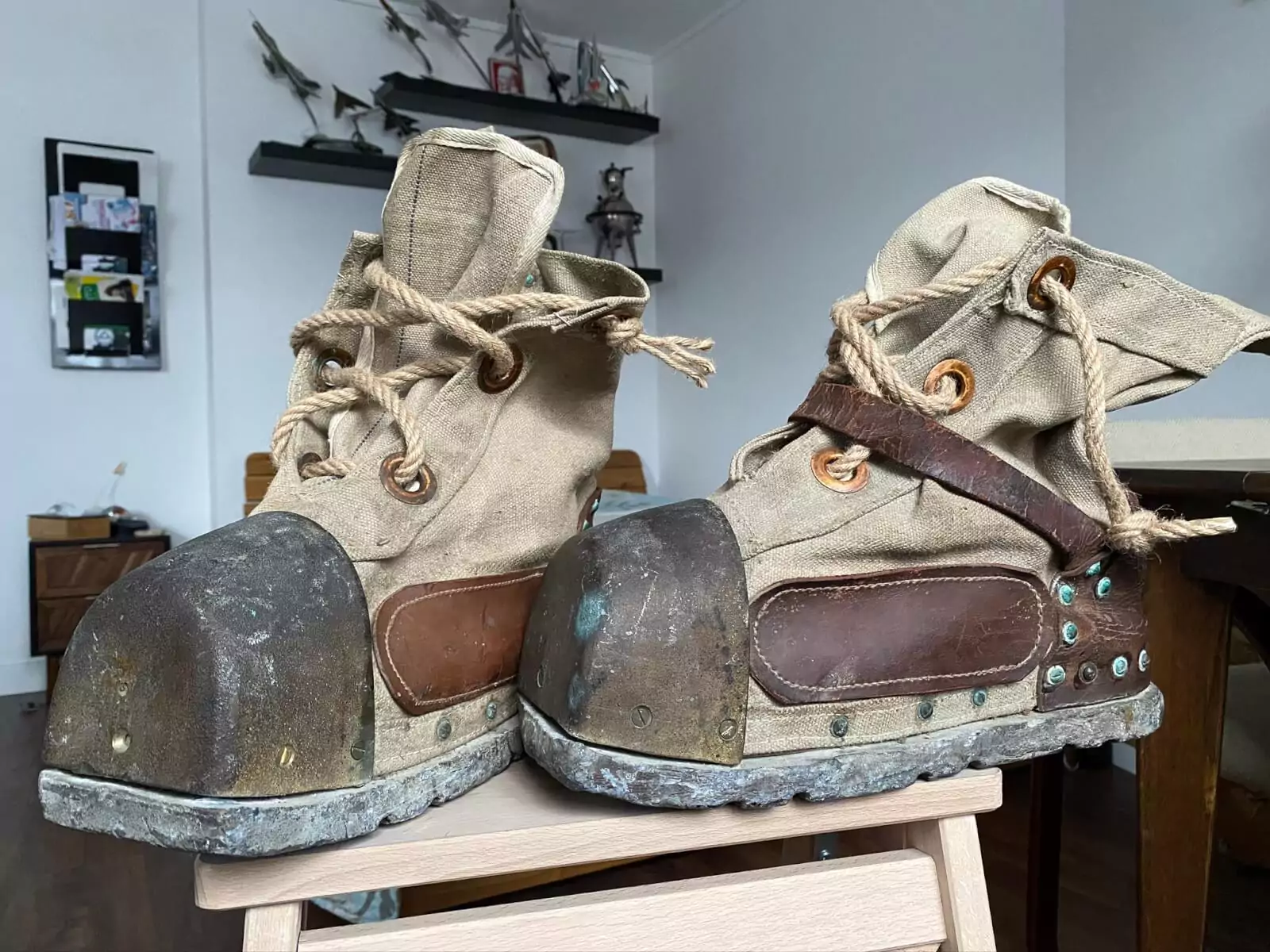
The boots are weighted with lead, with a brass or bronze toe cap. Each boot of one of the pairs that went through the shop weighed 10 kg.
Heavy diver’s boots, older model: canvas, leather and bronze toe caps.
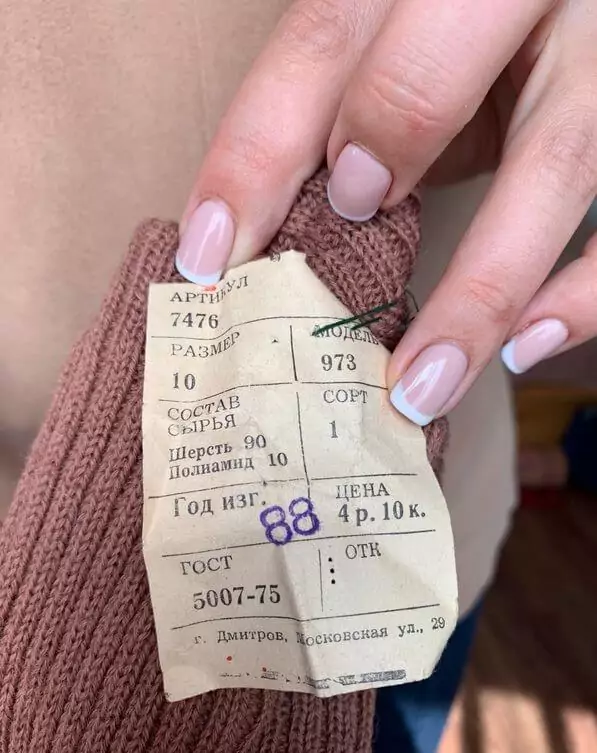
For the hands, camel wool gloves, new and dated 1988, go with three-bolt or twelve-bolt suits.
The gloves’ label: year of manufacture 1988.
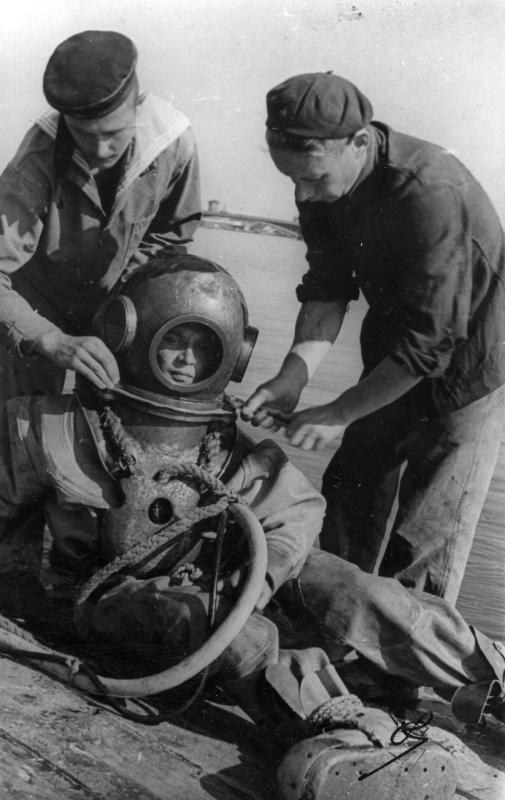
Two men assist a diver in his helmet. Black-and-white photograph, date not given.A heavy diver coming out of the water at the edge of a hole in the ice. Black-and-white photograph, date not given.
The NV-1 knife
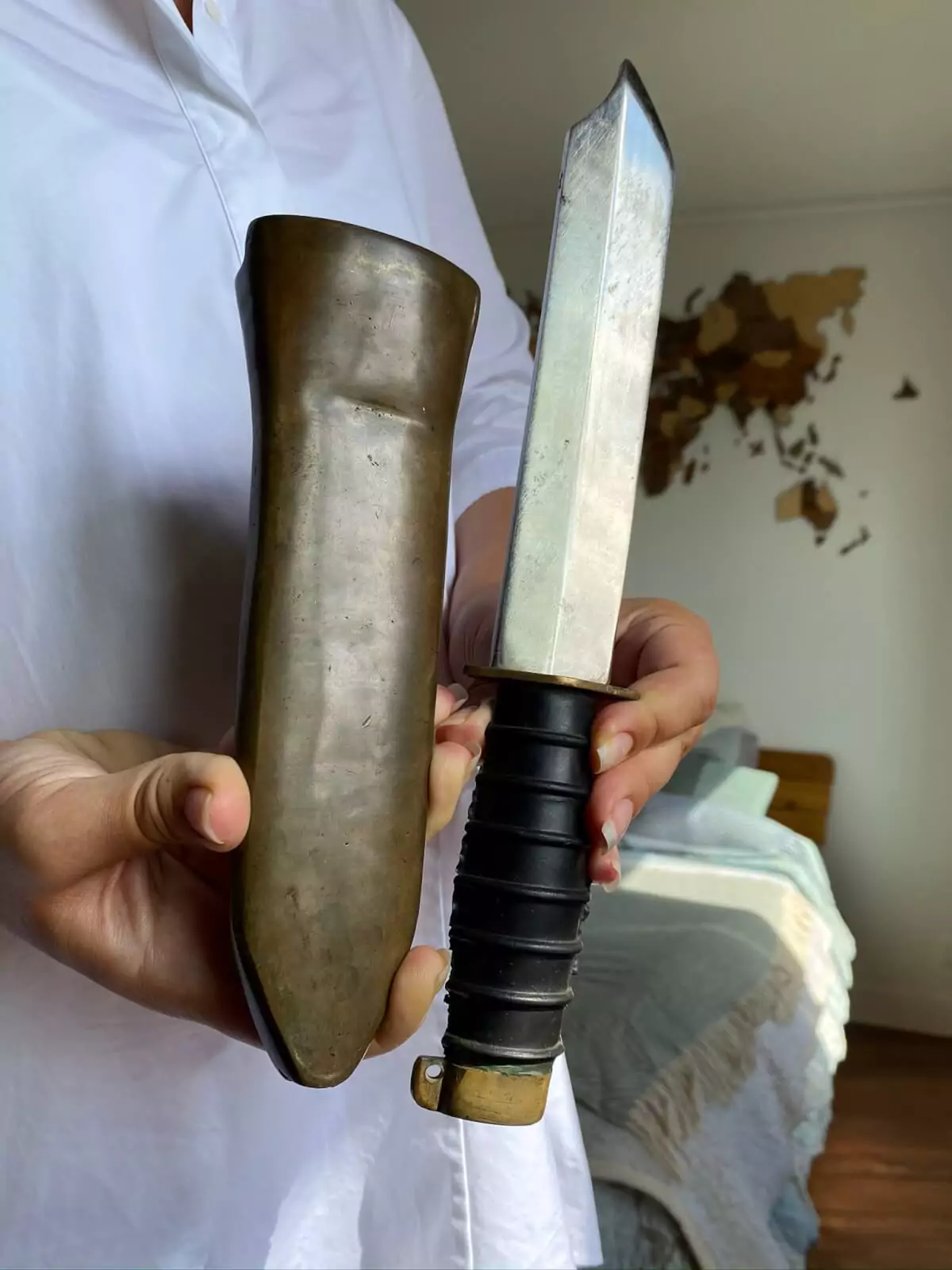
The NV-1 is the knife of the УВС-50, model 1950. It was a compulsory accessory of all Soviet diving equipment. Military factory No. 28 made it for the Navy.
Overall length 332 mm, blade 200 mm by 38 mm, thickness 7.5 mm. The knife weighs 400 g and its brass sheath 900 g. The handle is rubber, the guard and the pommel stamped brass. For mine-clearance divers, the factory also produced a non-magnetic variant with a bronze blade.
NV-1 with a bronze blade, non-magnetic, with its brass sheath.
NV-1 with a steel blade and a brass sheath, 1960s or 1970s.
This knife is not copied.
Instruments and the light diver
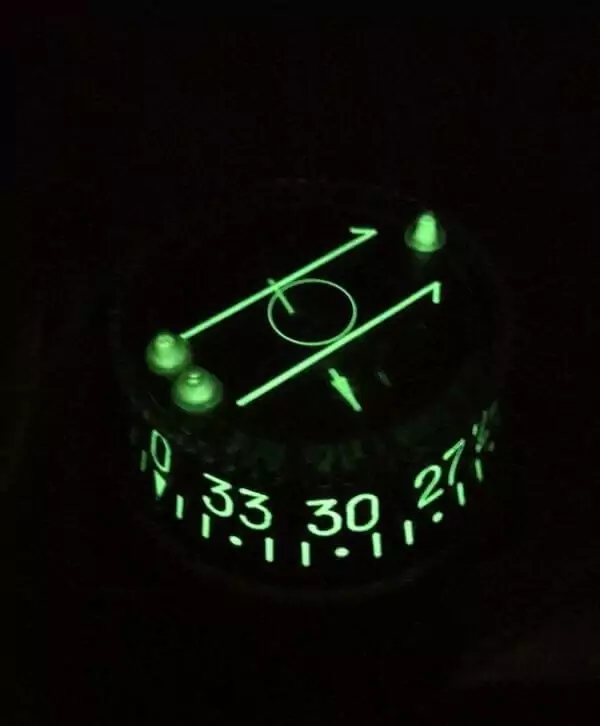
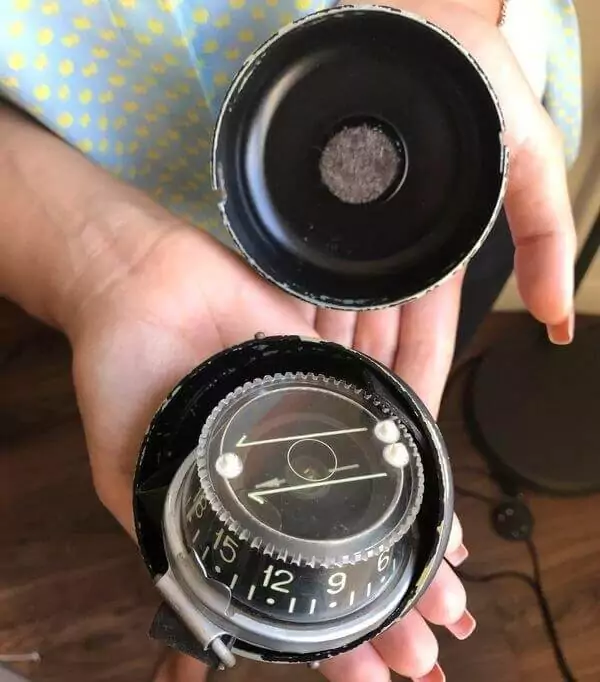
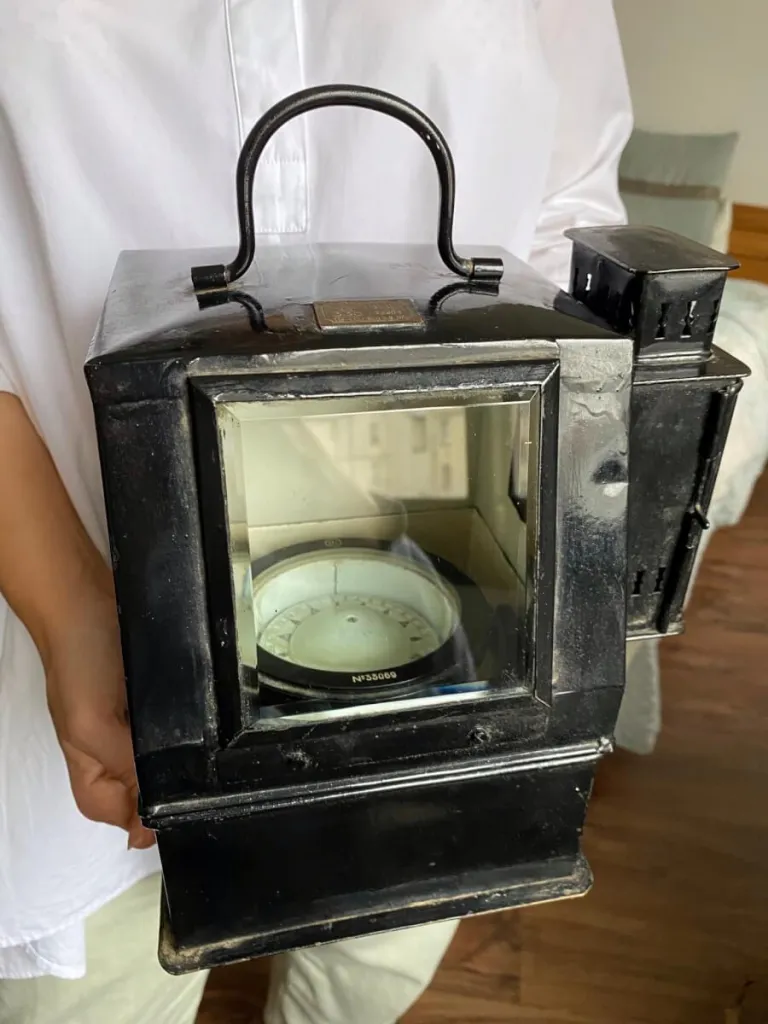
The Navy equipped its divers with instruments. The KNM compass, fluorescent, was issued from the 1960s to the 1990s. It lets the diver find his bearings underwater.
The KNM compass: fluorescent dial.
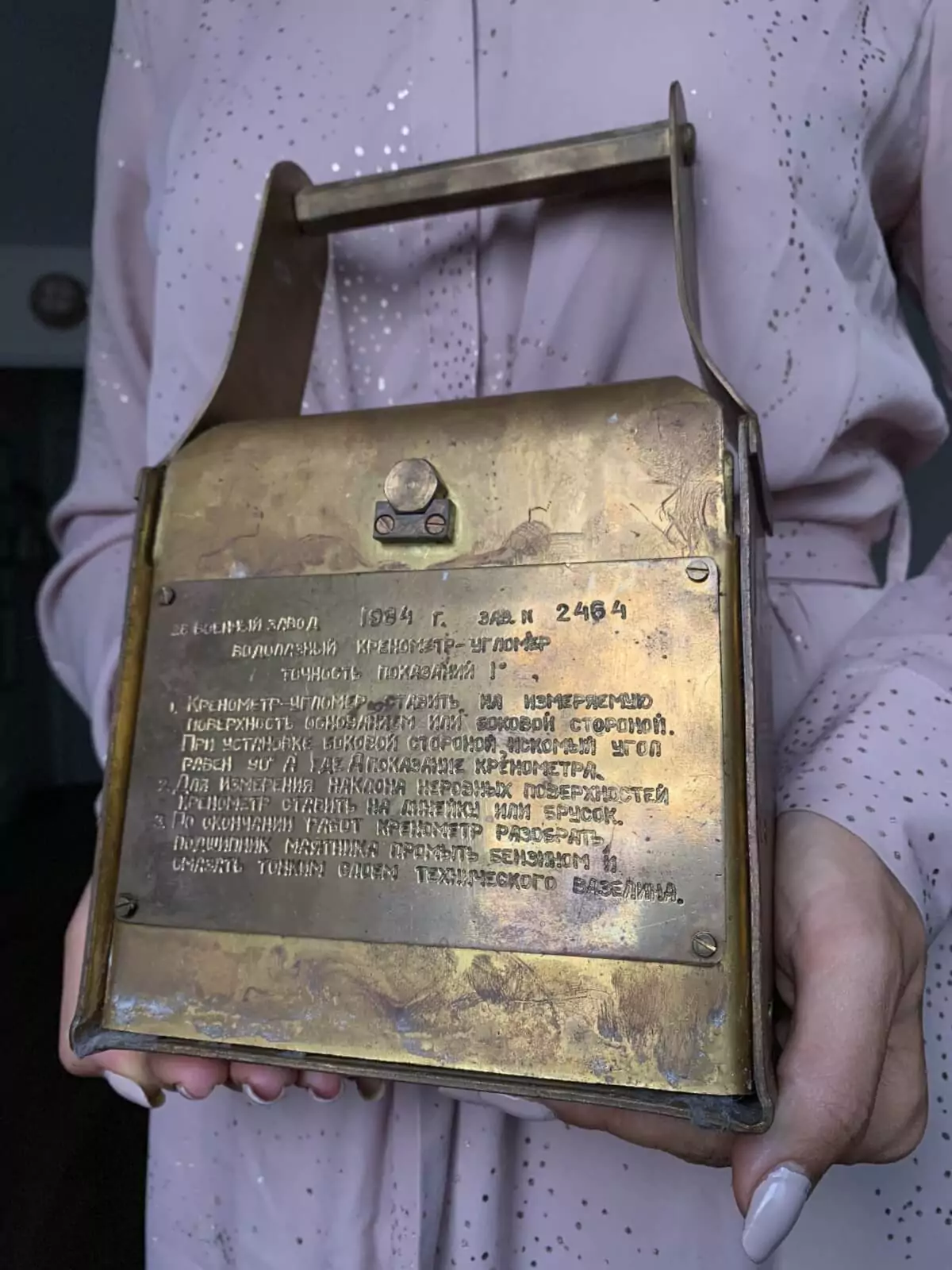
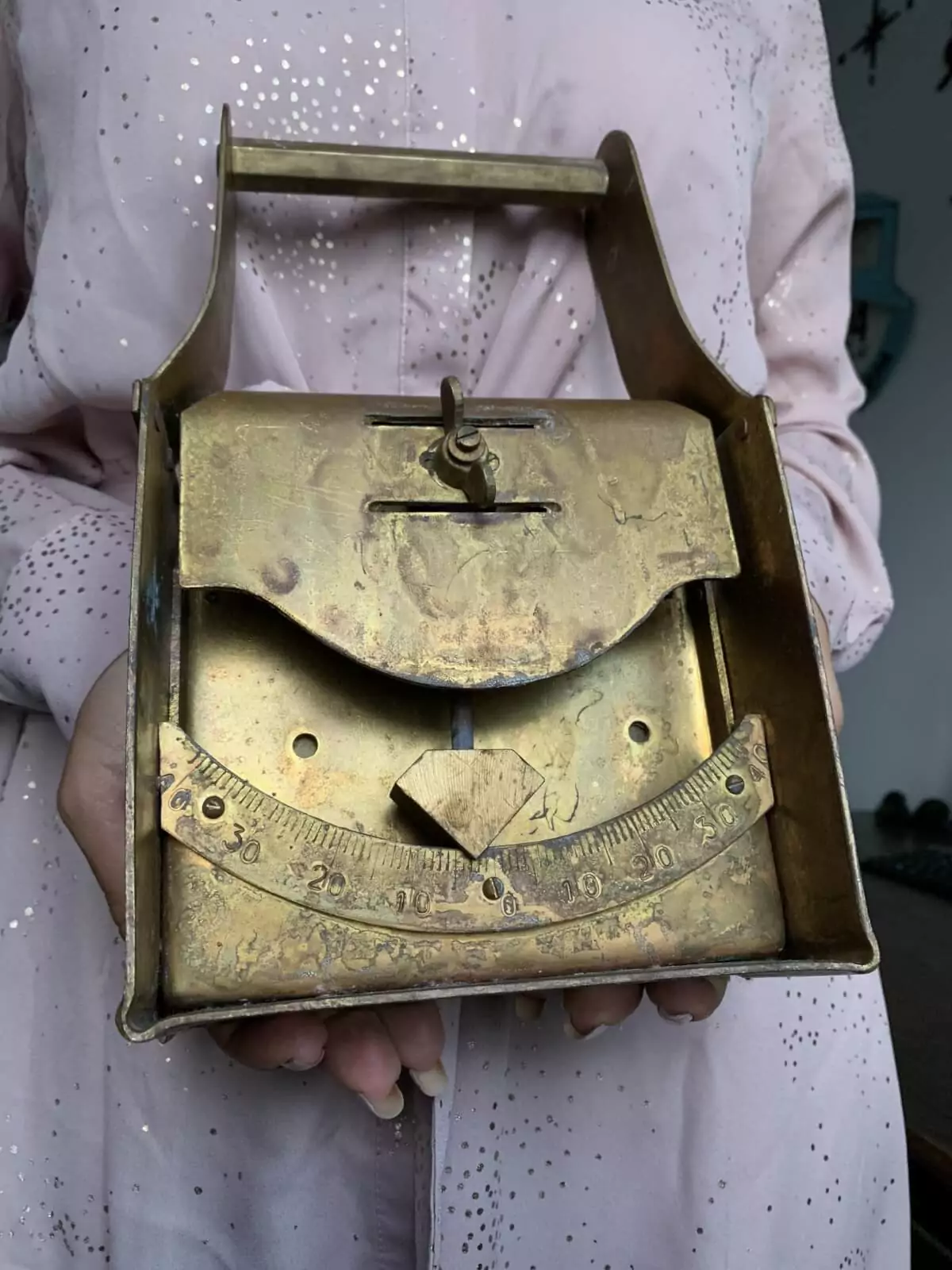
The heavy diver’s inclinometer measures the slope of a surface during underwater work. The one in the shop dates from 1984, comes from factory No. 28, and is made of brass with bronze rivets. The operating instructions are on the back.
Heavy diver’s inclinometer: the operating instructions are on the back.
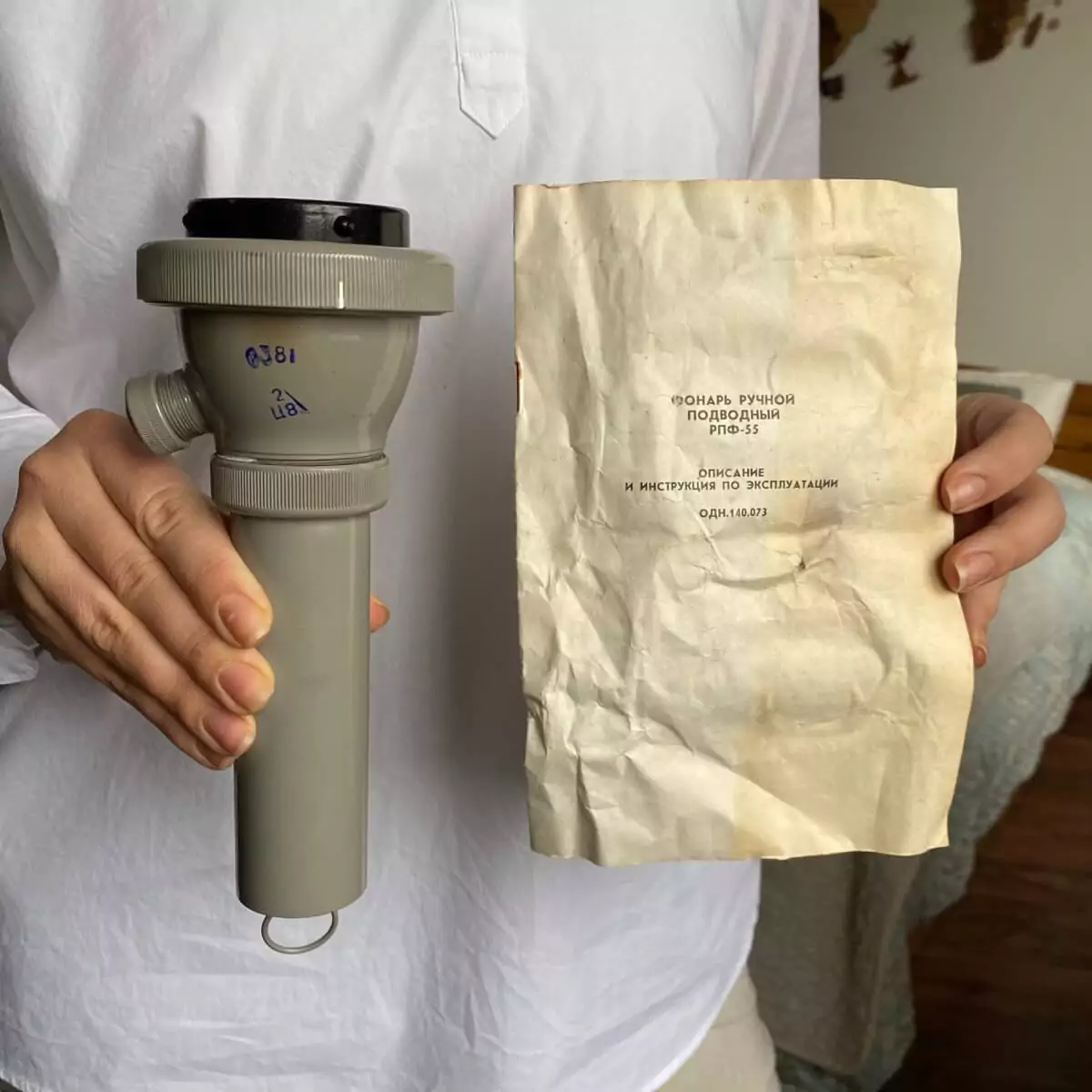
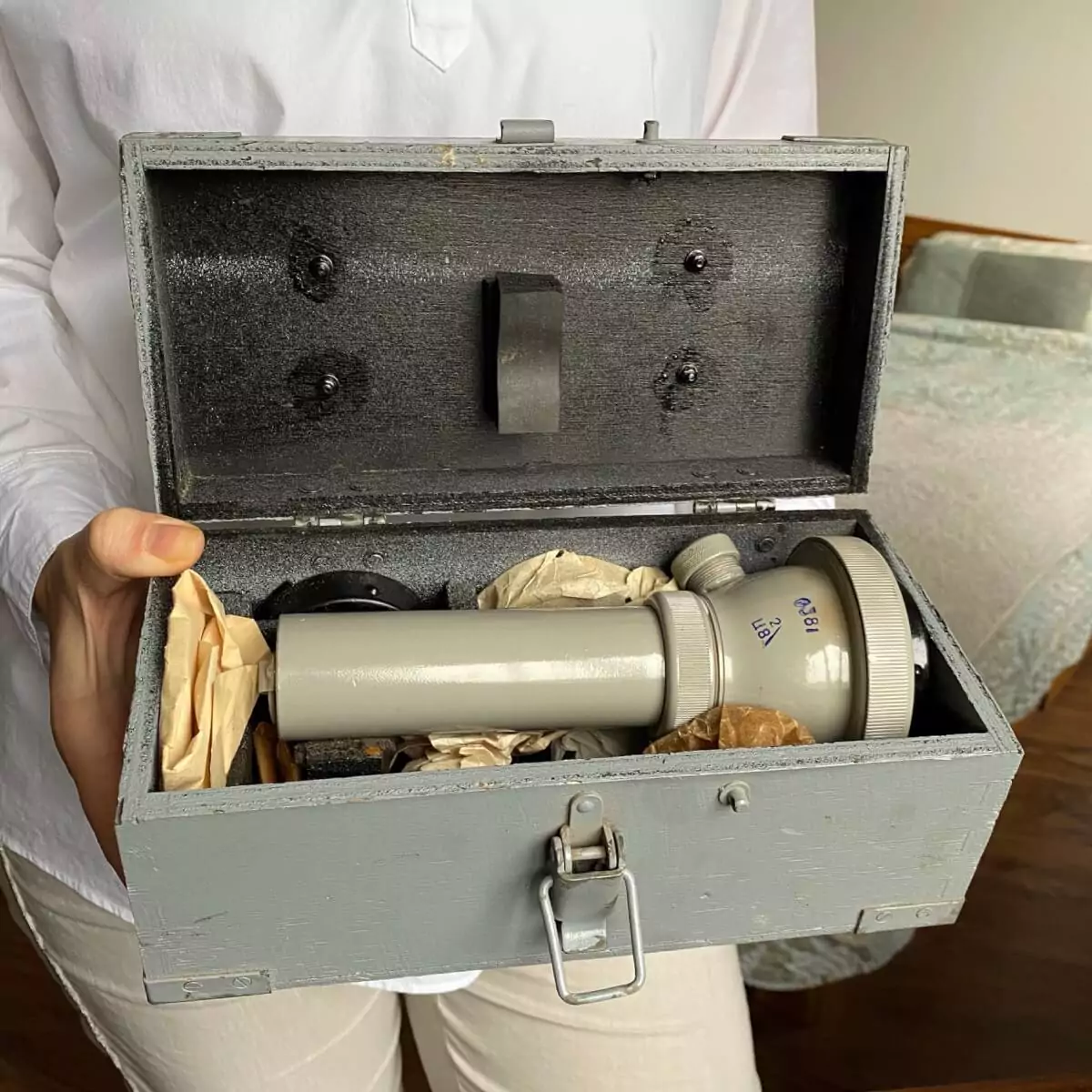
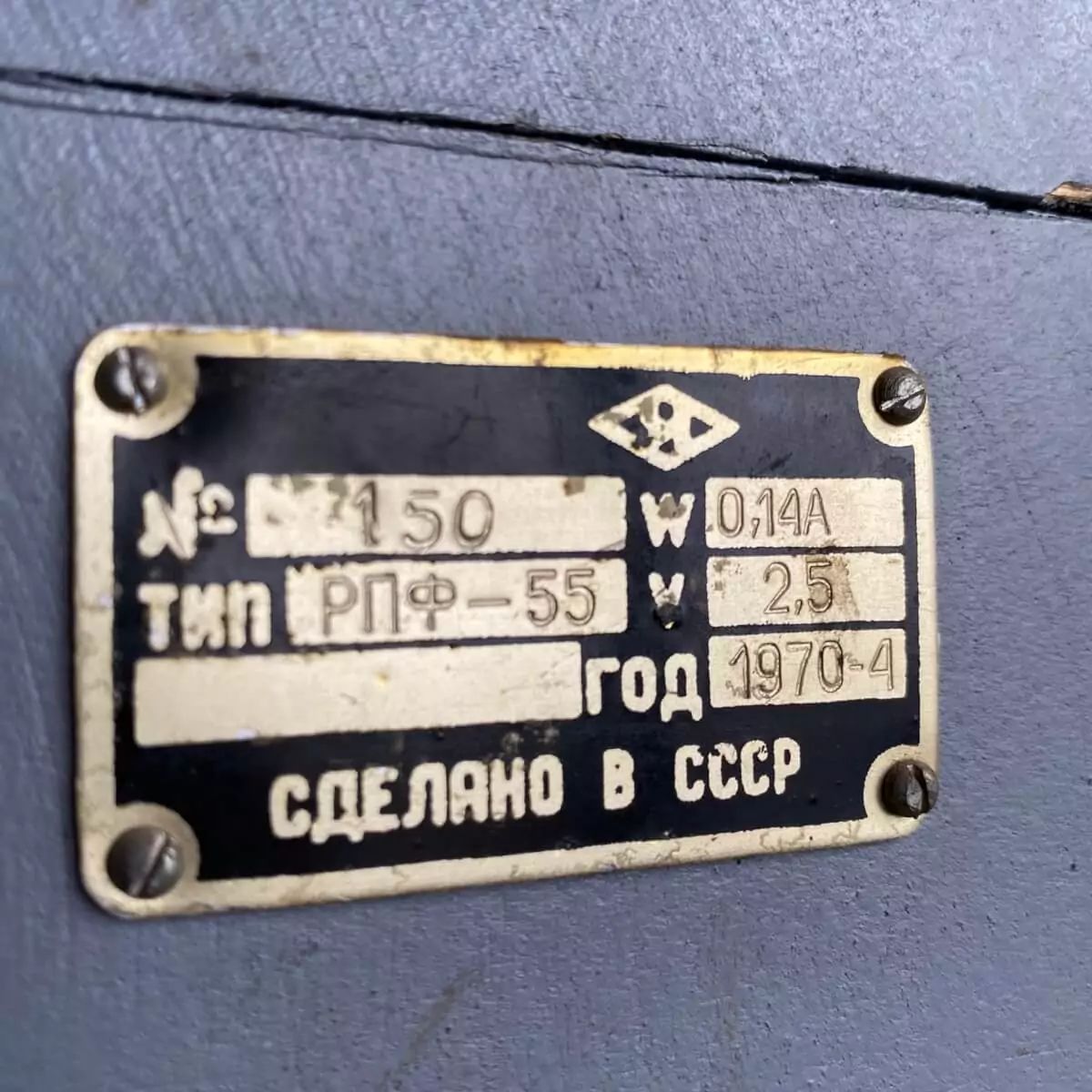
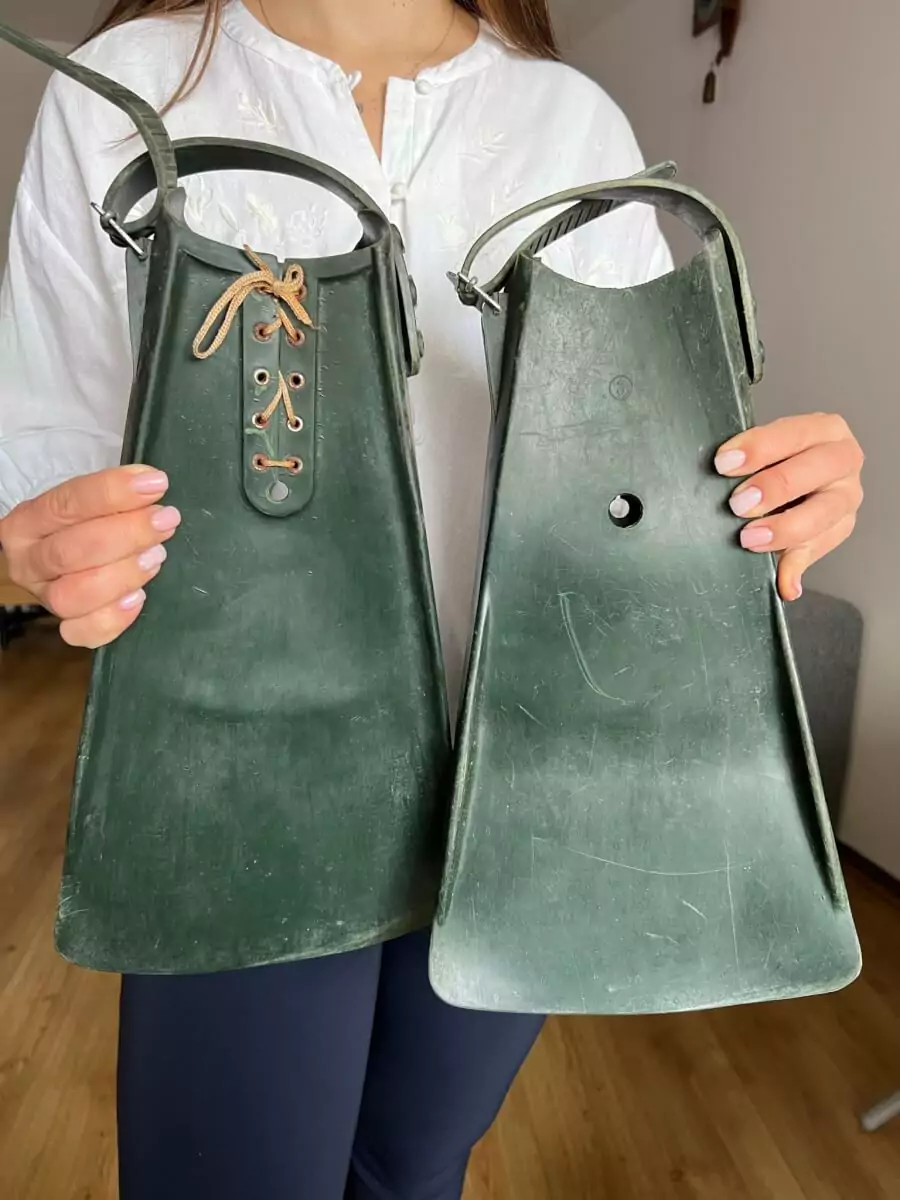
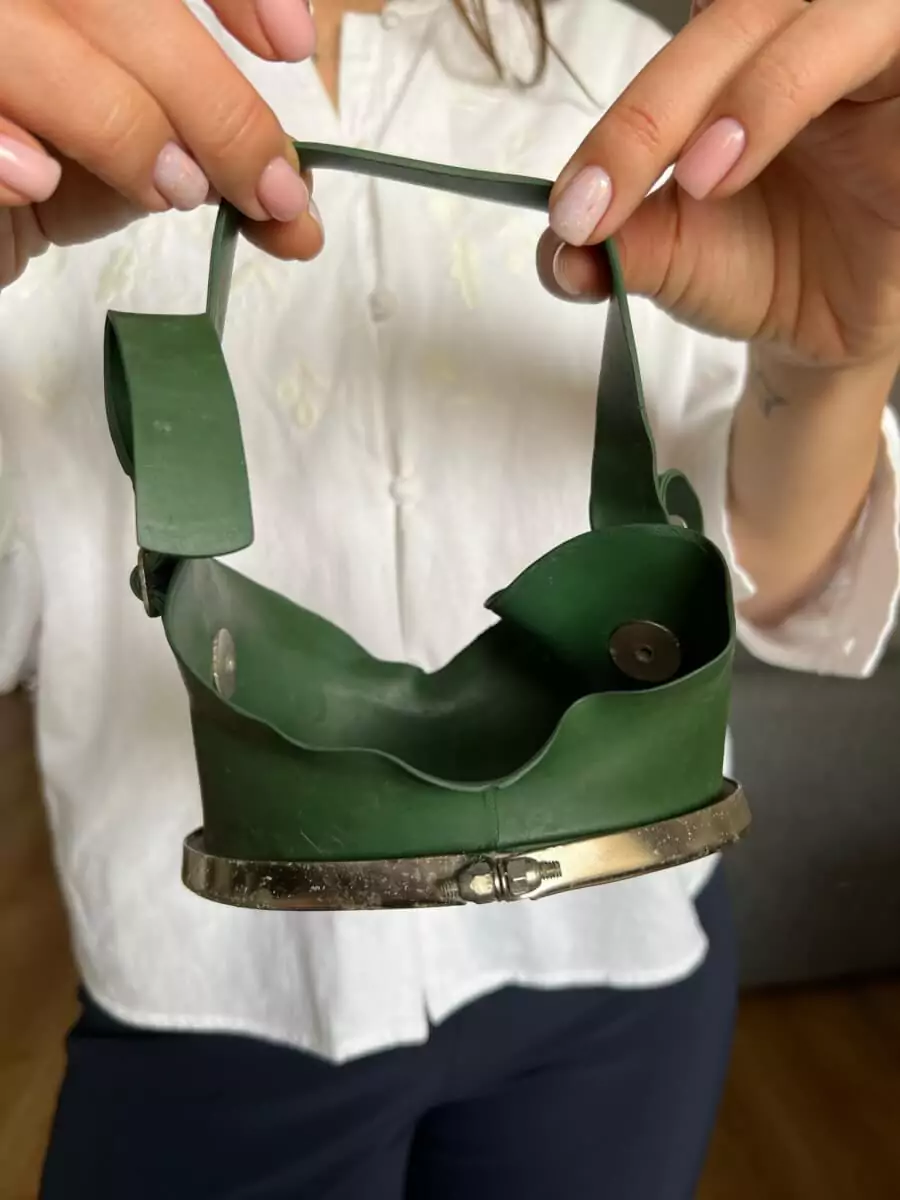
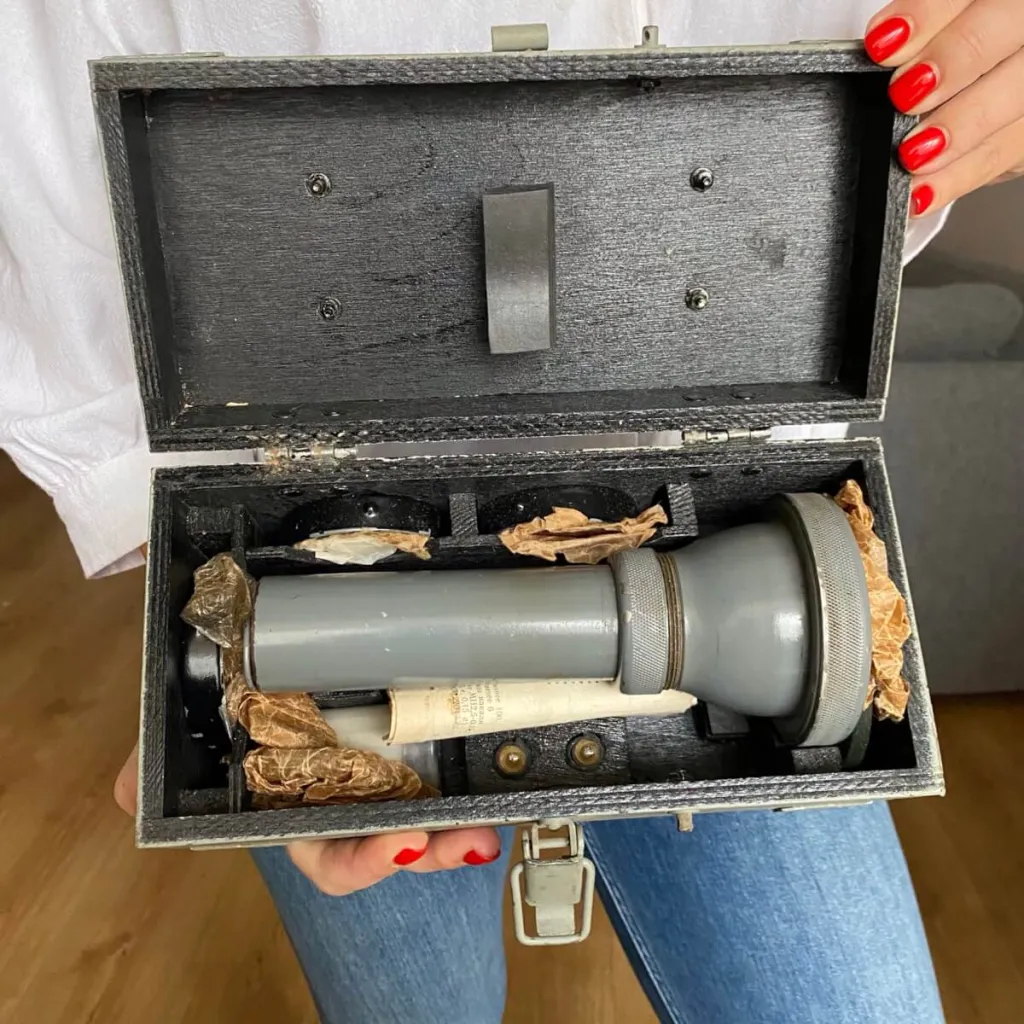
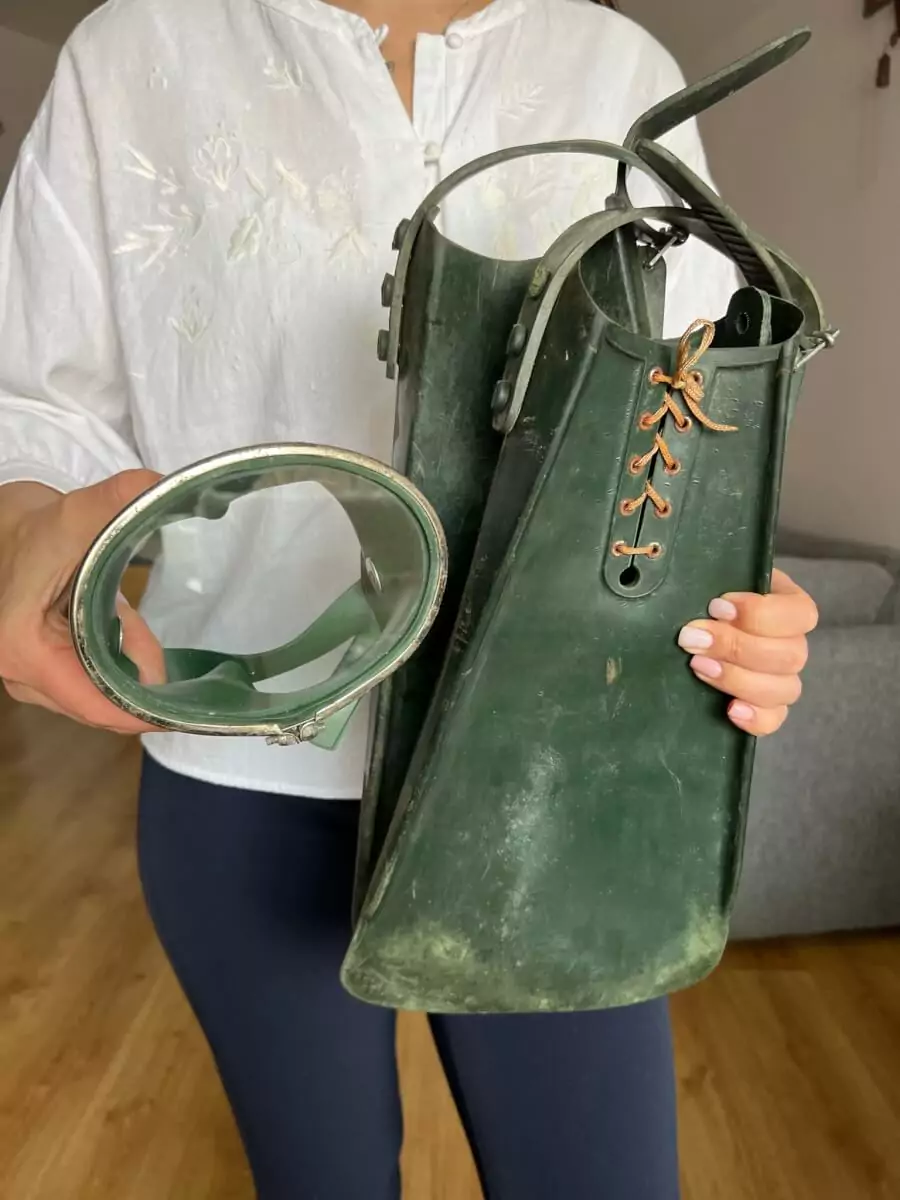
The light diver has his own equipment. The RPF-55 lamp, made in 1970, lights up to 30 metres underwater, steady or flashing. It weighs 800 g without batteries and comes in a wooden box. A mask and fins set for the military light diver, from the 1980s, never used, completes the picture.
The RPF-55 lamp with its instruction sheet.
In its wooden box.
Plate of the RPF-55 lamp, 1970.
The fins of the set.
The mask of the set.
The diver’s watch
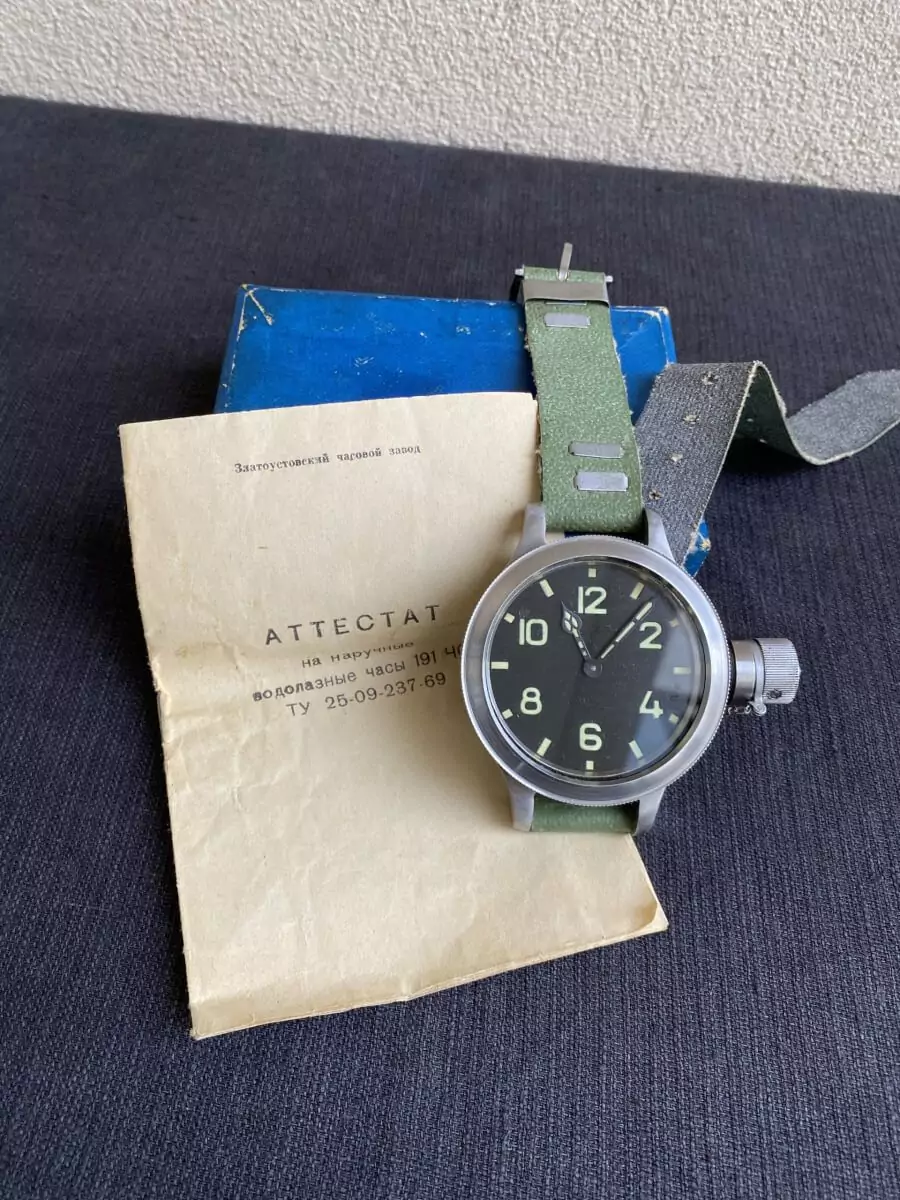
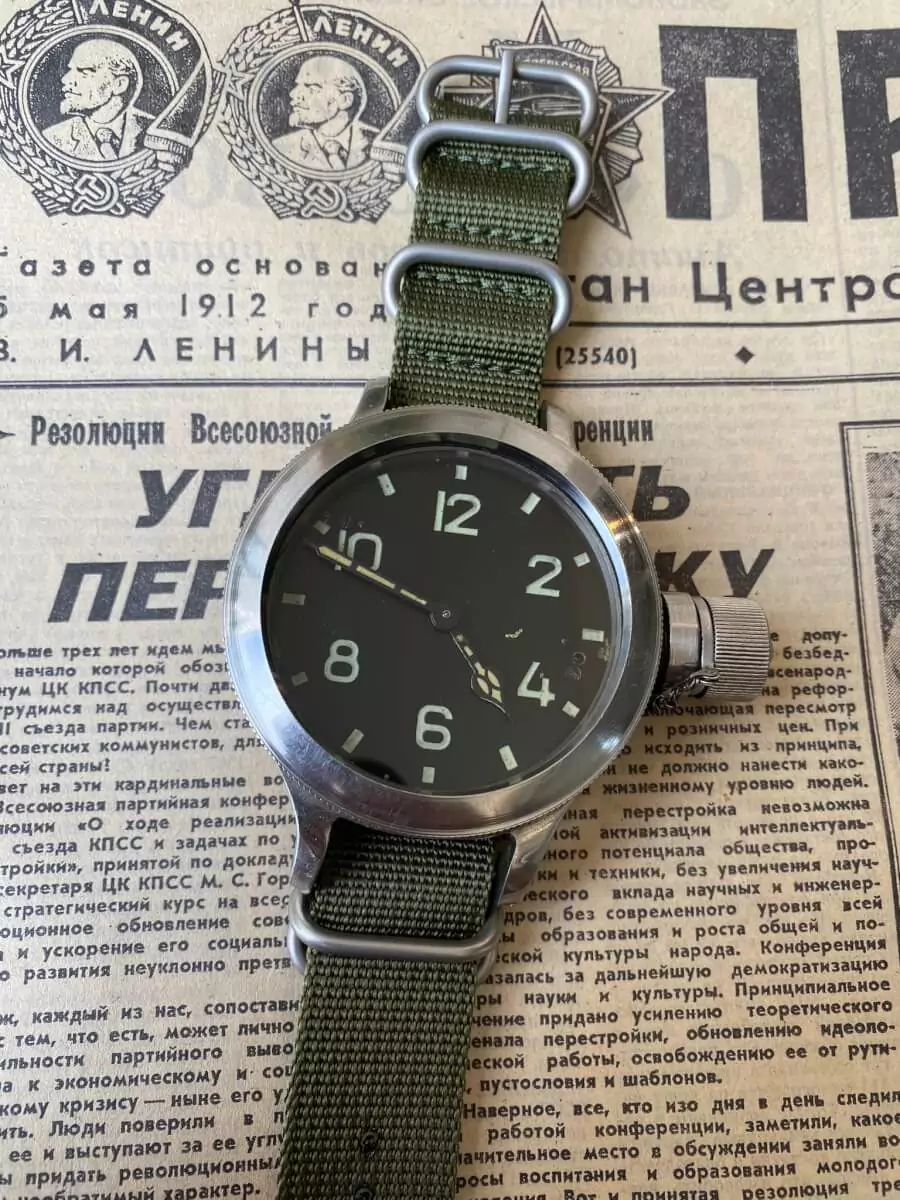
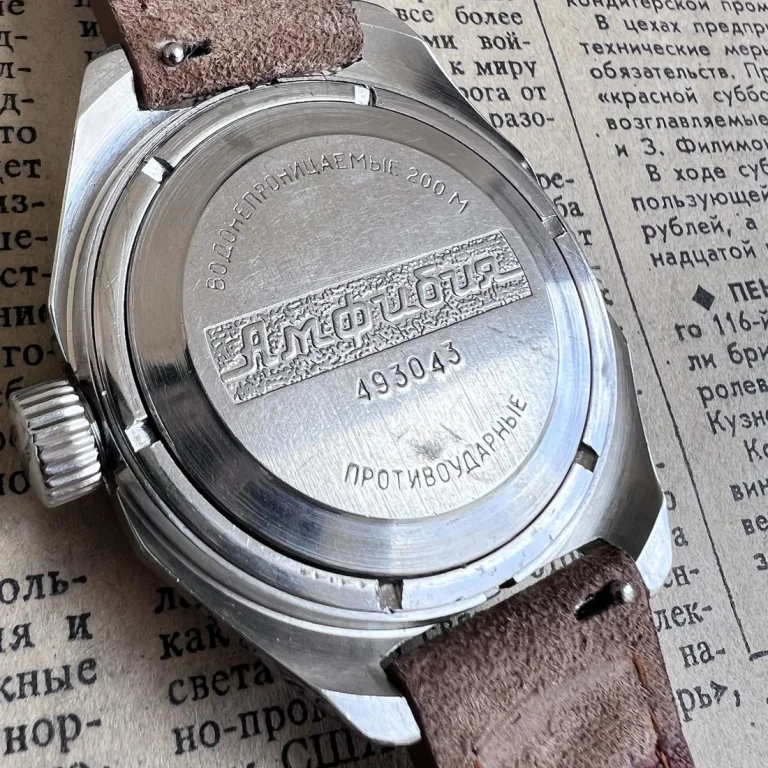
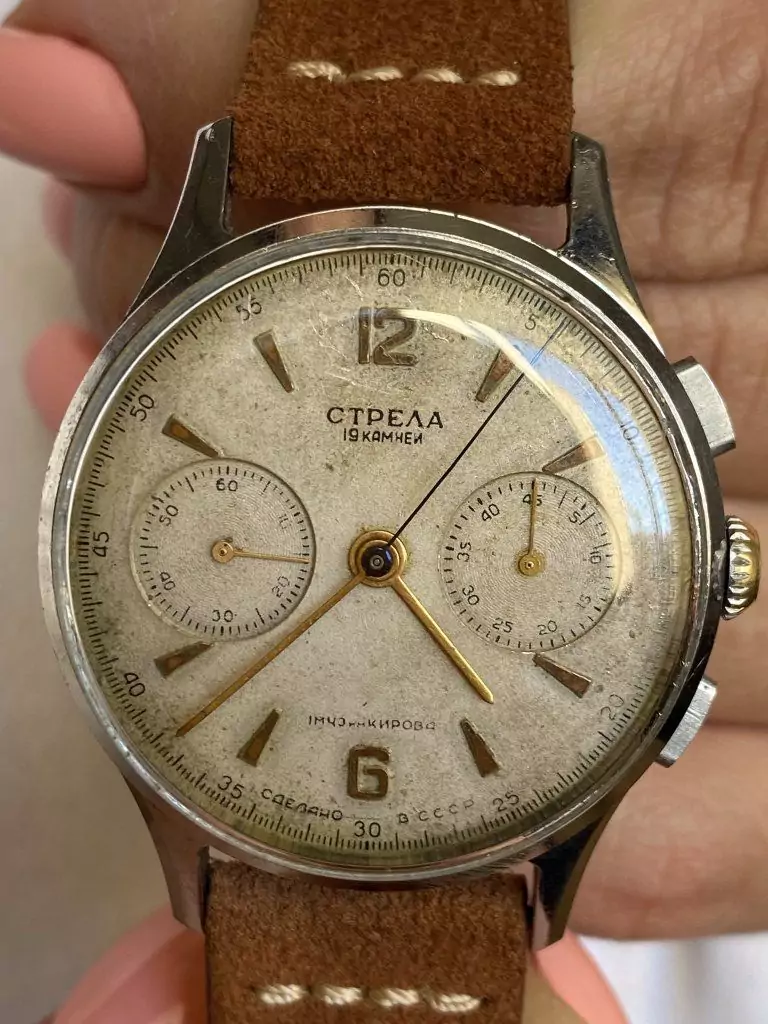
The 191ChS is the heavy diver’s watch, made in Zlatoust. Its one-piece stainless steel case measures 60 mm without the crown and weighs about 250 grams. The certificate of a new 191ChS from 1974 gives an accuracy of plus or minus one minute a day, at least thirty hours of running time, and water resistance of 3 kg/cm² for one hour at most.
The 191ChS No. 1317, new old stock, with its certificate and its box.
It is a subject of its own: fakes and remakes exist, almost by the dozen. This watch deserves an article to itself. A serviced 191ChS is also available.
Before you buy
For helmets, there are no serious fakes. The risk is helmets made in the 2000s: no patina, lighter weight, less carefully worked details. Check the plate, the weight, and the finish of the fittings and viewports.
The NV-1 knife is not copied. For the 191ChS watch, it is the opposite.
The most important thing is still to do thorough research before buying. Compare the helmet with several examples. Rely on collectors’ sites and buying guides.
The ДП-5В (DP-5V) is the field radiometer of Soviet civil defence: a green Bakelite console, a probe with a rotating gamma, beta and check-source shield, headphones and a manual that explains operation and maintenance. The one in this article served in an industrial bakery in Chișinău and was serviced in March 1991. Its owner shared his photos and documents with us, and we turned them into a tool that lets you operate it on screen, step by step.
The Moscow Games, from 19 July to 3 August 1980, boycotted by some sixty countries, produced more objects than any Soviet event: a bear cub, Misha, drawn by Viktor Chizhikov, an emblem made of running tracks, five thousand torches, watches from every factory, platinum coins, rings, tea glass holders, posters. This guide tells the story of the Games and reviews the objects, with the marks that authenticate them and the prices.
The 3017 chronograph of the First Moscow Watch Factory carries a five-digit number on the balance cock. The most common dating method reads it as a single series, from 1959 to 1979. Four factory passports show there are two, and that the same number can point to two watches made ten years apart. Here is how to read the number, the dial, the logo and the bridge, with a decoder to date your Strela, Poljot or Sekonda.
This website uses cookies to improve your experience while you navigate through the website.
Out of these cookies, the cookies that are categorised as necessary are stored on your browser as they are essential for the working of basic functionalities of the website.
We also use third-party cookies that help us analyse and understand how you use this website.
These cookies will be stored in your browser only with your consent.
You also have the option to opt out of these cookies.
But opting out of some of these cookies may affect your browsing experience.
Necessary cookies are absolutely essential for the website to function properly. This category only includes cookies that ensure basic functionalities and security features of the website. These cookies do not store any personal information.
Cookies that are not strictly necessary for the website to work and that are used specifically to collect personal data through analytics, ads and other embedded content are called non-necessary cookies. User consent is required before these cookies run on the website.
✕
Soviet in Paris
Offline right now. Leave your message and your email, we reply within 24 hours.
Hello 👋 A question about an item, an order or shipping? Write to us.
Your email is used only to reply to you.
Subscribe to our newsletter and get 10% off your first order.
Subscribe
★ New pieces before anyone else
★ New blog articles
★ Soviet in Paris news and updates
Join the Party
10% off your first order
Receive your welcome card and our next arrivals.
Your code appears here and is also sent to you by email. You can leave the Party in one click, at any time.