The ДП-5В (DP-5V) is the field radiometer of Soviet civil defence: a green Bakelite console, a probe with a rotating gamma, beta and check-source shield, headphones and a manual that explains operation and maintenance. The one in this article served in an industrial bakery in Chișinău and was serviced in March 1991. Its owner shared his photos and documents with us, and we turned them into a tool that lets you operate it on screen, step by step.
NOVEMBER 2026•9 MINUTE READ
by Marwen Yahyaoui
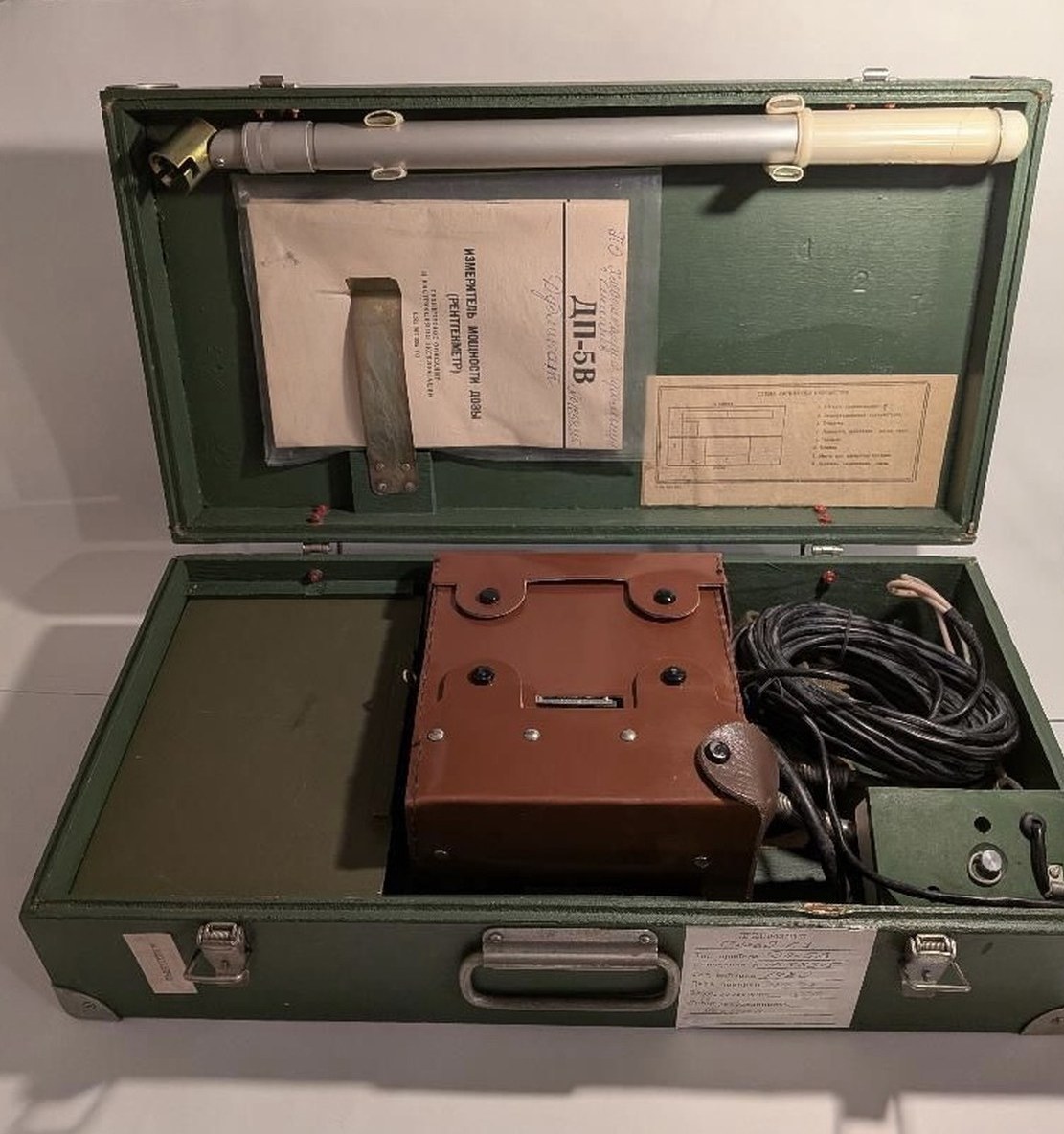
Mr Vanoli’s ДП-5В in its transport chest: the console in its case, the probe, the headphones, the extension rod and the documents. Photo: Mr Vanoli, collector.
The instrument arrived from Moldova complete, in its green chest closed by two locks. On the cover of its logbook (формуляр, formulyar), someone wrote in blue ink « ПО «Хлебопекарной пром.» г. Кишинев » (PO Khlebopekarnoy prom., Kishinev), meaning the production association of the bakery industry of Chișinău, and below it « Дубликат » (duplicate): this logbook replaces an earlier copy. According to Mr Vanoli, the radiometer was used at the factory to check the radioactivity of grain and wheat.
The last entry in the logbook is dated 16 March 1991: maintenance with repair « of the third category of complexity », carried out by a specialised civil defence workshop and signed by a dosimetry technician. Nine months later, the USSR no longer existed. The same page gives the value the instrument must read on its check source, 26 milliroentgens per hour on the ×10 range: the tool below uses it.
A radiometer for civil defence
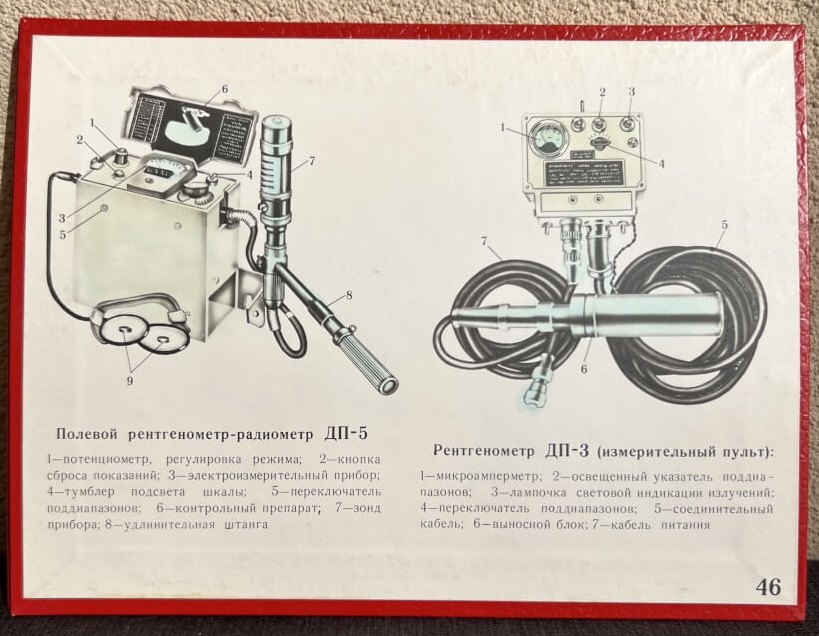
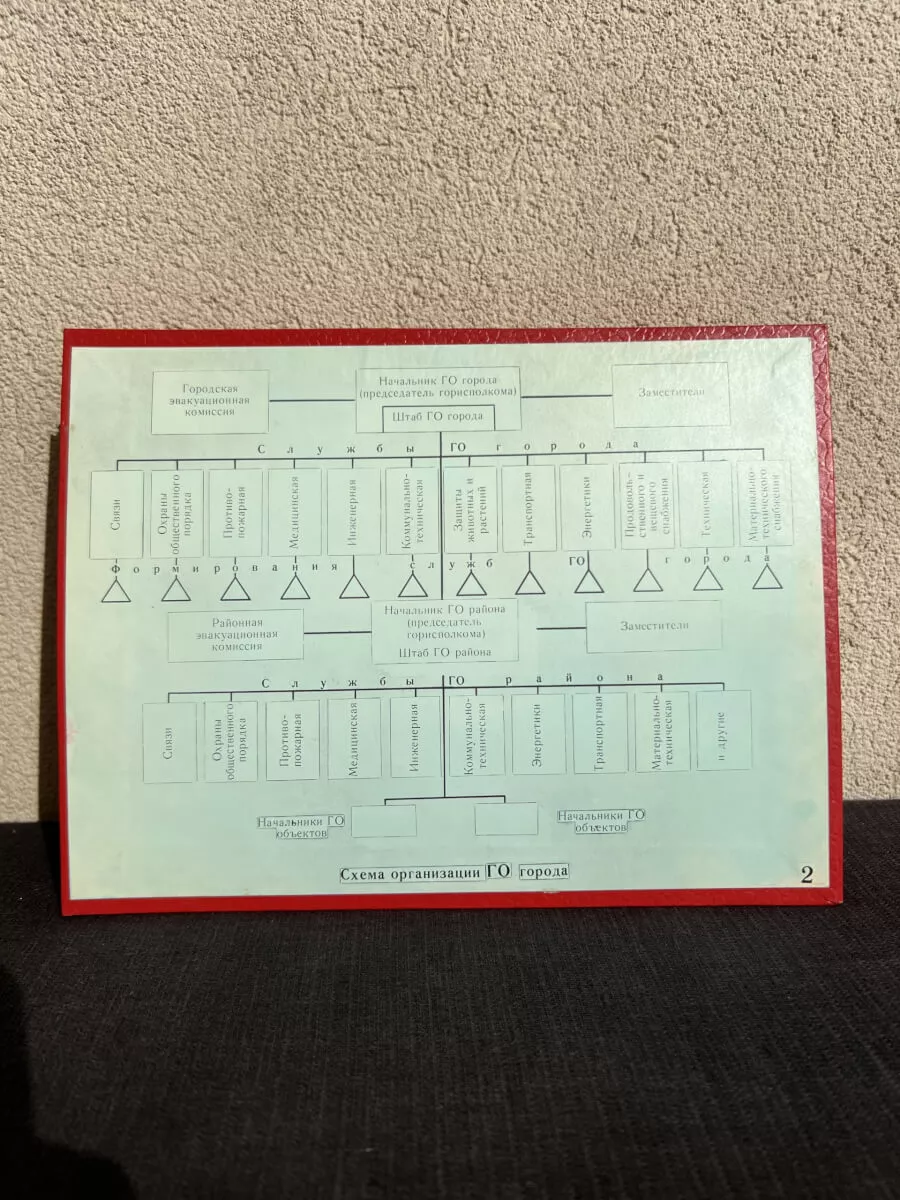
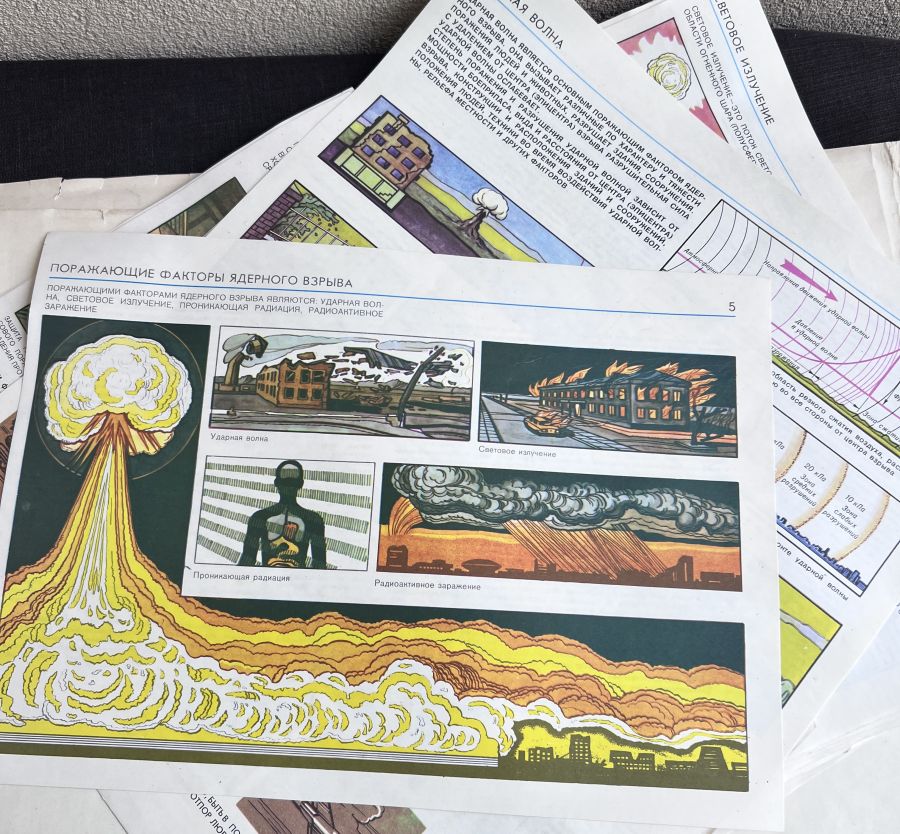
The ДП-5В (DP-5V) is called in its manual « измеритель мощности дозы (рентгенметр) » (izmeritel moshchnosti dozy, rentgenmetr), a dose rate meter. It belongs to the DP-5 family of the army and civil defence, the field radiometers shown on the civil defence card posters. These instruments were checked on dedicated rigs: the Soviet state register sheet for the УПДП-1 (UPDP-1) calibration rig, registered in 1987, lists the DP-5A, DP-5B and DP-5V among the instruments it calibrates.
Card no. 46 of a civil defence series printed in Kyiv in 1977: the DP-5 field radiometer, on the left.
The DP-5V measures from 0.05 milliroentgen per hour to 200 roentgens per hour, in six ranges. It was designed for radiological reconnaissance after a nuclear attack: its job is to tell whether ground, a vehicle, clothing or food is contaminated, not to measure natural background. Its operating ranges suit military use: it works from −50 to +50 °C, in the rain, and its probe can be dipped 50 cm under water.
What the chest contains
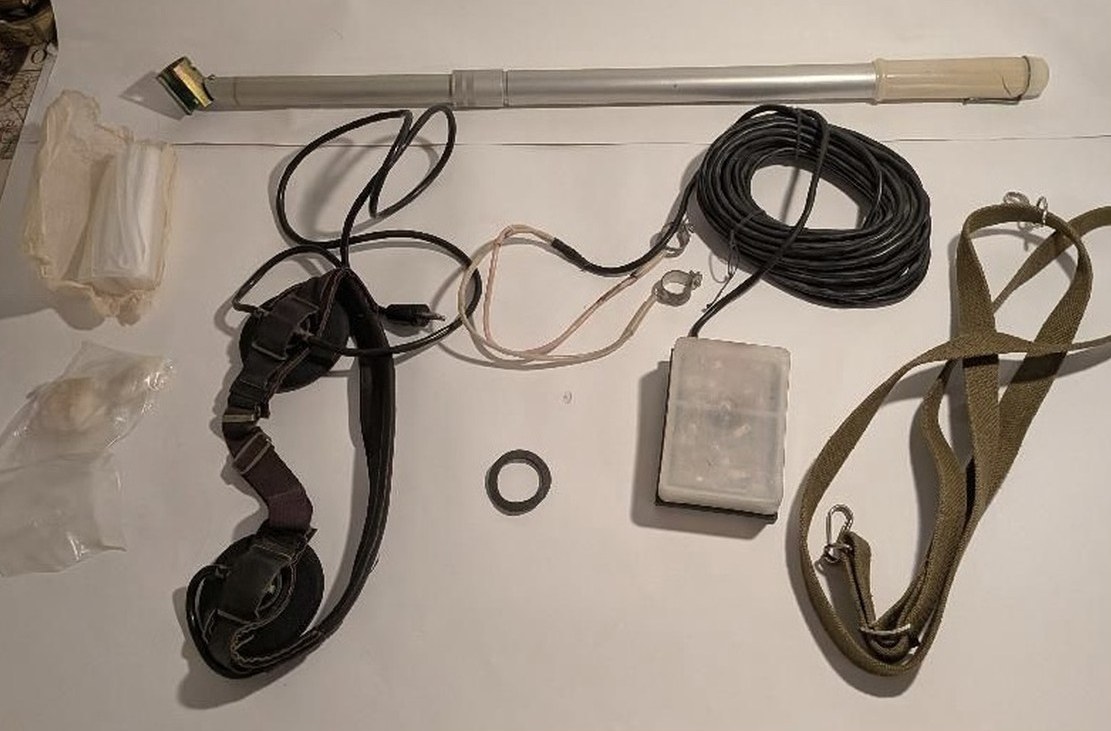
The manual lists the contents, and they are all in Mr Vanoli’s chest: the console in its leatherette case with two straps, the probe linked to the console by a 1.2 m cable, a telescopic extension rod of 45 to 75 cm, the ТГ-7М (TG-7M) headset with two small earpieces, a voltage divider with 10 m of cable to run the instrument from a 12 or 24 volt battery, ten polyethylene covers to protect the probe when measuring a liquid or loose material, a screwdriver, two bulbs and the documents. The three КБ-1 (KB-1) cells are on the list, with a note that the factory does not supply them.
The accessories: the extension rod, the probe covers, the headset, the voltage divider and its cable, the straps. Photo: Mr Vanoli, collector.
Complete, the chest weighs 8.2 kg at most, and the console alone, batteries included, 3.2 kg at most. The manual has it worn on the chest, held by the straps, in two positions: one for marching, one for work.
The console and the probe
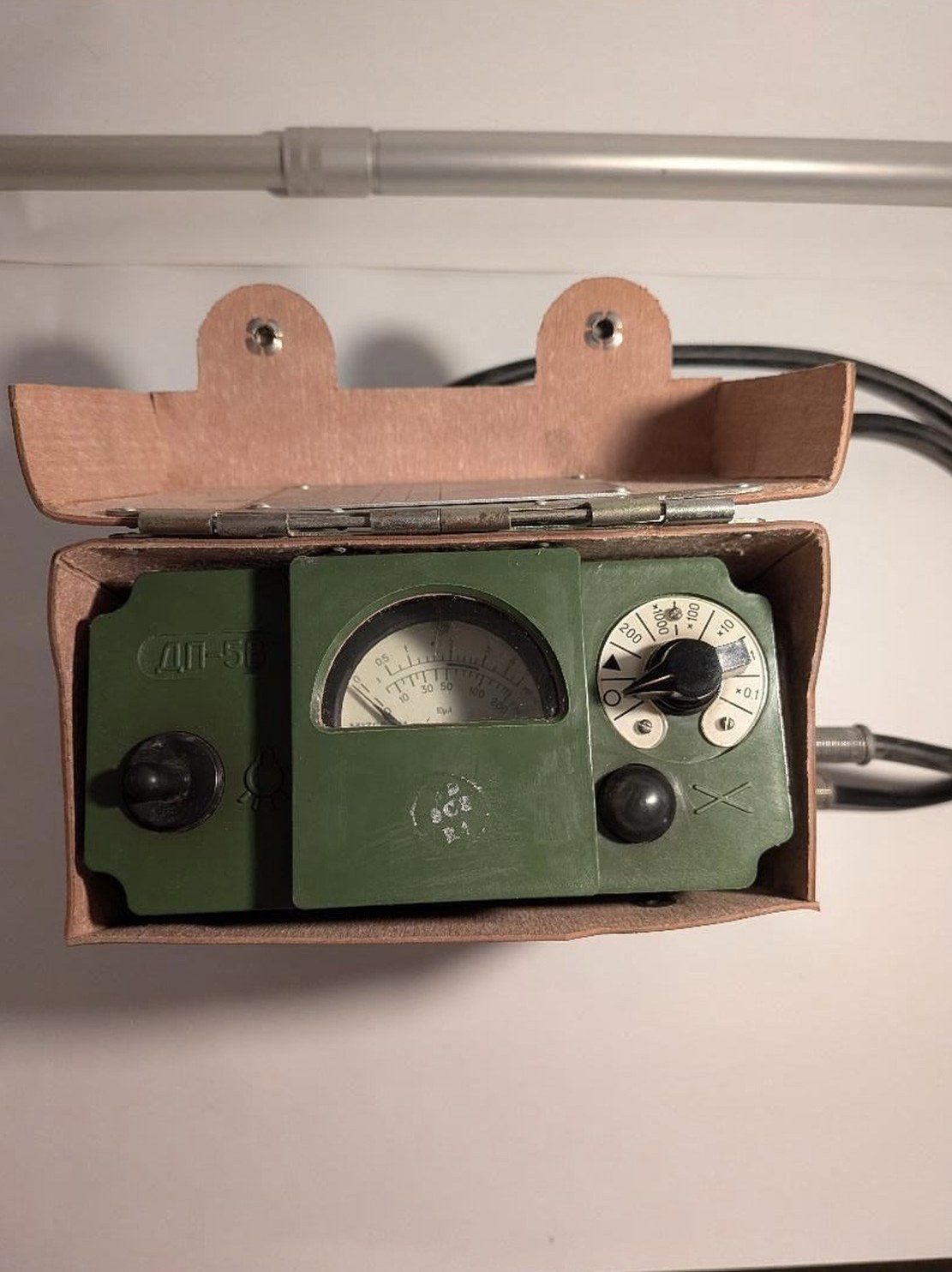
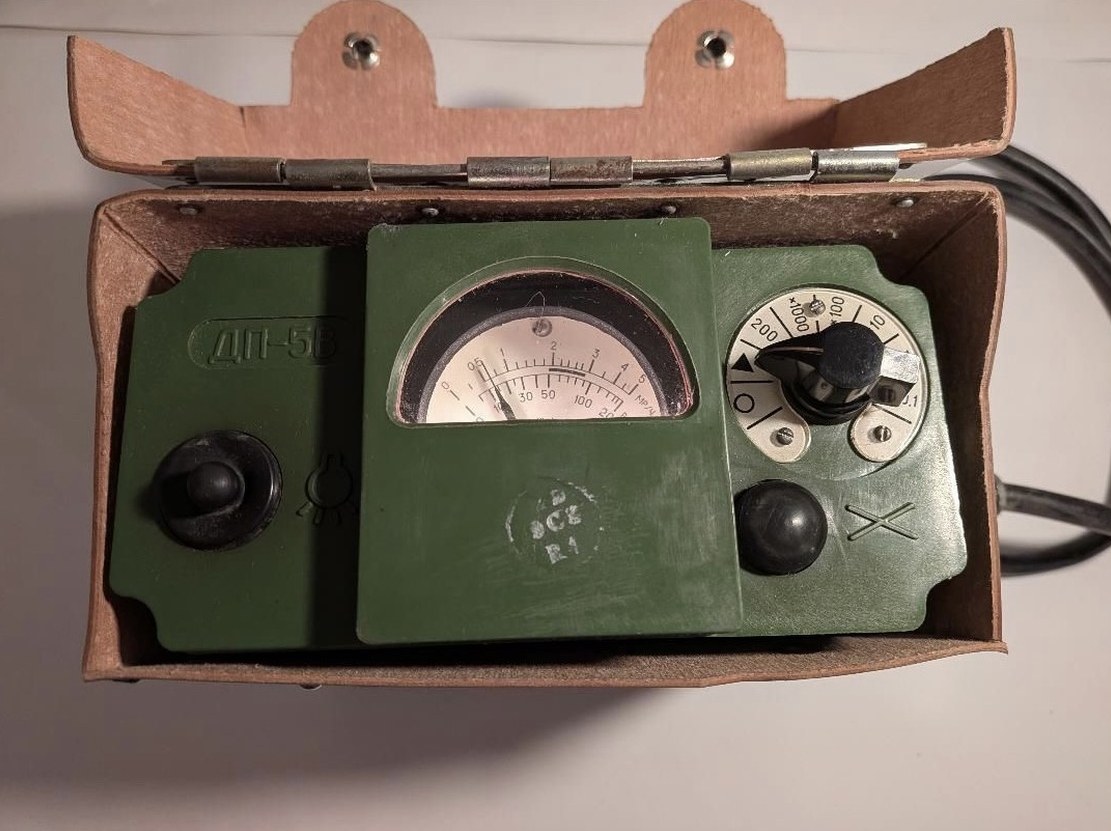
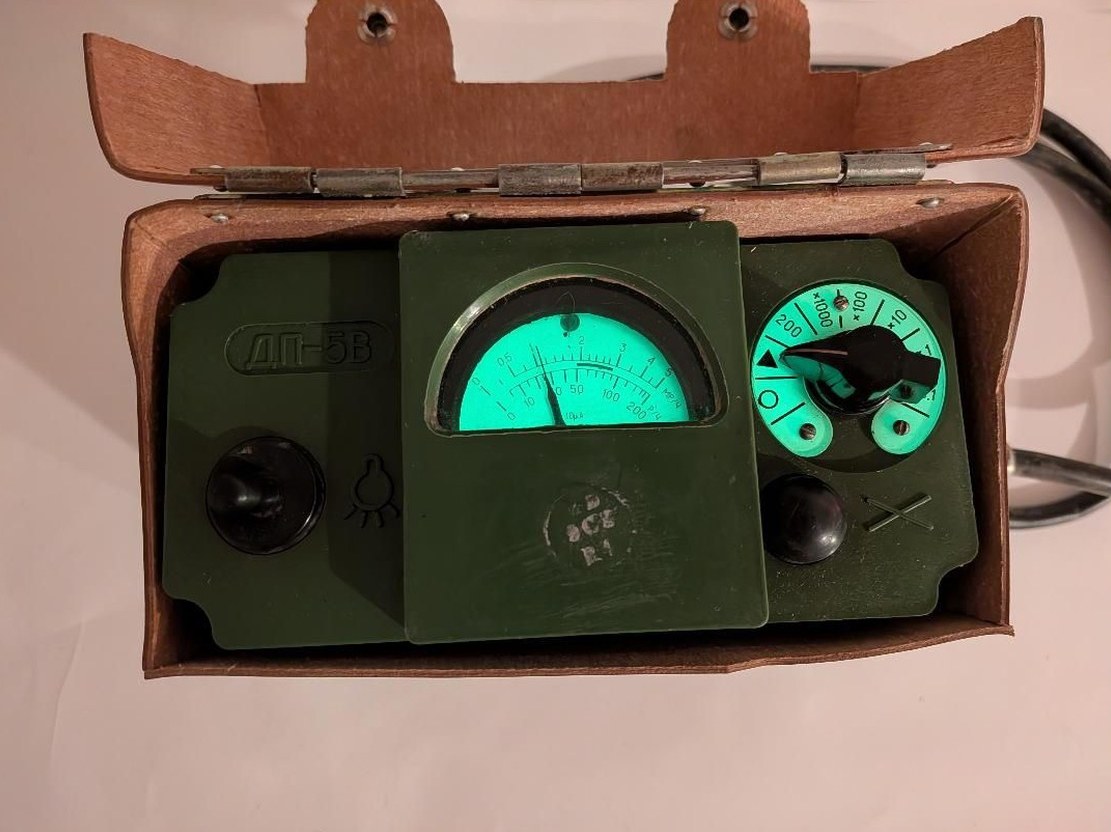
The console has four controls. On the left, the dial light switch. In the middle, a microammeter with two scales: the lower one from 0 to 200, for the first range, read directly in roentgens per hour; the upper one from 0 to 5, for the other five, multiplied by the range factor. On the right, the eight-position switch: О (off), ▲ (operating check), 200, ×1000, ×100, ×10, ×1 and ×0.1. Below it, the reset button, marked with a cross.
The console in daylight. Photo: Mr Vanoli, collector.
Bulb on, switch on ▲: the needle stops short of the black sector, the batteries are low. Photo: Mr Vanoli, collector.
The dial and the switch carry a luminous paint, not radium, that glows green after being charged with UV light or a torch: the instrument can be read at night when the bulb does not work. Photo: Mr Vanoli, collector.
Range
Position
Scale read
Measuring range
1
200
lower, 0 to 200
5 to 200 R/h
2
×1000
upper, 0 to 5
500 to 5000 mR/h
3
×100
upper, 0 to 5
50 to 500 mR/h
4
×10
upper, 0 to 5
5 to 50 mR/h
5
×1
upper, 0 to 5
0.5 to 5 mR/h
6
×0.1
upper, 0 to 5
0.05 to 0.5 mR/h
The working part of each scale is drawn as a solid line. The manual gives an error of 30% at most, and asks you to wait up to 45 seconds before reading. The headphones let you hear the pulses on every range except the first.
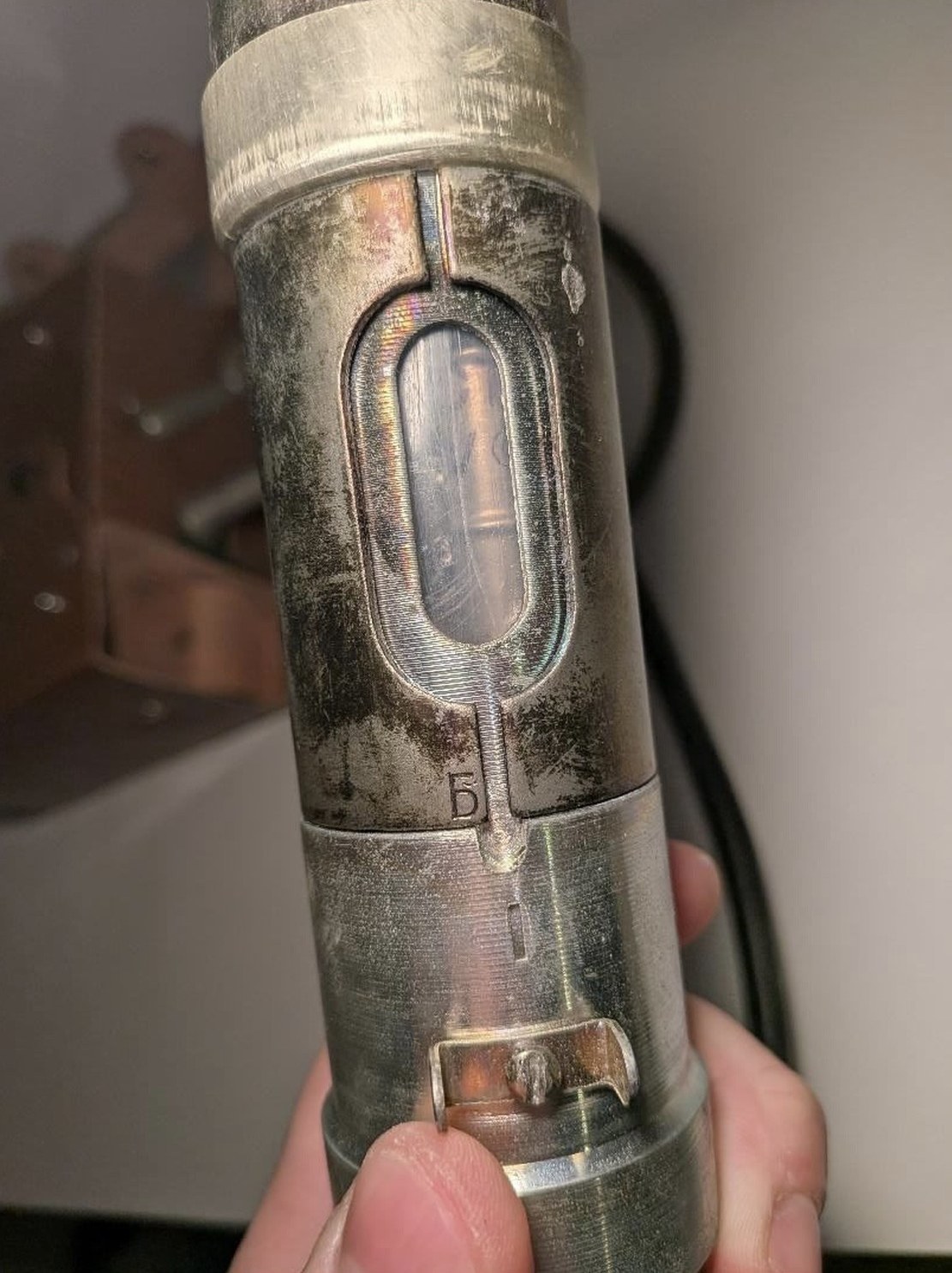
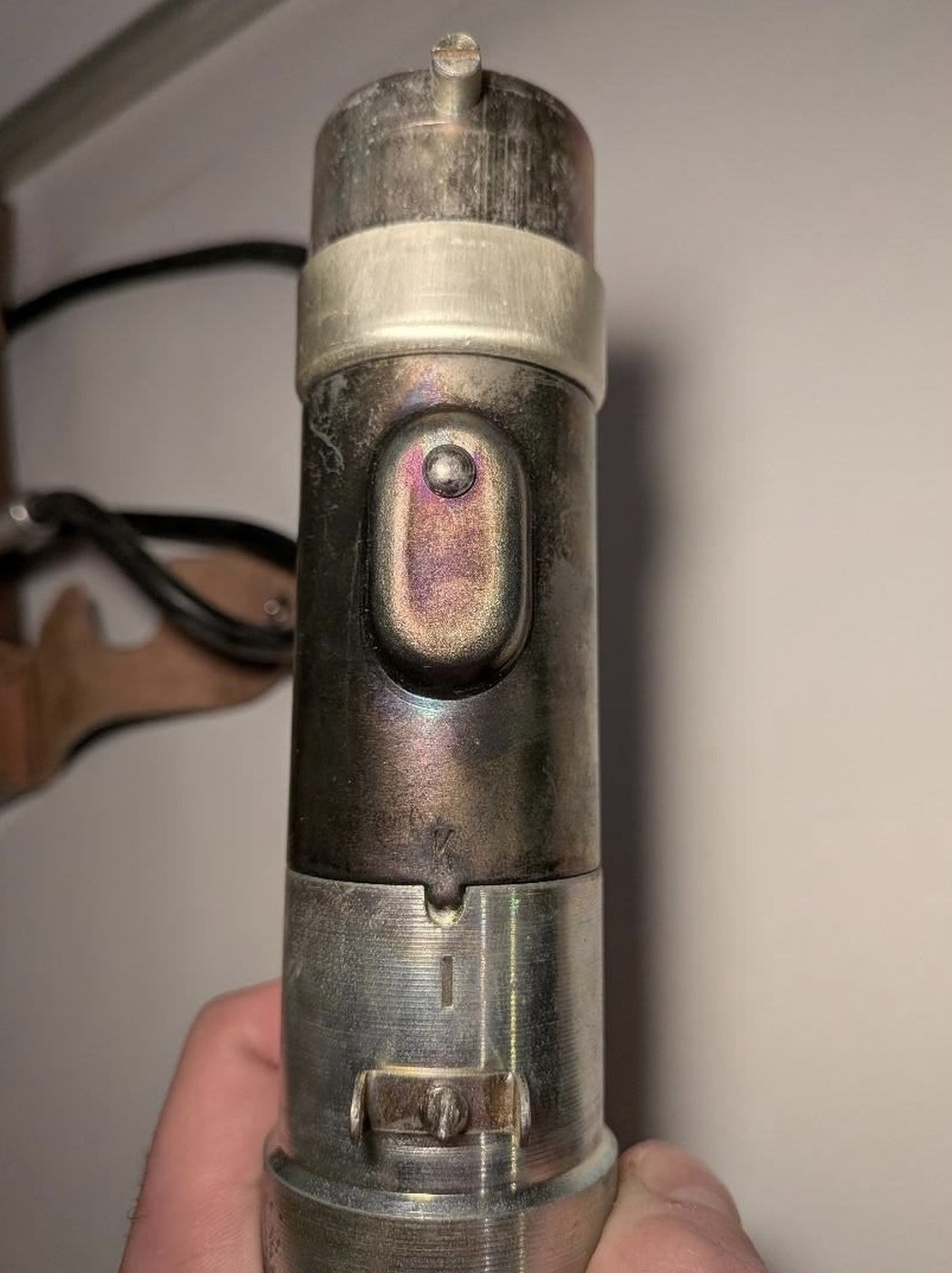
The probe is a sealed steel cylinder holding two Geiger tubes, an СИ3БГ (SI3BG) and an СБМ-20 (SBM-20), the tube explained in our article on Soviet Geiger counters. A window is cut in the steel, and a rotating screen locks in three positions marked on the body. On Б (B, for beta), the window is open. On Г (G, for gamma), the screen closes it. On К (K, for check), the screen brings the B-8 check source, housed in a recess of the screen, in front of the window.
Screen on Б: the window is open, a tube shows behind the glass. Photo: Mr Vanoli, collector.
Screen on К: the check source, in its housing, faces the window. Photo: Mr Vanoli, collector.
Measuring step by step with the DP-5V
The manual describes start-up in three steps and measurement in two. The tool below follows them, on a console and probe drawn after Mr Vanoli’s instrument. The situations in steps 3 and 4 are exercises, except the radium cockpit clock, measured with this DP-5V.
Batteries. Switch on ▲, the needle must stop in the black sector of the upper scale. If it does not, the manual points to the batteries.
Check source. Screen on К, you move the switch from range to range. On ×0.1 and ×1 the needle hits the stop, on ×10 it moves, on ×100 and ×1000 it may not move at all. The ×10 reading is compared with the value in the logbook, here 26 mR/h, within 30%. Then you press the reset button, turn the screen back to Г and the switch to ▲: the instrument is ready.
Gamma. Screen on Г, you start from the highest range and go down until the needle stops on the solid line. To find out whether a surface is contaminated, the probe is held 1 to 1.5 cm away.
Beta. You measure on Г, then turn the screen to Б, at the same distance. On Б the instrument measures beta and gamma together: if the reading rises, there is beta.
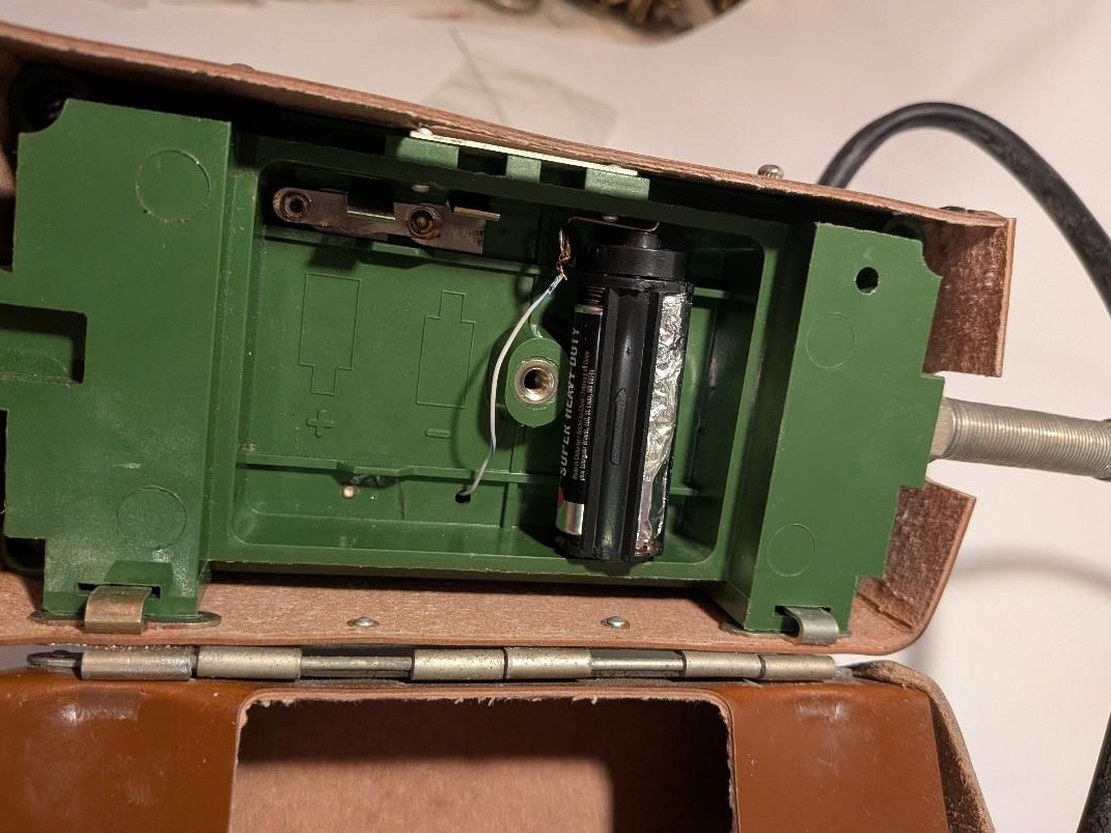
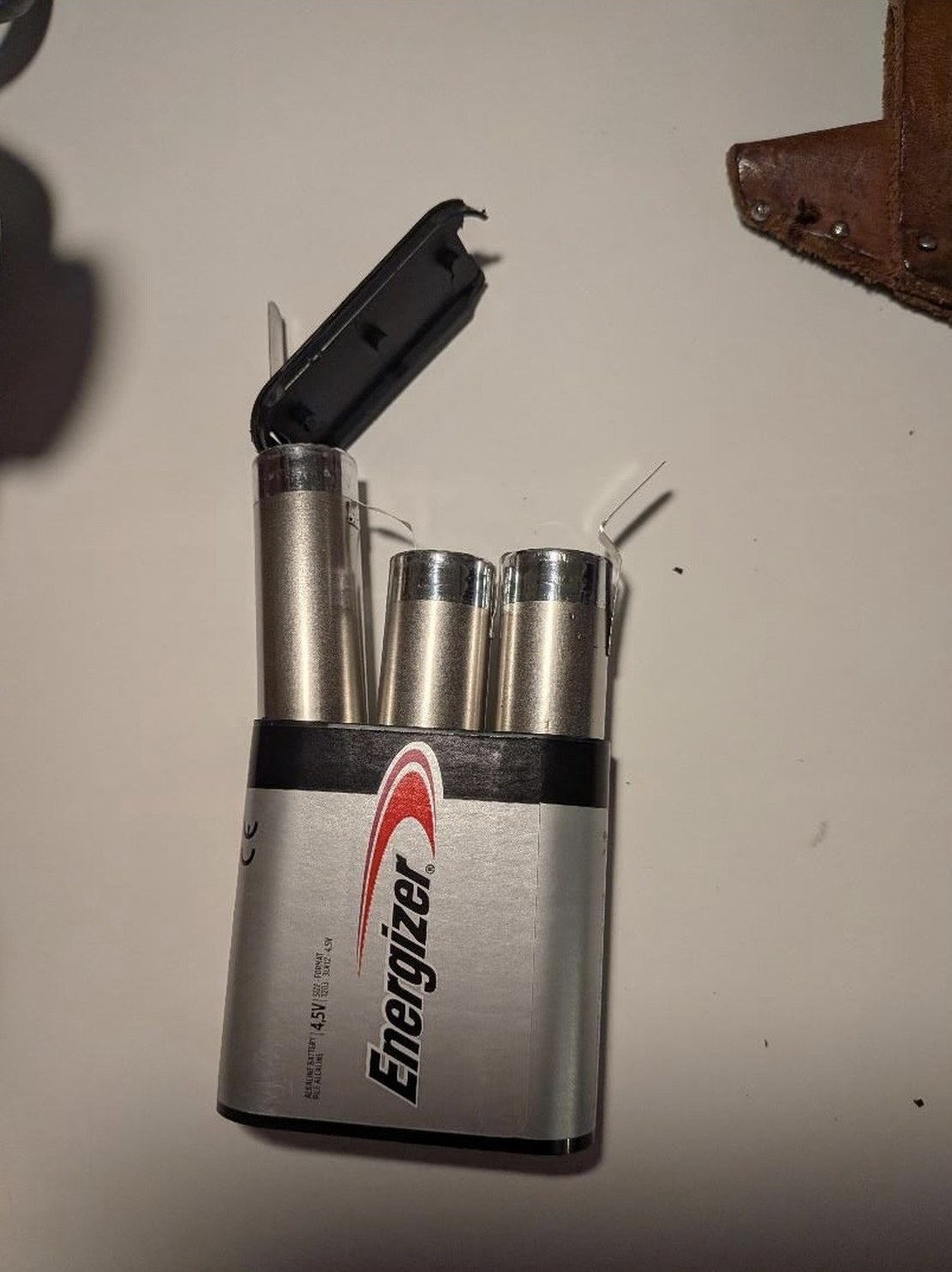
The console takes three КБ-1 (KB-1) cells: two power the circuit, the third only lights the dial. With fresh cells, the manual promises at least 55 hours of continuous use without the light. These cells are no longer made. Mr Vanoli points out that many instruments arrive modified by the seller to take AAA batteries, often with loose contacts. He cuts open a 4.5 volt Energizer battery into its three 1.5 volt cells, which match the size and voltage of the Soviet ones.
The battery compartment under the console, with an AAA holder fitted by a seller. Photo: Mr Vanoli, collector.
A 4.5 volt Energizer battery opened up: its three cells replace the KB-1. Photo: Mr Vanoli, collector.
What the DP-5V measures, and what it does not
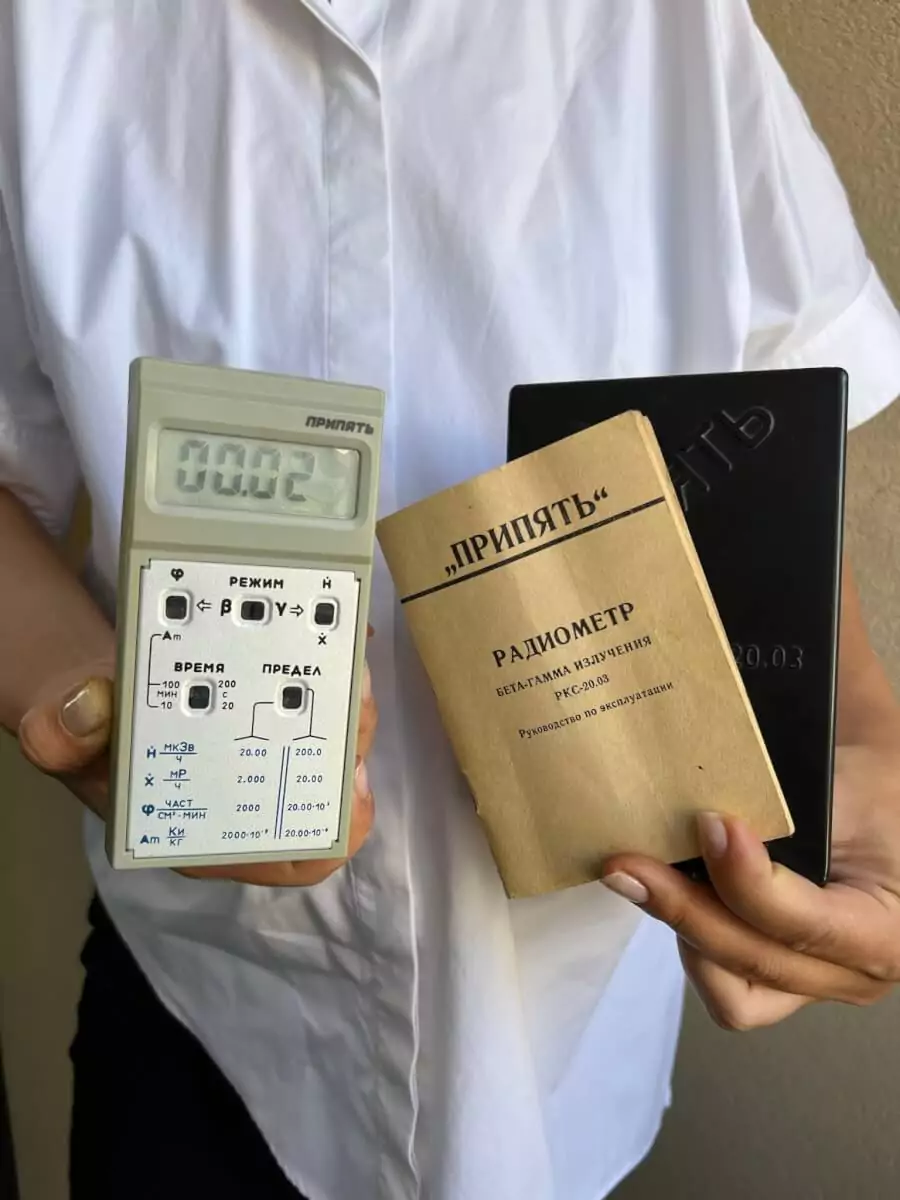
Its lowest reading, 0.05 mR/h, is about 0.5 microsievert per hour. Natural background in France lies between 0.05 and 0.2 µSv/h: on ×0.1 the needle stays before the solid line. For background levels you need a household dosimeter such as the Pripyat or the Bella, designed after Chernobyl for these levels. The DP-5V does react to a cockpit clock with a radium dial: with this instrument, against the glass of an АЧХ (AChKh), the needle rises to 2 on ×0.1, that is 0.2 mR/h, about 2 µSv/h. With the screen on Б the reading does not change: the glass stops the beta from the radium. Our guide to radium on Soviet dials explains how to keep these objects.
The check source
The B-8 source is radioactive. It is fixed in the probe screen and cannot be removed. During checks, the manual asks you to stay as far from the source as possible and to spend as little time near it as possible, and it warns that the tubes inside run at 390 to 400 volts. Before buying a DP-5V, ask the seller whether the source is present, and look up the rules on keeping and shipping it in your country.
Frequently asked questions
Can the DP-5V measure natural background?
No. It starts at 0.05 mR/h, about 0.5 µSv/h, several times natural background. On the ×0.1 range the needle stays before the start of the solid line.
What do Б, Г and К on the probe mean?
They are the three positions of the rotating screen. Б (beta) opens the window, Г (gamma) closes it, К (check) brings the B-8 source in front of the window to test the instrument.
Which batteries go in a DP-5V?
Three 1.5 volt cells the size of the KB-1: Mr Vanoli uses those from a cut-open 4.5 volt battery. The instrument can also run from a 12 or 24 volt battery through its voltage divider.
What is the button with a cross for?
It is the reset (СБРОС, sbros). The manual has you press it after the check-source test: the needle must return to zero.
Available at Soviet in Paris
The DP-5V is not for sale in the shop. You will find the civil defence cards it appears on, and the household dosimeters that measure natural background, in the Geiger counters and dosimetry category.
The Moscow Games, from 19 July to 3 August 1980, boycotted by some sixty countries, produced more objects than any Soviet event: a bear cub, Misha, drawn by Viktor Chizhikov, an emblem made of running tracks, five thousand torches, watches from every factory, platinum coins, rings, tea glass holders, posters. This guide tells the story of the Games and reviews the objects, with the marks that authenticate them and the prices.
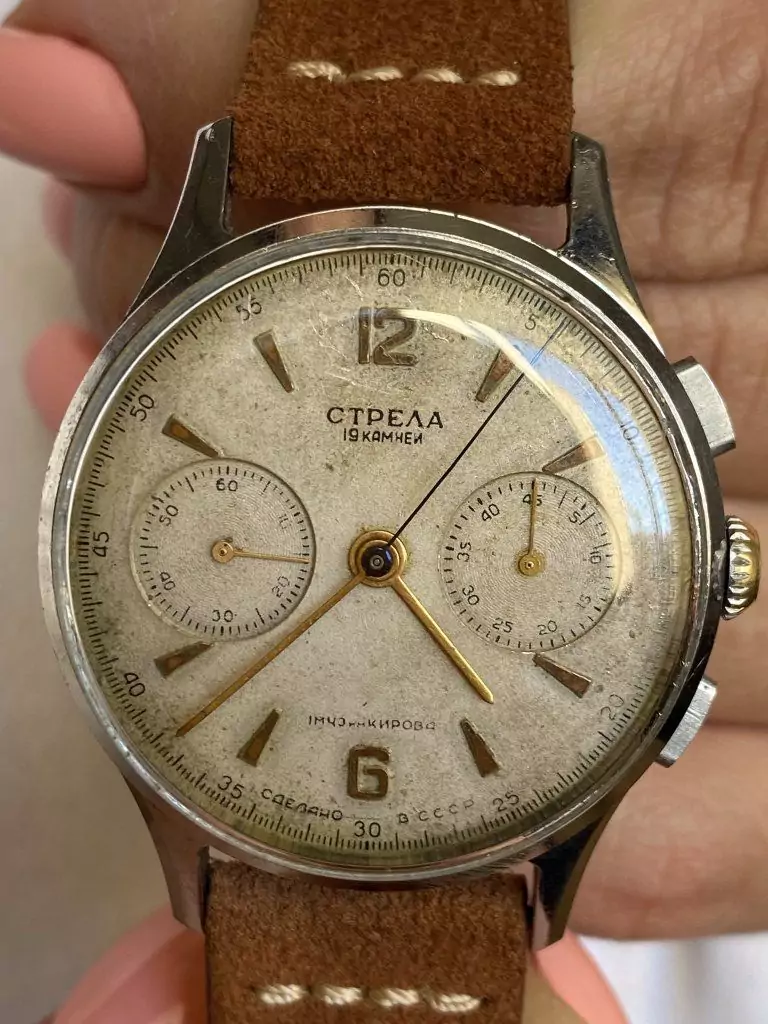
The 3017 chronograph of the First Moscow Watch Factory carries a five-digit number on the balance cock. The most common dating method reads it as a single series, from 1959 to 1979. Four factory passports show there are two, and that the same number can point to two watches made ten years apart. Here is how to read the number, the dial, the logo and the bridge, with a decoder to date your Strela, Poljot or Sekonda.
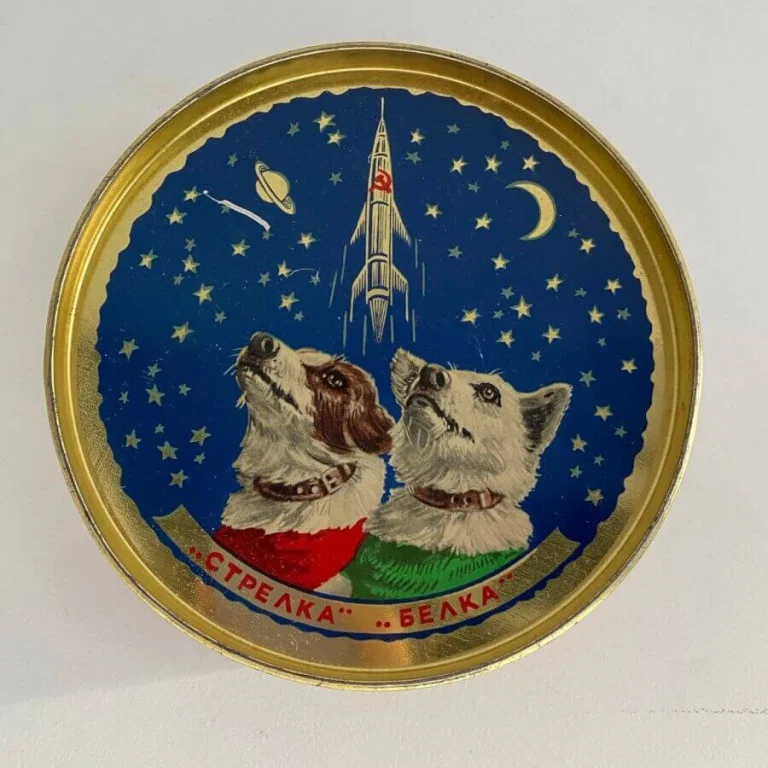
Before Gagarin, there were the dogs. Laika, a Moscow street dog, the first creature in orbit on 3 November 1957, dead within hours; Belka and Strelka, the first to come back alive on 19 August 1960, one of whose puppies ended up at the White House. The USSR made heroines of them, and objects by the million: pins, sweet tins, alarm clocks, postcards, tapestries. This guide tells the flights, then reviews the objects, with dates and prices.
This website uses cookies to improve your experience while you navigate through the website.
Out of these cookies, the cookies that are categorised as necessary are stored on your browser as they are essential for the working of basic functionalities of the website.
We also use third-party cookies that help us analyse and understand how you use this website.
These cookies will be stored in your browser only with your consent.
You also have the option to opt out of these cookies.
But opting out of some of these cookies may affect your browsing experience.
Necessary cookies are absolutely essential for the website to function properly. This category only includes cookies that ensure basic functionalities and security features of the website. These cookies do not store any personal information.
Cookies that are not strictly necessary for the website to work and that are used specifically to collect personal data through analytics, ads and other embedded content are called non-necessary cookies. User consent is required before these cookies run on the website.
✕
Soviet in Paris
Offline right now. Leave your message and your email, we reply within 24 hours.
Hello 👋 A question about an item, an order or shipping? Write to us.
Your email is used only to reply to you.
Subscribe to our newsletter and get 10% off your first order.
Subscribe
★ New pieces before anyone else
★ New blog articles
★ Soviet in Paris news and updates
Join the Party
10% off your first order
Receive your welcome card and our next arrivals.
Your code appears here and is also sent to you by email. You can leave the Party in one click, at any time.