The Moscow Games, from 19 July to 3 August 1980, boycotted by some sixty countries, produced more objects than any Soviet event: a bear cub, Misha, drawn by Viktor Chizhikov, an emblem made of running tracks, five thousand torches, watches from every factory, platinum coins, rings, tea glass holders, posters. This guide tells the story of the Games and reviews the objects, with the marks that authenticate them and the prices.
NOVEMBER 2026•6 MINUTE READ
by Marwen Yahyaoui
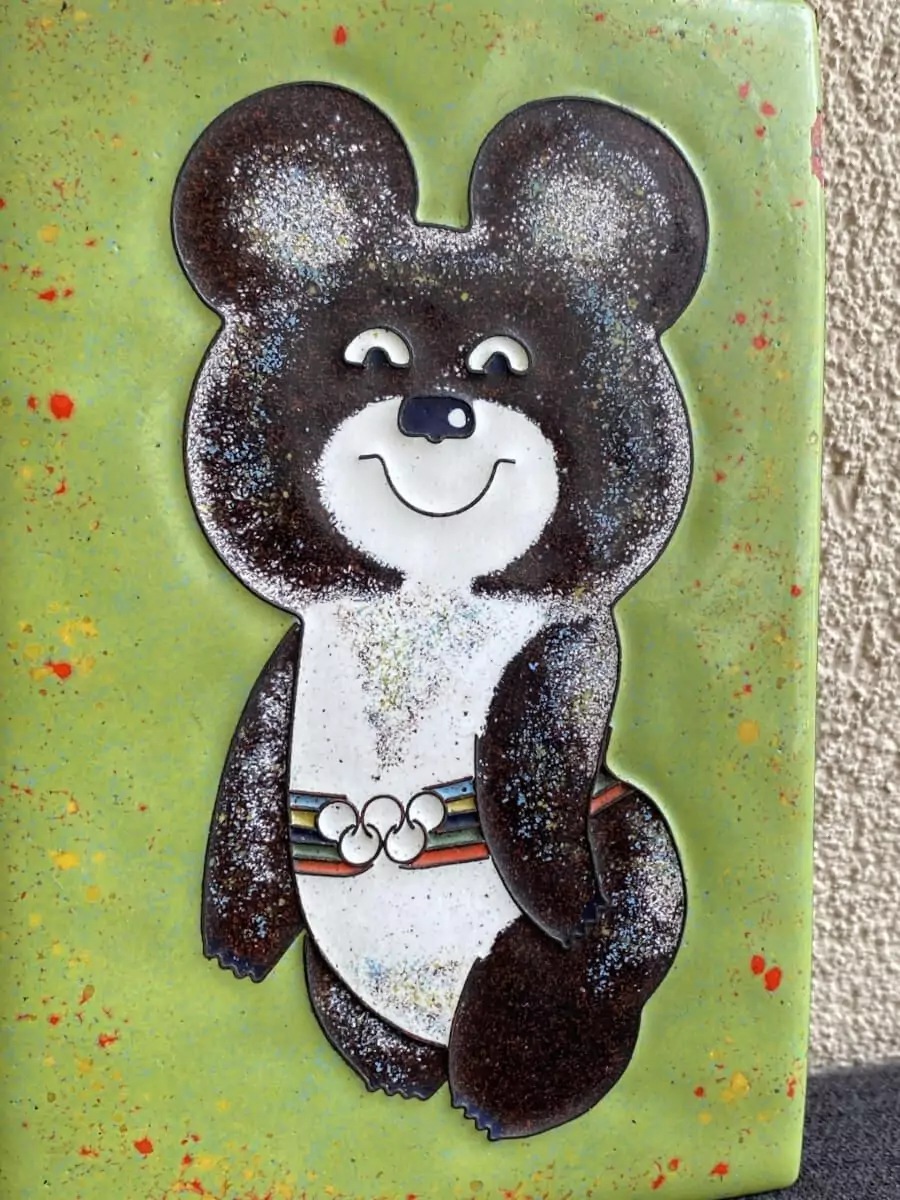
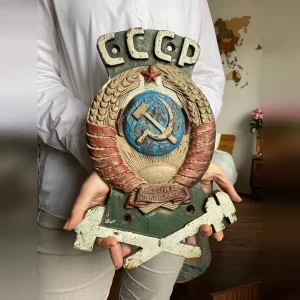
« Talisman » enamelled copper plaque: Misha, the bear cub of the Moscow Games, with his five-ring belt, the best-loved object of 1980.
In the summer of 1980 the USSR received the world, or what was left of it: sixty-five countries, led by the United States after Soviet troops entered Afghanistan, boycotted the Moscow Games, and France marched there only under the Olympic flag. For the Soviets, the Games were nonetheless the celebration of the decade, and industry followed: never did an event produce so many objects in the USSR. This guide tells the essentials and reviews what is collected, from torches to rings.
Misha and the emblem
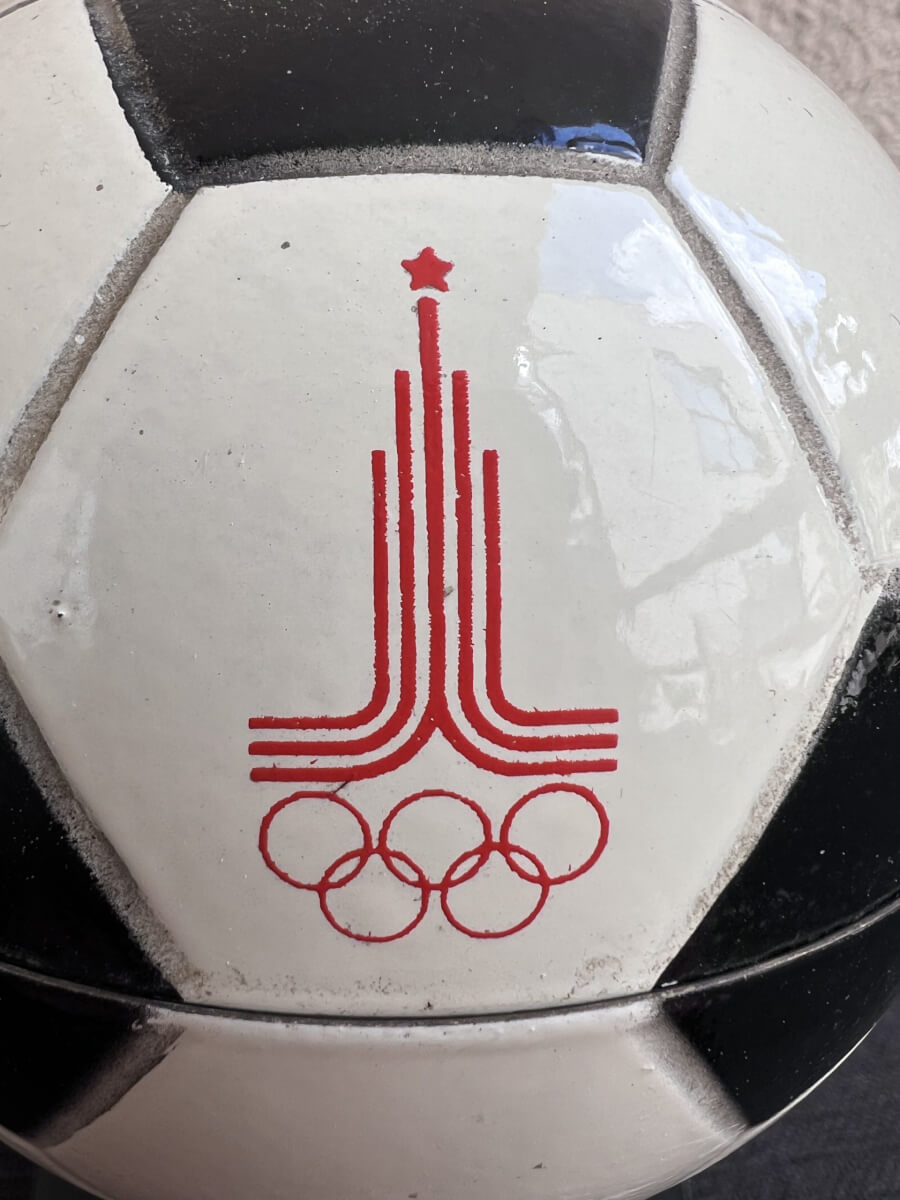
It all began with two competitions. The emblem, chosen in 1975, is by Vladimir Arsentyev: stacked running tracks rising into a Kremlin tower topped by a star, above the five rings. The mascot, chosen in 1977 from dozens of proposals, is the bear cub Михаил Потапыч Топтыгин, Misha to everyone, drawn by the children’s illustrator Viktor Chizhikov, with his belt in the Olympic colours buckled by the rings. Misha was the first object of the Games’ propaganda and the last: at the closing ceremony, on 3 August, a giant balloon Misha floated away from the Luzhniki stadium while the mosaic of the stands showed him in tears, and a whole country wept with him.
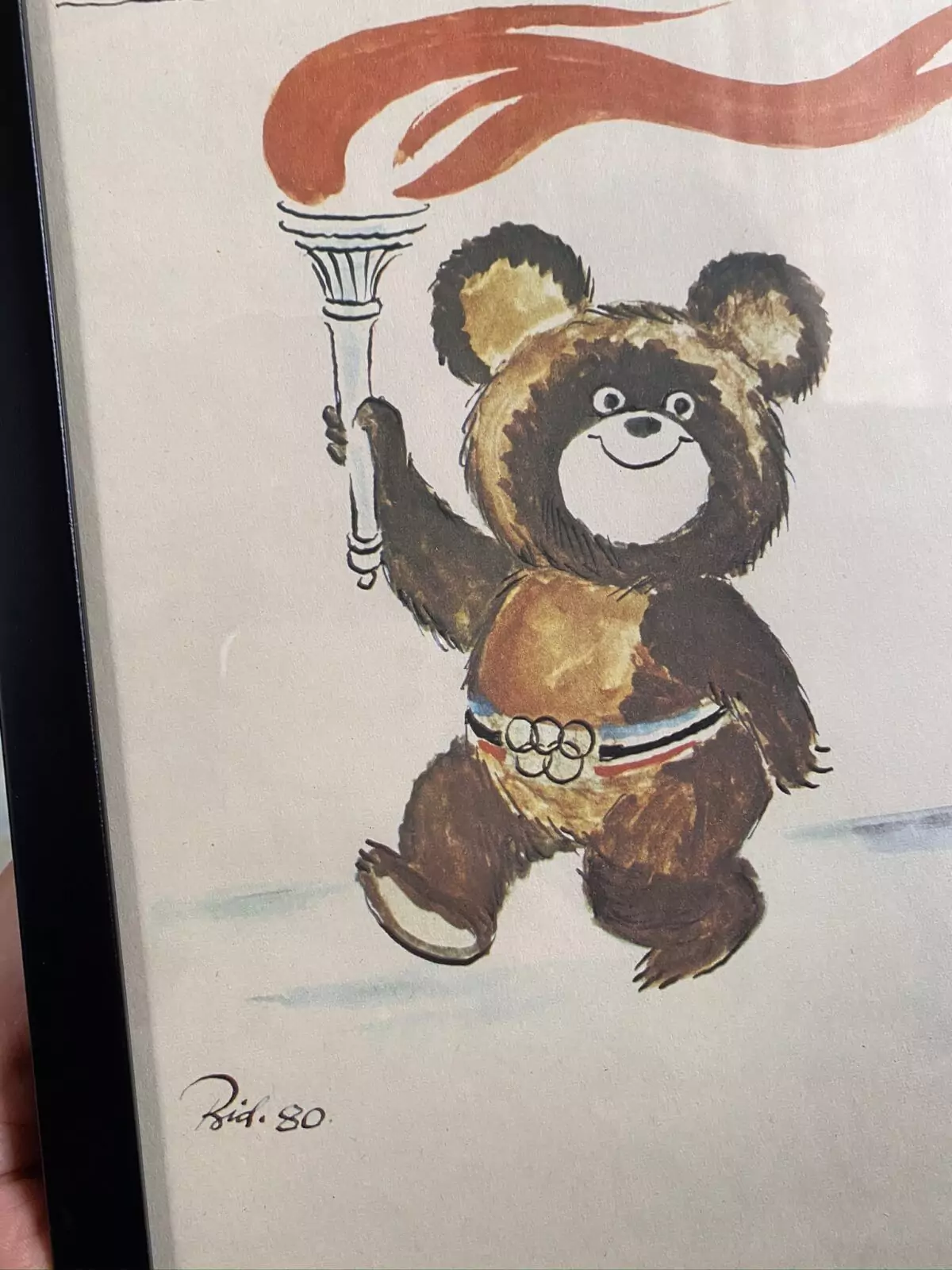
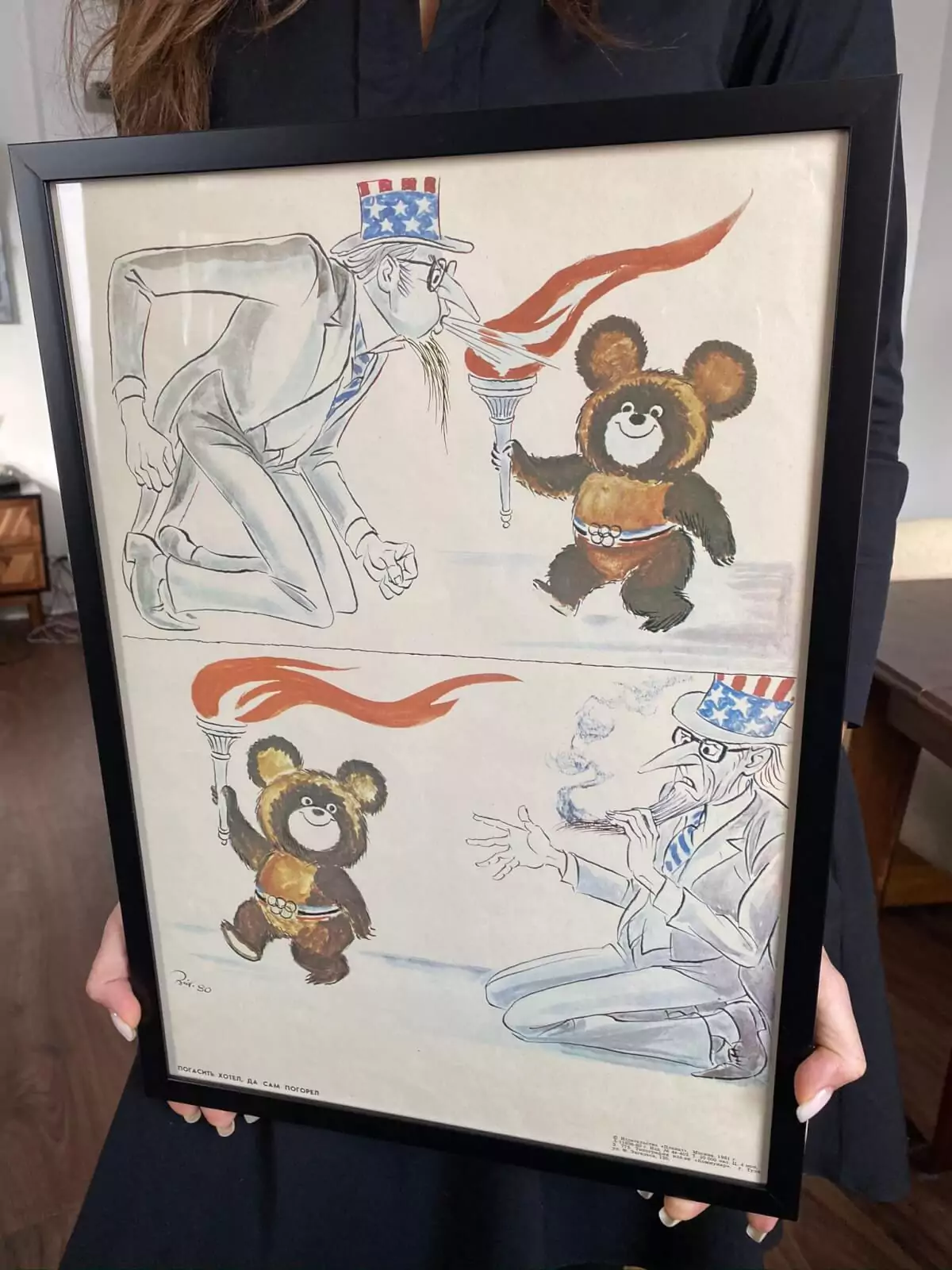
Misha carrying the flame, anti-boycott poster of 1980, signed « Еф. 80 ».
Arsentyev’s emblem, tracks, tower and star, on a football-shaped cigarette box.
The torch and the relay
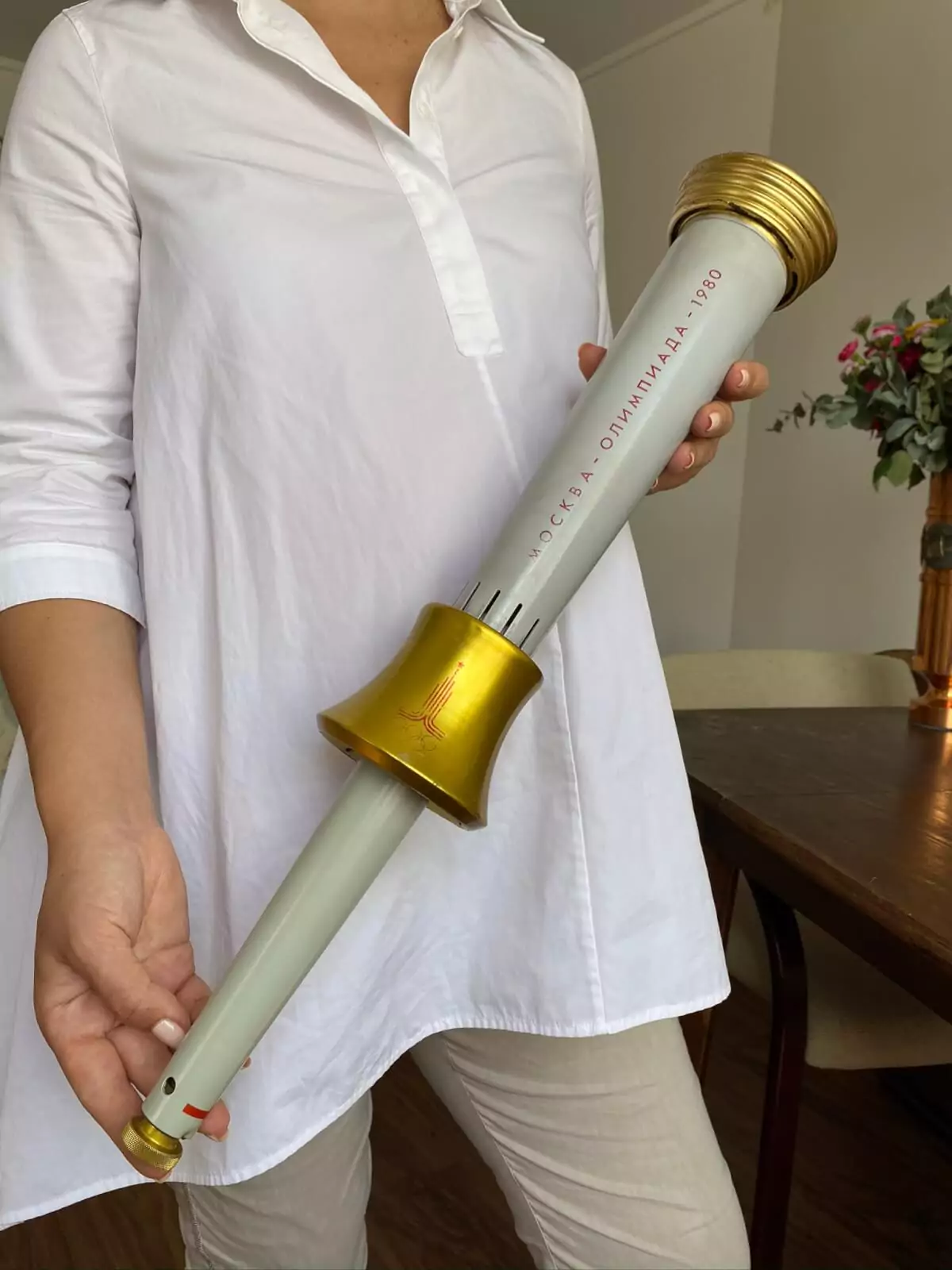
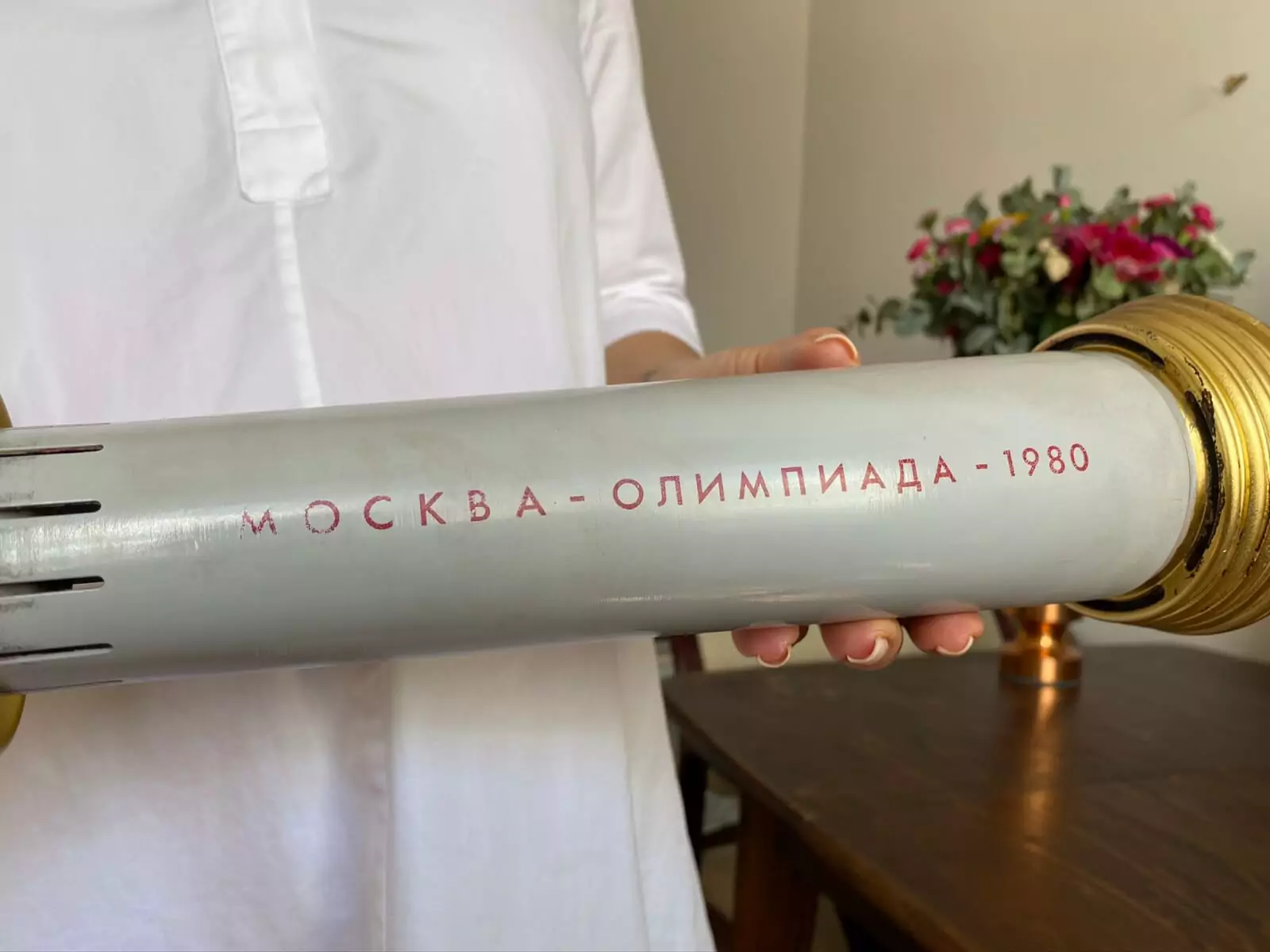
The flame was lit at Olympia on 19 June 1980 and crossed Greece, Bulgaria, Romania and Ukraine to Moscow. Five thousand torches were made in Leningrad, in aluminium, with a petrol burner, a grey handle marked « Москва Олимпиада 1980 » and a gilt cup with the emblem; each relay runner received his own with a vest and a headband. They are numbered on the burner. A torch alone sells for around 2,000 euros, a complete runner’s kit with the outfit, 2,900 to 3,500.
Relay torch, number 85, carried on a stage in Ukraine.
The handle: « Москва Олимпиада 1980 ».
The watches of the Games
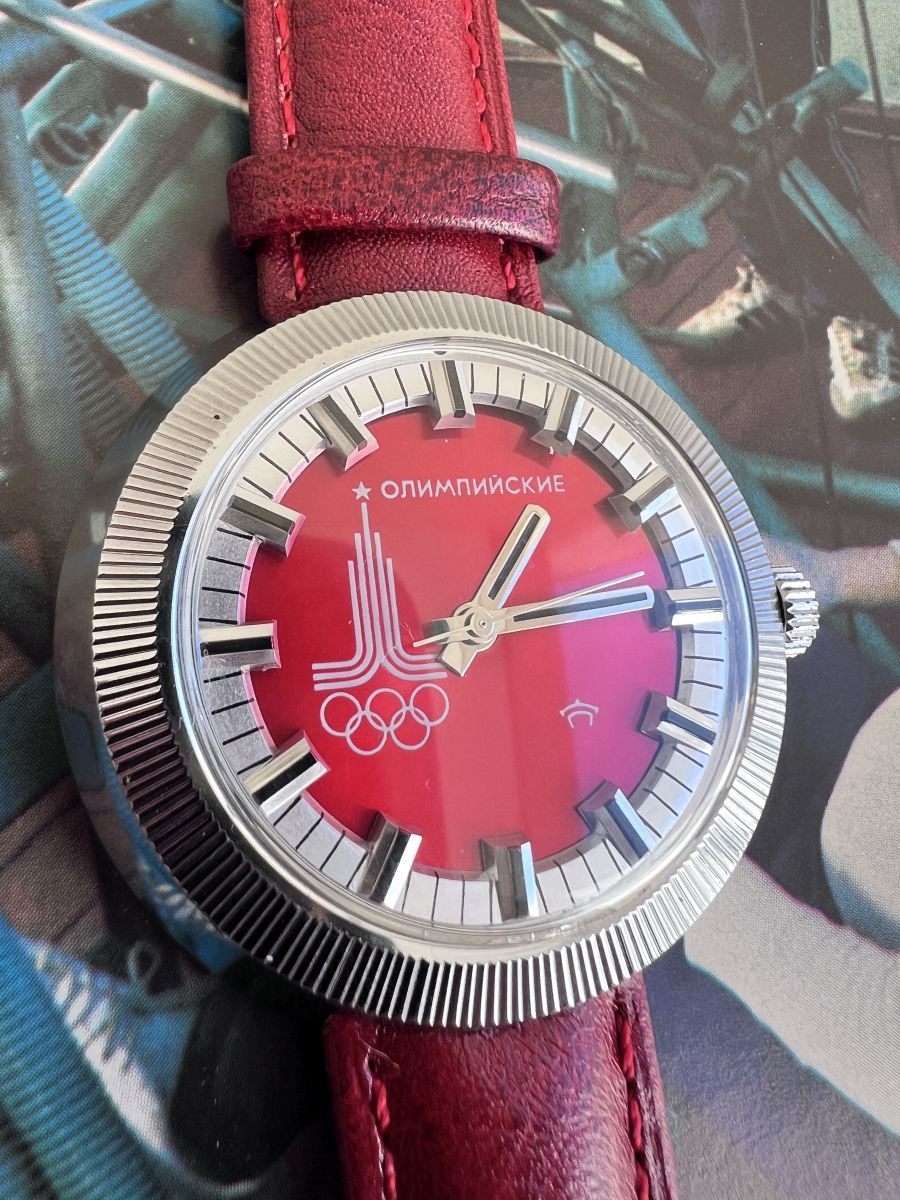
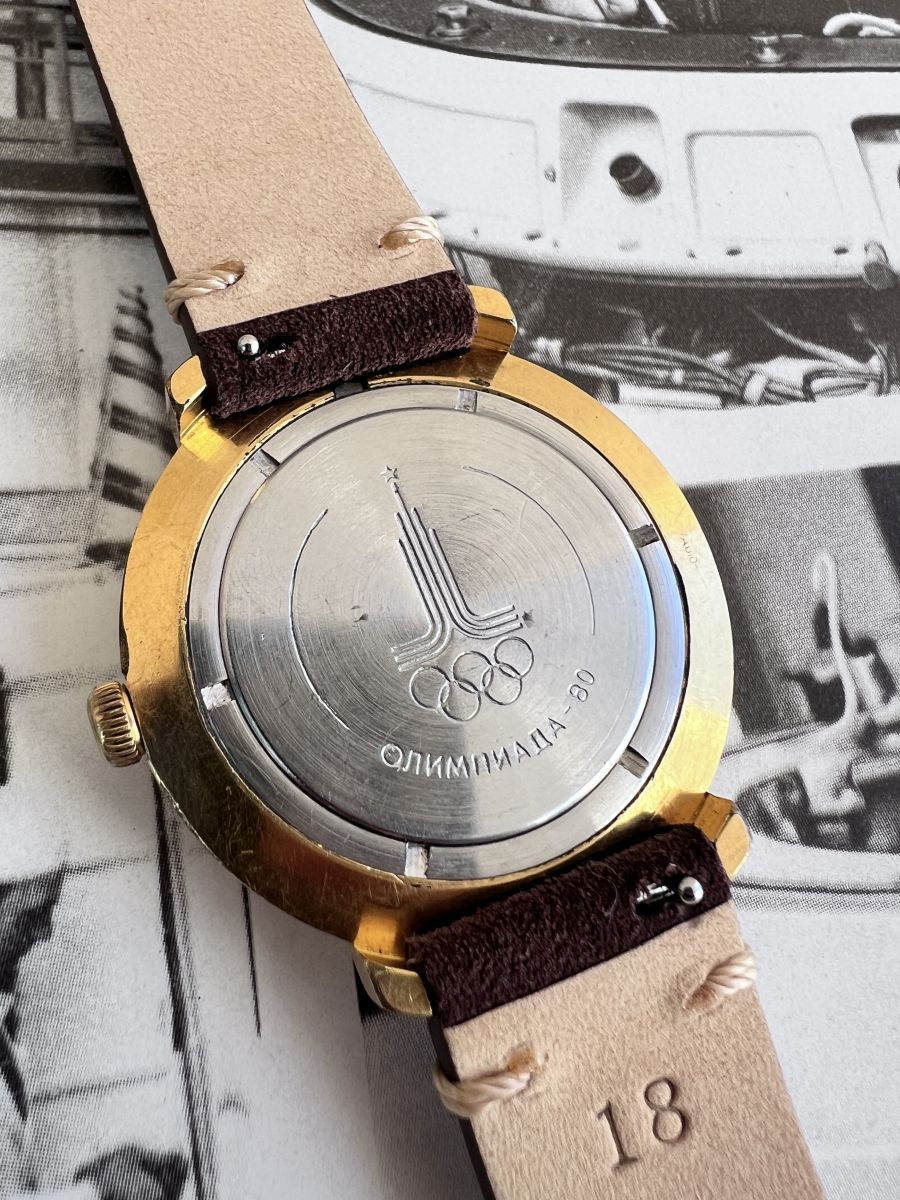
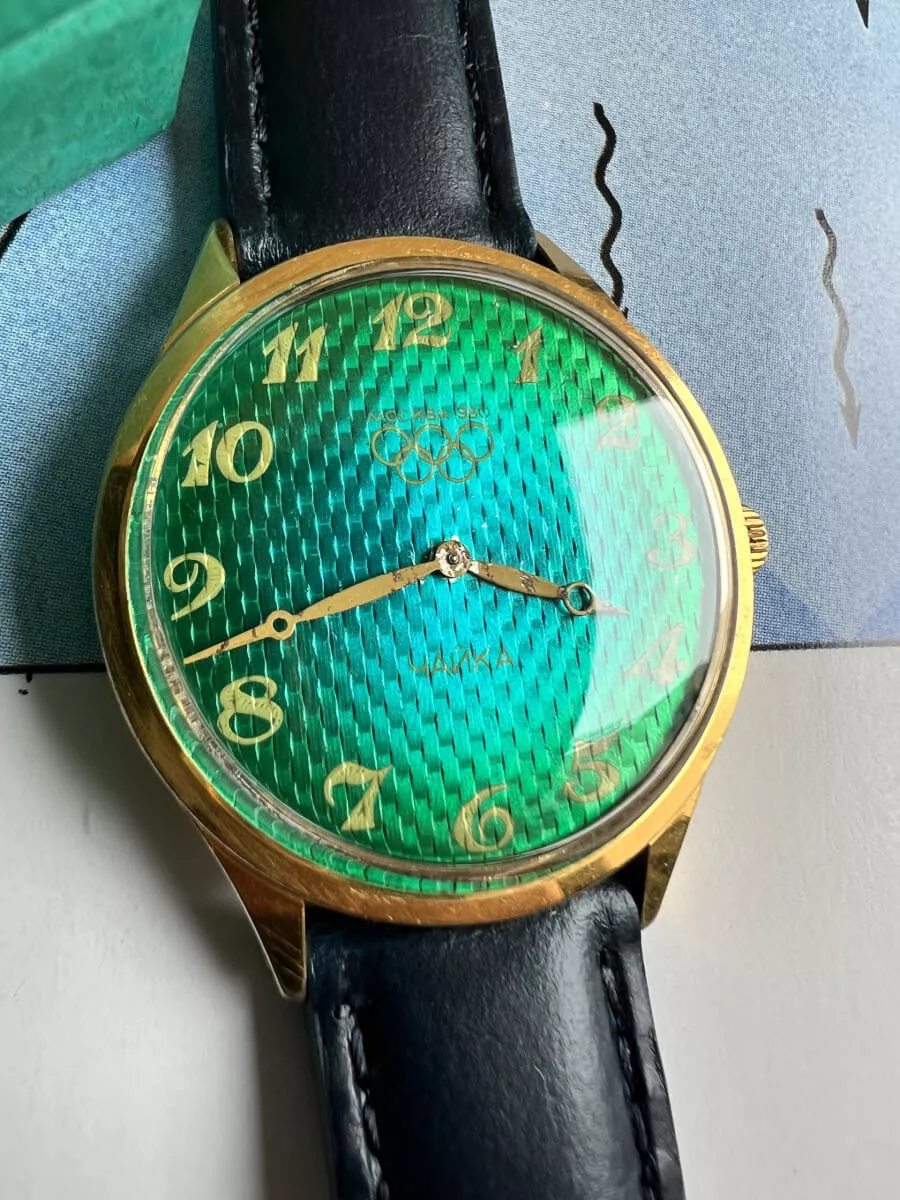
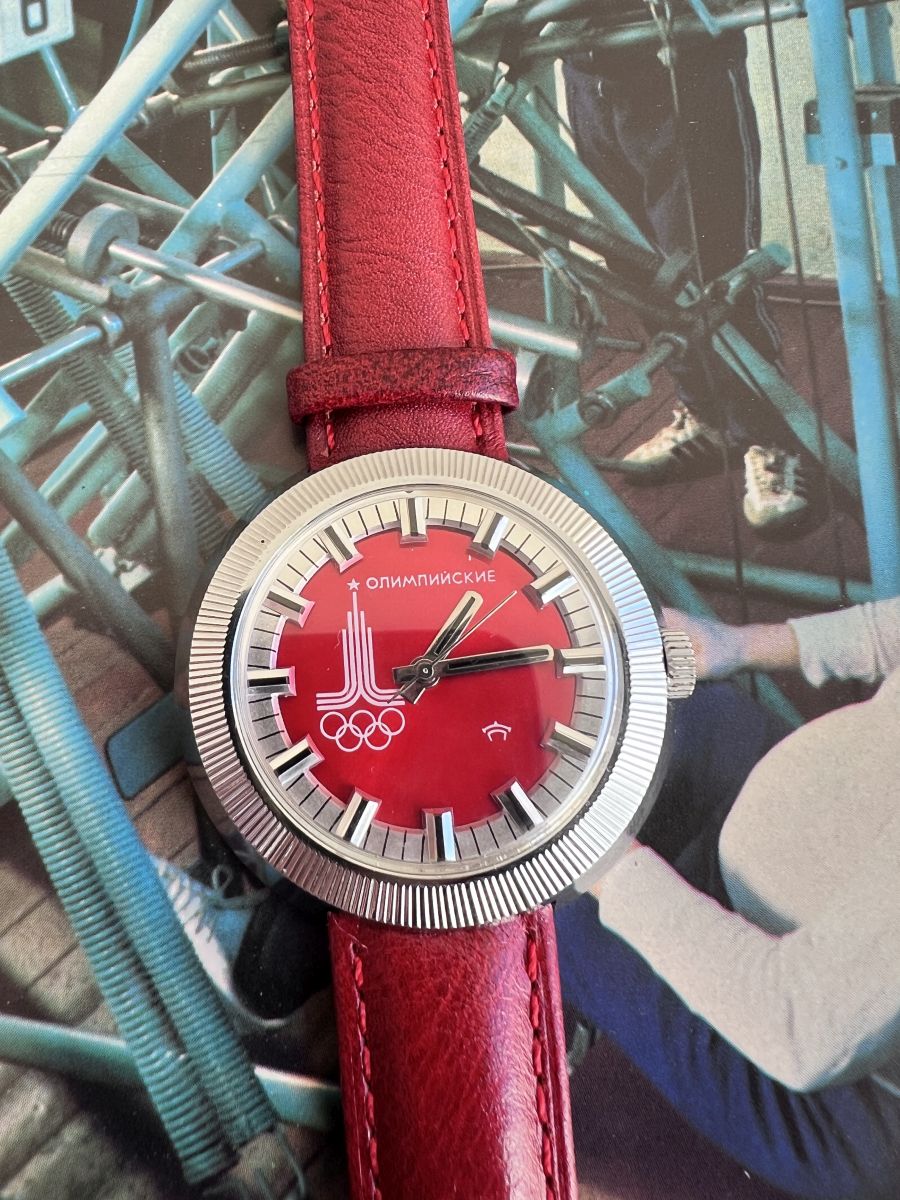
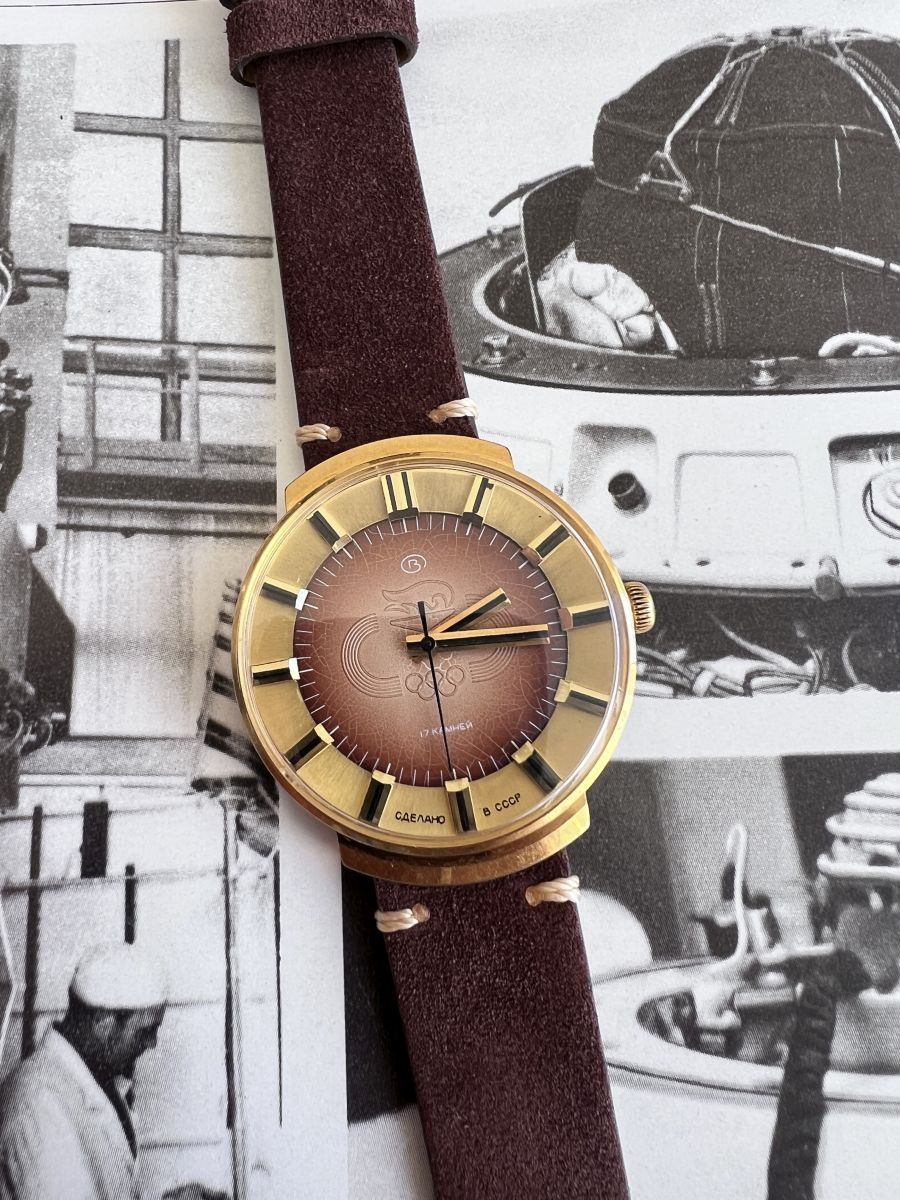
Every watch factory produced its Olympic watch in 1979-1980, and they are among the best dated Soviet watches. Raketa, at Petrodvorets, brought out the « Олимпийские », red dial with the emblem, case with a fluted bezel. Vostok, at Chistopol, engraved the emblem and « Олимпиада-80 » on the back of gilt watches with gradient dials. Chaika, at Uglich, made a gold-plated watch with a green guilloché dial, with the rings. Poljot produced « Fisheye » models with domed crystals. The dials carry the emblem or the rings, the backs often the inscription. Expect 175 to 330 euros serviced.
Raketa « Олимпийские », red dial, Games emblem at twelve.
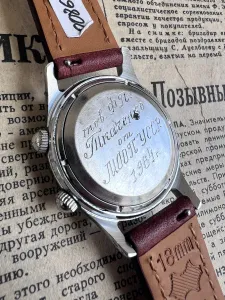
Engraved back of a Vostok: the emblem and « Олимпиада-80 ».
Gold-plated Chaika, green guilloché dial, the rings at twelve.
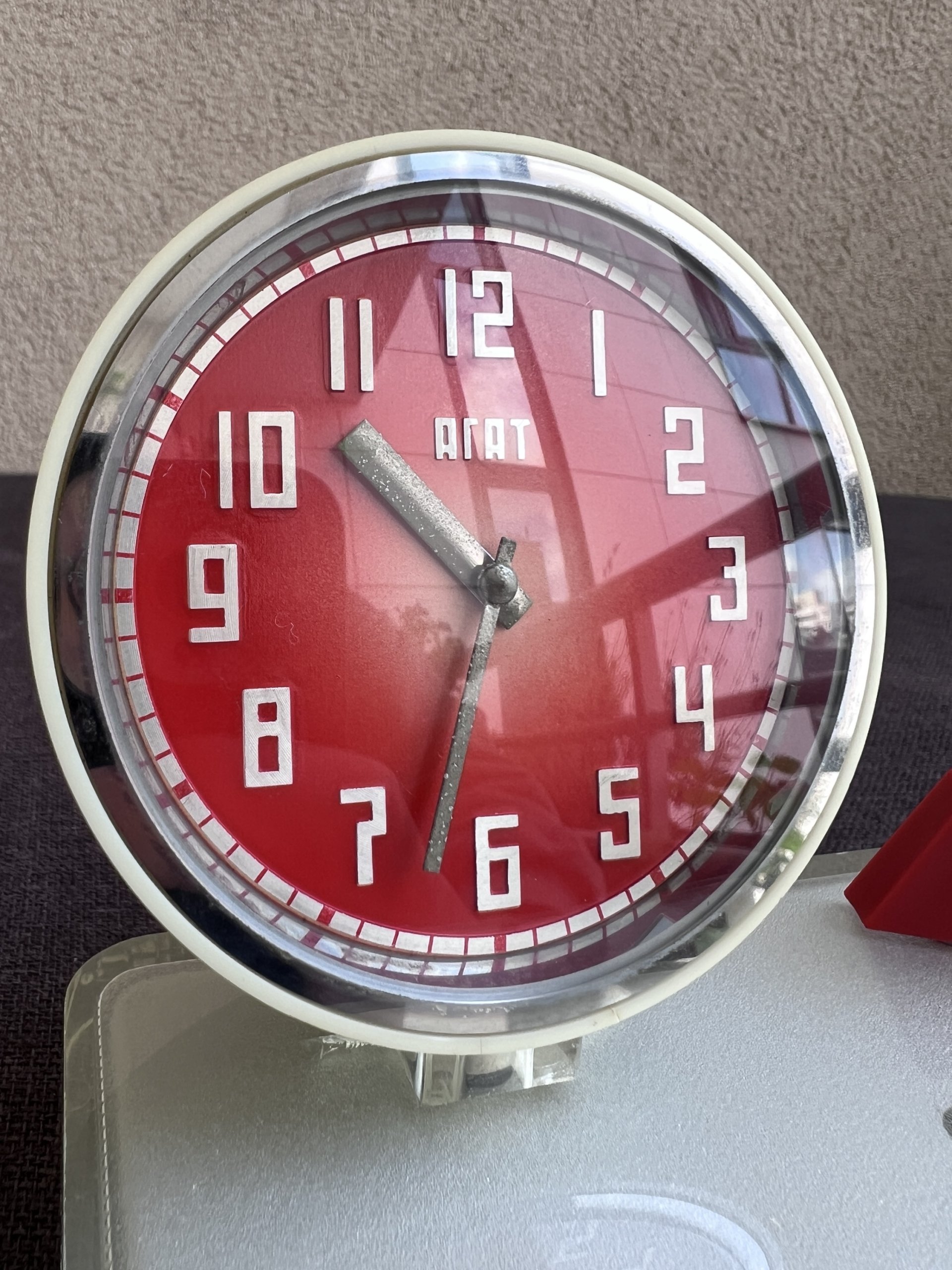
Agat desk clock, Games edition, Misha and « Москва 1980 » on the base.
Coins and jewellery
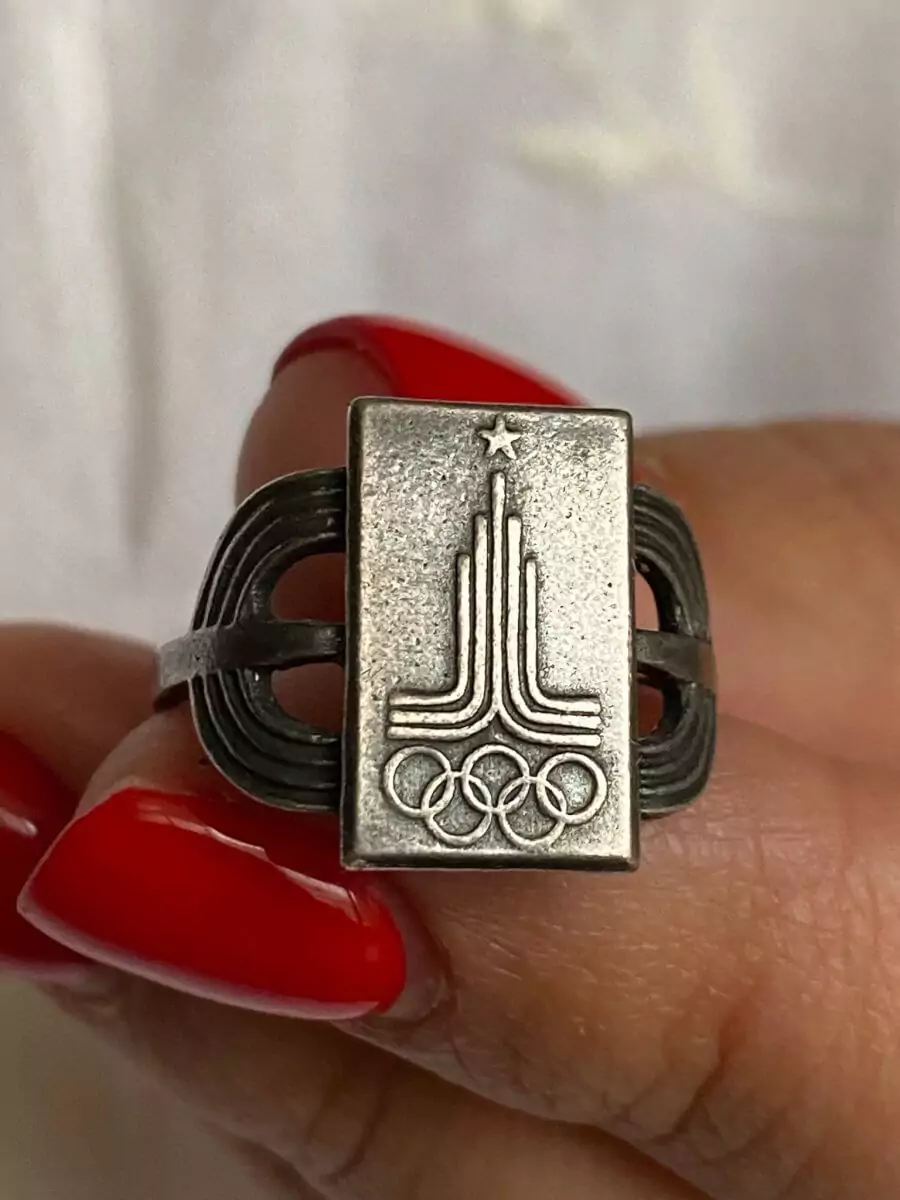
For the Games the USSR struck the largest series of commemorative coins in its history: silver 5 and 10 rouble coins on the sports and the cities, gold 100 rouble coins, and five platinum 150 rouble coins, struck from 1977 to 1980, which are the only Soviet platinum coins and sell for 790 to 890 euros. The state jewellers produced silver rings at the 875 or 916 standard, marked « Олимпийская Москва » or struck with the emblem, necklaces with an enamelled Misha, medals. A period ring is worth 90 to 110 euros; it always carries the Soviet star hallmark.
916 silver ring with the emblem, marked Moscow 80.
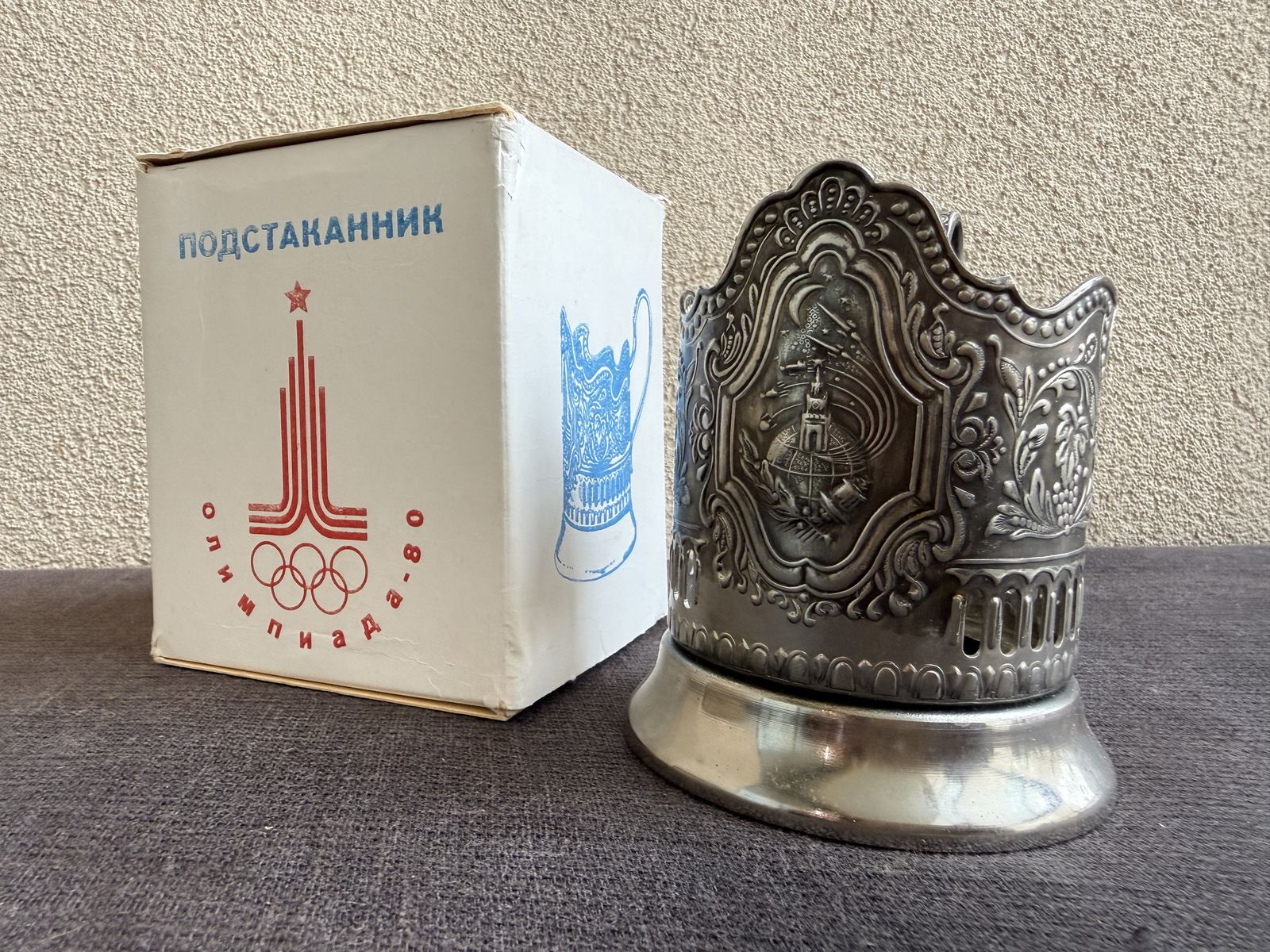
Tea glass holder from the Kolchugino plant, Kremlin and emblem, in its box.
Everyday objects
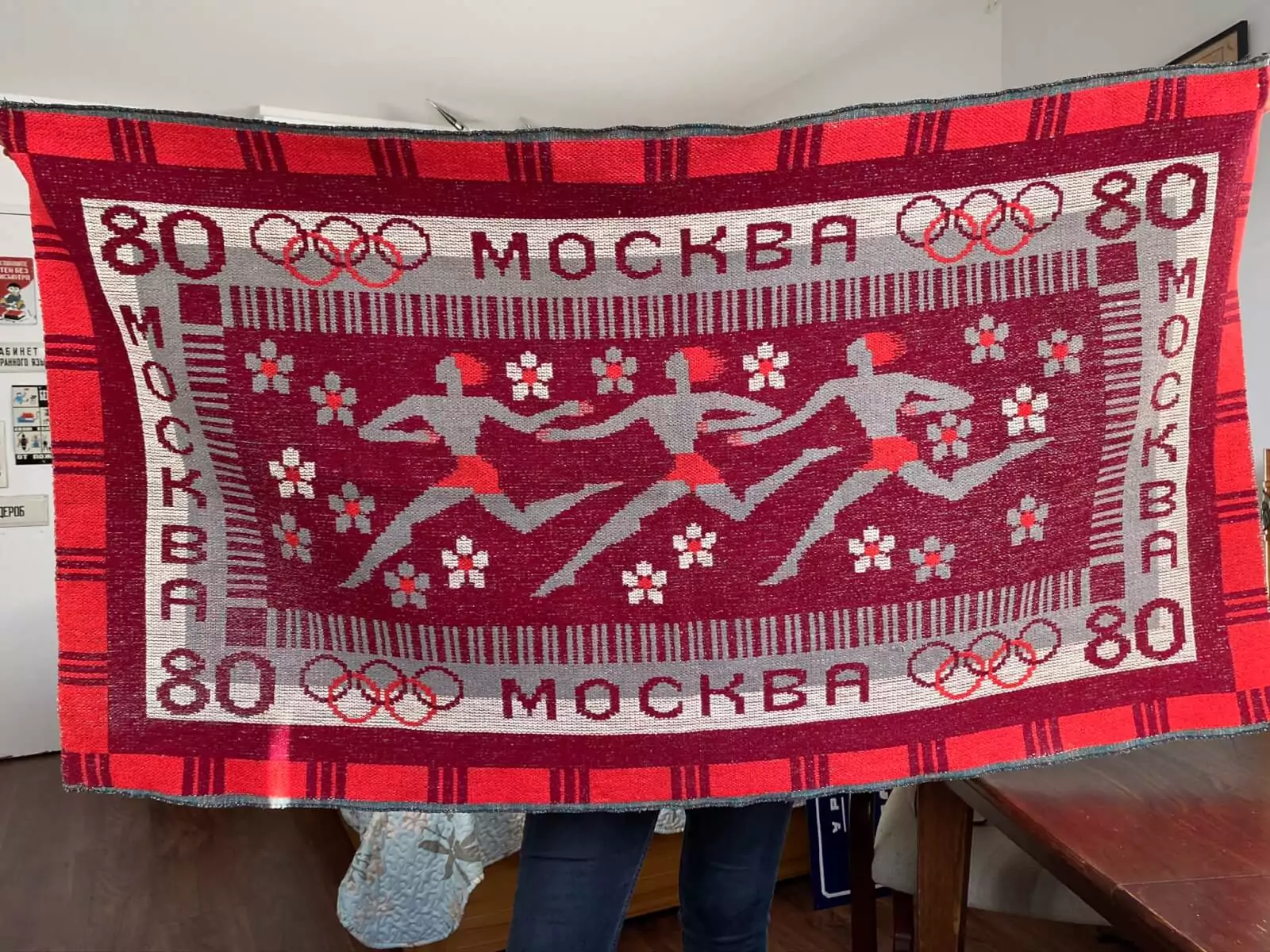
The Games marked everything that was sold: railway tea glass holders, football-shaped cigarette boxes, Riga lighters, blue or red travel bags from the Moscow tannery, cotton « Москва 80 » tapestries, commemorative Misha light bulbs, enamel plaques, marquetry, embroidered badges, Coca-Cola T-shirts, the sponsor of the Games despite the American boycott. Each carries the emblem or Misha, and often a factory label with the price, the date and the reference, like the « Talisman » plaque, article С-ВГ-328а-ОЛ, 7 roubles 50.
Commemorative Misha bulb, 220 volts, lit.
Cotton tapestry « Москва 80 », runners and rings.
The posters
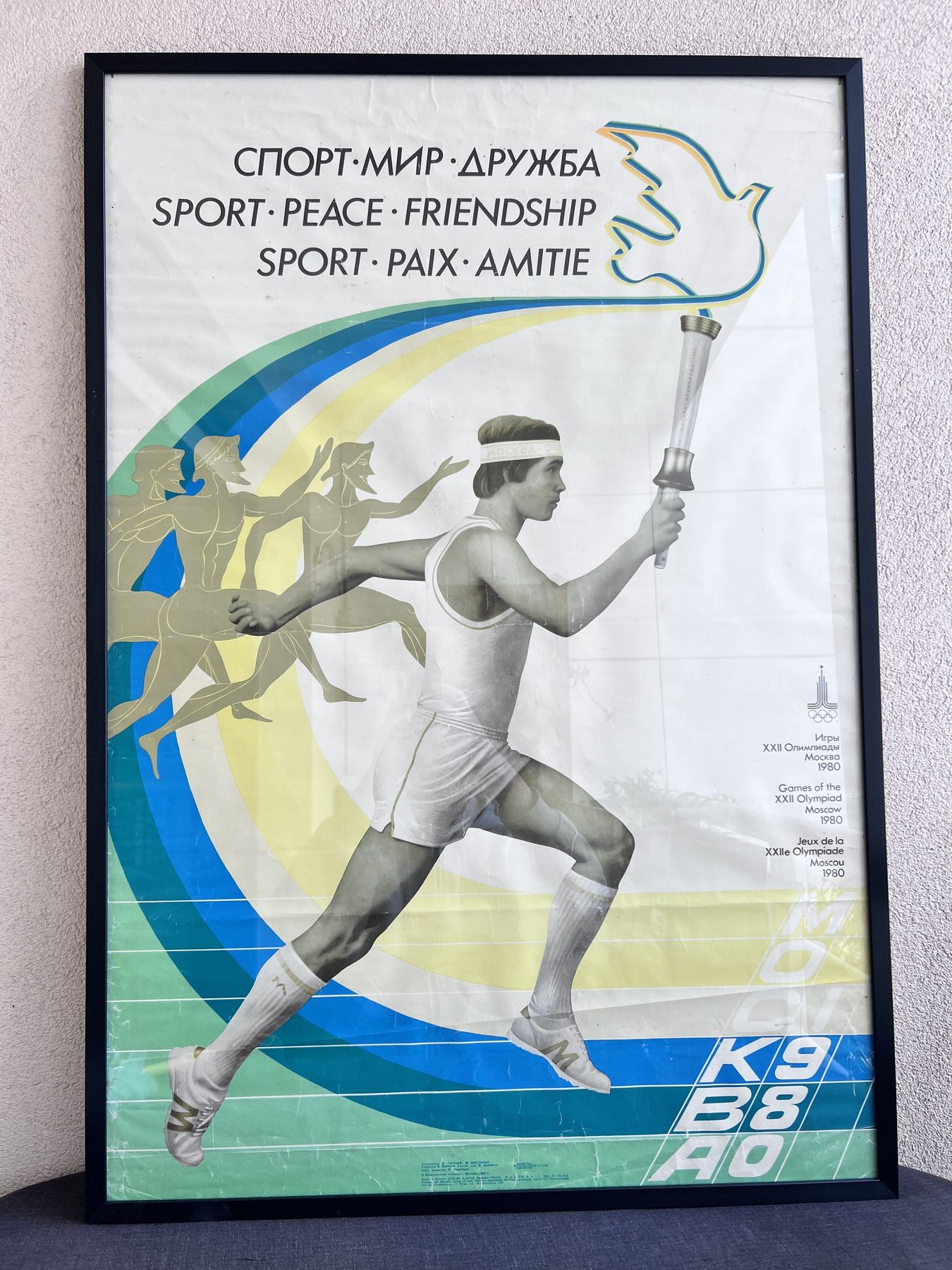
Two families. The official posters, published by Plakat in Moscow, « Sport, peace, friendship », doves, flames, stylised athletes, in large format, the most beautiful of late propaganda. And the satirical boycott posters, where Uncle Sam tries to put out Misha’s flame and burns himself, « he wanted to put it out, he burnt himself », which are today the most sought after because they tell the Games as they were. Small framed posters are found from 85 to 120 euros, the large official ones of 1980 up to 590.
Official poster « Sport, peace, friendship », flame bearer, 1980, 100 × 68 cm.
Boycott poster: Uncle Sam and Misha, 1980.
Dating and authenticating
A Games object is dated by nature, 1979-1980, and the emblem was protected: everything bearing it was produced under licence from the organising committee, in the state factories. The marks to look for are the exact emblem, tracks, tower, star and rings, often with « Олимпиада-80 » or « Москва-80 », the factory label or stamp with the price and the ОСТ reference, and for jewellery the star hallmark. Recent reproductions of Misha, in resin or fabric, have neither. Objects of the 1980 Games are plentiful, which makes them accessible, and it is the complete piece, with its box and its paper, that makes the difference.
Prices
Small framed posters, 85 to 120 euros. Rings, jewellery, tea glass holders, 90 to 110. Misha bulbs, enamel plaques, 110 to 180. Serviced Olympic watches, 175 to 330. Travel bags, tapestries, 280 to 320. Large official posters, 590. Platinum coins, 790 to 890. Torches, 2,000 to 3,500.
Frequently asked questions
Who drew Misha?
Viktor Chizhikov, a children’s book illustrator, chosen by competition in 1977.
How many torches were made for Moscow 1980?
Five thousand, in Leningrad, numbered on the burner. Each relay runner kept his own.
Which watches were made for the Games?
Raketa « Olympic » with a red dial, Vostok with the back engraved « Olympiad-80 », gold-plated Chaika, Poljot Fisheye, and others. All from 1979-1980.
Are the Soviet Olympic coins valuable?
Silver coins, 30 to 60 euros; gold coins, their weight in gold; the five platinum 150 rouble coins, 790 to 890 euros.
Did France take part in the Moscow Games?
Yes, under the Olympic flag and not the French flag, like several Western European countries.
The ДП-5В (DP-5V) is the field radiometer of Soviet civil defence: a green Bakelite console, a probe with a rotating gamma, beta and check-source shield, headphones and a manual that explains operation and maintenance. The one in this article served in an industrial bakery in Chișinău and was serviced in March 1991. Its owner shared his photos and documents with us, and we turned them into a tool that lets you operate it on screen, step by step.
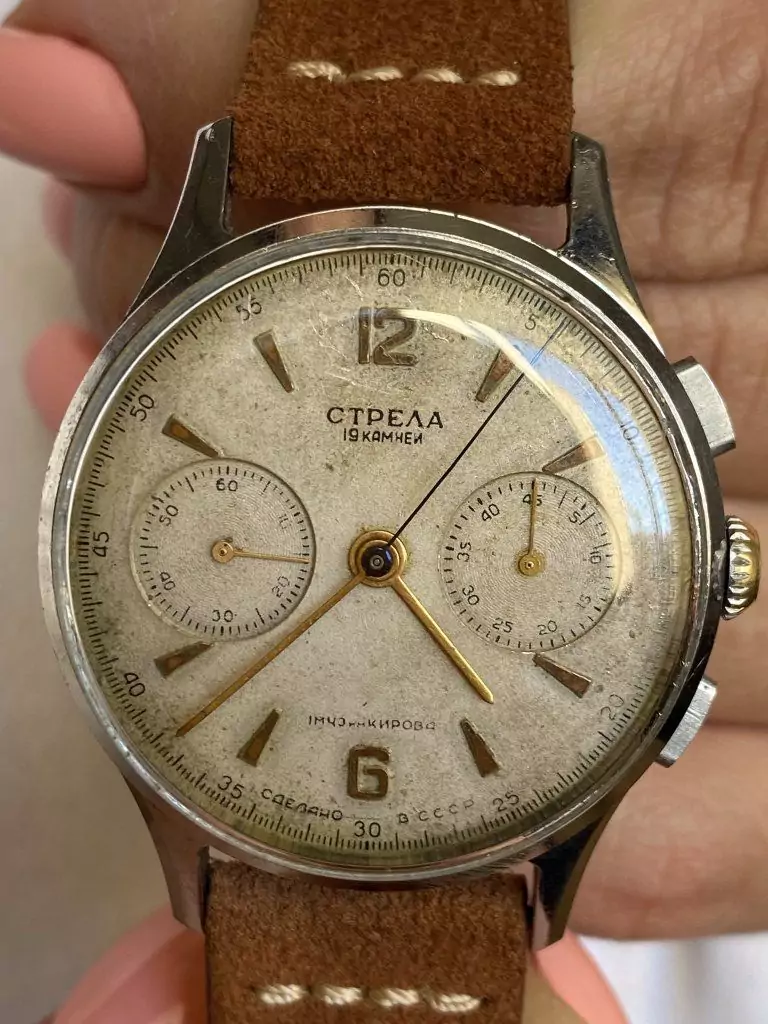
The 3017 chronograph of the First Moscow Watch Factory carries a five-digit number on the balance cock. The most common dating method reads it as a single series, from 1959 to 1979. Four factory passports show there are two, and that the same number can point to two watches made ten years apart. Here is how to read the number, the dial, the logo and the bridge, with a decoder to date your Strela, Poljot or Sekonda.
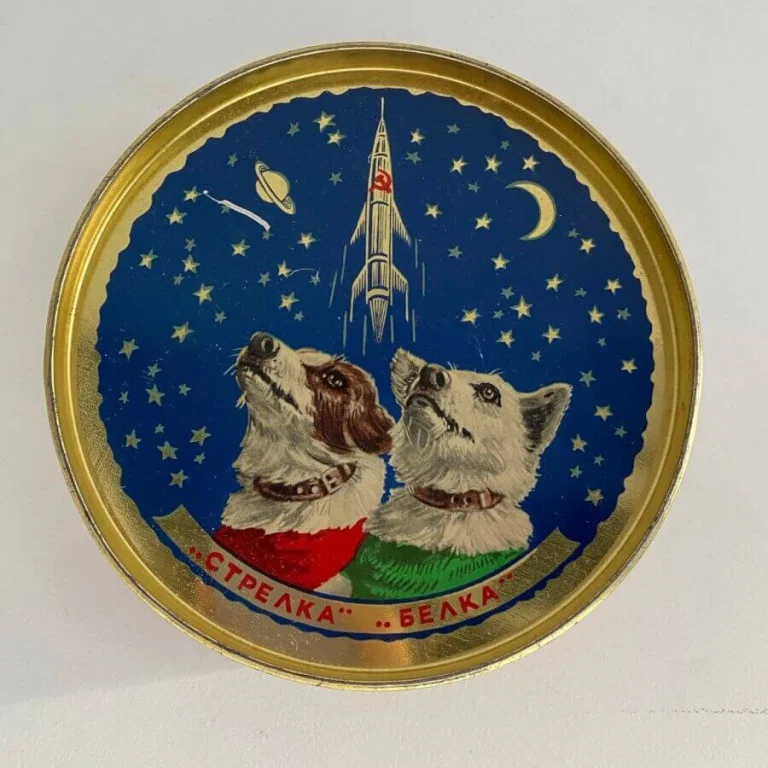
Before Gagarin, there were the dogs. Laika, a Moscow street dog, the first creature in orbit on 3 November 1957, dead within hours; Belka and Strelka, the first to come back alive on 19 August 1960, one of whose puppies ended up at the White House. The USSR made heroines of them, and objects by the million: pins, sweet tins, alarm clocks, postcards, tapestries. This guide tells the flights, then reviews the objects, with dates and prices.
This website uses cookies to improve your experience while you navigate through the website.
Out of these cookies, the cookies that are categorised as necessary are stored on your browser as they are essential for the working of basic functionalities of the website.
We also use third-party cookies that help us analyse and understand how you use this website.
These cookies will be stored in your browser only with your consent.
You also have the option to opt out of these cookies.
But opting out of some of these cookies may affect your browsing experience.
Necessary cookies are absolutely essential for the website to function properly. This category only includes cookies that ensure basic functionalities and security features of the website. These cookies do not store any personal information.
Cookies that are not strictly necessary for the website to work and that are used specifically to collect personal data through analytics, ads and other embedded content are called non-necessary cookies. User consent is required before these cookies run on the website.
✕
Soviet in Paris
Online. We answer in person, no AI and no chatbot. Reply right away, 20 min at most.
Hello 👋 A question about an item, an order or shipping? Write to us.
Your email is used only to reply to you.
Subscribe to our newsletter and get 10% off your first order.
Subscribe
★ New pieces before anyone else
★ New blog articles
★ Soviet in Paris news and updates
Join the Party
10% off your first order
Receive your welcome card and our next arrivals.
Your code appears here and is also sent to you by email. You can leave the Party in one click, at any time.