Freiberger Drum Sextant - Trommel-Sextant No. 820672 - East Germany 1982
$909.99Unique piece


Freiberger Drum Sextant - Trommel-Sextant No. 820672 - East Germany 1982
$909.99Unique piece
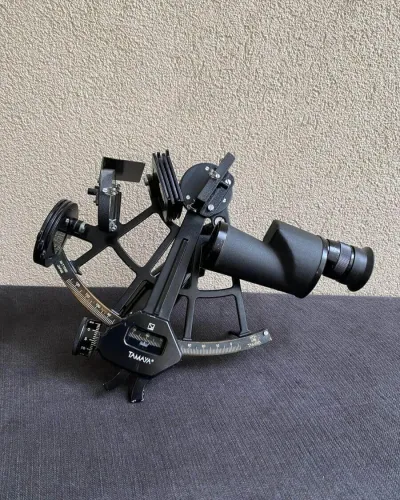
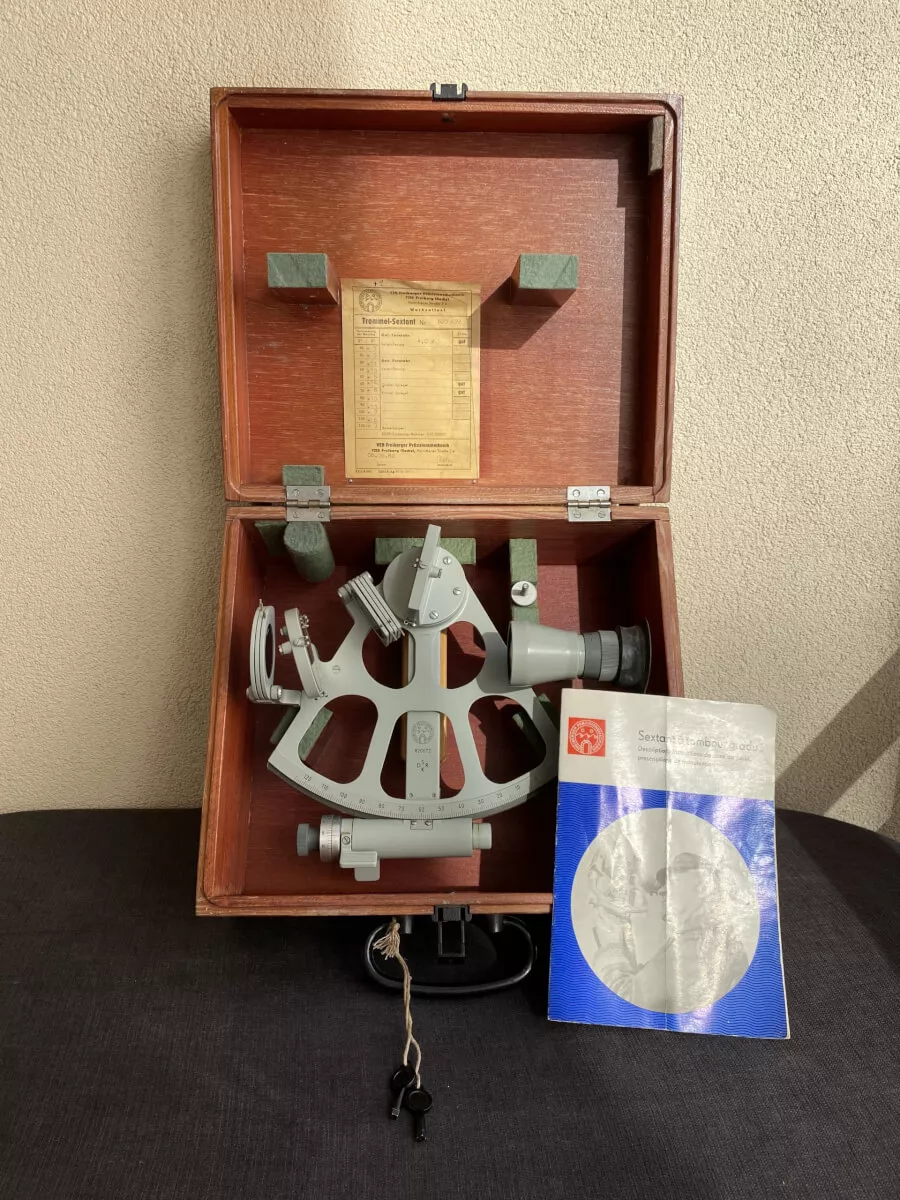
Freiberger drum sextant made in East Germany, number 820672, with its wooden case and keys, adjustment key, French instruction booklet and its factory certificate dated 8 June 1982.
1 in stock
Message received, dear comrade.
Our information desk usually replies within 24 hours at the address provided.Death of Leonid Brezhnev in November. Yuri Andropov succeeds him at the head of the CPSU.
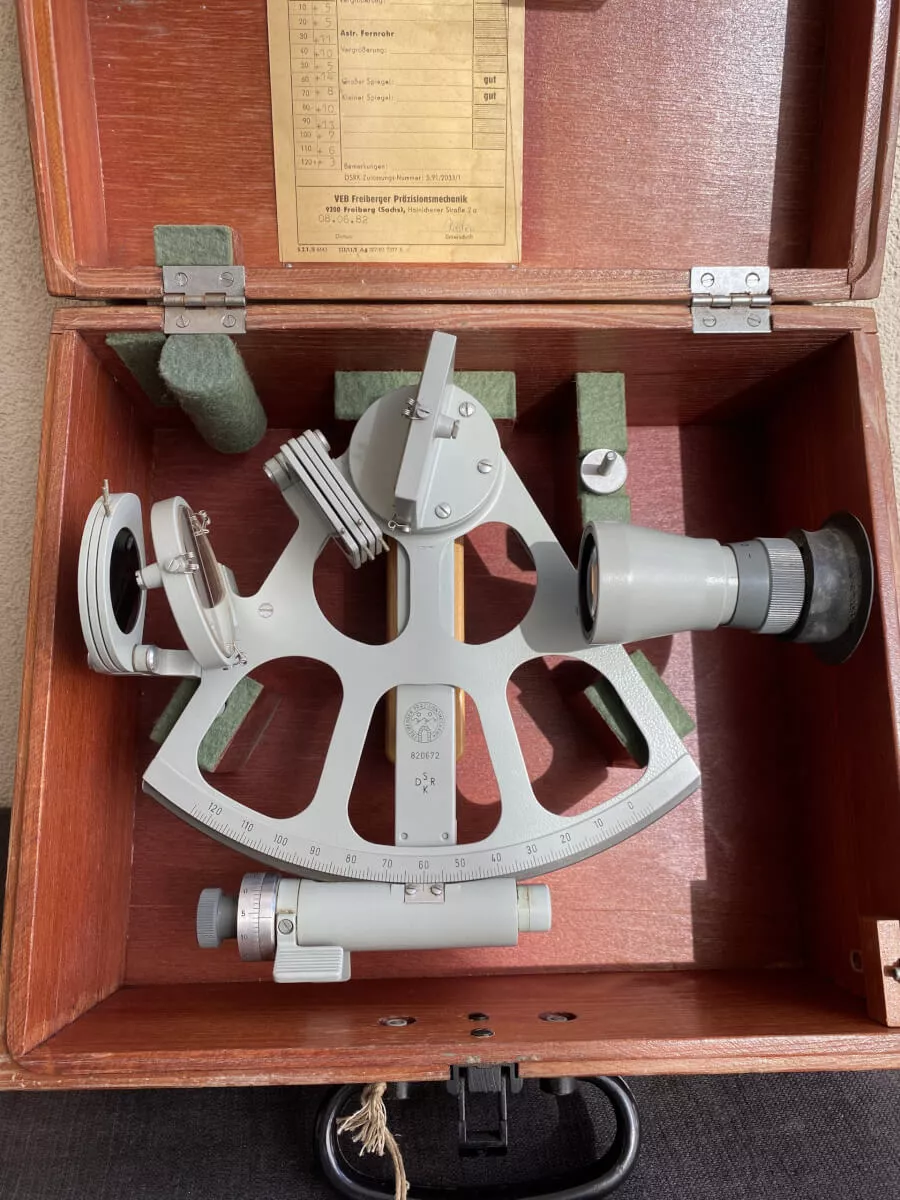
Drum sextant (Trommel-Sextant) made in East Germany by VEB Freiberger Präzisionsmechanik in Freiberg, Saxony, number 820672. It comes with its wooden case and keys, its adjustment key, its French instruction booklet and its factory certificate (Werksattest) fixed inside the lid, dated 8 June 1982 and signed by the inspector.
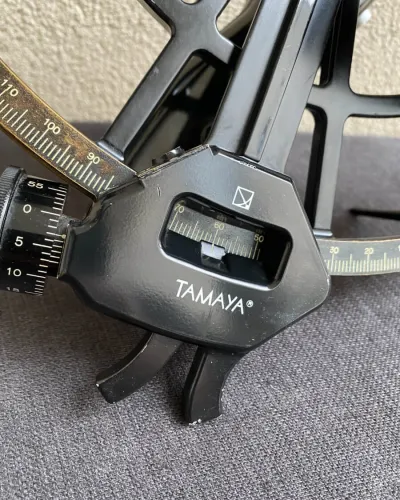
The frame is engraved with the factory logo (two stars above mountains and the entrance of a mine gallery, a reference to Freiberg’s mining past), the serial number 820672 and the DSRK mark. A “Made in the GDR” label is fixed on the back. The instrument has a 4x telescope with a rubber eyecup, a half horizon mirror, two sets of coloured shade glasses, a wooden handle and resting legs. Degrees are read on the arc and minutes on the drum, with an estimate to a tenth of a minute according to the booklet. The case has dovetail joints, a black handle and a black locking latch with key.
For every 10 degrees up to 120, the certificate gives the correction to apply to the reading, between +3 and +14 seconds of arc. It rates the telescope and both mirrors “gut” (good) and records the DSRK approval number 5.91/2033/1. A +2′ correction is handwritten at the top of the sheet.
A sextant measures the altitude of a celestial body above the horizon to fix a ship’s position at sea and, near the coast, the horizontal angle between two points of known position. The Freiberg workshop traces its origins back to 1791. From 1965 the factory worked for VEB Carl Zeiss Jena and became the group’s maker of levels, compasses and sextants. After reunification, drum sextant production continued under the Freiberger name.
Very good condition, complete in its case.
Additional information
| Weight | 4 kg |
|---|---|
| Dimensions | 40 × 40 × 35 cm |