Blog

DP-5V: Mr Vanoli’s ДП-5В in its transport chest: the console in its case, the probe, the headphones, the extension rod and the documents - Soviet in Paris
History & Propaganda

DP-5V Geiger Counter: the Soviet Civil Defence Radiometer, from Manual to Measurement

The ДП-5В (DP-5V) is the field radiometer of Soviet civil defence: a green Bakelite console, a probe with a rotating gamma, beta and check-source shield, headphones and a manual that explains operation and maintenance. The one in this article served in an industrial bakery in Chișinău and was serviced in March 1991. Its owner shared his photos and documents with us, and we turned them into a tool that lets you operate it on screen, step by step.

Read more »
Misha enamelled plaque: close-up of the enamelled Misha and his Olympic rings belt - Soviet in Paris
History & Propaganda

Moscow 1980 Olympic Games: Misha, the Torch, the Watches and the Objects to Collect

The Moscow Games, from 19 July to 3 August 1980, boycotted by some sixty countries, produced more objects than any Soviet event: a bear cub, Misha, drawn by Viktor Chizhikov, an emblem made of running tracks, five thousand torches, watches from every factory, platinum coins, rings, tea glass holders, posters. This guide tells the story of the Games and reviews the objects, with the marks that authenticate them and the prices.

Read more »
Clocks & Watches

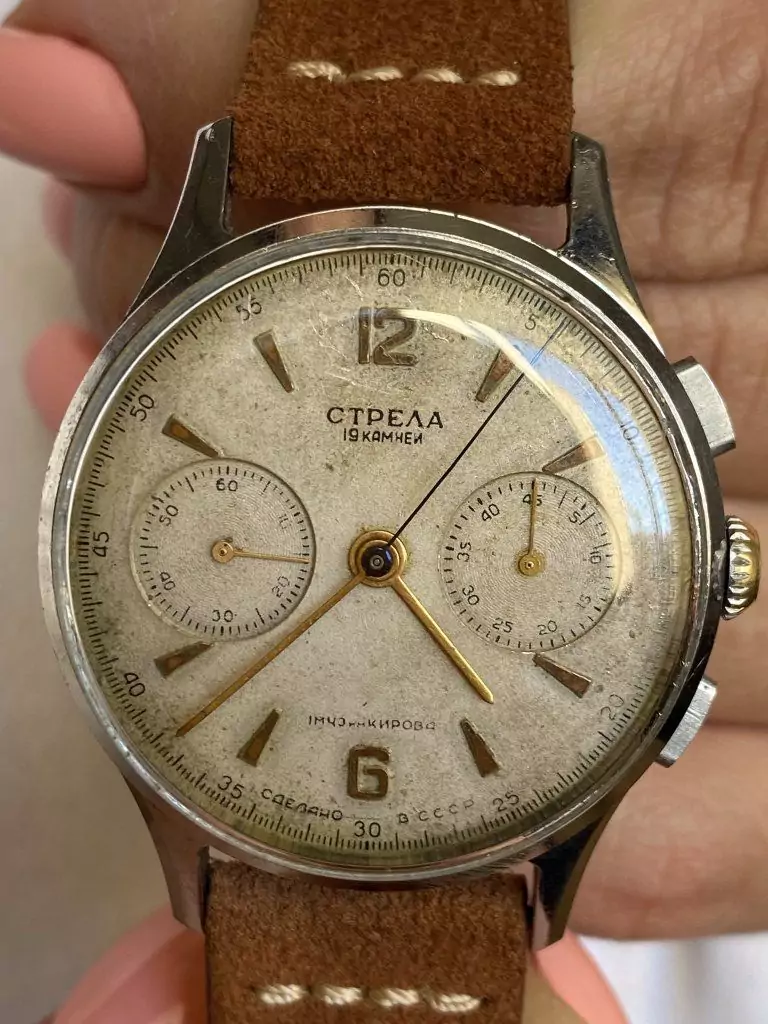
Strela 3017: How to Date a Strela, Poljot or Sekonda Chronograph by Its Number

The 3017 chronograph of the First Moscow Watch Factory carries a five-digit number on the balance cock. The most common dating method reads it as a single series, from 1959 to 1979. Four factory passports show there are two, and that the same number can point to two watches made ten years apart. Here is how to read the number, the dial, the logo and the bridge, with a decoder to date your Strela, Poljot or Sekonda.

Read more »
History & Propaganda

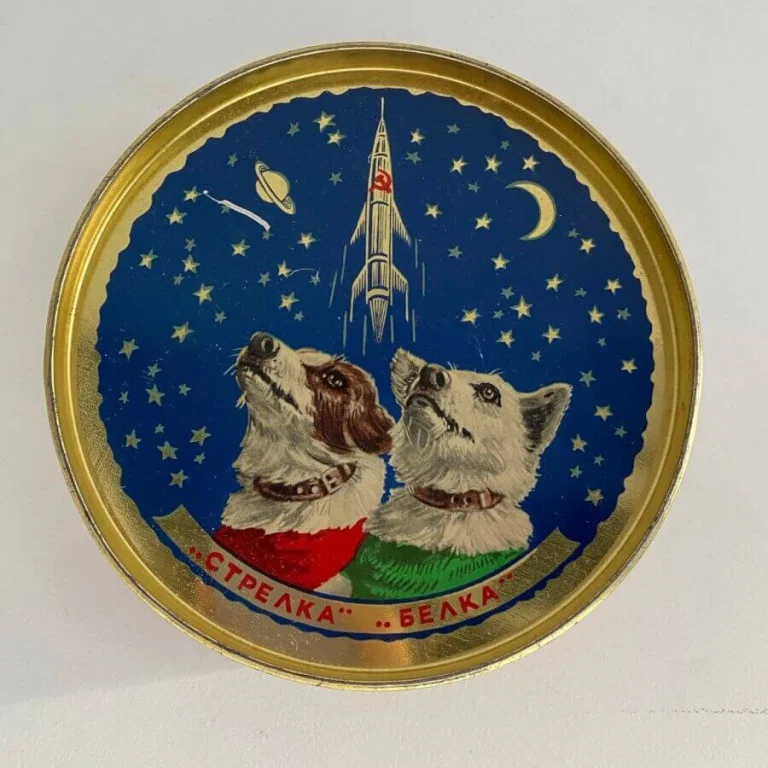
Laika, Belka and Strelka: The Cosmonaut Dogs and Their Objects

Before Gagarin, there were the dogs. Laika, a Moscow street dog, the first creature in orbit on 3 November 1957, dead within hours; Belka and Strelka, the first to come back alive on 19 August 1960, one of whose puppies ended up at the White House. The USSR made heroines of them, and objects by the million: pins, sweet tins, alarm clocks, postcards, tapestries. This guide tells the flights, then reviews the objects, with dates and prices.

Read more »
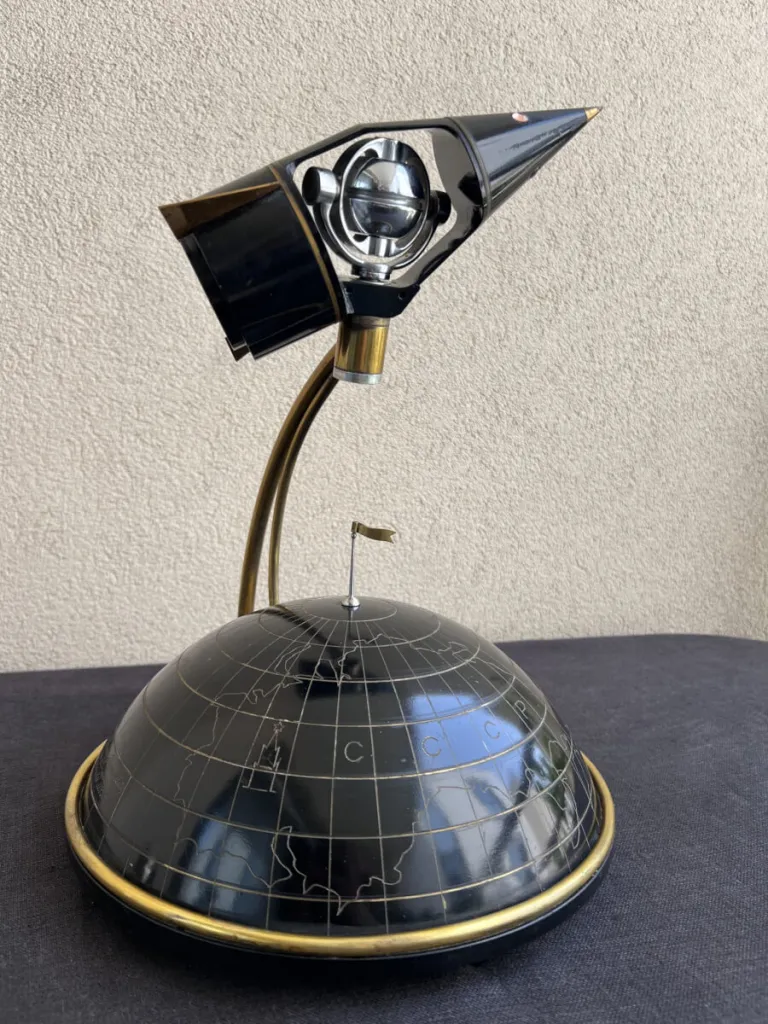
Vostok rocket globe by MZEMA: overall view, black rocket with gyroscope on a curved arm above a black globe - Soviet in Paris
History & Propaganda

Dating a Soviet Space Souvenir by Its Mission: The Method

A Soviet space souvenir carries its date within it: it cannot predate the mission it shows, and its rocket says whether it was drawn before or after 1967, the year the USSR showed the Vostok launcher to the public. This guide gives the chronology of the missions that produced objects, from Sputnik to Buran, the shapes that give away each period, and the marks, prices and dedications that refine the date.

Read more »
Space Race night light: lit up in the dark, with the globe and plexiglass arc glowing - Soviet in Paris
History & Propaganda

Soviet Night Lights and Lamps: The Models, the Marks, Putting Them Back into Service on 220 V

The Soviet night light is one of the most requested decorative objects in our catalogue, and the simplest to bring back to life: a globe, a rocket, a bulb, 220 volts. This guide presents the models, the Cosmos night light and its versions since 1967, Luna-9, the stratospheric MiG, the Ostankino tower, the Lenin icebreaker, the NKVD bakelite desk lamps, teaches how to read the price, the factory and the date moulded under the base, and explains how to plug them in at home without damaging anything.

Read more »
History & Propaganda

Kasli Cast Iron: Recognising a Piece, Reading the Mark, Dating It

Kasli cast iron is the only iron casting in the world collected like bronze. Cast in the Urals since the 19th century, awarded in Paris in 1900, it continued under the USSR with boxers, children with rockets, returning soldiers and busts. This guide gives its history in brief, explains the technique, teaches how to read the « КАСЛИ » mark and its year, how to tell cast iron from an alloy with a simple magnet, and gives prices.

Read more »
History & Propaganda

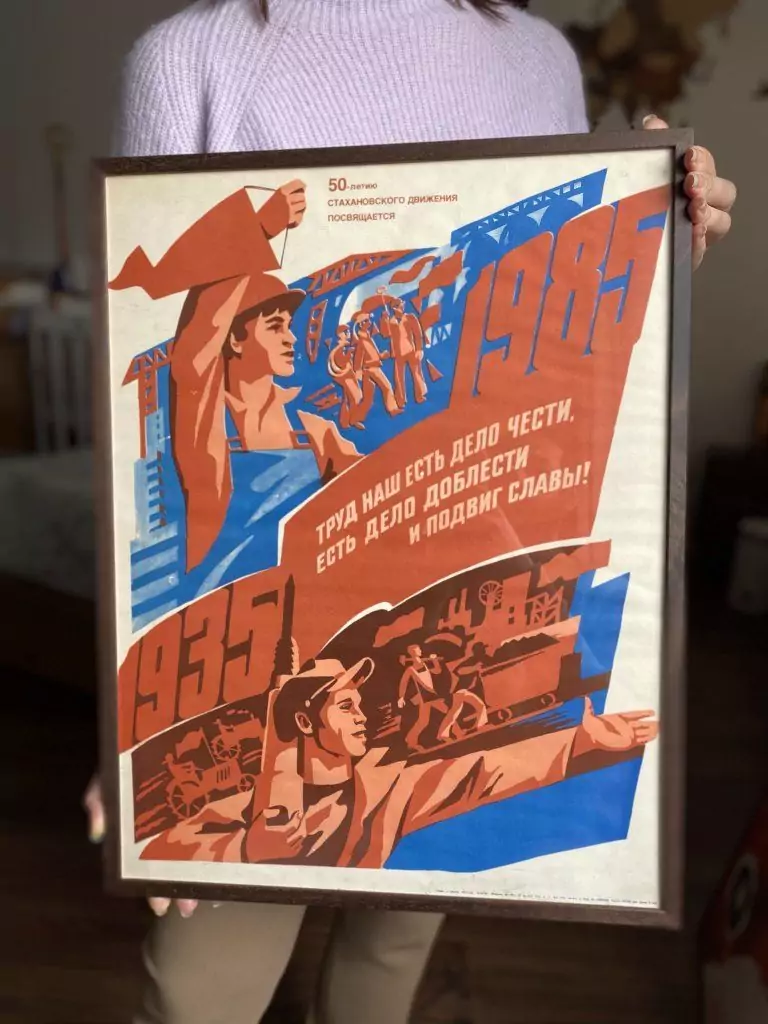
Stakhanovite movement: the 1935 record and its propaganda

On the night of 30 to 31 August 1935, a 29-year-old hewer cut 102 tonnes of coal in under six hours in a Donbass mine. Two weeks later his name stood for a national movement. The Stakhanovite movement gave the USSR its labour heroes, posters, sculptures and diplomas, and gave English a word still in use. This is the story of the record, how it was staged, and the objects it left behind.

Read more »
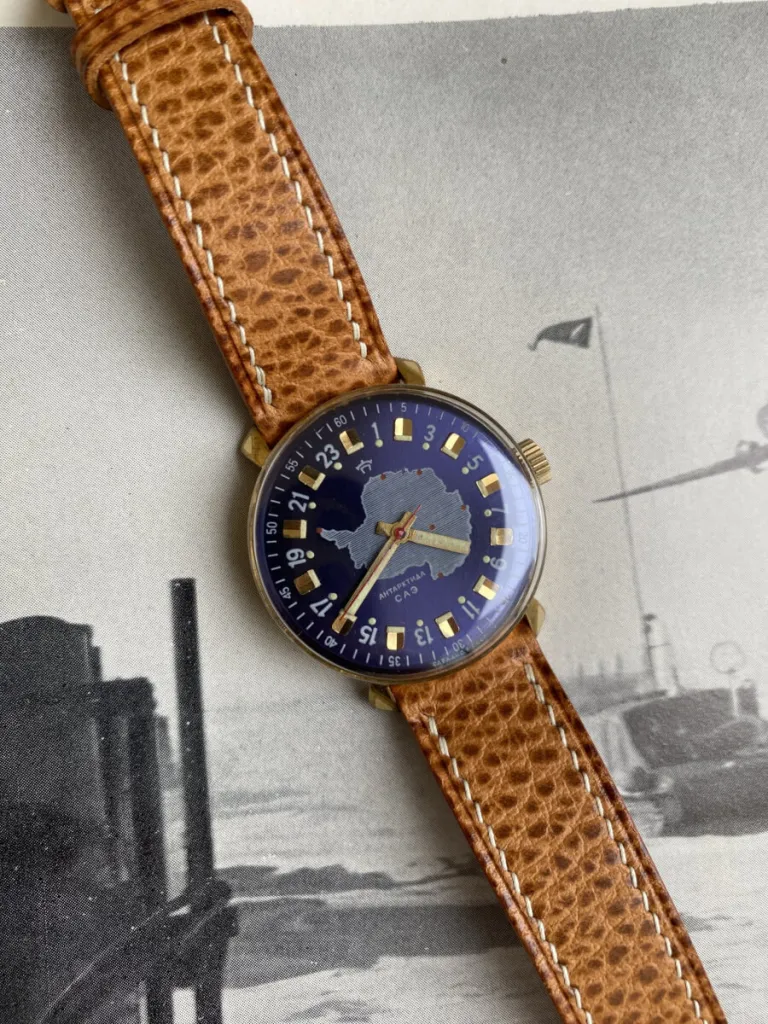
Raketa Antarktida 16 SAE watch: overall view, blue 24-hour dial and stitched leather strap - Soviet in Paris
Clocks & Watches

Raketa Watches: The Complete Guide to the Petrodvorets Brand

Raketa is, with Vostok, the most common Soviet watch brand on the French market, and the most copied. Every one of them came out of a single factory in Petrodvorets, near Leningrad, which produced millions of pieces between 1961 and 1991. This guide gathers what you need to know before buying one: the history of the factory, the calibres and how to read them on the bridge, the models that matter, how to date a piece, the copies to avoid and the prices we see. It links to our detailed guides, model by model.

Read more »
Sturmanskie Gagarin Watch - Type 1 - 1952 - Box
Clocks & Watches

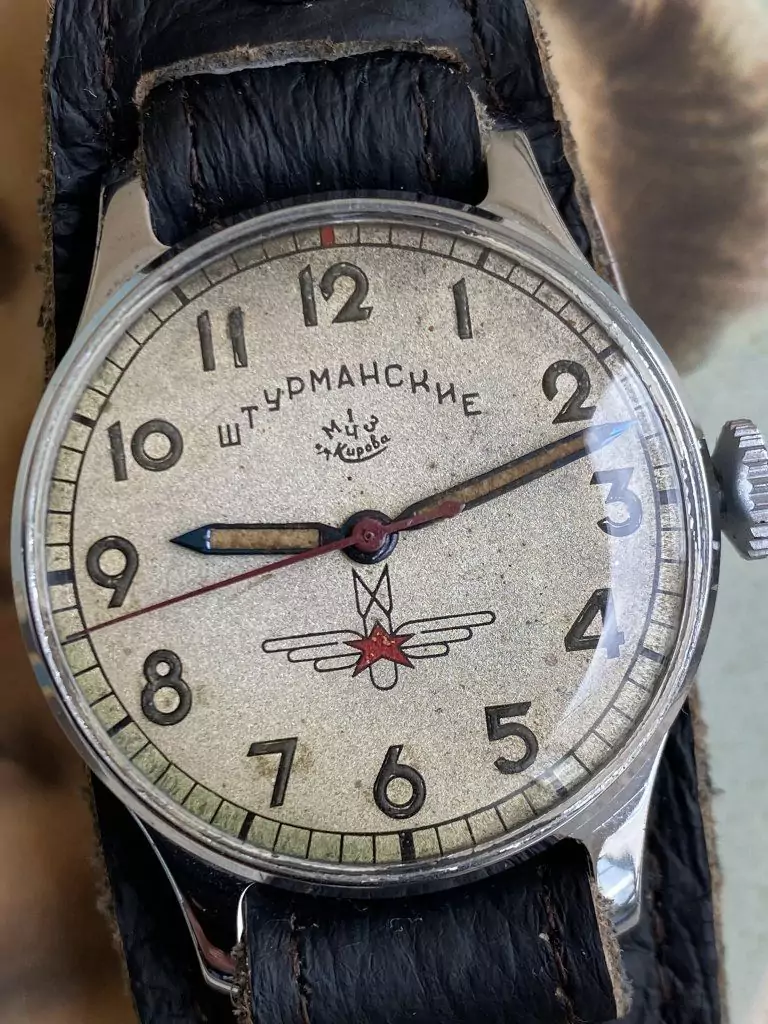
Radium on Soviet Dials: Recognising, Measuring, Living with It

Until the early 1960s, Soviet luminous dials, like Swiss and American ones, were painted with radium 226. A radium dial no longer glows, but it stays radioactive for thousands of years. This guide says which objects are concerned, pilot’s watches, cockpit clocks, compasses, alarm clocks, how to recognise them by eye and with a Geiger counter, what the real risks are, and how to keep them safely or part with them.

Read more »