Soviet Navy Star Globe ZG - Celestial Navigation - 1975 - USSR - No. 5584
$679.99Unique piece


Soviet Navy Star Globe ZG - Celestial Navigation - 1975 - USSR - No. 5584
$679.99Unique piece
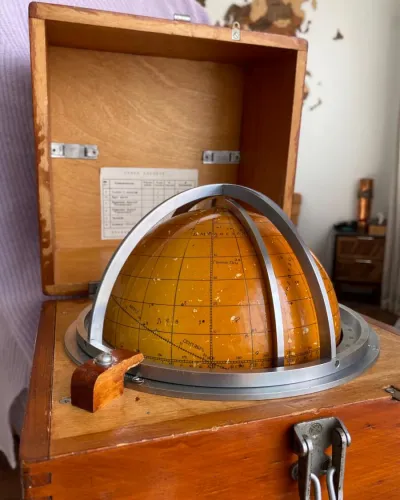
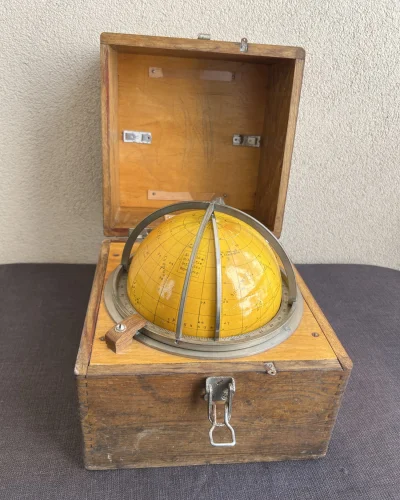
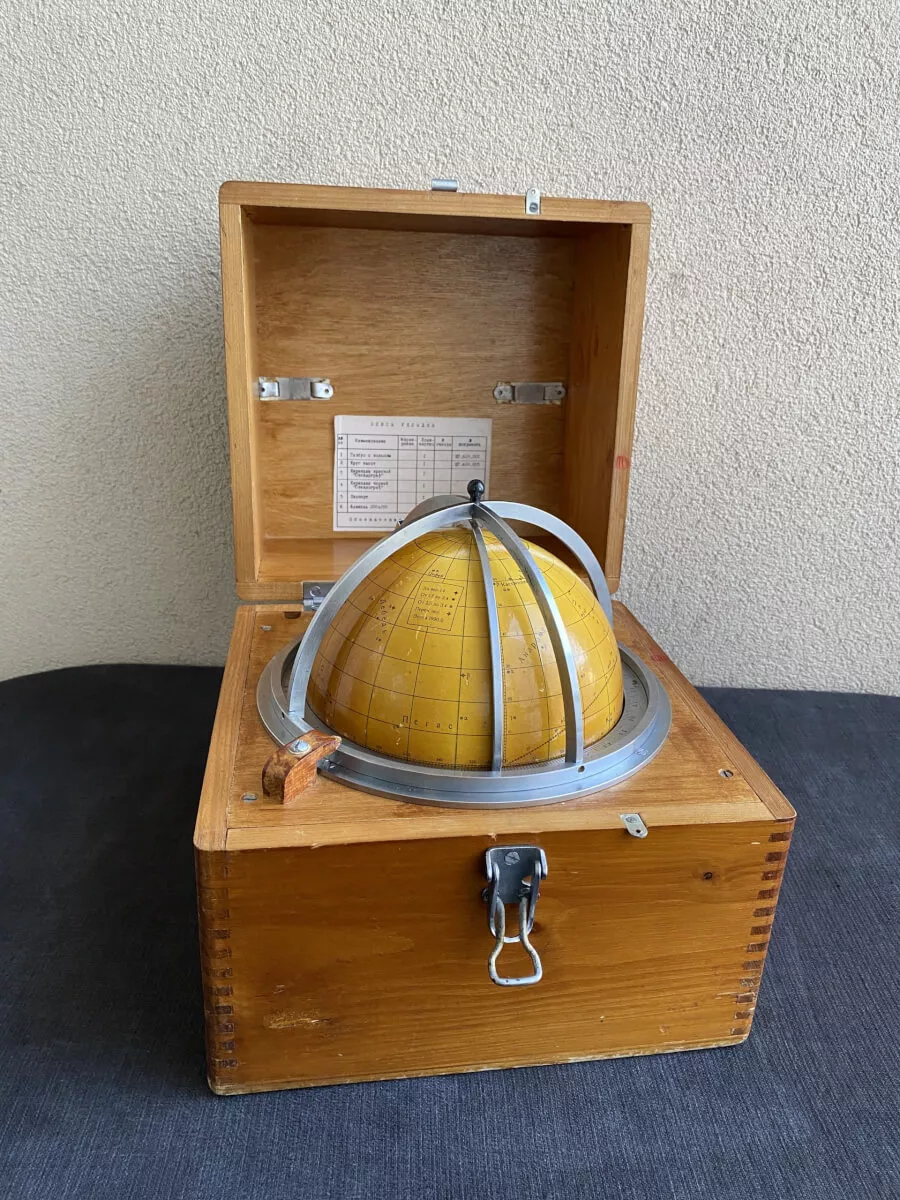
Soviet ZG celestial navigation globe used by the Soviet Navy (VMF), dated 1975 and numbered 5584, as new. Star chart in Russian, azimuth ring and altitude circle, stored in their wooden case with the packing list glued inside the lid.
1 in stock
Message received, dear comrade.
Our information desk usually replies within 24 hours at the address provided.Apollo-Soyuz mission. First USSR-United States space cooperation. Helsinki Accords.


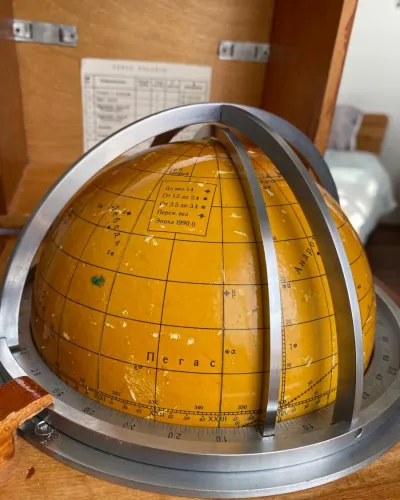
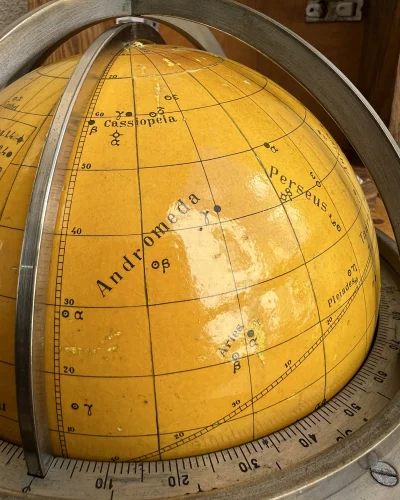
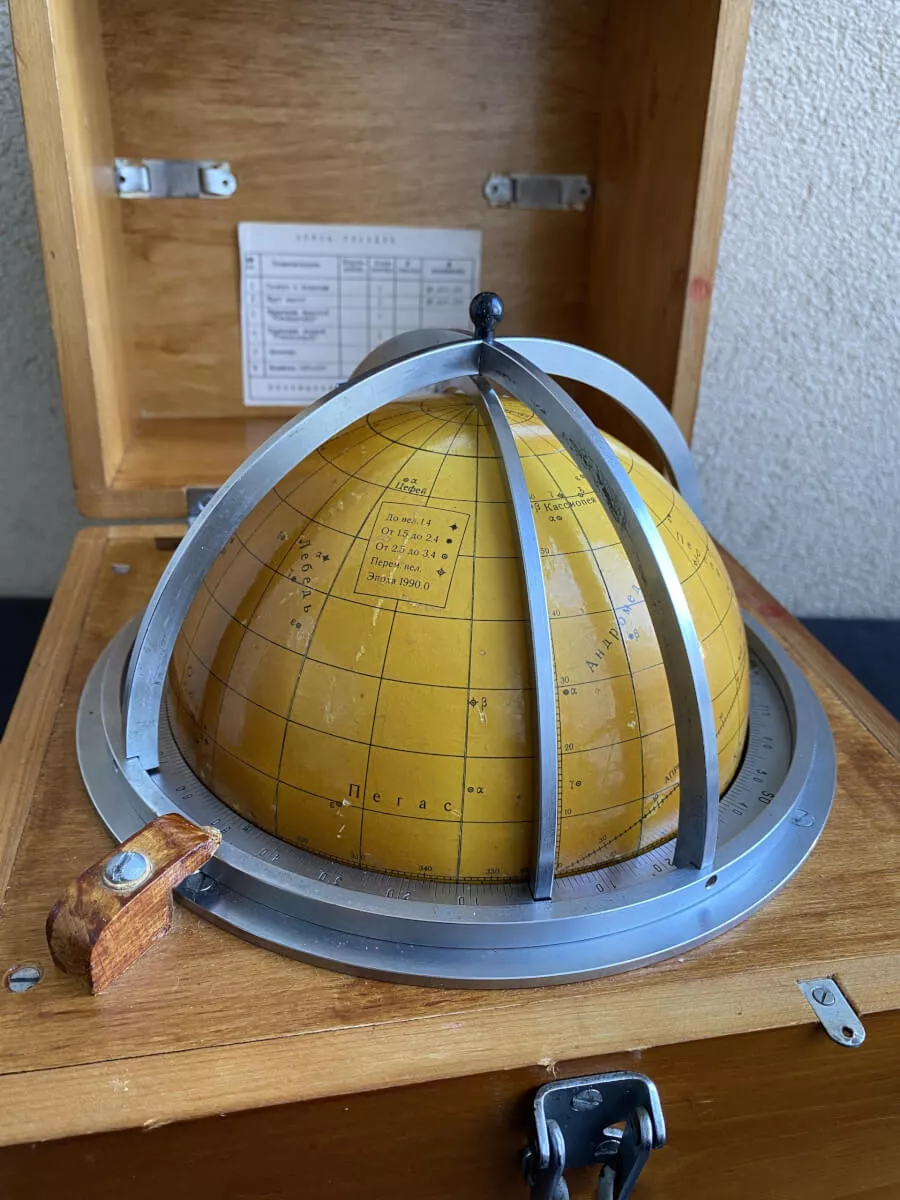
Soviet celestial navigation globe used by the Soviet Navy (VMF), designated ЗГ (ZG, for zvyozdny globus, star globe). The wooden case carries two plates: the designation ЗГ (ZG) and a plate stamped with the КБ (KB) mark, dated 1975 and numbered 5584. The yellow globe shows the star chart in Russian: Пегас (Pegasus), Лебедь (Cygnus), Андромеда (Andromeda), Кассиопея (Cassiopeia), Б. Медведица (Ursa Major), Возничий (Auriga), Лев (Leo), down to Ю. Крест (the Southern Cross) in the southern hemisphere. Полярная (Polaris) marks the pole. The ecliptic is graduated with the months, the equator in hours and degrees. A cartouche gives the magnitude classes and the note “Эпоха 1990.0” (epoch 1990.0).
The globe sits in a ring graduated in degrees and marked with the cardinal points, topped by the altitude circle, a cage of graduated metal half circles. It is as new. The light wooden case, with finger-jointed corners, closes with a latch and is carried by a black handle. Inside, two arms lined with green felt hold the globe. The lid keeps its “Опись укладки” (packing list), which lists the globe with its ring, the altitude circle, red and black Стеклограф (Steklograf) pencils, the passport and a flannel cloth, under the designation КБ8.820.997 (KB8.820.997).
A star globe is used to prepare sextant observations. Set to the ship’s latitude and sidereal time, it gives the approximate altitude and azimuth of the navigational stars above the horizon, so the navigator can choose and locate the stars to observe. Navies and merchant fleets used it until electronic calculators took over. Epoch 1990.0 means the star positions are calculated for 1990, so that they remain accurate throughout the instrument’s service life.
Additional information
| Weight | 5 kg |
|---|---|
| Dimensions | 50 × 40 × 30 cm |