Blog

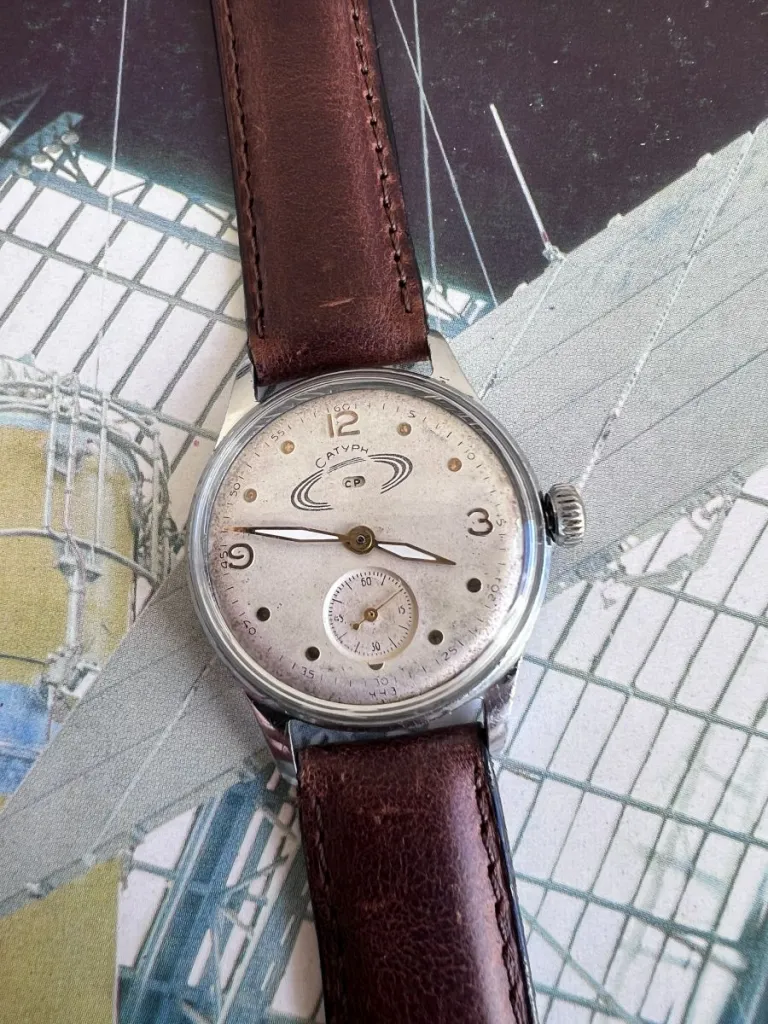
Saturn watch: overall view, "САТУРН" (Saturn) dial with planet logo and brown leather strap - Soviet in Paris
Clocks & Watches

Vostok Watches: The History of the Chistopol Factory, Model by Model

Vostok watches come from a factory born of an evacuation: in October 1941 the Second Moscow Watch Factory was sent to Chistopol, in Tatarstan. It set up in a distillery, made mine mechanisms, then Pobeda watches, before becoming the watch supplier of the Ministry of Defence in 1965. The story of the factory, from the war to today, and one landmark for each model family.
Read more »
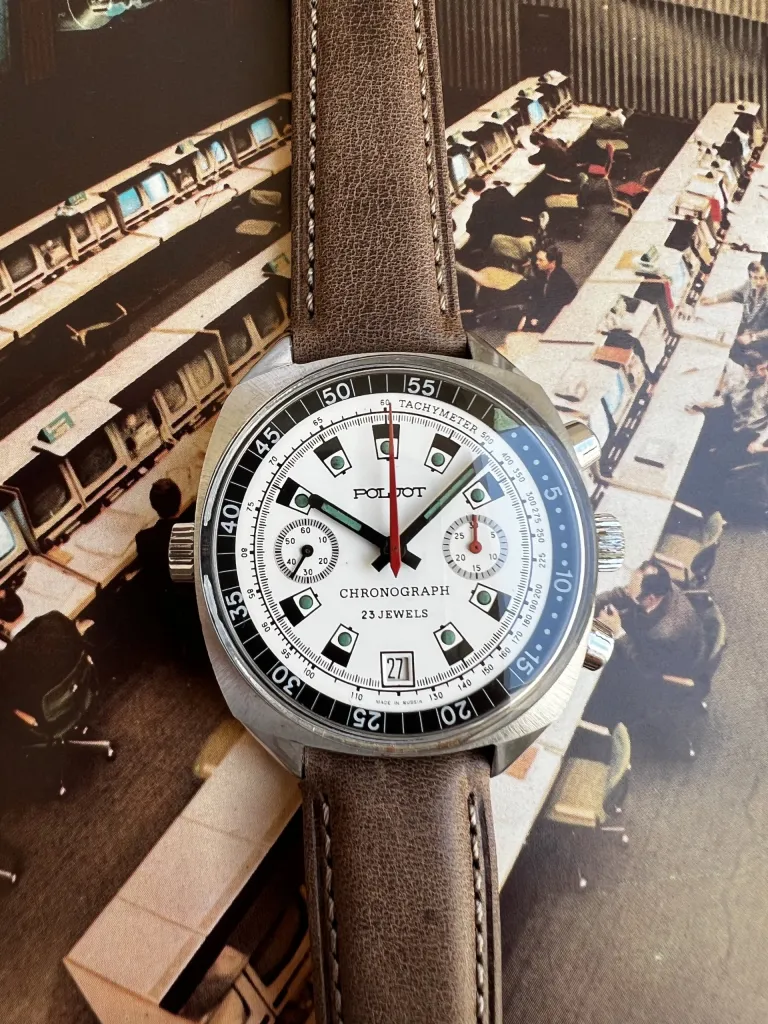
Poljot 3133 Cosmonauts chronograph: overall view, white "CHRONOGRAPH 23 JEWELS" dial on a leather strap - Soviet in Paris
Clocks & Watches

How to Use a Chronograph: Pushers, Reading, Telemeter and Tachymeter

A chronograph is a watch that also measures durations: two pushers control a large central hand, independent of the time. This guide explains how to start, stop, resume and reset a measurement, how to read the result, and what the telemeter and tachymeter scales are for. An animated Poljot 3133 chronograph lets you try each operation, with an atomic explosion and a racing car to practise on.

Read more »
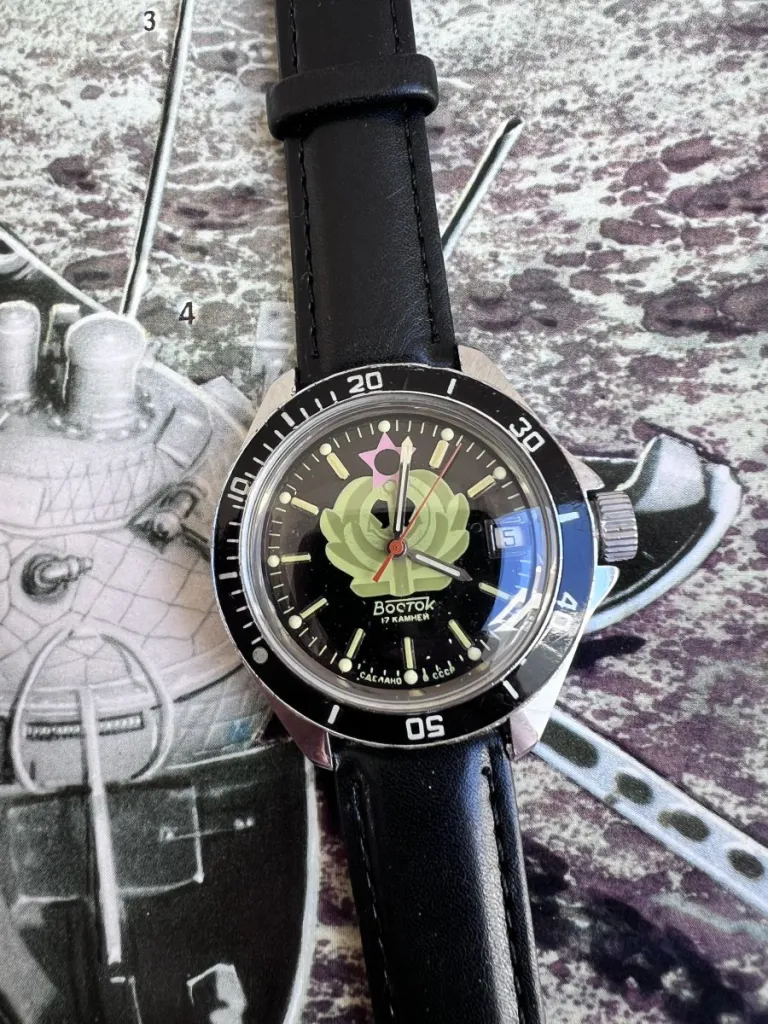
Vostok Amphibia 041776 watch: overall view, black dial with emblem, graduated bezel and black strap - Soviet in Paris
Clocks & Watches

The Vostok Amphibia and Komandirskie Crown: Why It Wobbles and How to Use It

You unscrew the crown of your Vostok and it starts moving in every direction: the watch is not broken. This wobbly crown is a deliberate feature of the Amphibia and Komandirskie. This guide explains why it is built this way, with a 3D cutaway, then how to wind the watch, set the time and date, screw the crown back and use the rotating bezel.

Read more »
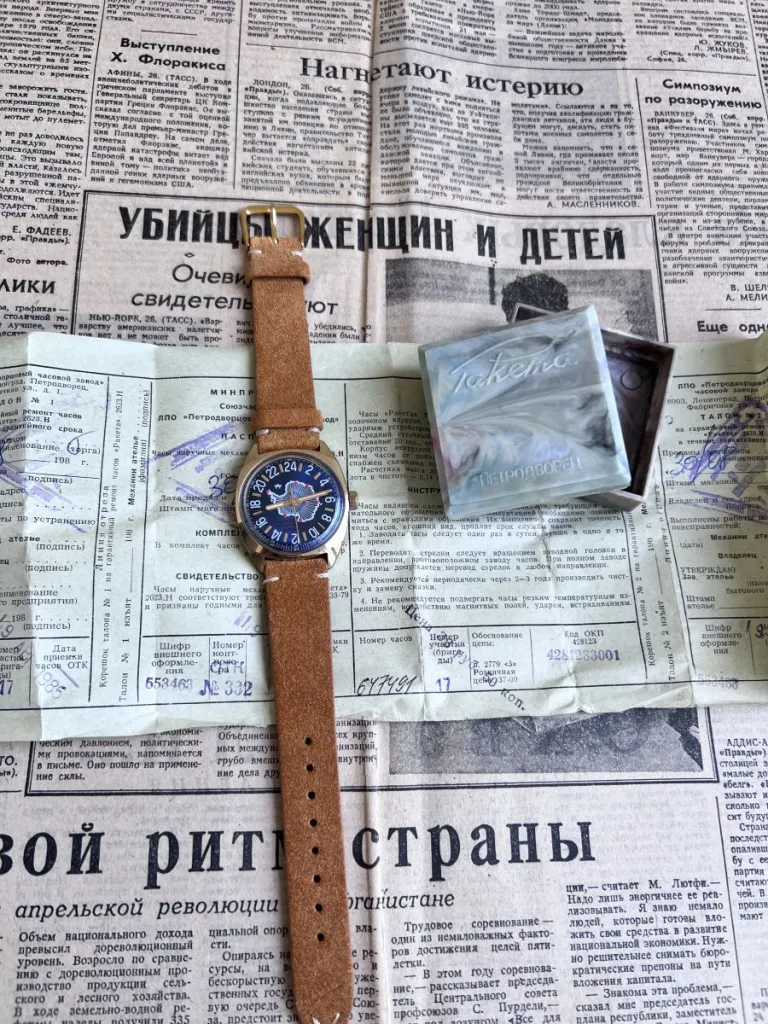
Raketa Antarctic watch: watch, factory passport and "Ракета ПЕТРОДВОРЕЦ" box laid on a newspaper - Soviet in Paris
Clocks & Watches

Mechanical, Automatic or Quartz Watch: The Differences Explained with Animated Diagrams

A mechanical watch draws its energy from a spring that is wound by hand. An automatic watch is a mechanical watch that winds itself on the wrist. A quartz watch runs on a battery. This guide explains how each one works with animated diagrams and a 3D movement, based on Soviet calibres, then answers the most common questions: winding, accuracy, stopping overnight, servicing.

Read more »
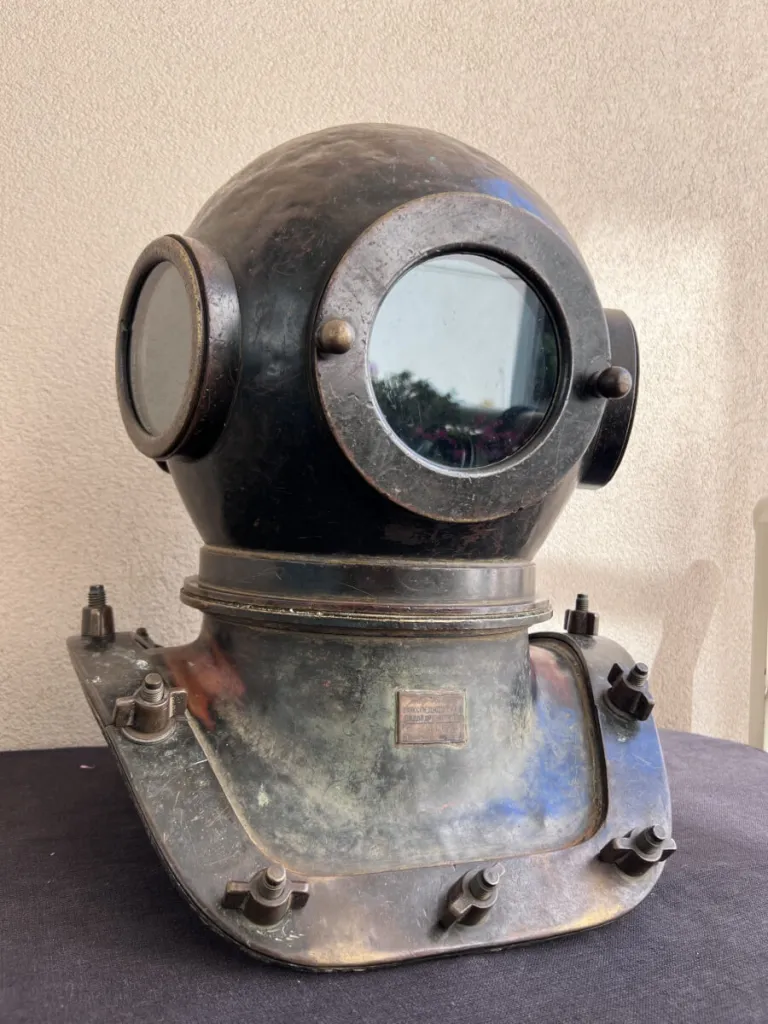
12-bolt diving helmet, Leningrad 1964: three-quarter view, three-window bonnet and wing nuts - Soviet in Paris
History & Propaganda

Soviet Diving Helmets: 12-Bolt, 3-Bolt and the Heavy Diver's Kit

This guide tells the twelve-bolt Soviet diving helmet from the three-bolt, shows how to read the factory plate and presents what completed the helmet: boots, NV-1 knife, compass, lamp and 191ChS watch. It also gives the points to check before buying, with so many helmets made in the 2000s.

Read more »
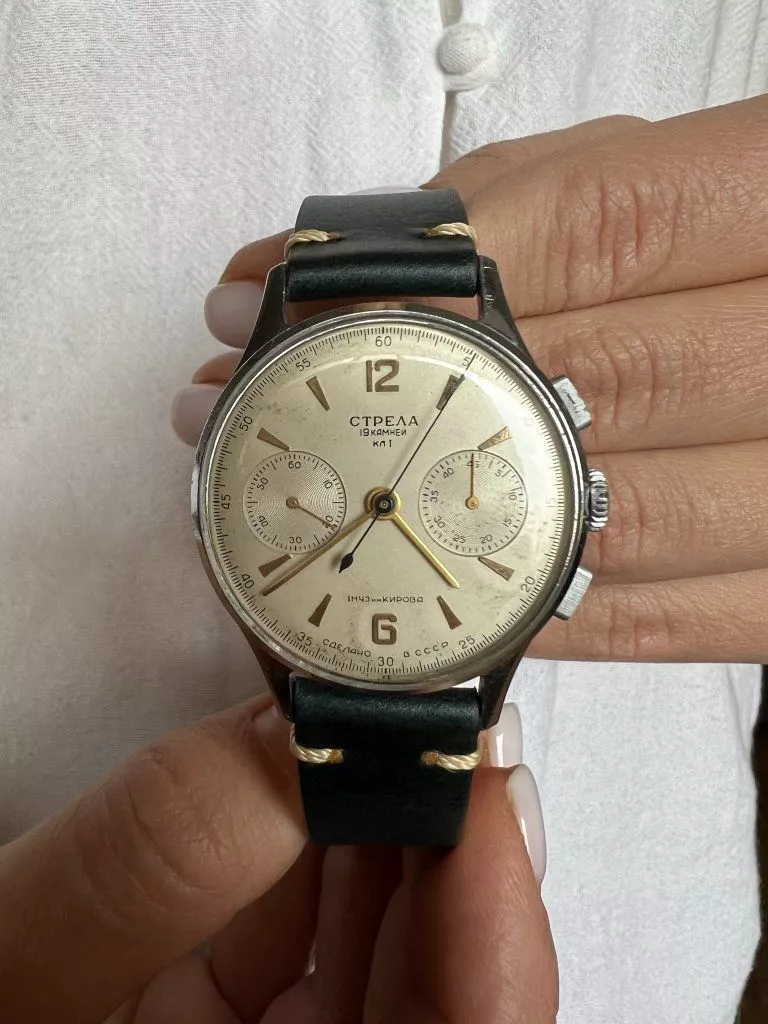
Cosmonaut Strela 3017 Watch - Poljot - Chronograph
Clocks & Watches

Poljot Watches: History, Models and Calibres of the First Moscow Watch Factory

Poljot watches come from the First Moscow Watch Factory, founded in 1930 with the machinery of an American manufacturer. The factory made the Pobeda, the pilots’ Sturmanskie, the first Soviet automatic, the first alarm wristwatch and an ultra-thin watch awarded in Leipzig, before bringing its whole output under the Poljot name in 1964. This guide traces that history, presents the models and their calibres, and gives the points to check before buying.

Read more »
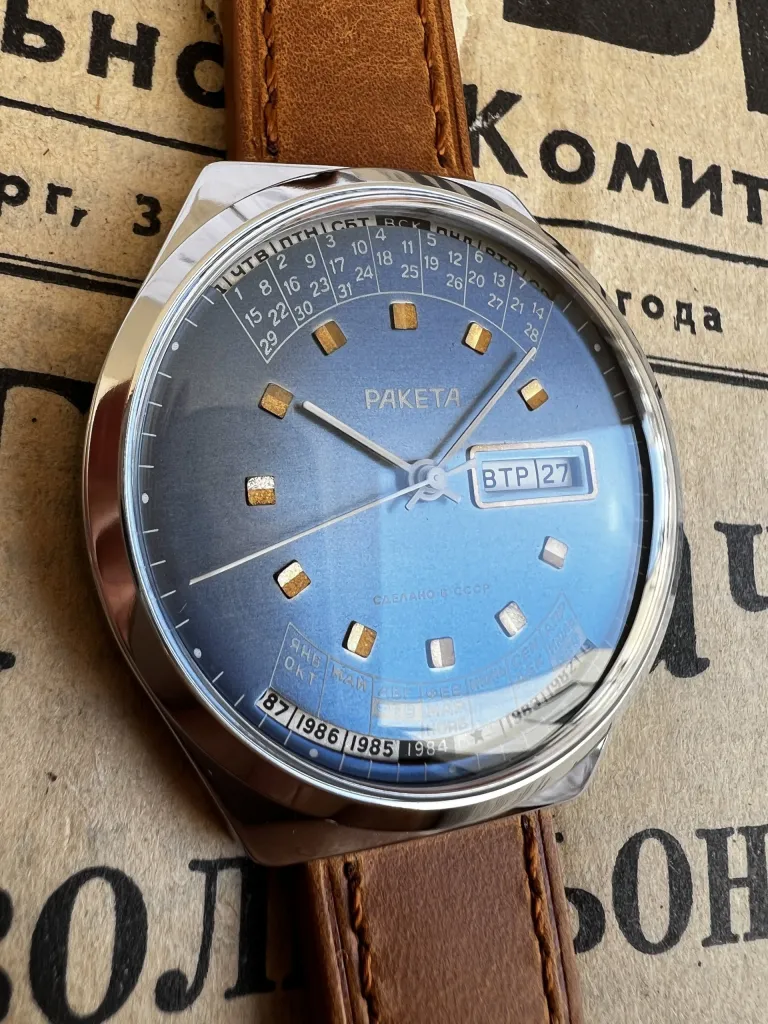
Raketa Perpetual Calendar watch with blue dial: dial at an angle, "ВТР 27" day-date window and years 1982 to 1987 - Soviet in Paris
Clocks & Watches

Raketa Perpetual Calendar: How It Works and How to Use It

The Raketa perpetual calendar is a Soviet watch whose dial carries a full calendar: a movable disc, set by a second crown, gives the day of the week for any date. The printed years stop at 2000, but the calendar still works, because each year has a twin on the disc. This guide explains how it works step by step, with a simulator, and shows which year to set up to 2040.

Read more »
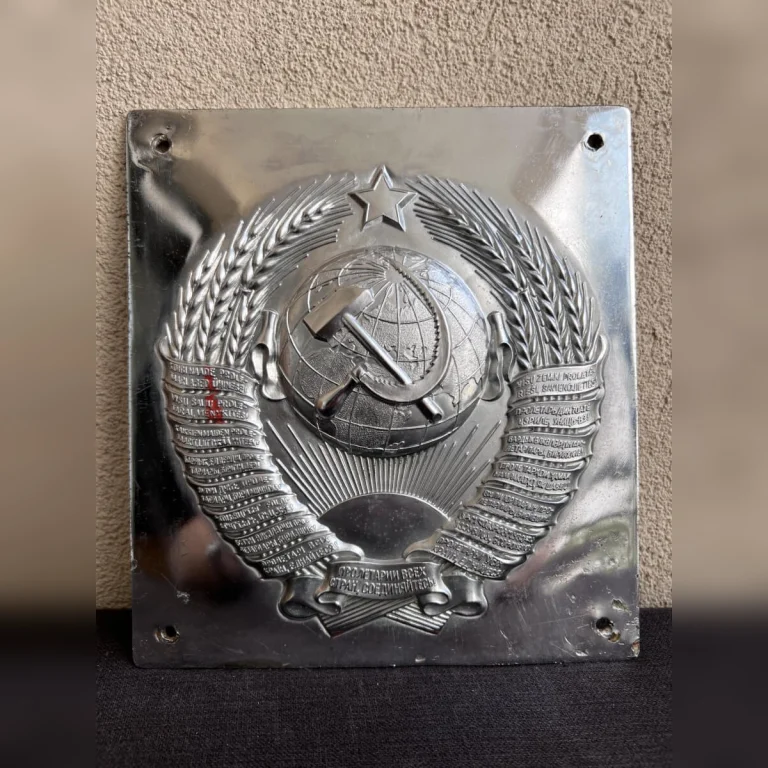
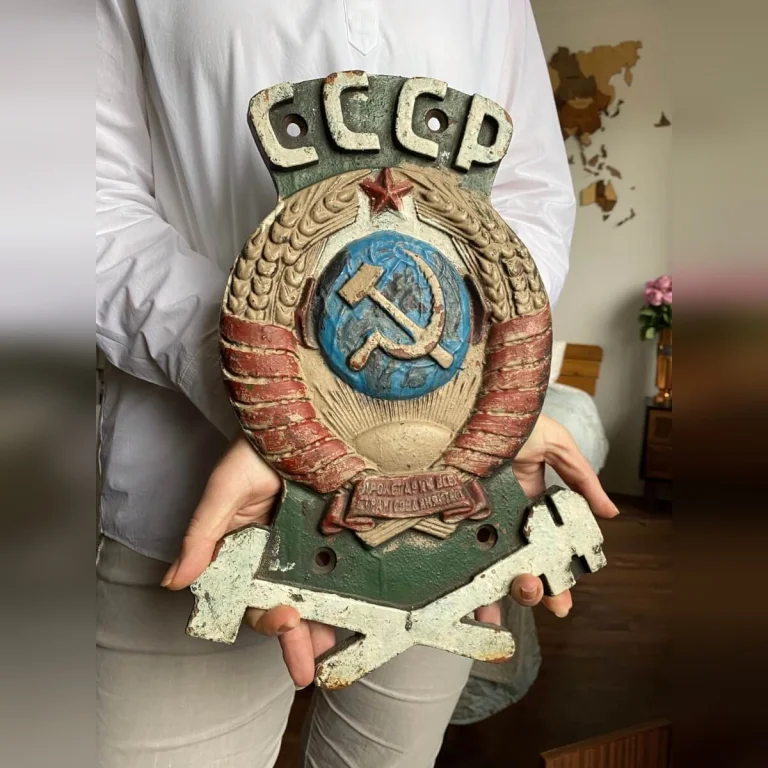
Soviet railway emblem in painted cast iron, letters СССР and coat of arms
History & Propaganda

Soviet Railway Emblem: The USSR Coat of Arms on Trains

Railway regulations required the Soviet railway emblem on passenger coaches and locomotives. Each one carries the letters СССР, the state arms and a hammer crossed with a wrench, the sign of the railwaymen. This guide explains where it was placed, how to read it, how to date it by its ribbons, and what sets apart the models found today.

Read more »
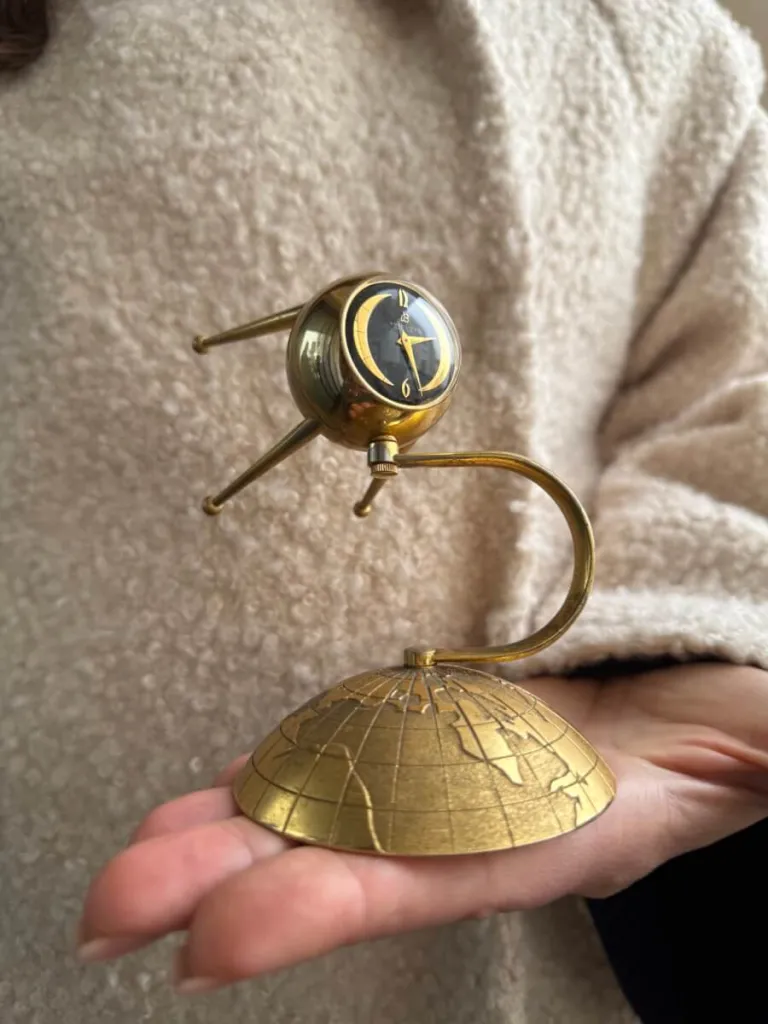
Breitling Bébé-Lune Sputnik clock: antenna sphere on its curved stem above the engraved globe base - Soviet in Paris
History & Propaganda

Breitling Baby Moon, Sputnik, Gagarin: The Objects the World Made for Soviet Spaceflight

On 4 October 1957 the USSR put the first artificial satellite into orbit. The French nicknamed it the bébé-lune, the baby moon, and in Geneva Breitling turned it into a desk clock. It was not alone. Gien earthenware, BN biscuits, German toys, Italian records, Romanian stamps, a Chinese alarm clock: from 1957 to the 1970s the whole world made objects for Sputnik, Laika and Gagarin. This article lists them, country by country.

Read more »