Clocks & Watches

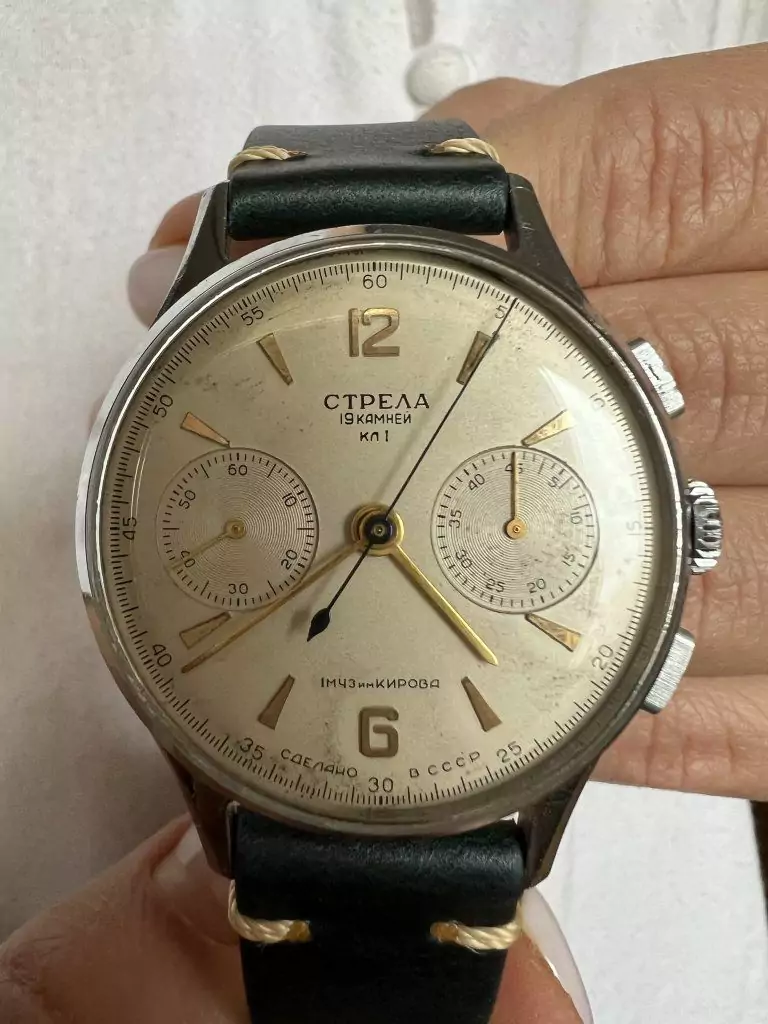
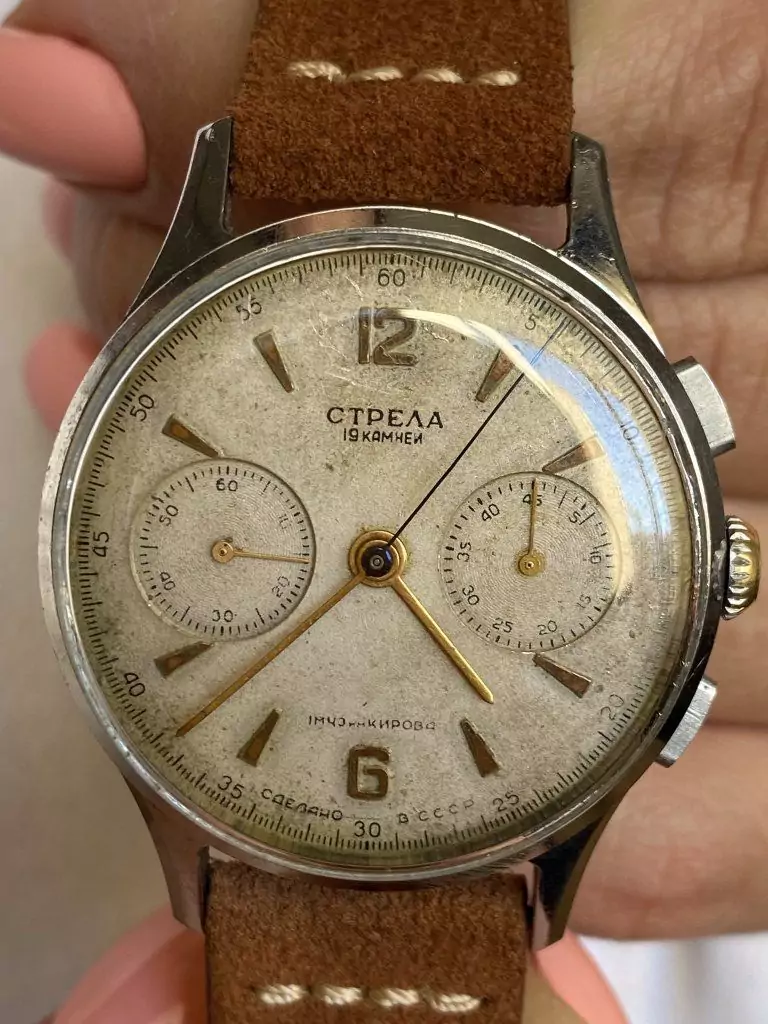
Strela 3017: How to Date a Strela, Poljot or Sekonda Chronograph by Its Number

The 3017 chronograph of the First Moscow Watch Factory carries a five-digit number on the balance cock. The most common dating method reads it as a single series, from 1959 to 1979. Four factory passports show there are two, and that the same number can point to two watches made ten years apart. Here is how to read the number, the dial, the logo and the bridge, with a decoder to date your Strela, Poljot or Sekonda.
Read more »
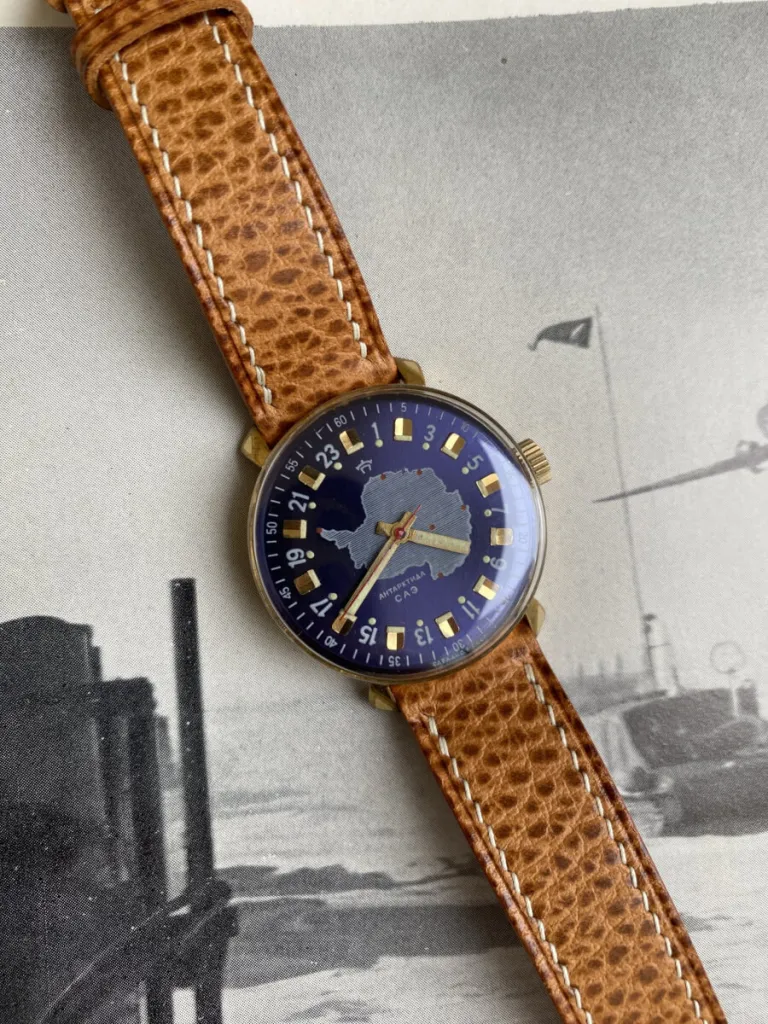
Raketa Antarktida 16 SAE watch: overall view, blue 24-hour dial and stitched leather strap - Soviet in Paris
Clocks & Watches

Raketa Watches: The Complete Guide to the Petrodvorets Brand

Raketa is, with Vostok, the most common Soviet watch brand on the French market, and the most copied. Every one of them came out of a single factory in Petrodvorets, near Leningrad, which produced millions of pieces between 1961 and 1991. This guide gathers what you need to know before buying one: the history of the factory, the calibres and how to read them on the bridge, the models that matter, how to date a piece, the copies to avoid and the prices we see. It links to our detailed guides, model by model.

Read more »
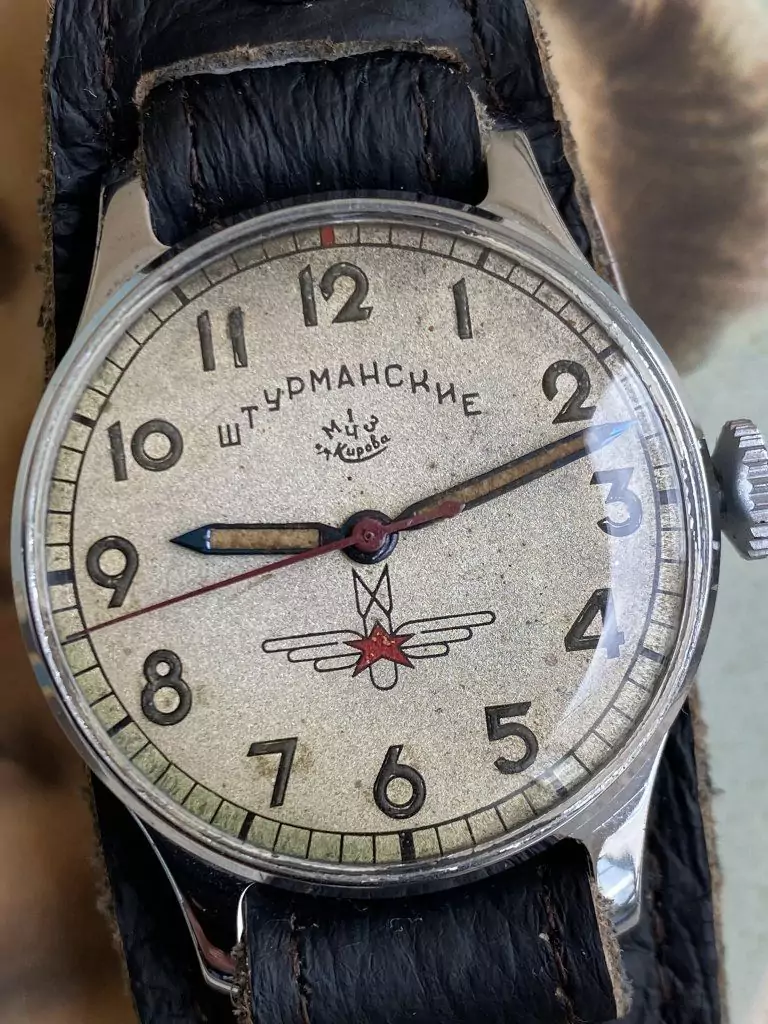
Sturmanskie Gagarin Watch - Type 1 - 1952 - Box
Clocks & Watches

Radium on Soviet Dials: Recognising, Measuring, Living with It

Until the early 1960s, Soviet luminous dials, like Swiss and American ones, were painted with radium 226. A radium dial no longer glows, but it stays radioactive for thousands of years. This guide says which objects are concerned, pilot’s watches, cockpit clocks, compasses, alarm clocks, how to recognise them by eye and with a Geiger counter, what the real risks are, and how to keep them safely or part with them.

Read more »
Cosmonaut Strela 3017 Watch - Poljot - Chronograph
Clocks & Watches

Cosmonaut Watches: What the Soviets Really Wore in Orbit

Far more than four Soviet watches flew: the Shturmanskie of Gagarin and Tereshkova, the 3017 chronographs signed Strela, Poljot and Sekonda, the 24-hour 8ChN of the watch research institute, the Okean 3133, a spacewalk watch, the Elektronika, then the mission watches of the 1990s. The watches with a cosmonaut, a rocket or a Sputnik on the dial celebrated those flights. This guide separates the two, gives the signs of each flight watch and what it is worth.

Read more »
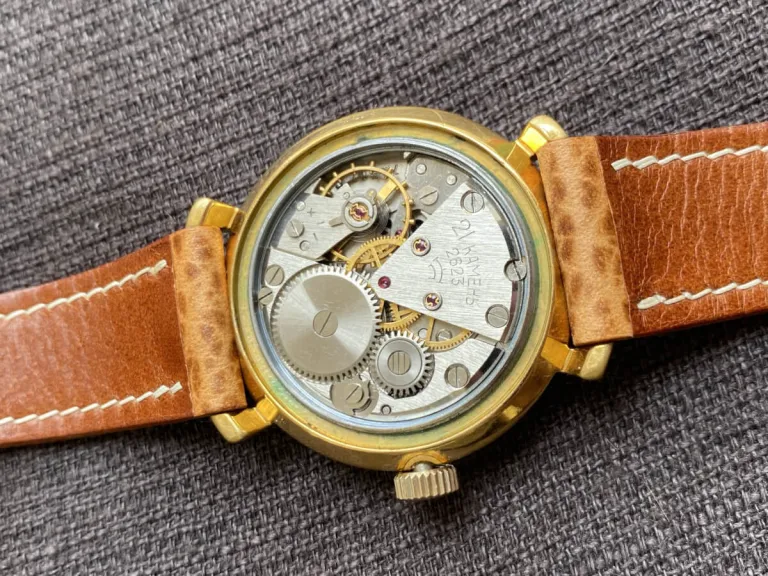
Raketa Antarktida 16 SAE watch: Baltika 2623 movement on view, bridge engraved "21 камень 2623" - Soviet in Paris
Clocks & Watches

Repairing a Russian Watch: Symptoms, Parts, Prices and Where to Send It

A Soviet watch that stops is almost never dead: nine times out of ten, its oils have dried. This guide translates each symptom, says which parts can still be found and which cannot, gives the real prices of a service, a crystal or a crown, explains what you should never do yourself, and how to send the watch to our Soviet Times workshop.

Read more »
Clocks & Watches

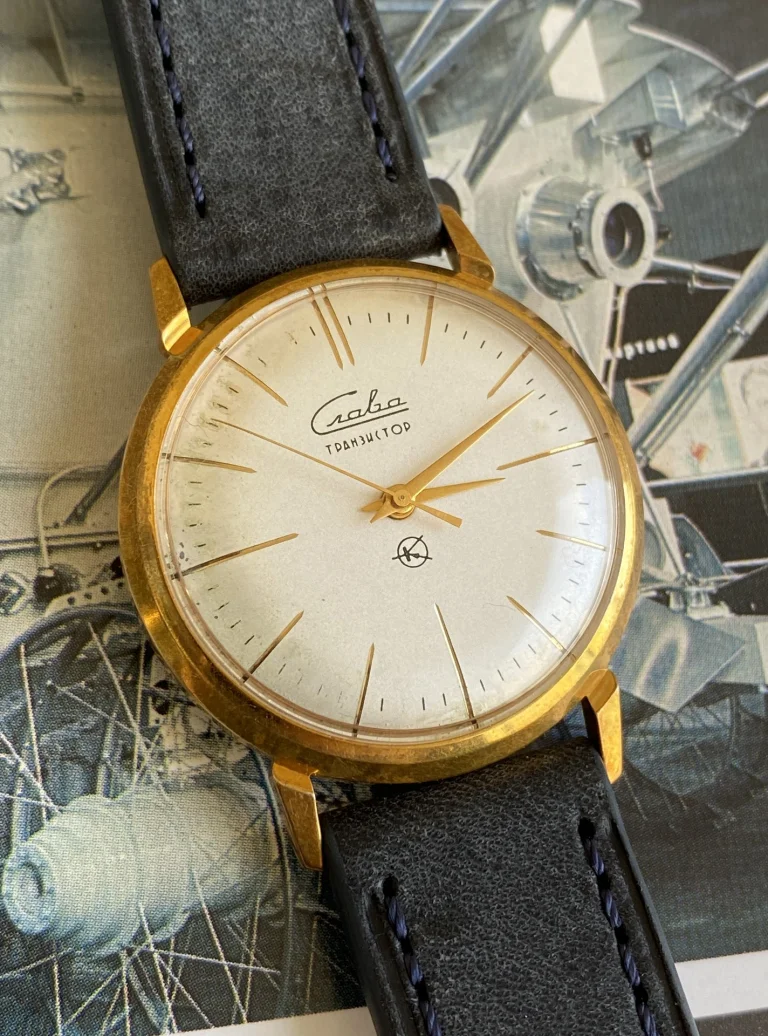
Slava Watches: The Second Moscow Factory, from 1924 to Besançon

Slava is the watch of the Second Moscow Watch Factory, founded in 1924 on American machines. Its 24 mm twin-barrel calibre, its doctor’s models, its export dials for Italy and its Besançon plant, which sold up to 300,000 watches a year in France, set the brand apart. This guide gives the signs for recognising, dating and choosing a Slava.

Read more »
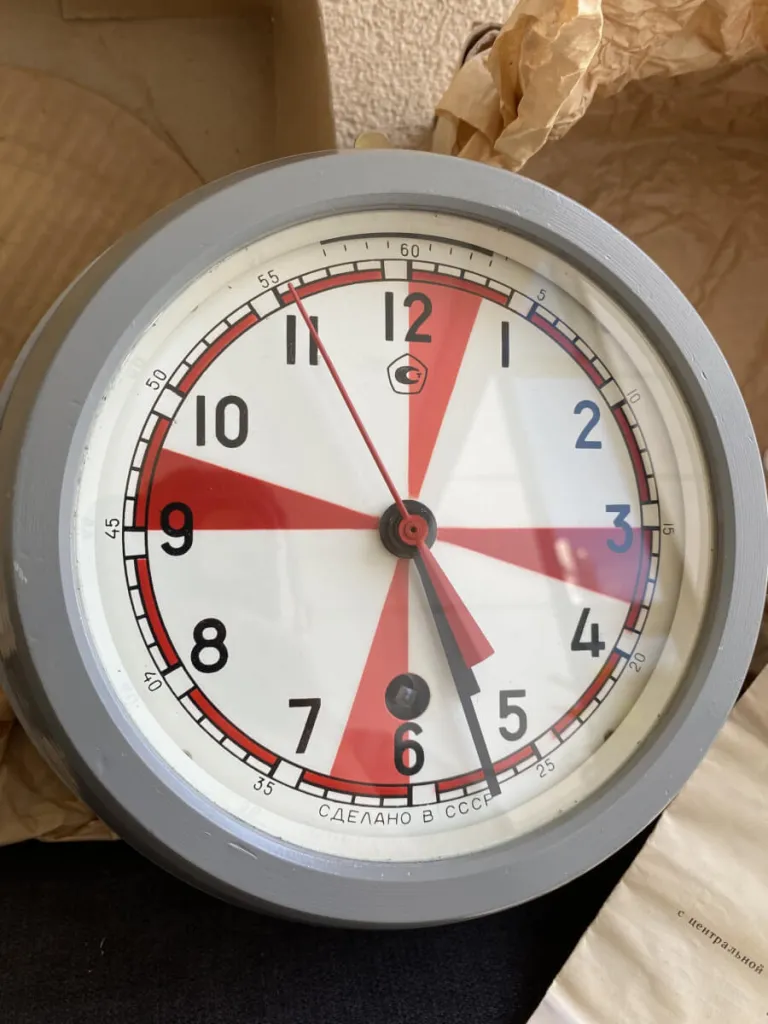
Soviet navy clock with silence periods: close-up of the red-sector dial and minute ring - Soviet in Paris
Clocks & Watches

Soviet Radio Room Clock: What the Red and Pink Sectors and the Silence Periods Mean

Four coloured sectors cut across the dial of a Soviet radio room clock. Twice an hour the ship’s radio operator had to stop transmitting for three minutes and listen on the distress frequency: the red sectors for telegraphy, the pink ones for telephony. This guide gives the texts that set the rule, shows how to read the dial with an animated diagram, then goes through the Chistopol and Glashütte clocks in our shop and what to check before buying.

Read more »
Poljot Mission Mir 1993 Limited Edition - Soviet in Paris
Clocks & Watches

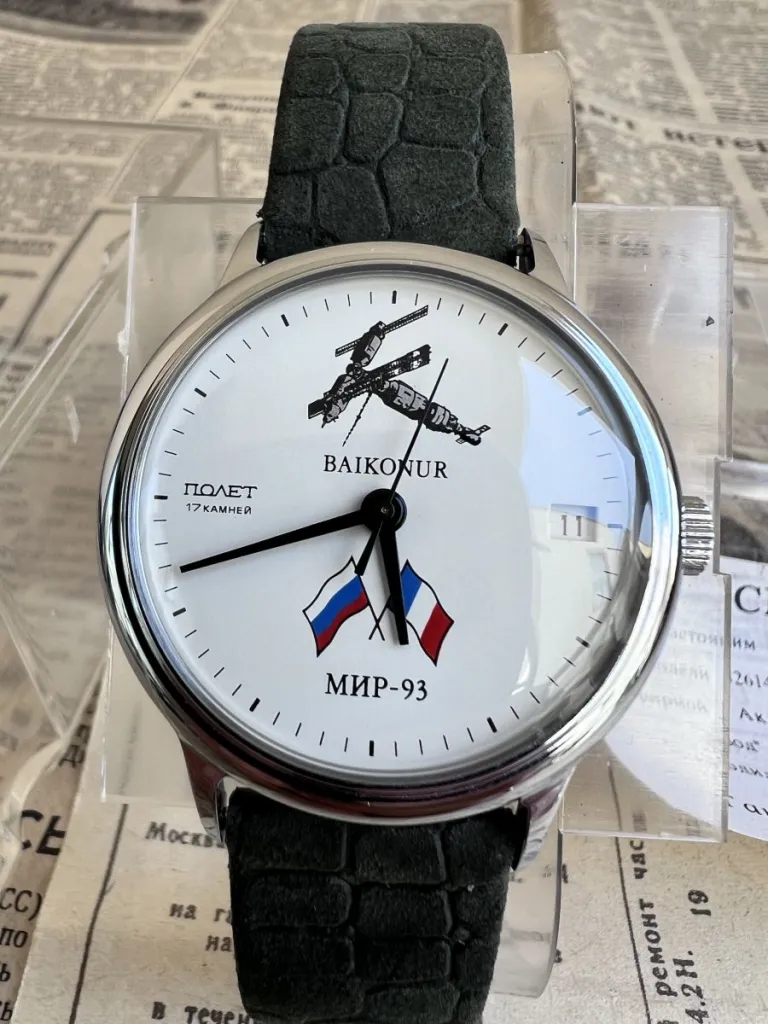
Poljot Mir-93: the watch made for France's Altaïr flight to Mir

On 1 July 1993 a Soyuz rocket left Baikonur carrying two Russians and a Frenchman. For that flight, the First Moscow Watch Factory made 250 Poljot watches with a white dial, the Mir station drawn above two crossed flags. This is the story of the Altaïr mission, its crew and the station, and of what the certificate, passport and launch-day stamp that came with watch N°481581 have to say.

Read more »
Elektronika-1 LED watch: cushion case in its box, red LED display showing 17 06 - Soviet in Paris
Clocks & Watches

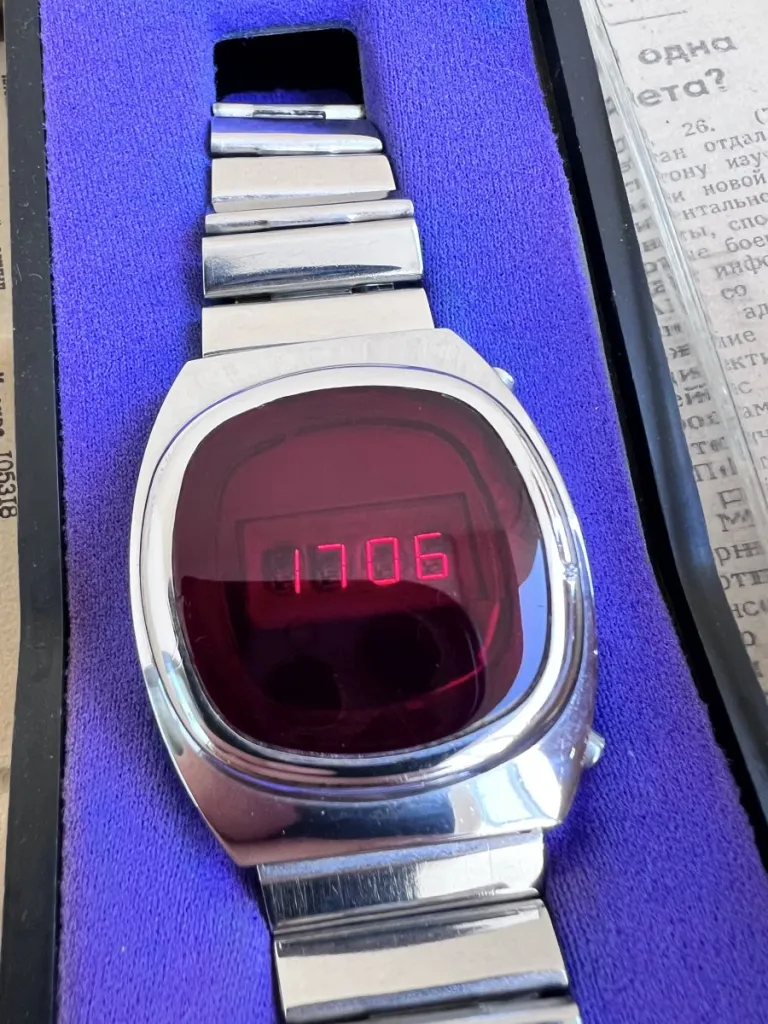
Elektronika 1: the First Soviet LED Watch, Its History, How to Set It and Why It Is Fragile

The Elektronika 1 is the Soviet watch with red digits. No hands, no ticking: a dark screen that lights up when a button is pressed, then goes out. It descends from an American watch of 1972, it was developed in a semiconductor institute in Moscow, and in 1981 it sold for 121 roubles, about two thirds of a month’s wages. This guide tells where it comes from, shows its two cases, explains its five buttons with a simulator, and says what to know before buying one.

Read more »
Okean Chronograph Watch - 3133
Clocks & Watches

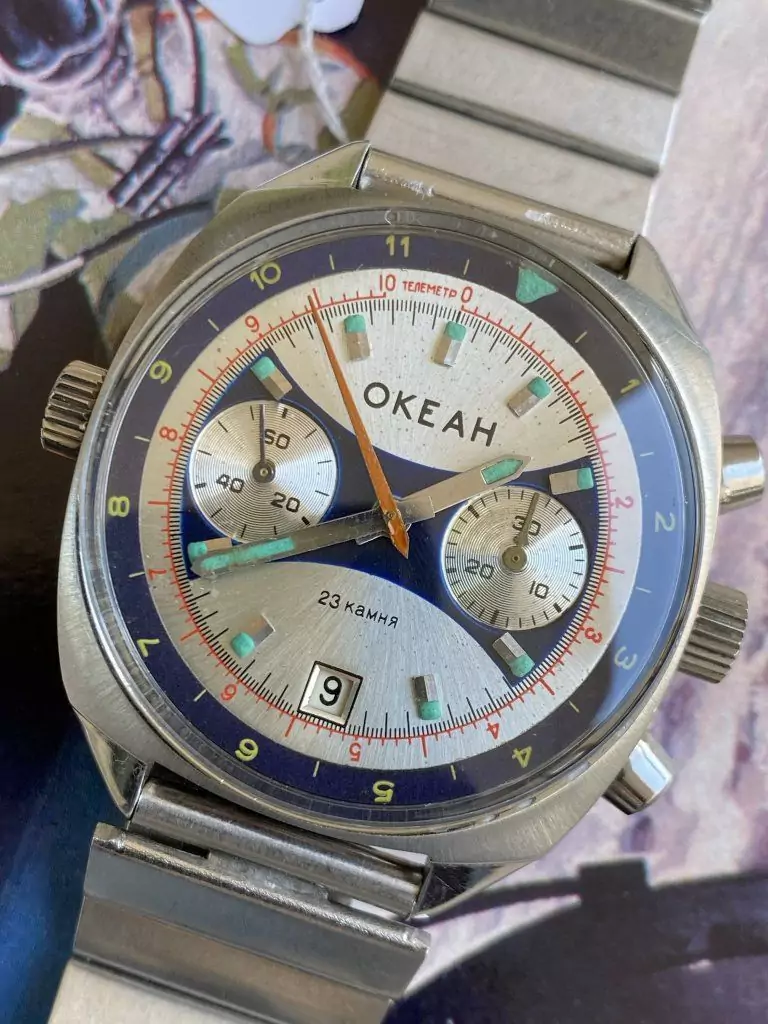
Poljot Okean: the Soviet Navy Chronograph, Its History, Its Dial and How to Spot a Copy

The Okean is the chronograph of the Soviet Navy. Released in 1976 by the First Moscow Watch Factory, it is one of the very first models fitted with the calibre 3133 and was never sold in shops. That same year it went into space with the crew of Soyuz 23 and ended the mission in a frozen lake in Kazakhstan. This guide tells its story, explains its dial, telemeter and rotating ring, and shows what separates a period watch from a copy.

Read more »