Kasli cast iron is the only iron casting in the world collected like bronze. Cast in the Urals since the 19th century, awarded in Paris in 1900, it continued under the USSR with boxers, children with rockets, returning soldiers and busts. This guide gives its history in brief, explains the technique, teaches how to read the « КАСЛИ » mark and its year, how to tell cast iron from an alloy with a simple magnet, and gives prices.
NOVEMBER 2026•7 MINUTE READ
by Marwen Yahyaoui
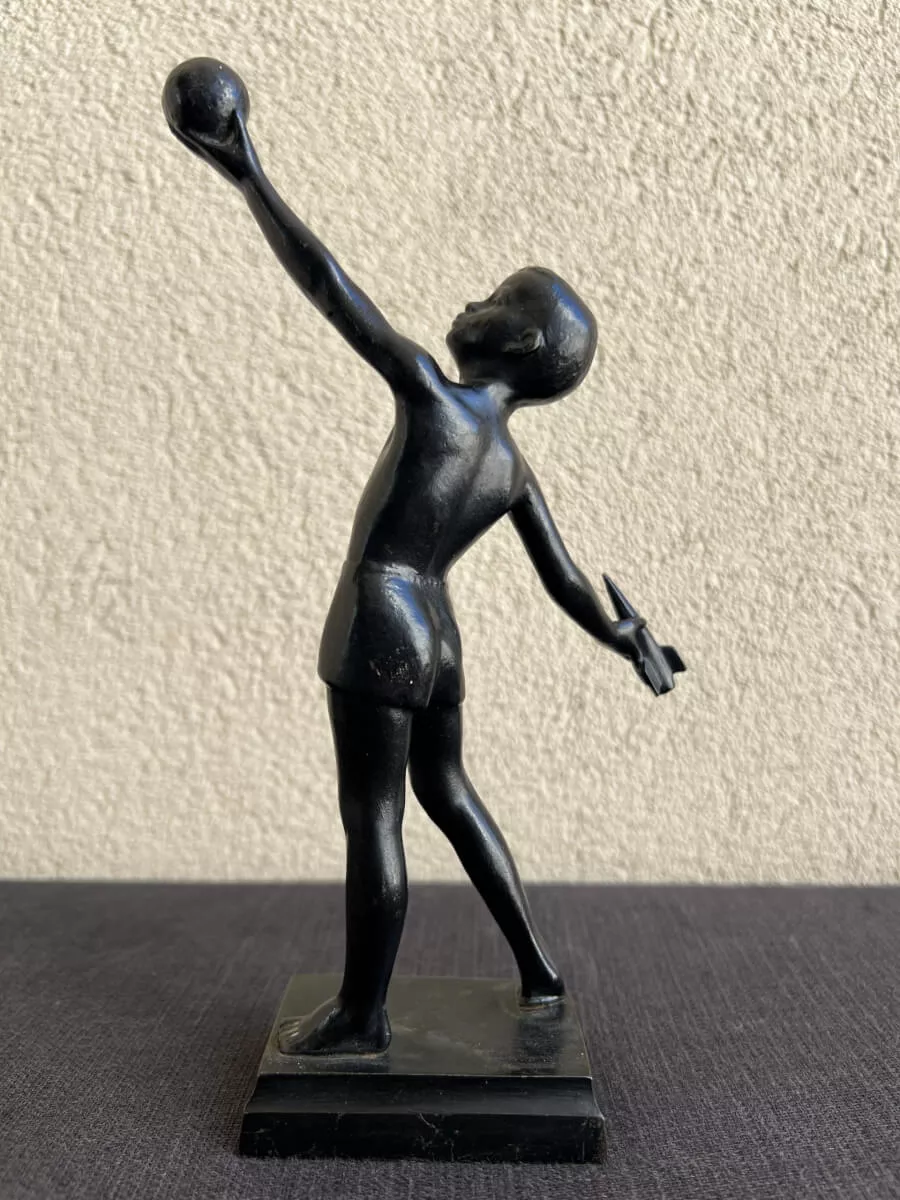
« A Child’s Dream », Kasli cast iron from 1966: a child holds a planet and a rocket, the most sought-after subject of the Soviet period.
There is only one place in the world where cast iron, the metal of radiators and manhole covers, became a collector’s art: Kasli, a small town in the Urals, between Chelyabinsk and Yekaterinburg. Since the 19th century its plant has cast sculptures of a fineness one would think reserved for bronze, black, heavy, chased by hand. The USSR took over the plant and its models, and gave it new subjects. This guide teaches how to recognise a Kasli, how to read its mark and how to date it.
From ironworks to the Paris pavilion
The Kasli plant was founded in 1747 to smelt Ural ore. In the 1820s and 1840s its moulders began to cast art objects after models by Saint Petersburg sculptors, Klodt, Lanceray, Bach, and from the 1860s Kasli pieces appeared in every Russian and international exhibition. In 1900, at the Paris Universal Exhibition, the plant presented an entire pavilion in openwork cast iron, more than 1,500 pieces, and received the Grand Prix. The story goes that President Loubet offered two million roubles to buy it along with the statue « Russia » that guarded it, and that the director replied that Russia was not for sale. The pavilion, dismantled, forgotten in the plant’s yard, slated for melting in 1921, was saved by the workers and restored; it can be visited today at the Yekaterinburg Museum of Fine Arts.
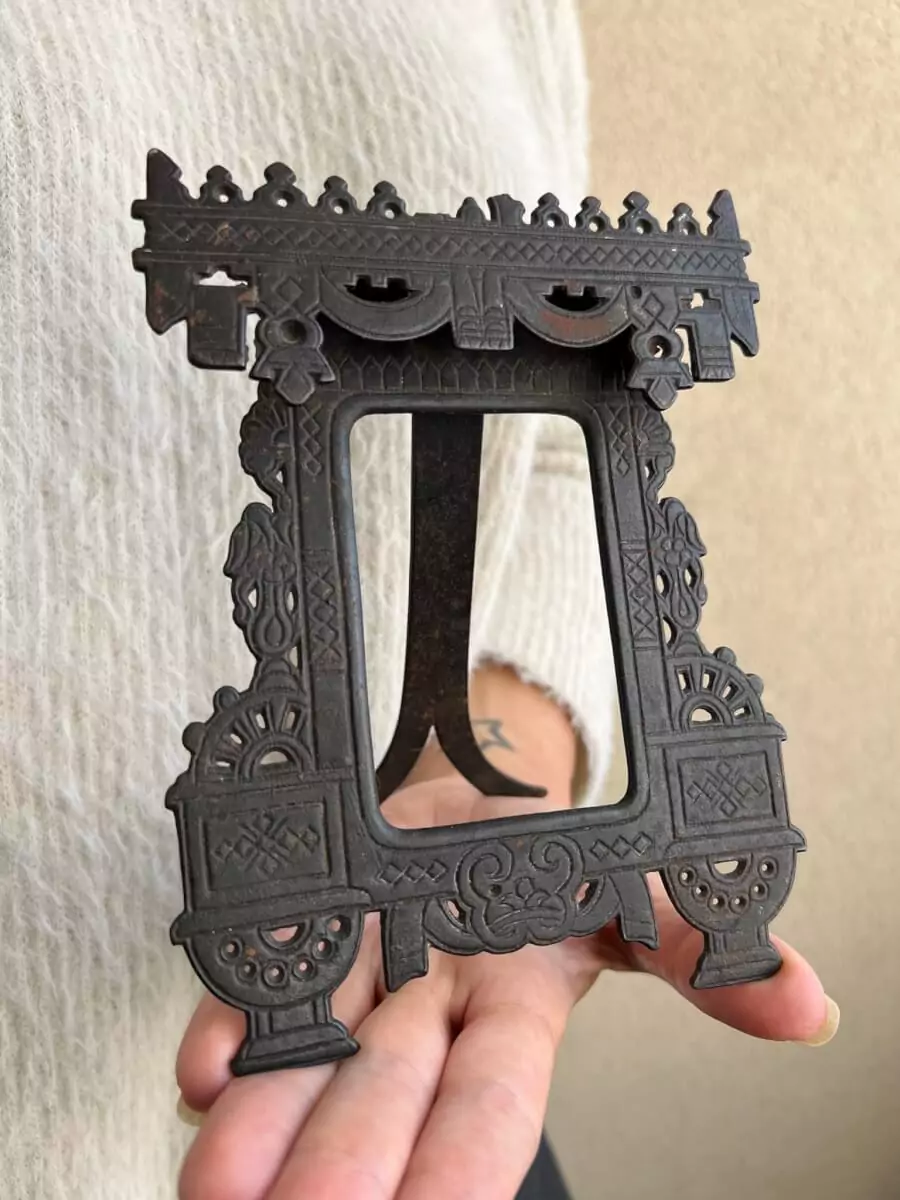
Openwork photo frame from 1906: imperial cast iron, fine as lace.
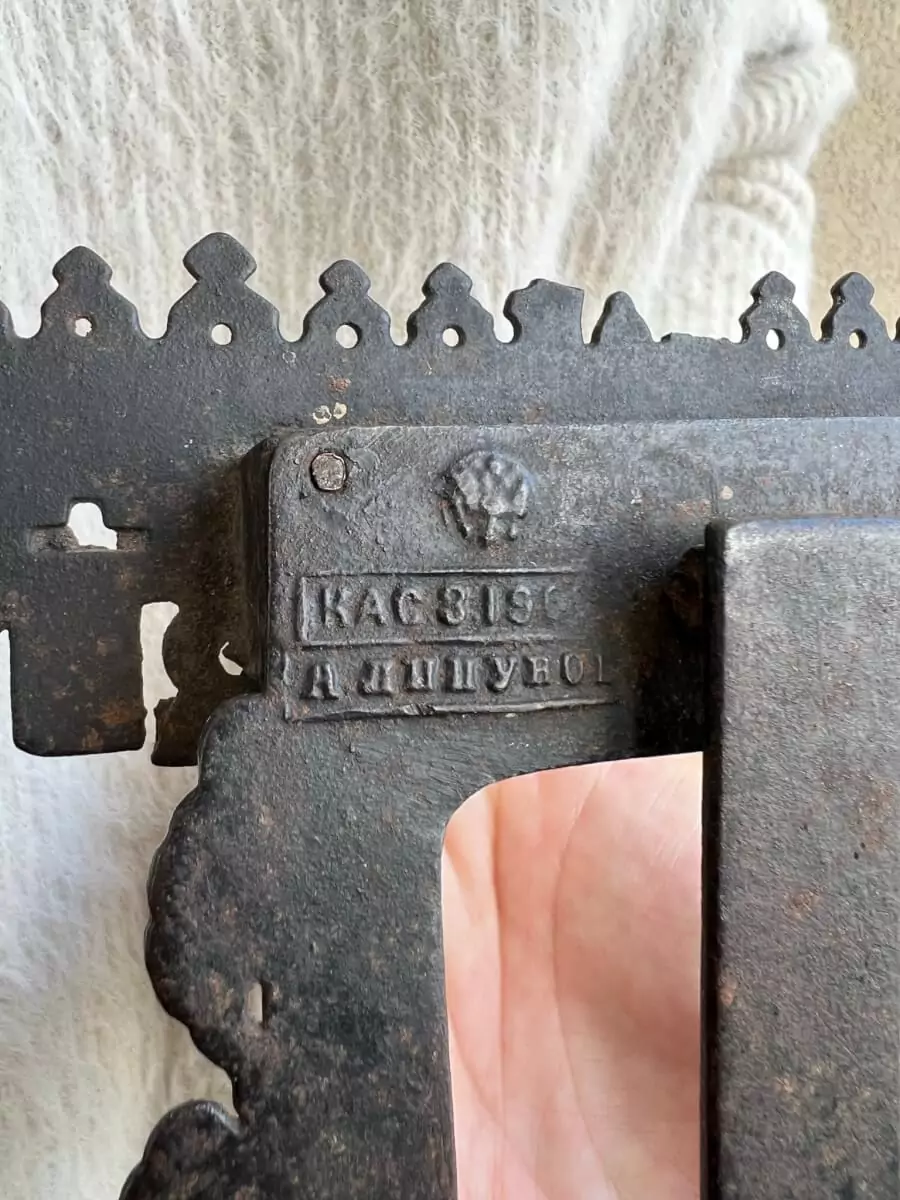
Its mark: the double-headed eagle and « КАС. З. », the Kasli plant.
How a Kasli is made
The model, in wood then in metal, is pressed into a fine clayey sand, piece by piece for complex shapes, sometimes in dozens of parts. The iron, rich in graphite, flows into the mould and reproduces the grain of the model. On coming out, each piece is fettled and chased by hand by a worker who goes over the hair, the folds, the faces, then painted a deep black based on soot and boiled oil, the « Dutch black », which protects from rust and gives that characteristic matt finish. A Kasli does not shine, does not weigh like a bronze and does not ring like one: it is lighter for the same volume, and colder.
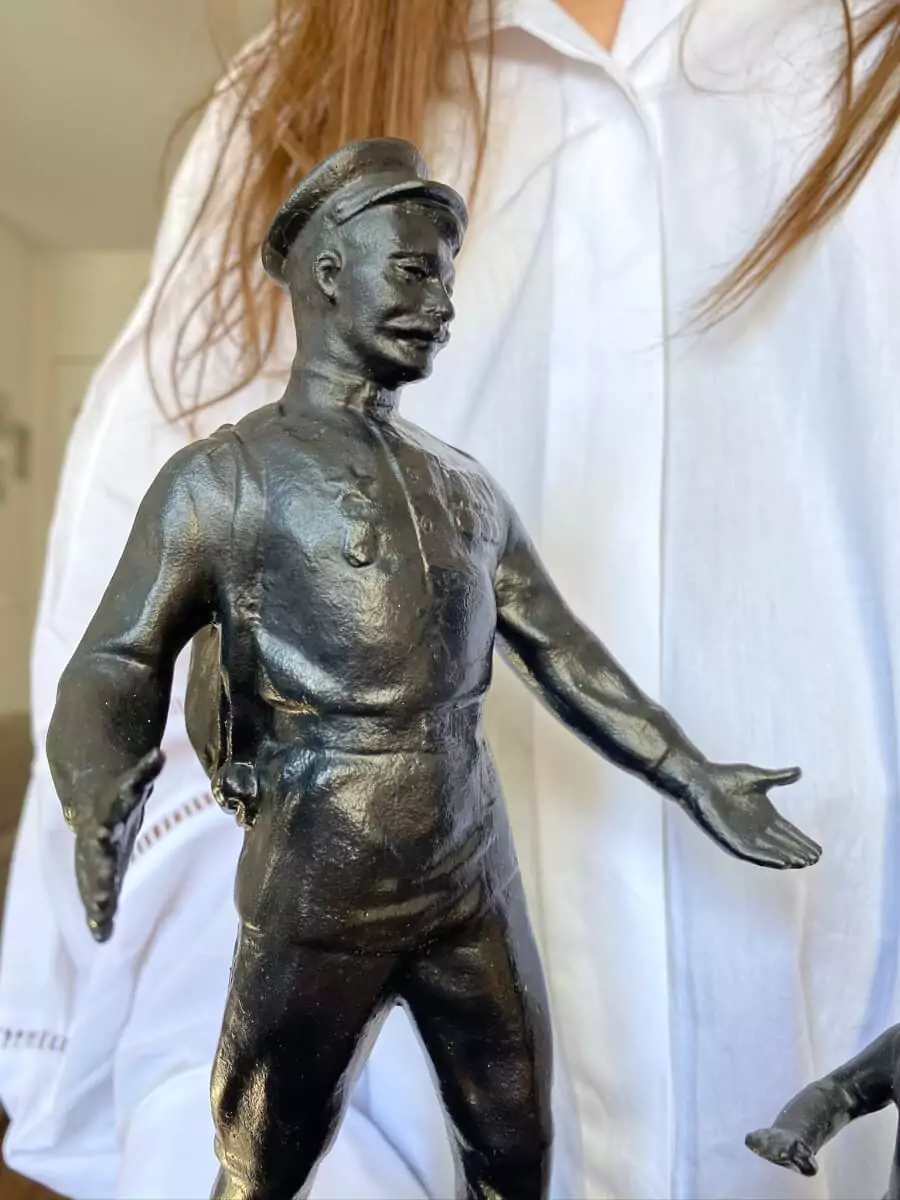
« The Father’s Return », 1988: faces and folds gone over with the chisel after casting.
The boxer Gennady Shatkov, Olympic champion of 1956, cast in 1963.
Reading the mark
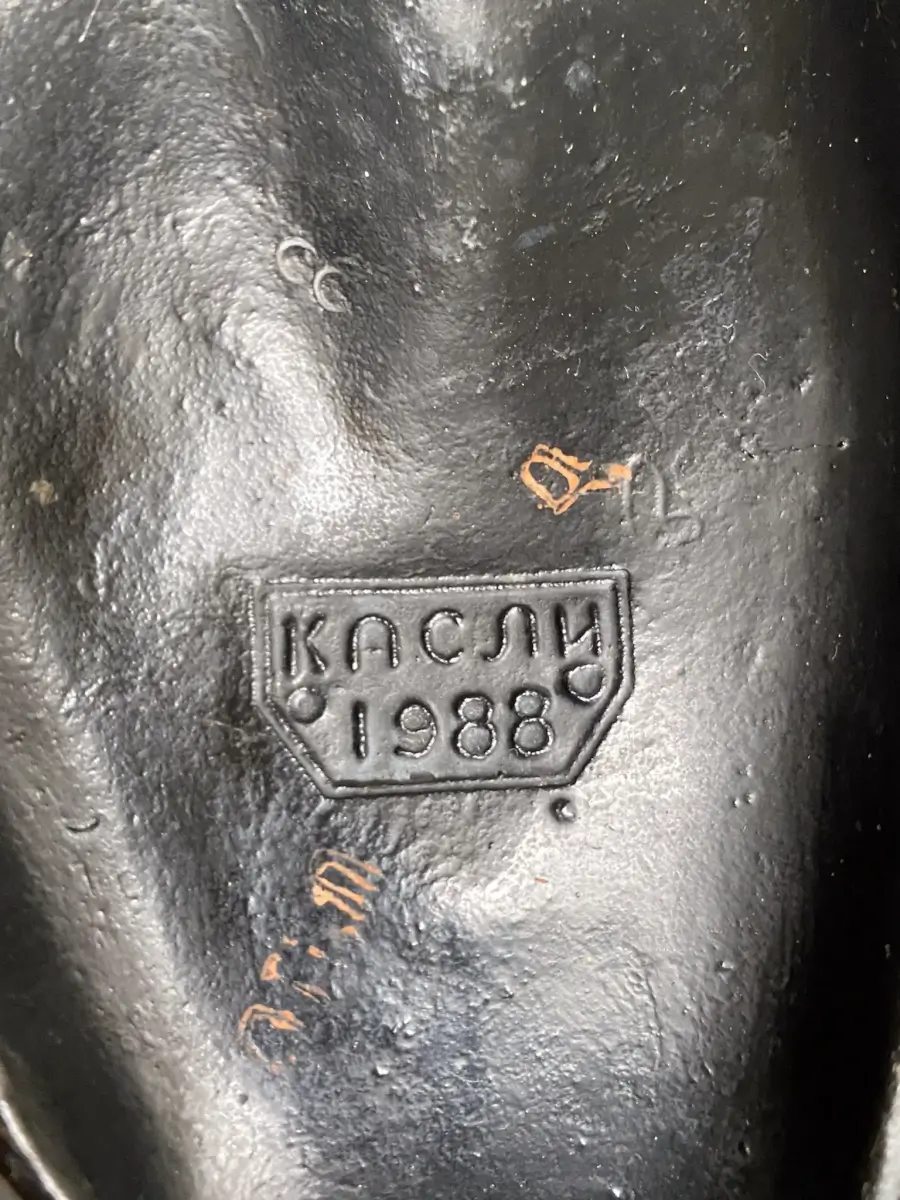
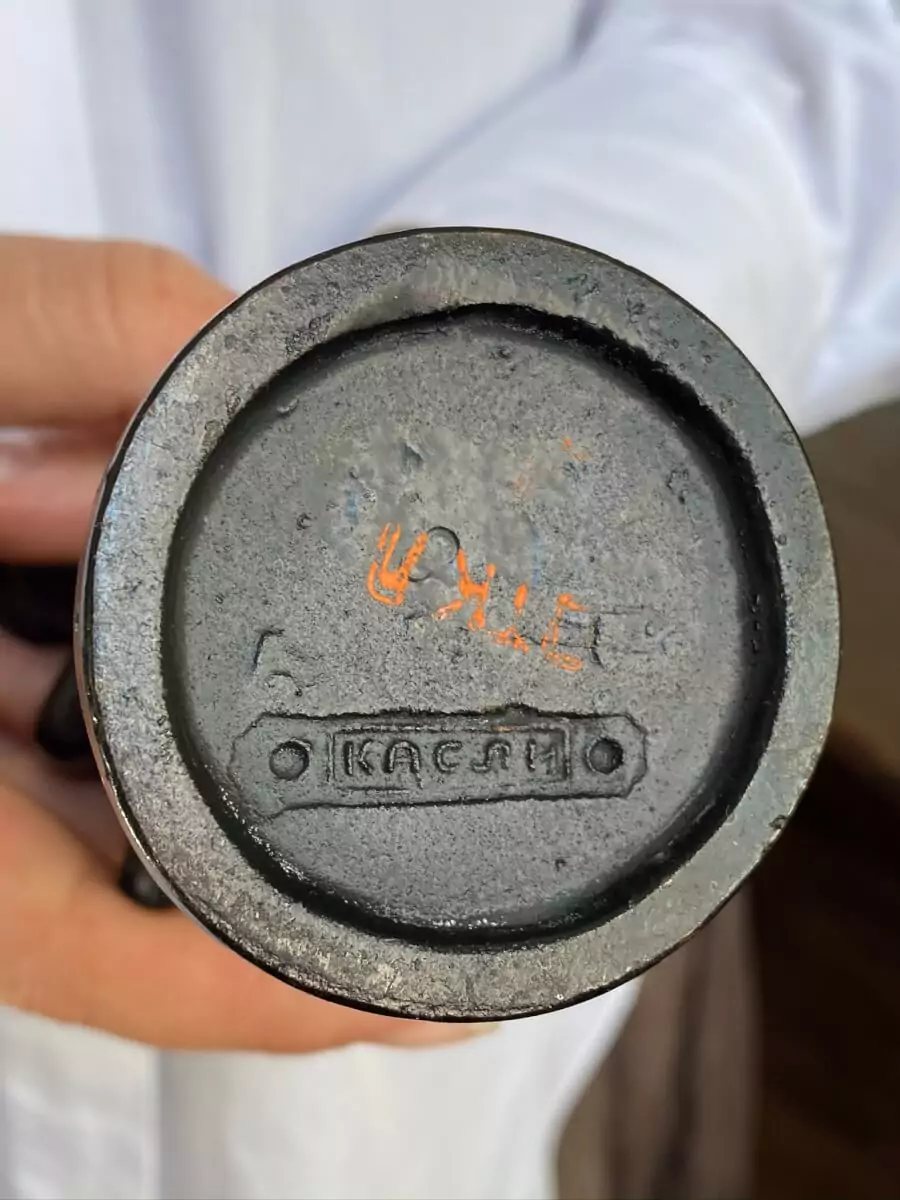
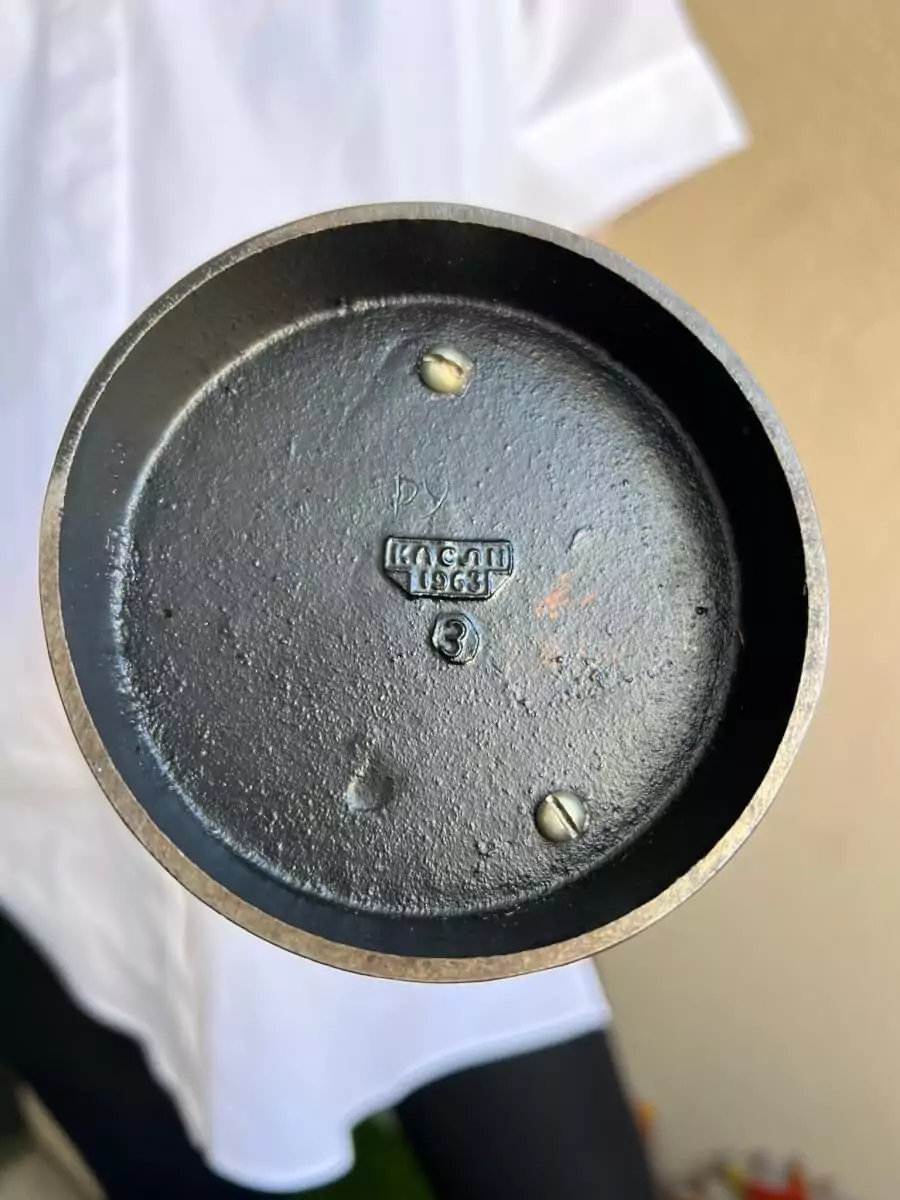
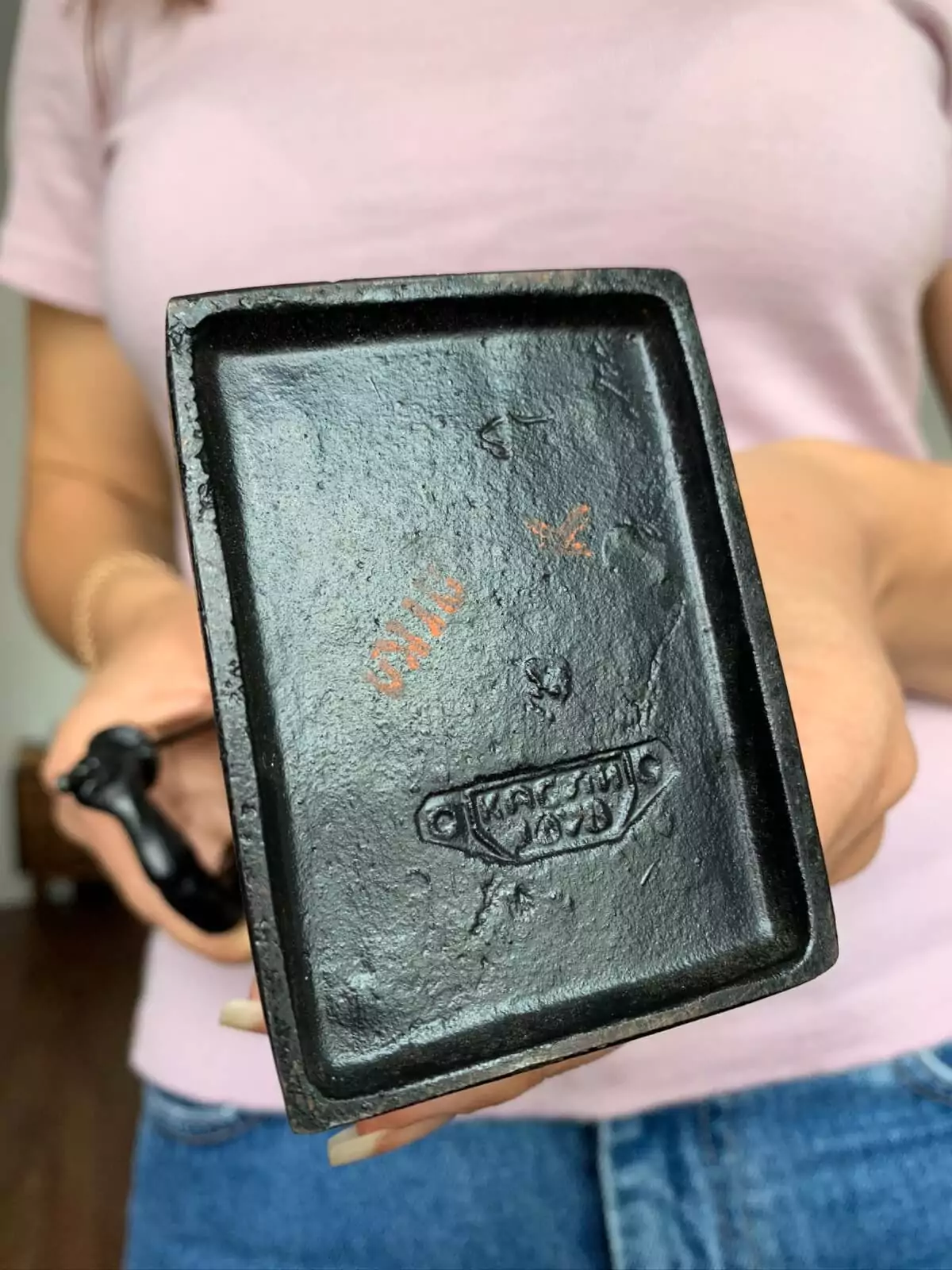
Everything is under the base. Before 1917: « КАС. З. », short for Каслинский завод, often with the double-headed eagle of imperial Russia and the model number. Under the USSR: « КАСЛИ » in capitals in a cartouche, followed by the year in figures, and next to it the « ОТК » stamp of the plant’s technical control, sometimes « Сделано в СССР ». After 1991: « Касли » or « КАСЛИ », the year, and the word Россия. The date in the mark is the date of the casting, not of the model: the 1946 Stalin bust was cast until 1953, the 1956 boxer in the 1960s, the 1957 « Swords into Ploughshares » in 1988. Kasli models live for decades.
« КАСЛИ 1988 » in its cartouche, under the base of « Swords into Ploughshares ».
« КАСЛИ » mark and number in red paint under a child statuette.
The subjects of the Soviet period
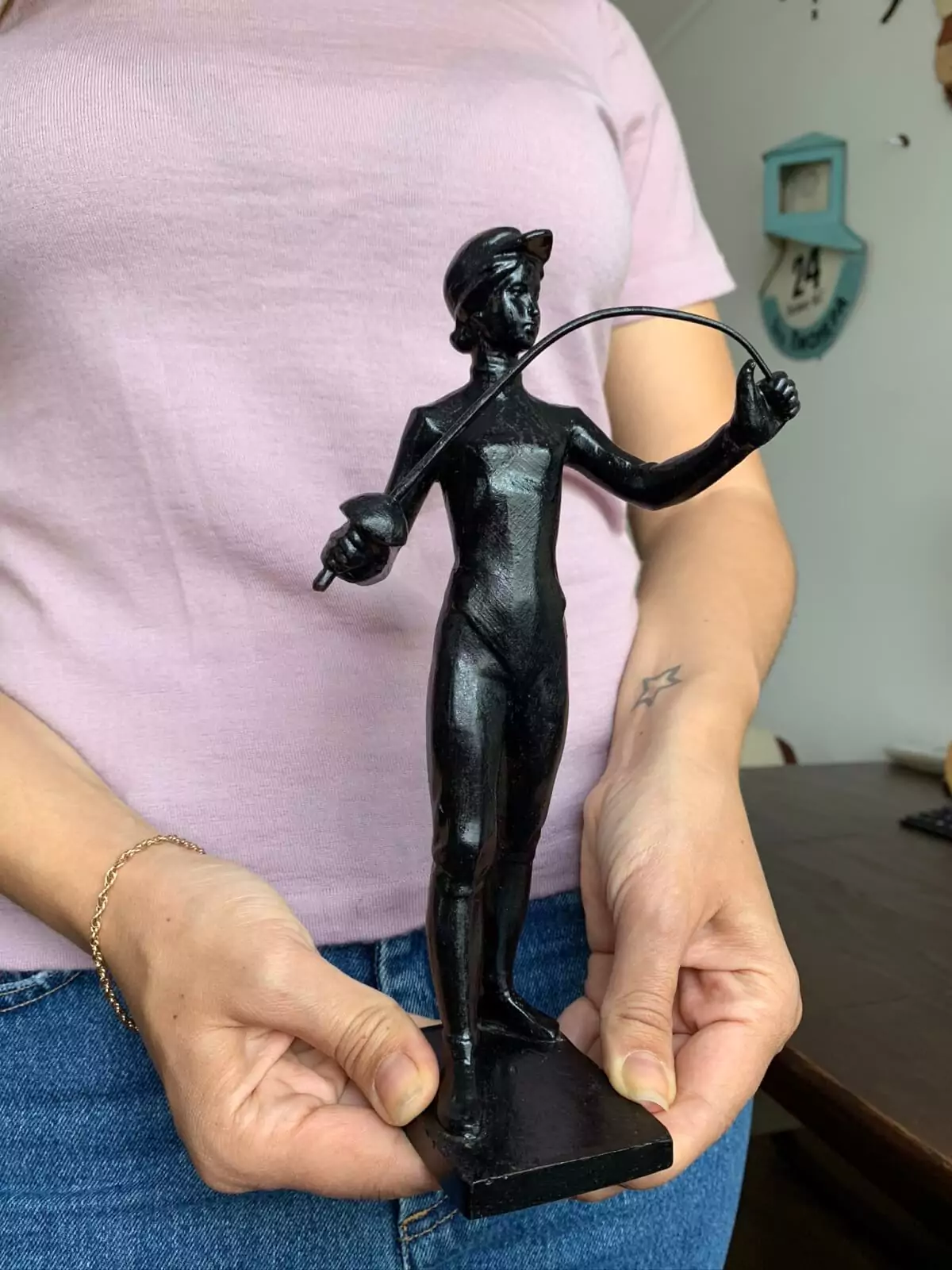
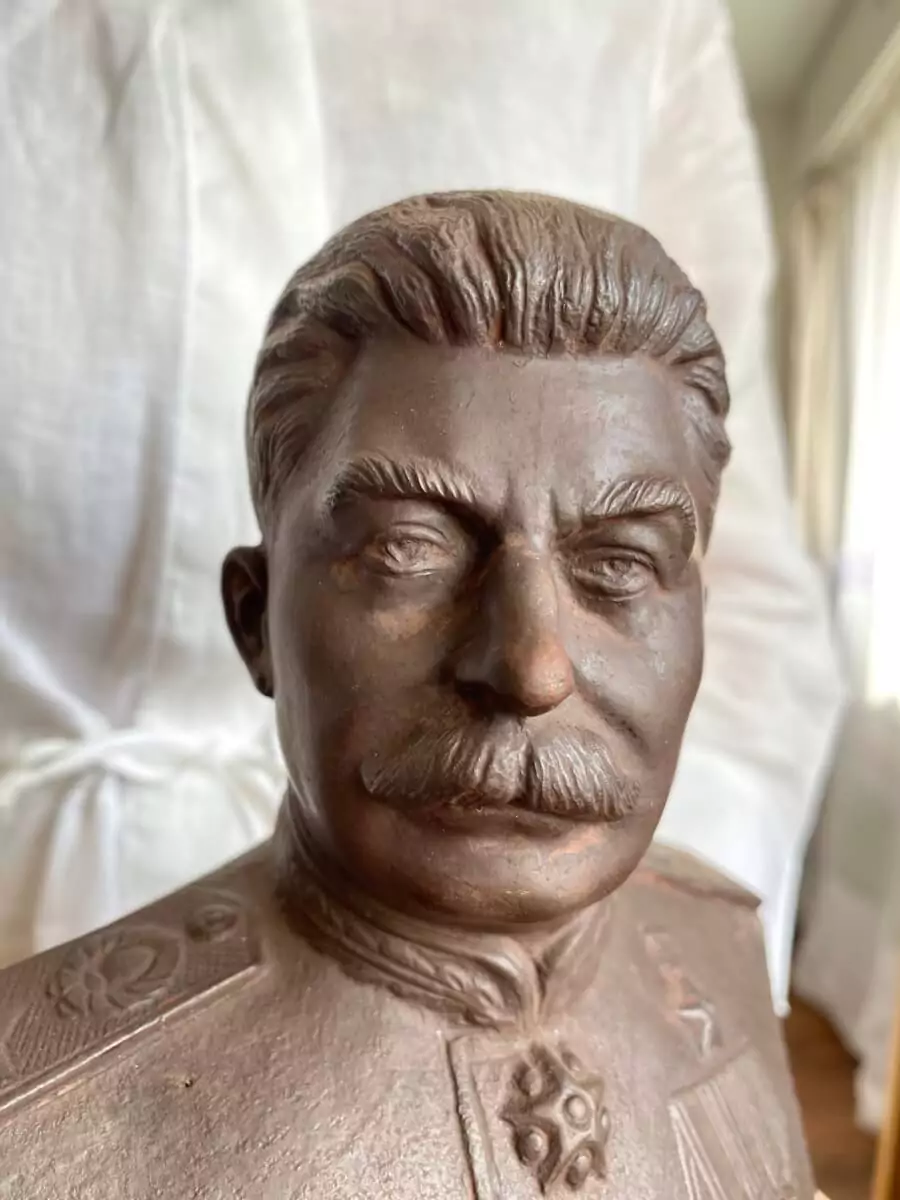
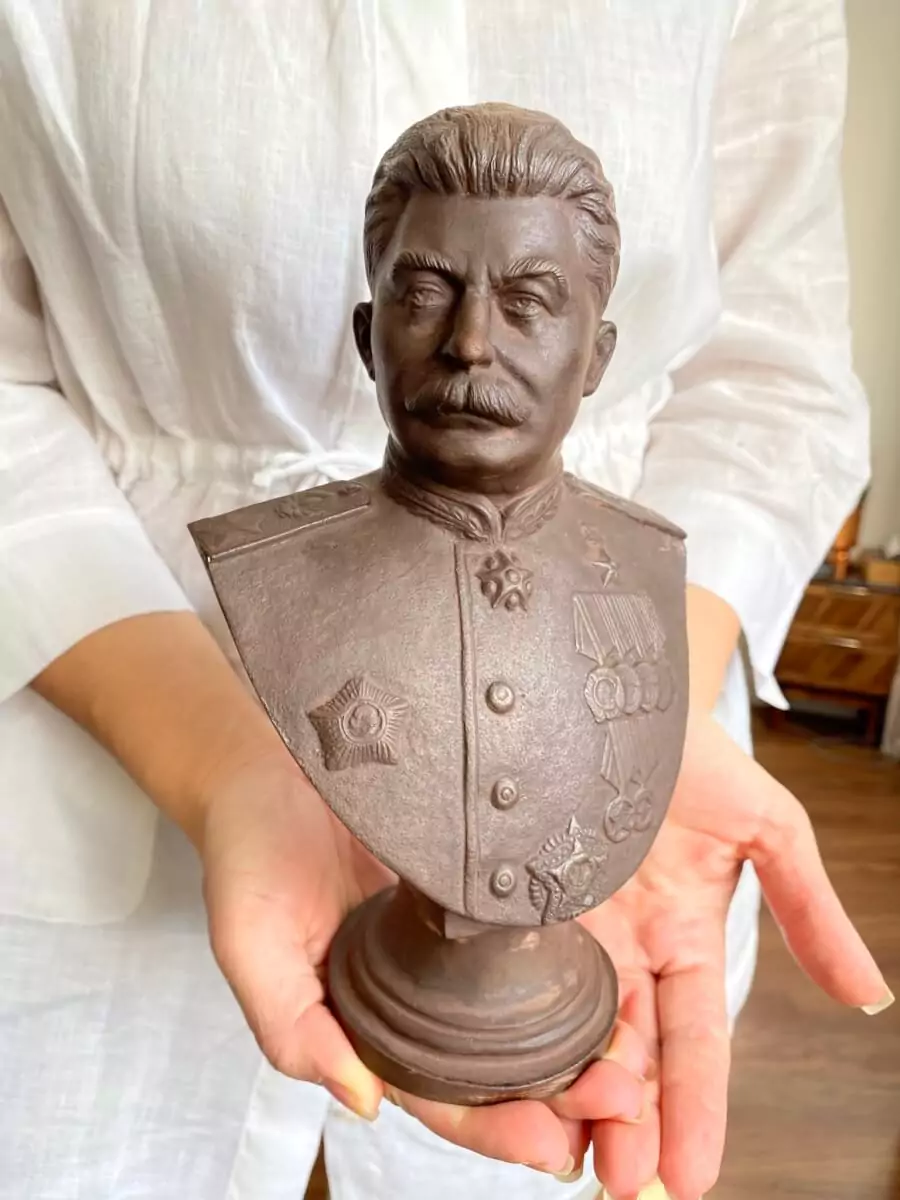
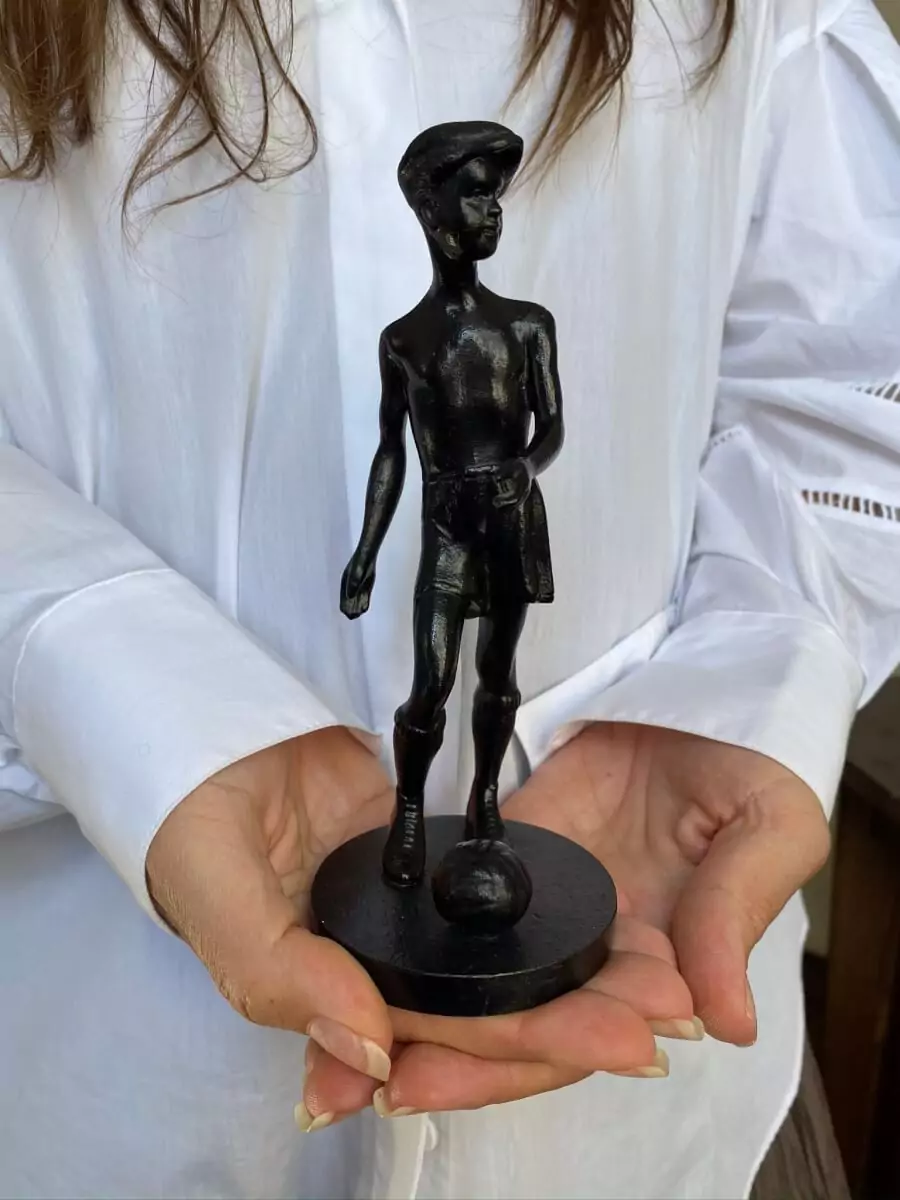
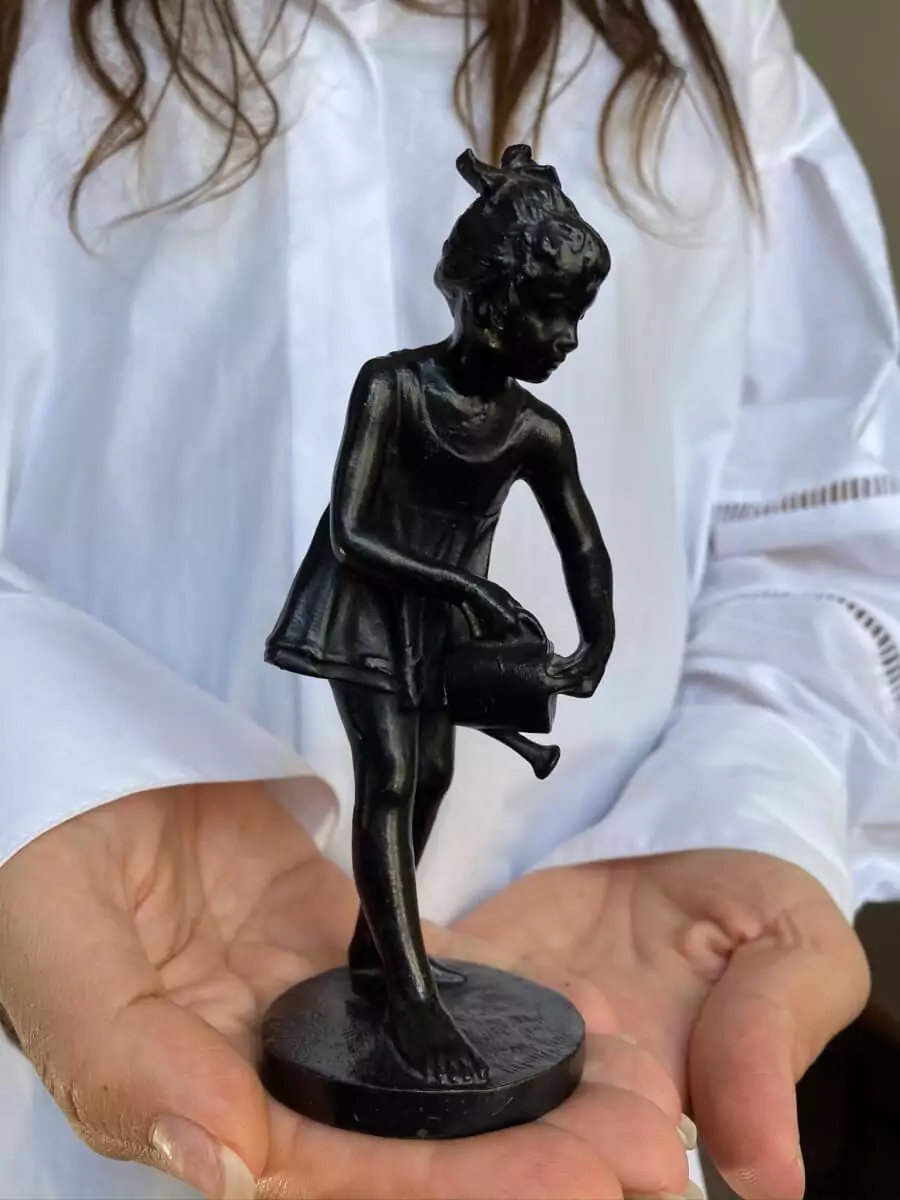
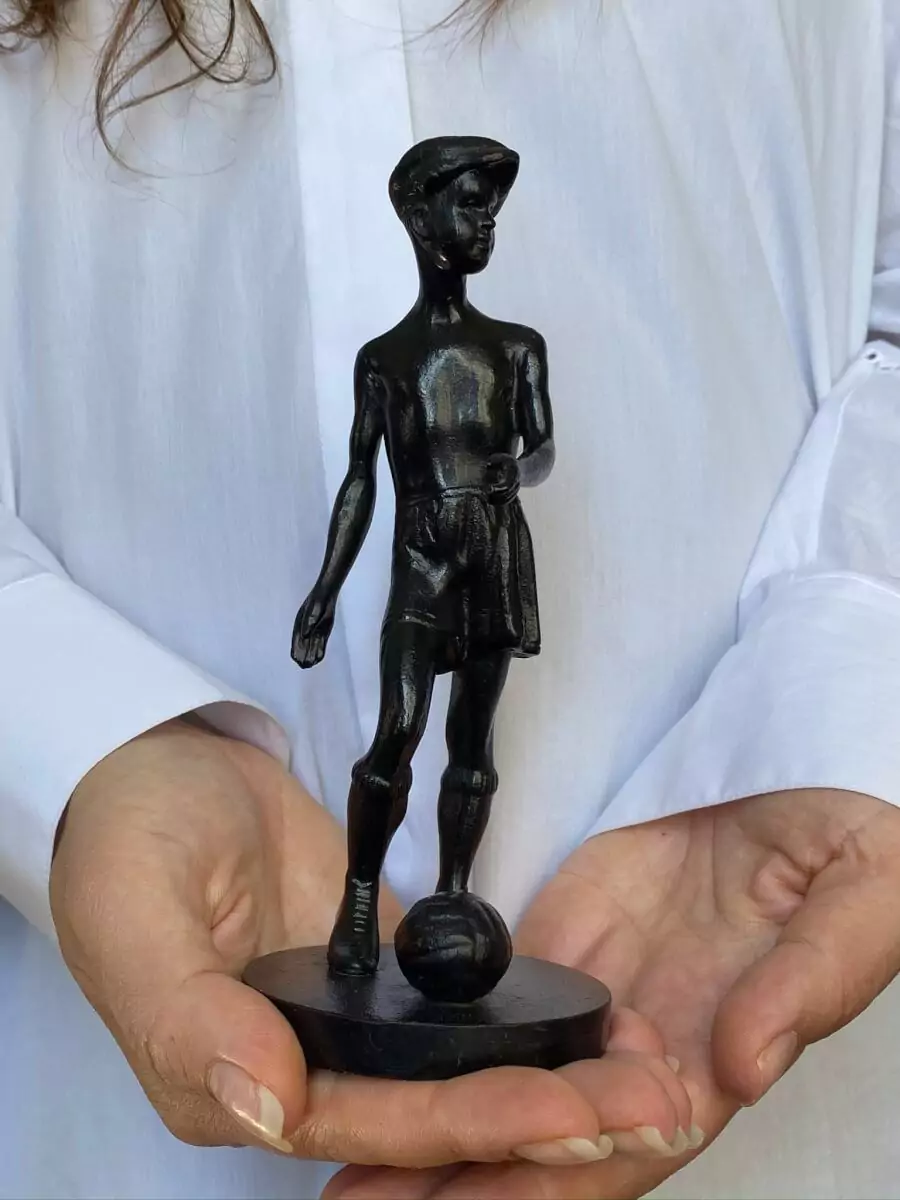
The USSR kept the old models, Klodt’s horses, Don Quixote, frames and ashtrays, and commissioned others from its sculptors. Sport first, in the 1950s and 1960s: boxers, hockey goalkeepers, footballers, fencers, including an American, Janice Romary, cast in 1978. Childhood next: « A Child’s Dream » of 1961, the child with the rocket cast after Gagarin’s flight, the girl with the watering can, the little footballer. War and memory: the returning soldier father, the reduced monuments. Peace finally, with Yevgeny Vuchetich’s « Swords into Ploughshares », whose original was given to the UN in 1959 and of which Kasli made reductions until 1988. And the busts of leaders, including the 1946 Stalin in marshal’s uniform, rare today because removed from offices after 1956.
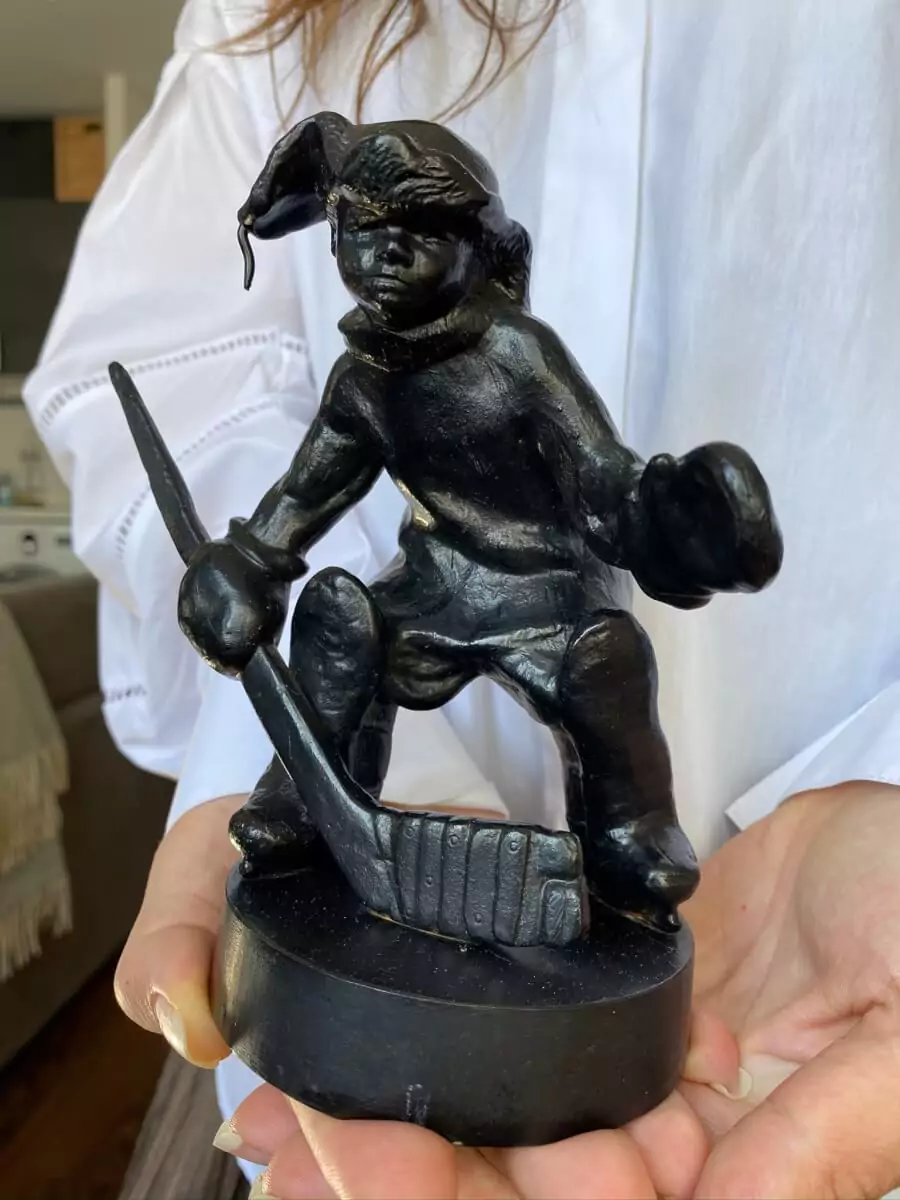
Child hockey goalkeeper, Kasli cast iron, 1.8 kg for 17 cm.
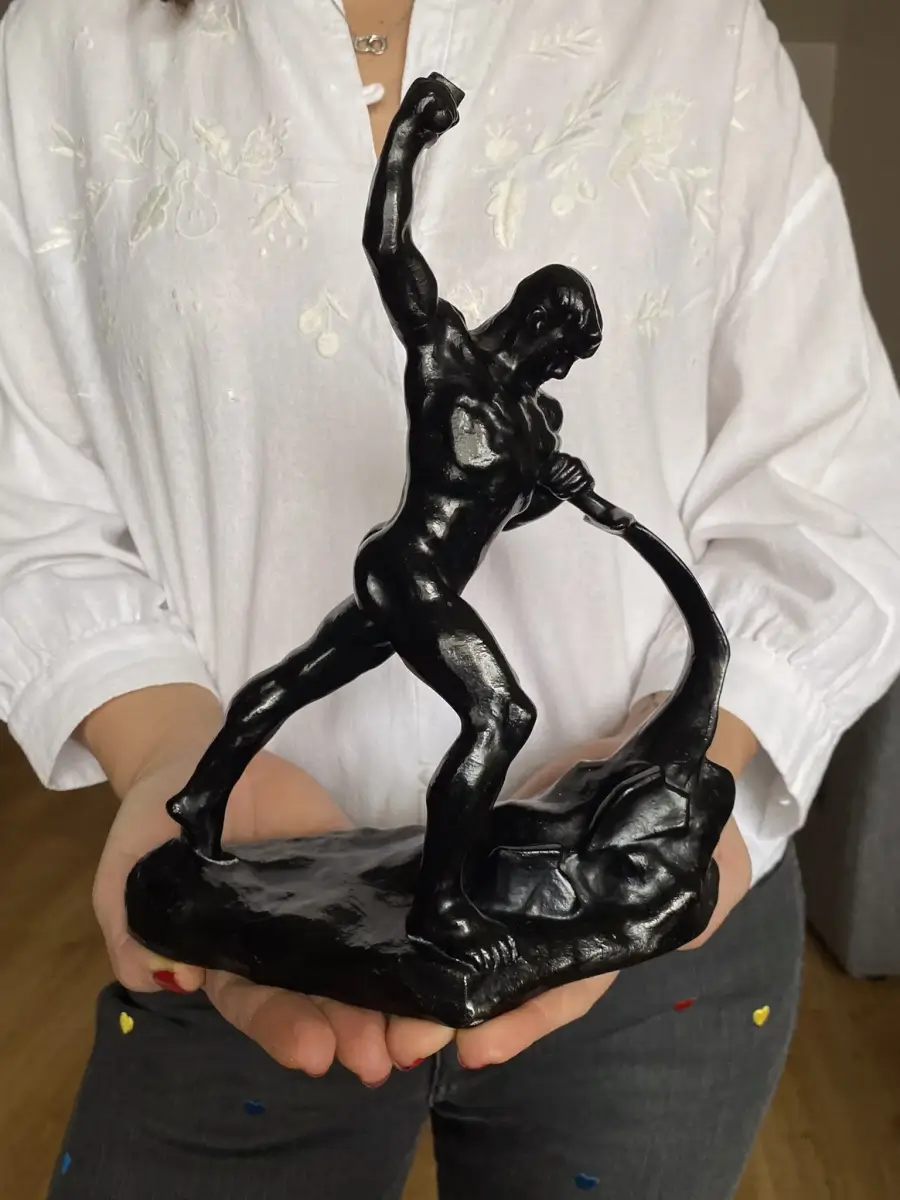
« Swords into Ploughshares », Vuchetich, Kasli reduction of 1988.
The fencer Janice Romary, 1978, 25 cm.
Stalin bust as marshal, 1946 model, cast in 1951, with appraisal.
Recognising a real Kasli
A magnet first: cast iron is magnetic, bronze, brass, silumin and resin are not. It is the simplest test and it eliminates half the false « Kaslis » on the market. The finish next: the black is matt, uniform, slightly satin, never glossy or metallic; under a chip, the metal is light grey. The details: a Kasli has hair, fingers, laces; a copy in coarse iron has soft surfaces and mould flash not worked over. The underside: the mark, the clean hollow of the base, sometimes file marks. The weight finally, consistent with iron: 520 grams for a 20 cm child, 2 kg for a 26 cm group.
The Kasli plant still exists and still casts pieces from the old models, marked with the year of casting. These are not fakes, they are recent Kaslis, and they are worth less than a dated Soviet casting.
The underside of a 1963 boxer: hollow base, mark in the cartouche, fixing screw.
The underside of the fencer: « КАСЛИ 1978 » and the control stamp.
Caring for cast iron
Cast iron fears water and nothing else. It is dusted with a brush, not washed, never polished. A piece that has lost its black in places is protected with a colourless microcrystalline wax or a thin coat of black antique wax, applied with a cloth and buffed. Surface rust is brushed dry, with a soft brass brush, then waxed. A Kasli is not repainted: the original black is part of its value.
Prices
A child or sportsman statuette of 12 to 20 cm, 110 to 220 euros. A group or a signed 25 cm piece, 220 to 400. Space subjects, « A Child’s Dream », 380 to 490. Imperial frames and objects, 170 to 300. Busts of leaders with appraisal, 800 to 1,200. Klodt’s horses and large imperial pieces sell at auction well beyond.
Frequently asked questions
How do you recognise Kasli cast iron?
By the magnet, which sticks to iron; by the matt black; by the fineness of the chased details; and by the dated « КАСЛИ » mark under the base.
What does the year under a Kasli mean?
The year of casting. The model may be much older, and the same subject was cast for decades.
Is Kasli cast iron still produced?
Yes, the Kasli plant still casts from its historical models, with the current year in the mark.
What is a Kasli sculpture worth?
From 110 euros for a small statuette to over 1,000 for a rare appraised bust. Most between 200 and 400.
How do you clean a Kasli?
Dry, with a brush, then with colourless wax. Never water, never paint.
The ДП-5В (DP-5V) is the field radiometer of Soviet civil defence: a green Bakelite console, a probe with a rotating gamma, beta and check-source shield, headphones and a manual that explains operation and maintenance. The one in this article served in an industrial bakery in Chișinău and was serviced in March 1991. Its owner shared his photos and documents with us, and we turned them into a tool that lets you operate it on screen, step by step.
The Moscow Games, from 19 July to 3 August 1980, boycotted by some sixty countries, produced more objects than any Soviet event: a bear cub, Misha, drawn by Viktor Chizhikov, an emblem made of running tracks, five thousand torches, watches from every factory, platinum coins, rings, tea glass holders, posters. This guide tells the story of the Games and reviews the objects, with the marks that authenticate them and the prices.
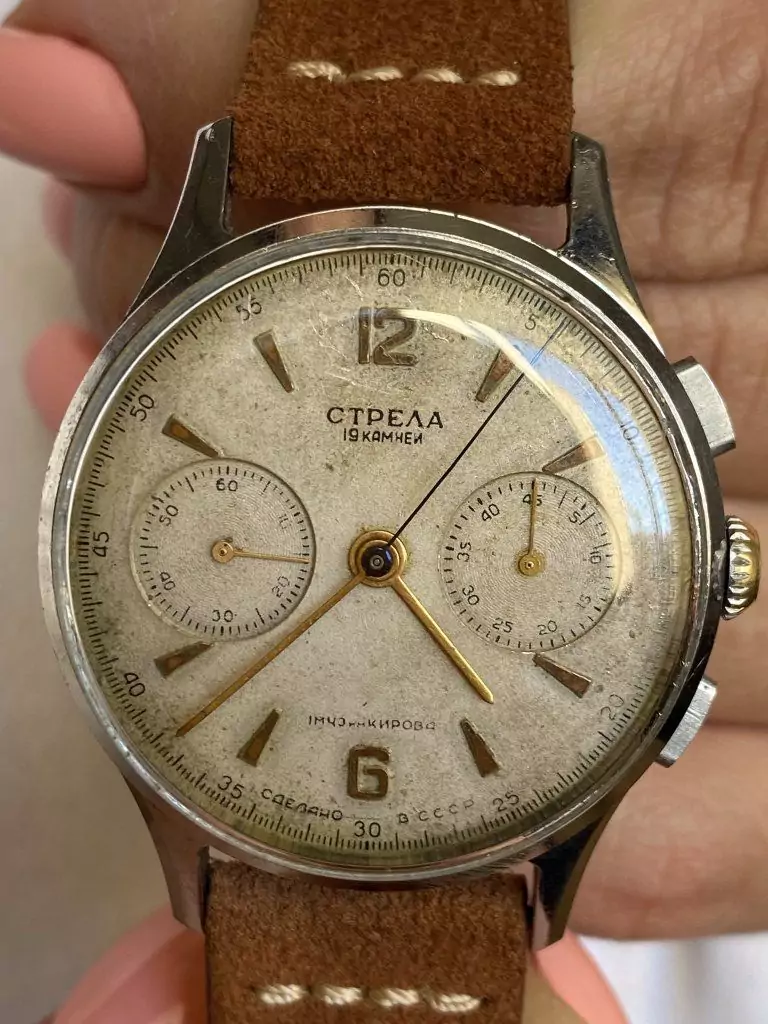
The 3017 chronograph of the First Moscow Watch Factory carries a five-digit number on the balance cock. The most common dating method reads it as a single series, from 1959 to 1979. Four factory passports show there are two, and that the same number can point to two watches made ten years apart. Here is how to read the number, the dial, the logo and the bridge, with a decoder to date your Strela, Poljot or Sekonda.
This website uses cookies to improve your experience while you navigate through the website.
Out of these cookies, the cookies that are categorised as necessary are stored on your browser as they are essential for the working of basic functionalities of the website.
We also use third-party cookies that help us analyse and understand how you use this website.
These cookies will be stored in your browser only with your consent.
You also have the option to opt out of these cookies.
But opting out of some of these cookies may affect your browsing experience.
Necessary cookies are absolutely essential for the website to function properly. This category only includes cookies that ensure basic functionalities and security features of the website. These cookies do not store any personal information.
Cookies that are not strictly necessary for the website to work and that are used specifically to collect personal data through analytics, ads and other embedded content are called non-necessary cookies. User consent is required before these cookies run on the website.
✕
Soviet in Paris
Online. We answer in person, no AI and no chatbot. Reply right away, 20 min at most.
Hello 👋 A question about an item, an order or shipping? Write to us.
Your email is used only to reply to you.
Subscribe to our newsletter and get 10% off your first order.
Subscribe
★ New pieces before anyone else
★ New blog articles
★ Soviet in Paris news and updates
Join the Party
10% off your first order
Receive your welcome card and our next arrivals.
Your code appears here and is also sent to you by email. You can leave the Party in one click, at any time.