Blog

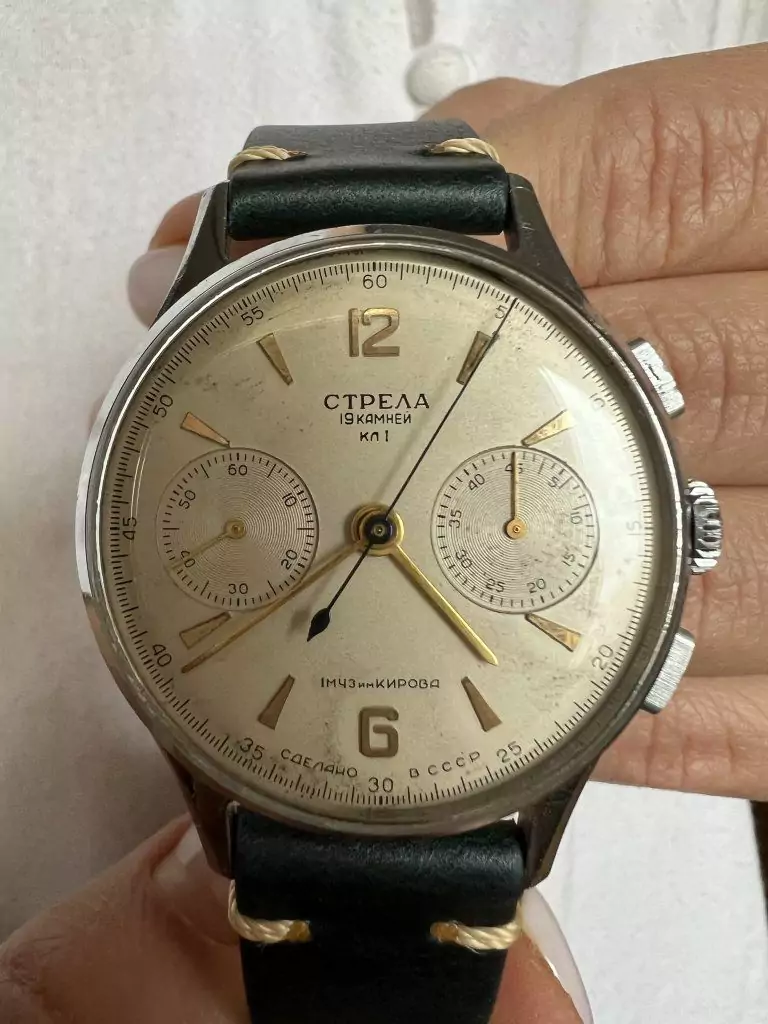
Cosmonaut Strela 3017 Watch - Poljot - Chronograph
Clocks & Watches

Cosmonaut Watches: What the Soviets Really Wore in Orbit

Far more than four Soviet watches flew: the Shturmanskie of Gagarin and Tereshkova, the 3017 chronographs signed Strela, Poljot and Sekonda, the 24-hour 8ChN of the watch research institute, the Okean 3133, a spacewalk watch, the Elektronika, then the mission watches of the 1990s. The watches with a cosmonaut, a rocket or a Sputnik on the dial celebrated those flights. This guide separates the two, gives the signs of each flight watch and what it is worth.
Read more »
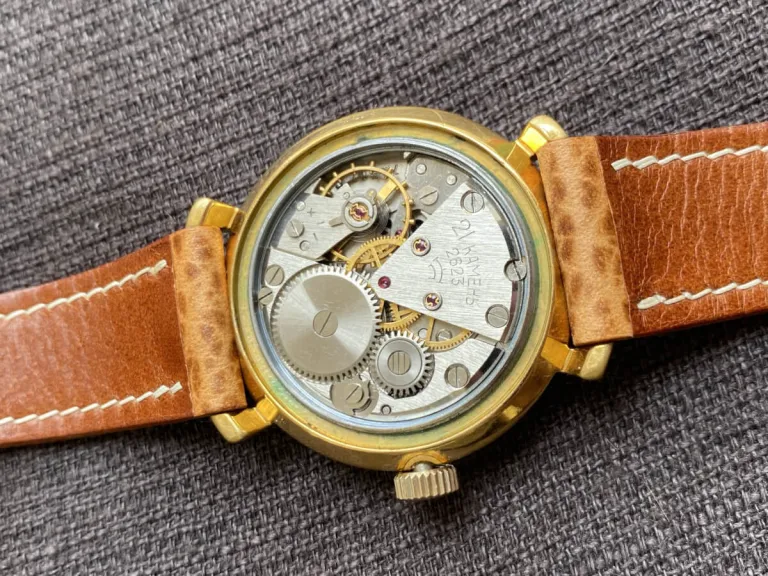
Raketa Antarktida 16 SAE watch: Baltika 2623 movement on view, bridge engraved "21 камень 2623" - Soviet in Paris
Clocks & Watches

Repairing a Russian Watch: Symptoms, Parts, Prices and Where to Send It

A Soviet watch that stops is almost never dead: nine times out of ten, its oils have dried. This guide translates each symptom, says which parts can still be found and which cannot, gives the real prices of a service, a crystal or a crown, explains what you should never do yourself, and how to send the watch to our Soviet Times workshop.

Read more »
Clocks & Watches

Slava Watches: The Second Moscow Factory, from 1924 to Besançon

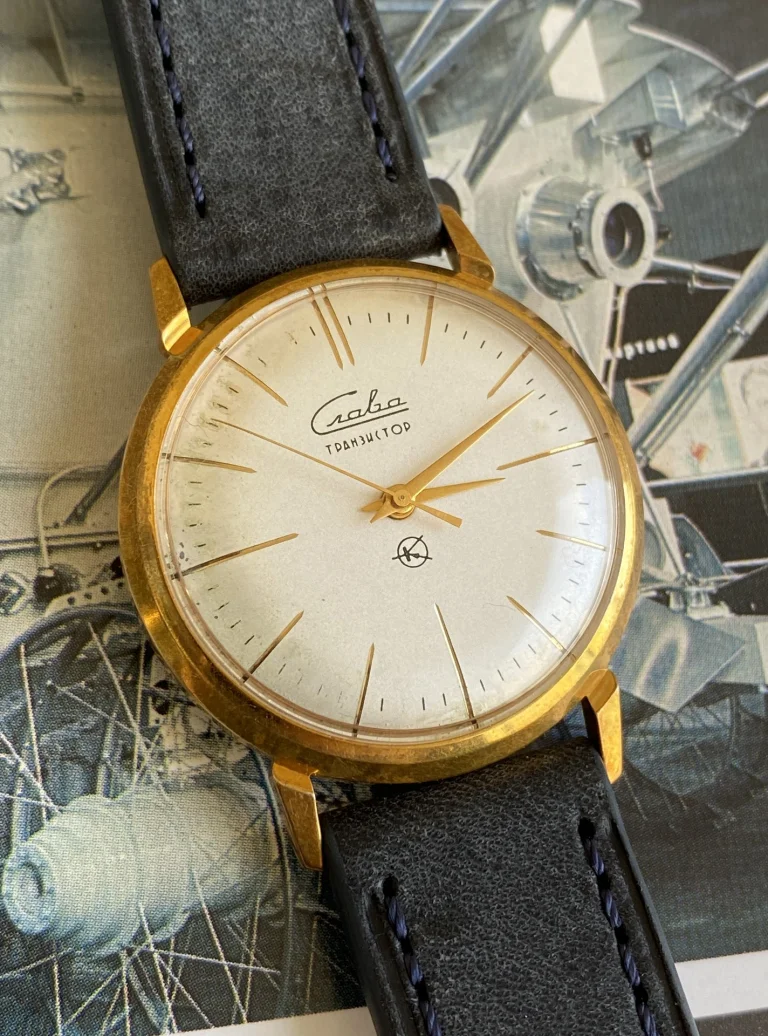
Slava is the watch of the Second Moscow Watch Factory, founded in 1924 on American machines. Its 24 mm twin-barrel calibre, its doctor’s models, its export dials for Italy and its Besançon plant, which sold up to 300,000 watches a year in France, set the brand apart. This guide gives the signs for recognising, dating and choosing a Slava.

Read more »
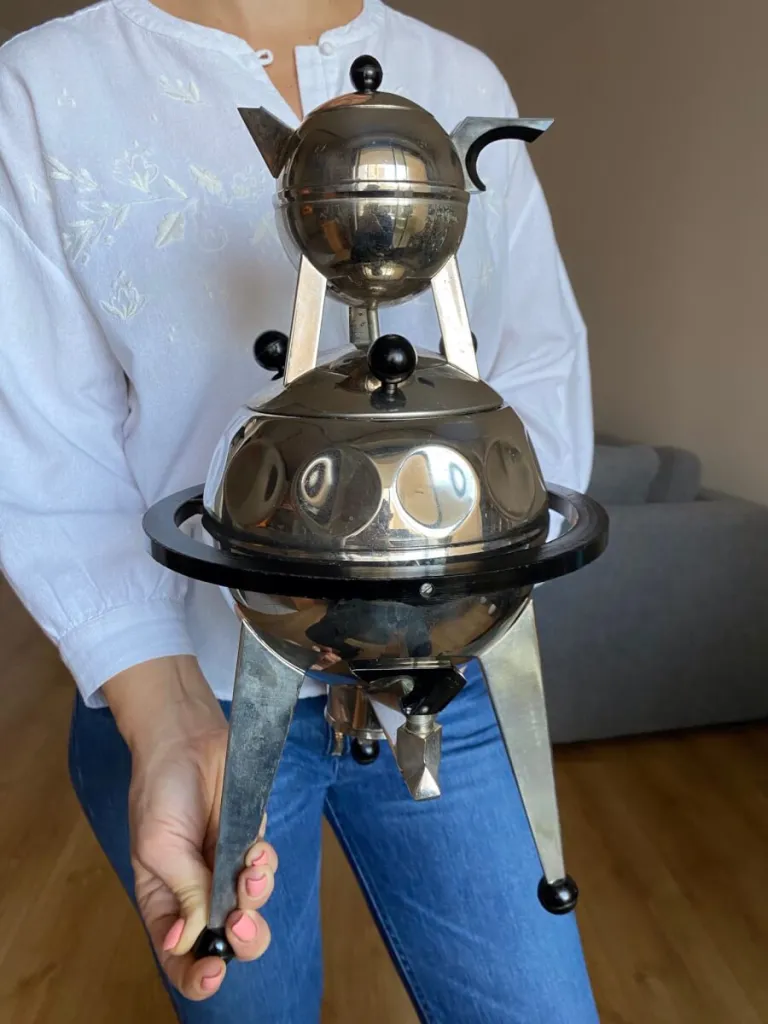
Sputnik samovar: full view held in hand, round teapot on three legs above the body circled by a black ring - Soviet in Paris
History & Propaganda

Soviet Sputnik Samovar: How It Works, Its History and What to Check Before Buying

A nickel-plated sphere on three legs, circled by a black ring, with a round teapot on top: the Sputnik electric samovar was designed by the painter Konstantin Sobakin and made in Suksun, in the Urals, from 1976. It keeps the idea of the charcoal samovar, a store of hot water with a brewing teapot sitting above it, but swaps the fire for a heating element. This guide covers how it works, where it came from, how to read its markings and what to check before buying one.

Read more »
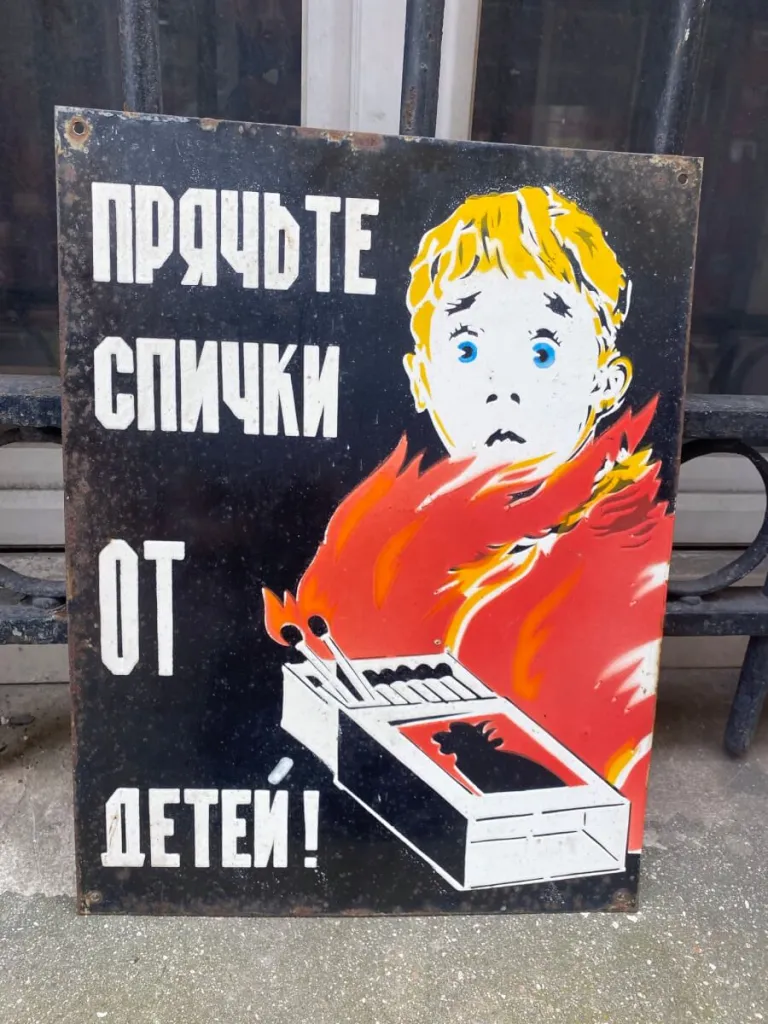
Soviet enamel sign "ПРЯЧЬТЕ СПИЧКИ ОТ ДЕТЕЙ!": full view, blond child and red flames - Soviet in Paris
History & Propaganda

Soviet Enamel Signs: How They Were Made and How to Date One

In Soviet towns, street names, the entrance of the savings bank and the warning on an electricity pole were written in glass. An enamel sign is not painted: every colour is a layer of glass fired onto the metal. This guide explains how Soviet enamel signs were made, how to read the inscription and the back, and which clues help you date one before buying, using the signs that have passed through our shop.

Read more »
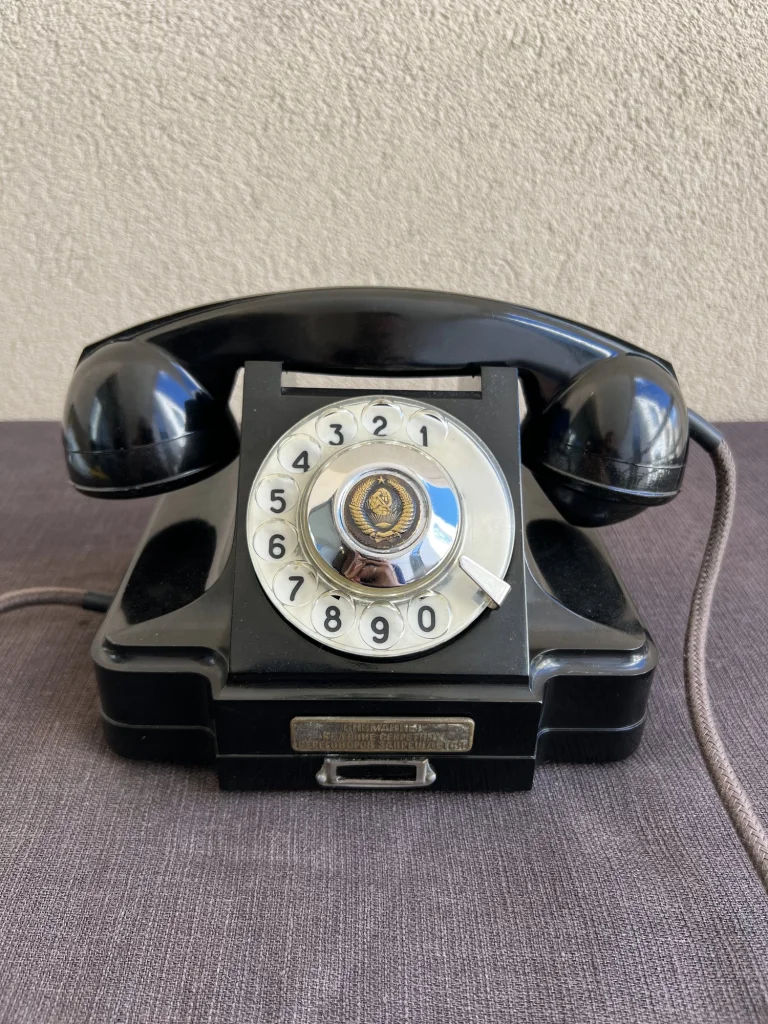
Soviet Desk Telephone TAN-5 - USSR Coat of Arms - 1959 - Soviet in Paris
History & Propaganda

Soviet Telephones: Rotary Dial, KGB Phones, Ship and Mine Phones Explained

On a Soviet telephone, three details nearly always place the piece. The dial, or the blanking plate fitted in its place, tells you what kind of exchange it was wired to. The plate or the moulding gives the model. The year is stamped under the base or on the plate. From Bakelite desk sets to battery-free ship phones and mine phones, this guide shows how they worked and what to check before you buy one.

Read more »
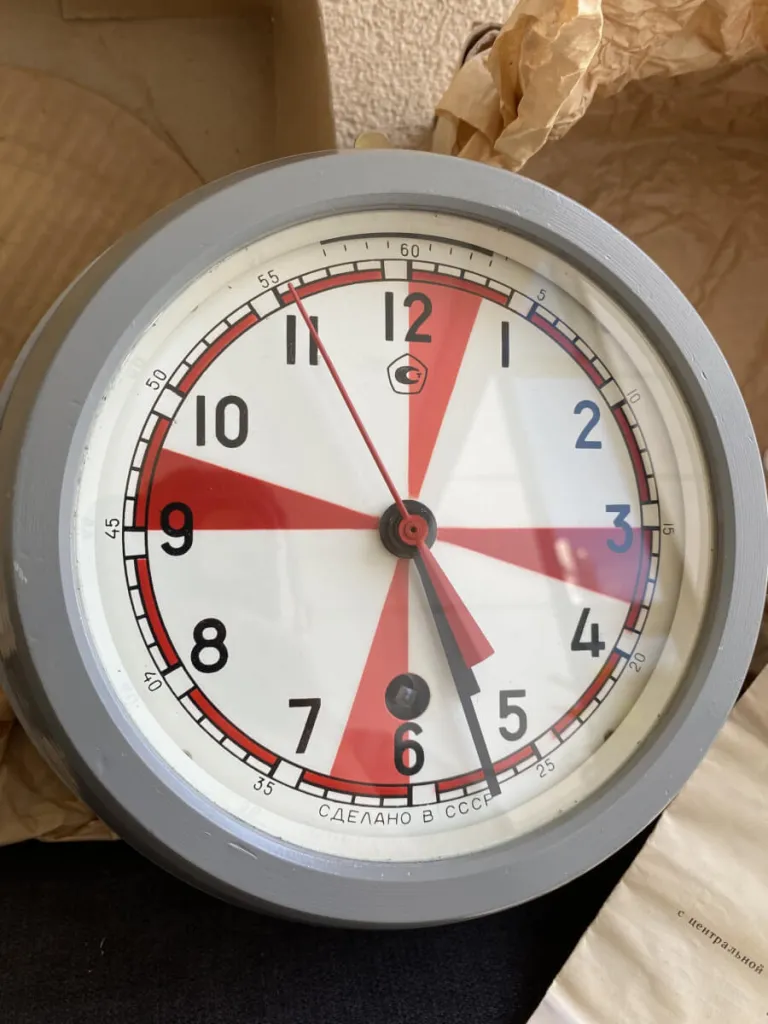
Soviet navy clock with silence periods: close-up of the red-sector dial and minute ring - Soviet in Paris
Clocks & Watches

Soviet Radio Room Clock: What the Red and Pink Sectors and the Silence Periods Mean

Four coloured sectors cut across the dial of a Soviet radio room clock. Twice an hour the ship’s radio operator had to stop transmitting for three minutes and listen on the distress frequency: the red sectors for telegraphy, the pink ones for telephony. This guide gives the texts that set the rule, shows how to read the dial with an animated diagram, then goes through the Chistopol and Glashütte clocks in our shop and what to check before buying.

Read more »
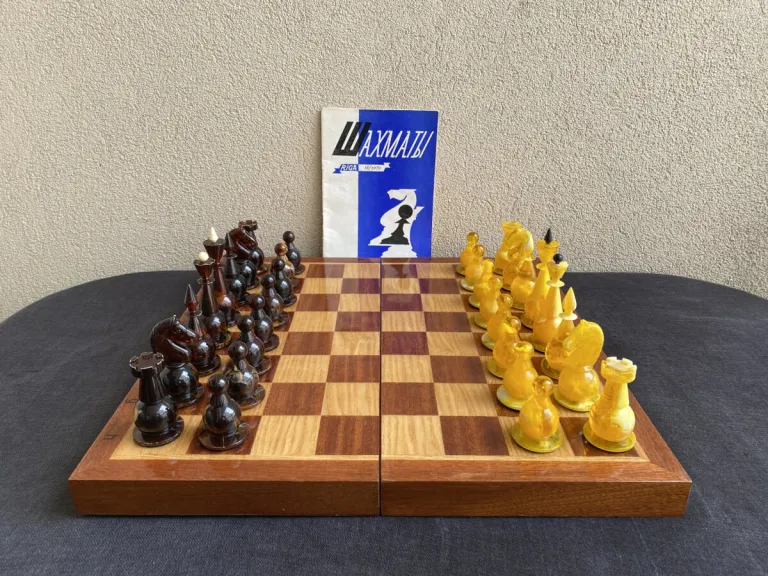
Kaliningrad amber chess set: overall view, dark and yellow pieces set up, with the magazine "ШАХМАТЫ RIGA 18/1979" - Soviet in Paris
History & Propaganda

Soviet Chess Sets and Jantar Chess Clocks: Travel Sets, Kaliningrad Amber and How to Date Them

The Soviet chess sets found today are mass-produced objects: magnetic or peg travel sets, plastic sets from Kiev or Kishinev, pressed amber pieces from Kaliningrad, Yantar (Jantar) tournament clocks. This guide goes through them using pieces from our shop, shows the marks that date a box or a clock, standard number, price and stamps, and ends with a board on which to replay three games, including the one played in orbit in 1970.

Read more »
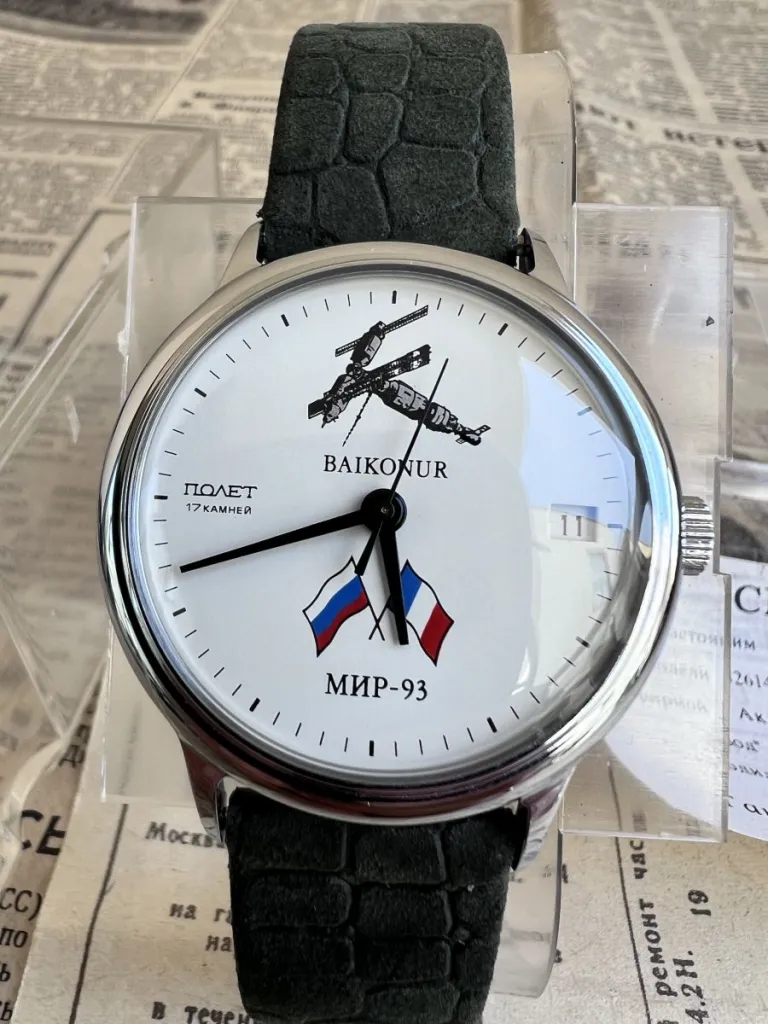
Poljot Mission Mir 1993 Limited Edition - Soviet in Paris
Clocks & Watches

Poljot Mir-93: the watch made for France's Altaïr flight to Mir

On 1 July 1993 a Soyuz rocket left Baikonur carrying two Russians and a Frenchman. For that flight, the First Moscow Watch Factory made 250 Poljot watches with a white dial, the Mir station drawn above two crossed flags. This is the story of the Altaïr mission, its crew and the station, and of what the certificate, passport and launch-day stamp that came with watch N°481581 have to say.

Read more »
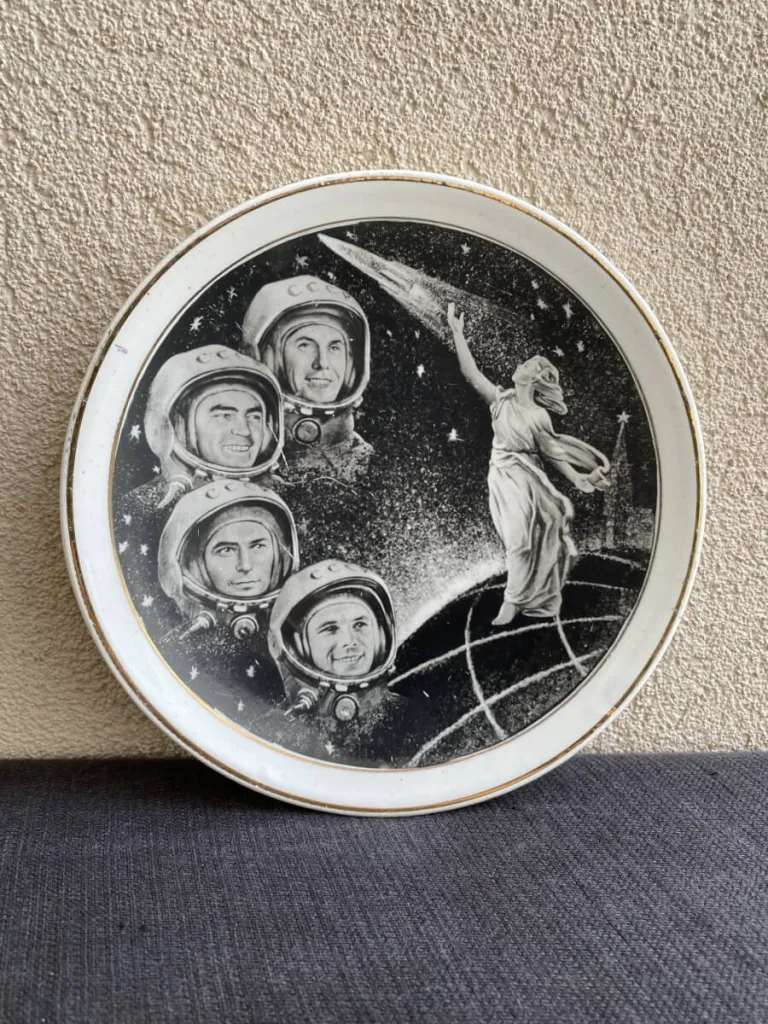
Soviet cosmonauts plate: front view, four helmeted cosmonauts and a female figure reaching towards a rocket - Soviet in Paris
History & Propaganda

Soviet Porcelain Marks: How to Read the Backstamp on USSR Porcelain

Turn a Soviet plate over: under the foot ring you find a letter, a circle, sometimes a rooster or a teapot, a number, the words 1 с. These backstamps tell you which factory made the piece, roughly when, which quality grade it received, and whether it was meant for export. This guide reads them on pieces that passed through Soviet in Paris, from Korosten to Leningrad, with the dates published by museums, and shows what separates a Soviet-era piece from one made after the USSR.

Read more »