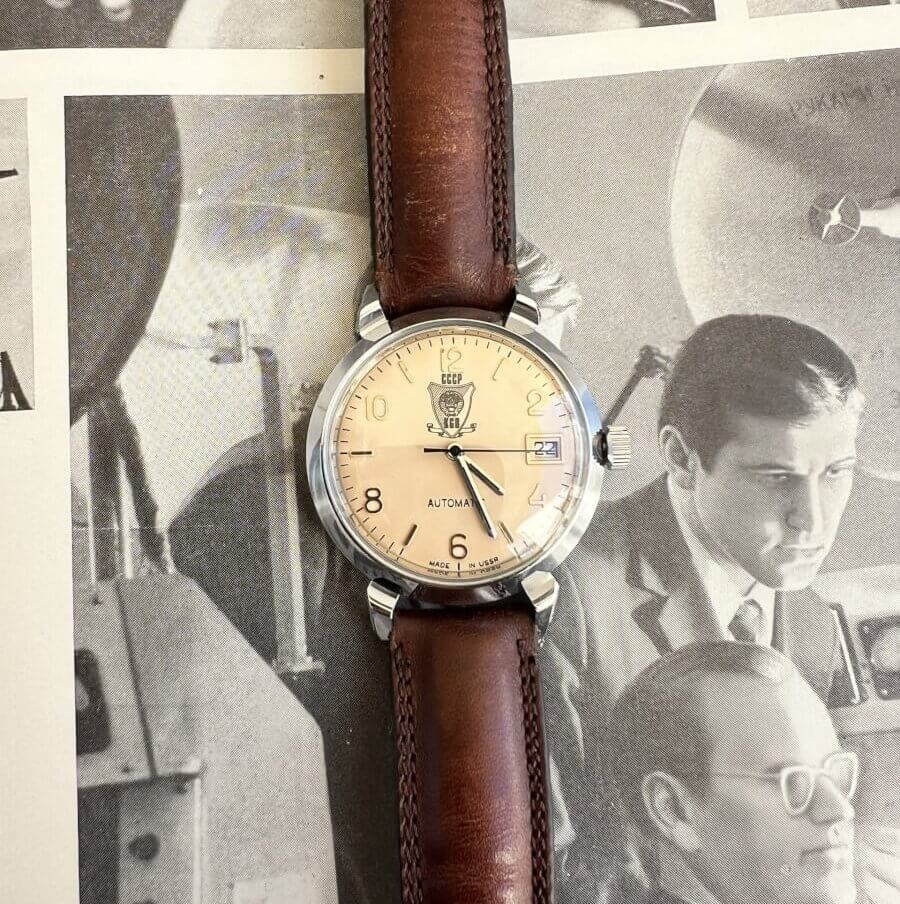
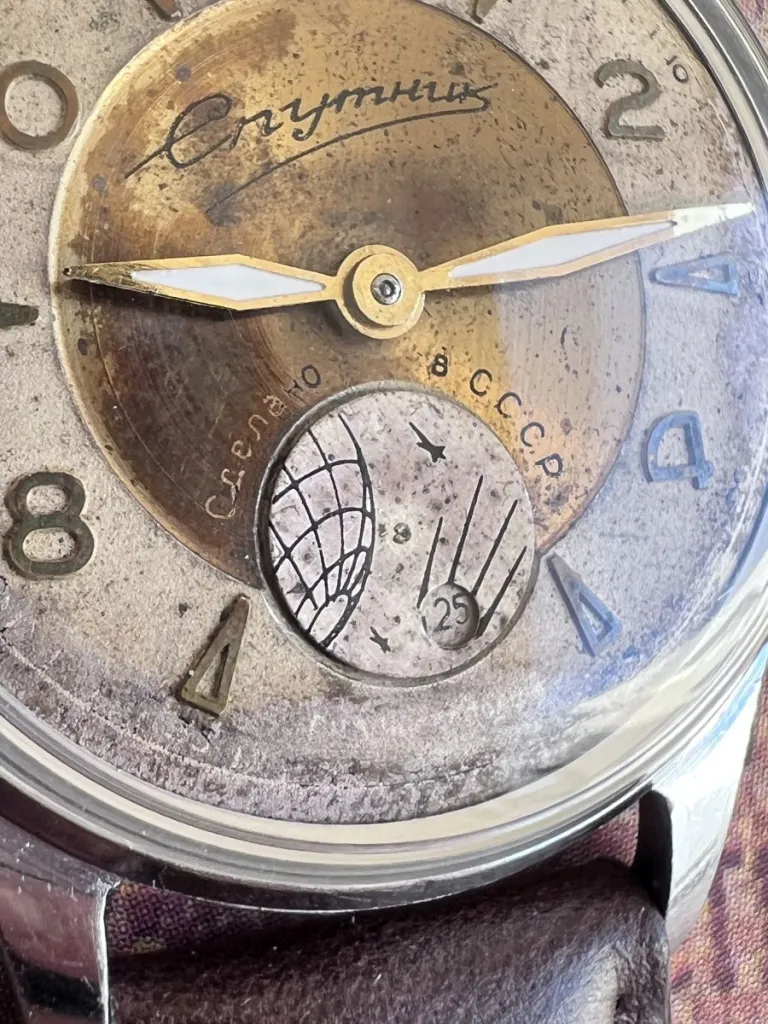
A mechanical watch draws its energy from a spring that is wound by hand. An automatic watch is a mechanical watch that winds itself on the wrist. A quartz watch runs on a battery. This guide explains how each one works with animated diagrams and a 3D movement, based on Soviet calibres, then answers the most common questions: winding, accuracy, stopping overnight, servicing.
OCTOBER 2026•6 MINUTE READ
by Marwen Yahyaoui
Mechanical, automatic and quartz watches all tell the time, but they are not worn, serviced or aged in the same way.
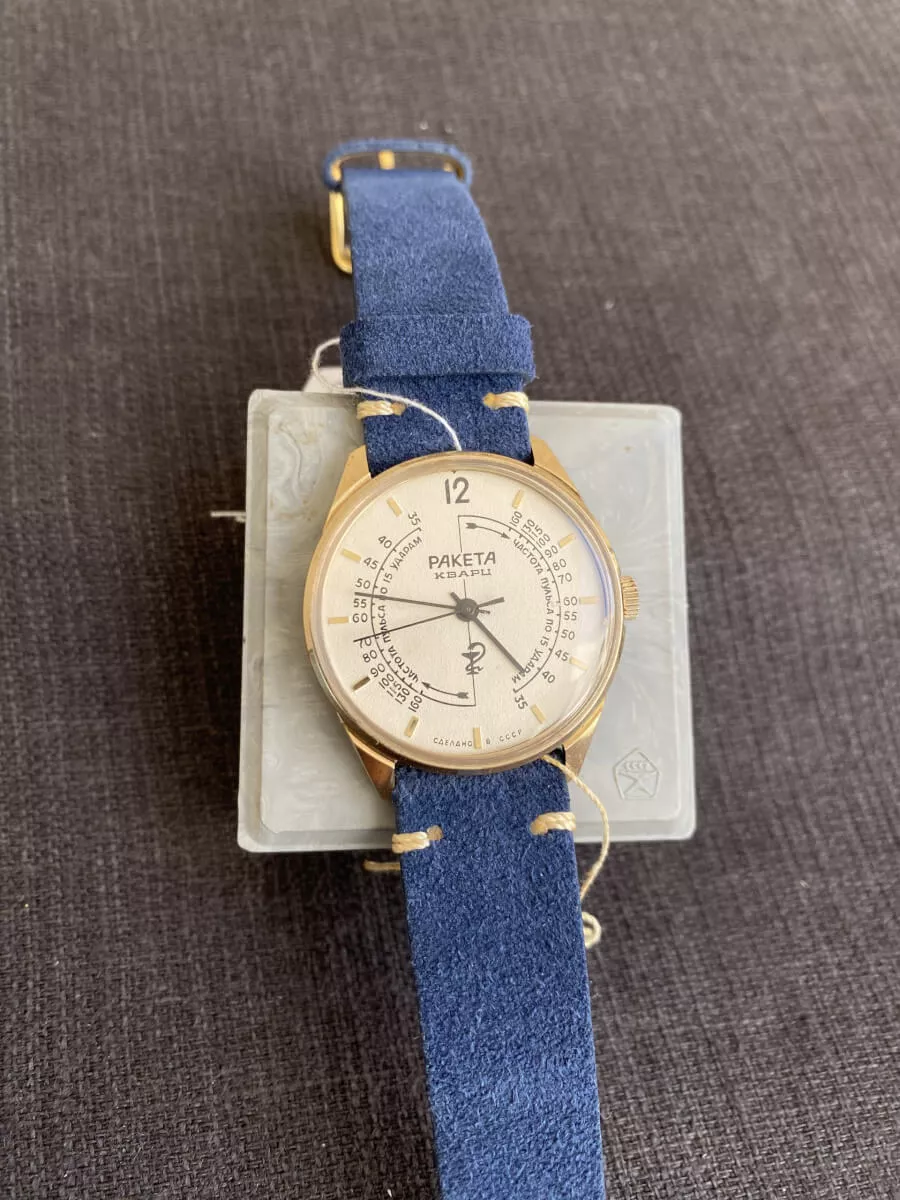
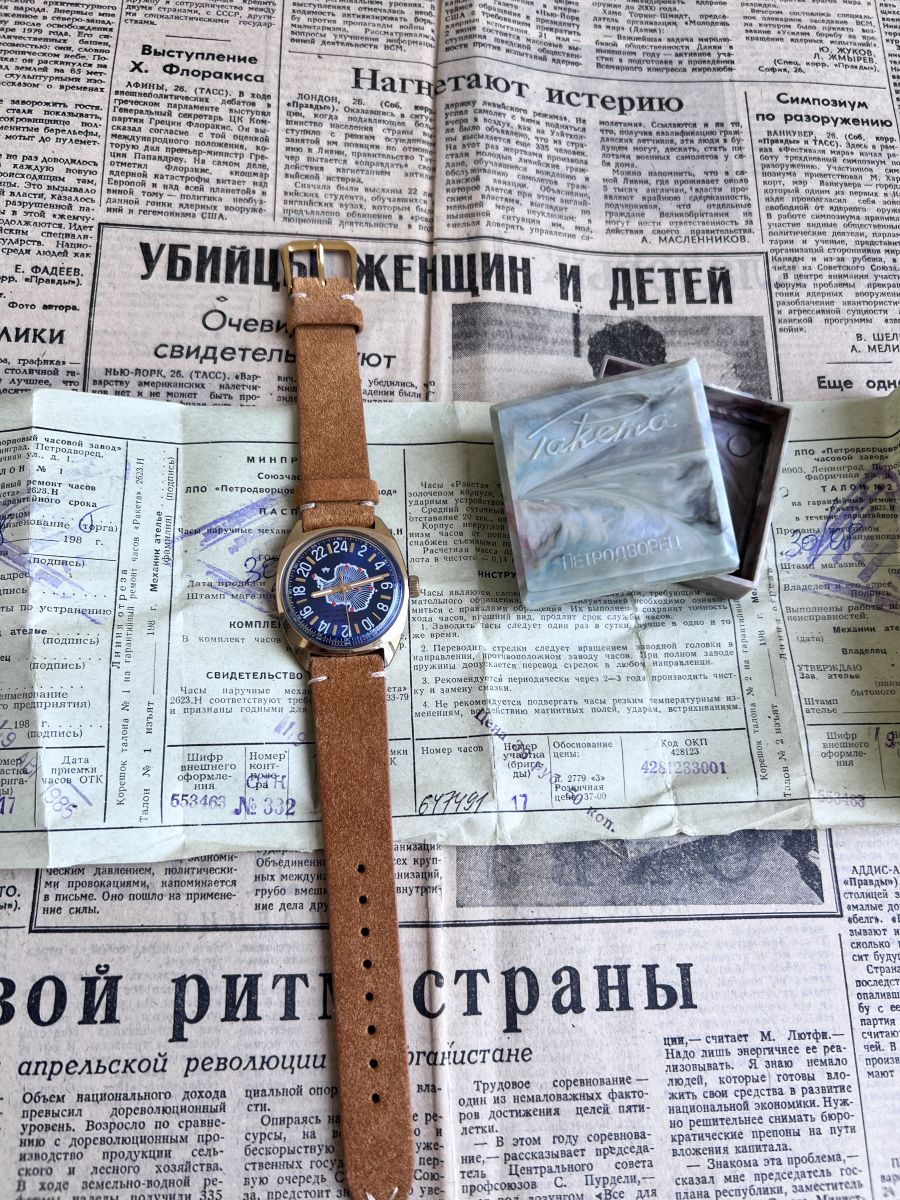
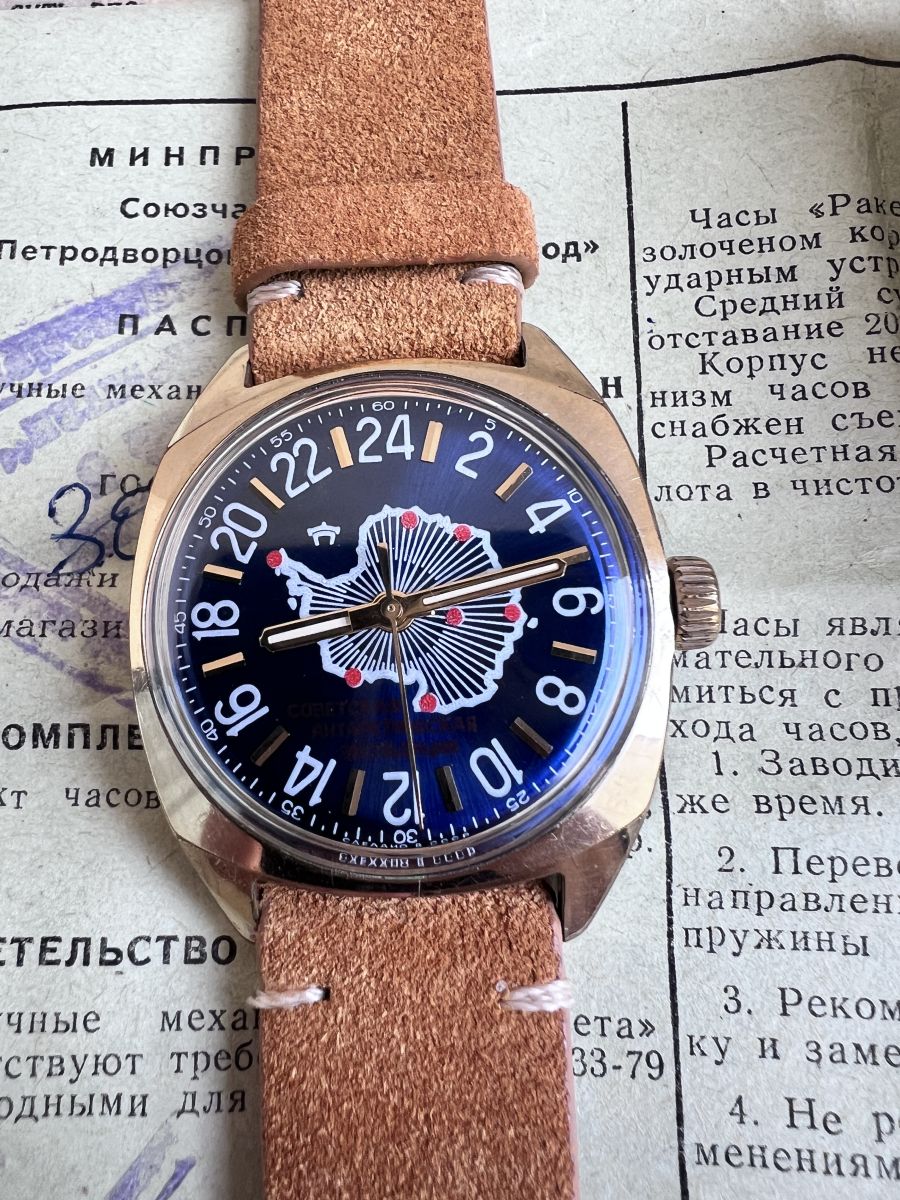
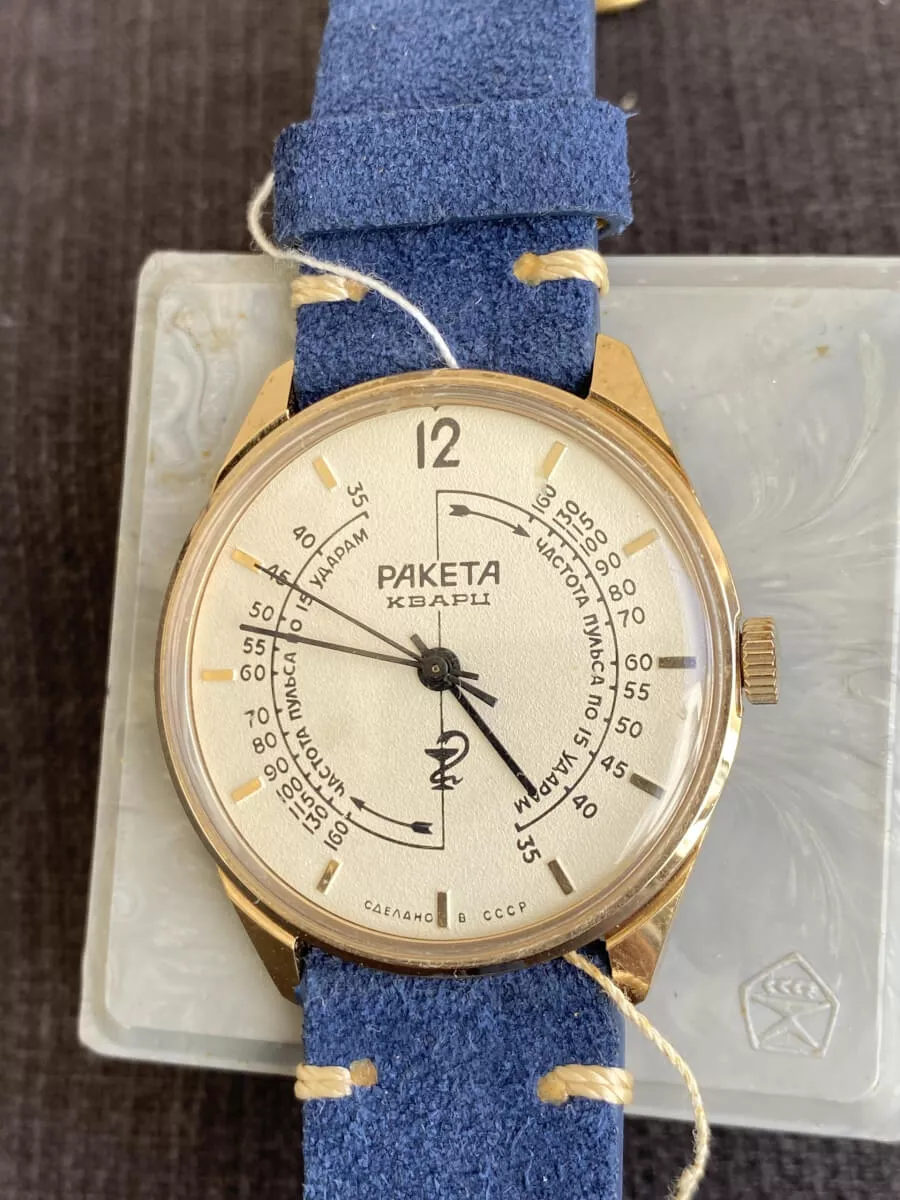
Hand-wound Raketa 24-hour watch.
This guide explains how each one works with animated diagrams, based on Soviet calibres: the Raketa 2609.HA for the hand-wound watch, the Vostok 2416B for the automatic, and a quartz Raketa. It then answers the questions buyers ask us most often.
The hand-wound mechanical watch
In a mechanical watch, everything starts with a steel spring coiled inside a small drum, the barrel. Turning the crown coils this spring around its arbor. The spring then tries to unwind, and that force turns the wheels all the way to the hands.
Without a brake, the spring would empty itself in a few seconds. This is the job of the escapement and the balance wheel: the balance swings at a steady rate, and at each swing the pallet fork lets a single tooth of the escape wheel pass. The ticking of the watch comes from there.
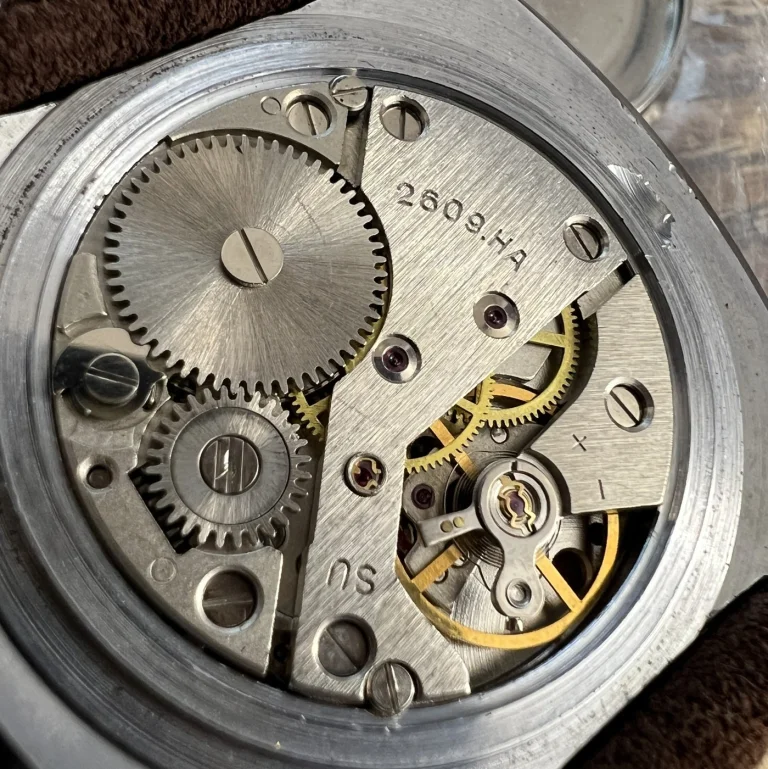
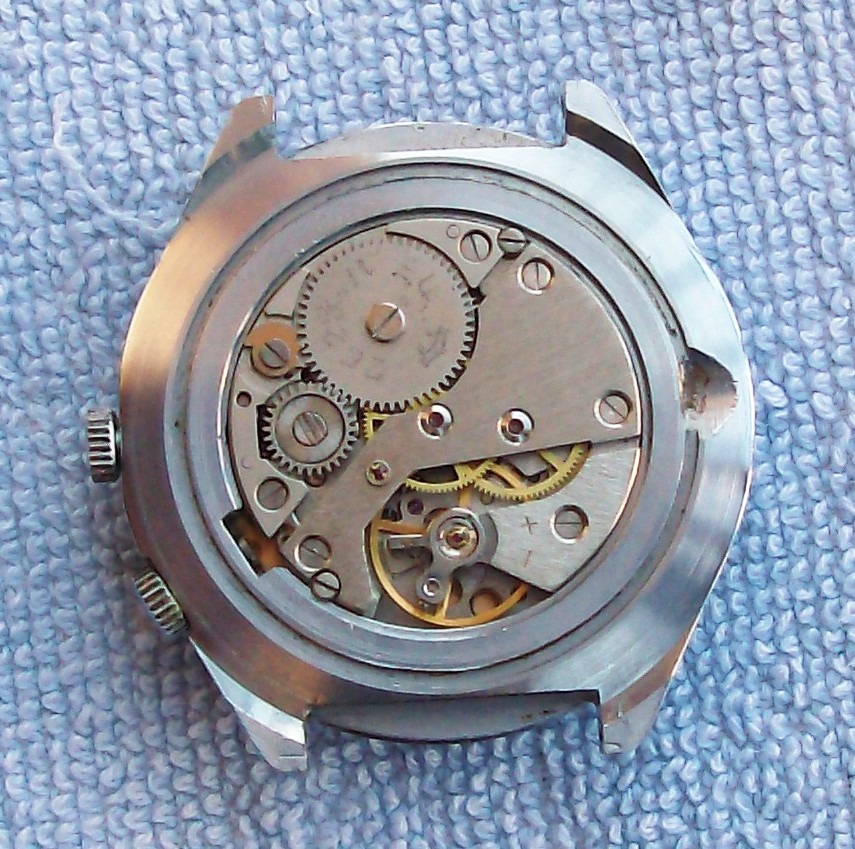
The model below follows the layout of the Raketa 2609.HA calibre, seen from the case back: 19 jewels, 18,000 beats per hour, centre seconds. Rotate it with a finger or the mouse, then wind the crown: the mainspring, visible through the bridges, tightens around its arbor. Then let it unwind until the watch stops. The “Exploded view” slider separates the layers of the movement.
Movement of a Raketa 24-hour watch, seen from the case back.
How to wind a mechanical watch
Turn the crown clockwise, with the watch facing you, until you feel a clear resistance. Allow about 20 to 30 turns for a full wind, and do not force beyond that point. Once wound, the watch runs for more than a day. The simplest habit is to wind it every day at the same time, for example in the morning.
The automatic watch
An automatic watch is a mechanical watch: same spring, same gear train, same escapement. The difference is one part added to the back of the movement, the rotor. It is a heavy half-disc on a pivot, which turns with every movement of the wrist and winds the mainspring.
Worn every day, it never stops. Left in a drawer, it runs on its reserve, then stops like a hand-wound watch. It then only needs to be wound by the crown, or worn.
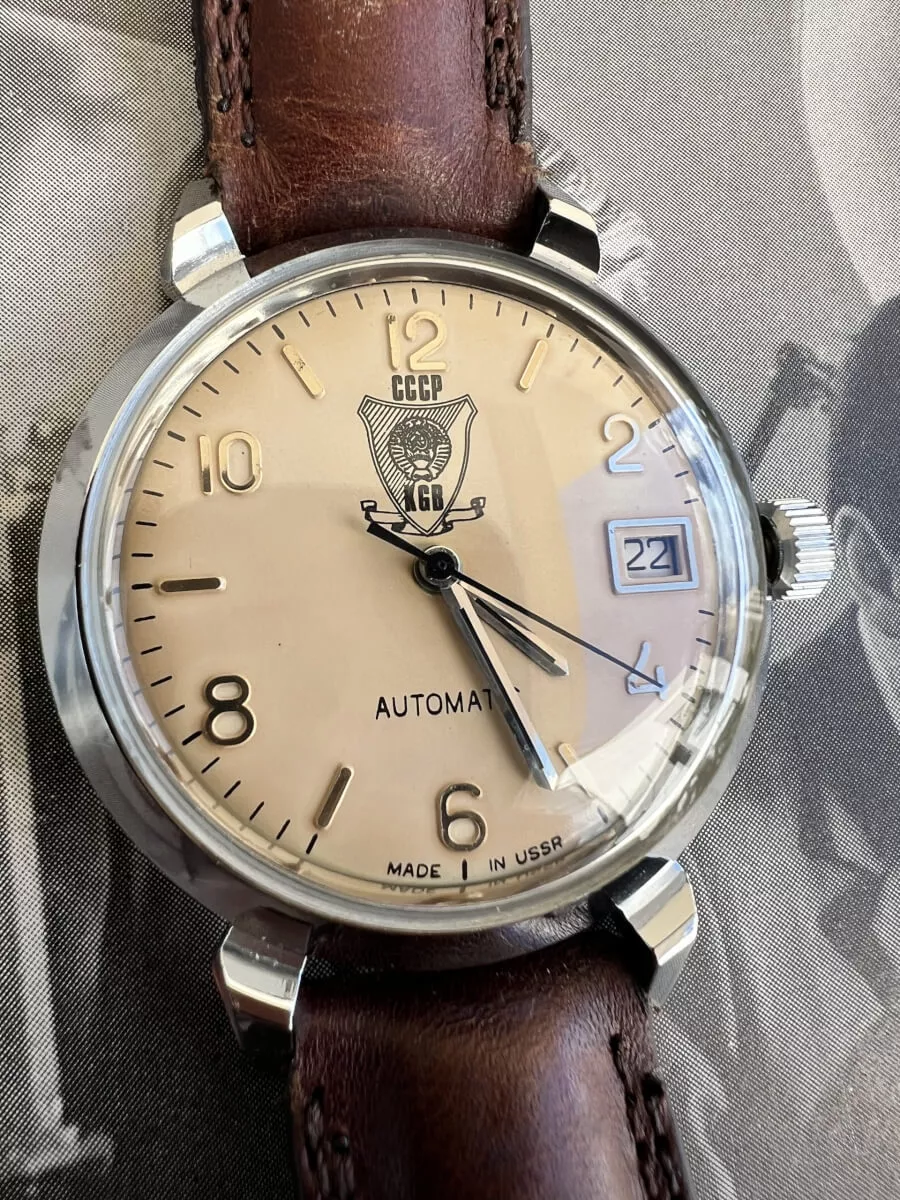
In the 3D model above, switch to the “Automatic” tab: it shows the Vostok 2416B calibre, 31 jewels, 19,800 beats per hour. Wear the watch: the rotor swings, transmission wheels pass its motion on to the ratchet wheel, and the mainspring tightens, whichever way the rotor turns. The layout of the movement is simplified there.
Vostok automatic, calibre 2416B.
Can an automatic watch be wound by hand?
Yes on most calibres, including the Vostok 2416B. A few dozen turns of the crown are enough to start it before putting it on. On an automatic there is no stop at the end of winding: the spring is designed to slip inside the barrel rather than strain.
The quartz watch
A quartz watch has neither mainspring nor balance wheel. A battery powers an electronic circuit, which makes a small quartz crystal vibrate 32,768 times per second. The circuit counts these vibrations and, every second, sends one pulse to a tiny motor that moves the hands one step.
This is why the seconds hand of a quartz watch jumps once per second, while that of a mechanical watch moves in small, close steps. The diagram below follows the layout of the Soviet quartz calibre 2356: the battery at the top, the motor coil on the right, the circuit and the quartz at the bottom.
The USSR also made quartz watches, notably under the Raketa, Poljot, Luch and Chaika names. A quartz watch is more accurate than a mechanical one and only needs a new battery from time to time. If it is left unused for a long time, take the battery out: a leaking battery damages the movement.
How to tell which type your watch is
Look at the seconds hand. If it jumps once per second, it is a quartz watch. If it moves in small, close steps, it is a hand-wound or automatic watch.
Read the dial. “КВАРЦ” or “Quartz” means a quartz watch. “Автоподзавод” or “Automatic” means an automatic watch.
Listen to it. A mechanical watch makes a fast, continuous ticking.
Move it gently close to your ear. On an automatic you can feel and hear the rotor turning.
Mechanical, automatic or quartz: which one to choose
The hand-wound mechanical watch asks for one gesture a day. It has no battery, and its movement can be repaired and serviced. It is the most common type among Soviet watches.
The automatic watch offers the same mechanical pleasure without daily winding, provided it is worn regularly.
The quartz watch is the most accurate and the easiest to live with. It suits anyone who wants a watch that is always on time without thinking about it.
Frequently asked questions
My mechanical watch runs fast or slow, is that normal?
Yes, to a degree. An old mechanical watch commonly varies by a few tens of seconds per day, depending on its position, the temperature and how fully it is wound. A difference of several minutes per day, however, points to a problem: a magnetised watch, dried oils or a knock. It then needs a service, which we offer in our repair workshop.
My automatic watch stops overnight
It was not worn enough during the day to fill its reserve. Wind it by the crown in the morning before putting it on. If it stops although it is fully wound, it needs a service.
Can a mechanical watch be overwound?
No, as long as you stop at the resistance. The spring cannot be wound beyond it: things break when you force past that point.
Does a mechanical watch need servicing?
Yes. The oils in a movement age and dry out even when the watch is not used. A watch that stops, runs very fast or becomes hard to wind should be serviced.
The ДП-5В (DP-5V) is the field radiometer of Soviet civil defence: a green Bakelite console, a probe with a rotating gamma, beta and check-source shield, headphones and a manual that explains operation and maintenance. The one in this article served in an industrial bakery in Chișinău and was serviced in March 1991. Its owner shared his photos and documents with us, and we turned them into a tool that lets you operate it on screen, step by step.
The Moscow Games, from 19 July to 3 August 1980, boycotted by some sixty countries, produced more objects than any Soviet event: a bear cub, Misha, drawn by Viktor Chizhikov, an emblem made of running tracks, five thousand torches, watches from every factory, platinum coins, rings, tea glass holders, posters. This guide tells the story of the Games and reviews the objects, with the marks that authenticate them and the prices.
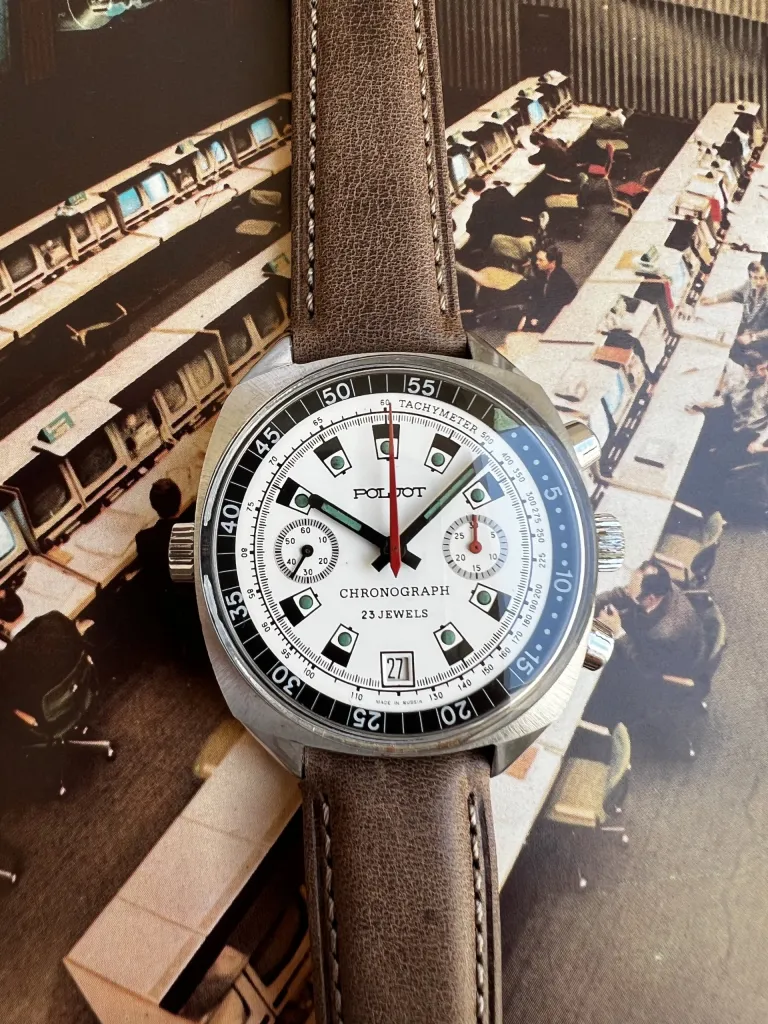
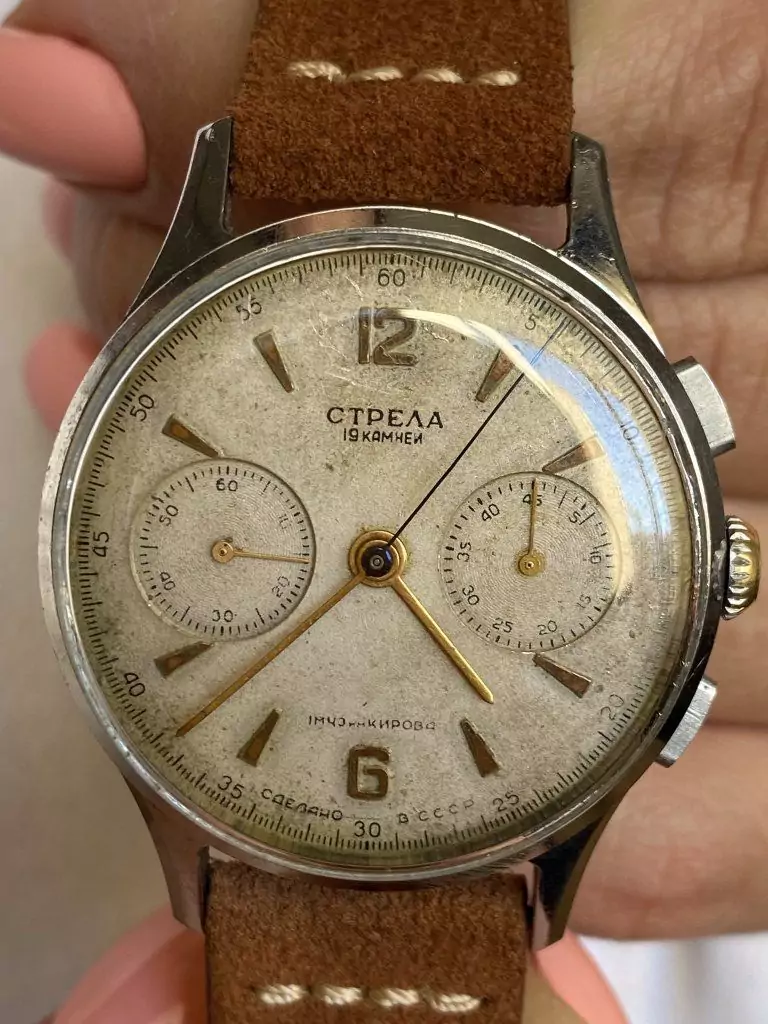
The 3017 chronograph of the First Moscow Watch Factory carries a five-digit number on the balance cock. The most common dating method reads it as a single series, from 1959 to 1979. Four factory passports show there are two, and that the same number can point to two watches made ten years apart. Here is how to read the number, the dial, the logo and the bridge, with a decoder to date your Strela, Poljot or Sekonda.
This website uses cookies to improve your experience while you navigate through the website.
Out of these cookies, the cookies that are categorised as necessary are stored on your browser as they are essential for the working of basic functionalities of the website.
We also use third-party cookies that help us analyse and understand how you use this website.
These cookies will be stored in your browser only with your consent.
You also have the option to opt out of these cookies.
But opting out of some of these cookies may affect your browsing experience.
Necessary cookies are absolutely essential for the website to function properly. This category only includes cookies that ensure basic functionalities and security features of the website. These cookies do not store any personal information.
Cookies that are not strictly necessary for the website to work and that are used specifically to collect personal data through analytics, ads and other embedded content are called non-necessary cookies. User consent is required before these cookies run on the website.
✕
Soviet in Paris
Offline right now. Leave your message and your email, we reply within 24 hours.
Hello 👋 A question about an item, an order or shipping? Write to us.
Your email is used only to reply to you.
Subscribe to our newsletter and get 10% off your first order.
Subscribe
★ New pieces before anyone else
★ New blog articles
★ Soviet in Paris news and updates
Join the Party
10% off your first order
Receive your welcome card and our next arrivals.
Your code appears here and is also sent to you by email. You can leave the Party in one click, at any time.





 Strane Mira, our second shop, states the movement on each listing of its