The line printed at the foot of the sheet dates a poster to the day and separates it from a reprint. This guide explains how to read it, introduces the main publishers and lists what to check before buying.
OCTOBER 2026•6 MINUTE READ
by Marwen Yahyaoui
A Soviet propaganda poster carries its own identity card. At the foot of the sheet, a line of small print gives the artist, the censor’s code, the date the poster was signed off for printing, the print run, the price and the printing house.
Reading the imprint line of a Soviet poster
In Russian these details are called « выходные сведения », or in everyday use « выходные данные ». They sit at the very bottom of the sheet, on the left or in the middle.
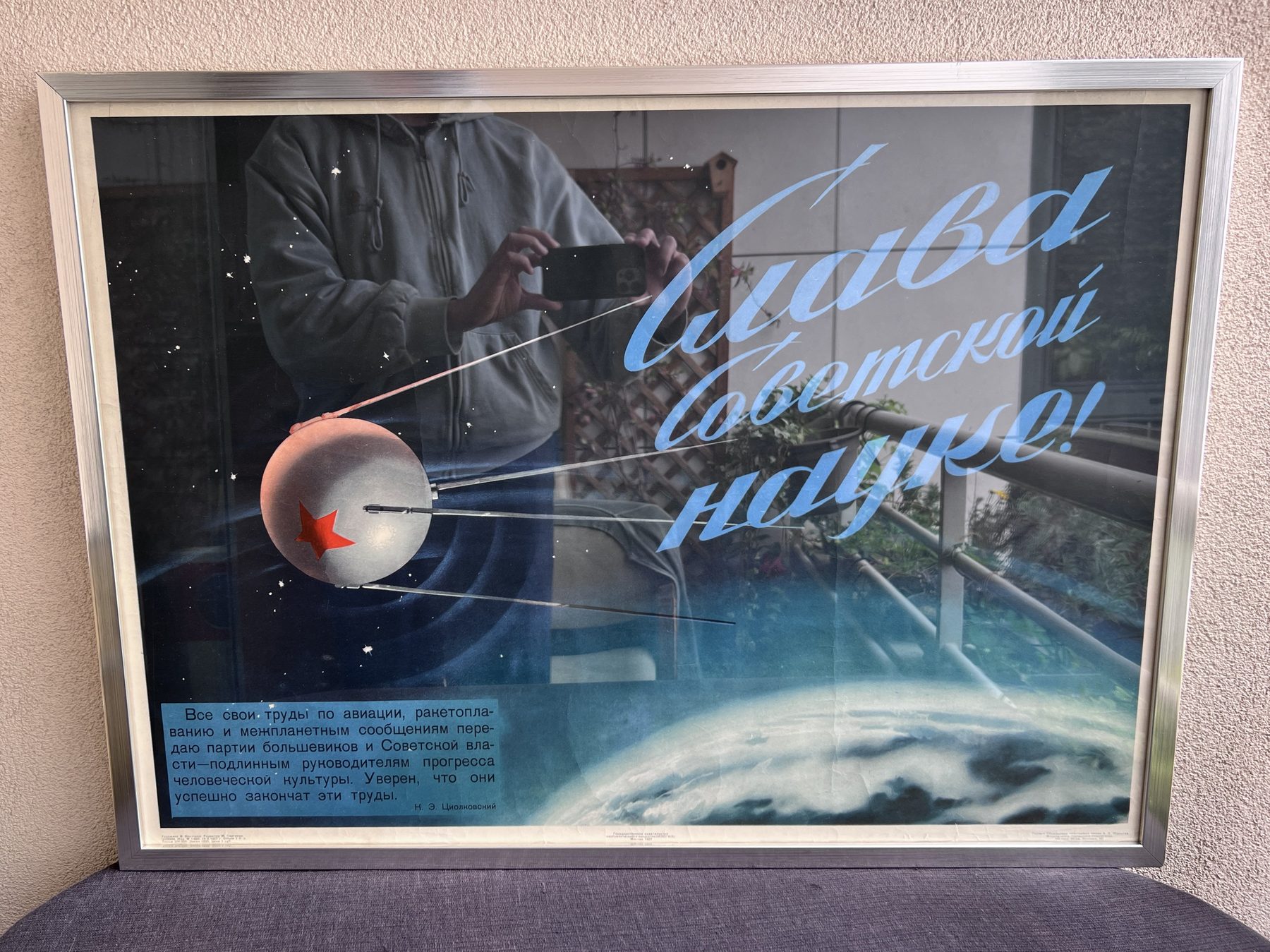
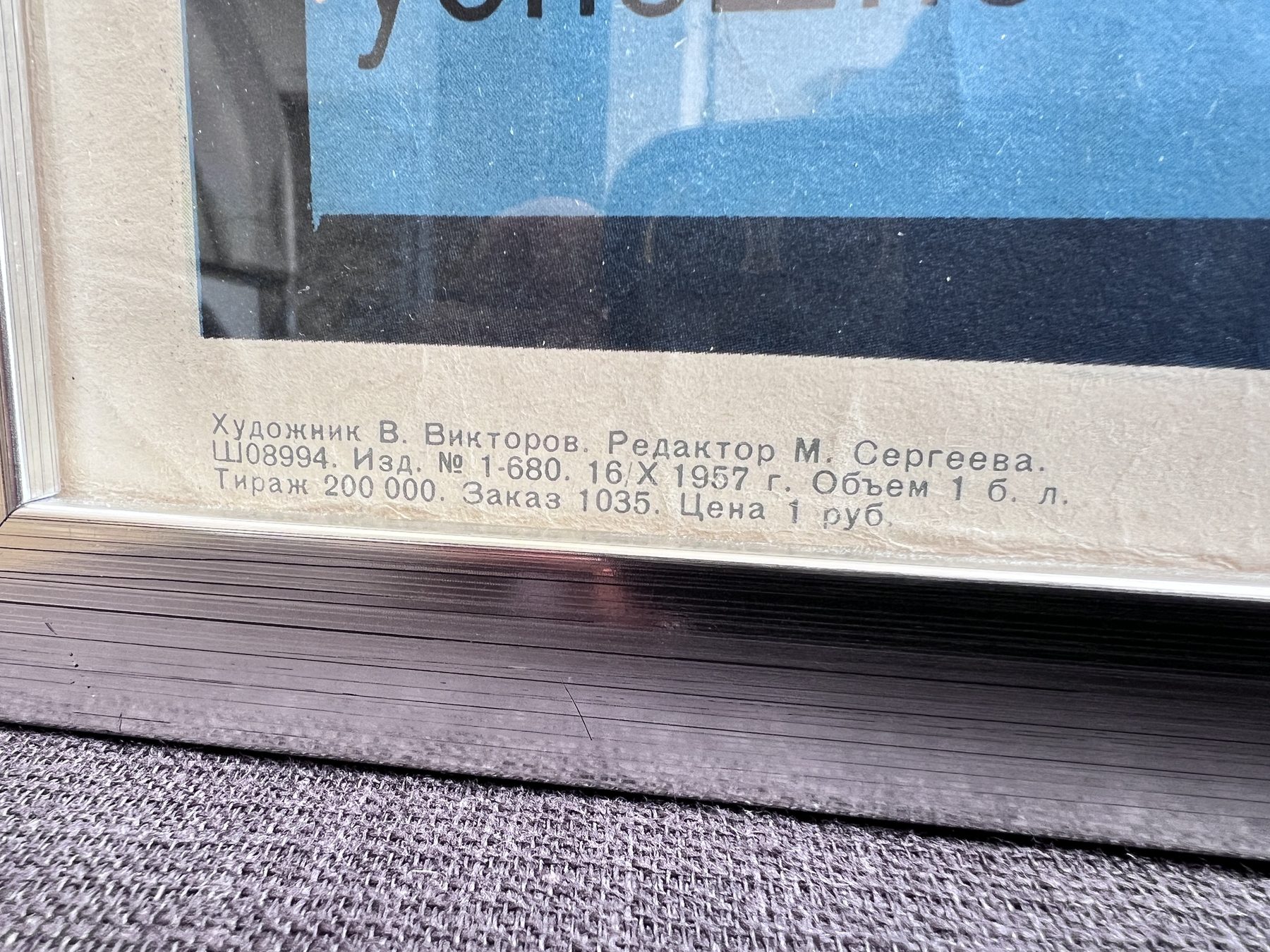
Our poster « Слава советской науке! » (Glory to Soviet science!) gives a complete example. Its line reads: « Художник В. Викторов. Редактор М. Сергеева. Ш08994. Изд. № 1-680. 16/X 1957 г. Объем 1 б. л. Тираж 200 000. Заказ 1035. Цена 1 руб. »
The imprint line of the Sputnik poster.
« Художник »: the artist, here Valentin Viktorov (1909-1981). « Редактор »: the publisher’s editor.
« Ш08994 »: the code of Glavlit, the censorship office. One letter and five digits, applied to every Soviet printed item.
« Изд. № »: the publisher’s edition number.
« 16/X 1957 г. »: the date of sign-off for printing, « подписано в печать ».
« Объем 1 б. л. »: the volume, one sheet of paper.
« Тираж 200 000 »: the print run.
« Заказ 1035 »: the printer’s order number.
« Цена 1 руб. »: the retail price, one rouble.
The publisher and the printing house are given separately, in the same margin.
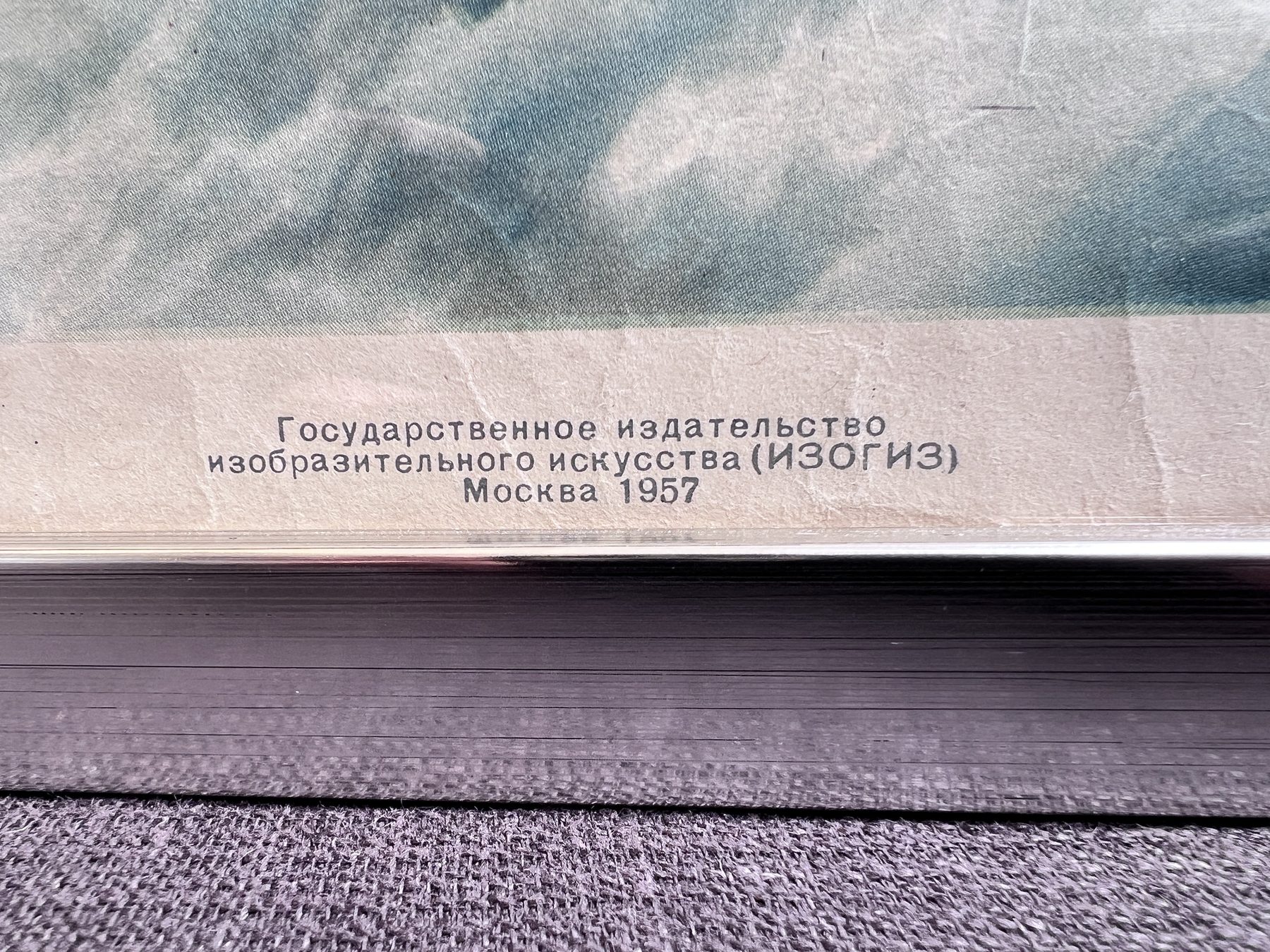
The publisher’s line: IZOGIZ, Moscow, 1957.
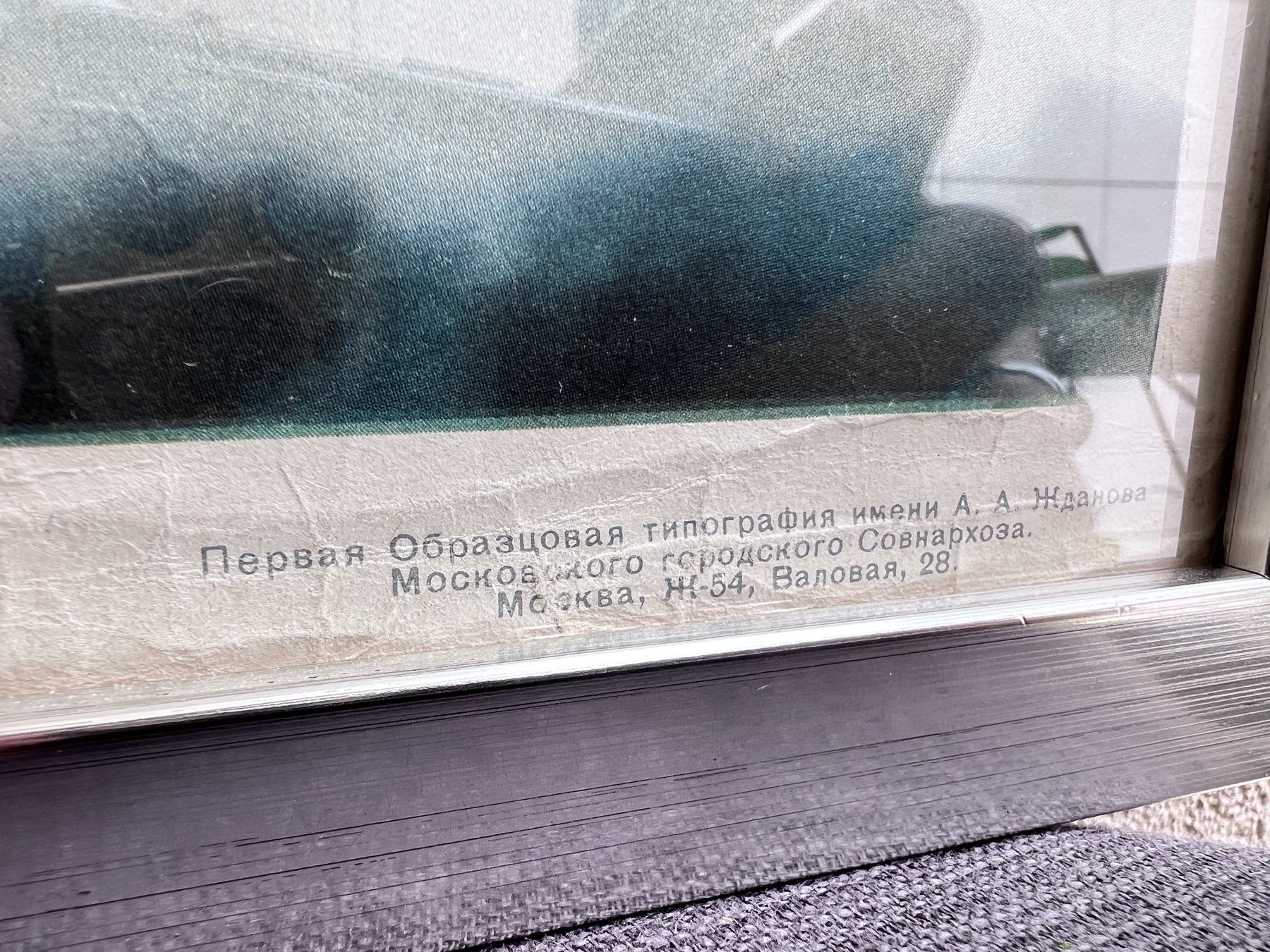
The printer’s line: Zhdanov First Model Printing House, Moscow.
Sputnik 1 had been launched on 4 October 1957: the poster was signed off twelve days later. The press of the time singled it out. It is, in all likelihood, one of the very first space posters. According to the historian E. Fedosov, close to one Soviet poster in ten refers to space between 1957 and 1965, with a peak from 1961 to 1963.
Dating by price, print run and censor’s code
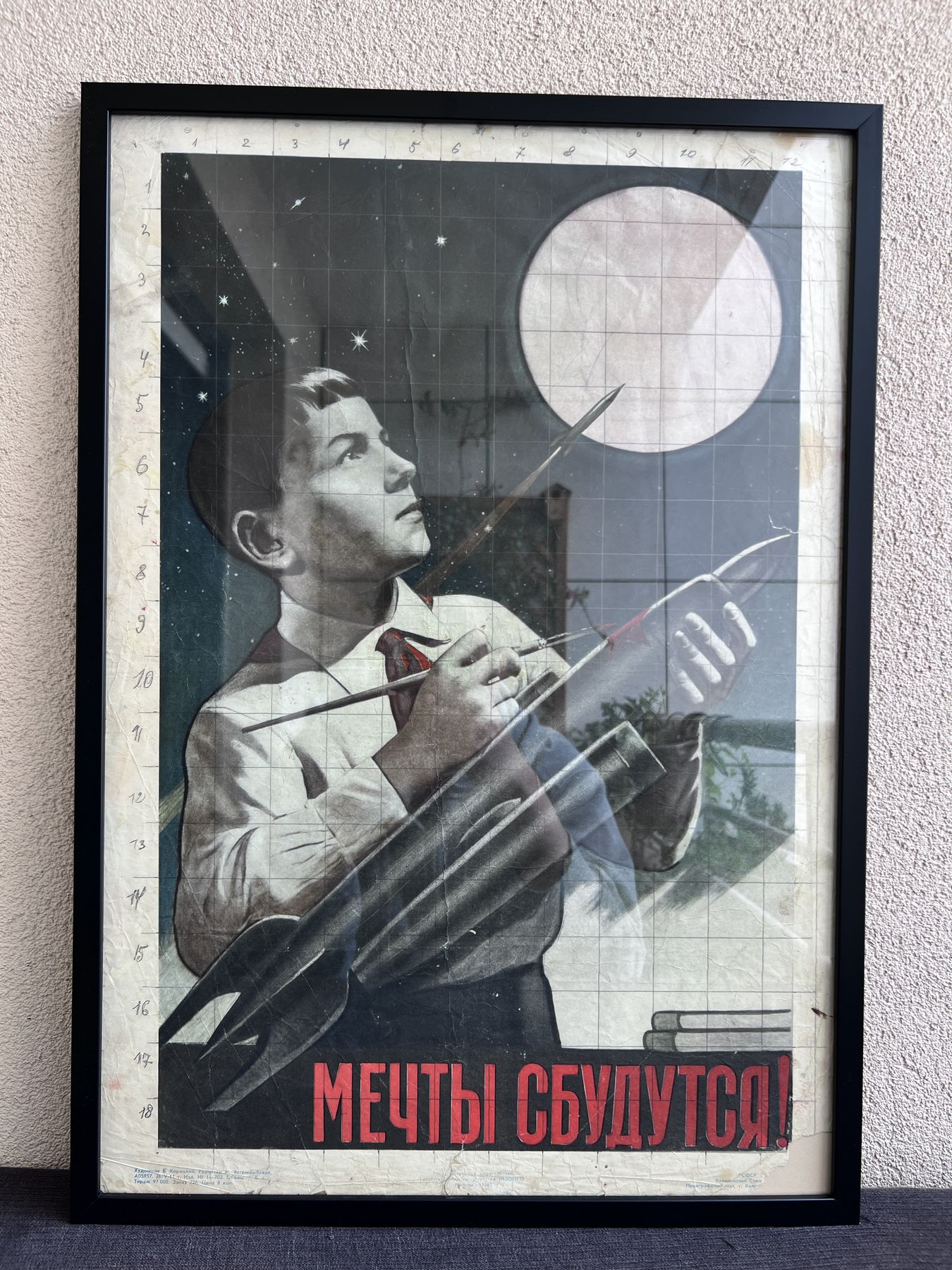
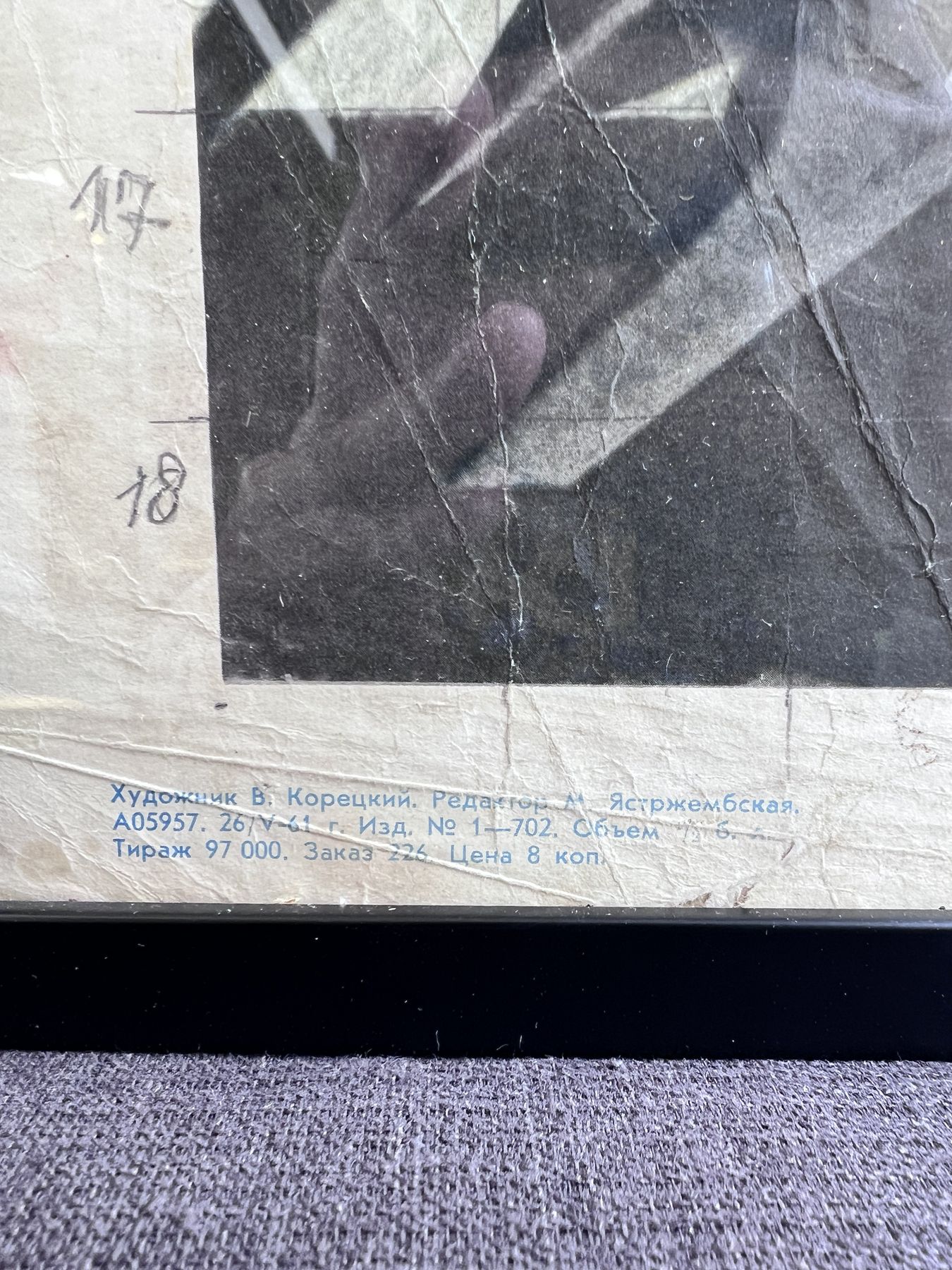
The printed price is a dating clue. Our 1957 poster costs 1 rouble. Viktor Koretsky’s « Мечты сбудутся! » (Dreams will come true!), signed off on 26 May 1961, costs 8 kopecks. In between, the currency reform of 1 January 1961 divided prices by ten.
« Мечты сбудутся! », Viktor Koretsky, signed off for printing on 26 May 1961.
Its line: code А05957, 26 May 1961, half sheet, 97,000 copies, 8 kopecks.
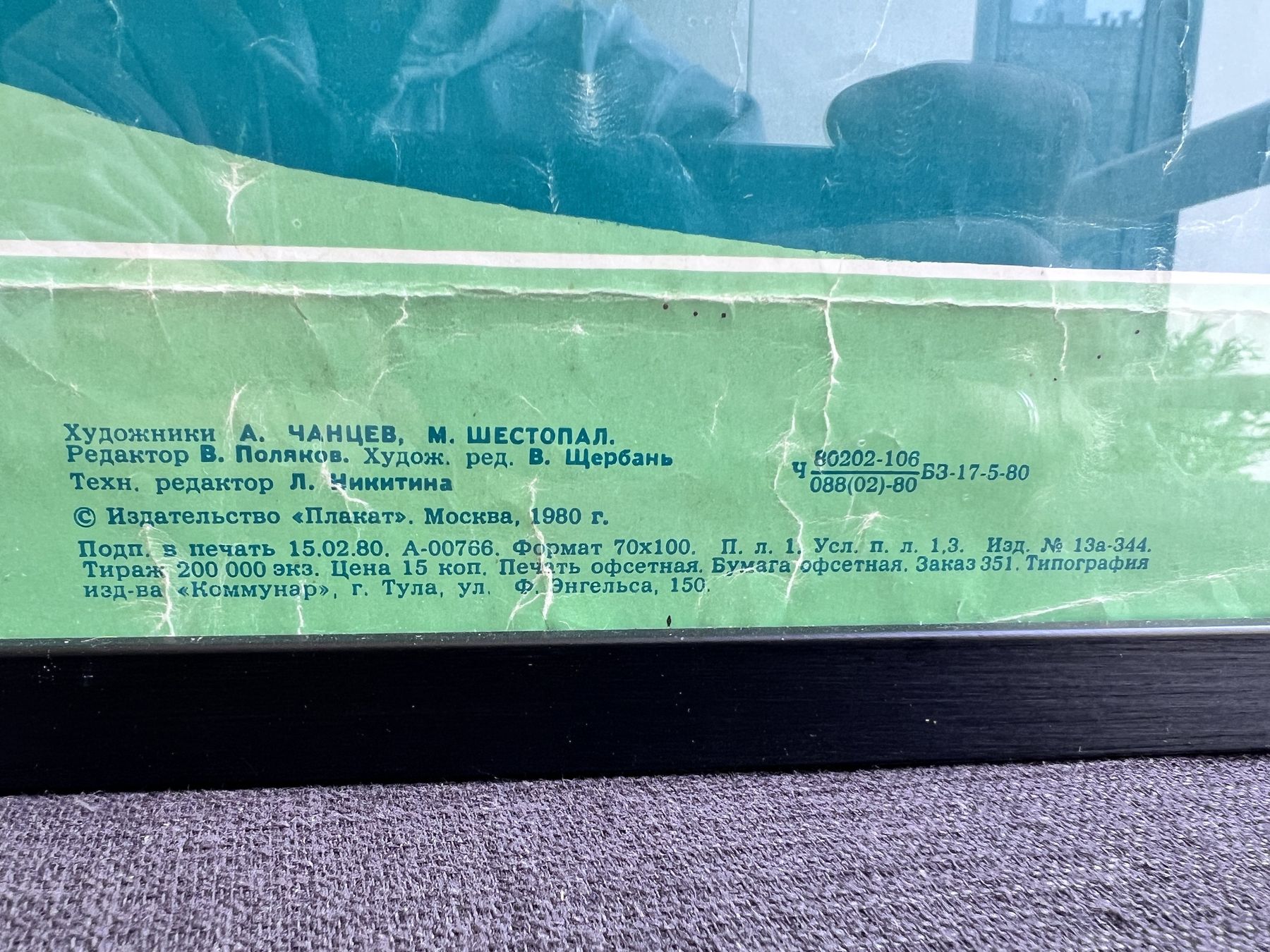
Print runs vary widely. Our examples range from 7,000 copies for a 1961 Ukrainian poster to 200,000 for the Sputnik poster and for the 1980 Olympic Games poster. For the same subject, a small regional run is scarcer than a Moscow poster.
Ukrainian poster, 17 November 1961: order 770, 7,000 copies, 10 kopecks, printed in Kyiv.
The Glavlit code appears on all these posters. The censorship office, created in 1922, was abolished in 1991, and the last Soviet posters carry no code.
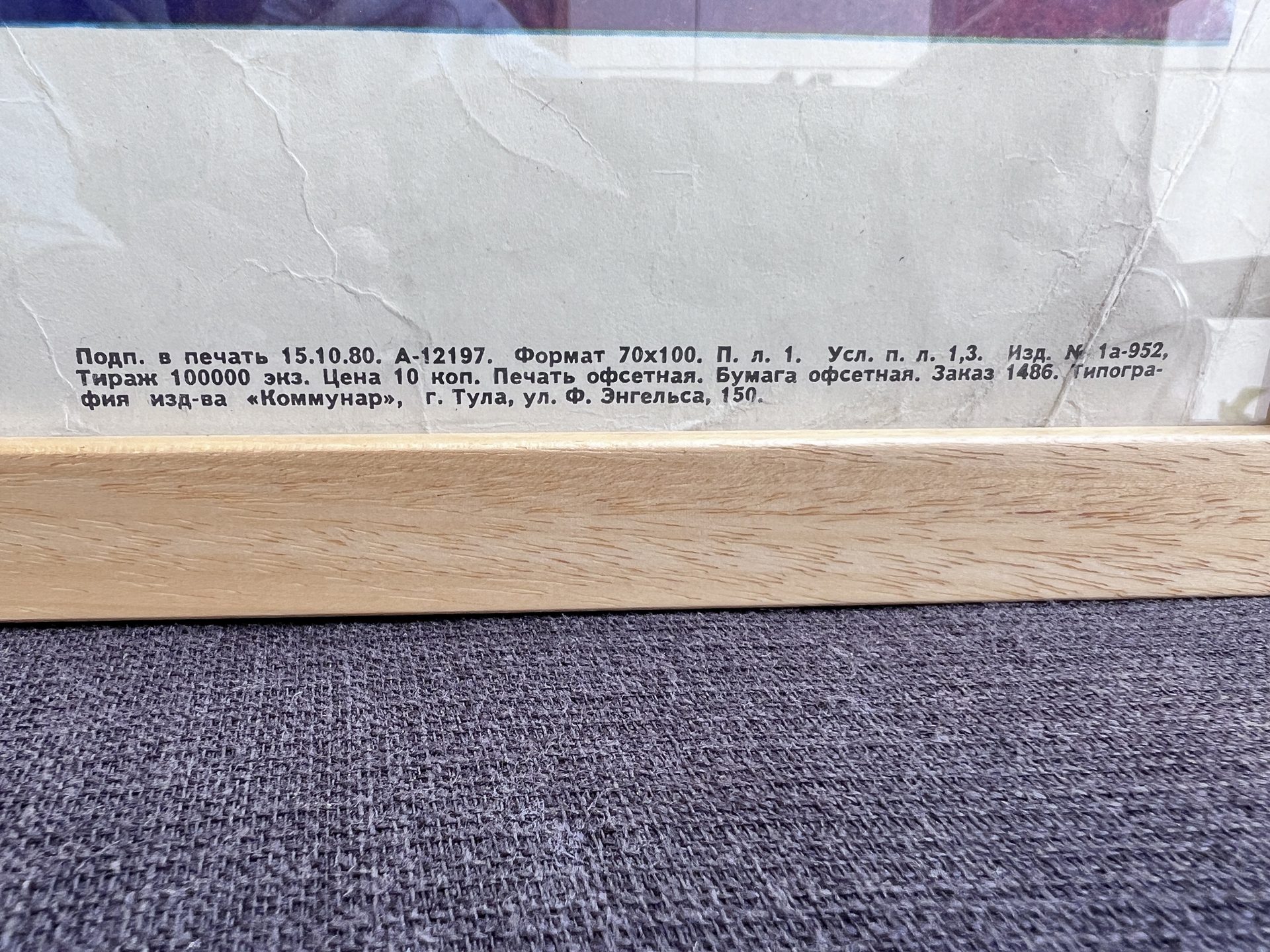
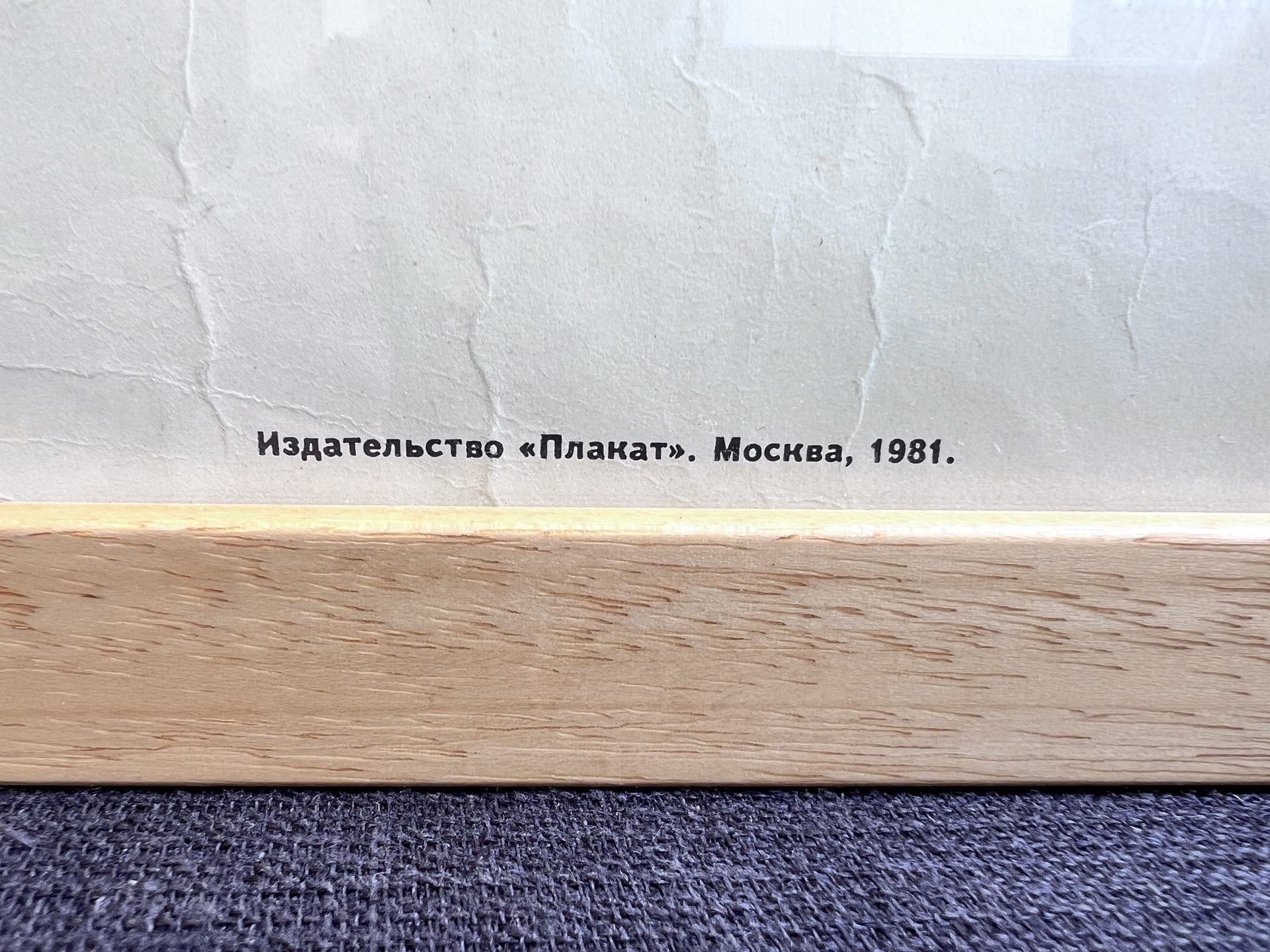
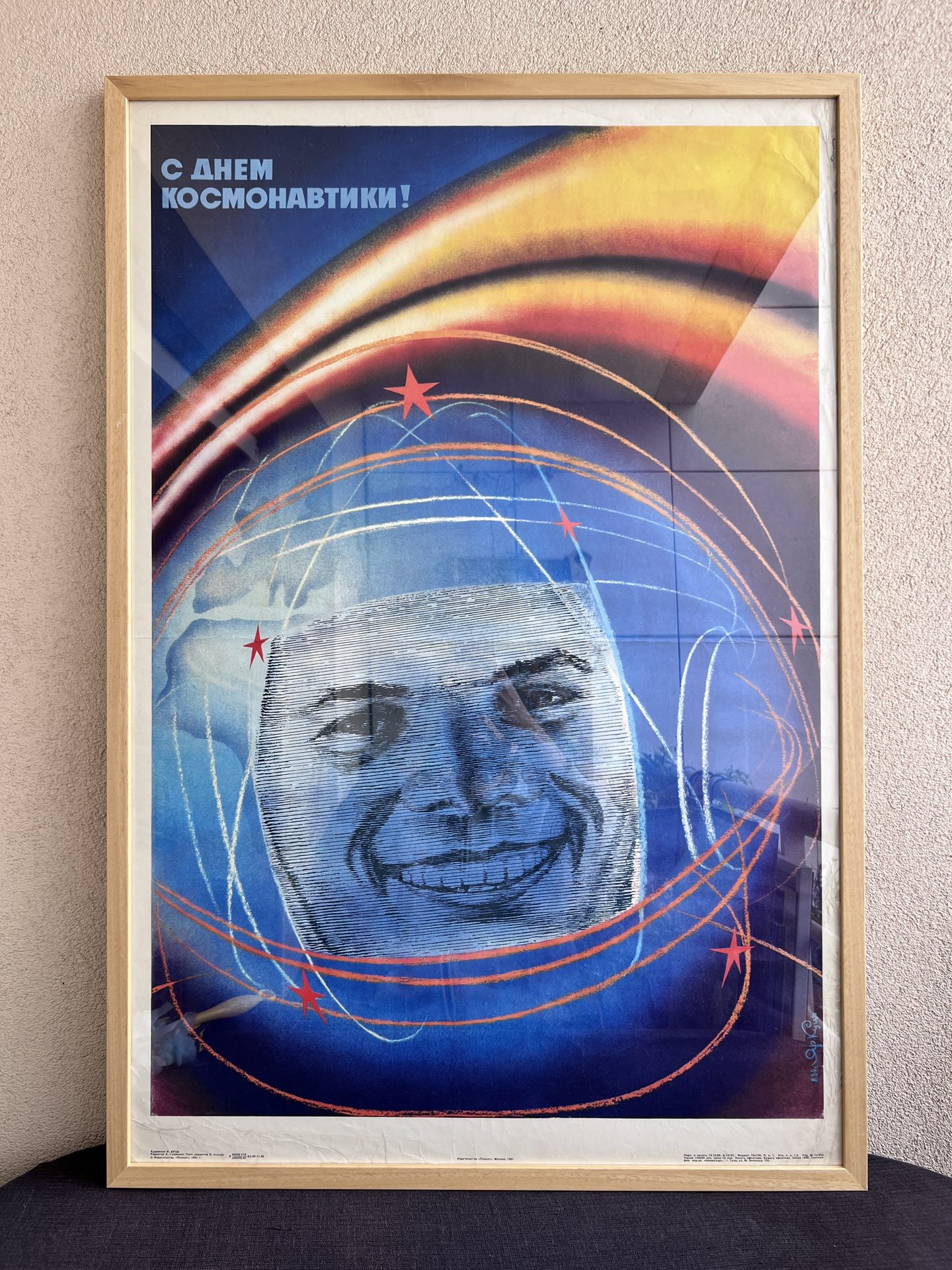
From the 1970s the line gets longer and spells everything out. The one on our Cosmonautics Day poster reads: « Подп. в печать 15.10.80. А-12197. Формат 70х100. П. л. 1. Усл. п. л. 1,3. Изд. № 1а-952. Тираж 100000 экз. Цена 10 коп. Печать офсетная. Бумага офсетная. Заказ 1486. » Format and printing process are written on it. The poster is dated 1981: sign-off for printing often comes a few months before the year of publication.
The line on a 1981 poster: 70 × 100 format, offset printing, 100,000 copies, 10 kopecks.
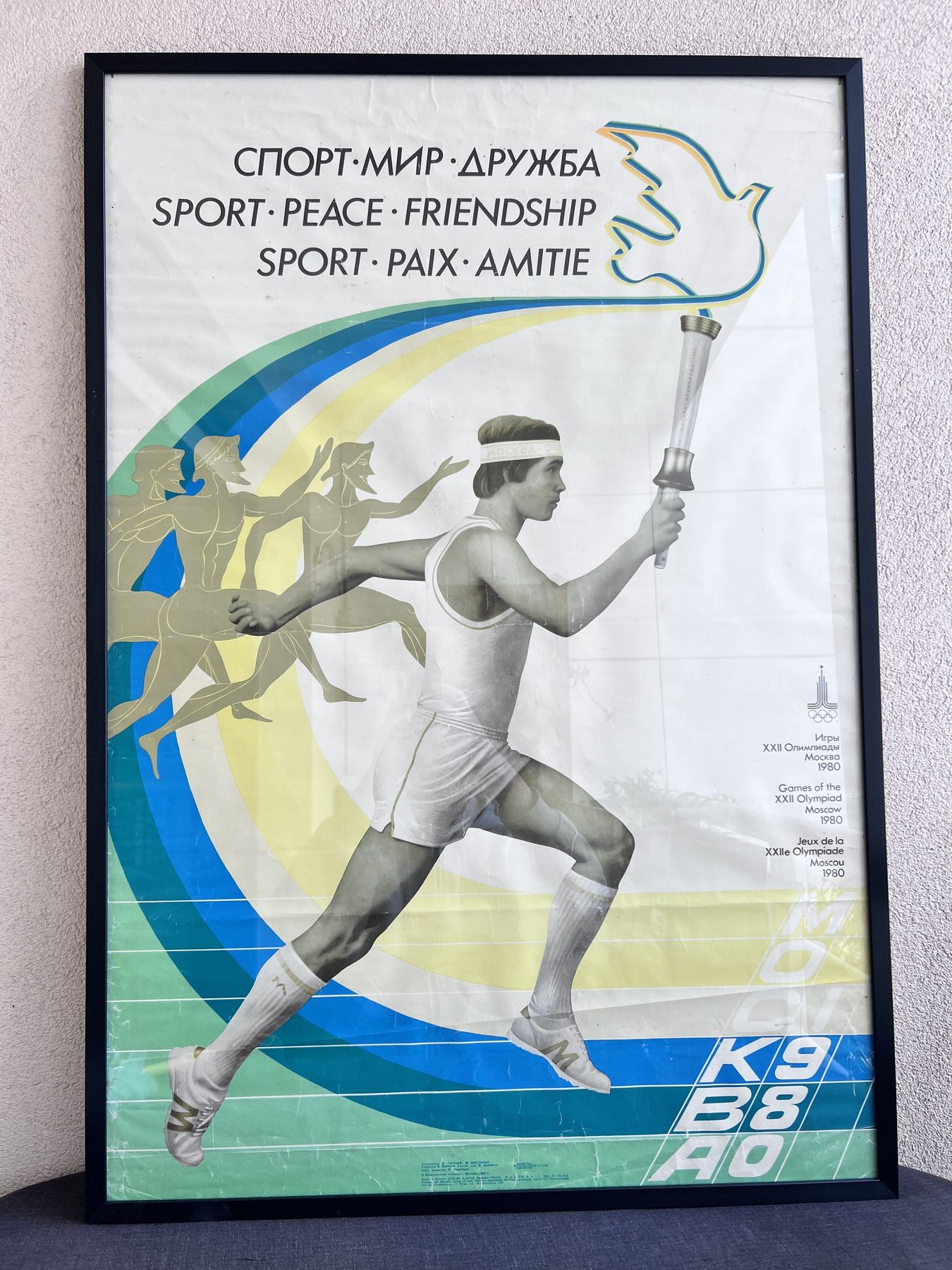
Moscow Olympic Games poster: signed off on 15 February 1980, 200,000 copies, 15 kopecks.
The publishers of Soviet posters
IZOGIZ, the state fine arts publishing house, was founded in 1930. It was absorbed in 1963 or 1964 by « Советский художник » (Soviet Artist), created in 1946, then relaunched around 1970 as « Изобразительное искусство » (Fine Art). « Агитплакат » (Agitplakat), founded in 1956, screen-printed about 200 posters a year.
« Плакат » (Plakat) was set up in 1974 as the specialist publisher of the Party Central Committee and issued about 900 political posters a year. In 1979 the yearly print run of all its publications reached 450 million copies. It became « Панорама » (Panorama) in 1991.
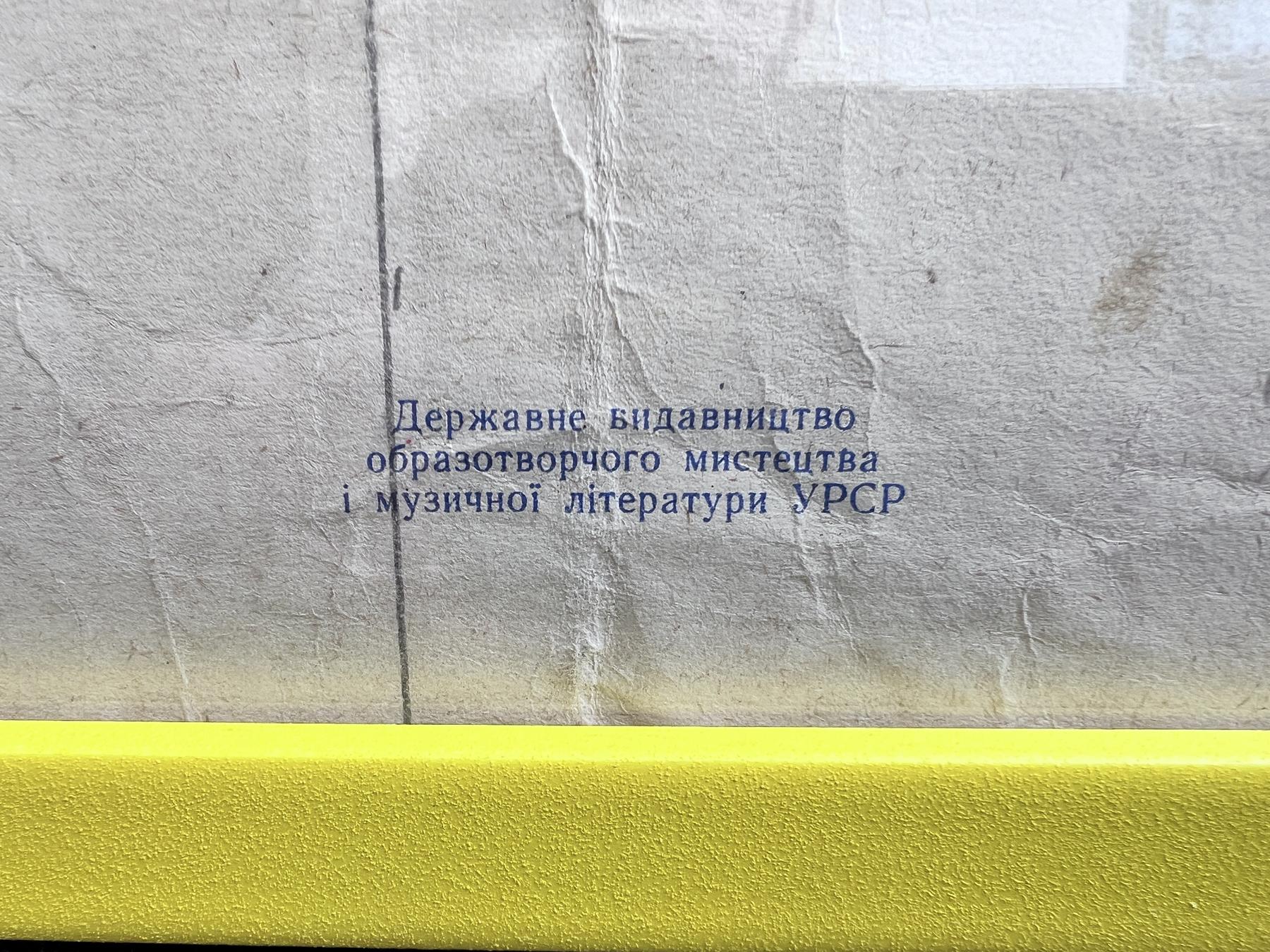
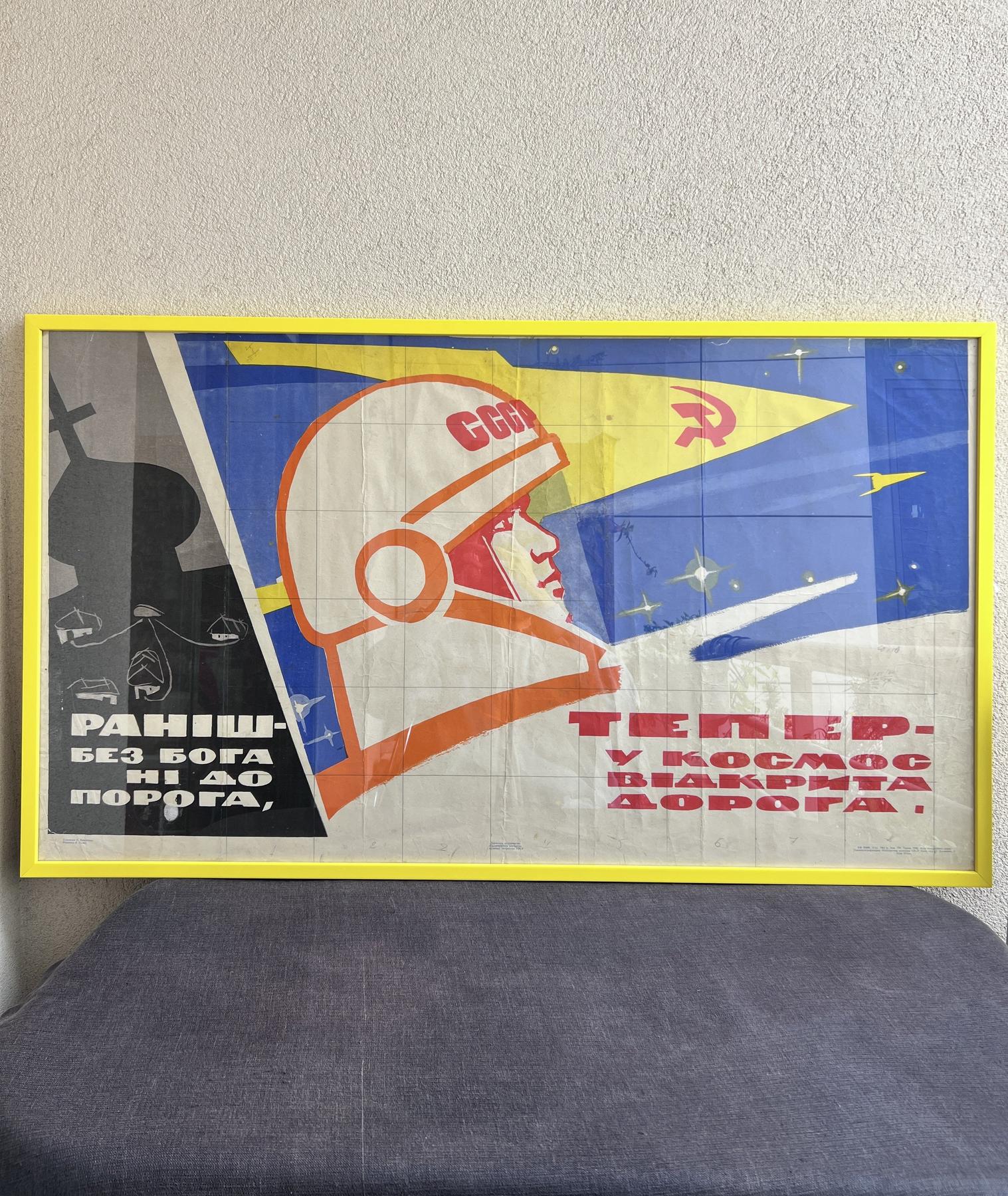
The republics had their own houses. Our 1961 poster carries the words « Державне видавництво образотворчого мистецтва і музичної літератури УРСР », the State Publishing House of Fine Art and Musical Literature of the Ukrainian SSR. In Kyiv, « Мистецтво » and « Політвидав України » also published in Ukrainian.
Line of the state publisher of the Ukrainian SSR, on a 1961 poster.
Formats and printing
Posters were printed on standard sheets: 60 × 90 cm, 70 × 100, 70 × 108, 84 × 108, and their halves. Our 1980 and 1981 posters state « Формат 70х100 ».
Posters of the 1930s are mostly lithographs. Offset dominates from the 1950s at IZOGIZ: under a loupe you see a regular rosette of dots. A dot screen therefore does not prove a reprint.
Cosmonautics Day poster, published by « Плакат ».
Period print or reprint
The bottom line. It should be there, sharp, and consistent with the publisher and the year. A missing, blurred or trimmed line is the first warning sign.
The price. A price in roubles on a poster dated after 1961, or in kopecks before, does not fit.
The format. It should match a Soviet sheet size. Modern reproductions are often sold in inch formats, 18 × 24 or 24 × 36, on matt or semi-gloss paper.
The paper. It is as old as the poster. A sheet too white and too smooth for a 1961 poster should raise doubts. Under an ultraviolet lamp, recent paper loaded with optical brighteners glows. Old paper stays dull.
Many posters carry old folds. A fragile poster can be linen-backed: mounted on canvas with a water-reversible paste, which flattens the folds without compromising the future. Backing stabilises the sheet, it does not erase its earlier condition.
Anti-religious space poster, Ukrainian SSR, 1961.
After Sputnik, Space Age style spread to clocks and everyday objects: see the selection at Strane Mira, our second shop.
The ДП-5В (DP-5V) is the field radiometer of Soviet civil defence: a green Bakelite console, a probe with a rotating gamma, beta and check-source shield, headphones and a manual that explains operation and maintenance. The one in this article served in an industrial bakery in Chișinău and was serviced in March 1991. Its owner shared his photos and documents with us, and we turned them into a tool that lets you operate it on screen, step by step.
The Moscow Games, from 19 July to 3 August 1980, boycotted by some sixty countries, produced more objects than any Soviet event: a bear cub, Misha, drawn by Viktor Chizhikov, an emblem made of running tracks, five thousand torches, watches from every factory, platinum coins, rings, tea glass holders, posters. This guide tells the story of the Games and reviews the objects, with the marks that authenticate them and the prices.
The 3017 chronograph of the First Moscow Watch Factory carries a five-digit number on the balance cock. The most common dating method reads it as a single series, from 1959 to 1979. Four factory passports show there are two, and that the same number can point to two watches made ten years apart. Here is how to read the number, the dial, the logo and the bridge, with a decoder to date your Strela, Poljot or Sekonda.
This website uses cookies to improve your experience while you navigate through the website.
Out of these cookies, the cookies that are categorised as necessary are stored on your browser as they are essential for the working of basic functionalities of the website.
We also use third-party cookies that help us analyse and understand how you use this website.
These cookies will be stored in your browser only with your consent.
You also have the option to opt out of these cookies.
But opting out of some of these cookies may affect your browsing experience.
Necessary cookies are absolutely essential for the website to function properly. This category only includes cookies that ensure basic functionalities and security features of the website. These cookies do not store any personal information.
Cookies that are not strictly necessary for the website to work and that are used specifically to collect personal data through analytics, ads and other embedded content are called non-necessary cookies. User consent is required before these cookies run on the website.
✕
Soviet in Paris
Online. We answer in person, no AI and no chatbot. Reply right away, 20 min at most.
Hello 👋 A question about an item, an order or shipping? Write to us.
Your email is used only to reply to you.
Subscribe to our newsletter and get 10% off your first order.
Subscribe
★ New pieces before anyone else
★ New blog articles
★ Soviet in Paris news and updates
Join the Party
10% off your first order
Receive your welcome card and our next arrivals.
Your code appears here and is also sent to you by email. You can leave the Party in one click, at any time.






 After Sputnik, Space Age style spread to clocks and everyday objects: see