Stalin Bust - Kasli Cast Iron - Cast 1951, Model 1946 - Expert Report
$1,321.99Unique piece
Stalin Bust - Kasli Cast Iron - Cast 1951, Model 1946 - Expert Report
$1,321.99Unique piece
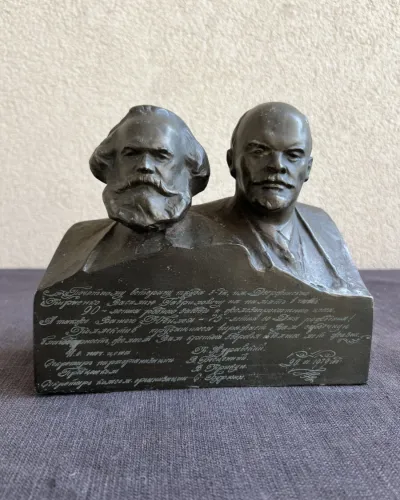
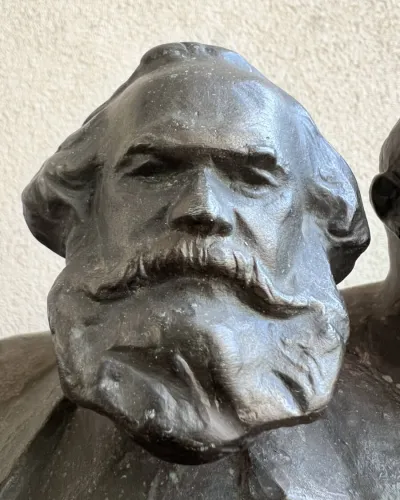
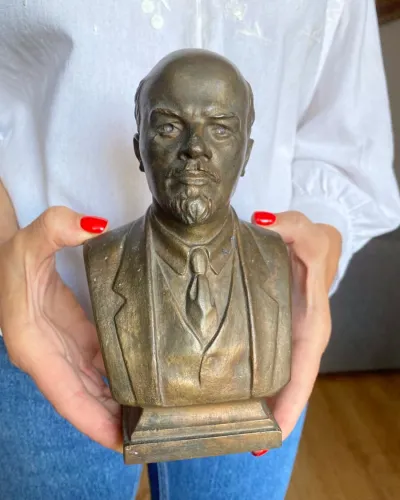
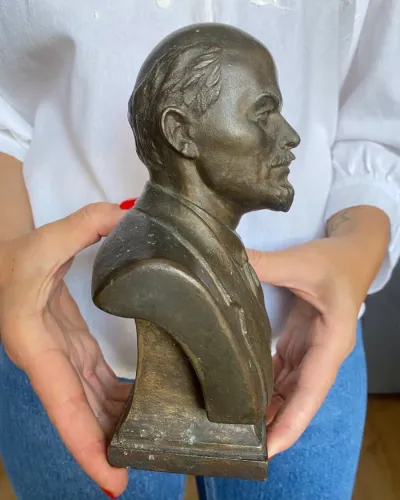
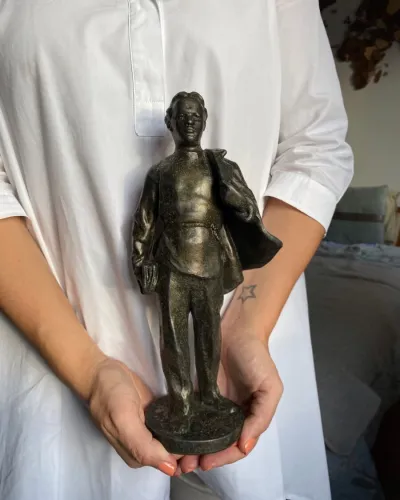
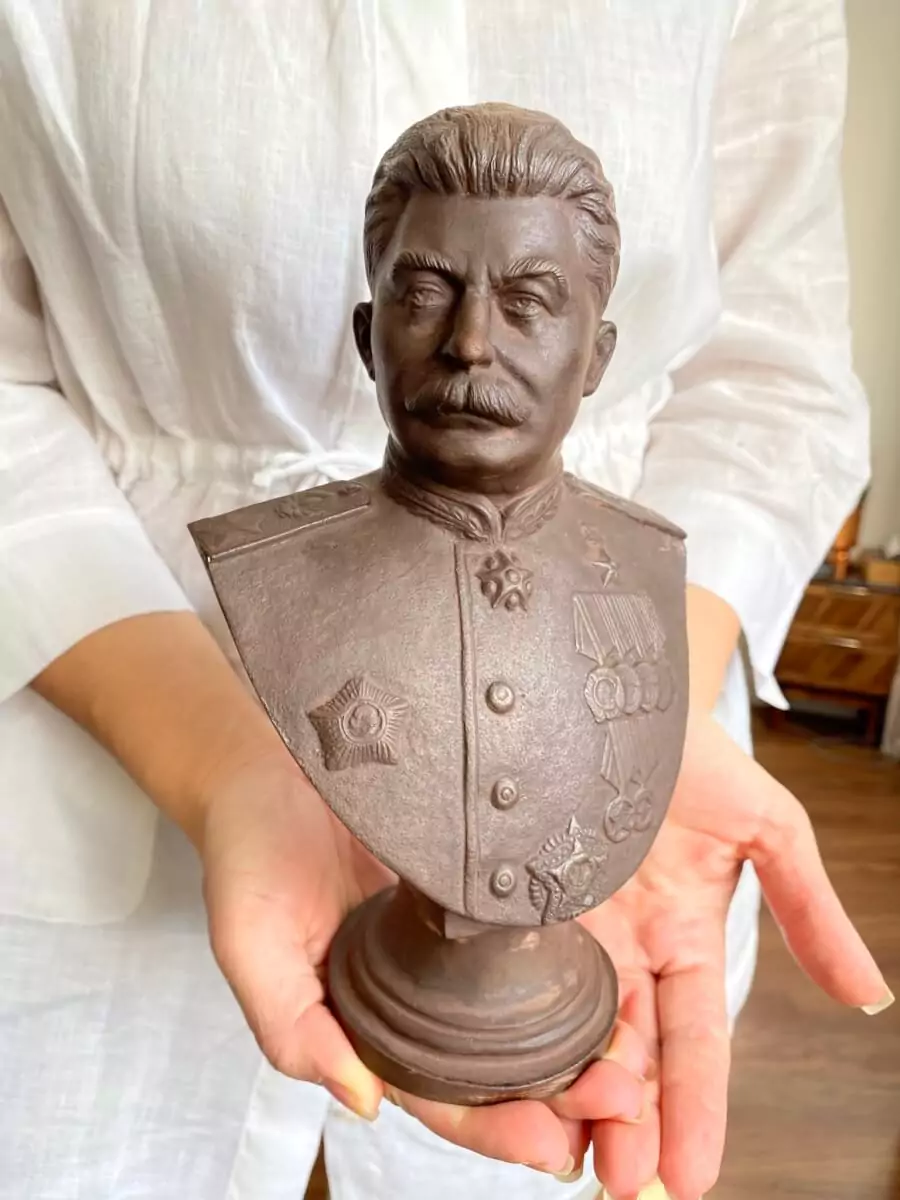
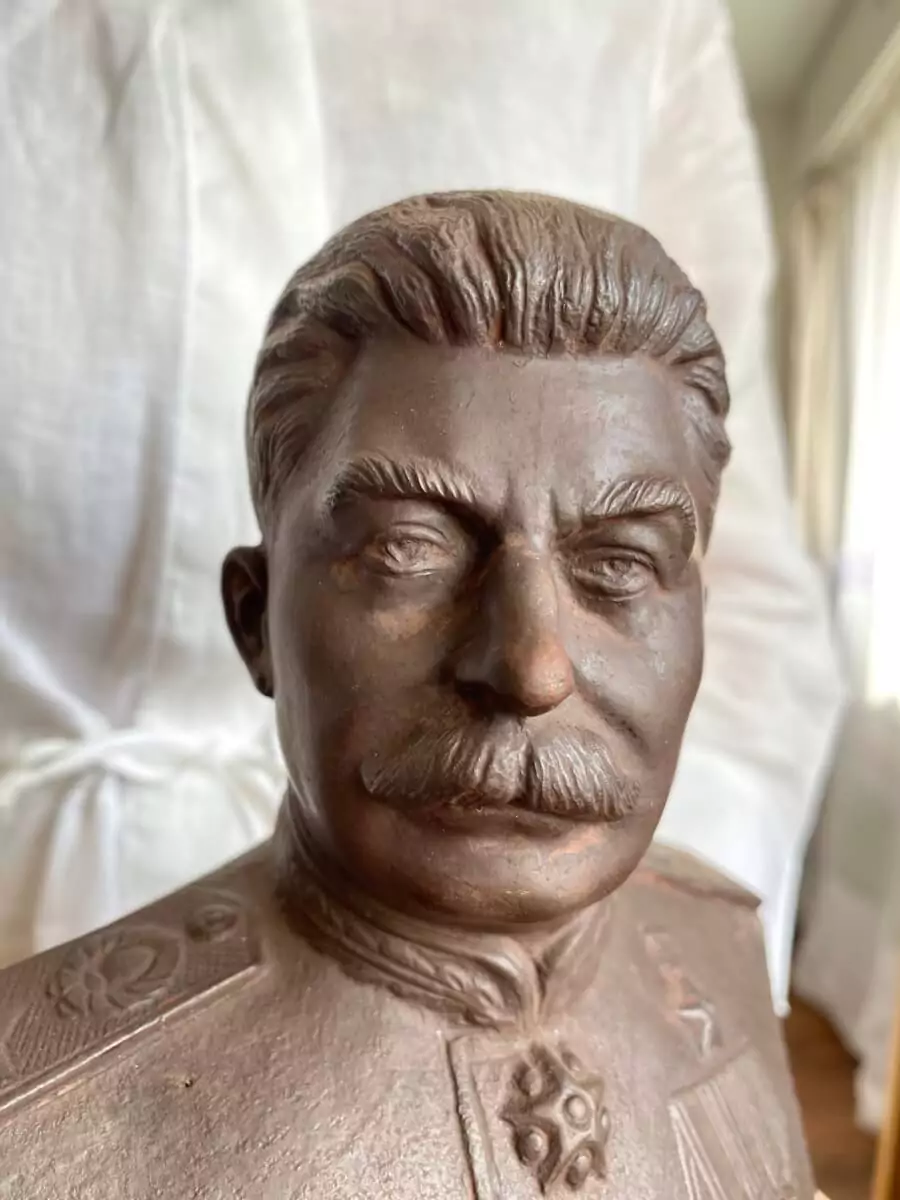
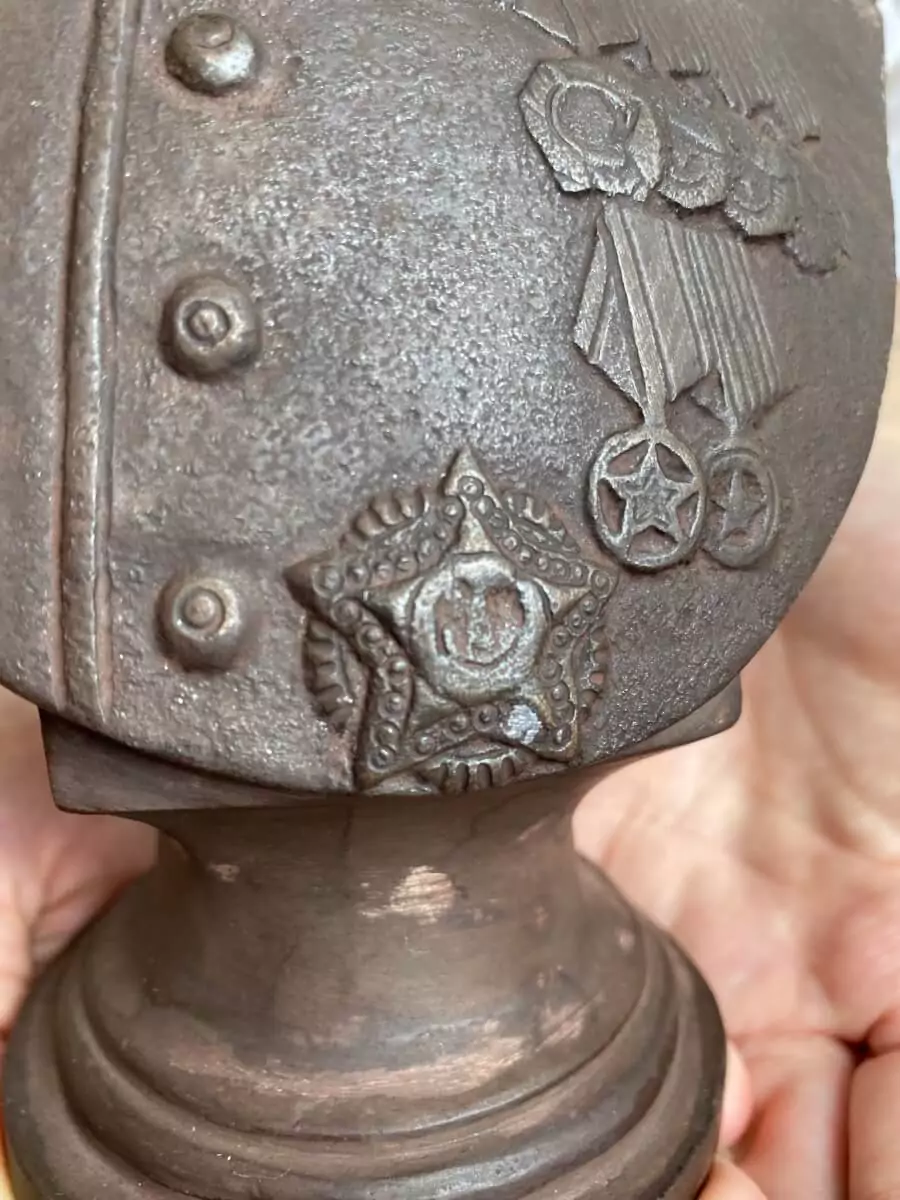
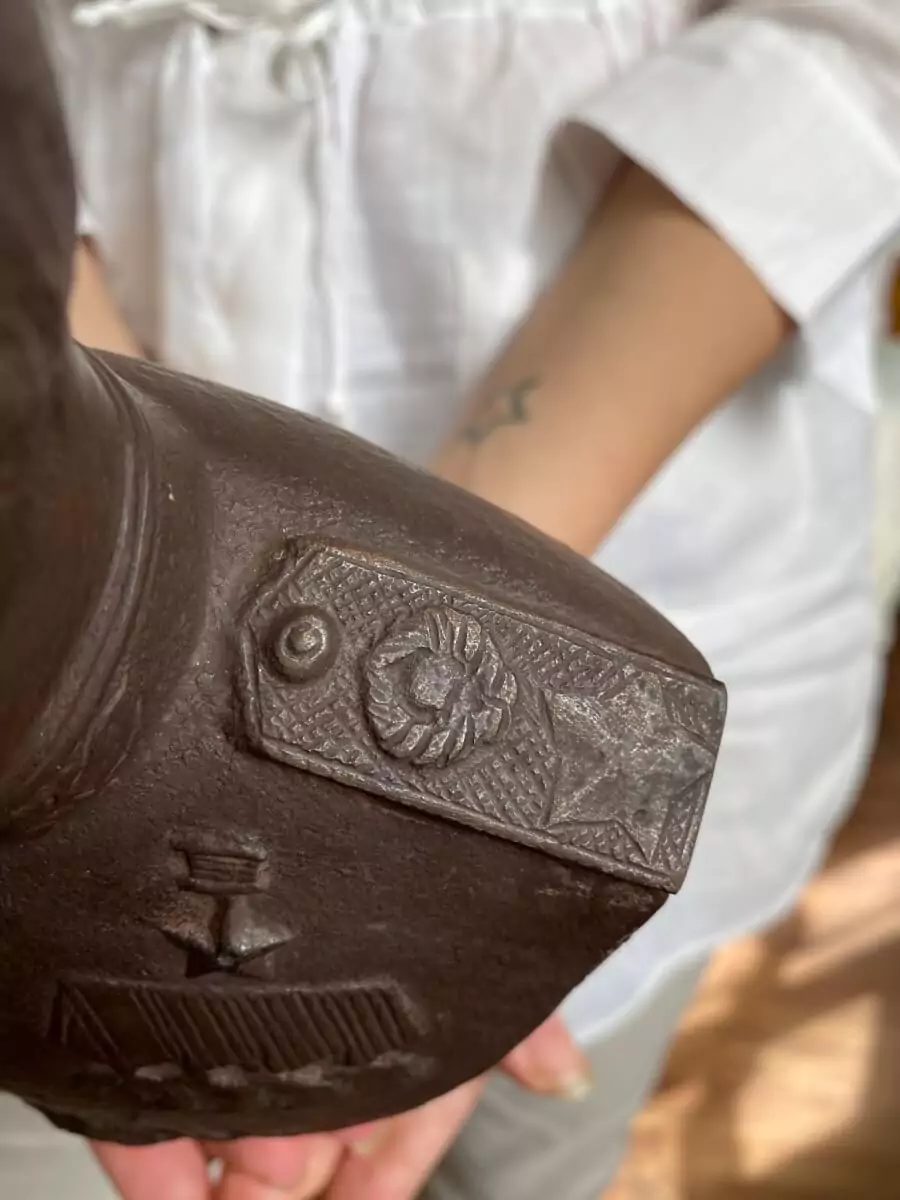
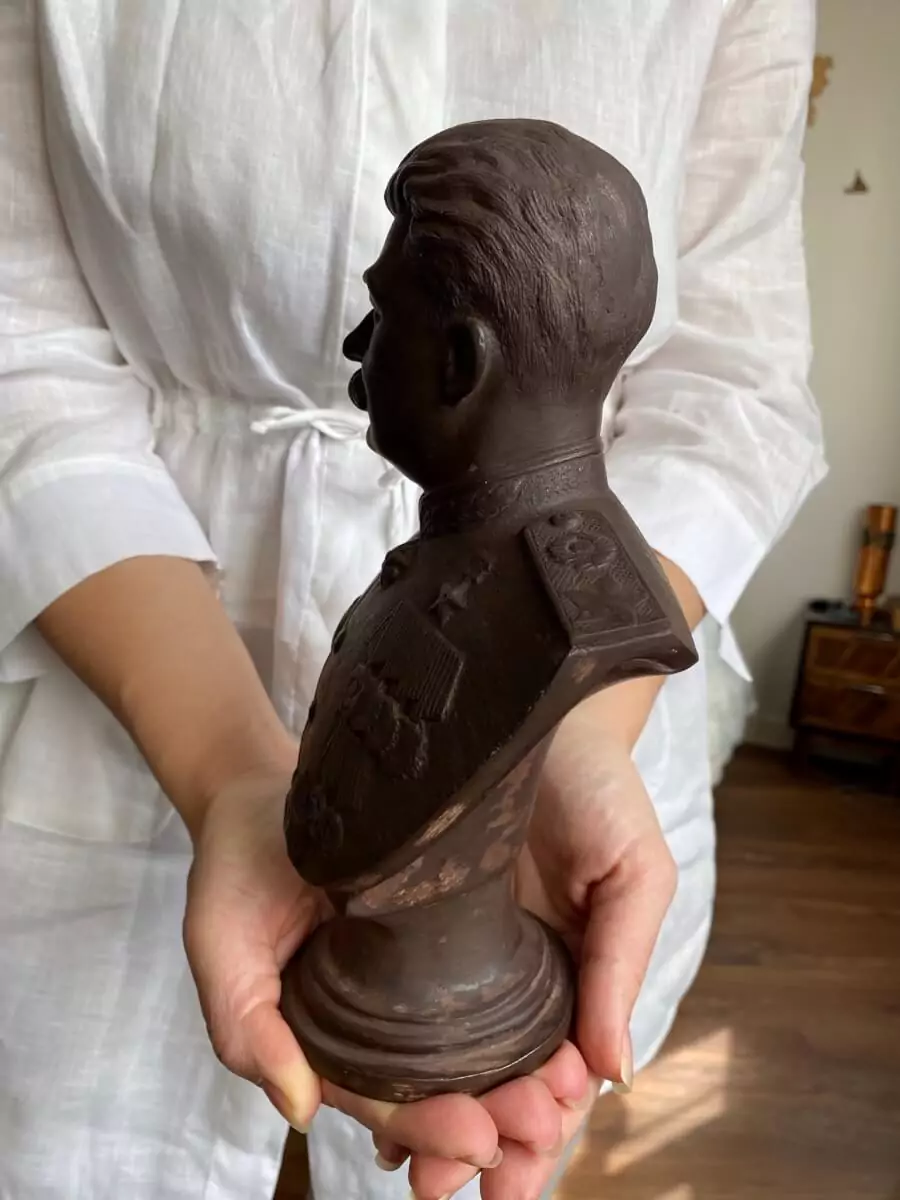
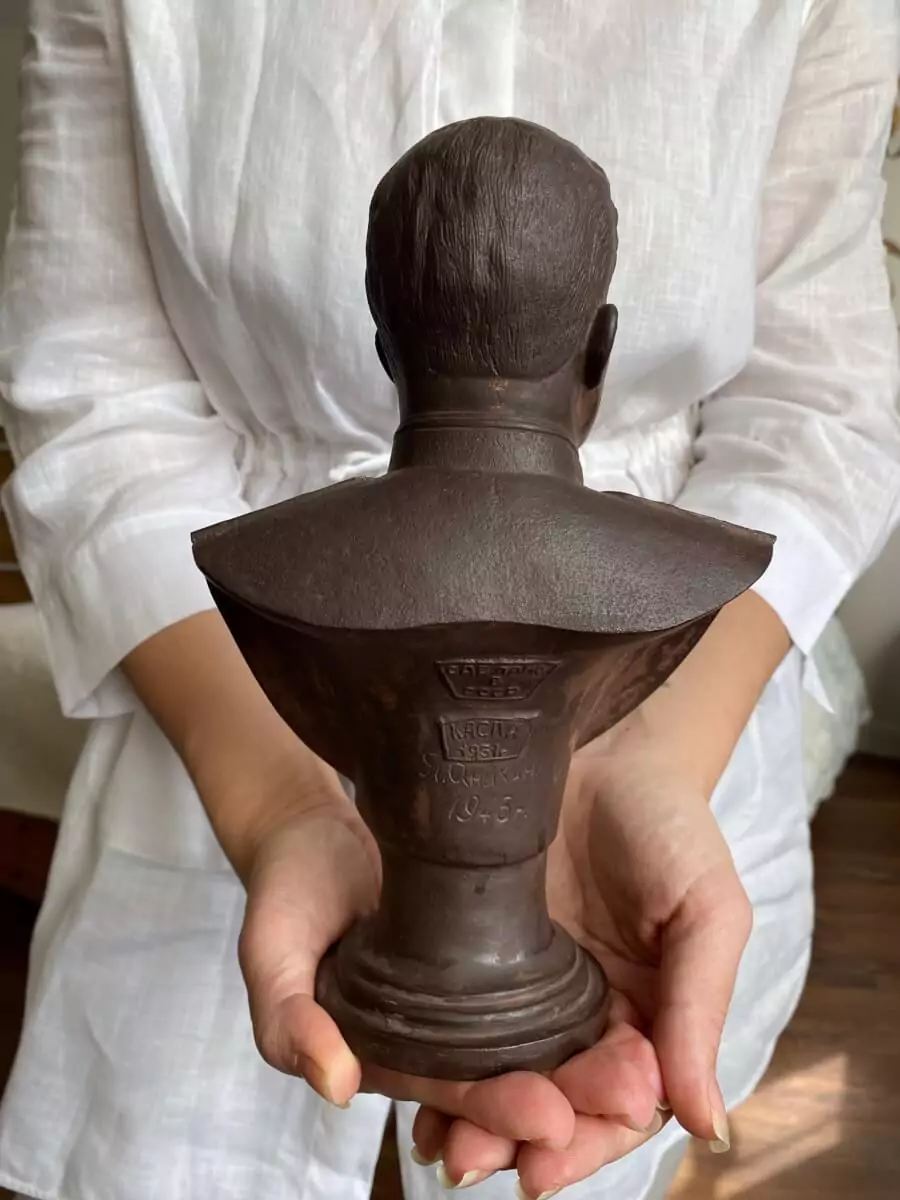
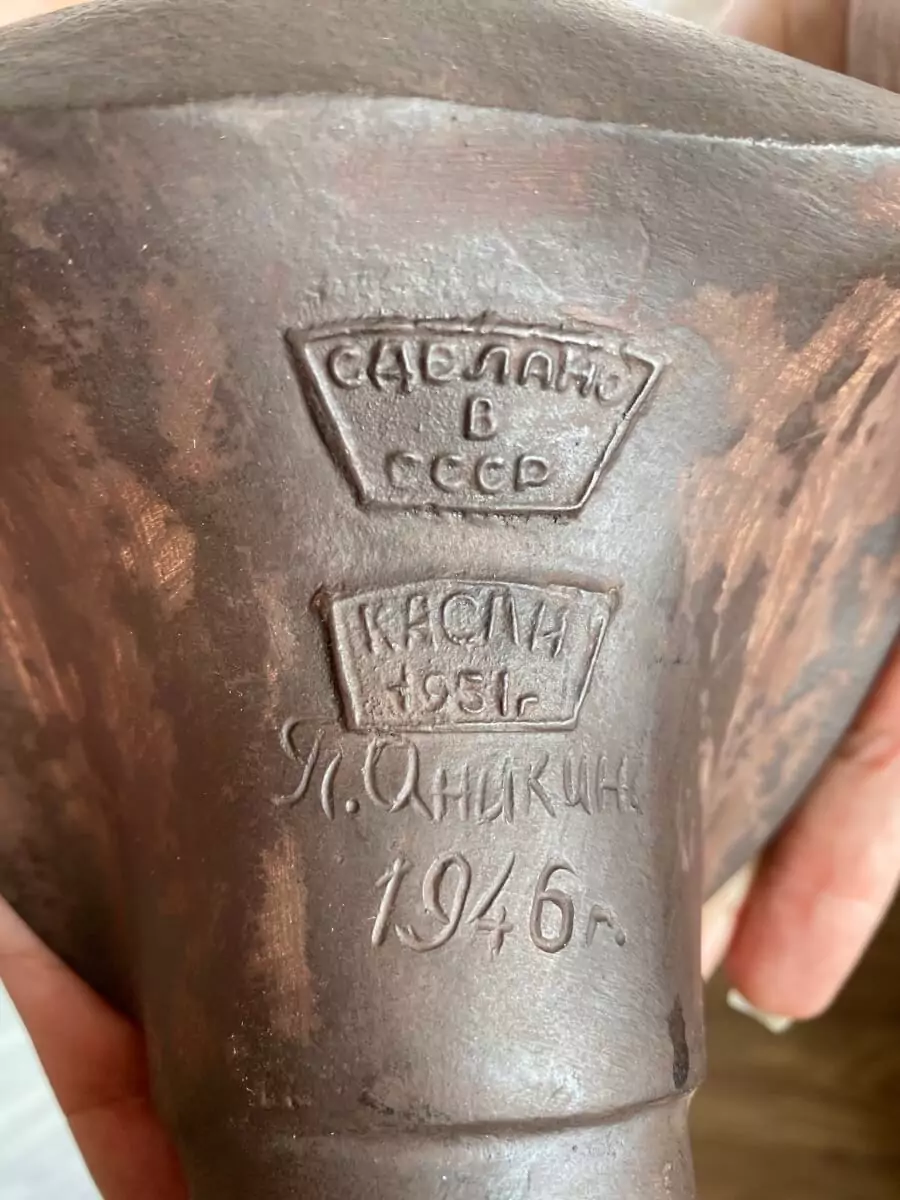
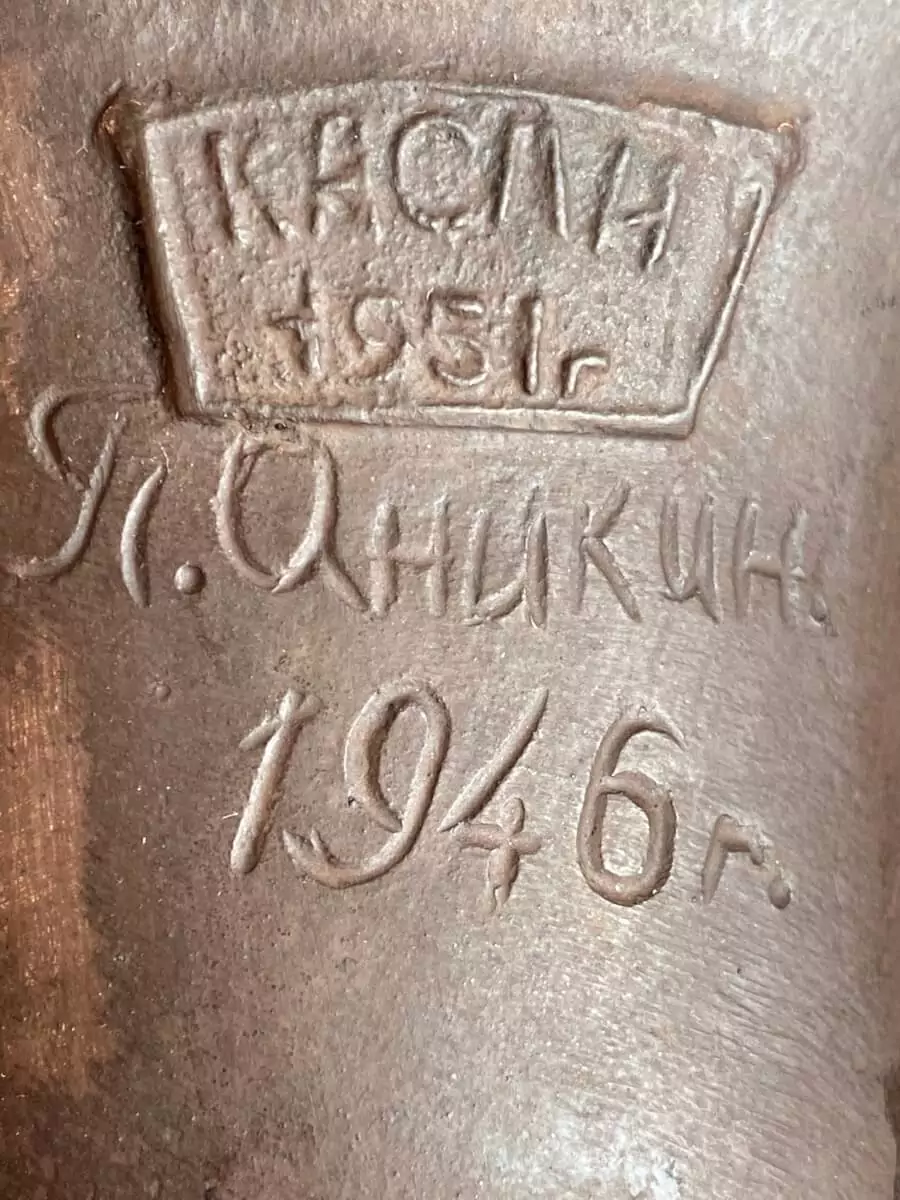
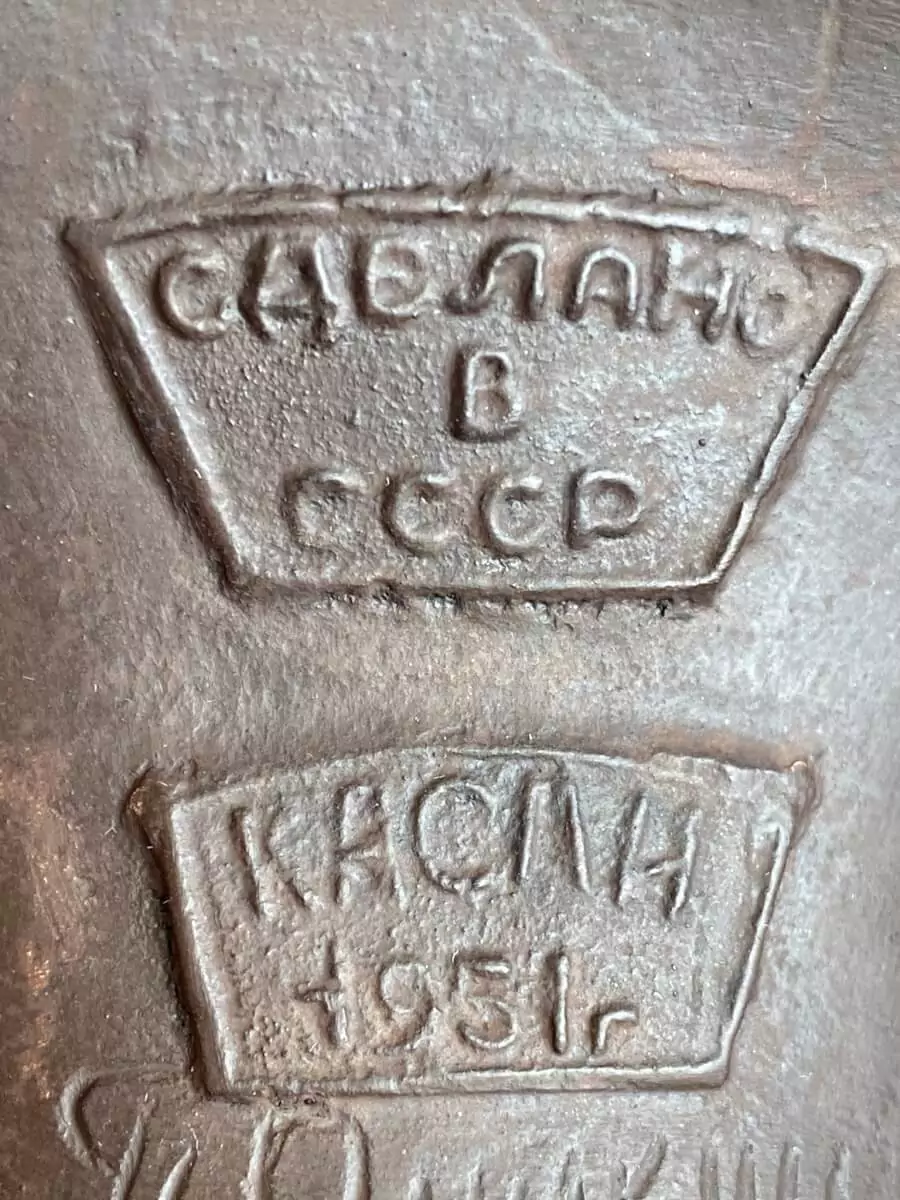
Exceptional bust of Stalin in Kasli cast iron, marked “Kasli 1951” and signed Pavel Stepanovich Anikin, who made the mould in 1946. Expert report by Pierre Znamensky, December 2021. Height 24.5 cm, weight 2,080 grams.
1 in stock
Message received, dear comrade.
Our information desk usually replies within 24 hours at the address provided.Height of the Cold War. Massive rearmament on both sides.

Exceptional bust of Stalin in Kasli cast iron
Expert report by Pierre Znamensky, December 2021
1. The object
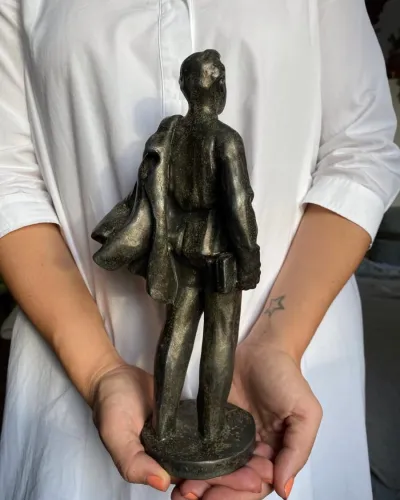
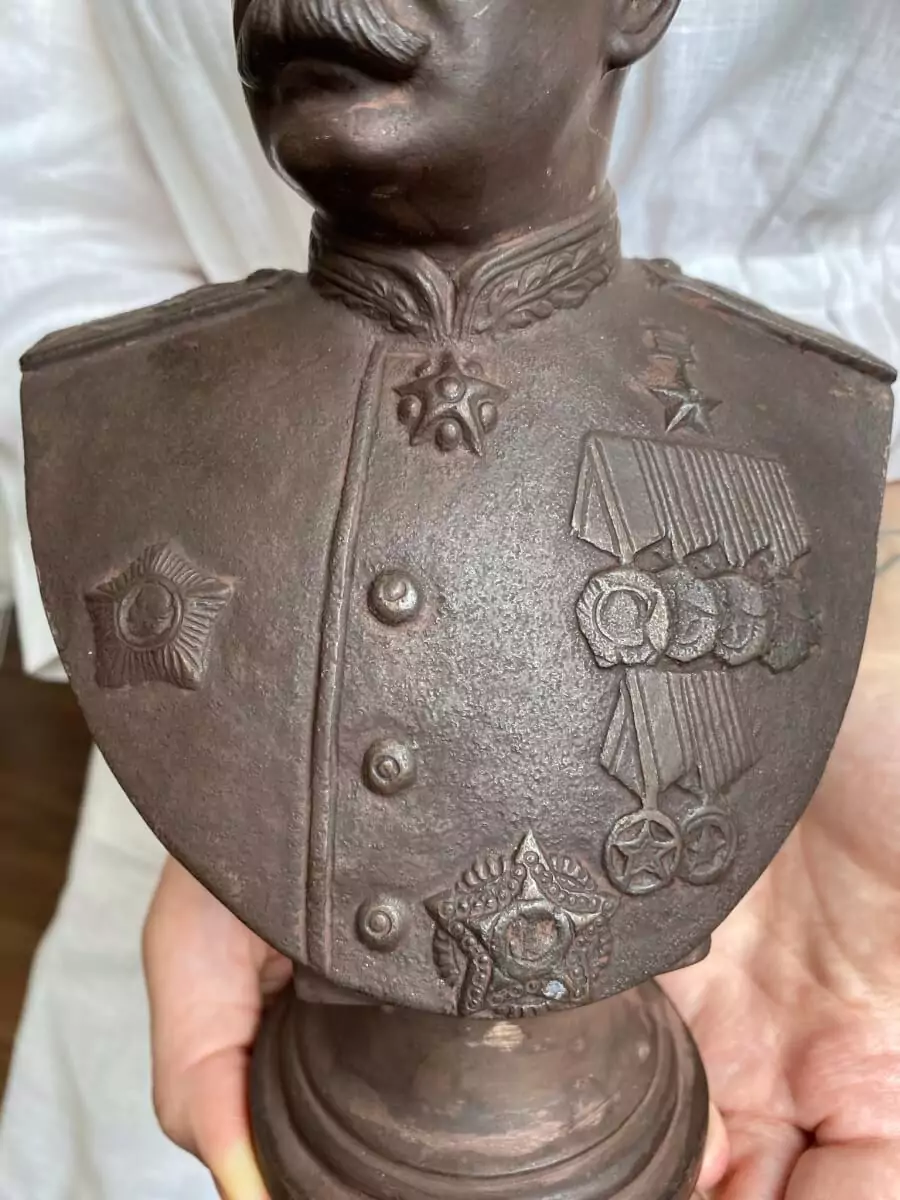
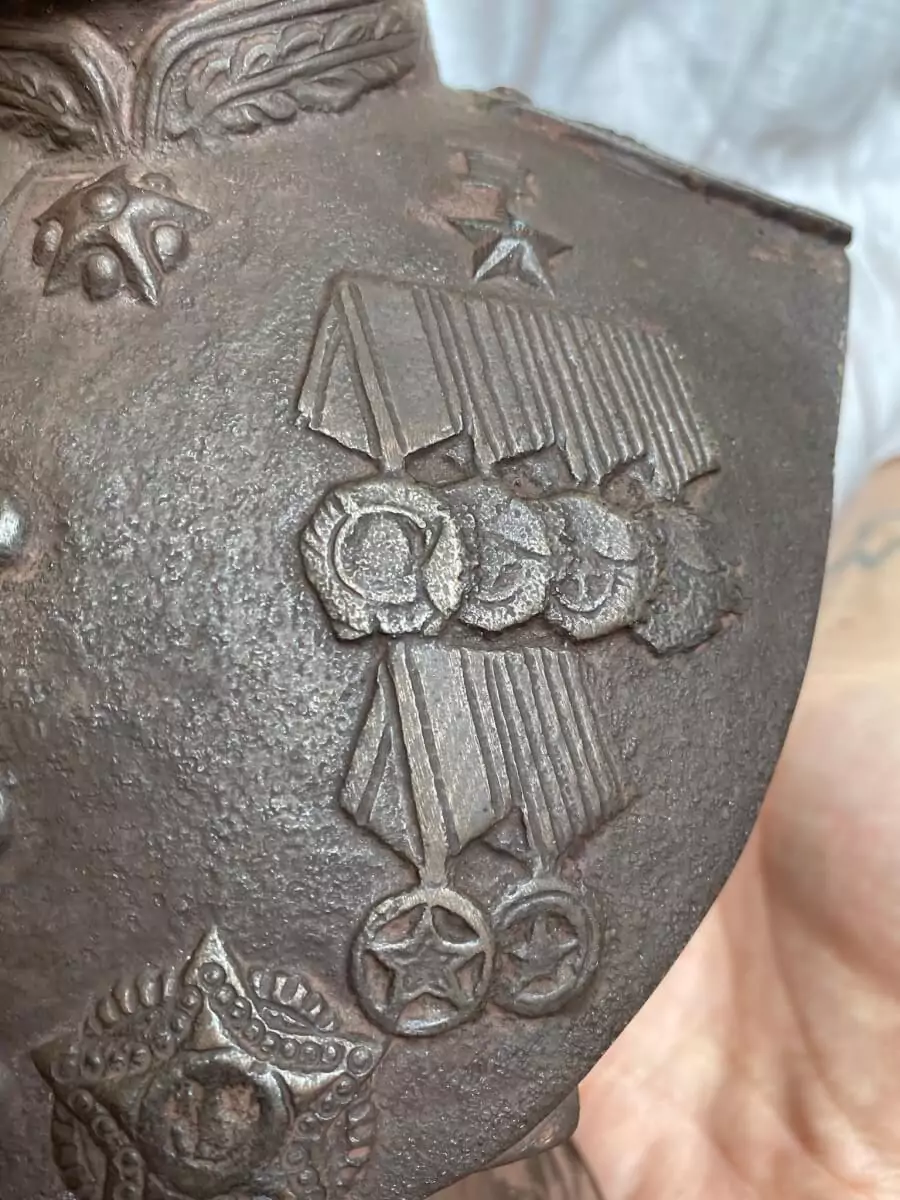
Cast iron bust produced by the Kasli works near Yekaterinburg in the Urals. It shows Marshal Stalin in his parade uniform, wearing his decorations, first among them the Order of Victory closing the collar of his tunic. On the back the bust carries the words “made in the USSR” and the mark “Kasli 1951”. It is signed Pavel Stepanovich Anikin, who made the mould for this sculpture in 1946. Our piece is therefore a casting made five years after the artist’s first version.
Dimensions: 24.5 cm tall. Weight: 2,080 grams.
It is extremely rare today to find a period example of this model of bust of the Generalissimo in such a state of preservation. The model was widely copied when the Kasli foundries were restarted in the early 2000s, and the market is unfortunately flooded with pieces that are hard to tell apart, since they are busts and sculptures made in the same factory from the same moulds. This piece, by contrast, is a period casting, dated 1951.
2. The artist
Born with the revolution in 1917, Pavel Stepanovich Anikin died before the age of forty, on 13 November 1956. He is one of the great master moulders and cast iron sculptors of Kasli. Anikin was trained by the very best, in particular M. Ozersky and N. Gorsky. During the Second World War his workshop was moved to Chelyabinsk. He returned to Kasli in 1944 and became a sculpture teacher at Kasli vocational school No. 18.
Over a dozen years he set up and ran what is today called vocational training in the sculptor-founder trade, and organised an art workshop where the future masters were trained.
Alongside this he was appointed head of the art foundry workshops of the Kasli works in 1949. He produced several monumental cast iron ensembles now on public display at the Museum of Decorative Arts in Moscow and at the Yekaterinburg museum. He is the author of the group sculptures “The Hymn of the Soviet Union” (1944), “The partisans behind enemy lines” (1945) and “The dawn of abundance” (1949). His last monumental work is “Peace will win”, made a few months before his death in 1956. He died in the village of Kasli itself.
In the early 1950s he developed a new technological process at the Kasli works allowing cast iron to be poured and sculpted under higher pressure.
3. The place: Kasli, world capital of the art of cast iron
The Ural range has long been known for the richness of its subsoil and its deposits of precious and semi-precious stones. The first iron foundries appeared in the Urals in the 18th century.
The history of Kasli casting began in 1747, when a merchant from Tula, Yakov Korobkov, founded a small metalworks with a foundry in the village of Kasli in the southern Urals. The site was rich in iron and in moulding sand of unique quality, as well as in wood, which is essential for producing charcoal.
Although these works were at first turned towards supplying the administration and the army, some of them quickly began to produce decorative objects for daily life and cast iron sculptures, adding artistic value to their output.
The craftsmen of the Urals, moulders, finishers and founders, in time managed to give a true jeweller’s value to cast iron, by definition a raw industrial material and a difficult one to work.
Among the products of the Kasli works at the end of the 18th century one can already see the first examples of artistic casting: slabs for the floors of churches and factories, cast iron railings and gravestones. The first cast iron statues for parks, garden vases, fences and staircases also appear at this time.
The 19th century gave the work of Kasli a new direction. From 1813 the works began to produce household and domestic articles, and production changed scale, becoming genuinely industrial.
In the 1810s craftsmen from Germany, where artistic iron casting was a long-standing tradition, settled in Kasli to make household articles such as kettles, cauldrons, pans and baking moulds, adding their know-how to what had already been in place for more than half a century.
The process gradually improved as the moulding forms became more complex. The first openwork pieces and ornamental compositions appear at the end of the 19th century.
They are found in a production line of great delicacy: writing and inking articles, candlesticks, a range of plates and vases, smokers’ items and ashtrays, clock stands and pencil holders.
The true triumph of the works, and the international recognition that came with it, took place in 1900, when the Saint Petersburg architect E. E. Baumgarten, with the participation of M. L. Dillon, built the monumental Kasli cast iron pavilion shown in the mining and metallurgy section of the Paris World’s Fair.
Weighing 4.5 tonnes, the three-storey structure had three entrances and was made up of 1,500 pieces masterfully brought together into a single composition.
Today the pavilion, reconstructed in 1958 from period photographs, is one of the major exhibits at the Yekaterinburg art museum. It continues to astonish visitors with the virtuosity of its work, the striking unity and coherence of its composition, the richness of its decorative ornament and the quality of its details.
The Kasli cast iron pavilion was recognised by UNESCO as a unique artistic monument of international importance in 1978.
4. The rise of Soviet artistic cast iron
The Soviet period, with the five-year plans and industrialisation from 1930 onwards, meant mass industrial production of cast iron articles.
Between 1918 and 1991 the Kasli casting works and its Ural masters answered state commissions with sensitivity and talent, illustrating every important event in the life of the country, so that the history of the Soviet Union can be read like a book through the output of the art foundries.
The Second World War badly affected the production of Kasli art castings. Called up to the front, many artists had to set their talents aside. The workshops turned to producing armaments for the front and part of the works had to be relocated for three long years.
The production of special articles for the defence industry came first, so the revival of artistic casting had to wait for the victory over Nazi Germany. But as soon as the war ended, the needs of propaganda rested heavily on a monumental output that only the Kasli works could supply. The first commission from the Soviet government after the conflict was for four huge commemorative plaques showing the faces of Stalin, Lenin, Marx and Engels, to decorate official buildings.
For the seventieth birthday of the General Secretary of the CPSU in 1949, the Kasli works set about making a sumptuous table in cast iron lace: a majestic, multi-tiered sculpture at the top of which stand two small leaders, Lenin and Stalin, pointing their arms in two different directions. A worker and a peasant woman crown the whole, in a movement recalling Mukhina’s monumental sculpture that topped the USSR pavilion at the 1937 Paris World’s Fair.
Throughout the Soviet period the craftsmen, founders and sculptors of Kasli answered both the demands of daily life, by producing everyday objects, and the celebrations of the country, casting in iron the exploration of space and the struggle for the cause of peace, giving glory to the highest leaders of the country and to the most anonymous of Soviet citizens. An exceptional, ornamental and massive way of illustrating in black cast iron the most glorious pages of the history of the USSR.
Additional information
| Weight | 3.5 kg |
|---|---|
| Dimensions | 50 × 40 × 30 cm |