Far more than four Soviet watches flew: the Shturmanskie of Gagarin and Tereshkova, the 3017 chronographs signed Strela, Poljot and Sekonda, the 24-hour 8ChN of the watch research institute, the Okean 3133, a spacewalk watch, the Elektronika, then the mission watches of the 1990s. The watches with a cosmonaut, a rocket or a Sputnik on the dial celebrated those flights. This guide separates the two, gives the signs of each flight watch and what it is worth.
NOVEMBER 2026•9 MINUTE READ
by Marwen Yahyaoui
Strela 3017 with a white dial and Cyrillic lettering, two counters, the cosmonauts’ chronograph of the 1960s.
Type « cosmonaut watch » into a search engine and you will mostly see watches that celebrated the flights without taking part in them: Sputniks, rockets, portraits of Gagarin on Vostok, ZIM or Pobeda dials. The watches that really flew are few, they are plain, and they are recognised by their movement rather than their dial. This guide reviews them in the order of the flights, then presents the commemorative watches that accompanied them.
1961: Gagarin’s Shturmanskie
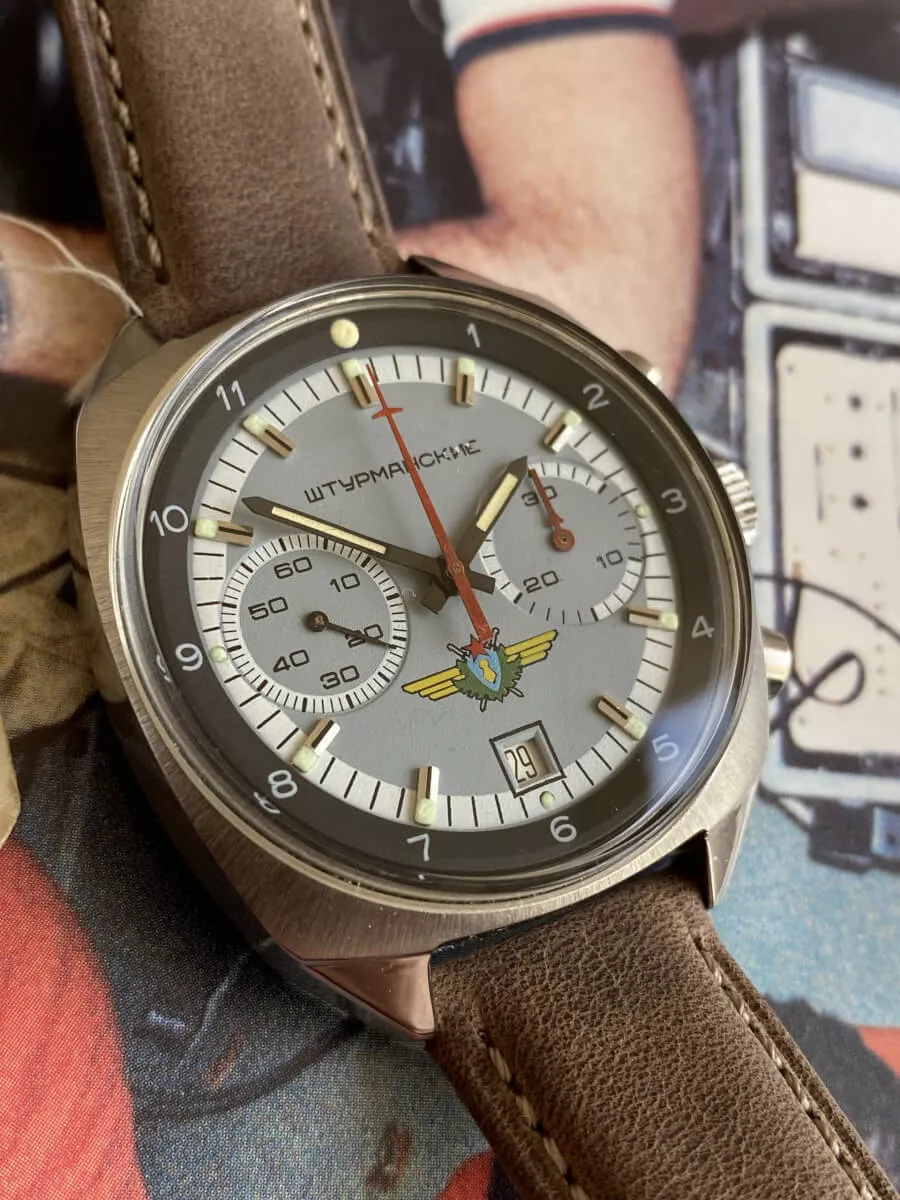
The first watch in orbit was an air force navigator’s watch, the 17-jewel Штурманские (Shturmanskie) Gagarin had received on leaving flight school in 1957. Three hands, no date, 33 mm. The archive photographs of June 1963 show on Valentina Tereshkova’s wrist, aboard Vostok 6, a light-dialled watch of the same model. We have devoted a whole guide to the Shturmanskie; here, note that it is worth 900 to 1,300 euros serviced, and that it is the most redialled Soviet watch.
Shturmanskie type 2, 17 jewels, Gagarin’s model.
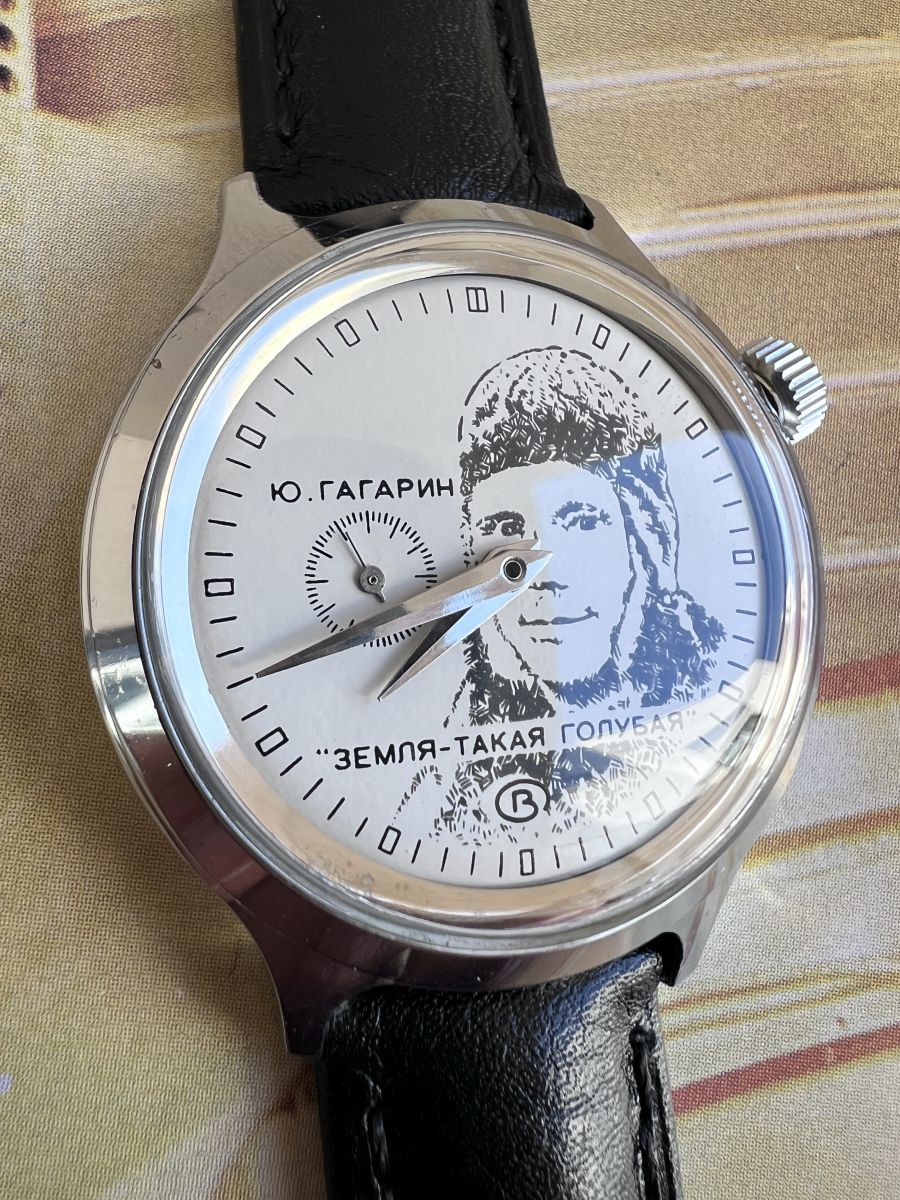
Vostok for the thirty years of the flight, 1991: a tribute, not a flight watch.
1965-1979: the Strela 3017, the crews’ chronograph
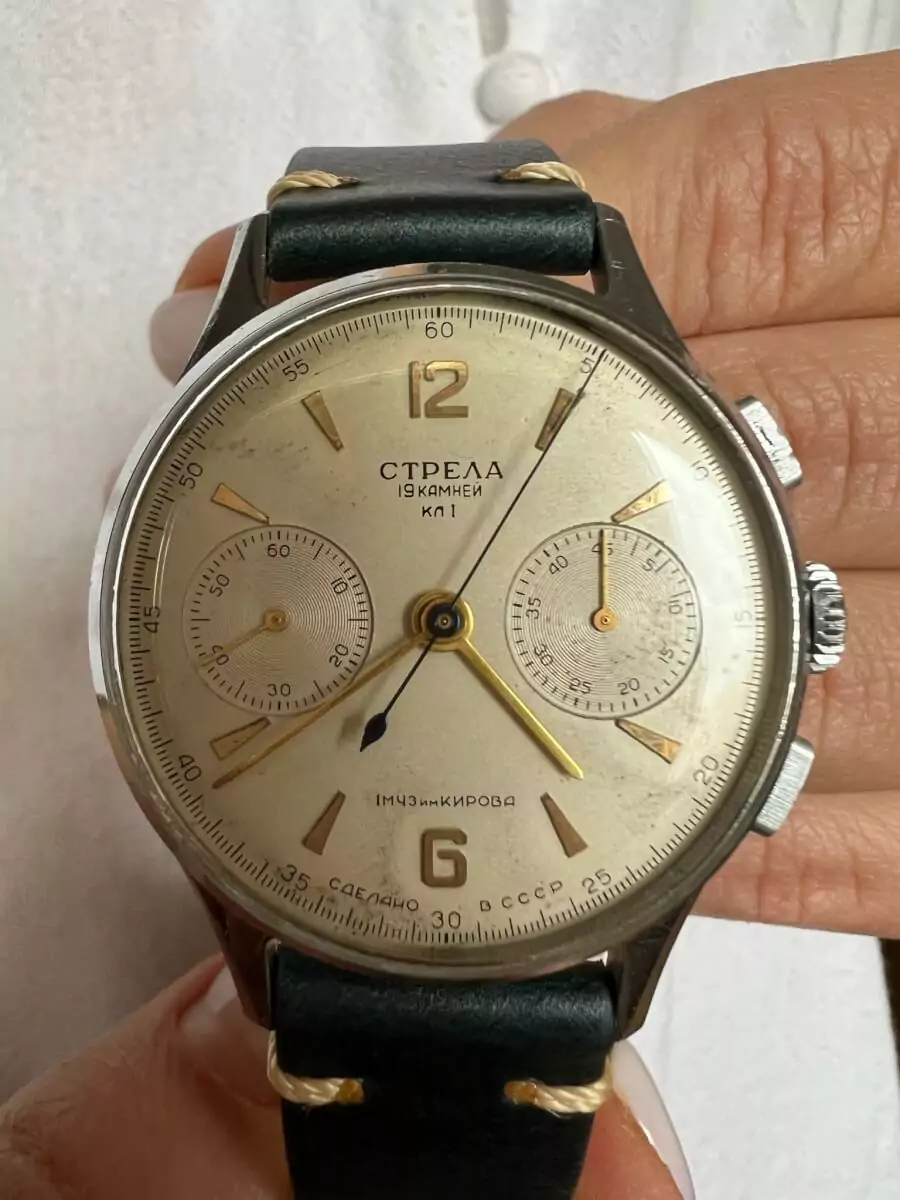
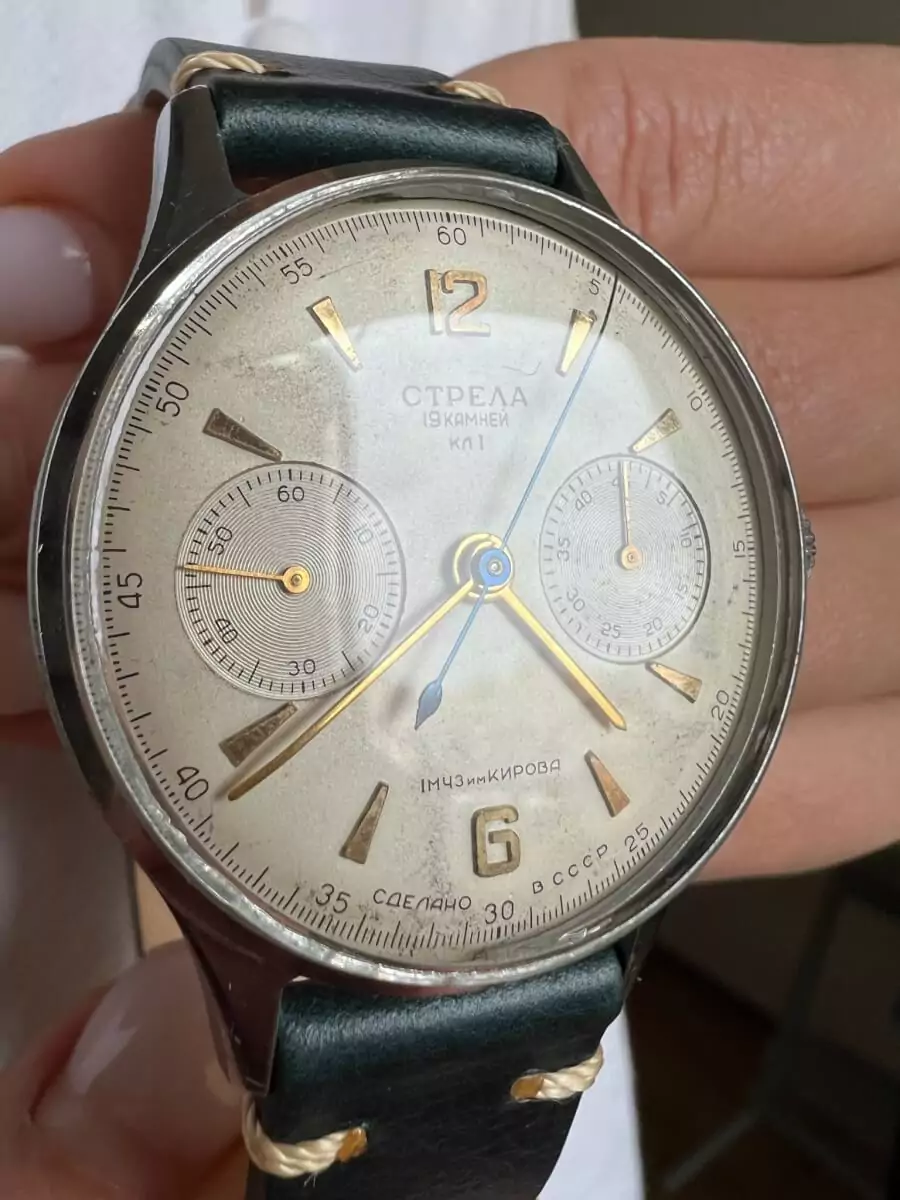
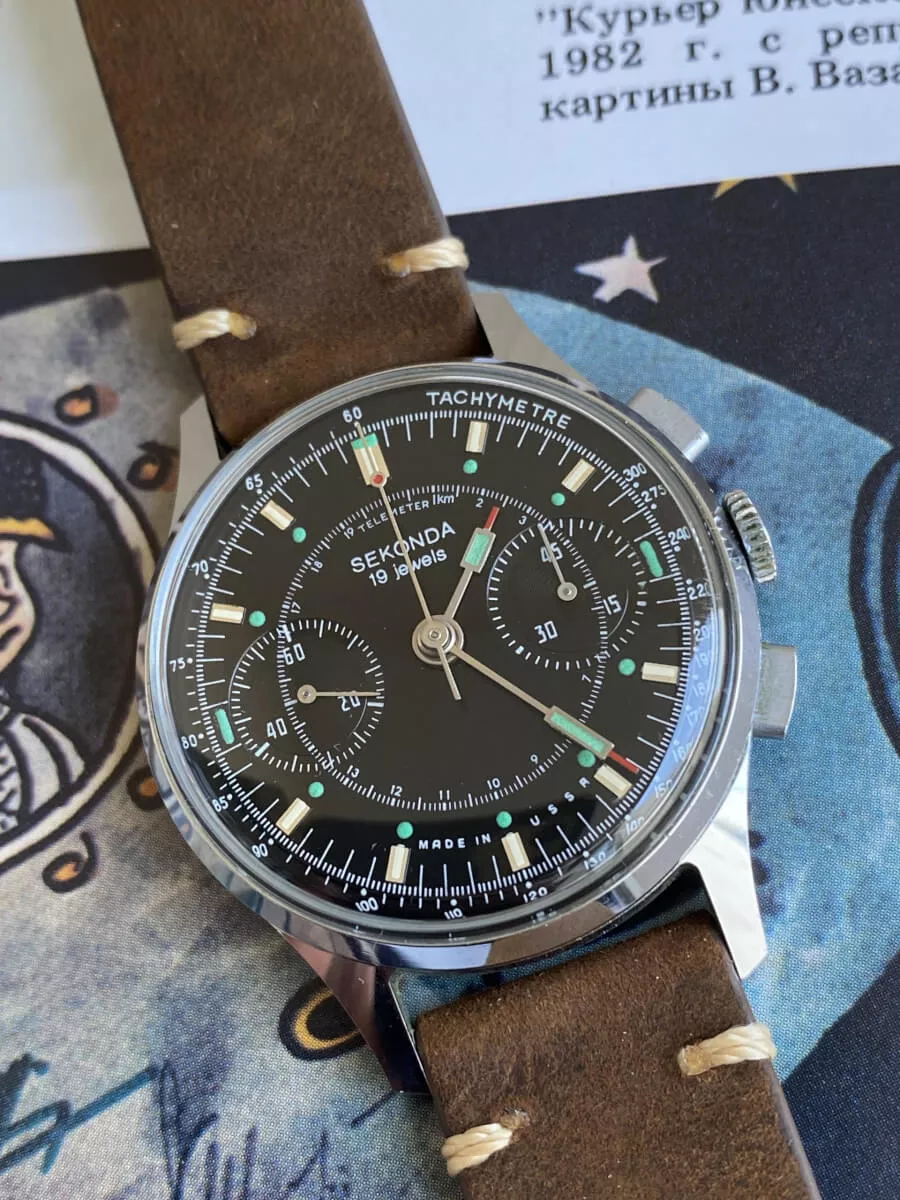
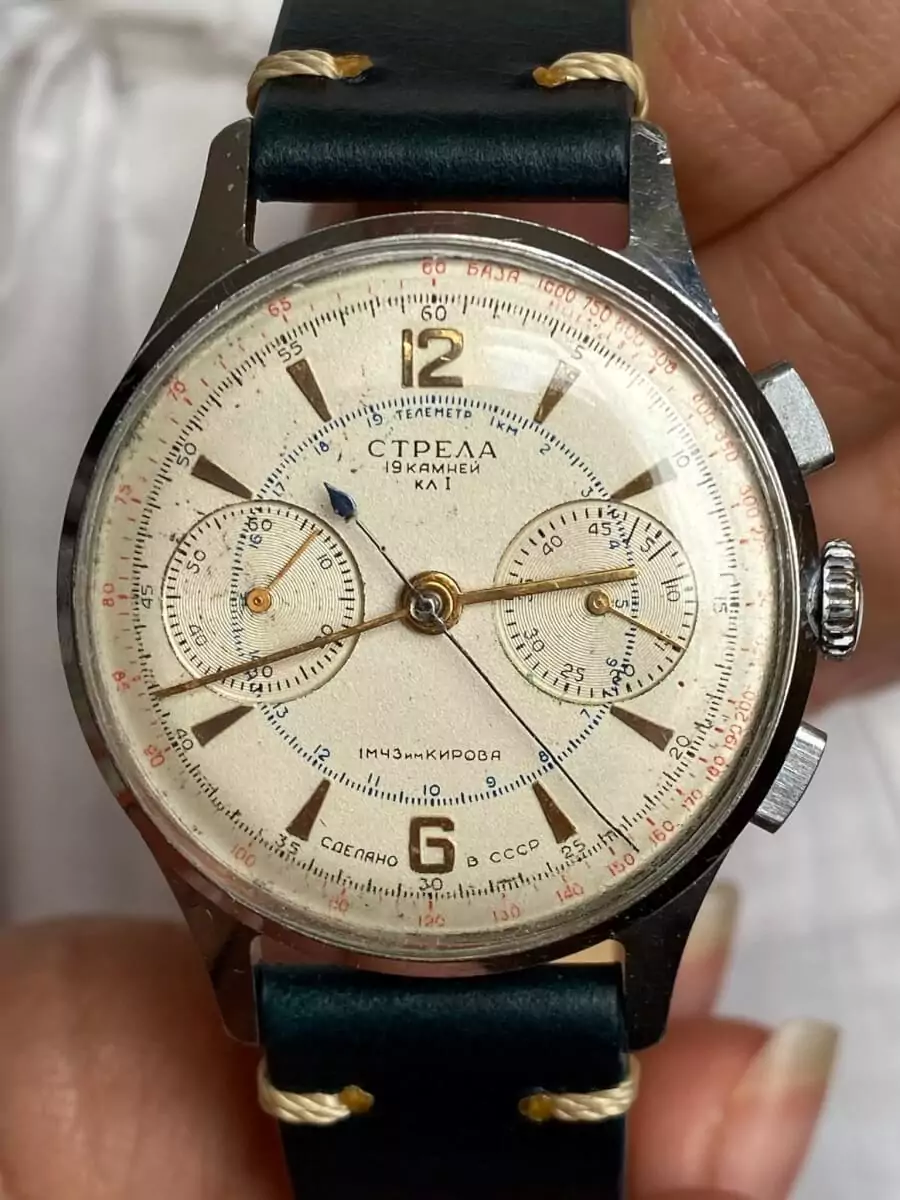
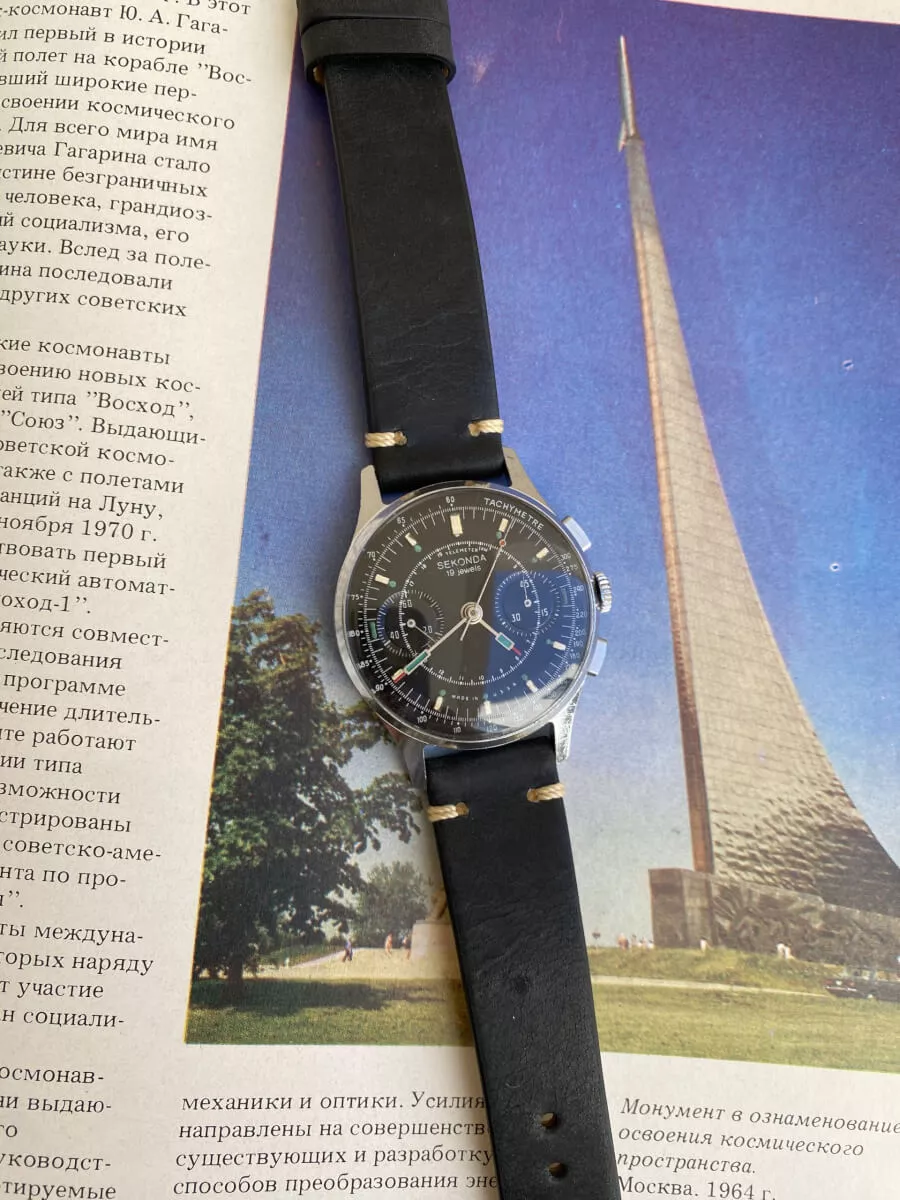
The Стрела (Strela, arrow) is the first Soviet wrist chronograph. Its 3017 calibre, with a column wheel and a 45-minute counter, descends from the Swiss Venus 150, whose tooling the First Moscow Watch Factory bought at the end of the 1950s. It was produced from about 1959 to 1979, under three successive letterings on the same movement: Стрела in Cyrillic from 1959 to 1964, Poljot in Latin letters afterwards, Sekonda for the British export market in the 1970s. Strela dials are always white or silver; black dials only appear with Sekonda.
It is the issue watch of the cosmonauts of the 1960s and 1970s. Tradition has it that Alexei Leonov wore one during the first spacewalk, on 18 March 1965; the photographs of the spacewalk, where the suit covers the wrist, do not allow this to be verified, and collectors debate it. What is not debated is that the Strela equipped the Voskhod and Soyuz crews for fifteen years, and that it preceded the Speedmaster’s arrival on the Moon by four years.
The dial of a Strela: blue telemeter, tachymeter, 45-minute counter on the right.
Sekonda 3017 with a black dial, the 1970s export version, same movement.
Several 3017s that flew are identified by their cosmonaut, often with a signed document, and have come up for sale since 1993. The Moscow Museum of Time listed them in 2023: a black-dial Sekonda of Vladimir Shatalov on Soyuz 10 in April 1971, a Sekonda of Yuri Artyukhin on Soyuz 14 and the Salyut 3 station in July 1974, worn at launch and landing, a Poljot of Oleg Makarov on Soyuz 18A, the flight aborted during launch on 5 April 1975. The Sekonda, often thought of as an export-only watch, flew too.
A Strela with Cyrillic lettering is worth 1,000 to 1,500 euros serviced, a Poljot 3017 from 700 to 1,200, a Sekonda from 1,000 to 1,600 depending on the dial. Check the movement above all: a column wheel and a 45-minute counter. A 30-minute counter means another calibre in a Strela case. Perfect watches are suspect; a real Strela has lived.
Sekonda 3017 with a white dial, Latin lettering, the same counters.
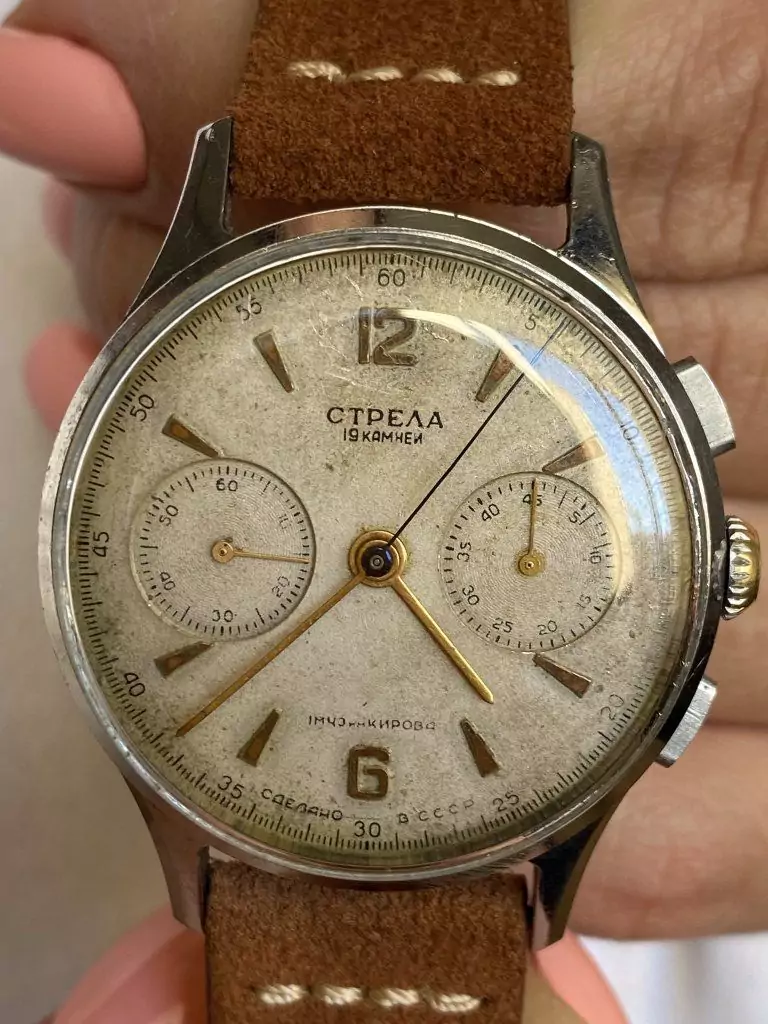
Cyrillic Strela, patinated cream dial, gilt hands: the condition in which they are found.
1965-1978: the 8ChN, the watch research institute’s watch
Less known than the Strela, the 8ЧН (8ChN) was never sold to the public. It was designed by the research institute of the watch industry, НИИЧАСПРОМ (NIIChasprom), for service and research use: a dial signed « НИИ », 24-hour display, central seconds, calendar. Pavel Belyayev wore it on Voskhod 2 in March 1965, alongside Leonov, and his widow signed its certificate. Yevgeny Khrunov had it on his wrist when he crossed from Soyuz 5 to Soyuz 4 by the outside in January 1969, visible in the film « Четверо в космосе » (Chetvero v kosmose, Four in Space). Yuri Artyukhin took one to Salyut 3 in 1974, Oleg Makarov on Soyuz 26 and 27 and Salyut 6 in 1978.
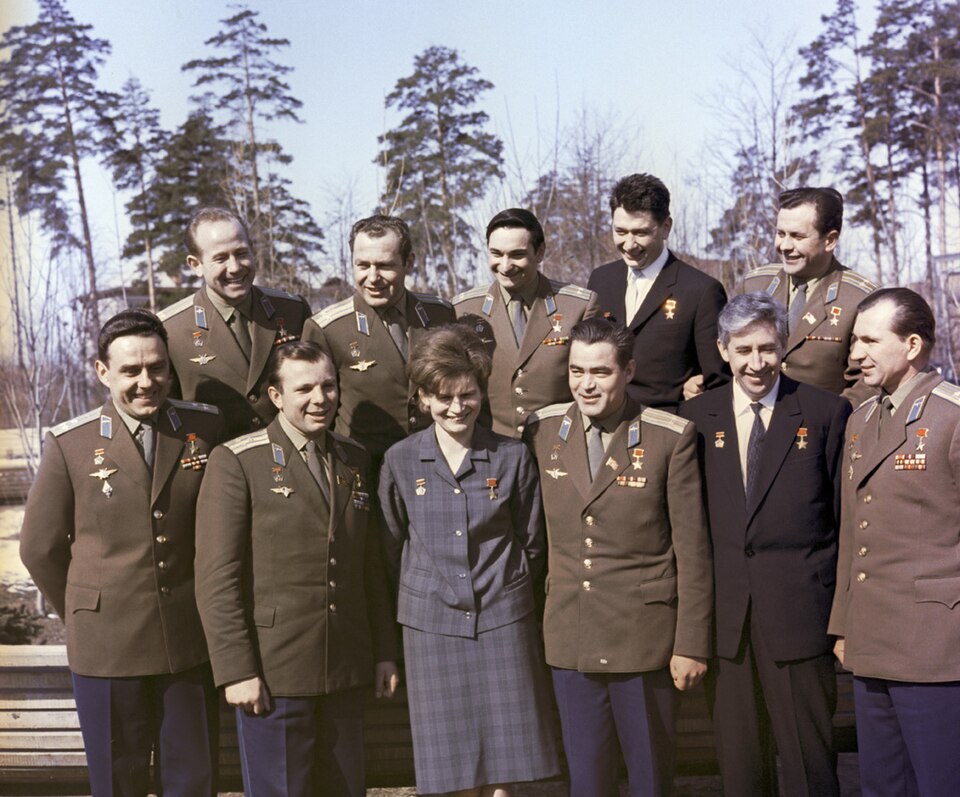
The cosmonauts in 1965. Front row, right, Pavel Belyayev, who wore an 8ChN on Voskhod 2; back row, left, Alexei Leonov. Also in the front row, Gagarin and Tereshkova. Photo Alexander Mokletsov, RIA Novosti archive, CC BY-SA 3.0.
The same institute had the First Moscow Watch Factory make a watch for spacewalks, to be worn over the spacesuit: a 70 × 63 mm metal case, 50 mm dial, elastic strap, « №001 » engraved on the back. Leonid Popov took it aboard Soyuz 35 on 9 April 1980, left it to Yuri Romanenko on Salyut 6, and it came back down on Soyuz 38 on 26 September 1980.
1976-2000: the Poljot 3133 of Salyut and Mir
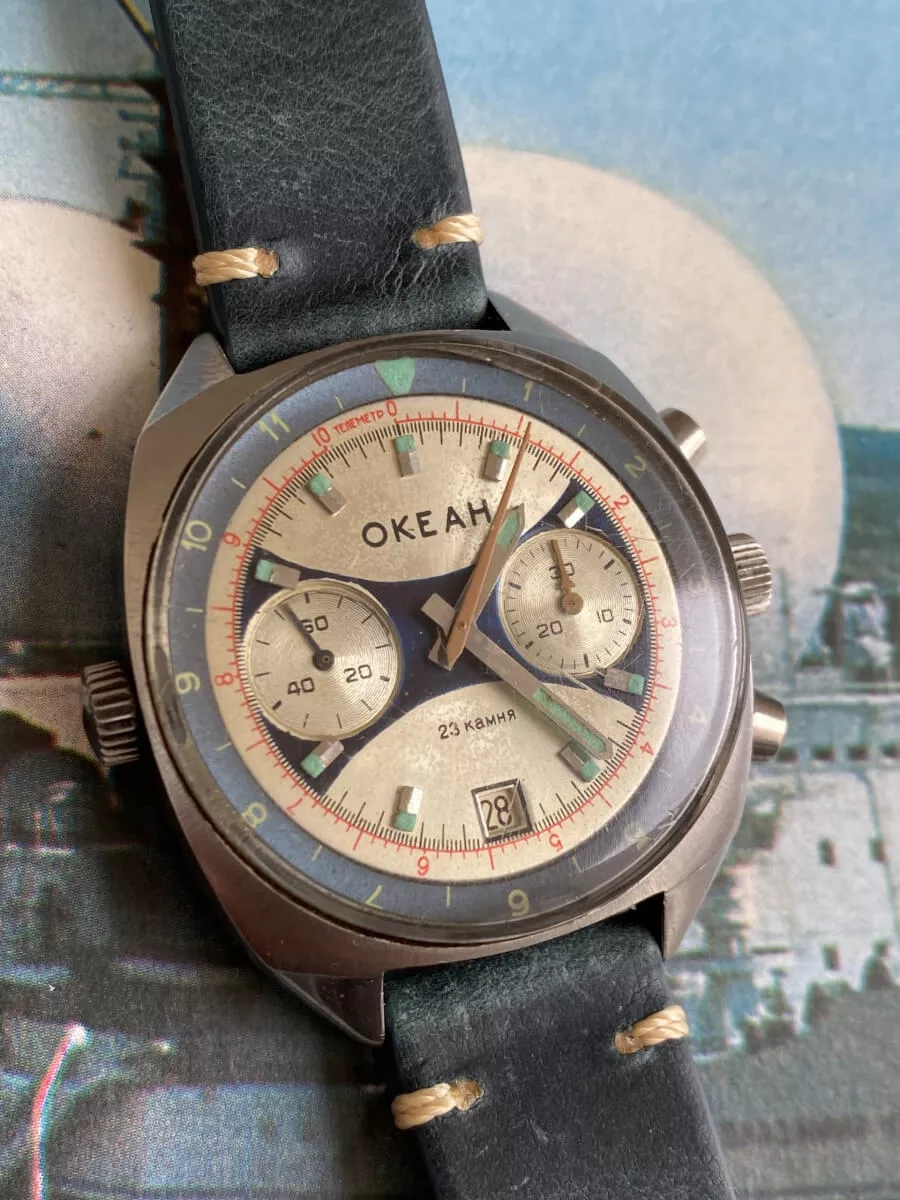
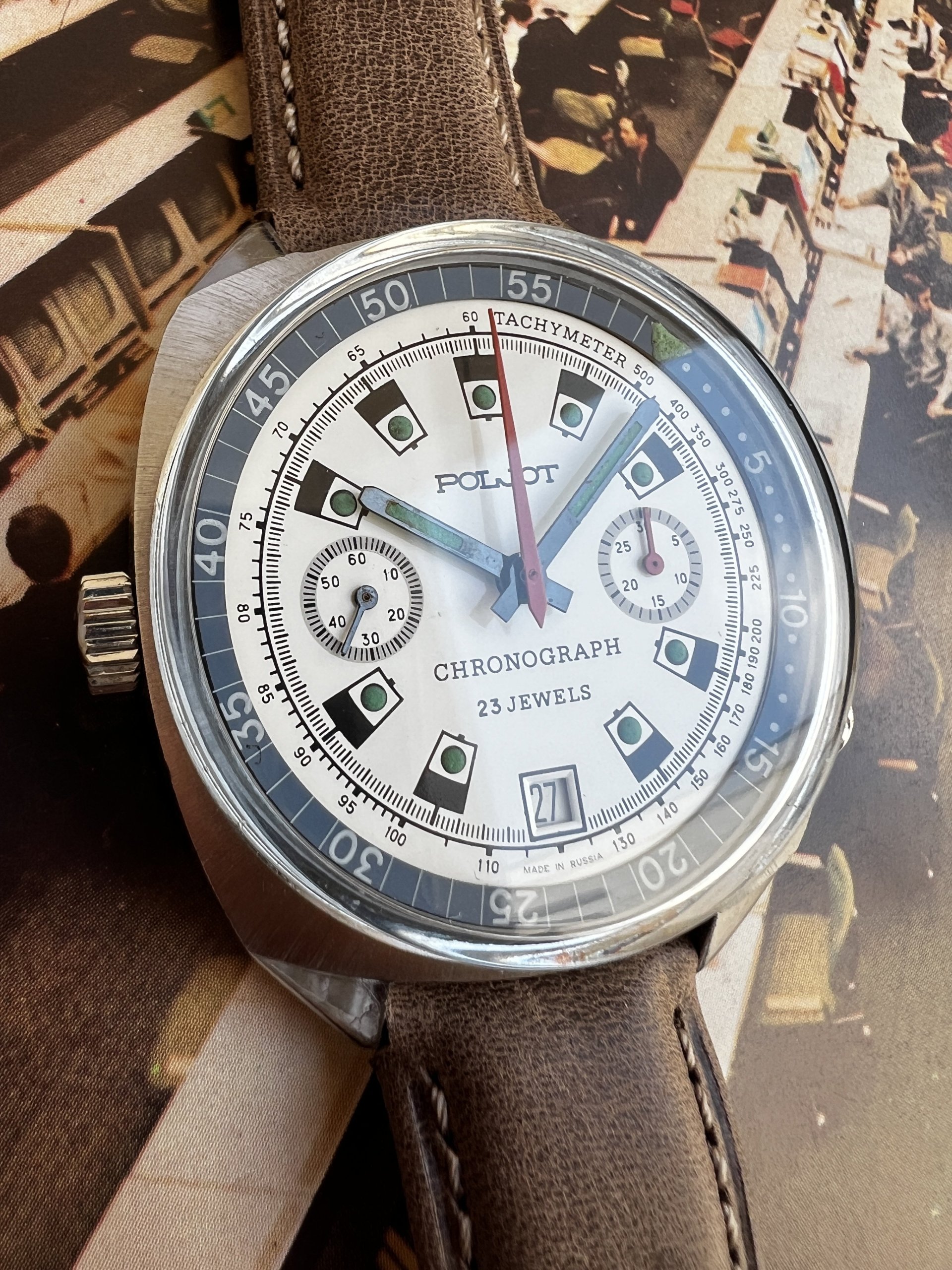
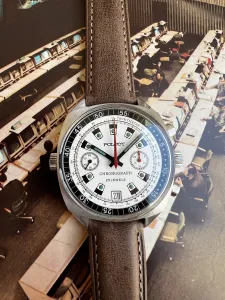
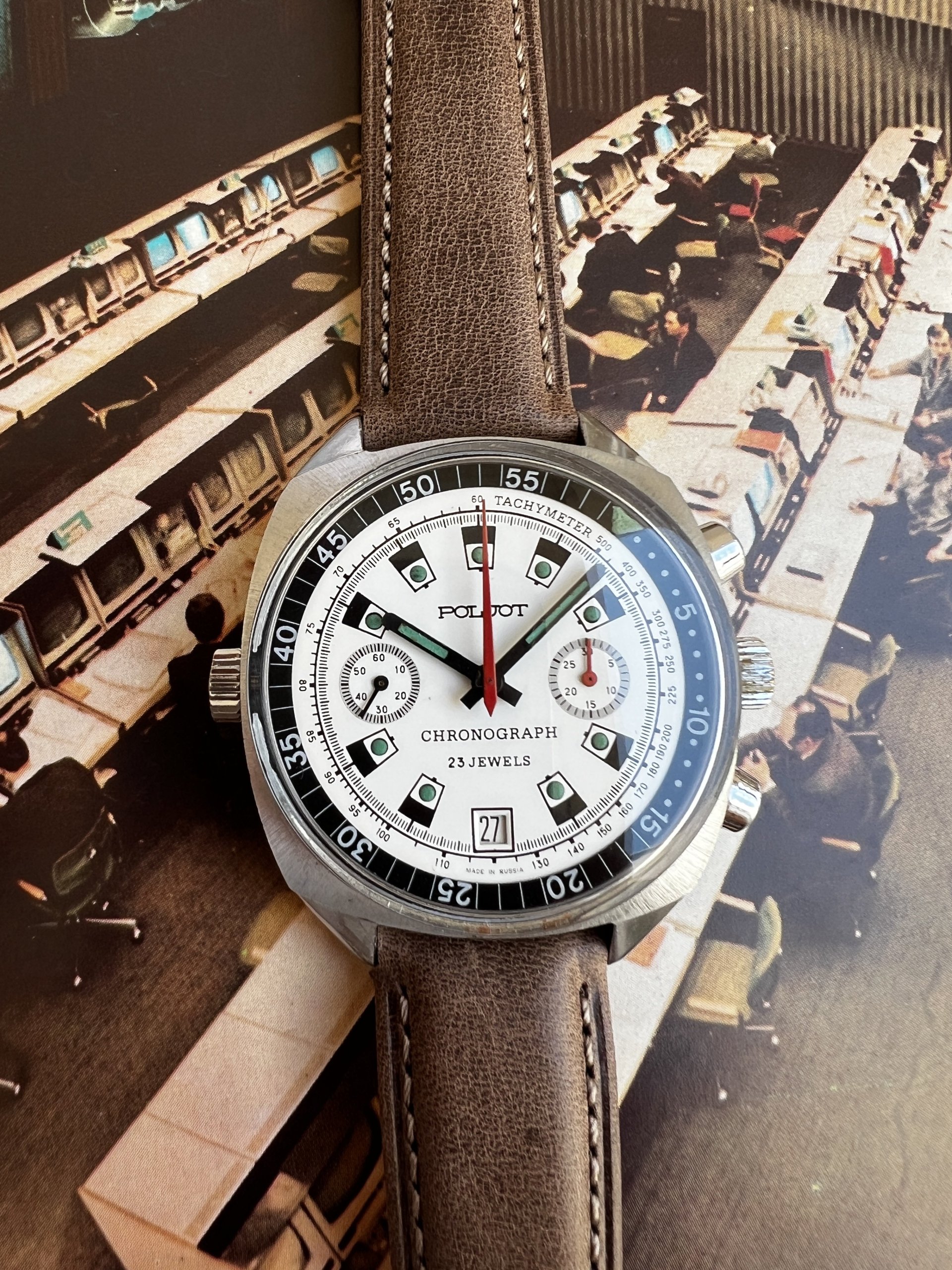
In 1976 the 3133 calibre replaced the 3017. Derived from the Valjoux 7734, cam-operated rather than column wheel, 23 jewels, 30-minute counter, it is simpler to produce and to maintain. It is the one that flew aboard the Salyut 6 and 7 stations and then Mir, in the 1980s and 1990s, under several dials: the white-dial « Cosmonauts » chronograph with an inner bezel, the pilots’ Shturmanskie, the Navy’s Okean, and mission editions. The first 3133 whose flight is documented is an Океан (Okean), the Navy chronograph: Valery Rozhdestvensky wore it on Soyuz 23 in October 1976. The crew could not dock with Salyut 5, the capsule came down at night on the frozen Lake Tengiz, and the watch stopped during the evacuation; the cosmonaut’s handwritten notes record it. Valery Polyakov, who since 1995 has held the record for the longest stay in space, is photographed aboard Mir with a 3133. A 3133 with a white dial and two black counters is the most accessible cosmonaut’s watch: 600 to 900 euros serviced.
Okean 3133, silver and blue dial, 23 jewels: Rozhdestvensky’s model on Soyuz 23.
Poljot 3133 « Cosmonauts », white dial, graduated inner bezel.
Shturmanskie 31659, the pilots’ 3133, new old stock.
1980s: the Elektronika, and some Omegas
From the 1980s, Elektronika quartz watches appear on cosmonauts’ wrists in many photographs and in their memoirs, and an experimental advertising campaign, in 1988 and 1989, was built on their use in flight. Crews also wore foreign watches: Alexei Leonov an Omega Flightmaster during the Apollo-Soyuz flight of July 1975, Vladimir Vasyutin a Speedmaster on Soyuz T-14 in 1985, Anatoly Solovyov a Speedmaster during two spacewalks in 1990. The Soviet watch never had the wrist to itself.
1992-1993: the mission watches
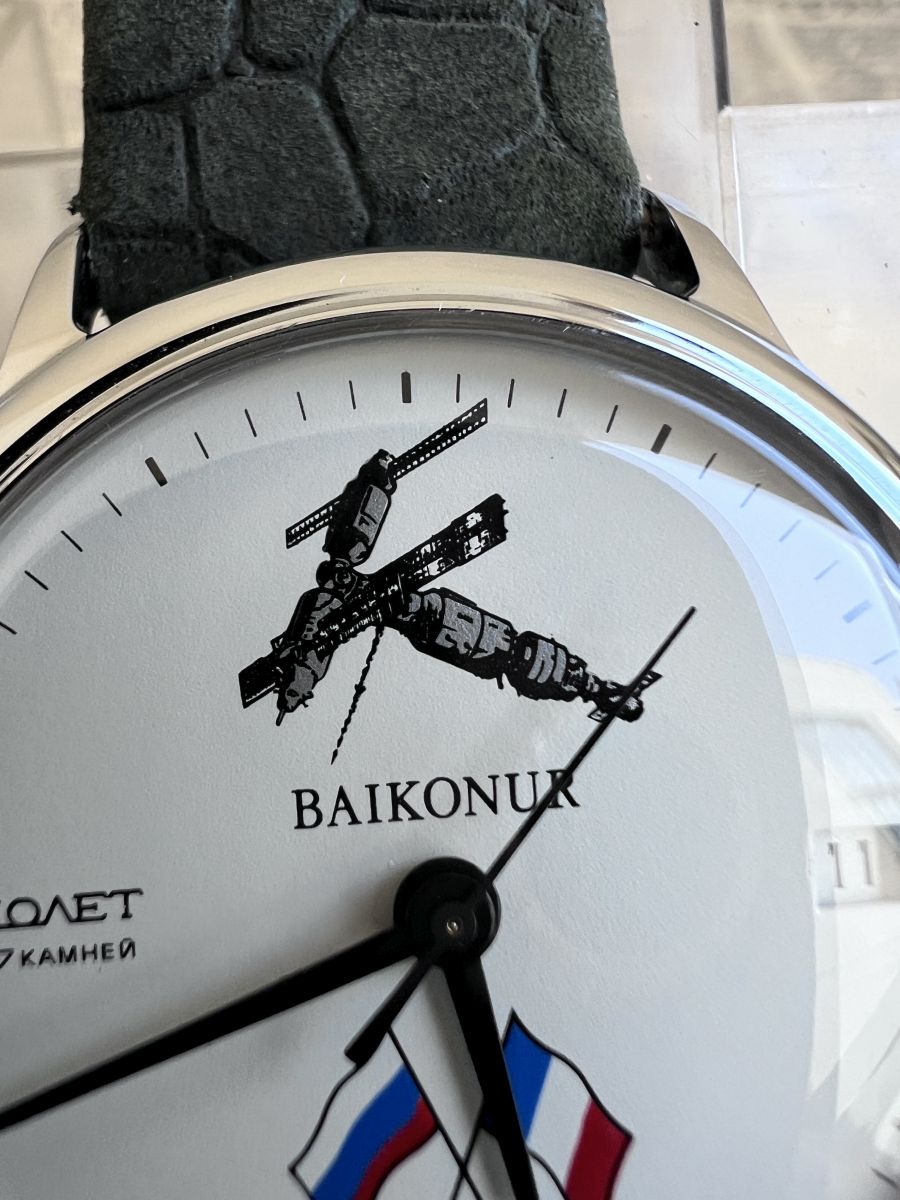
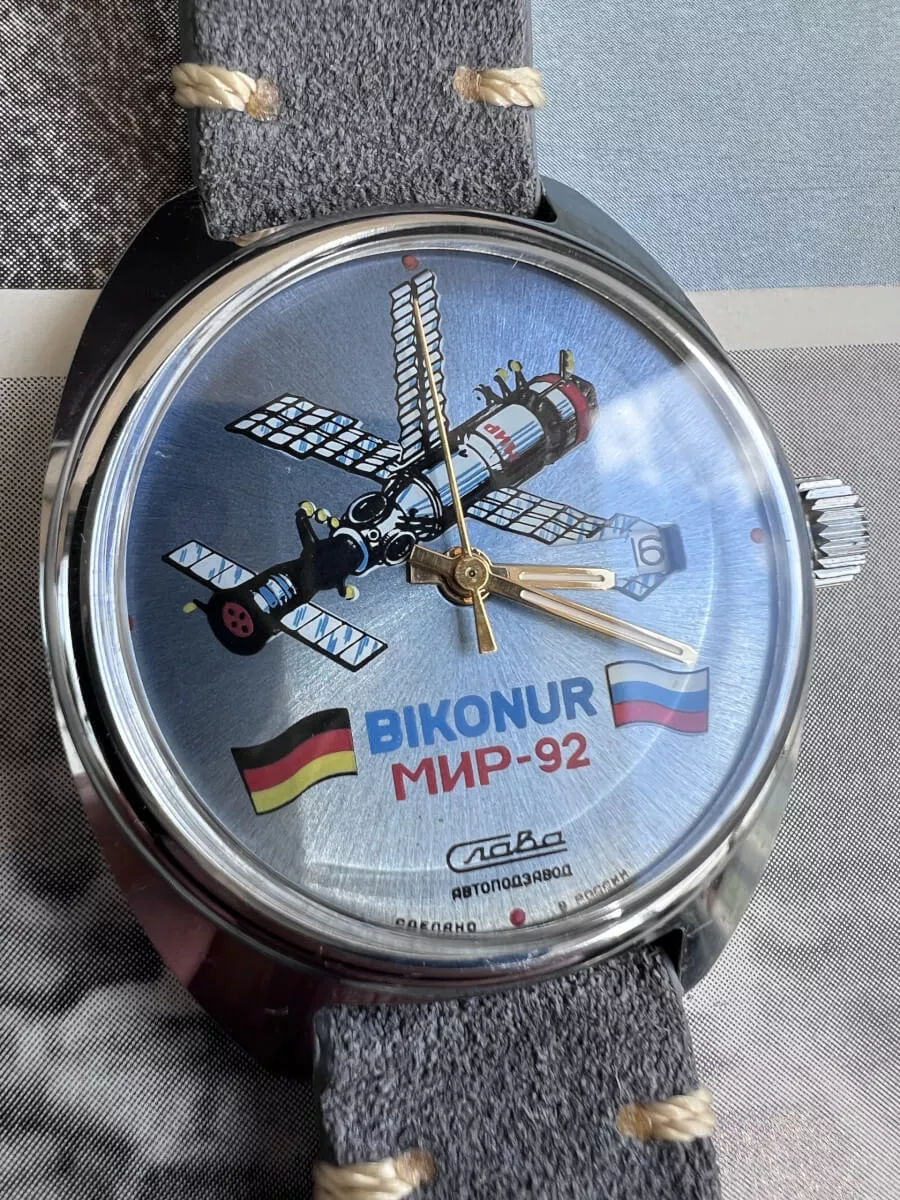
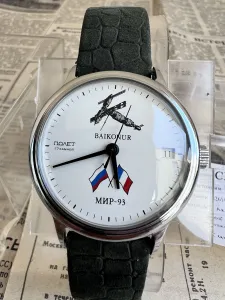
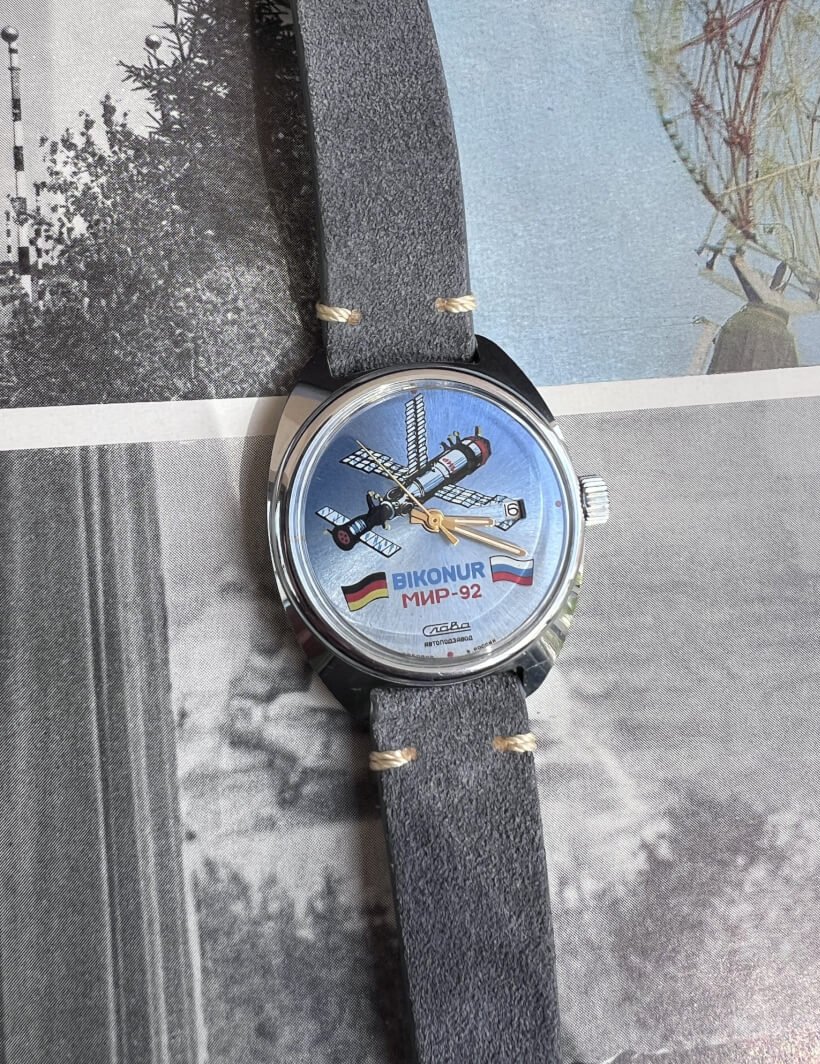
After 1991 the factories produced watches for each commercial flight to Mir, given to the crews and sold in limited series. The Slava Mir-92 for the flight of the German Klaus-Dietrich Flade in March 1992, the Slava and the Poljot Altaïr for the flight of the Frenchman Jean-Pierre Haigneré in July 1993, with Baikonur and the two flags on the dial. These are watches of the Russian era, 250 to 950 euros depending on the brand and the series, and the only ones that can be tied to a specific flight and a name.
Slava Altaïr, 1993: Mir station, French and Russian flags, Baikonur.
Poljot Mir-93, limited series of 250, same mission.
The watches that celebrated the flights
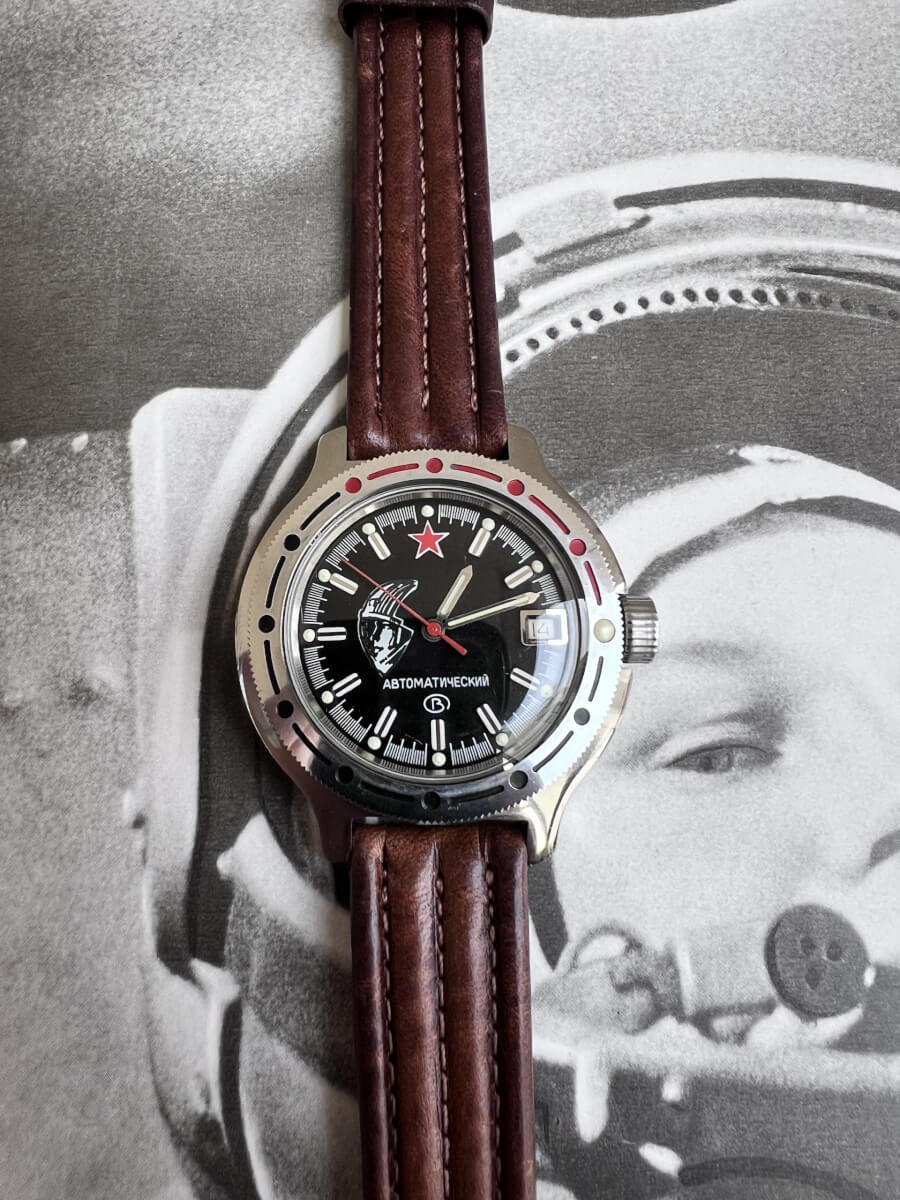
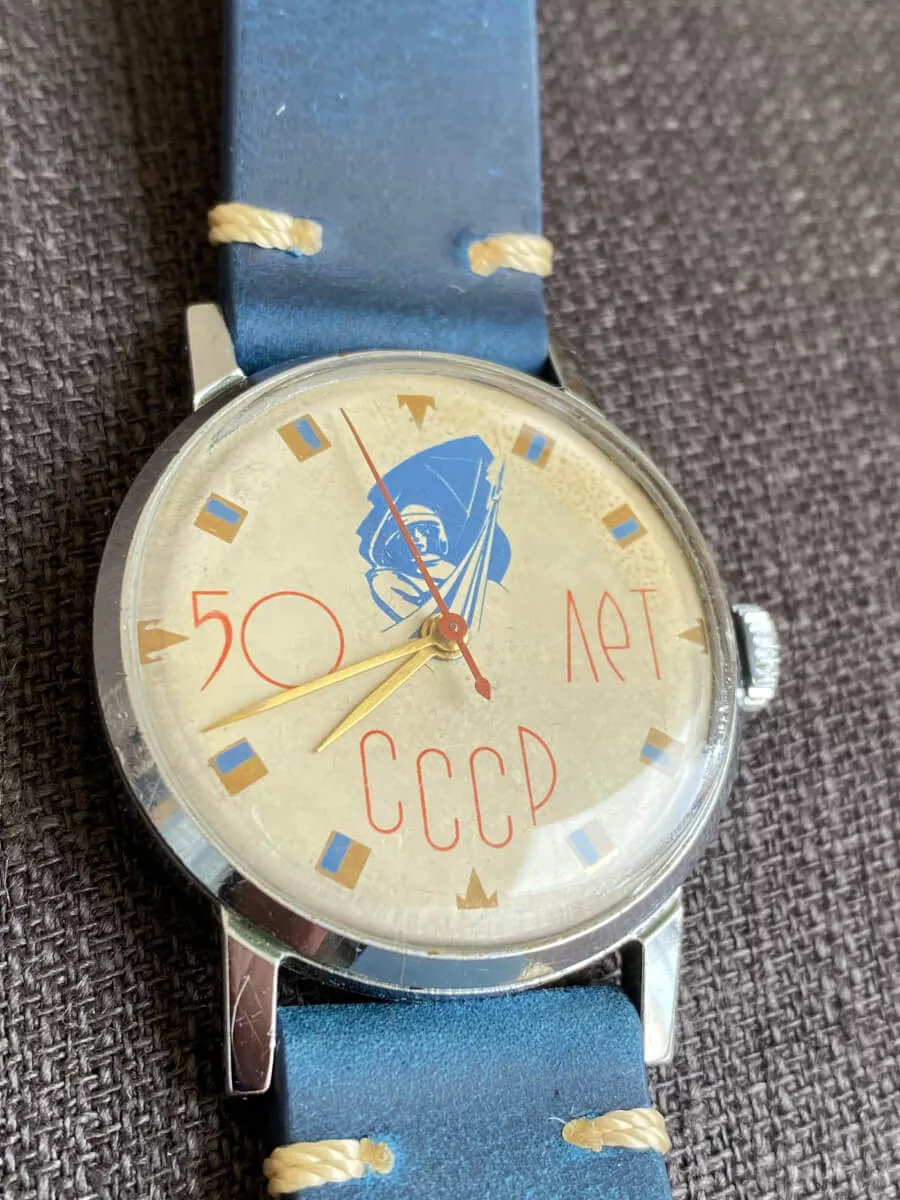
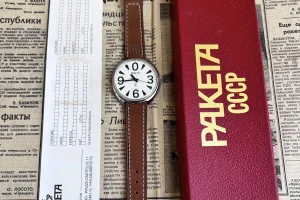
Alongside the flight watches, the factories produced for the public watches with a space theme, and it is through them that the country lived its conquest of space: Vostok Komandirskie with a helmeted cosmonaut, Slava Buran, Raketa with a Sputnik, ZIM for the 50th anniversary of the USSR with a cosmonaut, Vostok for Gagarin’s thirtieth anniversary, Pobeda and Kama with hand-painted rocket dials in the 1960s. They did not fly, they celebrated the flights, and they are the entry point to this collection: 200 to 450 euros serviced, with dials found in no other watchmaking tradition.
Automatic Vostok with a helmeted cosmonaut, red star, rotating bezel.
ZIM for the 50th anniversary of the USSR, painted cosmonaut, 1972.
Flight watch or commemorative watch: knowing what you buy
The difference is not seen on the dial but in the calibre and the factory: Soviet flight watches come from the First Moscow Watch Factory, Shturmanskie, 3017, 3133, from the watch research institute for the 8ChN, the Elektronika, and from the Slava and Poljot mission watches; Vostok, Raketa and ZIM did not supply the crews. A Komandirskie with a cosmonaut sold as « the cosmonauts’ watch » is a good commemorative watch, and sells at its price. A 3133 « Cosmonauts » sold as a flight watch sells at its own. Both have their place, provided they are named.
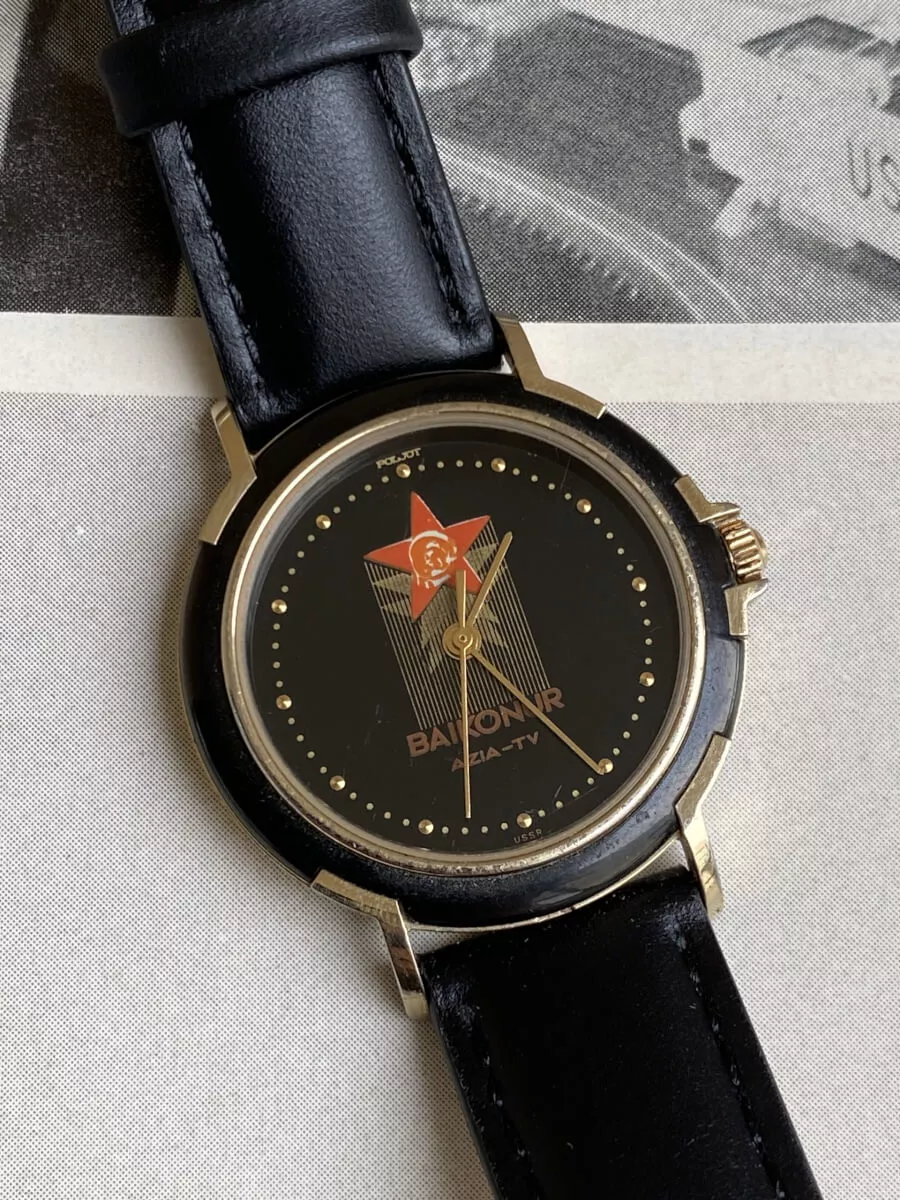
Poljot Baikonur, black dial, 1990s: a souvenir dial on a good calibre.
Slava Mir-92, flight of Klaus-Dietrich Flade, German and Russian flags.
Before buying
For a Strela or a 3133, ask for a photo of the movement and compare it with documented examples. A 3017 has a column wheel; a 3133 has 23 jewels engraved on the bridge. Beware of cases that are too shiny, sapphire crystals and dials without patina. For a mission watch, look for the serial number and the box. Do your research, compare several examples, rely on collectors’ sites that show their pieces.
The black Sekonda dial of the 3017 also exists as a fake: our real or fake comparator shows how to recognise it by its printing.
Frequently asked questions
Which watch did the Soviet cosmonauts wear?
The Shturmanskie in 1961 and 1963, the 3017 chronograph signed Strela, Poljot or Sekonda from 1965 to the late 1970s, the 24-hour 8ChN of the watch research institute, then the 3133, the Okean among them, and the Elektronika aboard Salyut and Mir. Some also wore Omegas.
Did Leonov wear a Strela during his spacewalk?
That is the tradition, and the Strela was indeed the cosmonauts’ issue watch in 1965. The photographs do not allow it to be confirmed.
What is a cosmonaut’s watch worth?
From 600 to 900 euros for a Poljot 3133, from 700 to 1,600 for a 3017 chronograph depending on lettering and condition, from 900 to 1,300 for a type 2 Shturmanskie.
Is the Vostok Amphibia a cosmonaut’s watch?
No. Vostok never supplied the crews; its space dials are commemorative.
Did the watches with a cosmonaut or a rocket fly?
No, they are the watches through which the factories and the public celebrated the flights. Flight watches have plain dials and are recognised by their calibre.
The ДП-5В (DP-5V) is the field radiometer of Soviet civil defence: a green Bakelite console, a probe with a rotating gamma, beta and check-source shield, headphones and a manual that explains operation and maintenance. The one in this article served in an industrial bakery in Chișinău and was serviced in March 1991. Its owner shared his photos and documents with us, and we turned them into a tool that lets you operate it on screen, step by step.
The Moscow Games, from 19 July to 3 August 1980, boycotted by some sixty countries, produced more objects than any Soviet event: a bear cub, Misha, drawn by Viktor Chizhikov, an emblem made of running tracks, five thousand torches, watches from every factory, platinum coins, rings, tea glass holders, posters. This guide tells the story of the Games and reviews the objects, with the marks that authenticate them and the prices.
The 3017 chronograph of the First Moscow Watch Factory carries a five-digit number on the balance cock. The most common dating method reads it as a single series, from 1959 to 1979. Four factory passports show there are two, and that the same number can point to two watches made ten years apart. Here is how to read the number, the dial, the logo and the bridge, with a decoder to date your Strela, Poljot or Sekonda.
This website uses cookies to improve your experience while you navigate through the website.
Out of these cookies, the cookies that are categorised as necessary are stored on your browser as they are essential for the working of basic functionalities of the website.
We also use third-party cookies that help us analyse and understand how you use this website.
These cookies will be stored in your browser only with your consent.
You also have the option to opt out of these cookies.
But opting out of some of these cookies may affect your browsing experience.
Necessary cookies are absolutely essential for the website to function properly. This category only includes cookies that ensure basic functionalities and security features of the website. These cookies do not store any personal information.
Cookies that are not strictly necessary for the website to work and that are used specifically to collect personal data through analytics, ads and other embedded content are called non-necessary cookies. User consent is required before these cookies run on the website.
✕
Soviet in Paris
Online. We answer in person, no AI and no chatbot. Reply right away, 20 min at most.
Hello 👋 A question about an item, an order or shipping? Write to us.
Your email is used only to reply to you.
Subscribe to our newsletter and get 10% off your first order.
Subscribe
★ New pieces before anyone else
★ New blog articles
★ Soviet in Paris news and updates
Join the Party
10% off your first order
Receive your welcome card and our next arrivals.
Your code appears here and is also sent to you by email. You can leave the Party in one click, at any time.