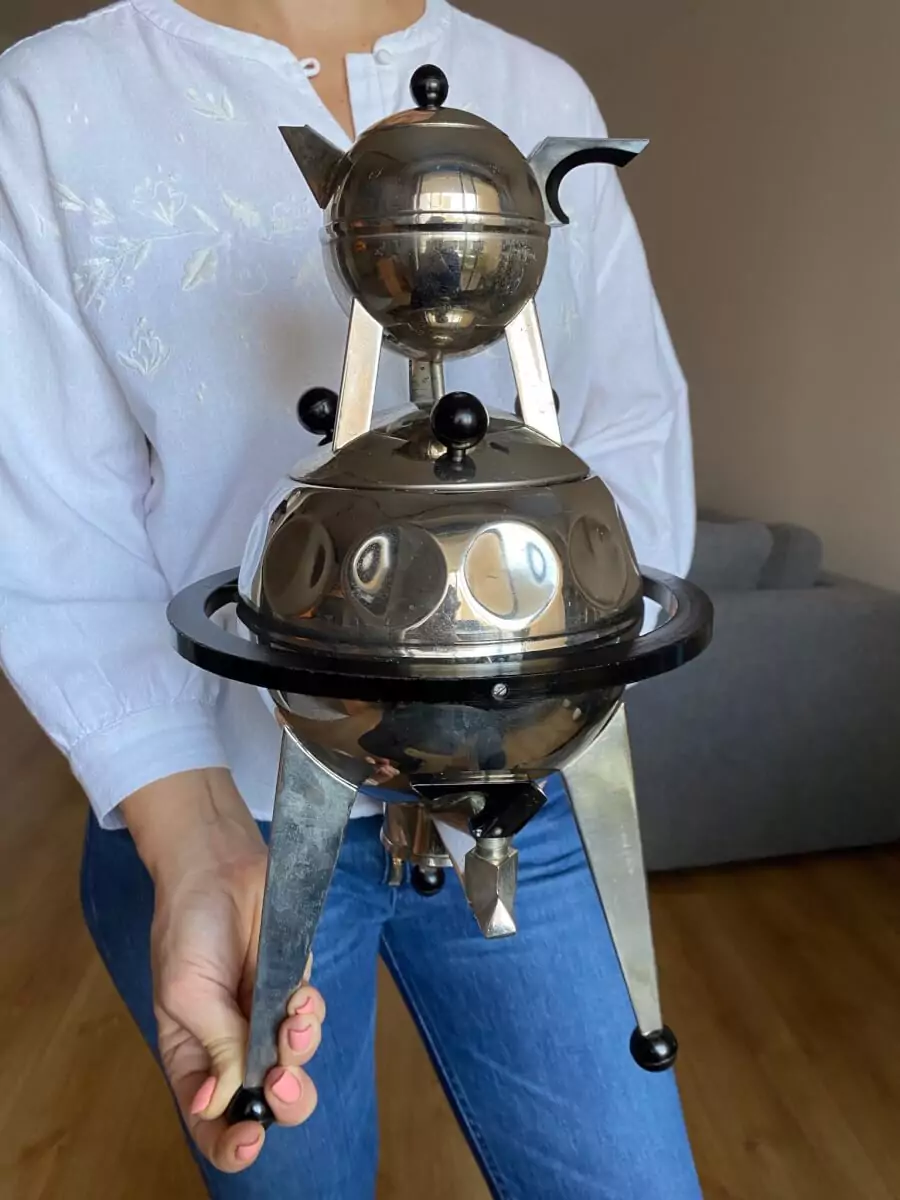
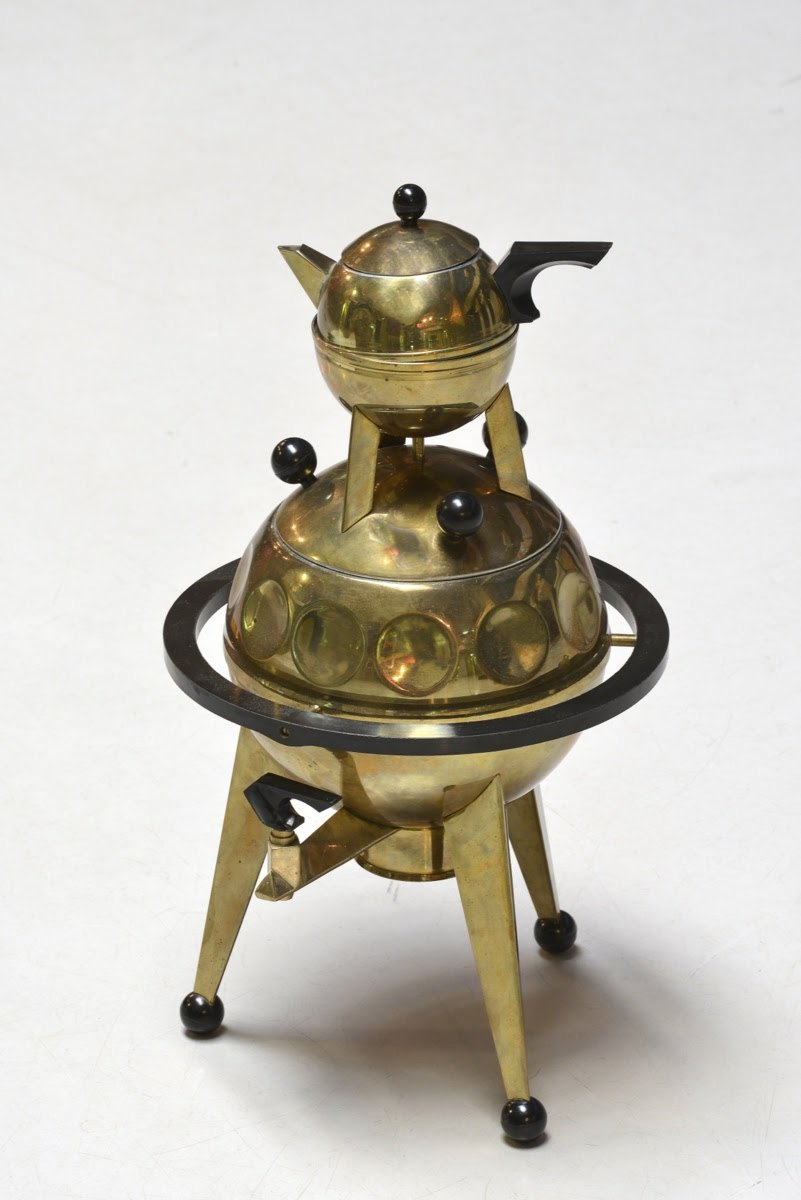
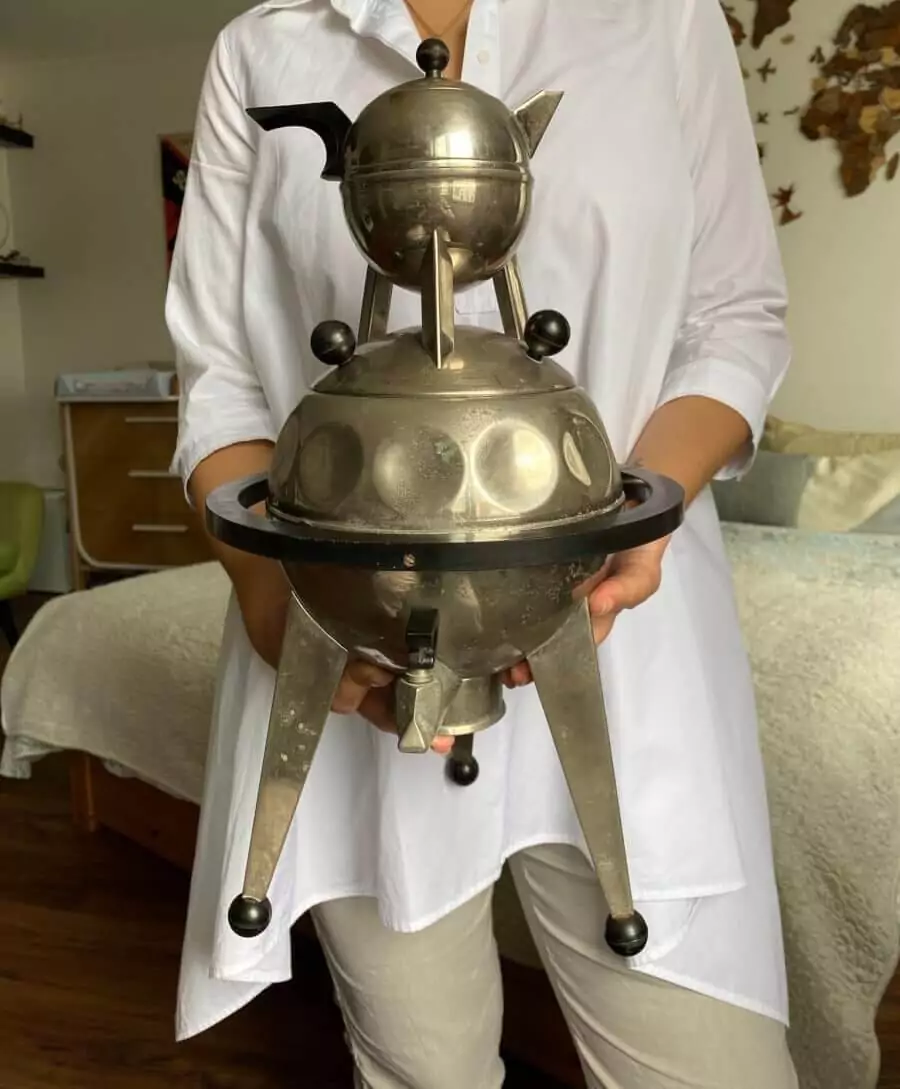
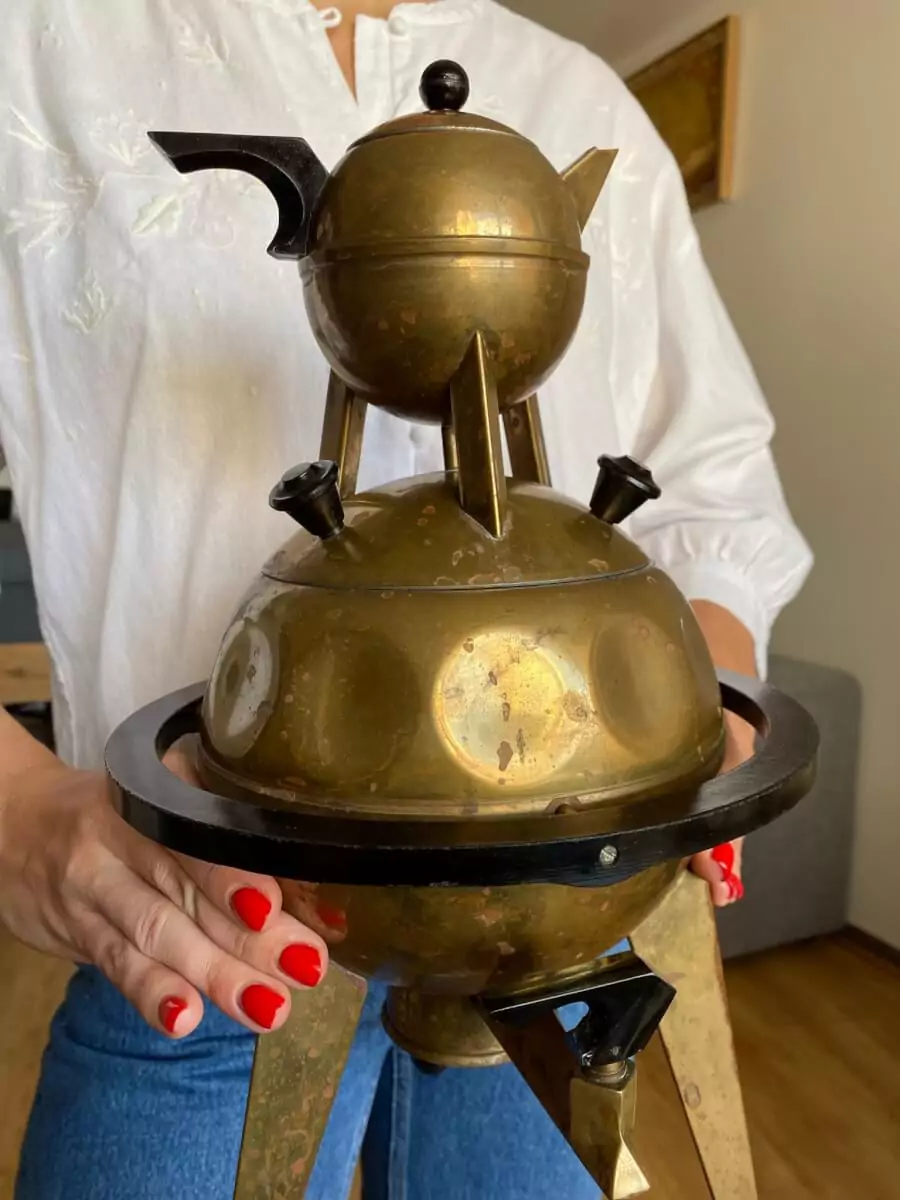
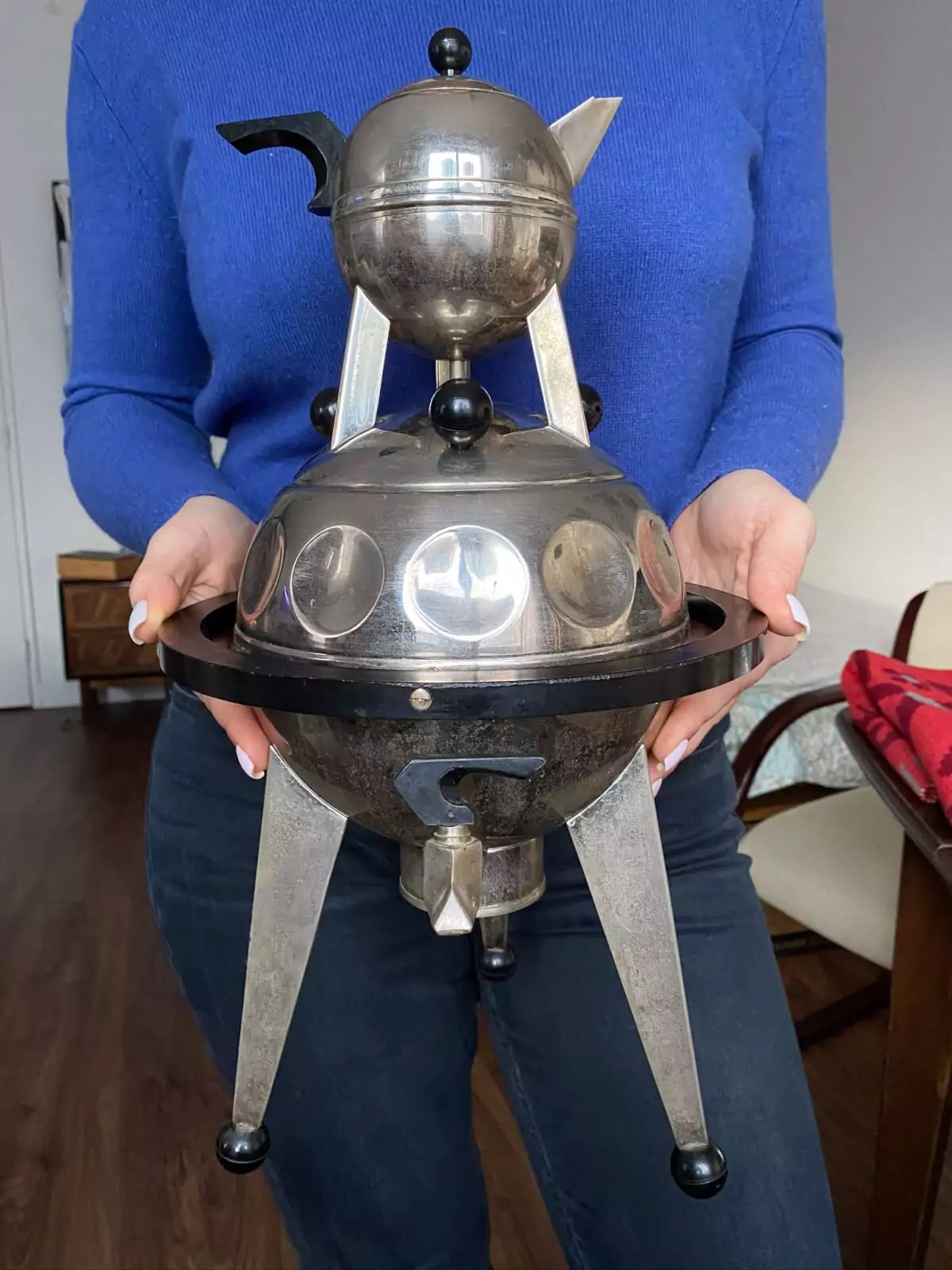
A nickel-plated sphere on three legs, circled by a black ring, with a round teapot on top: the Sputnik electric samovar was designed by the painter Konstantin Sobakin and made in Suksun, in the Urals, from 1976. It keeps the idea of the charcoal samovar, a store of hot water with a brewing teapot sitting above it, but swaps the fire for a heating element. This guide covers how it works, where it came from, how to read its markings and what to check before buying one.
OCTOBER 2026•13 MINUTE READ
by Marwen Yahyaoui
Sputnik electric samovar from the Suksun factory, 1978, with its spherical teapot.
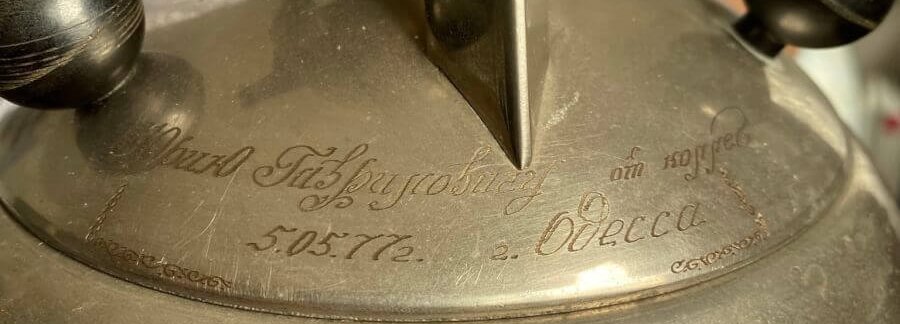
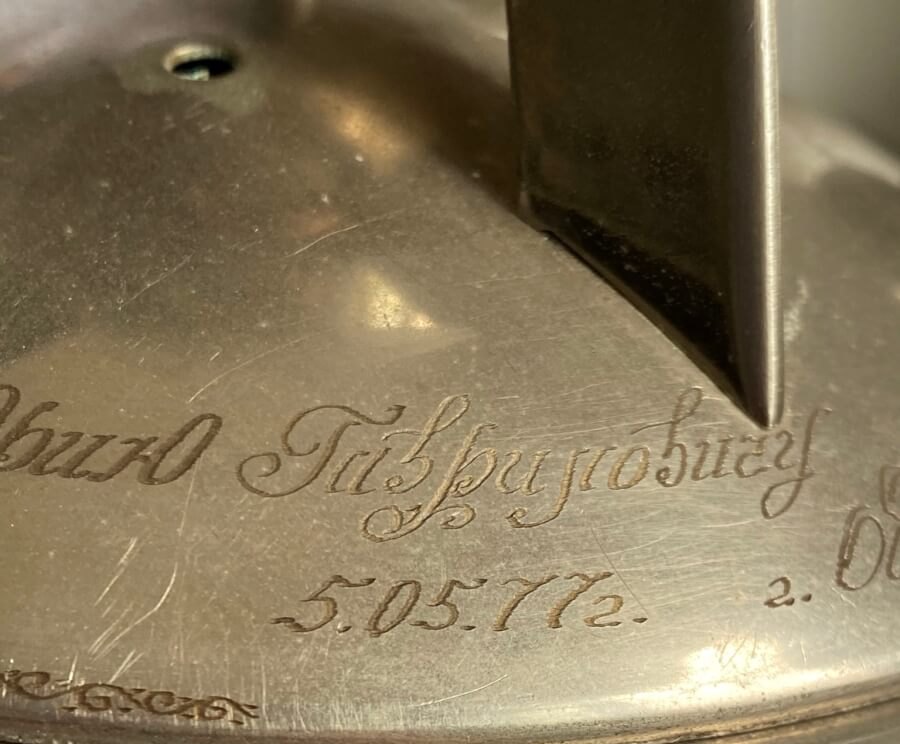
On 5 May 1977, in Odessa, a group of colleagues gave one of their own a samovar and had its lid engraved: “Юрию Гавриловичу от коллег. 5.05.77 г., г. Одесса” (Yuriyu Gavrilovichu ot kolleg, g. Odessa), “To Yuri Gavrilovich, from his colleagues. 5.05.77, Odessa”. The engraving gives neither his trade nor the occasion. The ring of the samovar carries the year 1976. That samovar is now in our shop, with three other Sputniks from 1977 and 1978.
The dedication engraved on the lid: Юрию Гавриловичу от коллег, 5.05.77 г., г. Одесса.
How a samovar works: water around a fire
Самовар (samovar) roughly means “self-boiler”. In its classic form, settled by the late 18th century, it is a water tank with a vertical tube running through it, and the fuel burns inside that tube. Russian texts call it труба-жаровня (truba-zharovnya), or more casually кувшин (kuvshin, “the jug”). The water around the tube heats through its walls. At the bottom, an air intake, the поддувало (podduvalo), feeds the fire. At the top, a crown called the конфорка (konforka) holds a small teapot of very strong tea.
Water goes in first: never heating an empty samovar is the first rule in the how-to published by the Russian weekly AiF. Kindling and wood chips are then lit in the tube, which is topped with a chimney extension to draw the air. To liven the fire, a boot, the сапог (sapog), is pulled over the tube and pumped like a bellows. Pine cones give a lot of smoke and a smell of resin. When steam comes out of the small vent in the lid, the душник (dushnik), the water is boiling. The extension comes off, the teapot goes on the crown and tea is served from the tap: a splash of strong brew in the cup, topped up with boiling water.
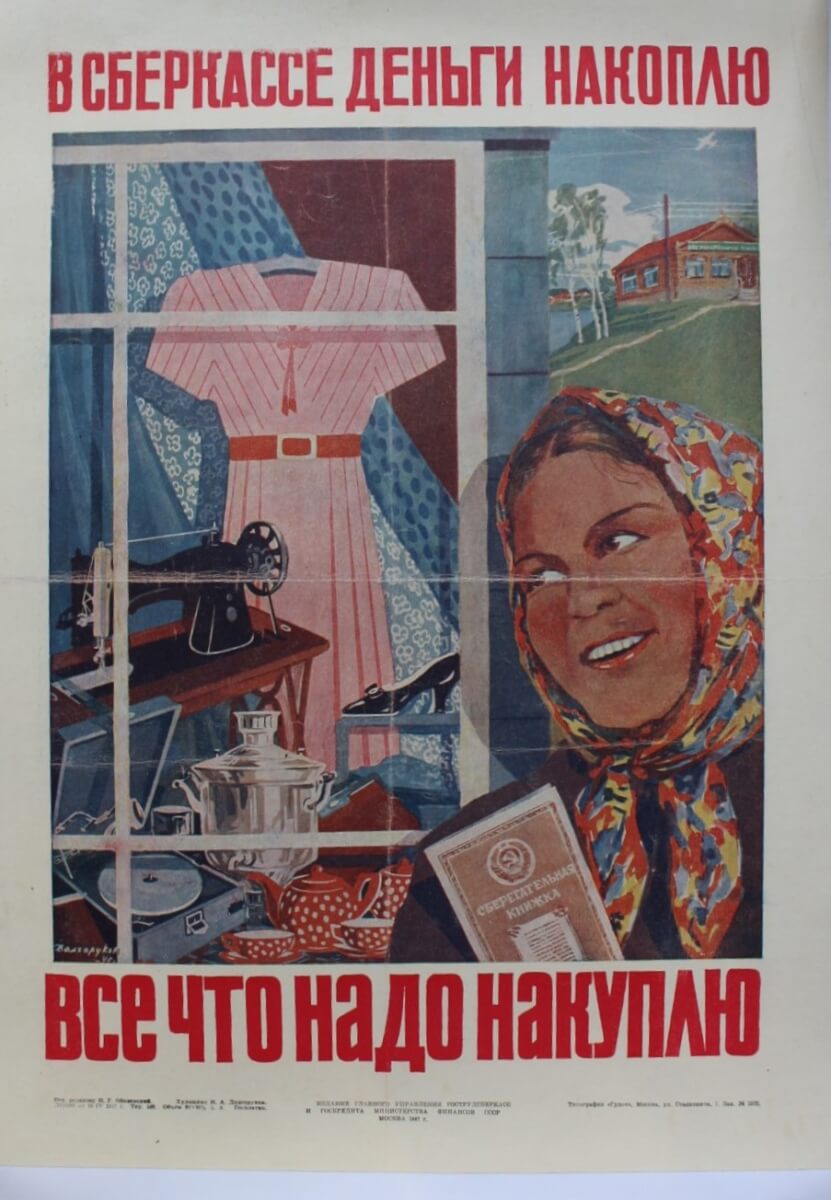
Savings bank poster, 1947: the samovar at bottom left, between the sewing machine and the record player.
By the mid-19th century Tula was making up to 120,000 samovars a year, and about 660,000 in 1913, according to the tea historian A. Kolbasinov, quoted by the magazine Vokrug Sveta. The samovar was still a coveted purchase in the post-war USSR. On a 1947 poster in our shop, “В сберкассе деньги накоплю, всё что надо накуплю” (V sberkasse dengi nakoplyu, vsyo chto nado nakuplyu: “I will save money at the savings bank and buy everything I need”), it stands among the promised purchases, with the dress, the sewing machine, the record player and the tea set. To date a poster like this one, see our guide to reading the printer’s line on Soviet posters.
From charcoal to the wall socket: the electric samovar
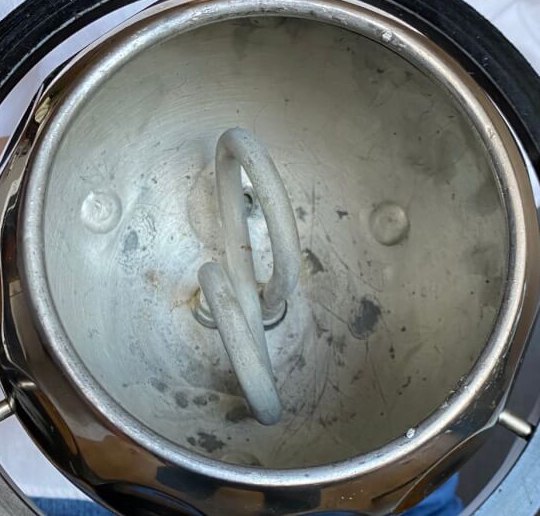
A fuel samovar needs a flue. The electric samovar does away with the fire: a tubular heating element, the ТЭН (TEN, short for трубчатый электронагреватель, trubchaty elektronagrevatel, “tubular electric heater”), is fixed in the bottom of the tank and sits in the water. The Sputnik has no central tube and no chimney. The crown survives, but only as a stand for the teapot.
The looped heating element at the bottom of the tank, on our 1978 samovar.
According to the Russian magazine T-J, the Штамп (Shtamp) plant in Tula started making electric samovars in 1956. The same article says they caught on when families moved into the apartment blocks of the Khrushchev era, whose flats had no flue, and that they were a popular housewarming present. Electric samovars were also made in Leningrad, Kuibyshev, Dnipropetrovsk and Grodno.
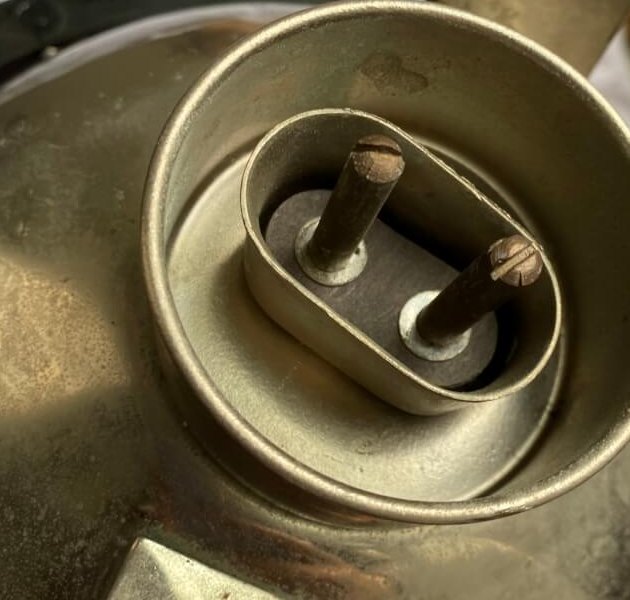
Under the base, the two pins that take the cord.
Suksun, a samovar town in the Urals
Suksun is a small town in the Perm region, founded in 1651 near copper deposits, where Akinfiy Demidov built a works in the 18th century. Samovars have been made there since the 1740s. In the early 20th century, according to the Perm newspaper Business Class, nine factories and eighty craft workshops were making samovars there. The Sputnik came from the Суксунский завод металлоизделий (Suksunsky zavod metalloizdeliy), the Suksun metalware factory, which answered to the RSFSR Ministry of Local Industry: this is what the cover of its user manual says. According to Natalya Tokareva of the Suksun local history museum, this factory, the ЗМИ (ZMI), was workshop no. 3 of the town’s optical and mechanical plant from 1957 to 1969, and it has not existed since 2008.
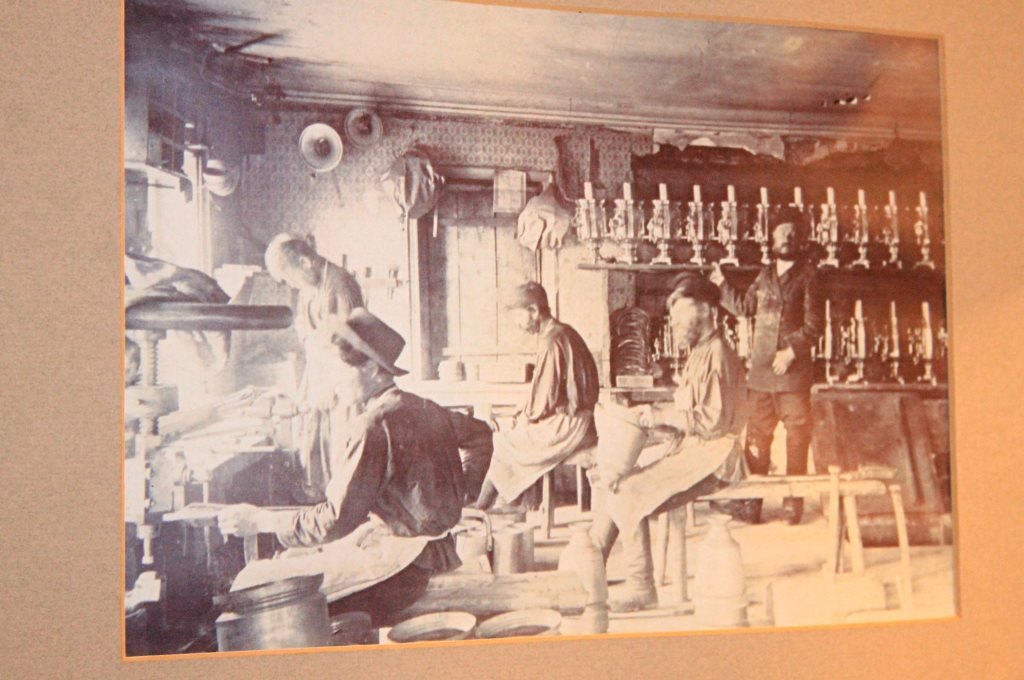
Work in a samovar craft workshop, an old print displayed at the Suksun local history museum. Photo Alexey Merkulov, Business Class (Perm), 28 July 2016.
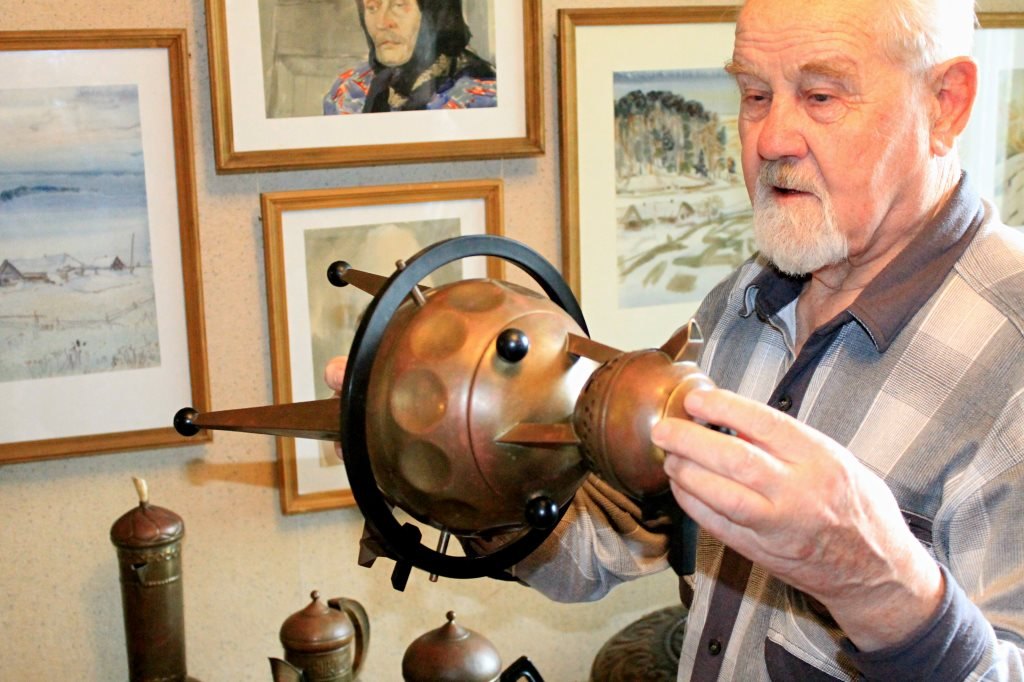
Konstantin Sobakin at home in Suksun, in 2016, holding a Sputnik samovar. Photo Alexey Merkulov, Business Class (Perm), 28 July 2016.
The design is by Konstantin Sobakin, born in Suksun in 1929, a painter and member of the Union of Artists who chaired its Perm branch from 1969 to 1972. He worked at the factory’s request without being on its payroll. According to the label of the Zimmerli Art Museum in the United States, he was inspired by the first flights of Soviet cosmonauts and made the samovar look like the first satellite. He settled in Suksun in the 1980s.
The timeline comes from Natalya Tokareva: the idea goes back to the 1960s, the drawing was finished in 1974, the factory’s technical department completed the plans and production began in 1976. Exhibitions often date the object to “the 1960s”, which fits the idea rather than the production. Our four samovars date from 1976, 1977 and 1978.
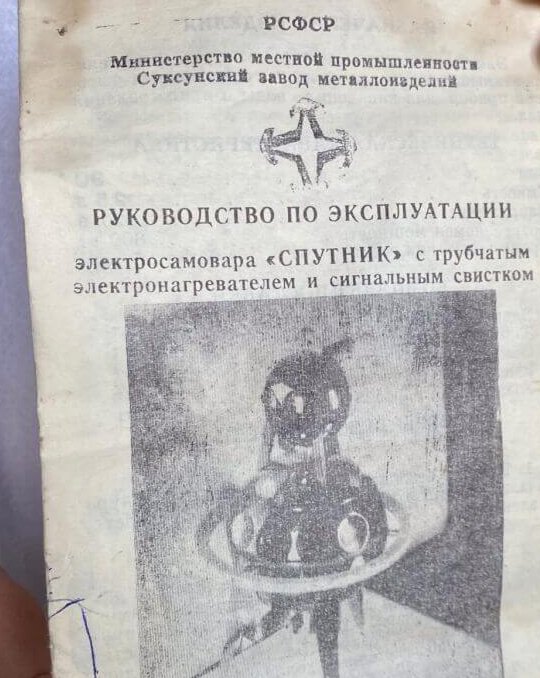
The cover of the user manual: RSFSR Ministry of Local Industry, Suksun metalware factory.
Production did not last. The factory received its orders from Росхозторг (Roskhoztorg), the state wholesale body for household goods. Natalya Tokareva also reports that the legs came off in transit. She describes them as soldered with tin, but on our samovars they are screwed on: each black ball turns a long screw that fixes the leg to the globe. She knows neither how many were made nor when production stopped. Her article quotes a price of 17 roubles, described as very high. The passport and the rings of our samovars say 30 roubles, a little over one sixth of the average monthly wage, which was 168.9 roubles in 1980. The same share of today’s average French salary comes to about €640.
Our 1978 samovar still has its manual, the “Руководство по эксплуатации” (Rukovodstvo po ekspluatatsii), which describes the object in a few lines. The body is a sphere of nickel-plated brass. It stands on three brass legs ending in spherical plastic feet. At the equator, a plastic ring held by pins “serves as handles for carrying the samovar”. That is its job according to the factory, and it is also what gives the samovar its ringed-planet look: Saturn in our listings, the Earth’s orbit according to the Zimmerli label. The heating element is mounted in the bottom, with its contacts for the cord. On the lid, three legs shaped as three-sided columns, which continue those of the body, carry a brass half-sphere cup: this is the конфорка, where the brewing teapot sits, and the teapot is a sphere too.
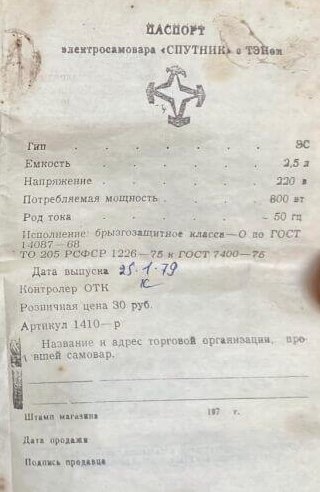
The passport: type ЭС, 2.5 litres, 220 volts, 800 watts, released on 25.1.79, retail price 30 roubles.
The passport printed on the back gives the specifications: type ЭС (ES), 2.5 litres, 220 volts, 800 watts, 50 hertz alternating current, water on the boil within 25 minutes. On the line “Дата выпуска” (data vypuska, date of release), a quality inspector wrote “25.1.79” in blue ink and initialled it. The set included the samovar, the teapot, the cord, the manual and a cardboard box, with an 18-month guarantee.
The lid of the 1976 samovar: top left, the small hole near the edge.
The title of the manual announces a samovar “с трубчатым электронагревателем и сигнальным свистком” (s trubchatym elektronagrevatelem i signalnym svistkom), with a tubular heating element and a signal whistle. The pages do not say where it is: it is the small hole in the lid, near the edge.
The manual gives its instructions. Plug the cord into the samovar first, then into the wall socket. Never switch the samovar on without water, or empty it completely while it is plugged in, “so as not to unsolder the samovar” or burn out the element. Before first use, remove the protective grease with a swab soaked in petrol, then polish with tooth powder. Descale the element by boiling five tablespoons of vinegar essence in 2.5 litres of water, then rinse. A burnt-out element can be replaced, but only in a repair workshop. These instructions date from 1979: an electrical appliance of that age should be checked by a professional before it is plugged in.
The story of a samovar made from a Sputnik
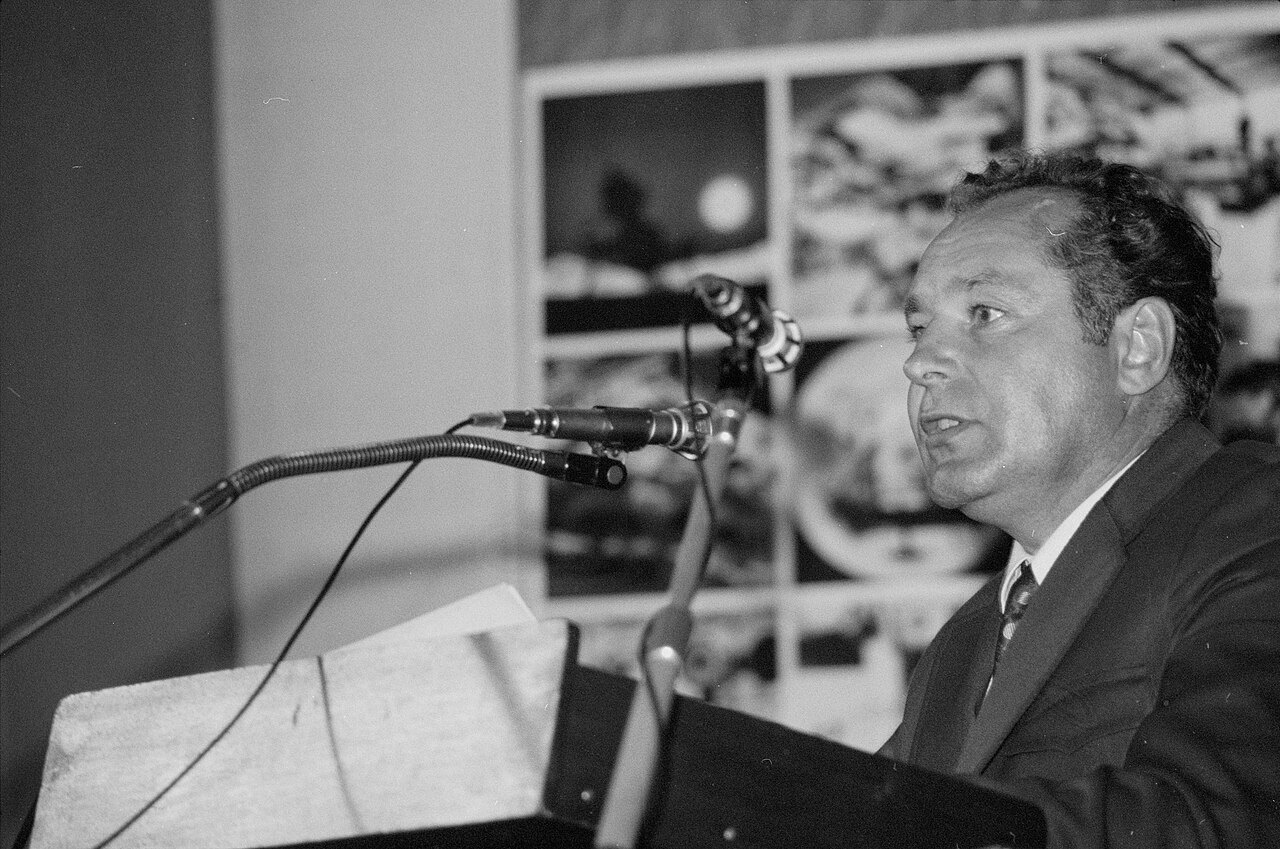
Another story goes round, and it should be read as a story, not as established fact. On 3 October 2012 the Moscow daily Moskovsky Komsomolets published the recollection of a retired colonel, Alexander Mitenkov. In the early 1980s, after a meeting at the military space directorate, ГУКОС (GUKOS), he had lunch in the canteen. The cosmonaut Gherman Titov, then first deputy head of the directorate, is said to have told him that the tea samovar was made from the backup unit of the first Sputnik: antennas and instruments removed, the sphere was reportedly fitted in Tula with legs, a crown, a tap and two handles. No document or photo backs it up, and the narrator says he does not know what became of it. That samovar, if it existed, has nothing to do with the Suksun model.
Gherman Titov at the lectern, at the opening of the Soviet space exhibition at the Swiss Museum of Transport, Lucerne, 3 July 1974. Photo Christof Sonderegger, ETH-Bibliothek Zürich, Bildarchiv, Wikimedia Commons, CC BY-SA 4.0.
Given to cosmonauts, shown in museums
The Sputnik was a gift. Business Class writes that it was presented to cosmonauts on their return from a flight, and the Zimmerli label that it was often given to foreign guests. A samovar from the Memorial Museum of Cosmonautics in Moscow was lent to the Science Museum in London for “Cosmonauts: Birth of the Space Age”, which ran until 13 March 2016. The Moscow Design Museum holds its own, shown in 2020 at the Zimmerli Art Museum in “Everyday Soviet”, and the museum of Krasnokamsk, in the Perm region, has another.
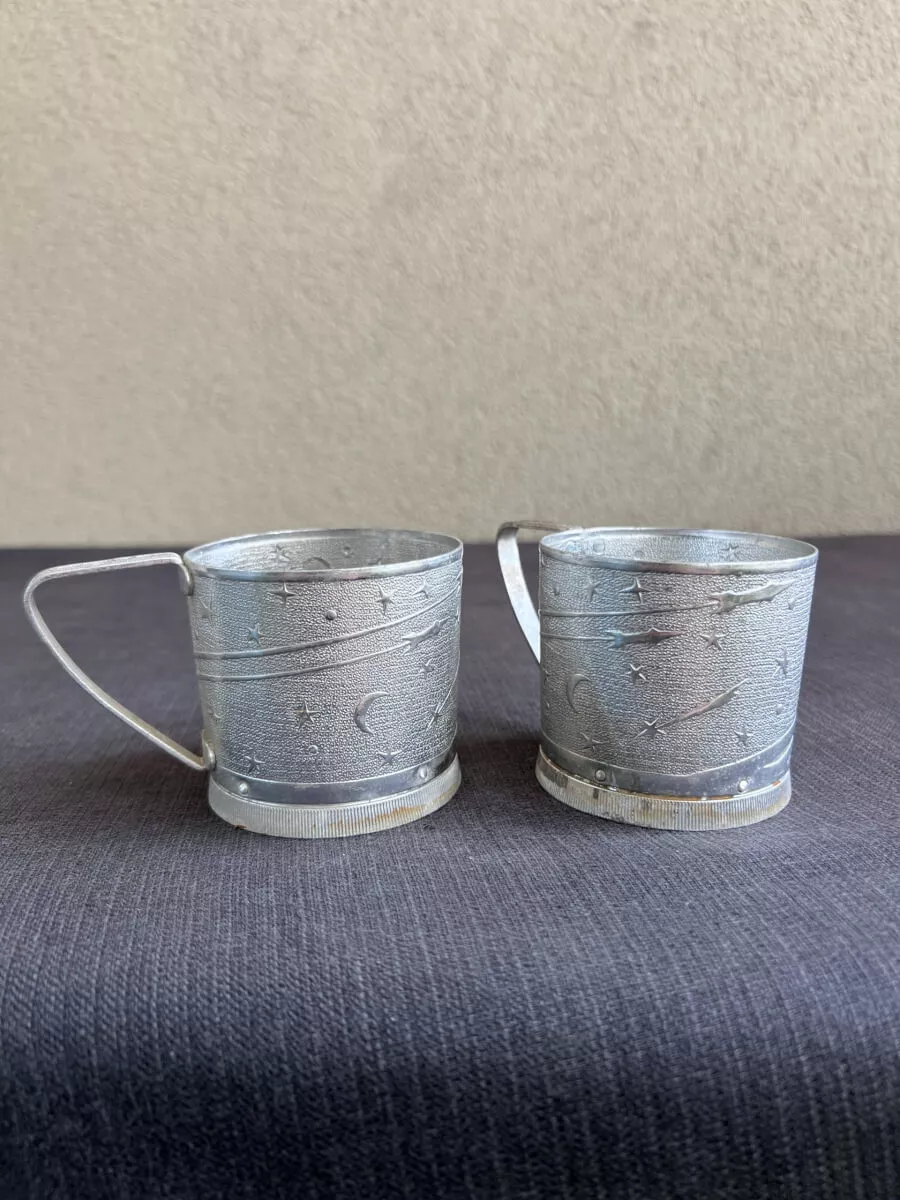
Pair of aluminium glass holders stamped with stars and rockets.
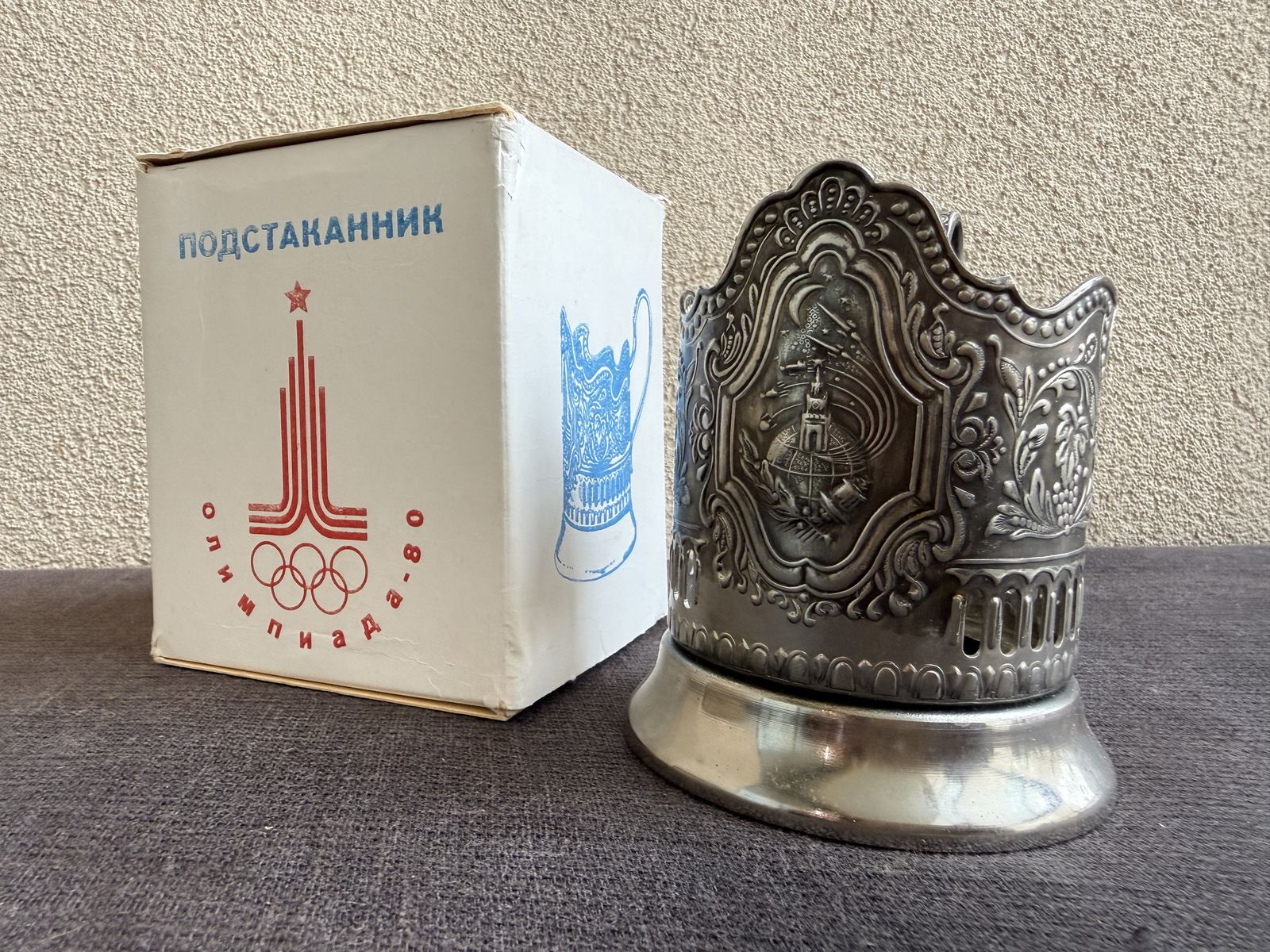
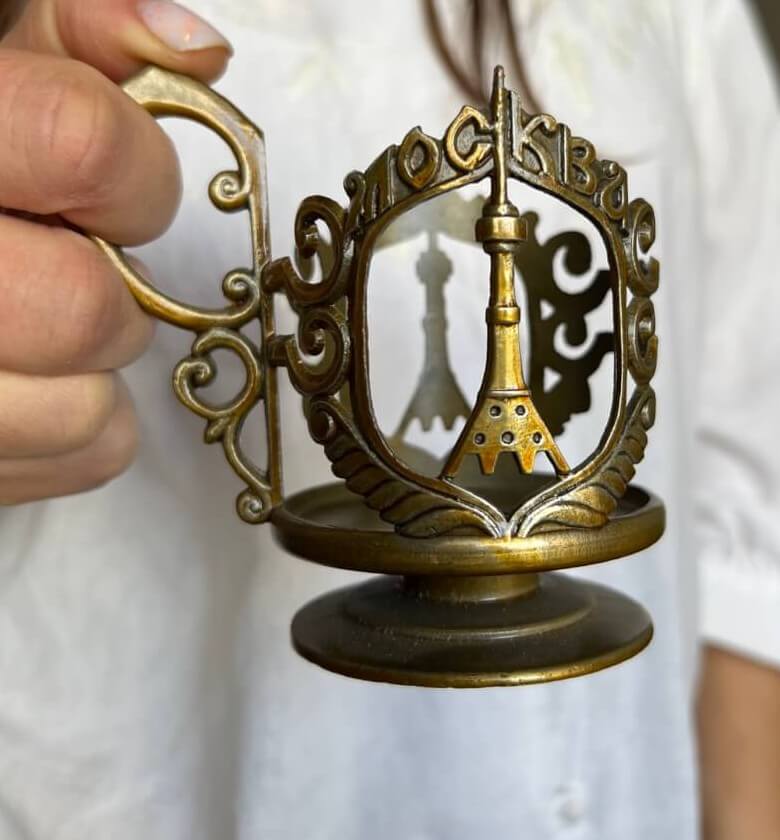
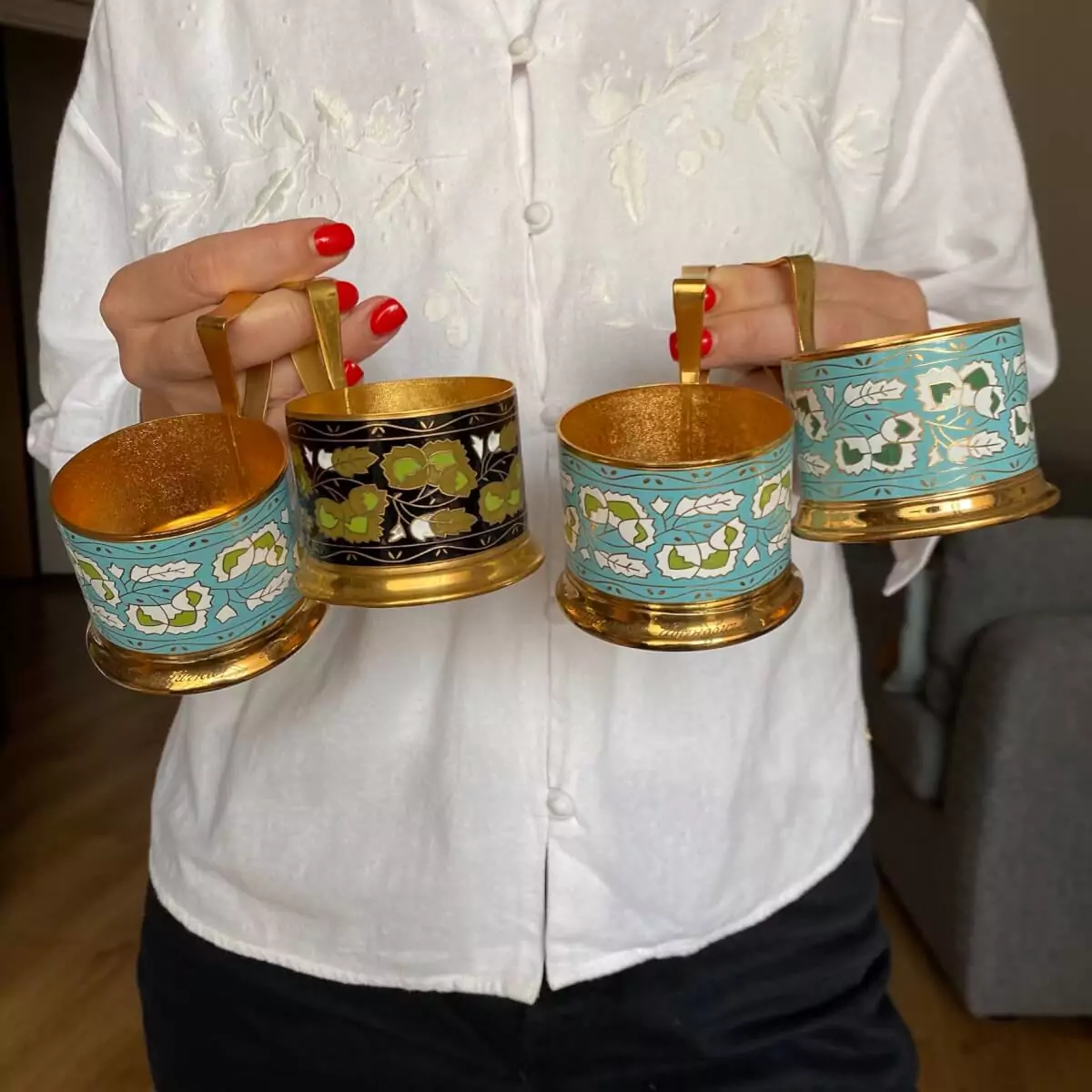
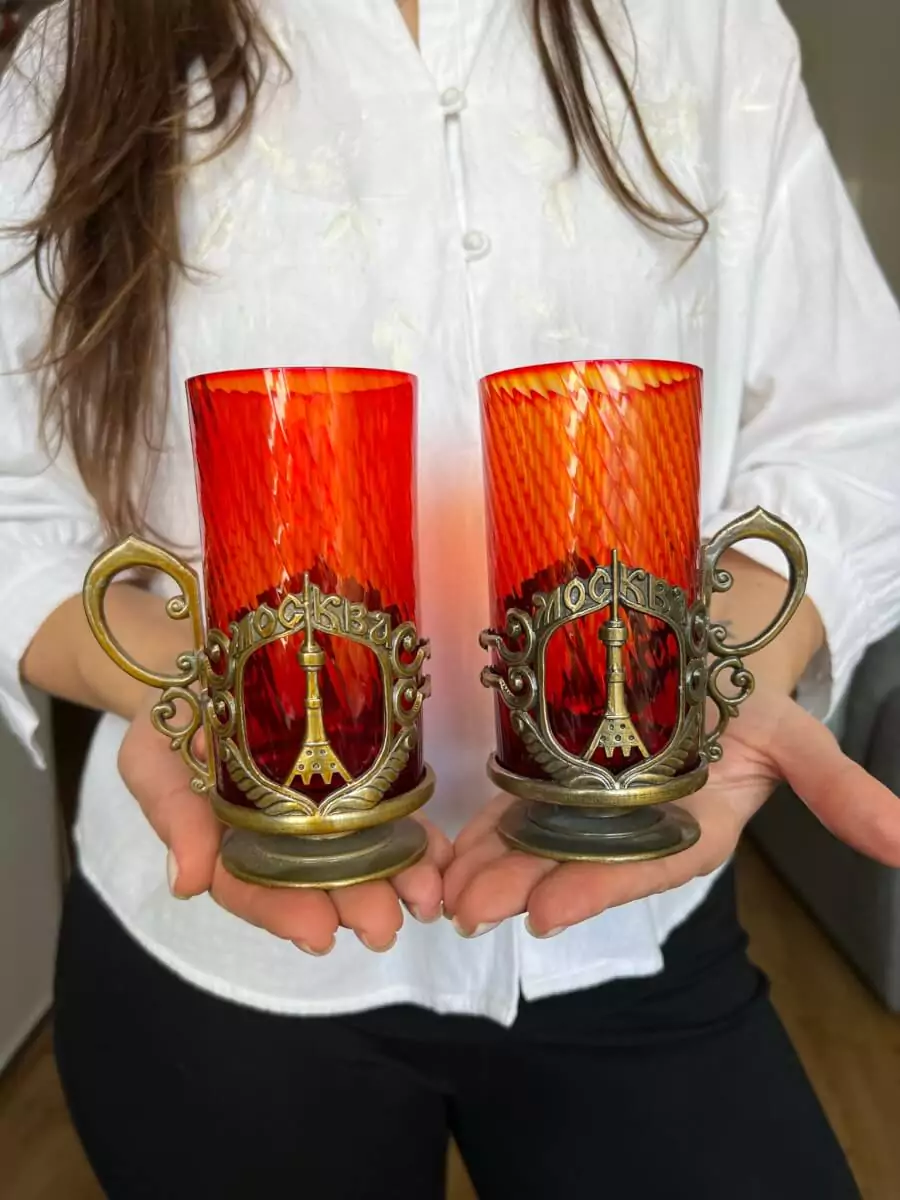
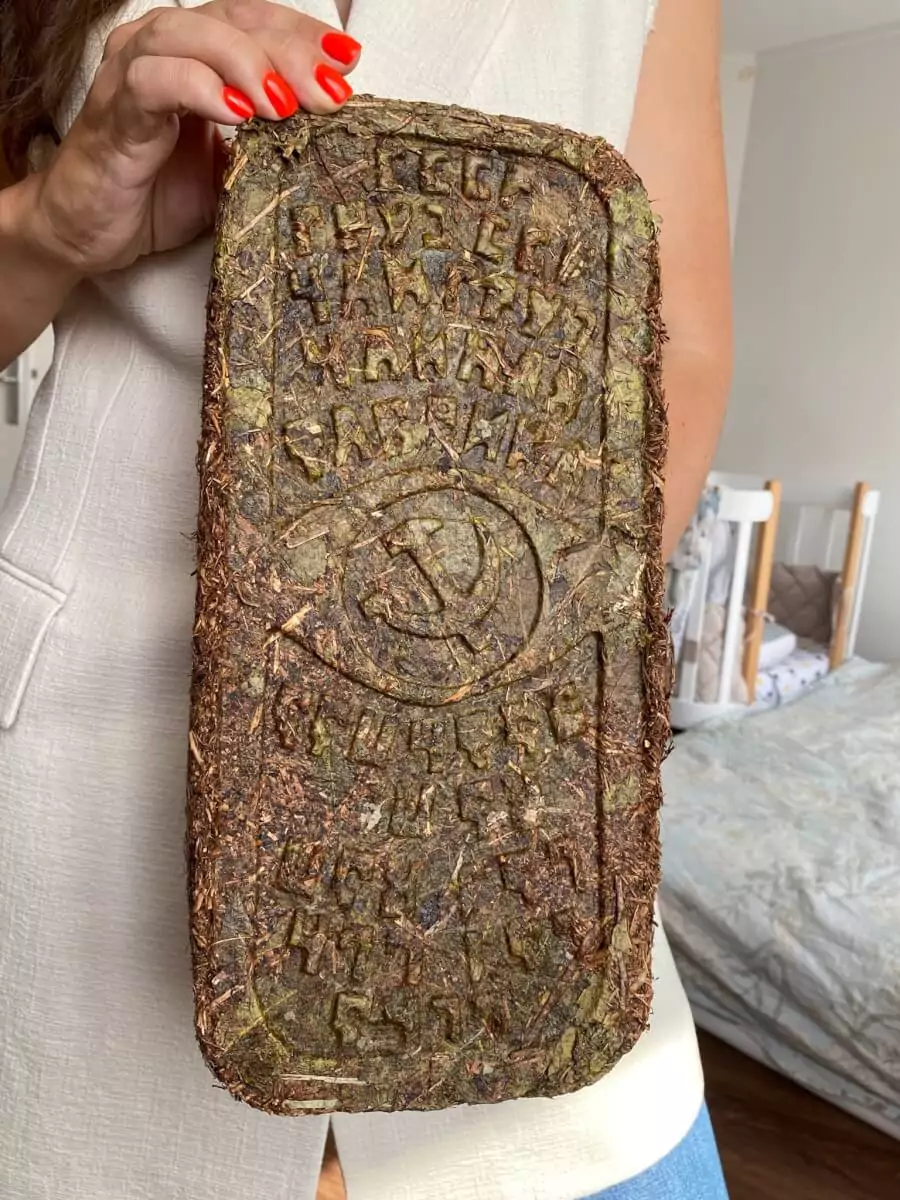
Tea was also drunk from a glass set in a metal holder, the подстаканник (podstakannik). Those in our shop range from a pair in aluminium stamped with rockets and stars, from the 1980s, to a Kolchugino holder decorated with the Spasskaya tower of the Kremlin, in its Moscow 1980 Olympics box, and a set of four cloisonné enamel holders from Leningrad. There is also a 1.8 kg brick of Georgian tea from the 1980s.
Kolchugino glass holder decorated with the Kremlin, with its Moscow 1980 Olympics box.
Moscow tea glass holder with the Ostankino tower, 1970s.
Before buying a Sputnik samovar
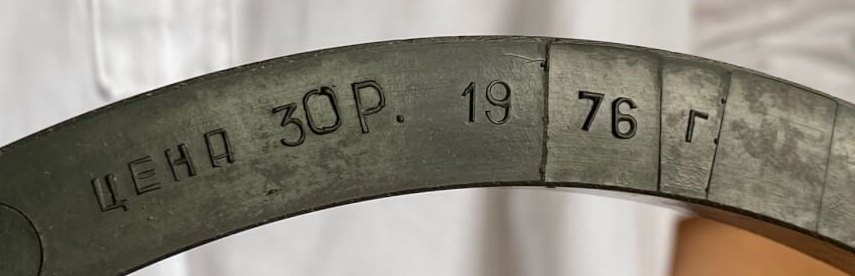
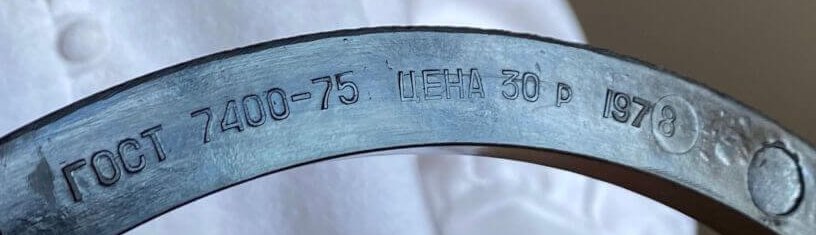
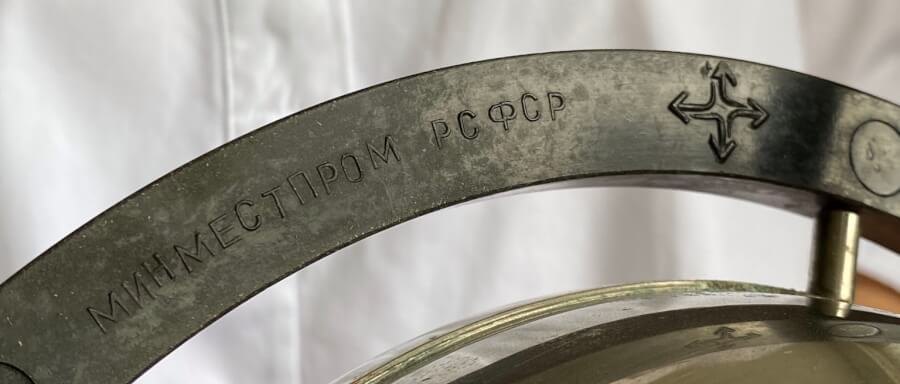
Read the ring. The markings moulded into the black ring are the first thing to check. On our 1976 samovar they read “МИНМЕСТПРОМ РСФСР” (Minmestprom RSFSR, RSFSR Ministry of Local Industry) followed by the factory logo, a four-pointed star whose arms end in arrows, then “Т.О. 205 РСФСР 1226-75” and “К ГОСТ 7400-75”, the technical specification and the standard, and “ЦЕНА 30 Р. 19 76 г.” (tsena, price). On those of 1977 and 1978, price and year follow the standard, “ГОСТ 7400-75 ЦЕНА 30 р 1978”, and another segment gives the type, capacity and voltage: “ЭС 2,5 Л ~ 220 В”. The logo is the one printed on the manual and the passport.
1976 ring: ЦЕНА 30 Р. 19 76 г., the last two digits in a cartouche.
1978 ring: ГОСТ 7400-75 ЦЕНА 30 р 1978, the 8 in a round insert.
On both rings the end of the year is moulded separately, in a cartouche in 1976 and in a round insert in 1978: most likely a mould insert that was changed every year.
МИНМЕСТПРОМ РСФСР and the Suksun factory logo, on the 1976 ring.
Compare the ring with the passport. The year on the ring is not necessarily the year the samovar left the factory: our unused samovar carries 1978 on its ring and a passport dated 25 January 1979. A samovar that still has its passport and manual is rare. The manual itself told buyers to ask the shop for a passport bearing the date of sale and the shop’s stamp.
Check the legs, the tap and the element. The legs should sit firmly, with no play. If they wobble, simply tighten them by turning the black balls that rest on the table. To avoid a leaking tap, the manual asks you to check that the numbers on the tap plug and on the tap match. A leak at the bottom after a change of element comes, it says, from particles caught under the sealing sleeves. Also check that the teapot, its lid and the cord are there.
Nickel and brass. The body is nickel-plated brass, and the storage rules in the manual mention the tin and nickel coatings, to be kept away from acid fumes. One of our 1977 samovars has a factory brass finish.
Copies and reissues. We found no reported copy or reissue of the Suksun Sputnik.
As with any collector’s piece, research thoroughly, compare several examples and rely on trusted collectors’ sites and buying guides.
The ДП-5В (DP-5V) is the field radiometer of Soviet civil defence: a green Bakelite console, a probe with a rotating gamma, beta and check-source shield, headphones and a manual that explains operation and maintenance. The one in this article served in an industrial bakery in Chișinău and was serviced in March 1991. Its owner shared his photos and documents with us, and we turned them into a tool that lets you operate it on screen, step by step.
The Moscow Games, from 19 July to 3 August 1980, boycotted by some sixty countries, produced more objects than any Soviet event: a bear cub, Misha, drawn by Viktor Chizhikov, an emblem made of running tracks, five thousand torches, watches from every factory, platinum coins, rings, tea glass holders, posters. This guide tells the story of the Games and reviews the objects, with the marks that authenticate them and the prices.
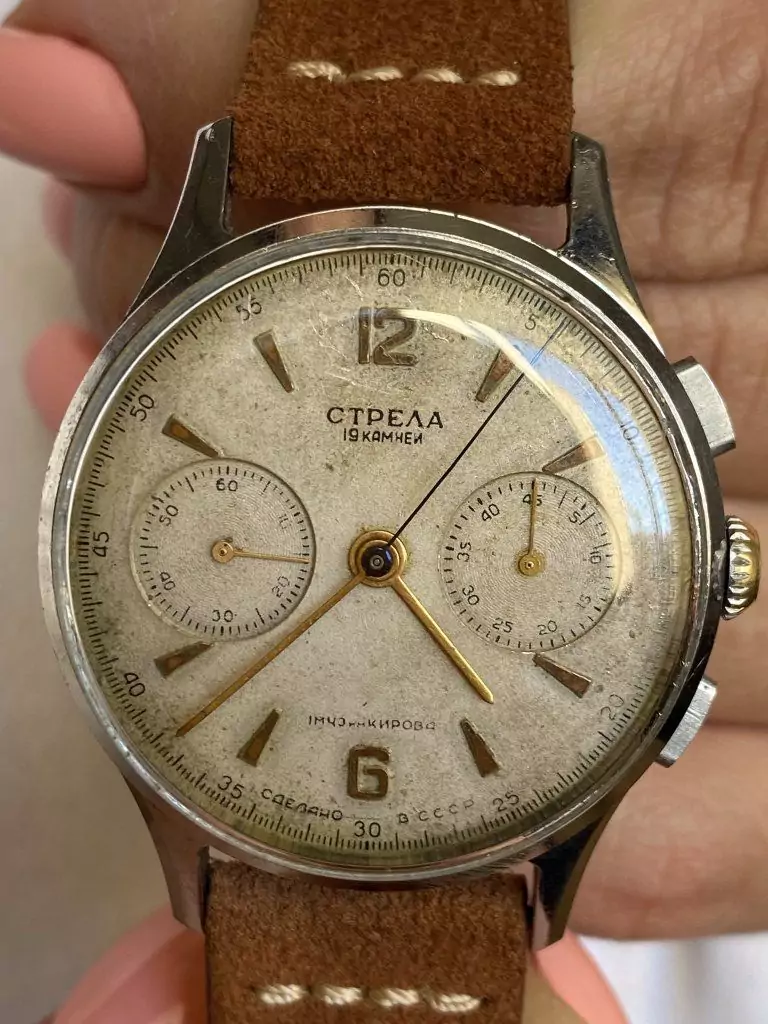
The 3017 chronograph of the First Moscow Watch Factory carries a five-digit number on the balance cock. The most common dating method reads it as a single series, from 1959 to 1979. Four factory passports show there are two, and that the same number can point to two watches made ten years apart. Here is how to read the number, the dial, the logo and the bridge, with a decoder to date your Strela, Poljot or Sekonda.
This website uses cookies to improve your experience while you navigate through the website.
Out of these cookies, the cookies that are categorised as necessary are stored on your browser as they are essential for the working of basic functionalities of the website.
We also use third-party cookies that help us analyse and understand how you use this website.
These cookies will be stored in your browser only with your consent.
You also have the option to opt out of these cookies.
But opting out of some of these cookies may affect your browsing experience.
Necessary cookies are absolutely essential for the website to function properly. This category only includes cookies that ensure basic functionalities and security features of the website. These cookies do not store any personal information.
Cookies that are not strictly necessary for the website to work and that are used specifically to collect personal data through analytics, ads and other embedded content are called non-necessary cookies. User consent is required before these cookies run on the website.
✕
Soviet in Paris
Offline right now. Leave your message and your email, we reply within 24 hours.
Hello 👋 A question about an item, an order or shipping? Write to us.
Your email is used only to reply to you.
Subscribe to our newsletter and get 10% off your first order.
Subscribe
★ New pieces before anyone else
★ New blog articles
★ Soviet in Paris news and updates
Join the Party
10% off your first order
Receive your welcome card and our next arrivals.
Your code appears here and is also sent to you by email. You can leave the Party in one click, at any time.