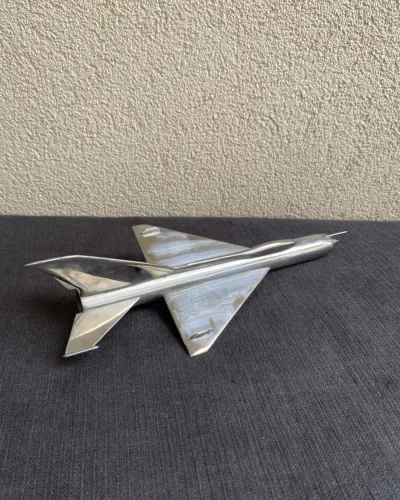
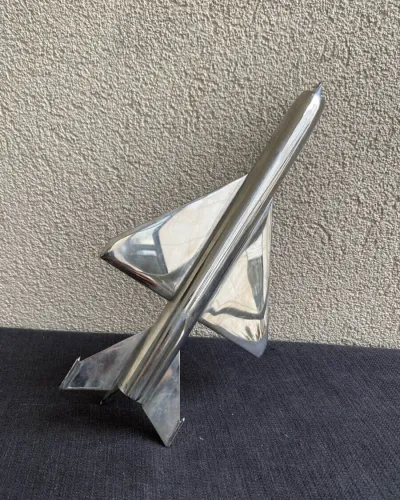
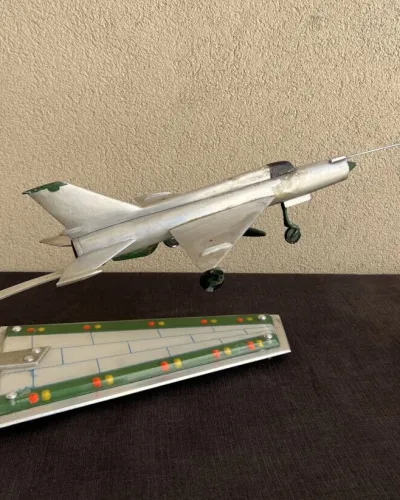
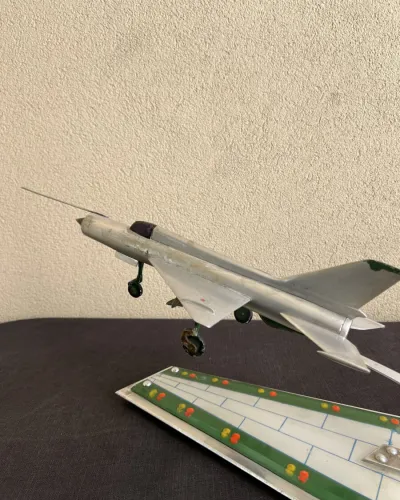
Yak-28P Aluminium Desk Model - Soviet Firebar Interceptor - USSR 1970s
$564.99Unique piece



Yak-28P Aluminium Desk Model - Soviet Firebar Interceptor - USSR 1970s
$564.99Unique piece
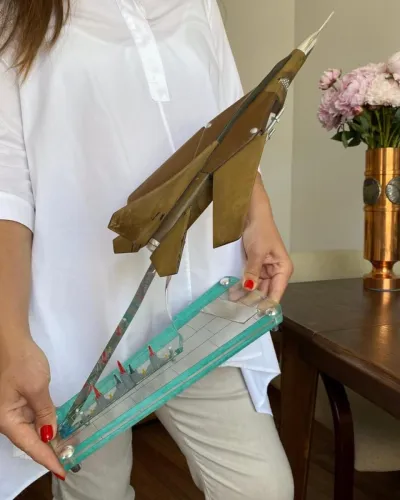
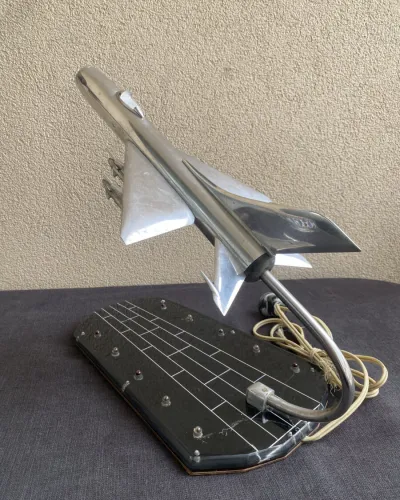
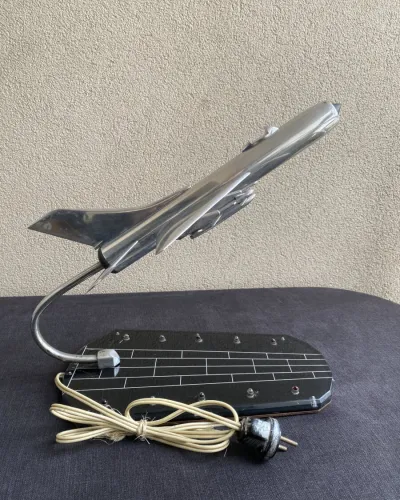
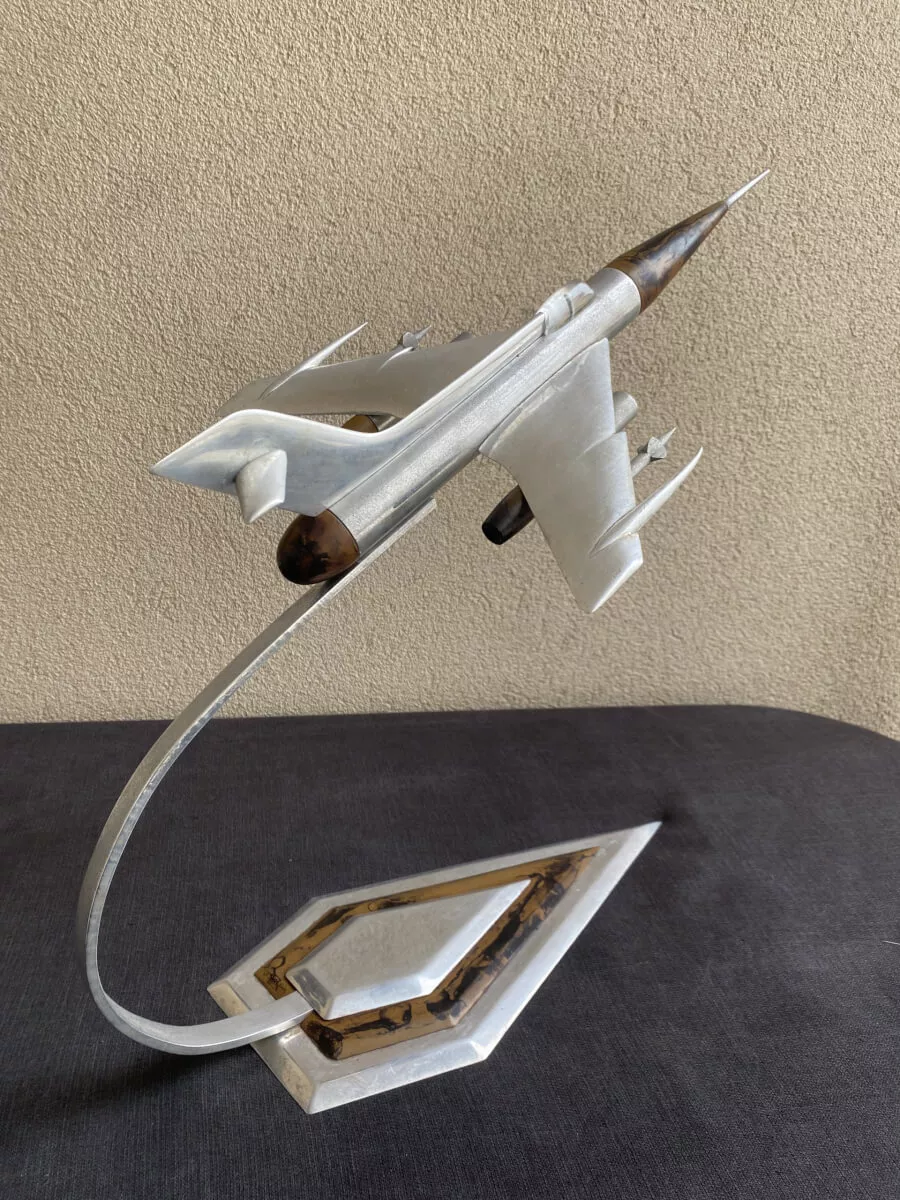
Soviet presentation model of the Yakovlev Yak-28 in its P interceptor version, in aluminium with a brown bakelite radome and details, carried by a curved blade on an arrowhead base. Presented to a pilot in the 1970s.
1 in stock
Message received, dear comrade.
Our information desk usually replies within 24 hours at the address provided.The Brezhnev era. Détente with the West, SALT treaties, the Apollo-Soyuz mission. Economic stagnation and growing corruption.
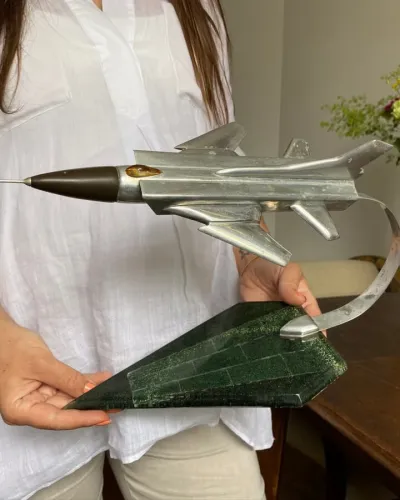
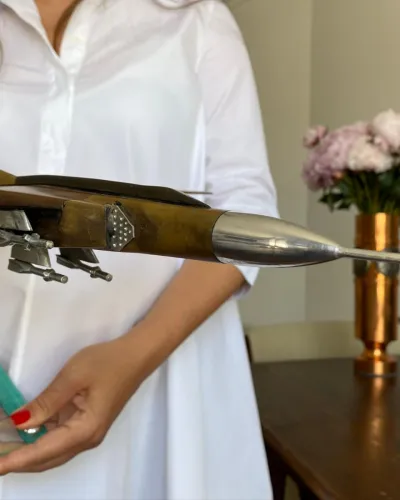
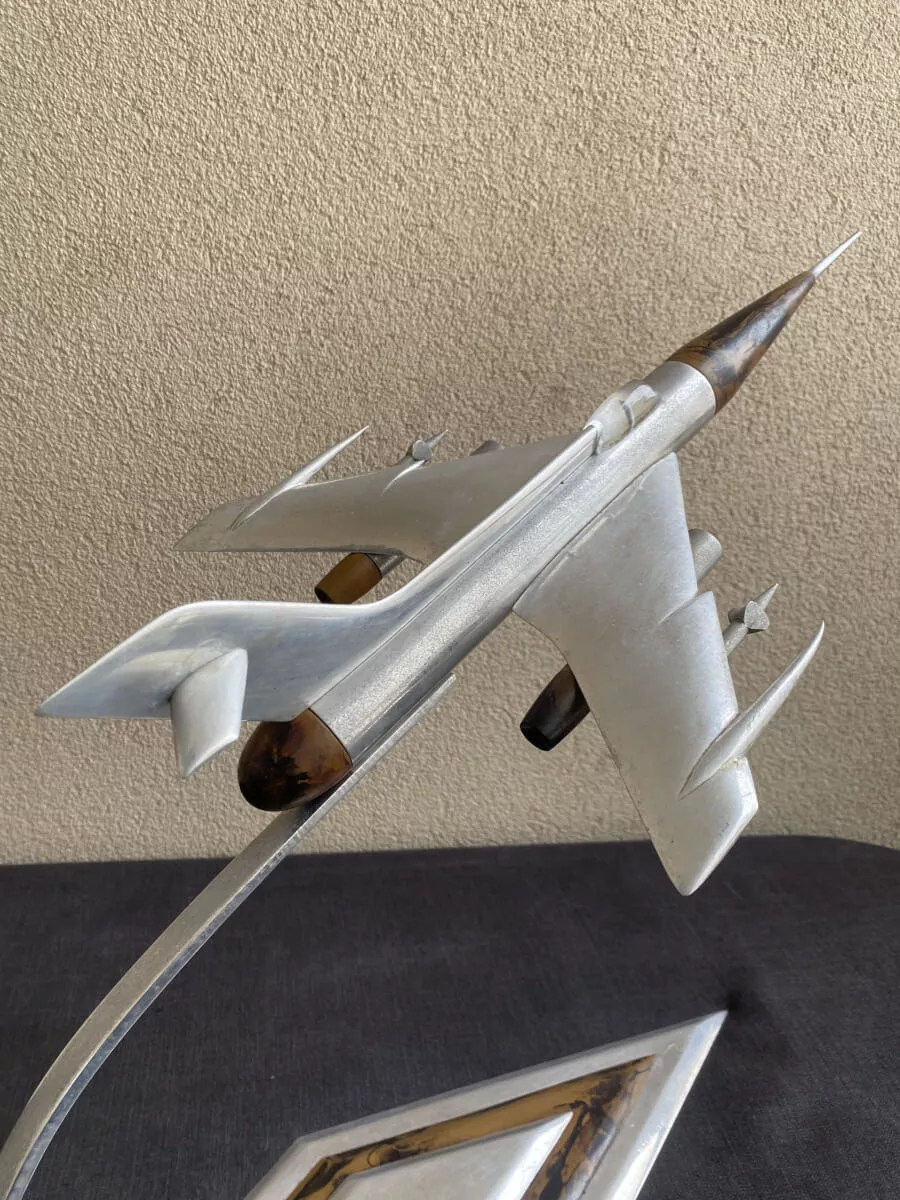
Presentation model of the Soviet Yakovlev Yak-28 combat aircraft, given to a Soviet pilot in the 1970s. The aircraft is shown climbing, carried by a curved aluminium blade rising from an arrowhead-shaped base. The Yak-28 silhouette is all there: swept wings, two engines in nacelles under the wings, tailplane set halfway up the fin, canopy at the front of the fuselage. The long conical radome ending in a probe and the two missiles under the wings match the Yak-28P interceptor version.
The airframe and the base are aluminium, with parts in marbled brown bakelite: the radome, the rear of the nacelles, the tail cone and the band inlaid in the base. Models of this kind, made one at a time or in very small numbers, were presented to pilots and officers for a retirement, a service anniversary or a promotion.
The Yak-28 first flew in 1958 and entered service in 1964. Designed as a tactical bomber, it was developed into reconnaissance, electronic warfare, trainer and interceptor versions. The Yak-28P, an interceptor armed with two R-98 missiles, was built in 435 examples up to 1967 and served with the air defence forces until the early 1980s. The last production aircraft received a longer, purely conical radome, as on this model. NATO called the interceptor Firebar and the bomber Brewer. In all, 1,180 Yak-28s of all versions were built.
Additional information
| Weight | 2.5 kg |
|---|---|
| Dimensions | 40 × 30 × 20 cm |