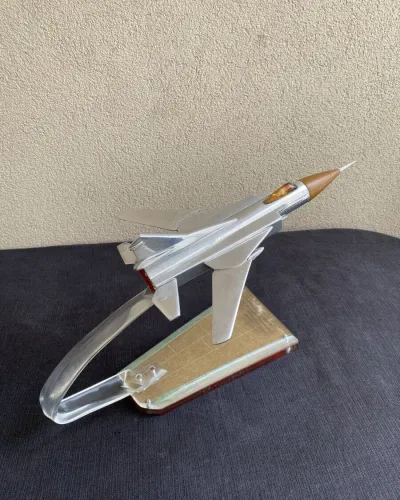
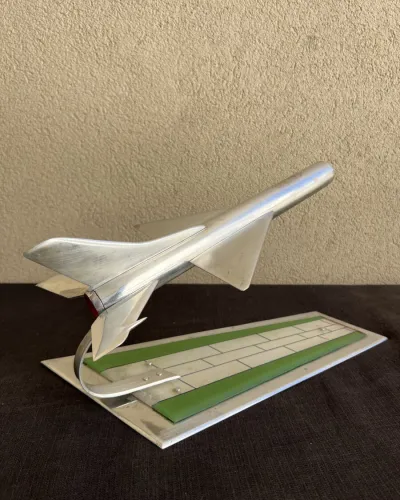
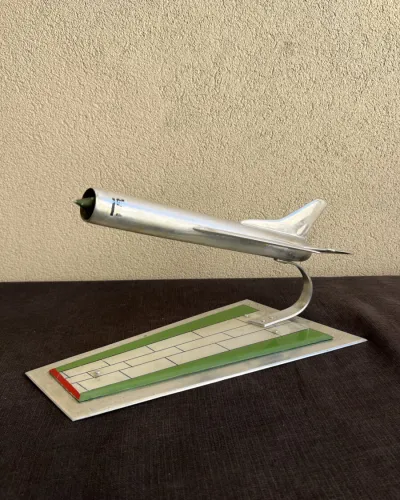
MiG-21 Aluminium Desk Model - Illuminated Runway Base - USSR
$518.99Unique piece

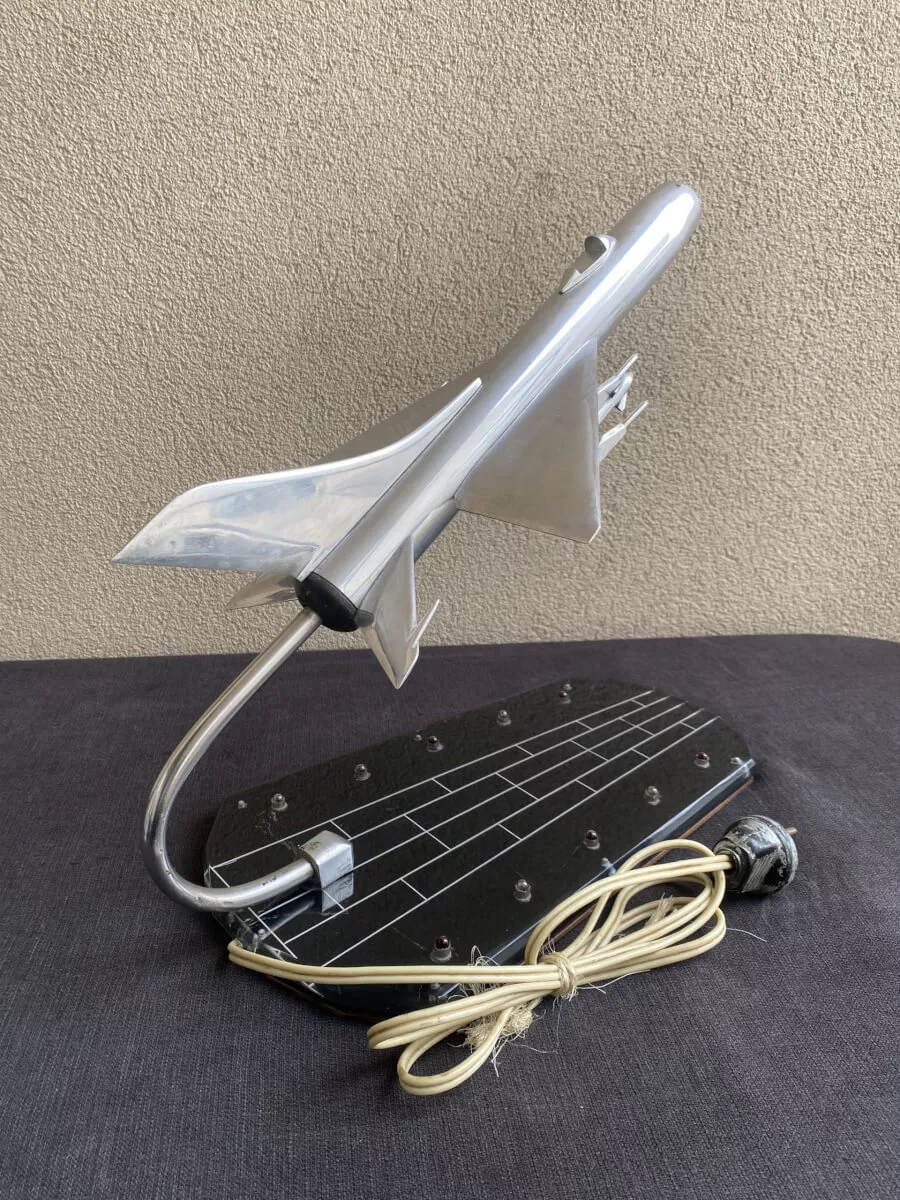


MiG-21 Aluminium Desk Model - Illuminated Runway Base - USSR
$518.99Unique piece
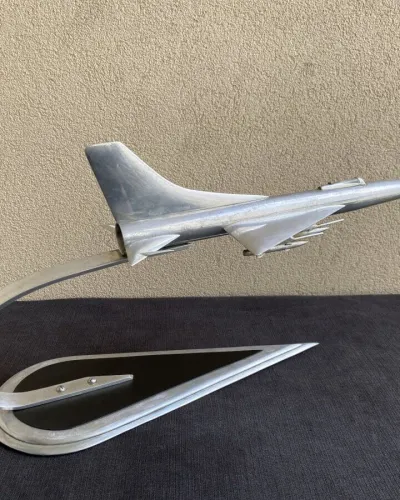
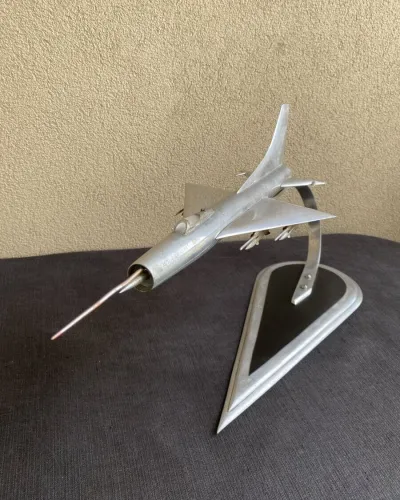
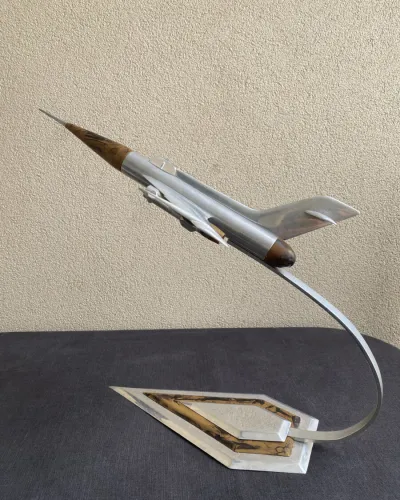
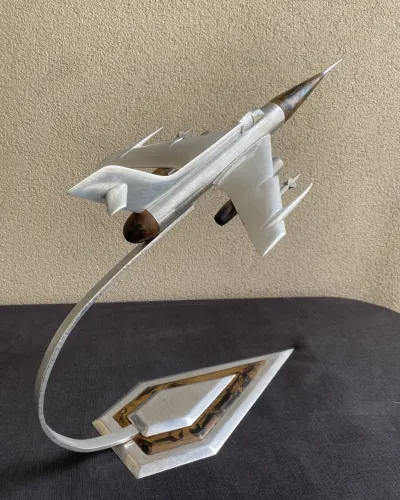
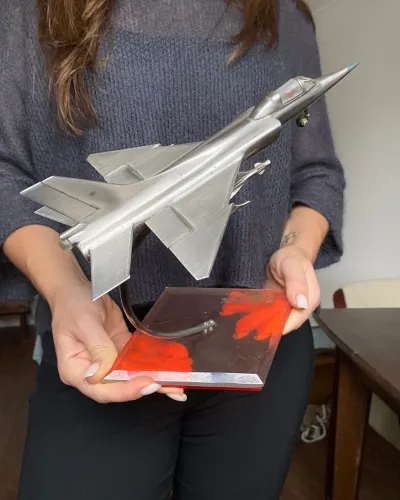
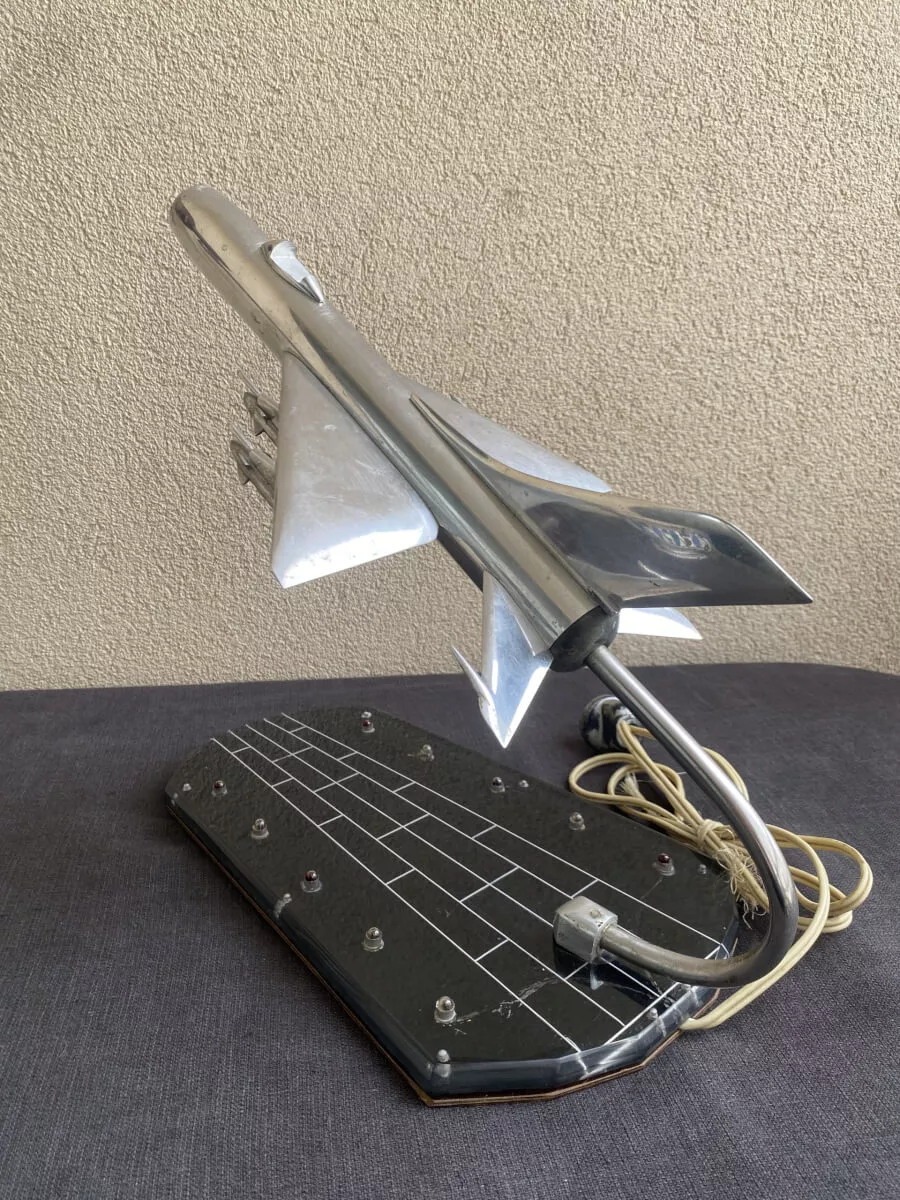
Soviet presentation model of the MiG-21 fighter in polished aluminium, armed with six missiles, mounted on a black plexiglass base shaped as a runway whose lights glow orange and red. Officer’s gift, 1970 to 1990.
1 in stock
Message received, dear comrade.
Our information desk usually replies within 24 hours at the address provided.Invasion of Afghanistan (1979), boycotted Moscow Olympics (1980). Gorbachev comes to power in 1985, launching Perestroika and Glasnost. Chernobyl in 1986.





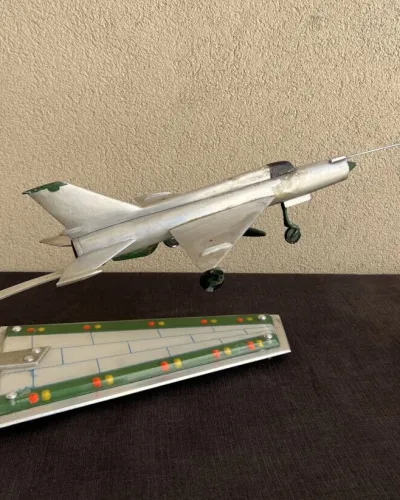
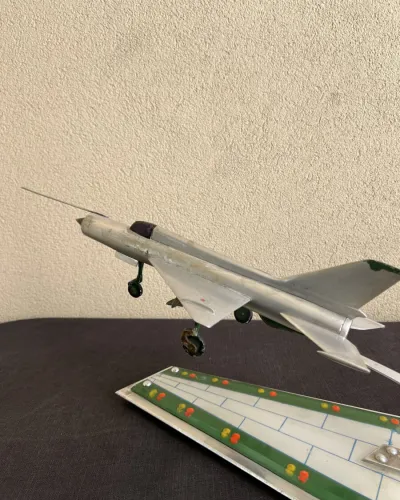
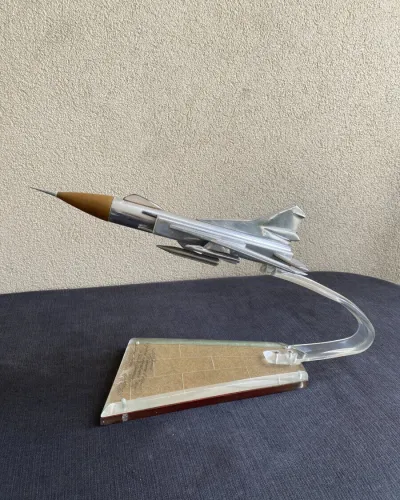
Presentation model of the Soviet MiG-21 fighter in polished aluminium, mounted on an illuminated base shaped as an airfield runway. The aircraft is shown climbing, held at the rear of the fuselage by a curved chrome tube. The features of the MiG-21 are all there: delta wing, nose air intake with its shock cone, teardrop canopy, swept fin, tailplanes and ventral fin. Six missiles hang under the wings and fuselage.
The black plexiglass base carries white lines drawing the runway slabs. It is edged with two rows of lamps that light up orange and red, like airfield runway lighting. The power cord ends in a Soviet two-pin plug. Materials: aluminium, bakelite, plexiglass.
This model was made by hand to be presented as a gift to a senior officer during the Soviet period, between 1970 and 1990. Models of this kind, made one at a time or in very small numbers, were given to officers and pilots for a retirement, a service anniversary or a promotion, and then took pride of place on a desk.
Designed by the Mikoyan-Gurevich design bureau, the MiG-21 first flew in 1955 and entered service with the Soviet air force in the late 1950s. Built in more than 10,000 examples in the USSR and under licence, it is the most produced supersonic combat aircraft in history and served in some sixty countries. Soviet pilots nicknamed it “Balalaika” because of the shape of its wing seen from above.
The runway lights on the base switch on and work perfectly.
Additional information
| Weight | 2.5 kg |
|---|---|
| Dimensions | 40 × 30 × 20 cm |