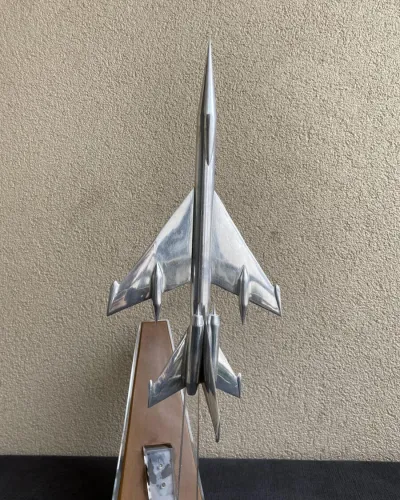
Soviet MiG-23 ML Desk Model - Swing Wings - USSR 1970s - Bakelite
$784.99Unique piece
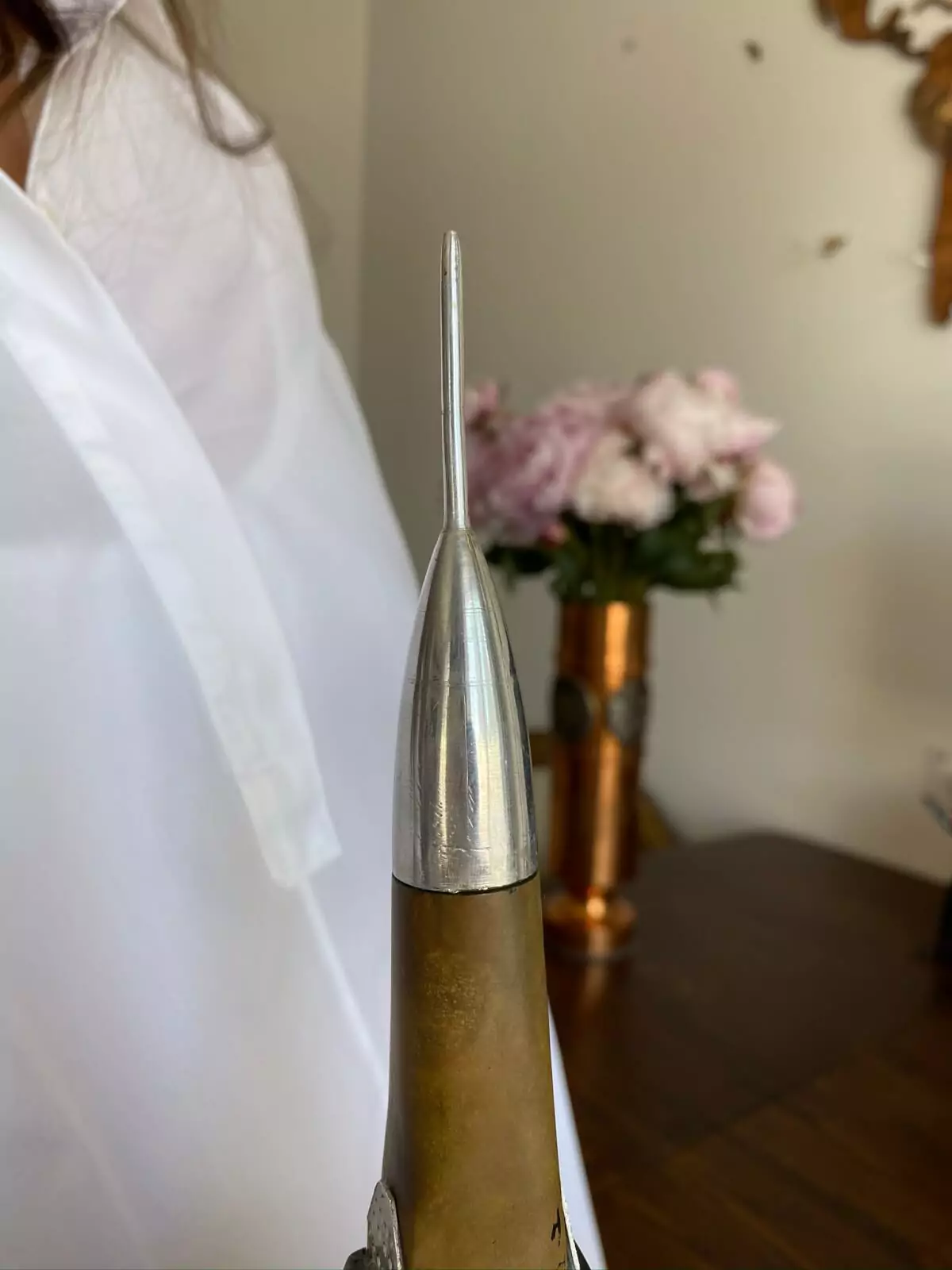
Soviet MiG-23 ML Desk Model - Swing Wings - USSR 1970s - Bakelite
$784.99Unique piece
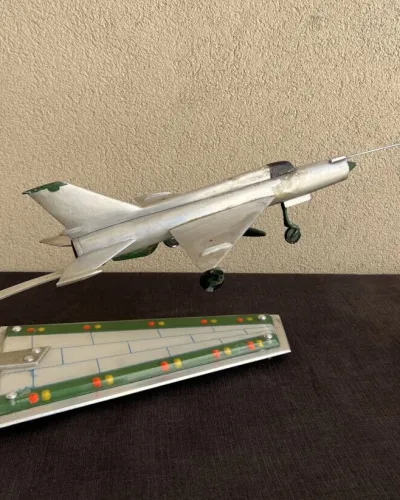
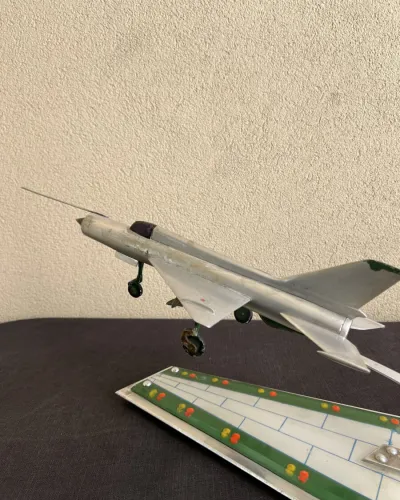
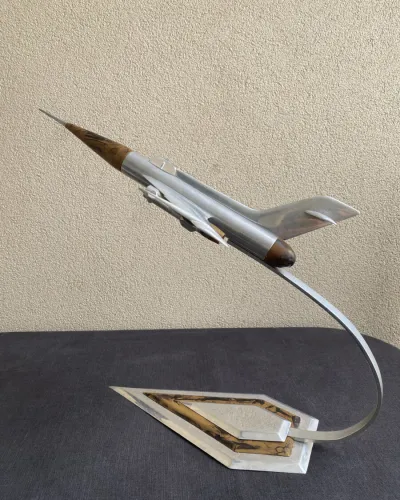
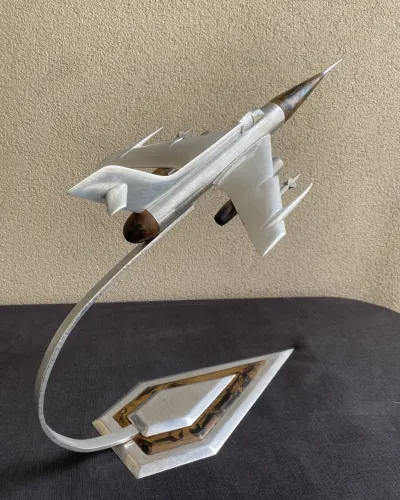
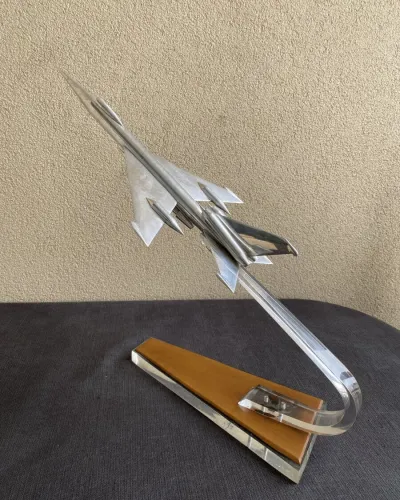
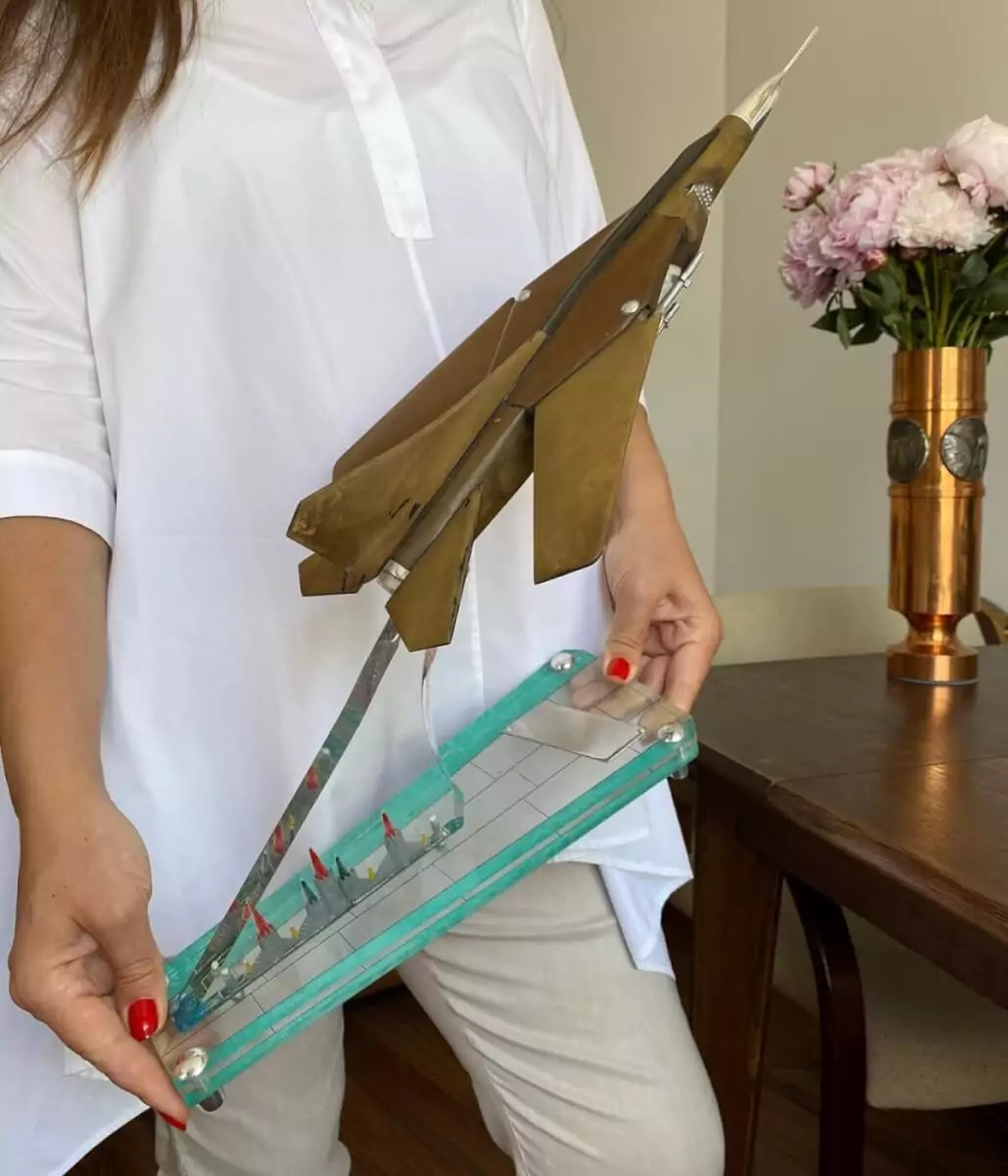
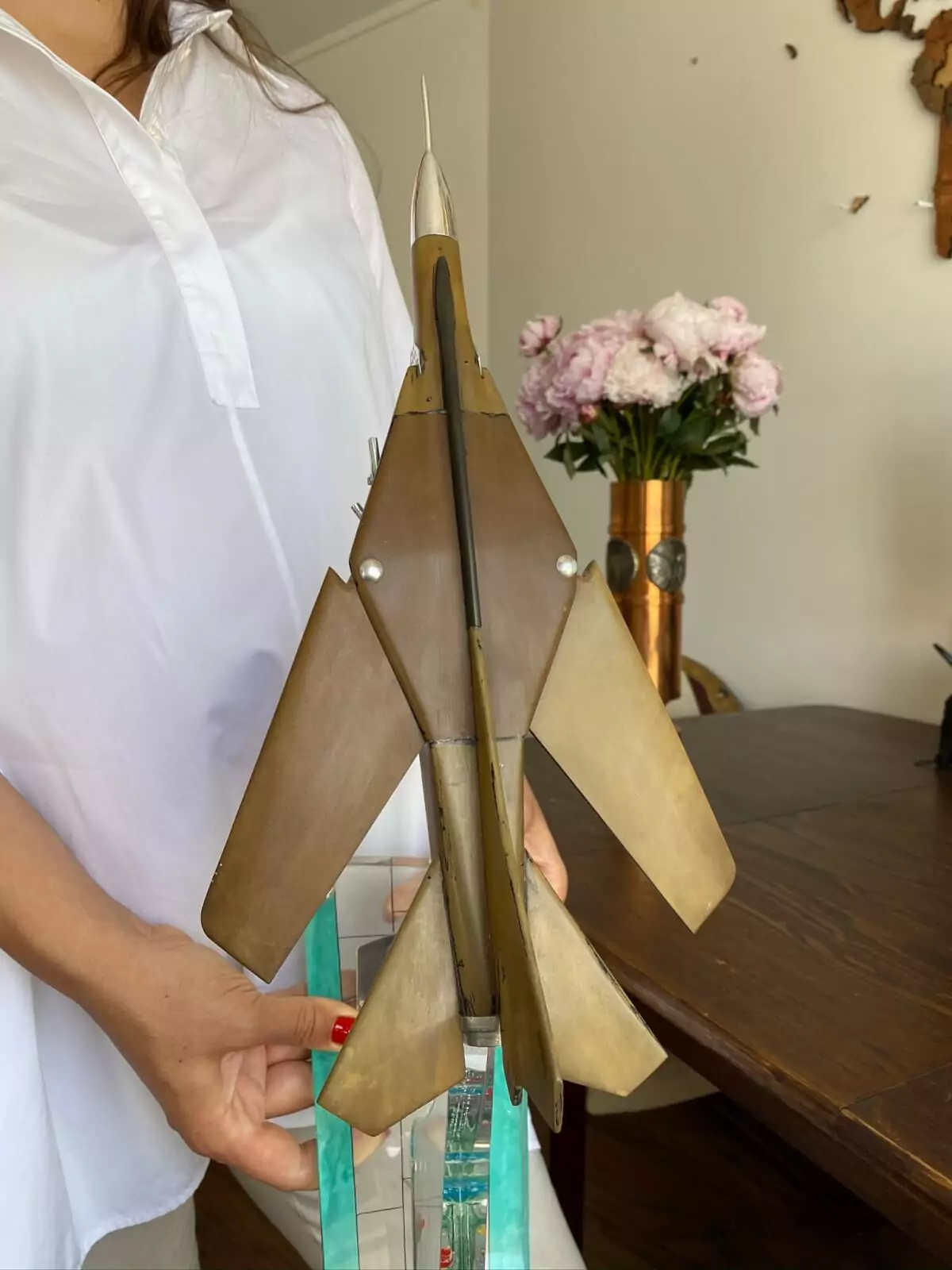
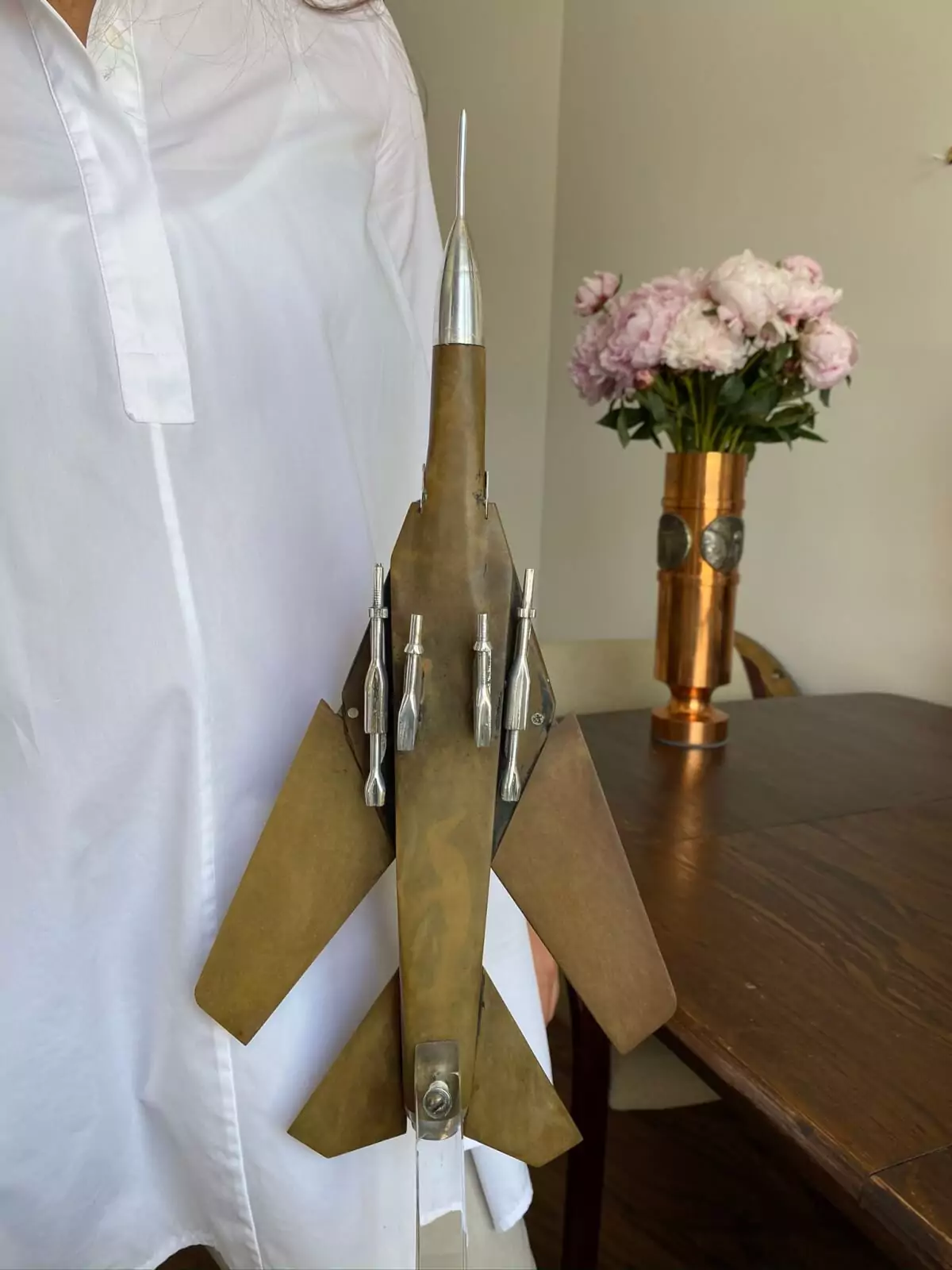
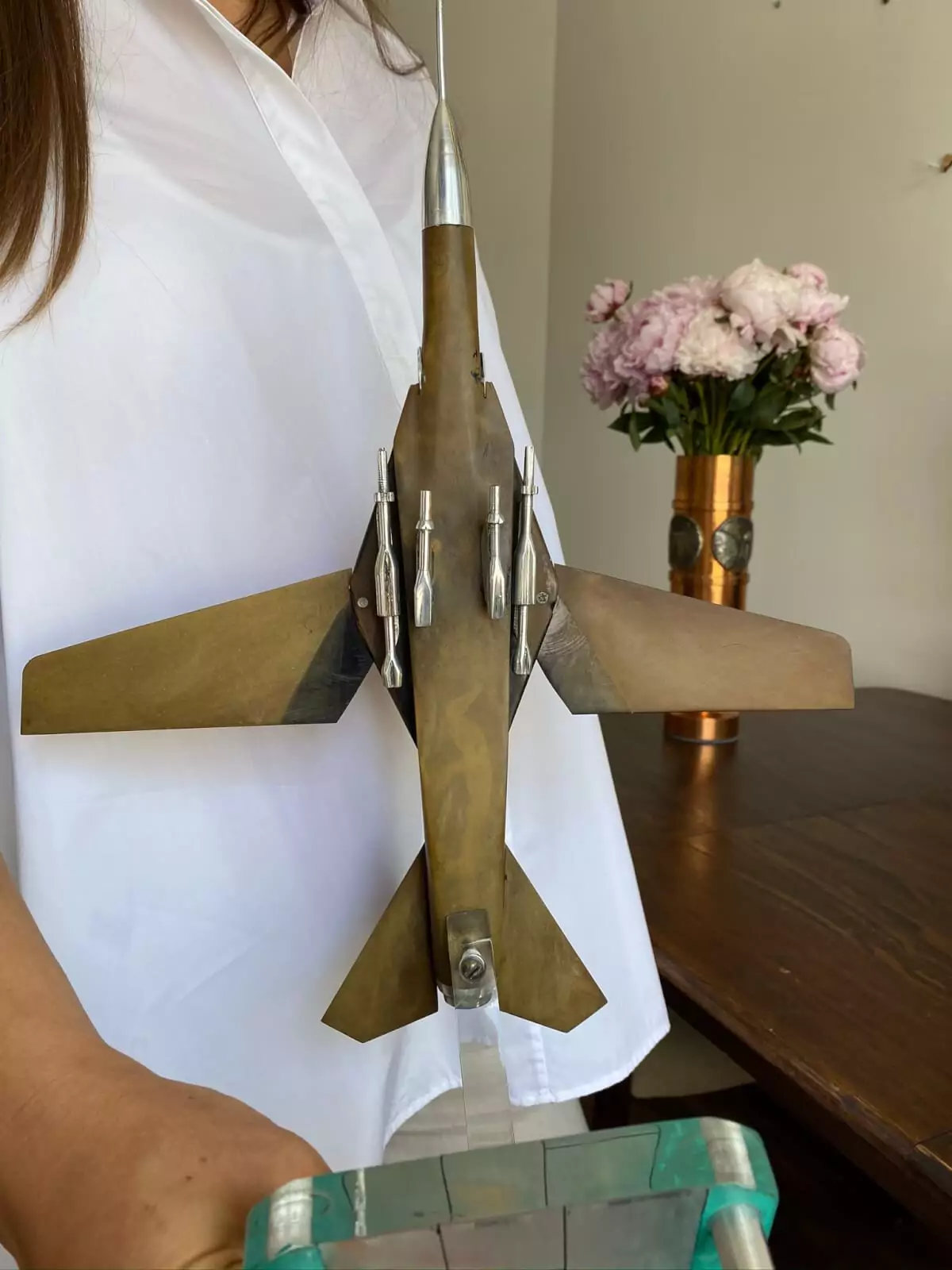
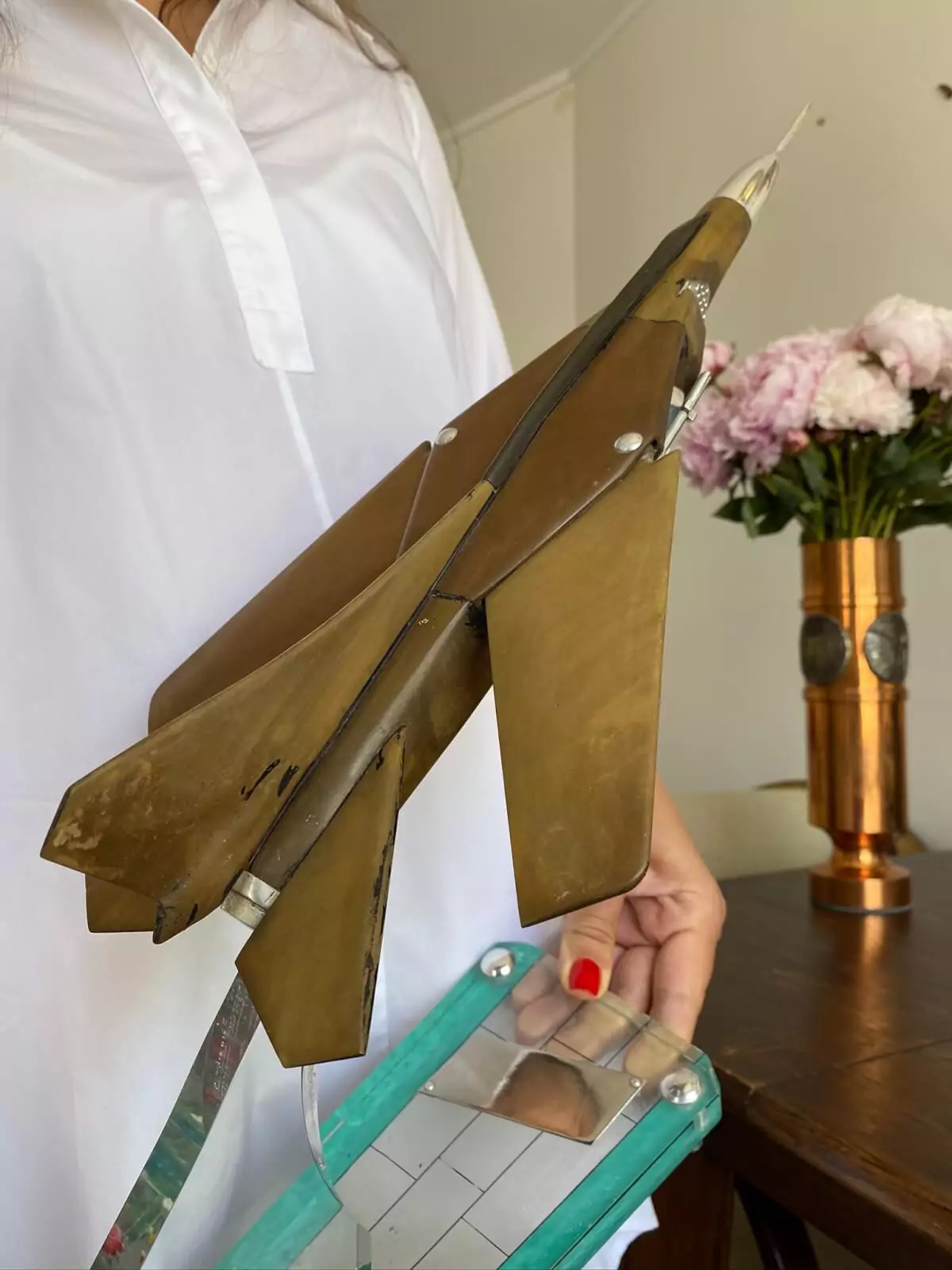
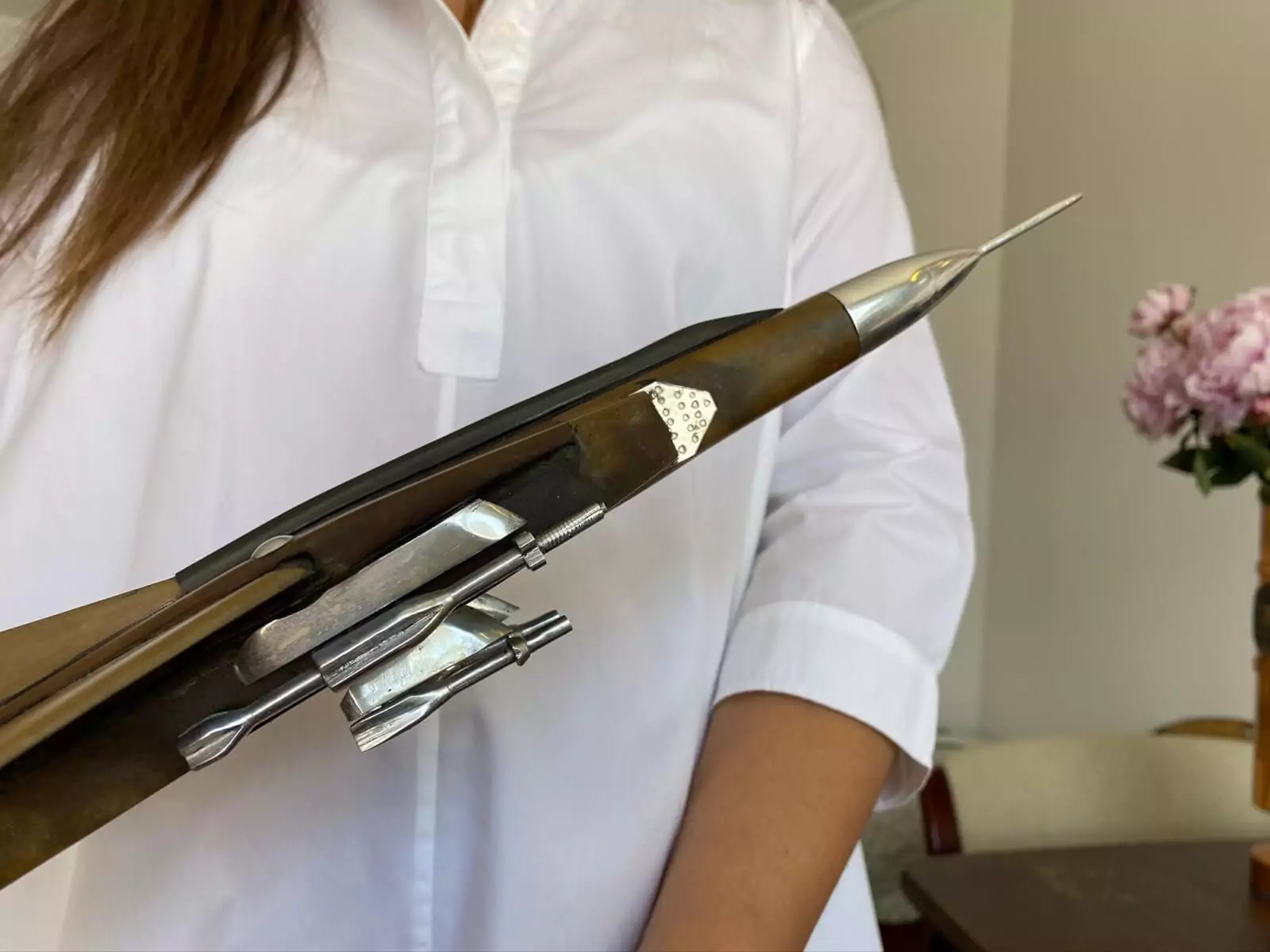
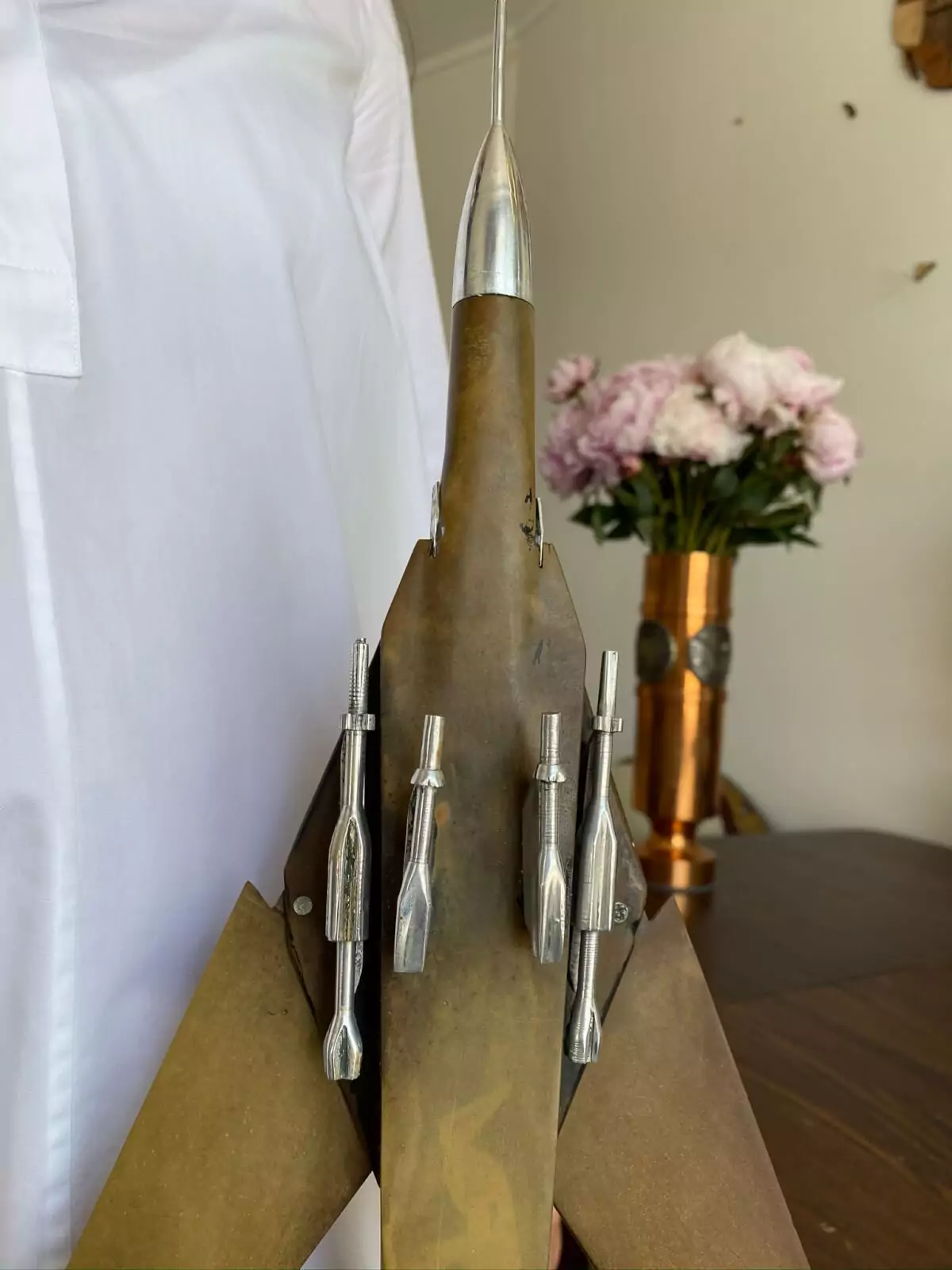
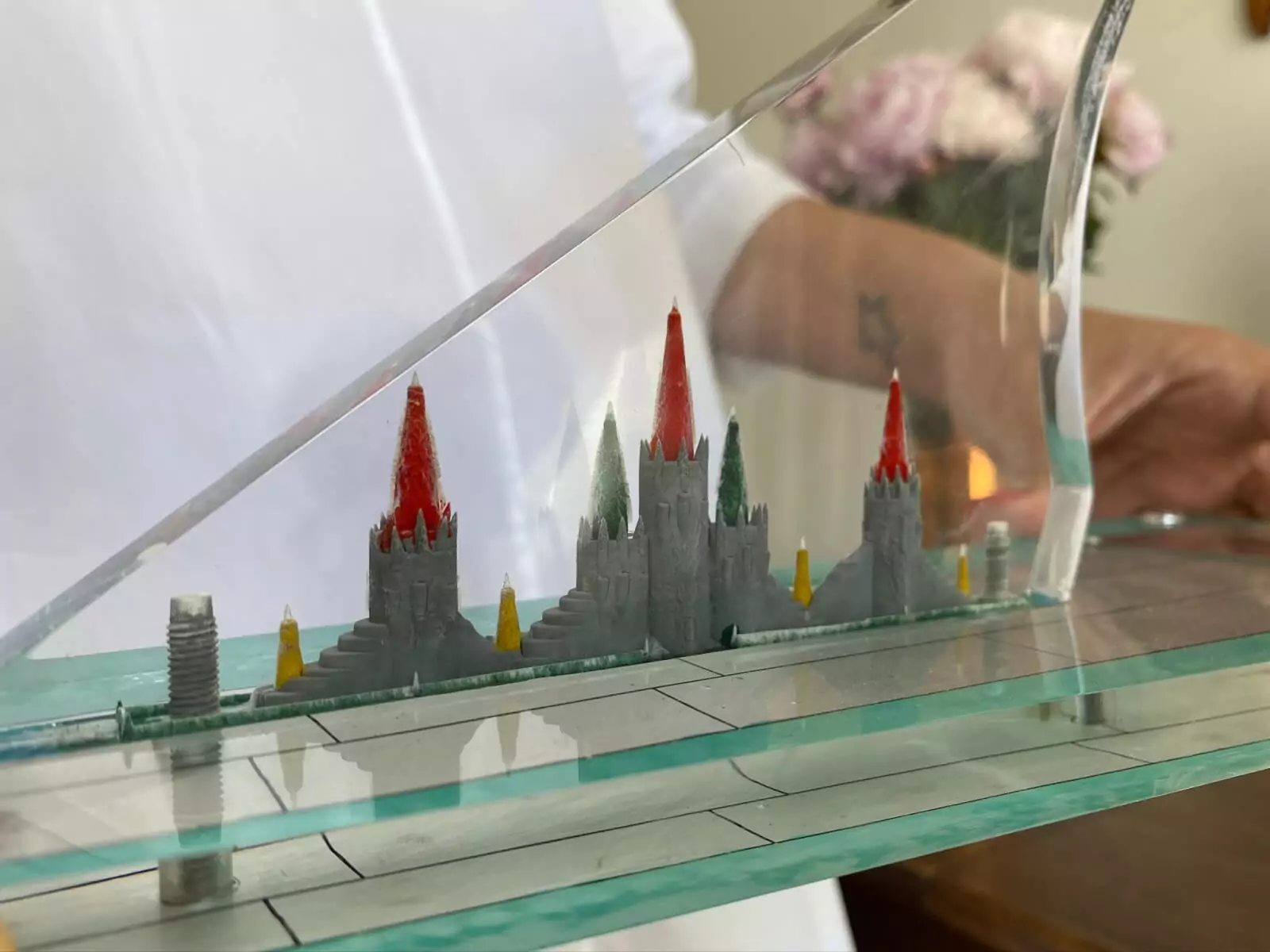
Soviet desk model of a MiG-23 ML fighter in bakelite and aluminium, with variable sweep wings and four missiles, mounted on a perspex stand representing the fortress of Brest-Litovsk.
1 in stock
Message received, dear comrade.
Our information desk usually replies within 24 hours at the address provided.The Brezhnev era. Détente with the West, SALT treaties, the Apollo-Soyuz mission. Economic stagnation and growing corruption.
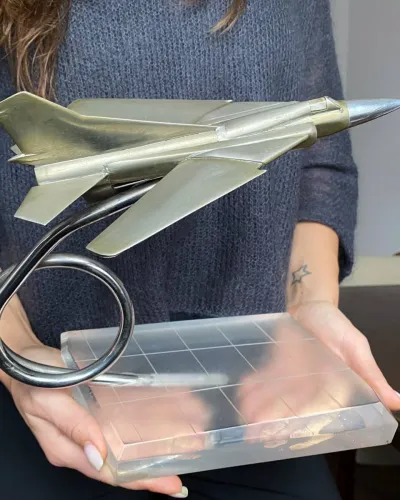
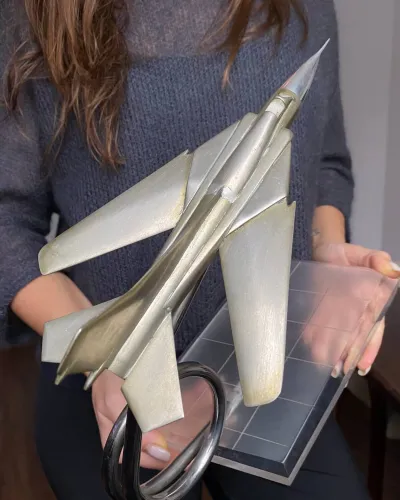
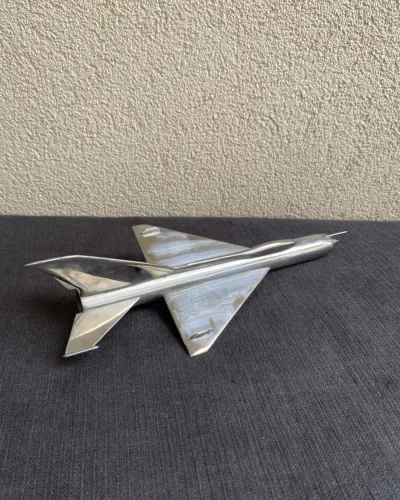
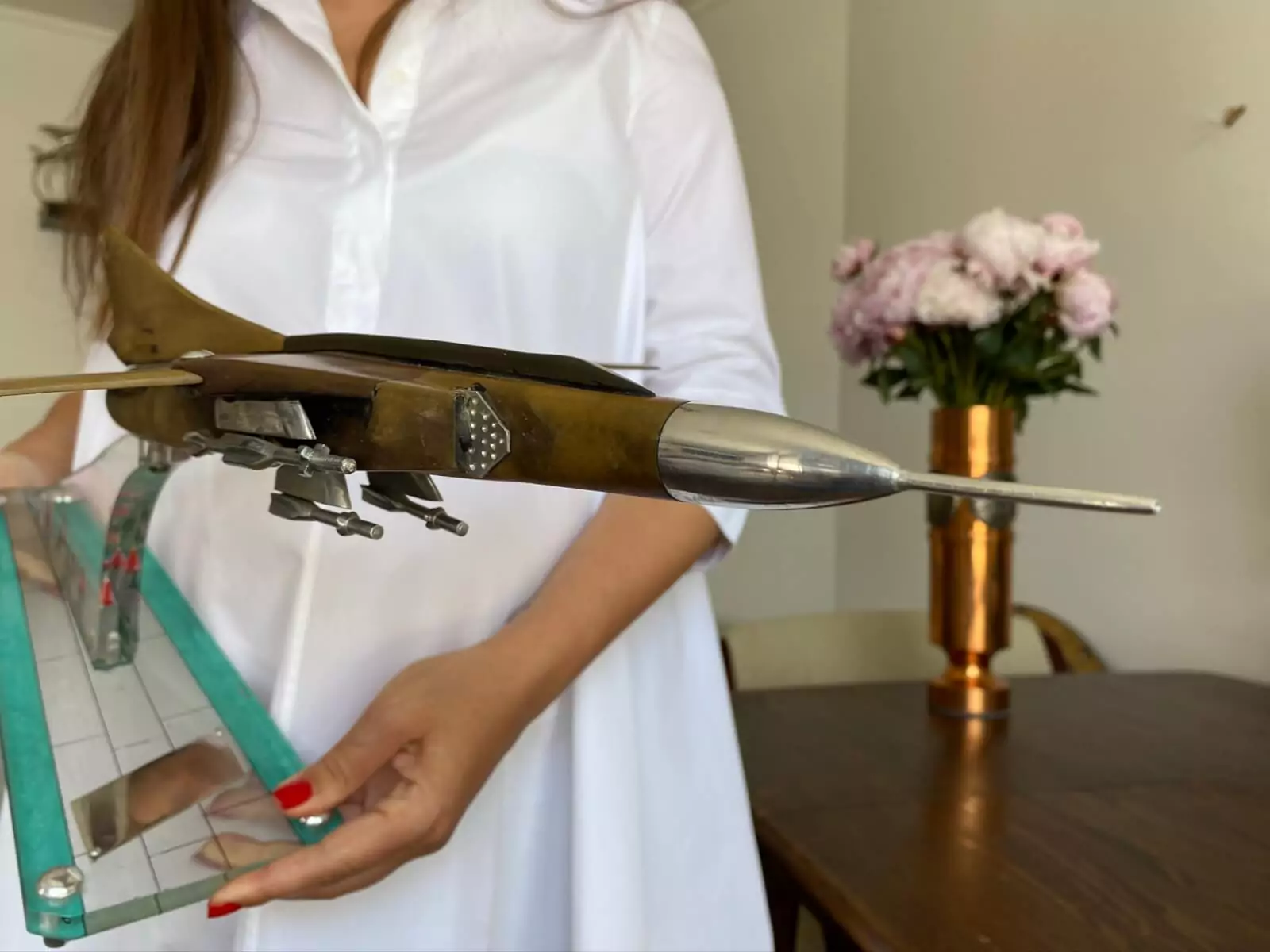
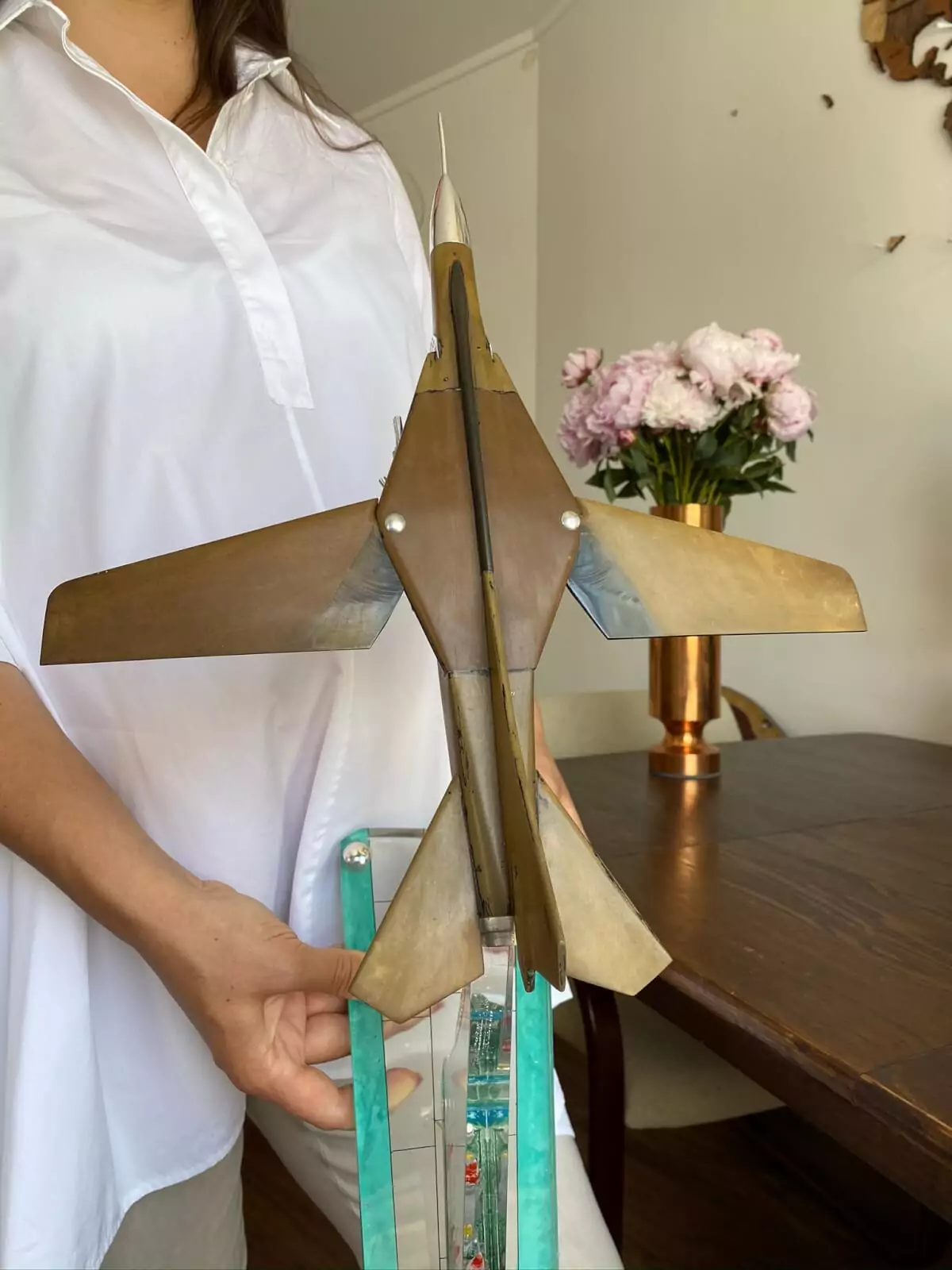
Soviet combat aircraft model of a Mikoyan-Gurevich MiG-23 fighter, identified as the MiG-23 ML variant. The fuselage, wings and tail surfaces are made of bronze coloured bakelite. The nose cone with its pitot probe, the four missiles under the fuselage and the two perforated plates on the sides are aluminium. This combination of materials is fairly rare on this type of model.
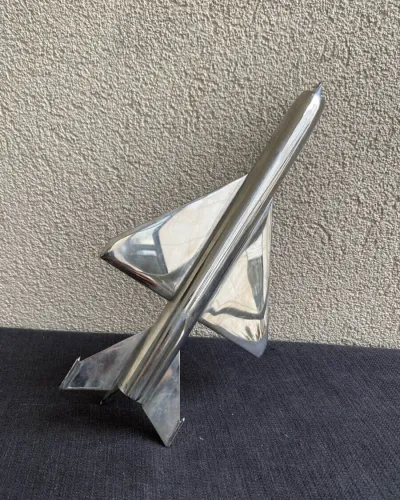
The wings reproduce the variable sweep geometry of the aircraft. They pivot on their axis and can be set either spread or swept back, as shown in the photos. The model is a large format piece, among the largest of its kind.
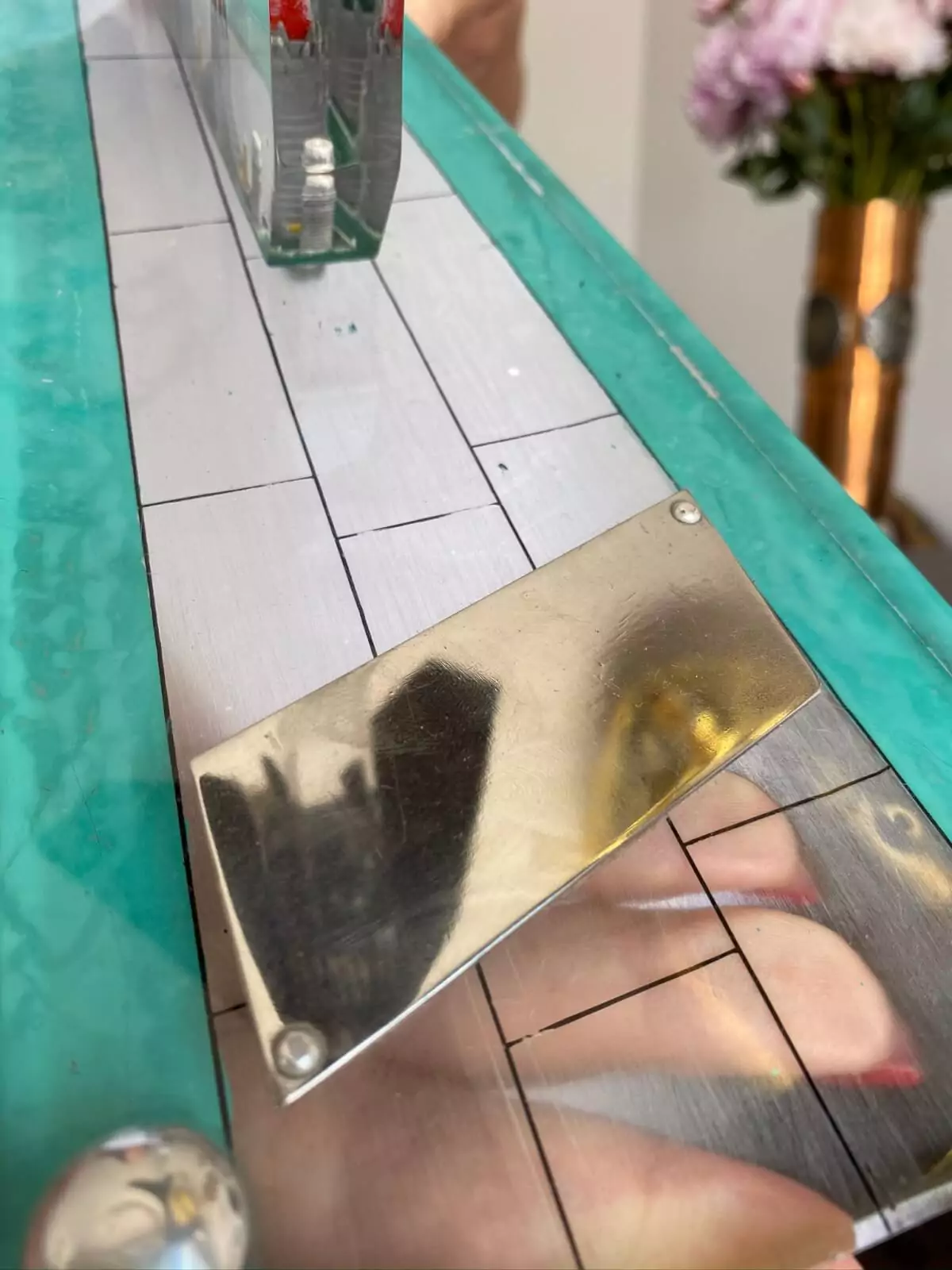
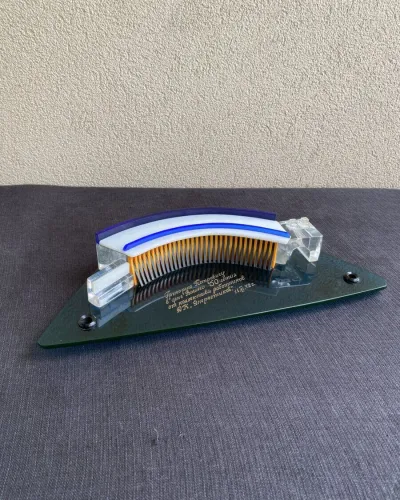
The aircraft is fixed by the tail to a curved perspex blade, mounted on a perspex base with green edges. The aluminium top plate, engraved with a paving pattern, carries a polished metal plaque without inscription. Set into the stand is a representation of the fortress of Brest-Litovsk, with crenellated towers topped by red, green and yellow spires.
The MiG-23, NATO reporting name “Flogger”, first flew on 10 June 1967 and was officially commissioned into the Soviet Air Forces on 4 January 1974. Its variable sweep wing had three positions, 16, 45 and 72 degrees, shown in the cockpit. 5,047 were built, serving with the USSR and several foreign air forces.
The four missiles and the nose cone are present, and the wings pivot.
Additional information
| Weight | 2 kg |
|---|---|
| Dimensions | 50 × 30 × 40 cm |