USSR MiG-21 Aluminium Desk Model - Coloured Runway Base - 1970s
$299.99Unique piece



USSR MiG-21 Aluminium Desk Model - Coloured Runway Base - 1970s
$299.99Unique piece
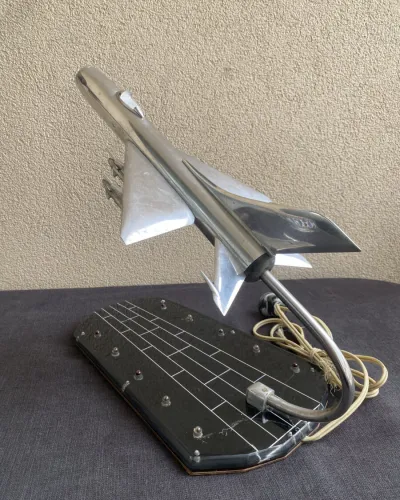
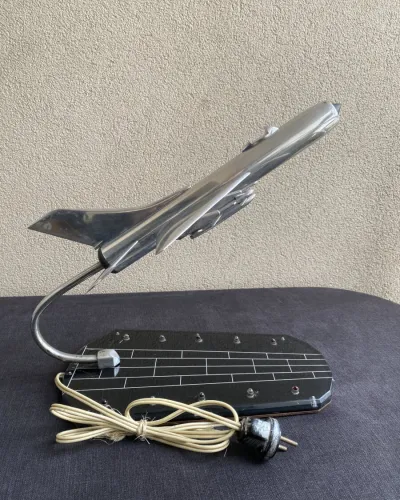
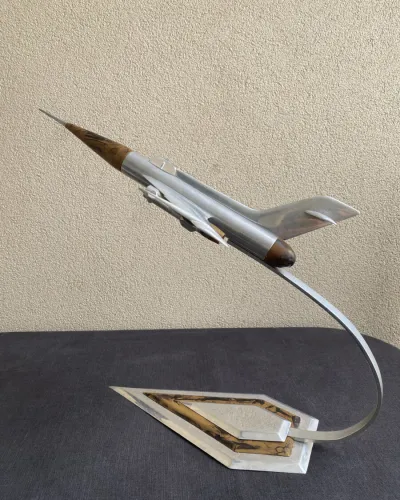
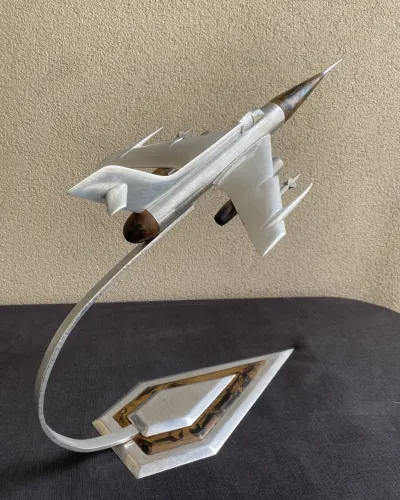
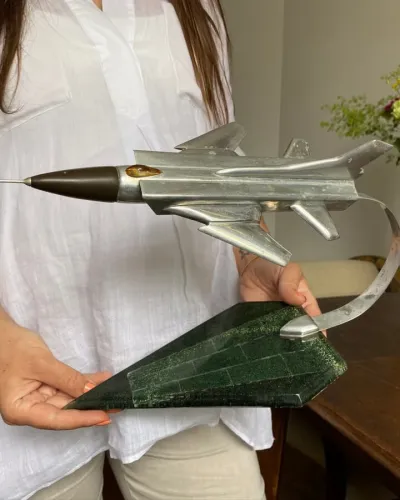
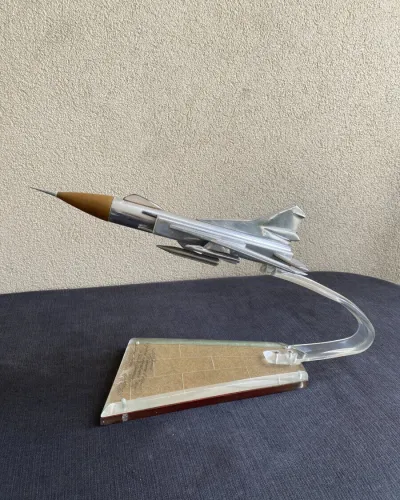
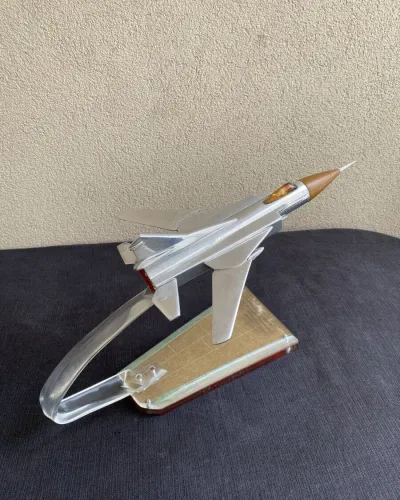
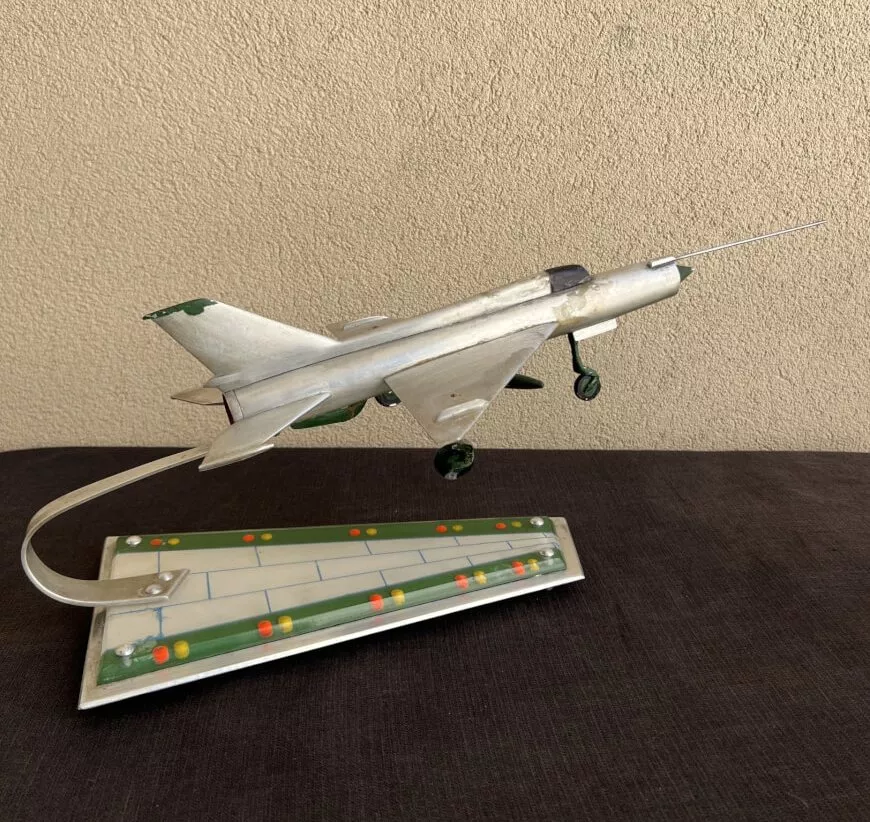
Soviet aluminium desk model of a MiG-21 fighter, landing gear down, held by a curved arm above a plexiglass base painted as a runway with its edge lights. USSR, 1970s.
1 in stock
Message received, dear comrade.
Our information desk usually replies within 24 hours at the address provided.The Brezhnev era. Détente with the West, SALT treaties, the Apollo-Soyuz mission. Economic stagnation and growing corruption.

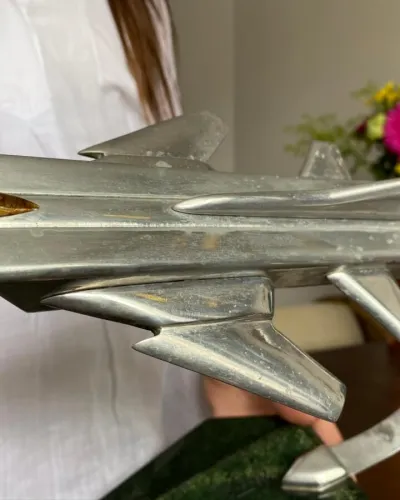
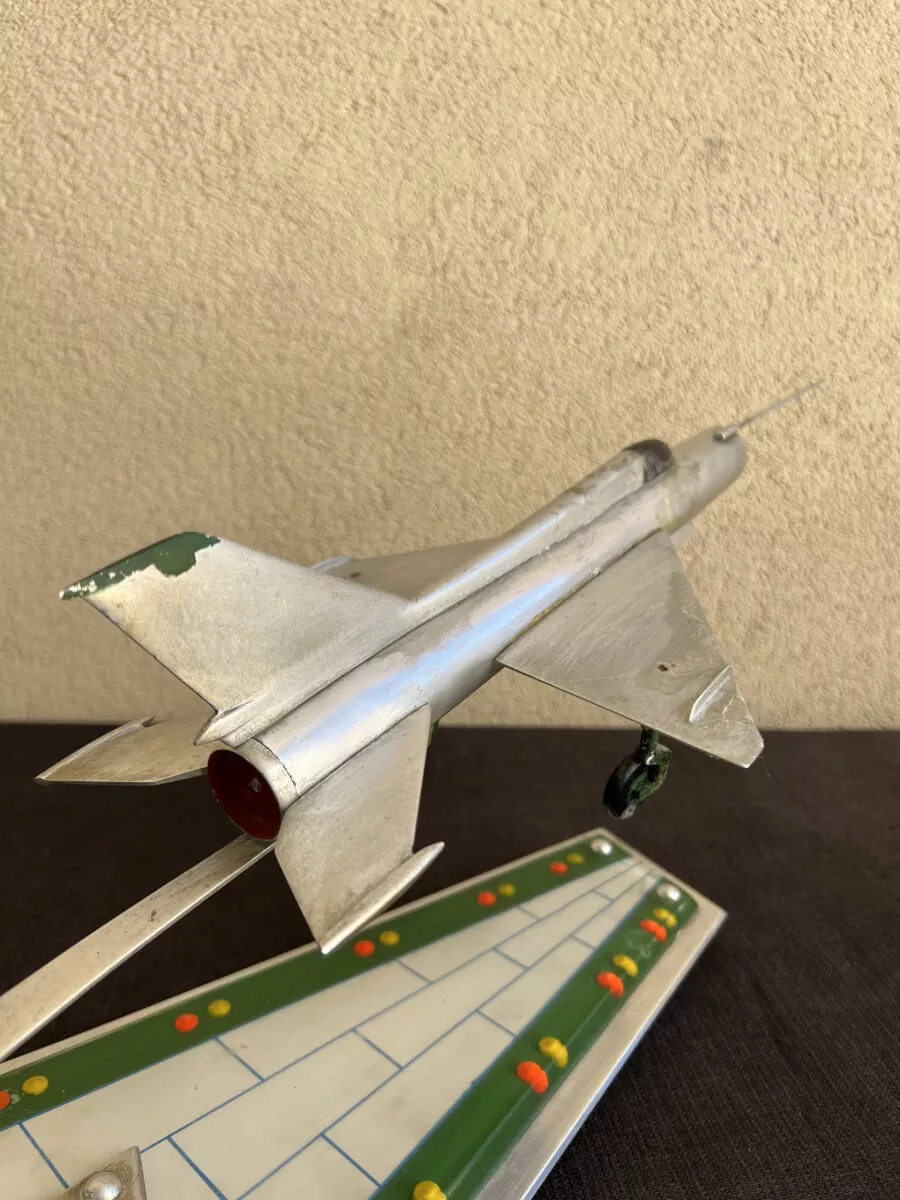
Aluminium model of a MiG-21 fighter, shown taking off, nose up and landing gear down. The aircraft is carried by a curved aluminium arm riveted to the base. All the lines of the MiG-21 are there: tubular fuselage, nose air intake with its shock cone, delta wing, swept tail and long nose probe. The canopy is painted dark purple, the exhaust red, the intake cone and the top of the fin green. Under the fuselage, a green drop tank and, at the rear, the ventral fin painted green, three green landing gear legs with black wheels. A handwritten inscription is traced on the drop tank.
The plexiglass base is painted as a runway: white slabs outlined in blue, green edges dotted with raised red and yellow runway lights, aluminium frame and visible screws. This kind of hand assembled metal model was made in the workshops of Soviet aviation factories and units, to decorate offices or to be given on anniversaries and retirements. Good condition.
Designed by the Mikoyan-Gurevich design bureau, the MiG-21 first flew in 1955 and entered service with the Soviet Air Force in 1959. With more than 10,000 built, it is the most produced supersonic aircraft in history. It served with the air forces of the Warsaw Pact and some fifty countries, from Vietnam to India and Egypt, and in the 1960s and 1970s became one of the symbols of Soviet air power.
Additional information
| Weight | 3 kg |
|---|---|
| Dimensions | 50 × 30 × 30 cm |