Soviet MiG-23 Desk Model - Bakelite - Perspex Stand - USSR 1970s
$322.99Unique piece
Soviet MiG-23 Desk Model - Bakelite - Perspex Stand - USSR 1970s
$322.99Unique piece
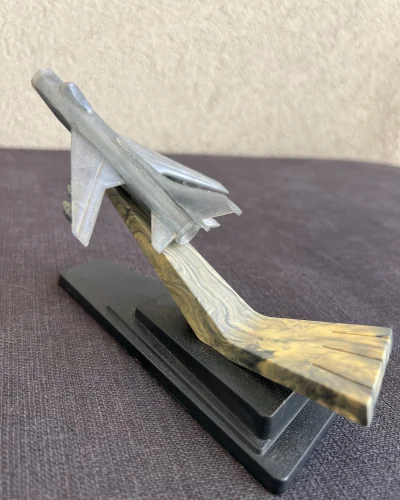
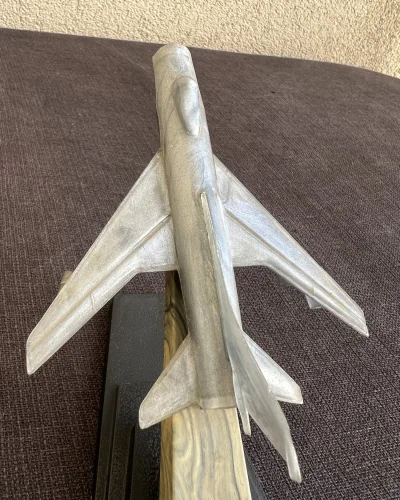
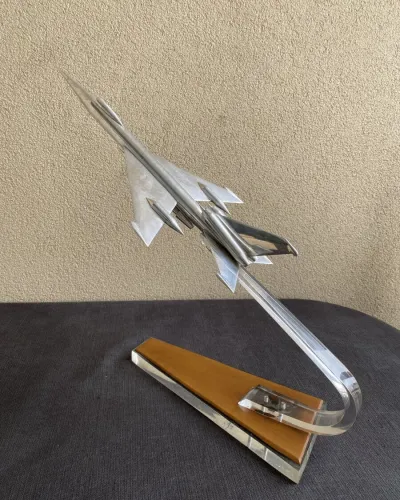
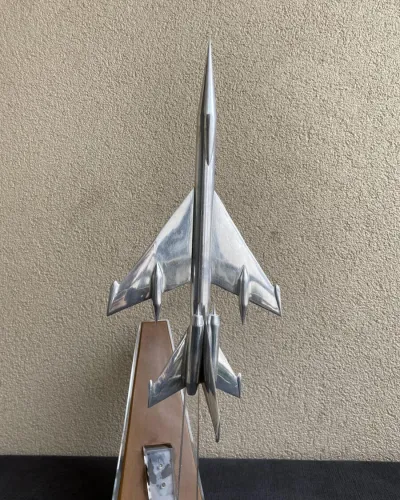
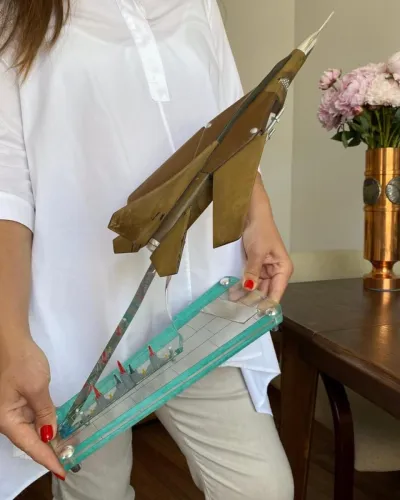
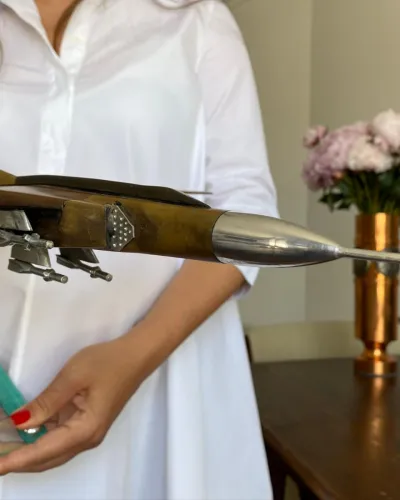
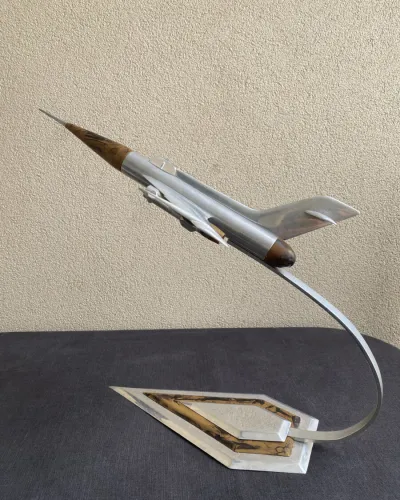
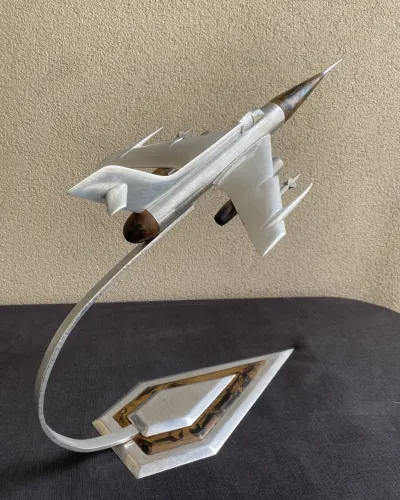
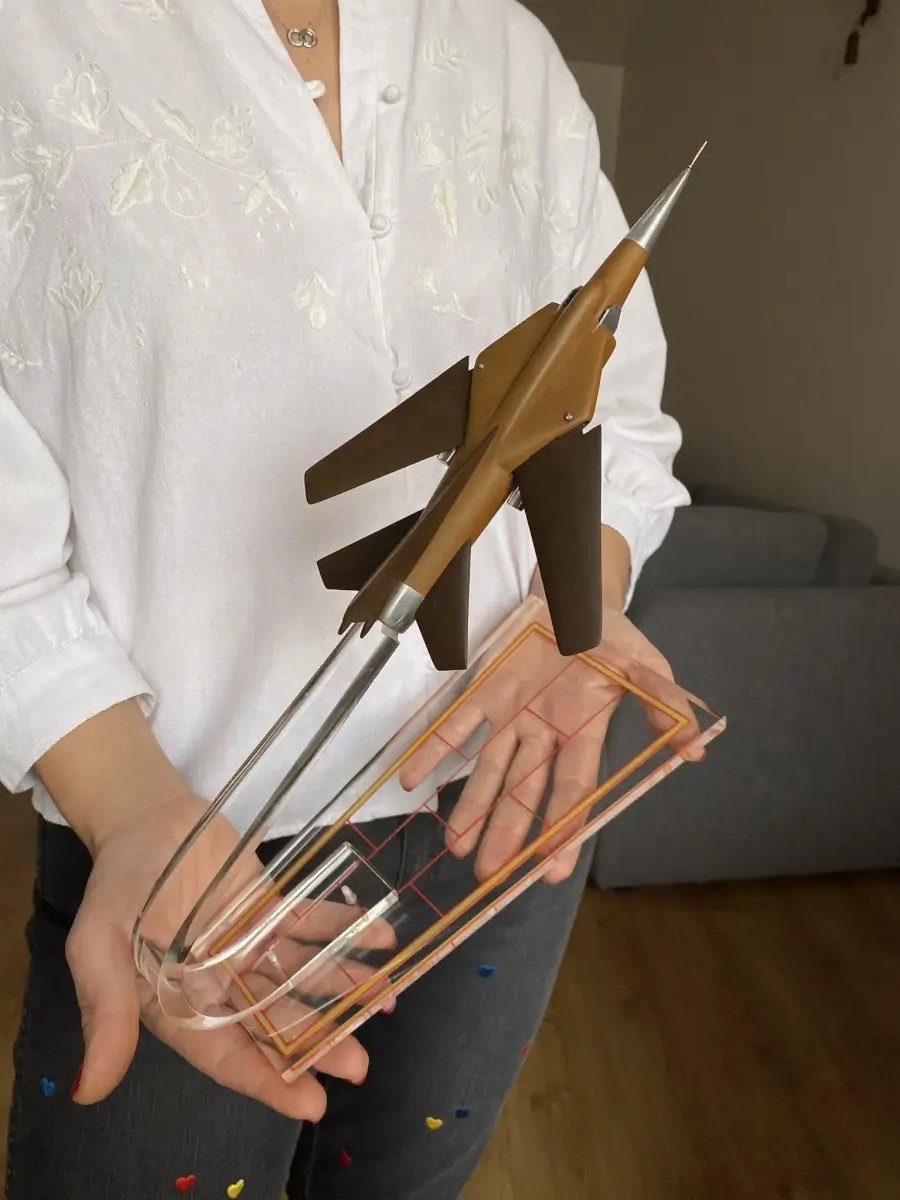
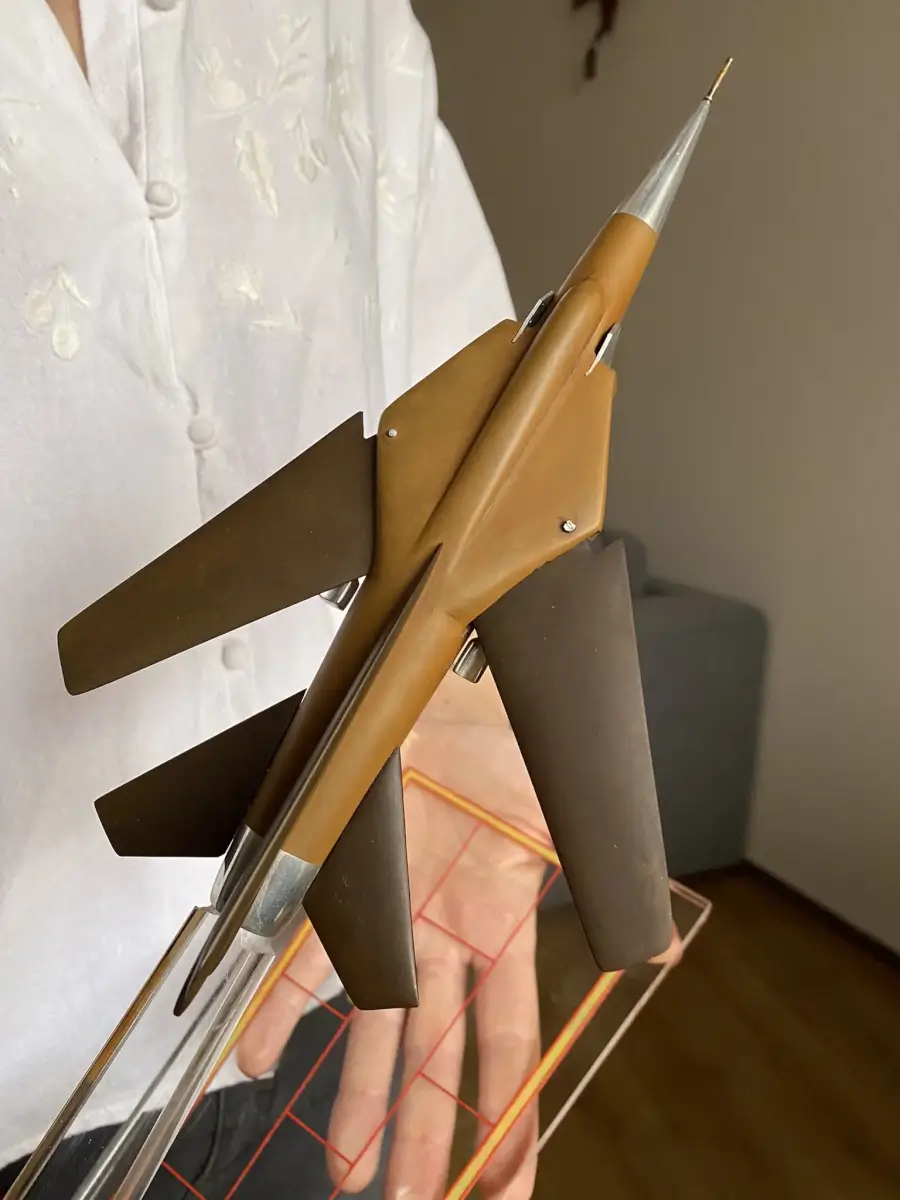
Soviet desk model of the variable geometry MiG-23, in bakelite, with two missiles screwed under the wing roots and a curved stand on a perspex base. Given in the 1970s to a pilot officer of the Soviet air force.
1 in stock
Message received, dear comrade.
Our information desk usually replies within 24 hours at the address provided.The Brezhnev era. Détente with the West, SALT treaties, the Apollo-Soyuz mission. Economic stagnation and growing corruption.




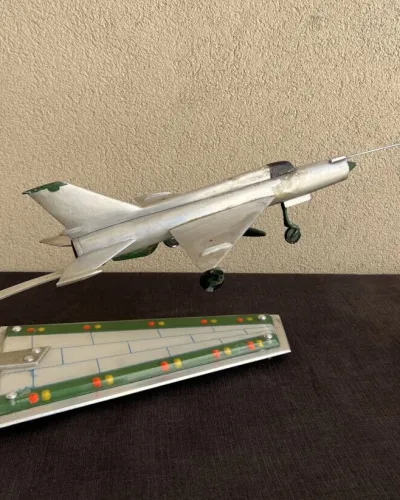
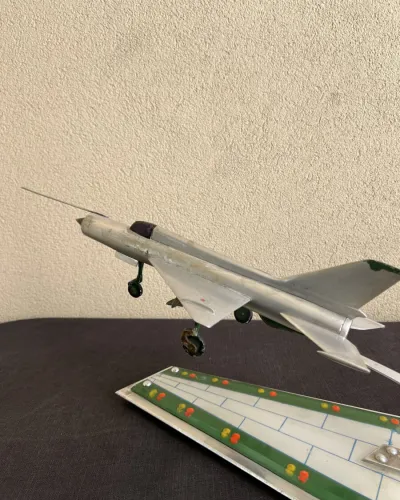
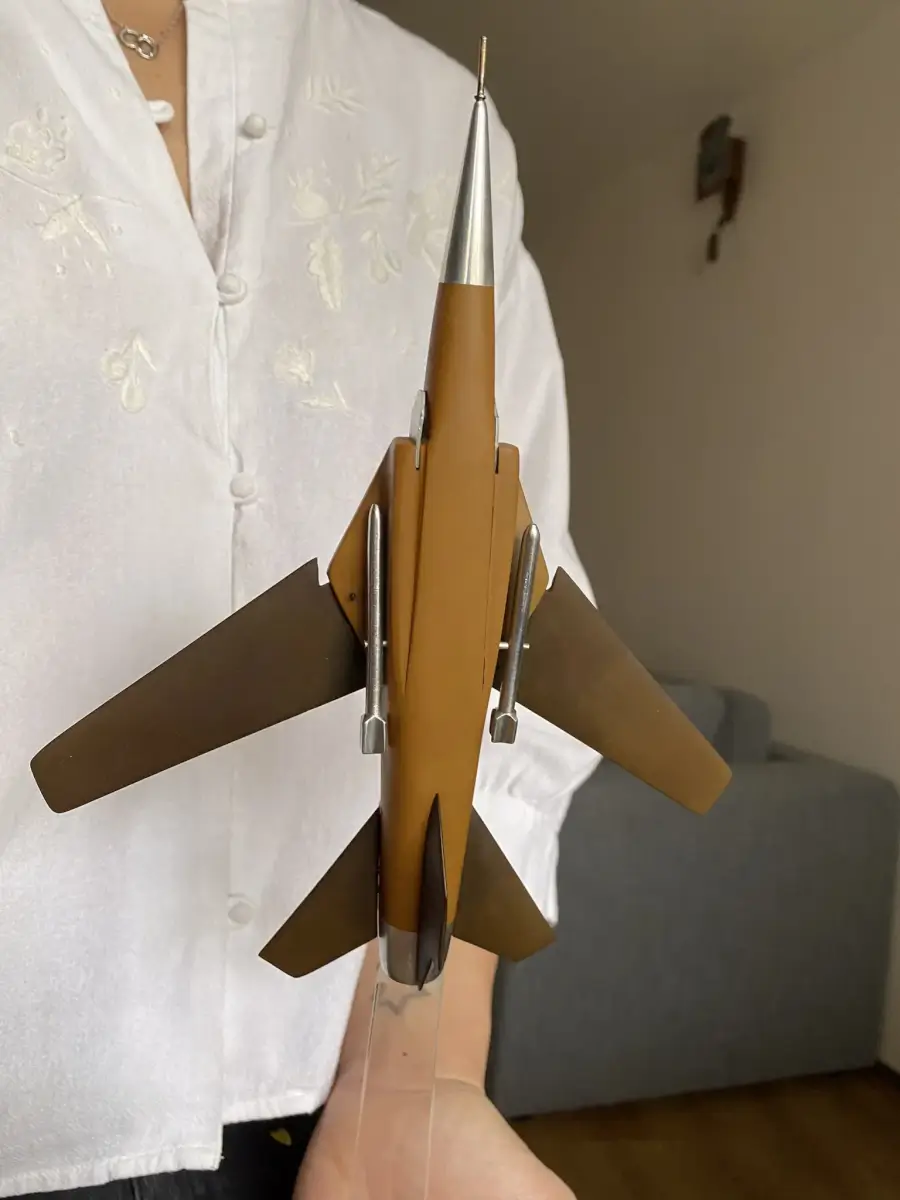
Model of a Soviet military aircraft, the MiG-23 variable geometry fighter. The wings move on the model, as on the real aircraft. The fuselage and control surfaces are bakelite, in ochre and brown tones, with a metal nose cone extended by a thin probe. Two munitions are screwed under the wing roots, on either side of the fuselage, and the side air intakes and the fin are clearly shown.
The aircraft is shown climbing, fixed on a curved clear stand that rests on a perspex base decorated with red and orange lines representing a runway. This model was given in the 1970s to a pilot officer of the Soviet air force.
Designed by the Mikoyan-Gurevich bureau, the MiG-23 (NATO code name Flogger) first flew in 1967 and entered service in the early 1970s. Its variable sweep wing combined short take-off with high speed. Built in very large numbers, it served with the Soviet air force and air defence forces as well as many Warsaw Pact countries and allies of the USSR. Desk models of this type were made in aircraft factories and given to pilots, officers and engineers to mark a promotion, a birthday or the end of a posting.
Additional information
| Weight | 1.5 kg |
|---|---|
| Dimensions | 40 × 30 × 20 cm |