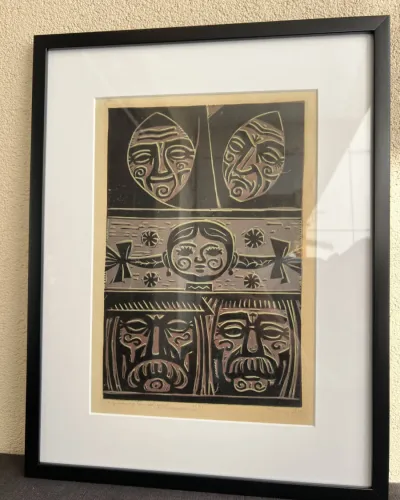
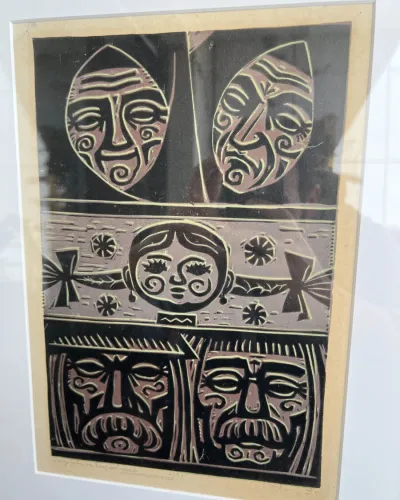
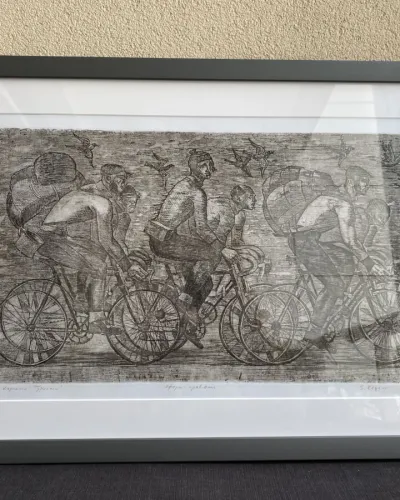
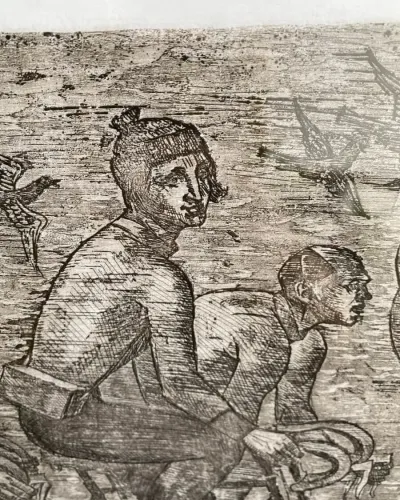
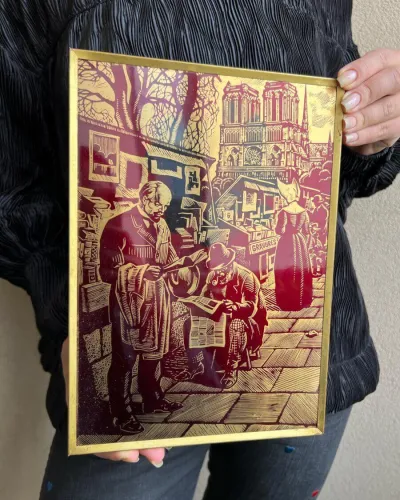
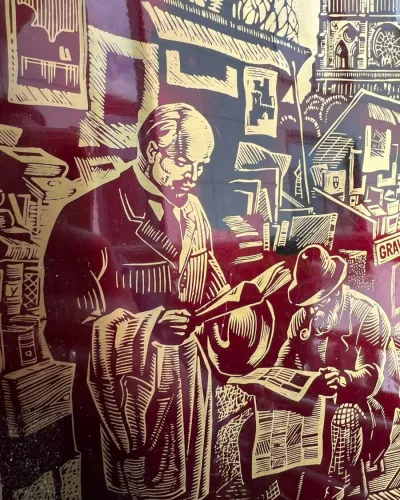
Engraving - Oil of the Carpathians - Zenoviy Ketsalo - 1972
$265.99Unique piece
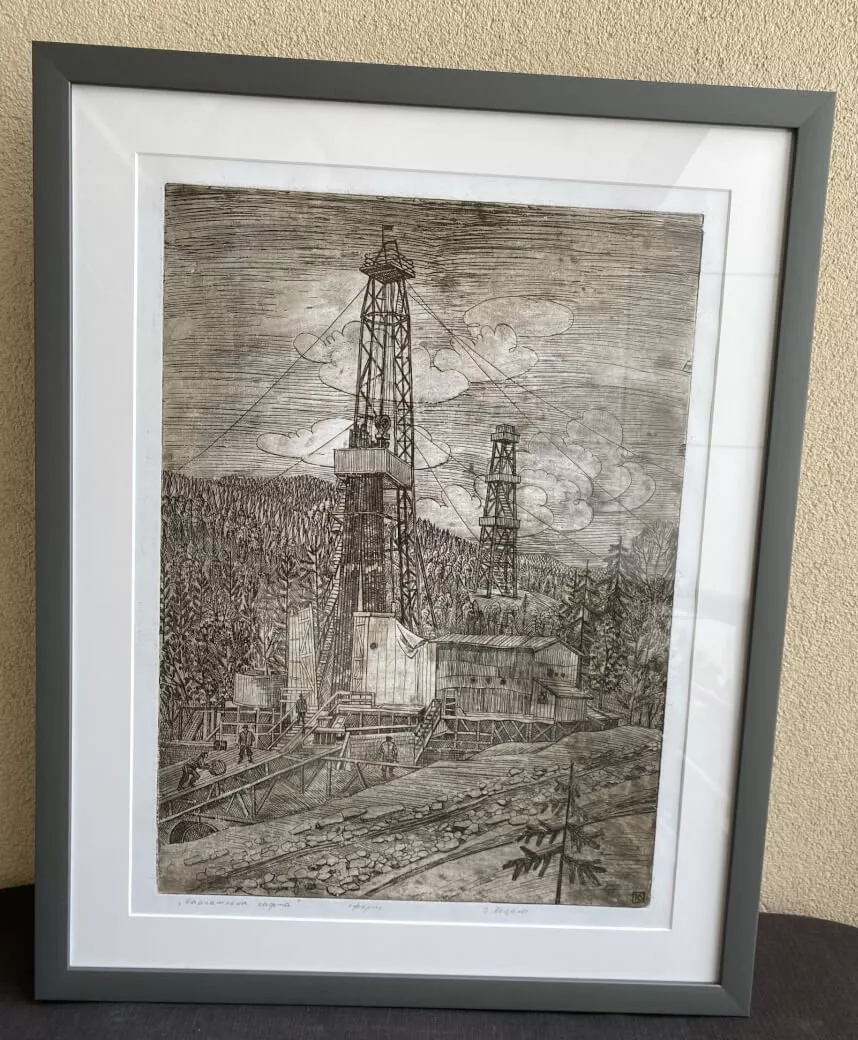


Engraving - Oil of the Carpathians - Zenoviy Ketsalo - 1972
$265.99Unique piece
The engraving “Oil of the Carpathians” by Zenoviy Ketsalo, created in 1972, invites us on an absorbing journey through the history of oil extraction in the Ukrainian Carpathians.
1 in stock
Message received, dear comrade.
Our information desk usually replies within 24 hours at the address provided.Nixon's visit to Moscow. SALT I agreements on strategic arms limitation.
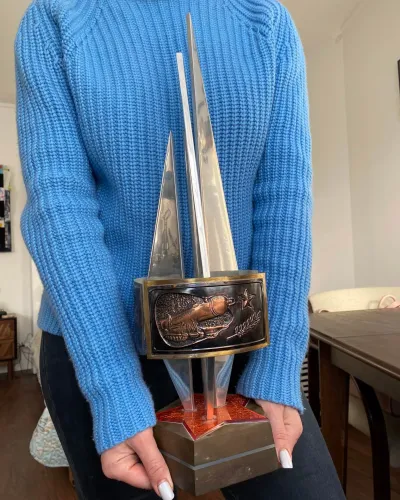
The engraving “Oil of the Carpathians” by Zenoviy Ketsalo, created in 1972, invites us on an absorbing journey through the history of oil extraction in the Ukrainian Carpathians.
The work reflects the close link between the local population and the oil seeps they observed over the centuries. This distinctive experience had a significant impact on the toponymy of the region, influencing names such as Ropyanka, Repne, Ropytsa and others.
The earliest mentions of oil extraction in the Carpathians are found in the literature of 1617. It is worth noting that the old settlement of Sloboda Rungurska was already engaged in Carpathian oil production in 1711. Over the centuries, oil became an integral part of the life of the region.
A crucial moment in the history of Ukrainian oil production was the 16th and early 17th centuries, when oil extraction began in the Carpathians. As early as the 16th century, the town of Drohobych had the privilege of lighting its streets with rock oil, a sign of the early use of oil in the country.
The first oil refineries in Ukraine were set up precisely in the Carpathians, in the towns of Boryslav, Lviv, Drohobych and Nadvirna. This stage in the region’s history marked a turning point in technological and economic development, the beginning of the processes that shaped the landscape of the modern oil industry in Ukraine.
Zenoviy Ketsalo (1919-2010), People’s Artist of Ukraine, an outstanding painter and graphic artist, became known for his talent and his contribution to the world of Ukrainian art. He is the author of well-known works that form part of the legacy of the Lviv graphic school.
Framed by us, 57×44 cm excluding frame.
Additional information
| Weight | 4 kg |
|---|---|
| Dimensions | 65 × 50 × 10 cm |