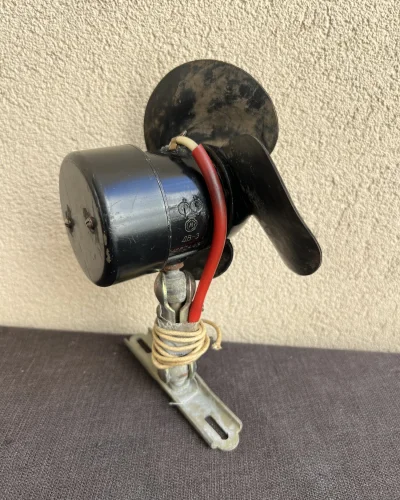
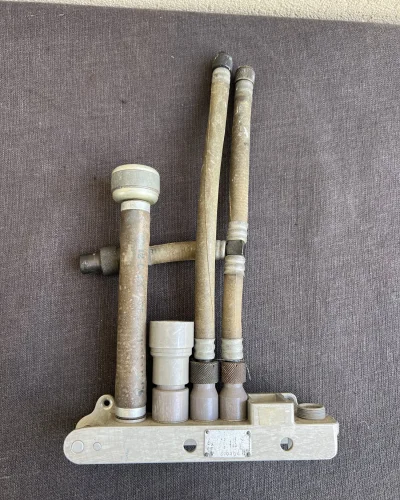
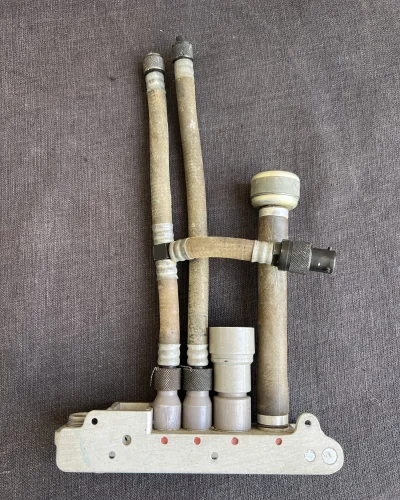
Soviet Aviation Rigging Gauge - 7.0 and 8.0 Settings - USSR Workshop Tool
$92.99Unique piece
Soviet Aviation Rigging Gauge - 7.0 and 8.0 Settings - USSR Workshop Tool
$92.99Unique piece
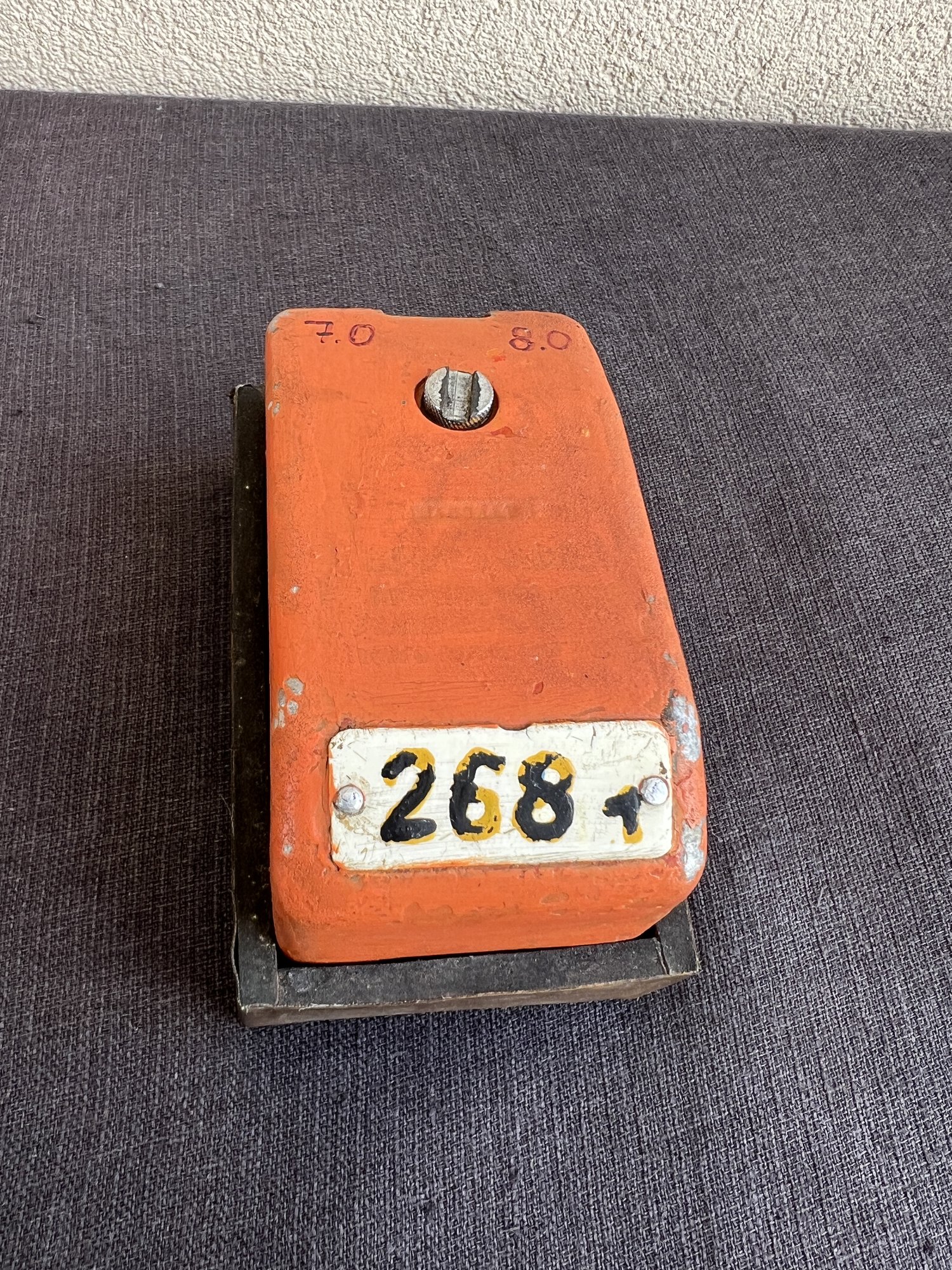
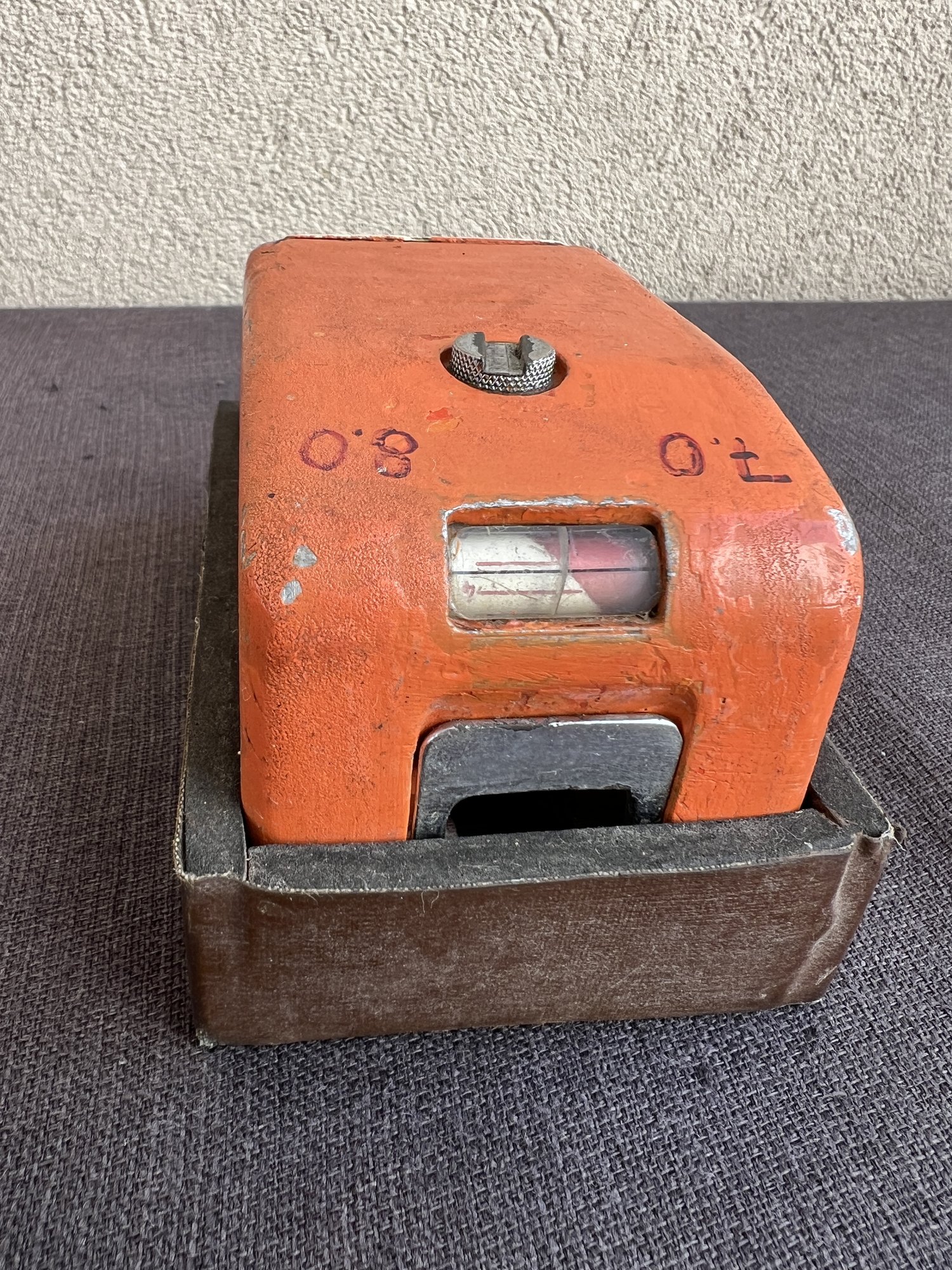
Rigging gauge from a Soviet aviation maintenance workshop, with hand marked 7.0 and 8.0 settings and a steel clamping stirrup.
Comes in its storage tray, with honest workshop wear.
1 in stock
Message received, dear comrade.
Our information desk usually replies within 24 hours at the address provided.The Brezhnev era. Détente with the West, SALT treaties, the Apollo-Soyuz mission. Economic stagnation and growing corruption.
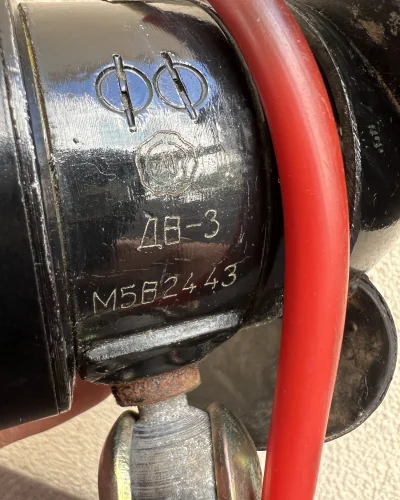
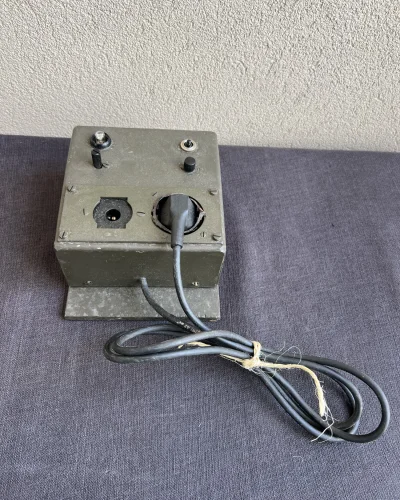
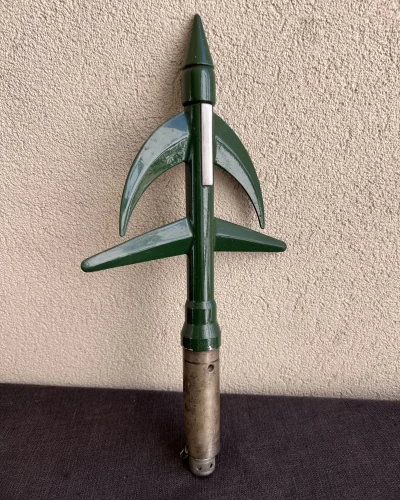
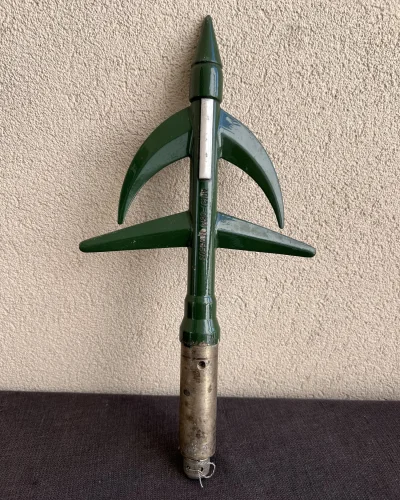
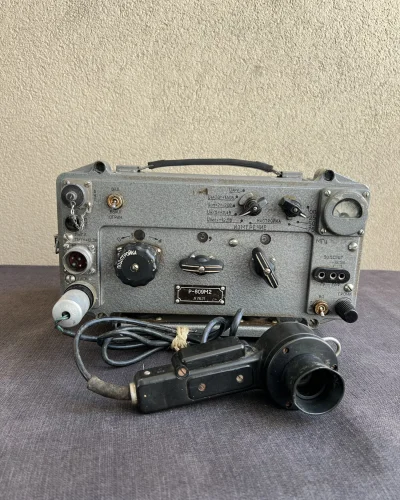
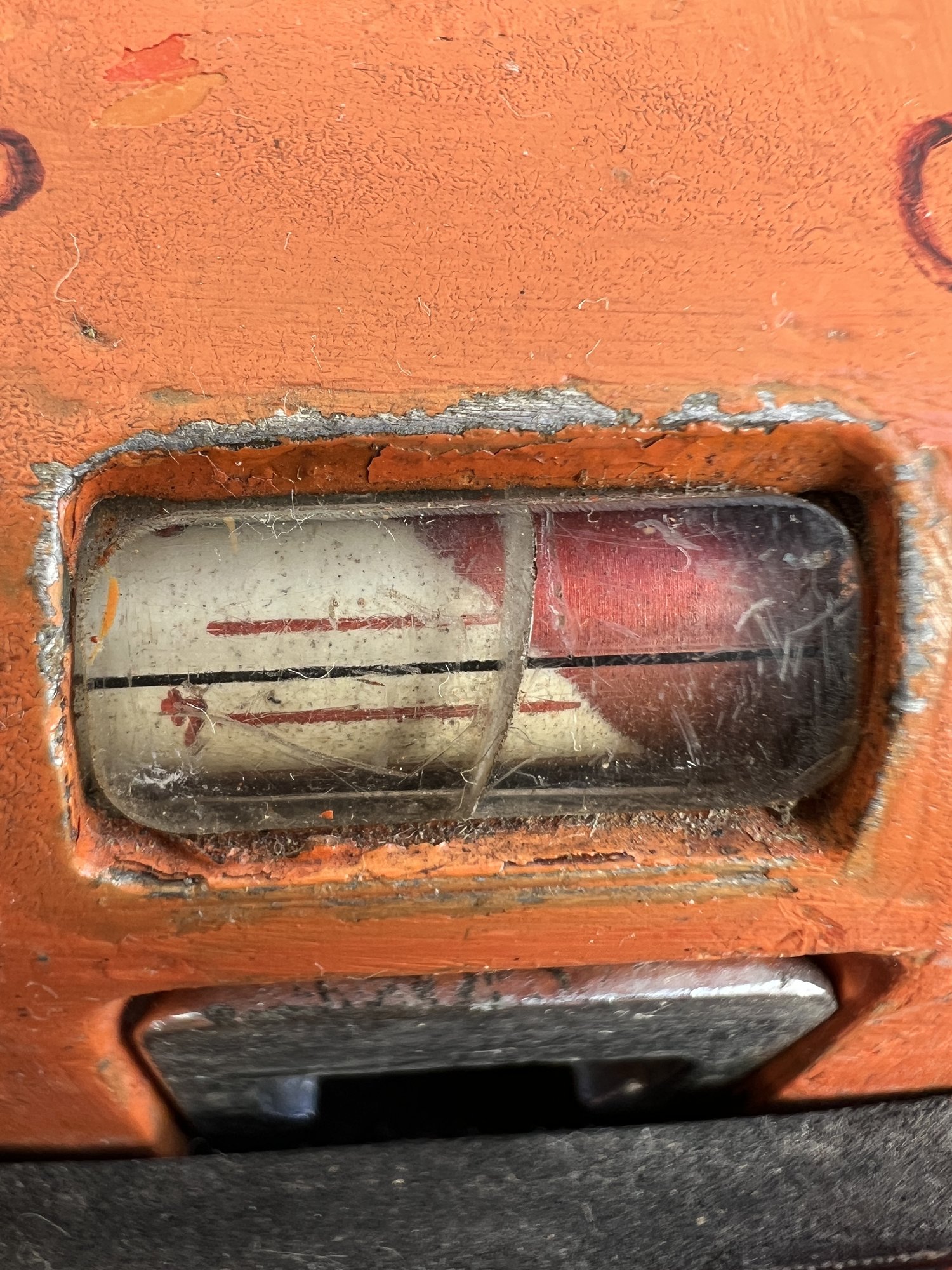
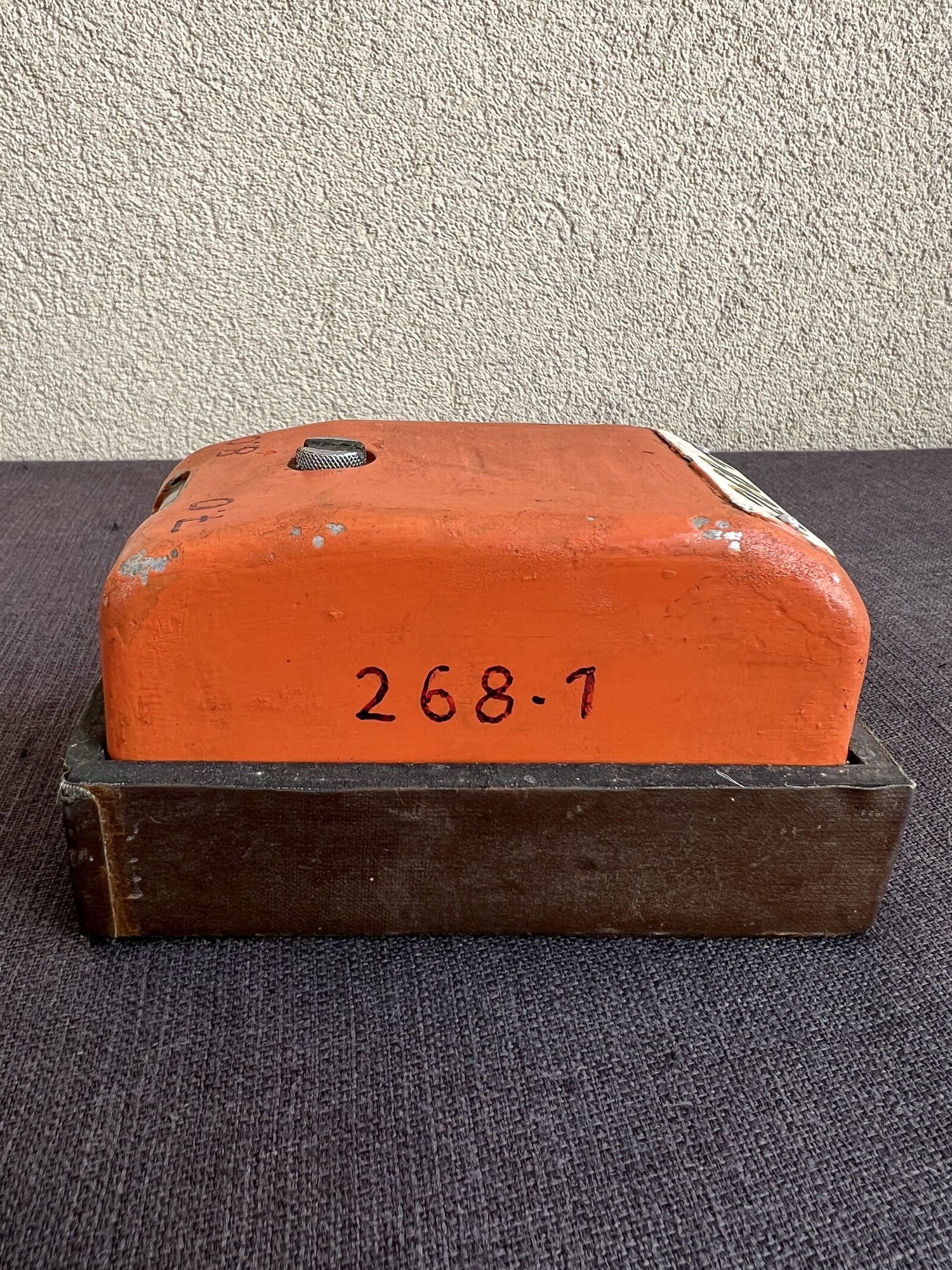
Soviet aviation workshop rigging gauge in painted cast metal, kept in its felt lined storage tray. The tool measures 13 x 8 x 7 cm. It combines a reading window with a central reference line, a knurled clamping screw and a steel stirrup used to secure it on the part being checked. Two values are hand marked on top, 7.0 and 8.0, and a riveted plate carries the workshop inventory number. That number is 268, painted on, and the side is hand-marked “268-1”.
In Soviet aircraft repair plants and squadron maintenance units, every adjustment on an airplane or helicopter relied on dedicated gauges: control surface rigging, flap settings, blade pitch. These tools were made in small batches for one aircraft type, numbered and stored in tooling cabinets. One hypothesis: the 7.0 and 8.0 marks are two angle values in degrees, and the stirrup clamps onto a blade or control surface edge to check that its setting falls between those limits. If that reading is right, the gauge was used to check rotor or propeller blade pitch, a task repeated at every maintenance inspection.
A workshop piece, probably from the 1970s, in untouched condition: paint worn on the edges, scratched reading window, signs of use on the tray. A mechanic’s tool rarely kept outside tooling stores.
This piece comes from the reserve collection of a military museum in Germany, from the same lot as a Soviet MiG-21 built from 1968 onwards.
Additional information
| Weight | 1.5 kg |
|---|---|
| Dimensions | 25.0 × 20.0 × 15.0 cm |