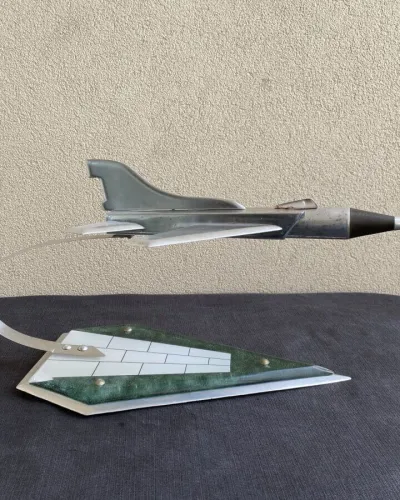
Soviet Tu-22 Blinder Officer's Desk Model - Metal - Bakelite Base
$311.99Unique piece
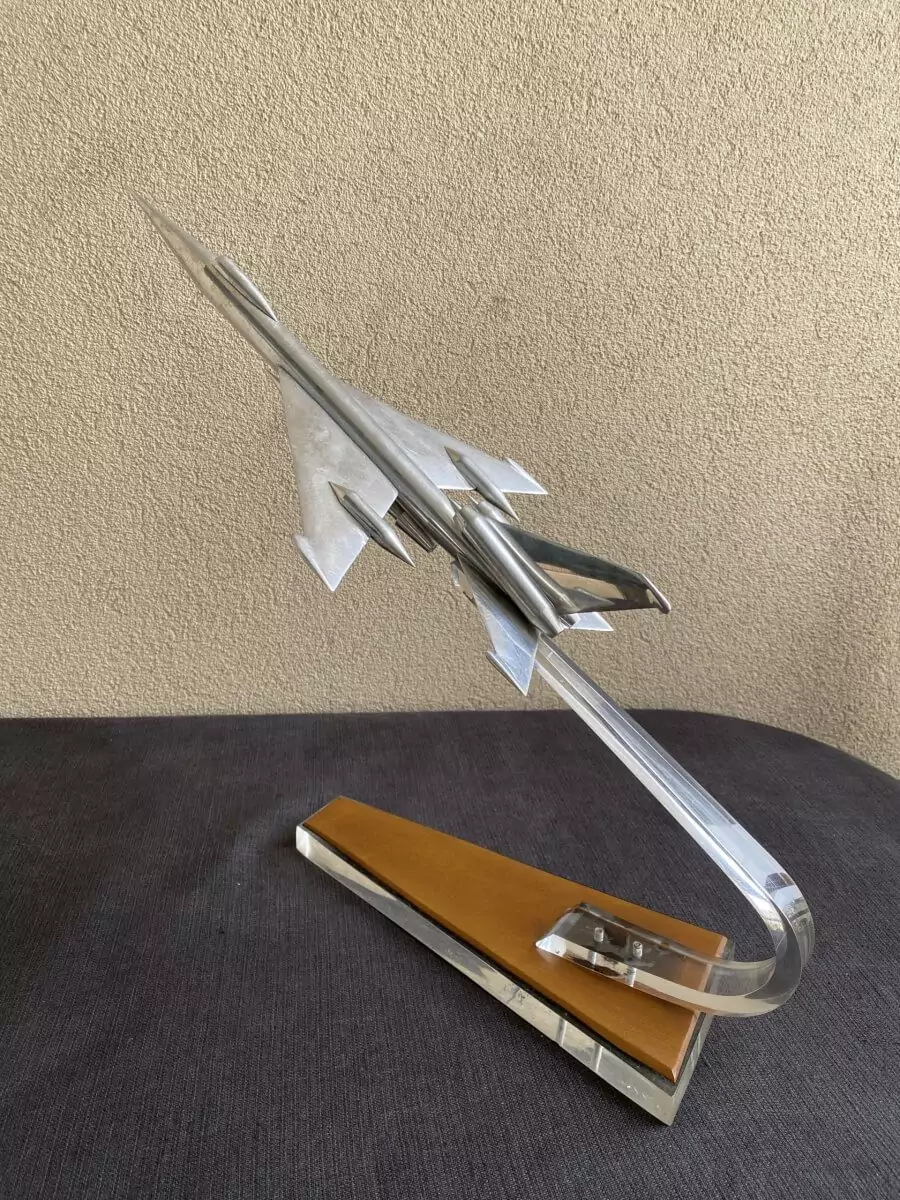

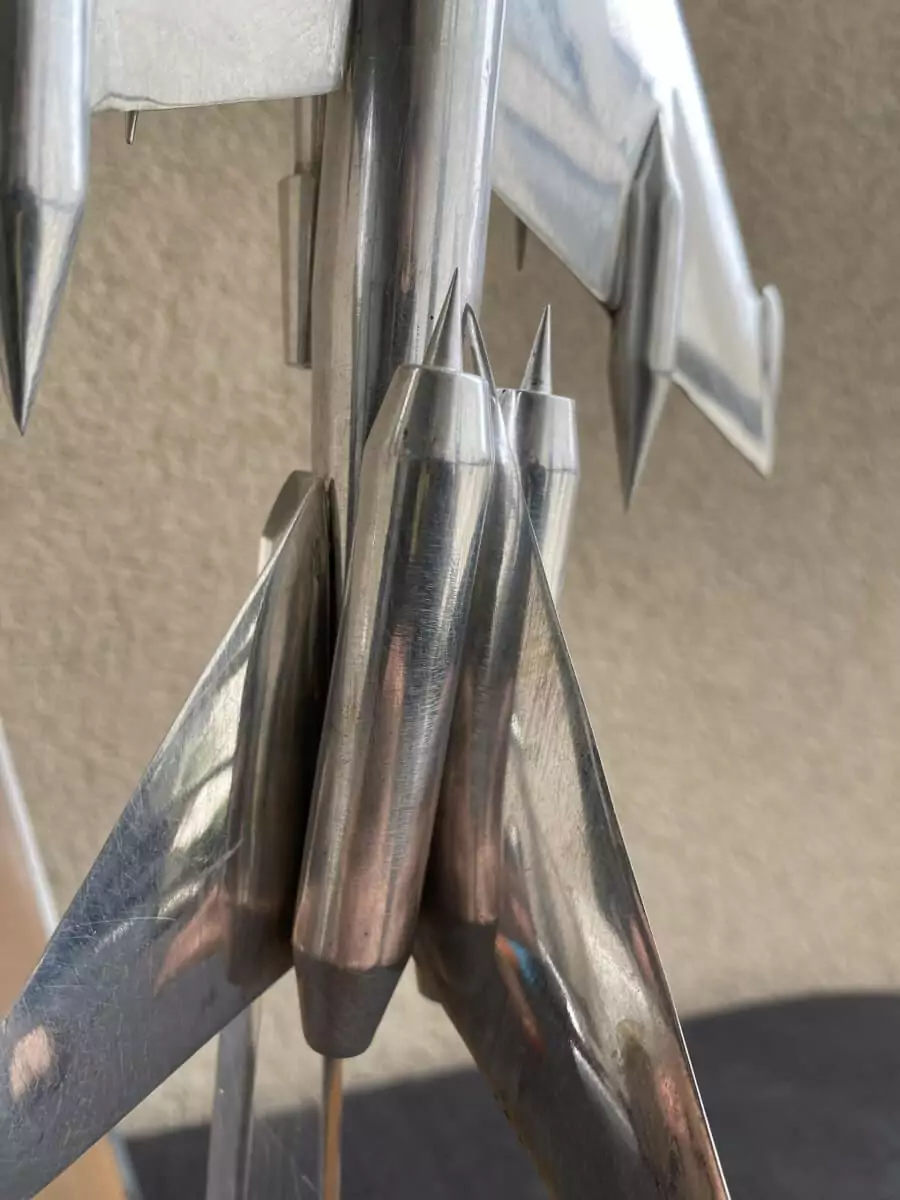
Soviet Tu-22 Blinder Officer's Desk Model - Metal - Bakelite Base
$311.99Unique piece
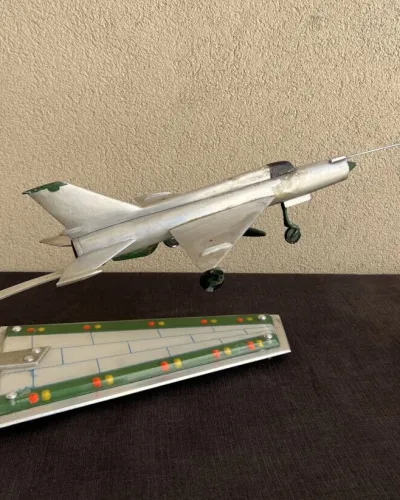
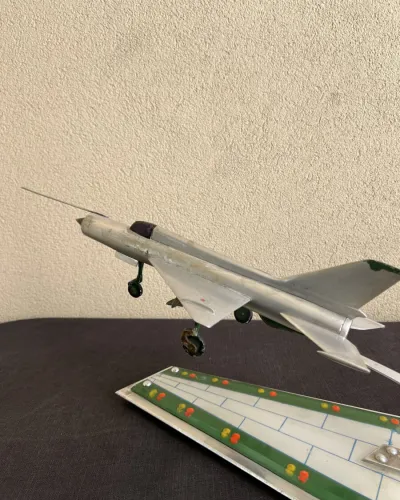
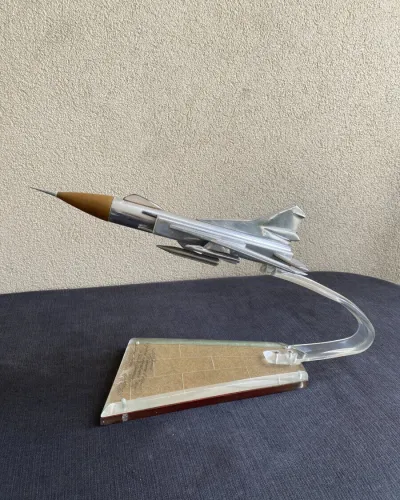
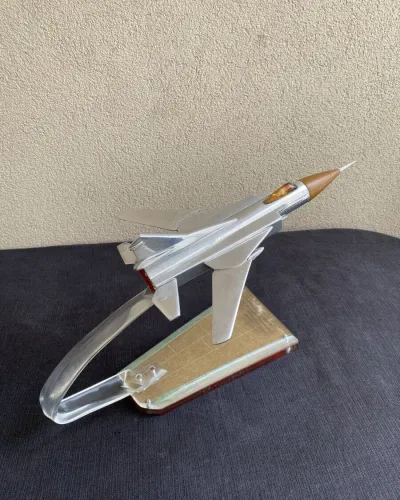
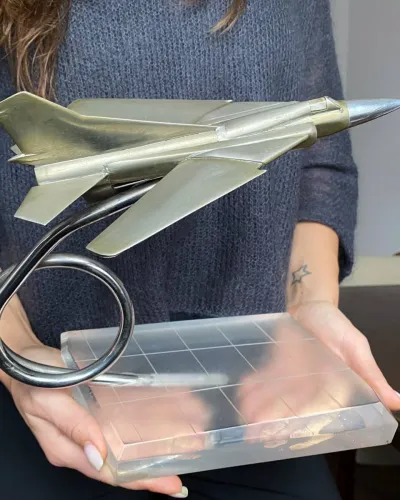
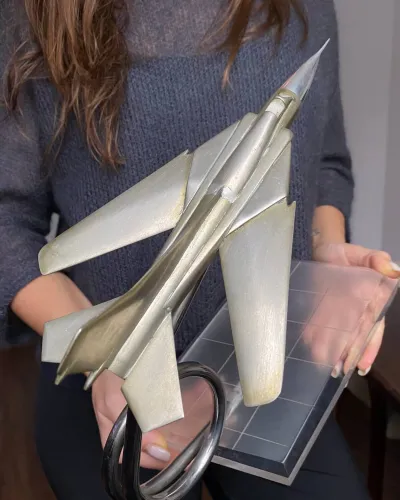
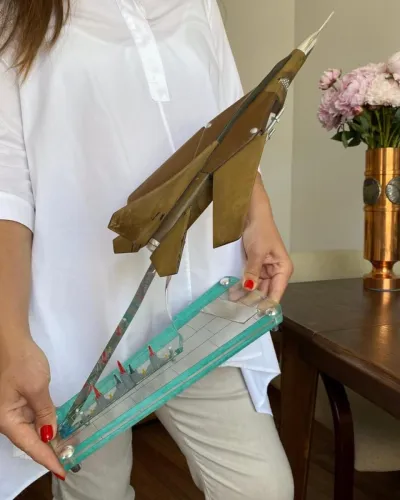
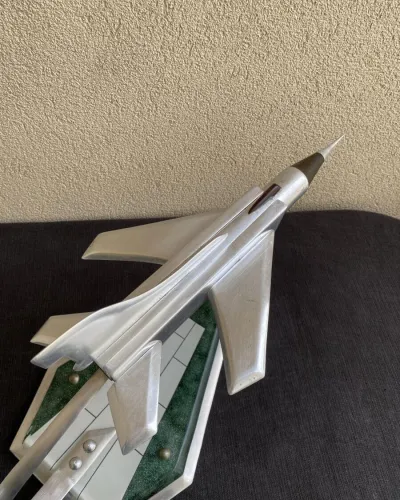
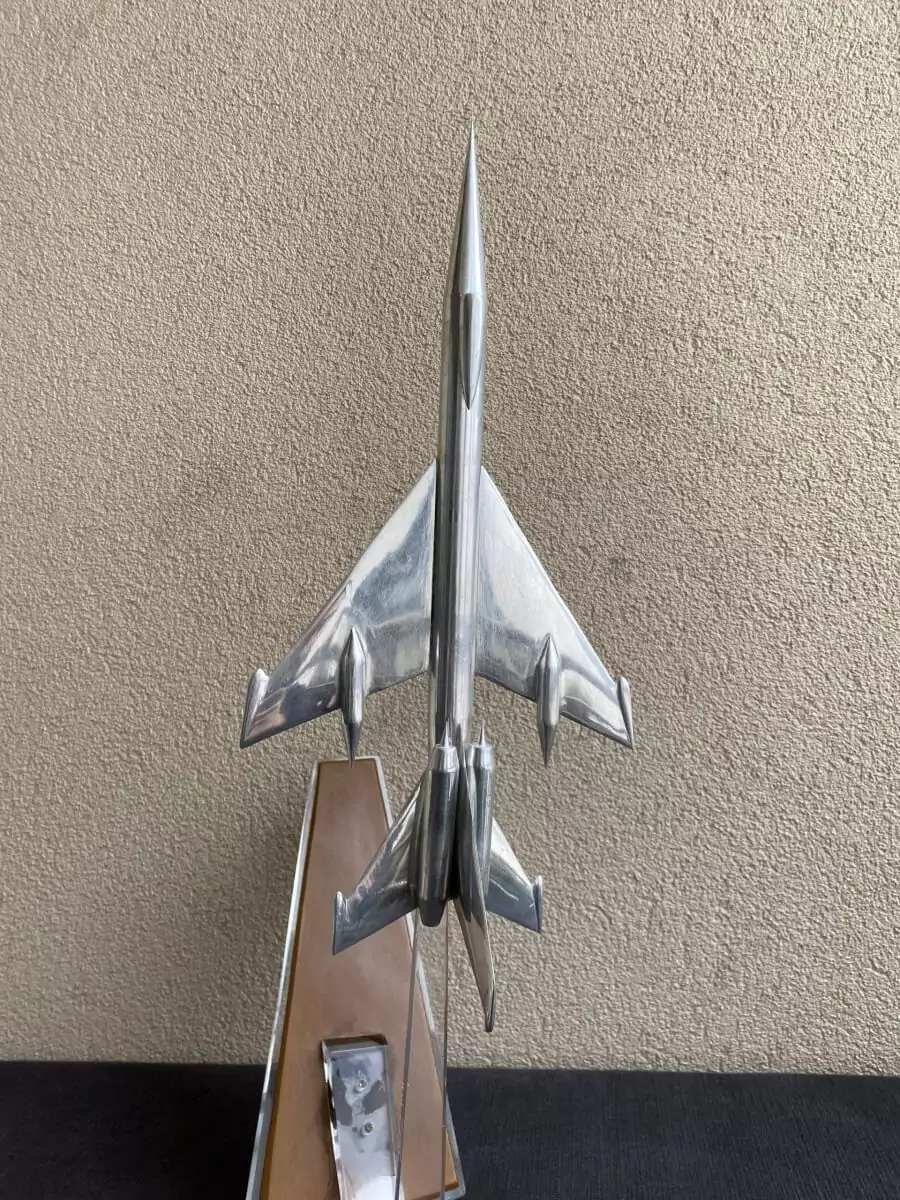
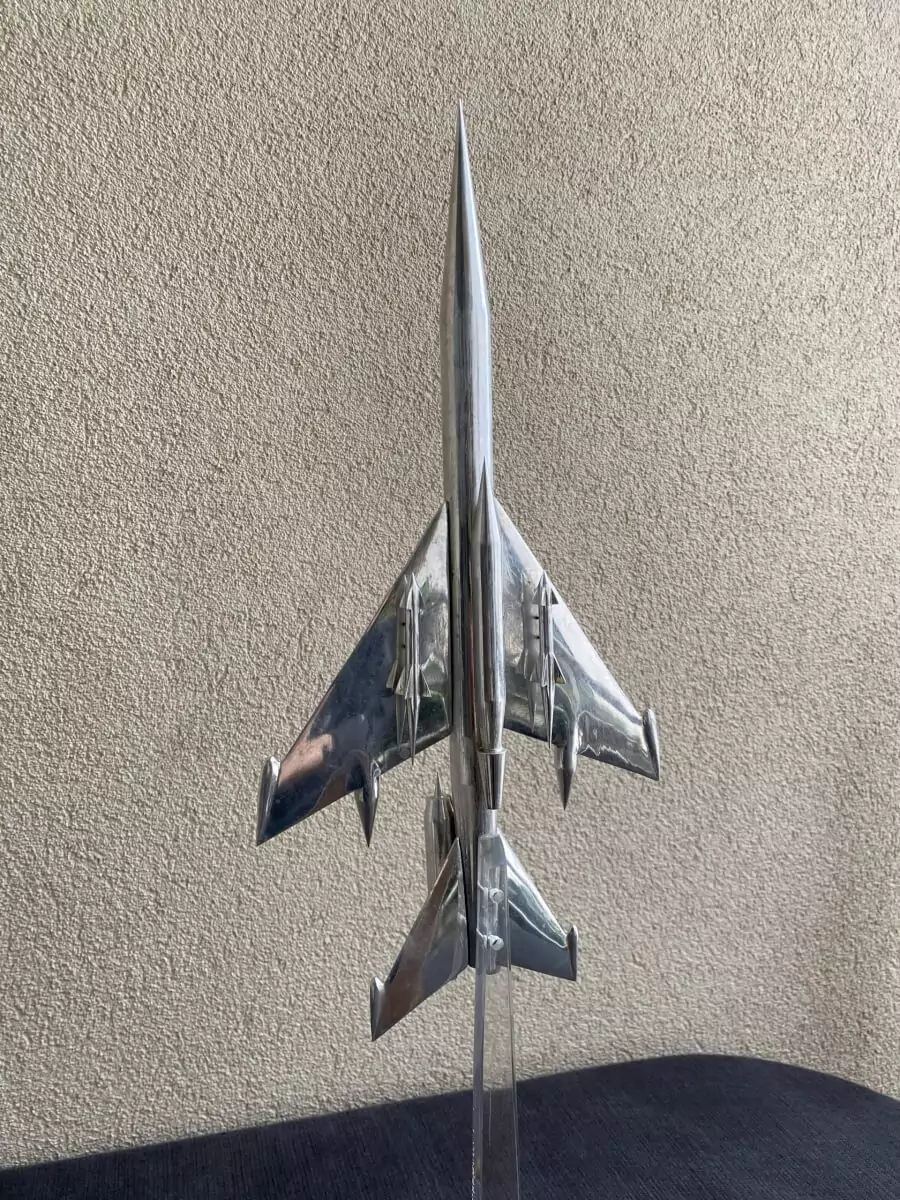
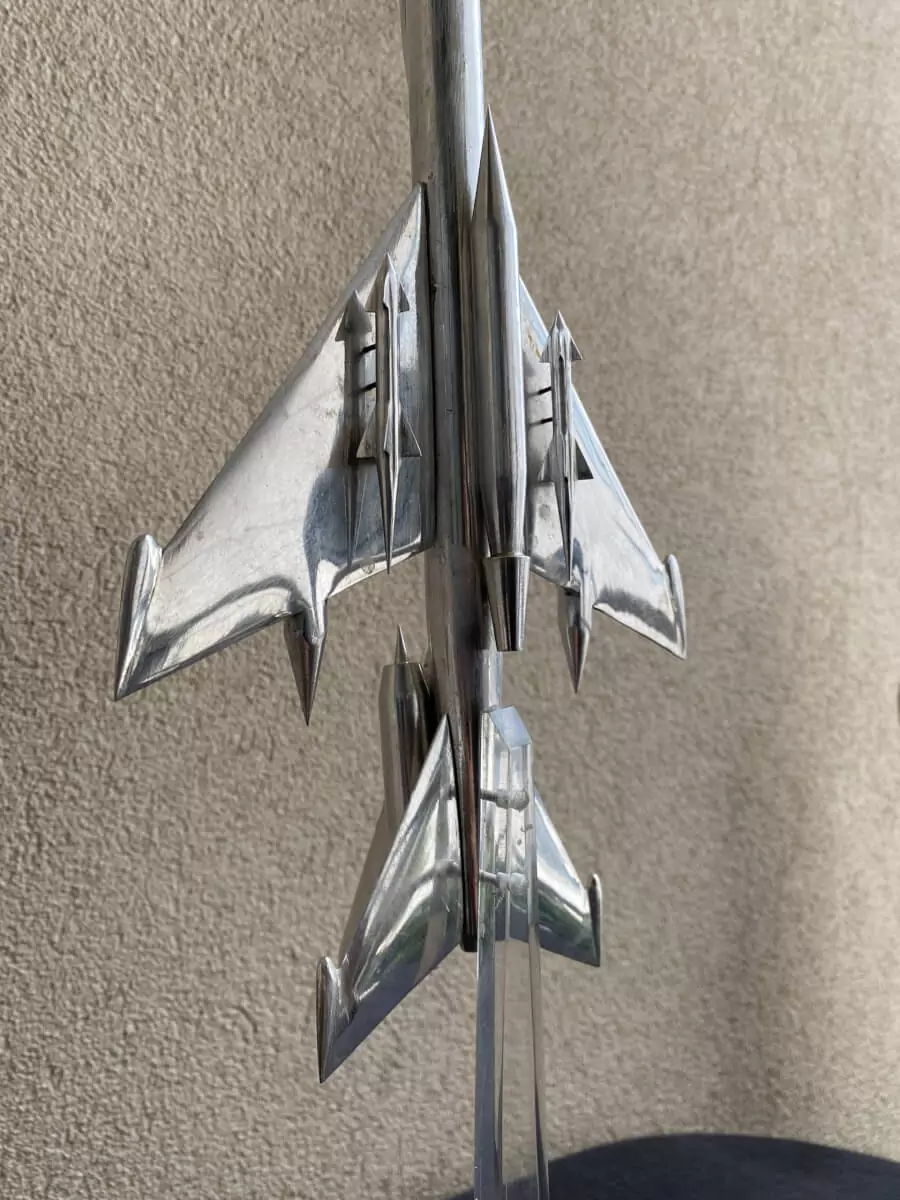
Soviet desk model of the Tupolev Tu-22 Blinder supersonic bomber, all polished metal and complete, shown in flight on a curved perspex rod fixed to a perspex and bakelite base.
1 in stock
Message received, dear comrade.
Our information desk usually replies within 24 hours at the address provided.The Brezhnev era. Détente with the West, SALT treaties, the Apollo-Soyuz mission. Economic stagnation and growing corruption.

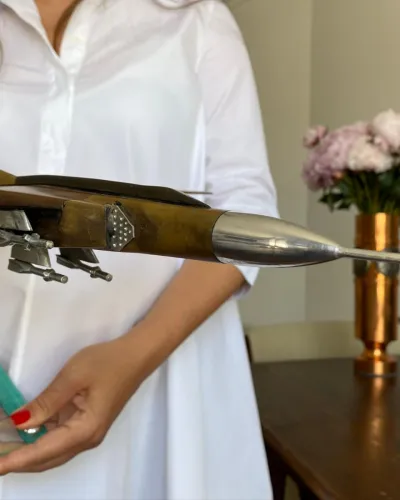
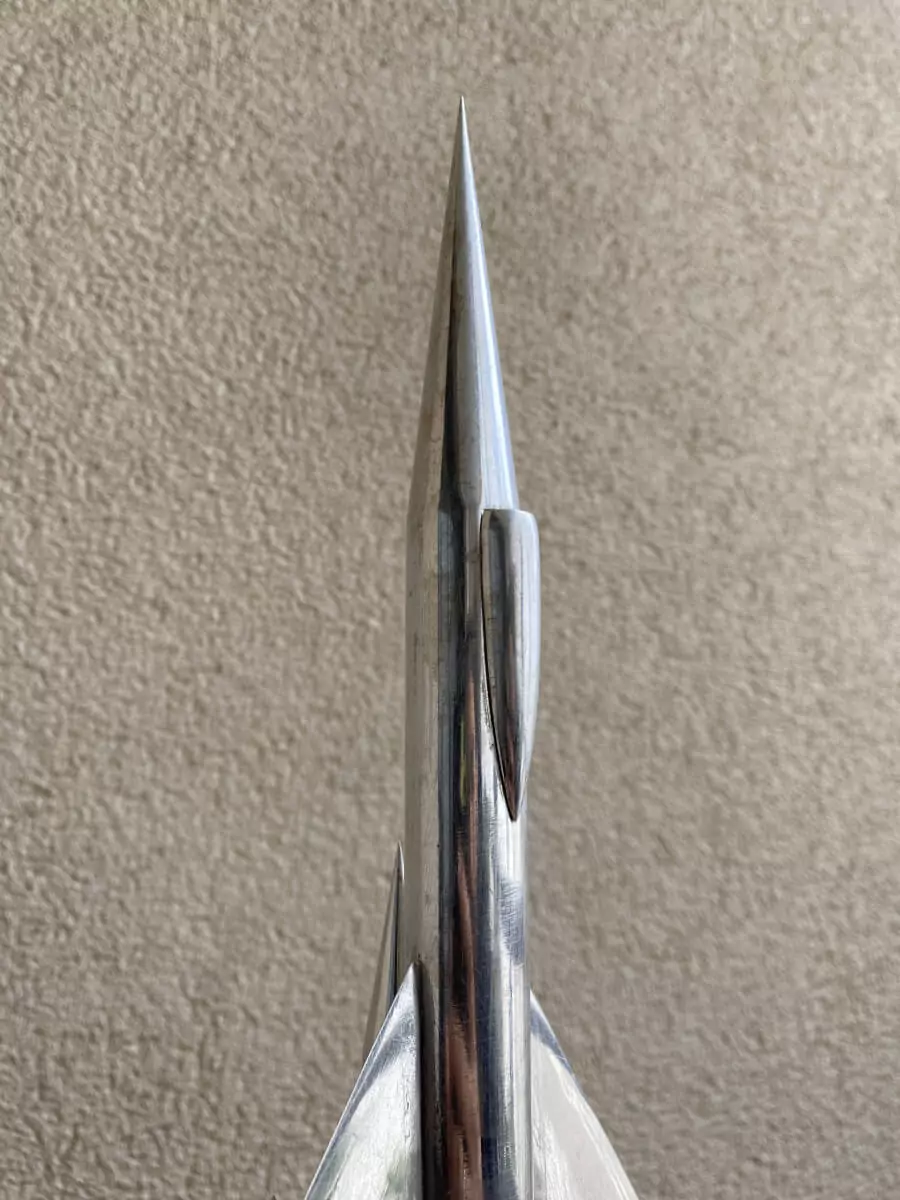
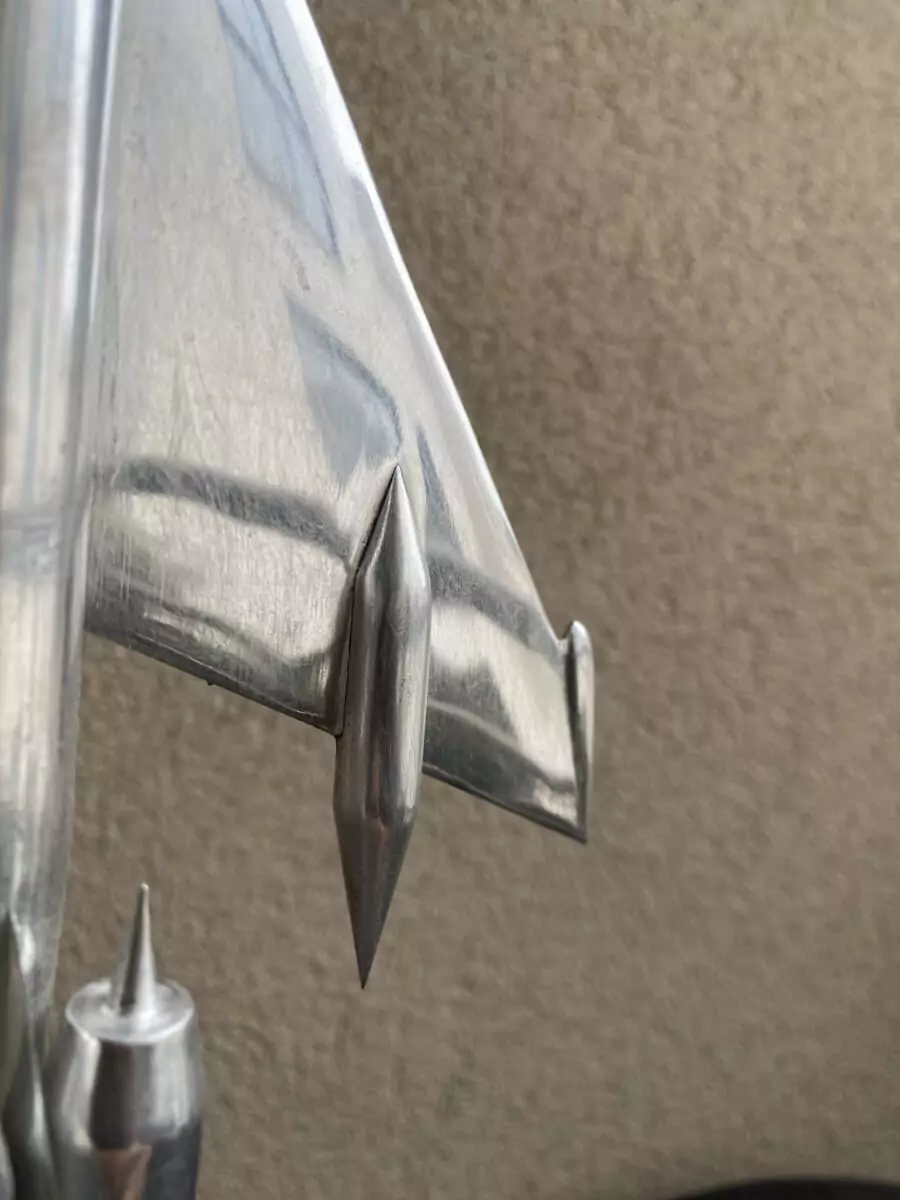
Soviet officer’s model of the Tupolev Tu-22, the supersonic bomber known in the West by its NATO reporting name Blinder. The aircraft is all polished metal and complete. The features of the type are easy to read: a slender fuselage ending in a long needle nose, swept wings carrying the main landing gear pods on their trailing edge, engines grouped at the rear of the fuselage and a swept tail. Under the wings the maker added one missile on each side, a stylised detail typical of these presentation models.
The aircraft is shown climbing, nose up, on a hook shaped curved perspex rod screwed to a trapezoid perspex base with a bakelite top. It sits on a desk and can be viewed from every side.
Desk models of this kind were made in small runs in the workshops of aircraft plants and military units, then presented to pilots, officers and engineers for a promotion, a retirement or a regiment anniversary. They stood in the offices of staff headquarters and design bureaus.
The Tu-22 was the first supersonic bomber to enter service in the USSR. Designed by the Tupolev bureau, it first flew in 1959 and was shown in public at the Tushino air display in 1961, where it took Western observers by surprise. Built in Kazan, it served with Soviet Long Range Aviation and Naval Aviation from the 1960s in bomber, reconnaissance, missile carrier and jamming versions, before being replaced by the Tu-22M.
Model in very good condition, complete, supplied with its base.
Additional information
| Weight | 2.5 kg |
|---|---|
| Dimensions | 40 × 35 × 20 cm |