Soviet MiG-23 Officer's Desk Model - USSR Fighter Jet - Metal on Stand
$438.99Unique piece

Soviet MiG-23 Officer's Desk Model - USSR Fighter Jet - Metal on Stand
$438.99Unique piece
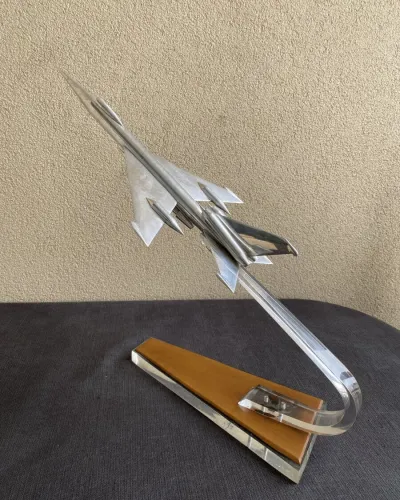
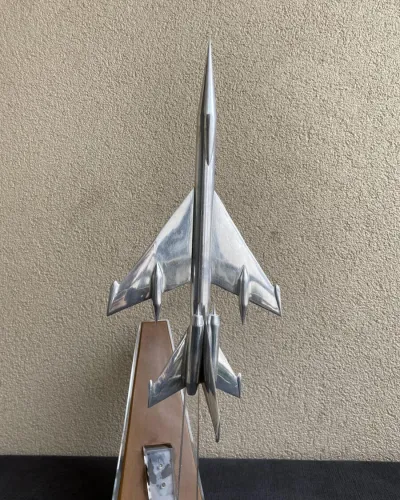
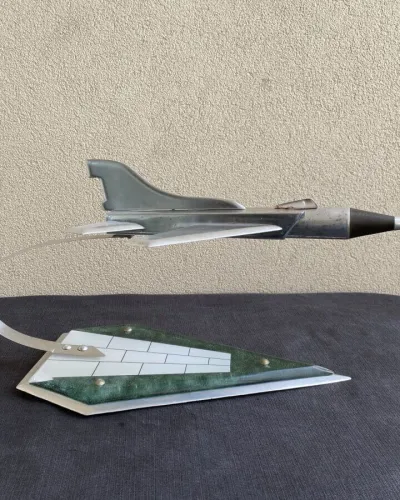
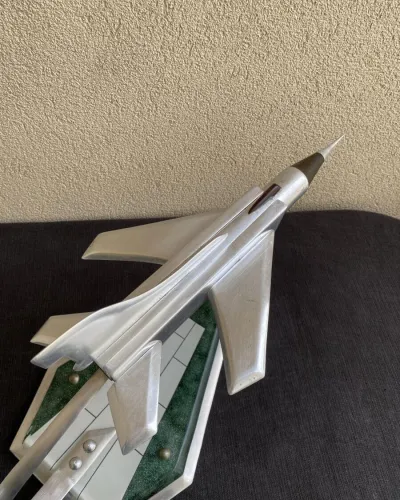
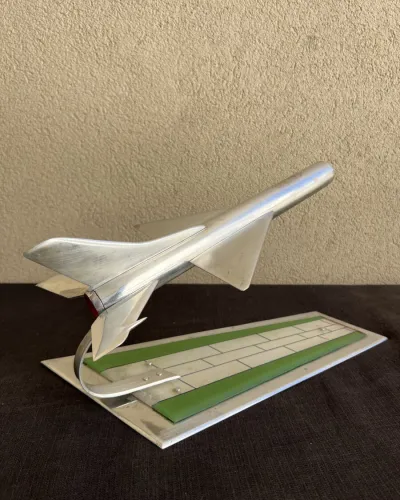
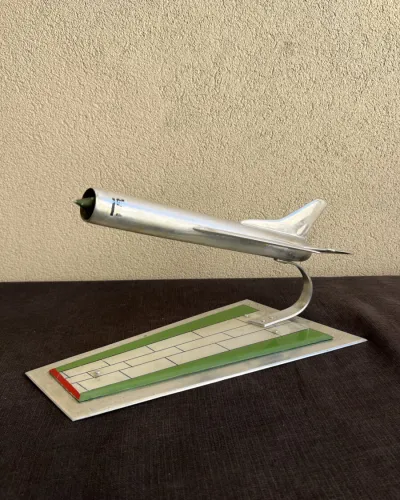
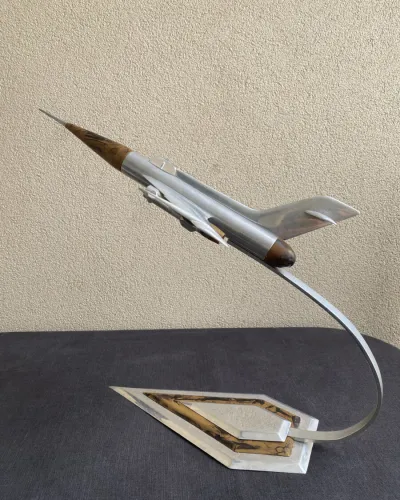
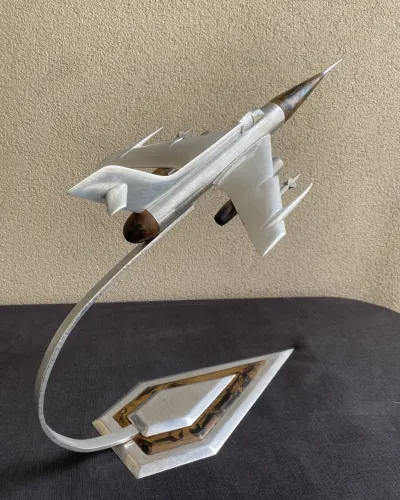
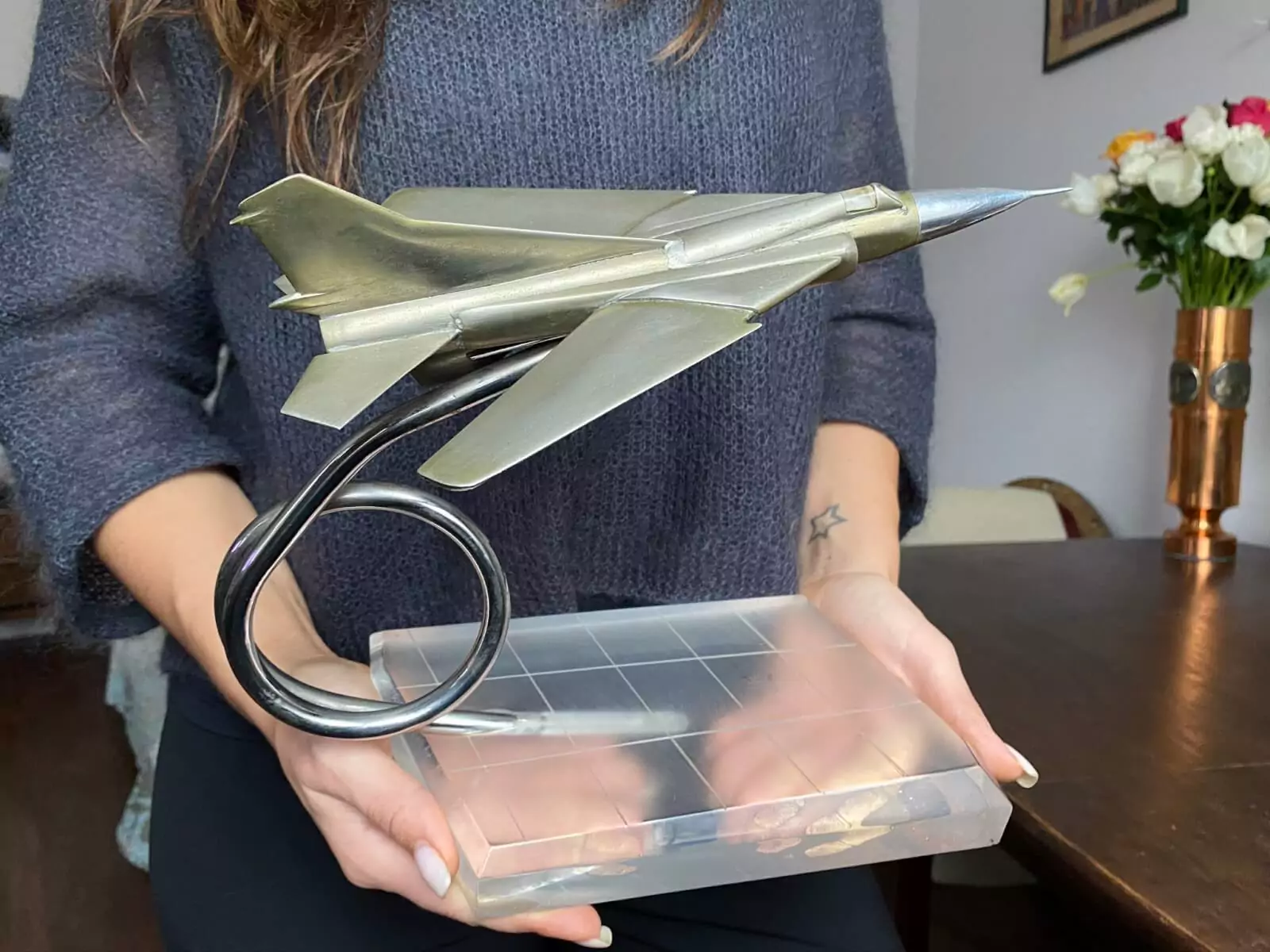
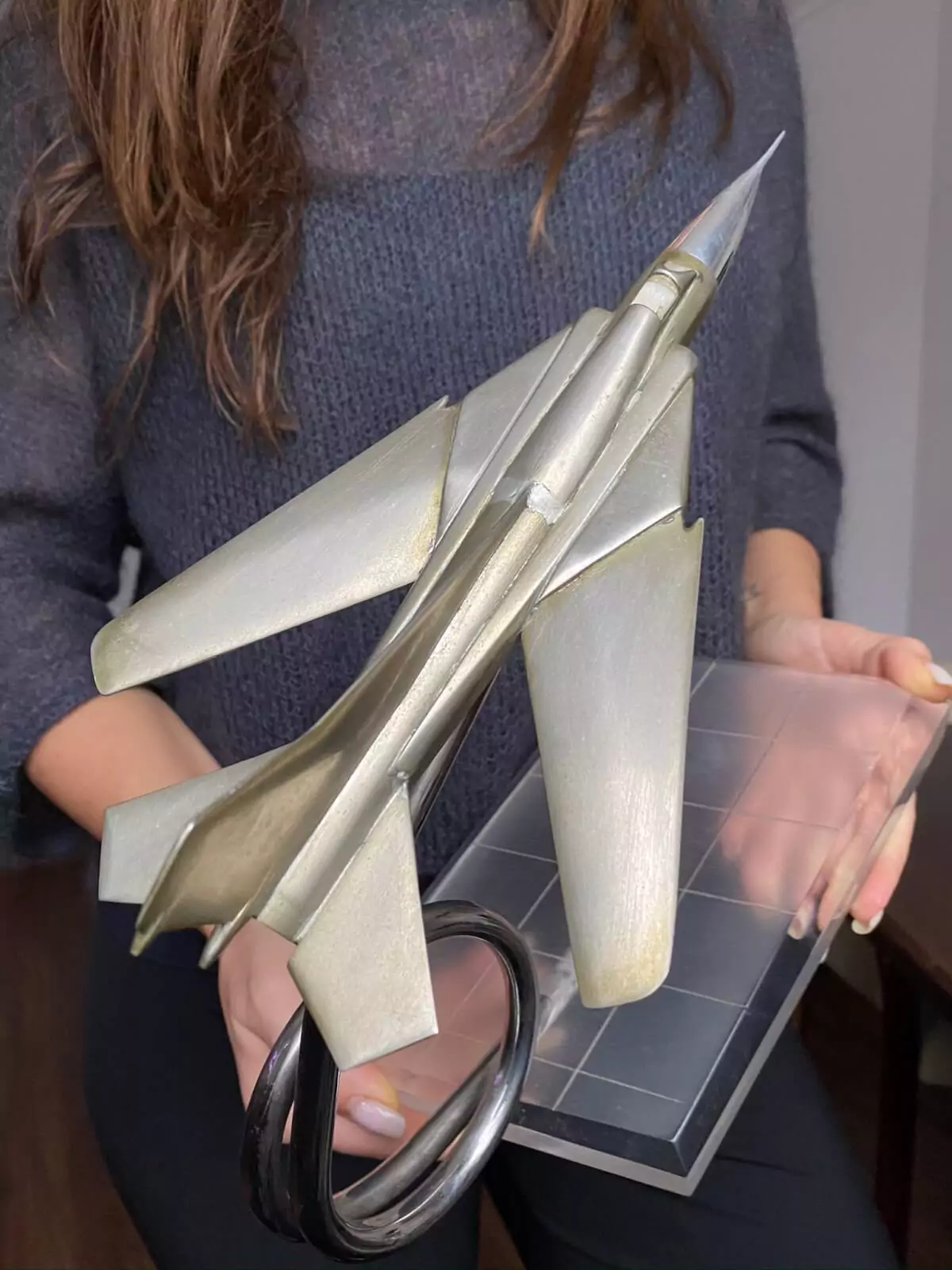
Officer’s desk model of the Soviet MiG-23 fighter in metal, wings at full sweep, mounted on a looping chrome support and a clear gridded base. Complete set.
1 in stock
Message received, dear comrade.
Our information desk usually replies within 24 hours at the address provided.The Brezhnev era. Détente with the West, SALT treaties, the Apollo-Soyuz mission. Economic stagnation and growing corruption.


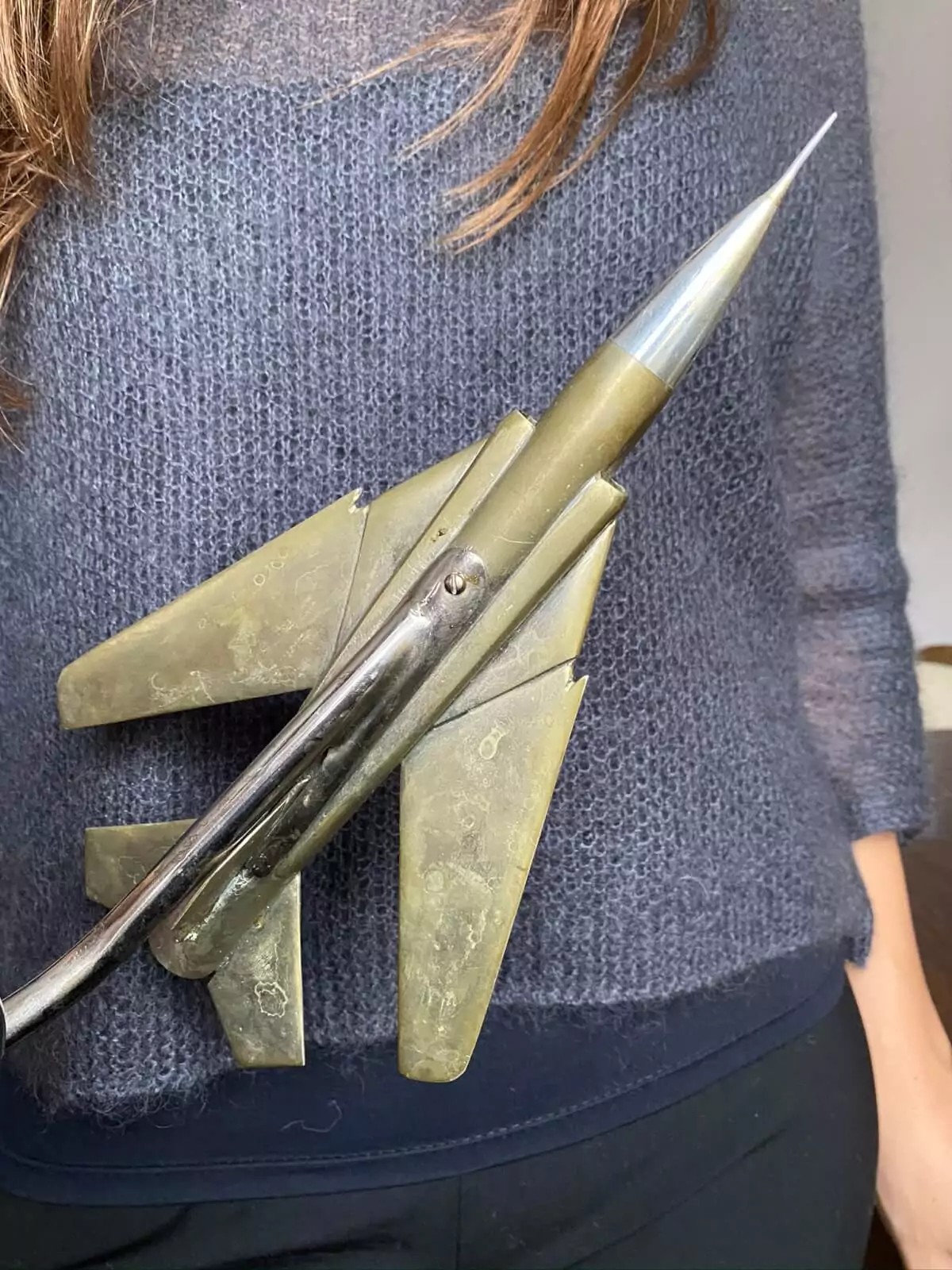
Officer’s model of the Soviet MiG-23 fighter aircraft, in metal, shown in flight on a chrome tubular support that forms a full loop before meeting a clear base engraved with a grid. The aircraft is shown with its wings at full sweep, the high speed configuration of this variable geometry jet. The side air intakes, canopy, fin, tailplanes, exhaust nozzle and ventral fin are all modelled. The polished, tapering nose cone ends in a fine point that echoes the aircraft’s nose probe.
The metal has a golden tone. The support is fixed under the aircraft with a screw. No inscription or marking is visible. This is an officer’s gift, and the set is complete: aircraft, support and base.
The MiG-23 (NATO reporting name Flogger) was designed by the Mikoyan-Gurevich design bureau. The 23-11 prototype first flew on 10 June 1967, piloted by Aleksandr Fedotov. Its variable geometry wing was set from the cockpit in three positions, 16° for takeoff and landing, 45° for combat manoeuvring and 72° for high speed interception. Officially commissioned into the Soviet Air Forces in January 1974, it was built in more than 5,000 examples and exported to Warsaw Pact countries, the Middle East, Africa, India and Cuba.
Additional information
| Weight | 2.5 kg |
|---|---|
| Dimensions | 40 × 30 × 20 cm |