Soviet Navy Star Globe ZG - Celestial Navigation - 1961 - USSR - No. 1345
$679.99Unique piece




Soviet Navy Star Globe ZG - Celestial Navigation - 1961 - USSR - No. 1345
$679.99Unique piece
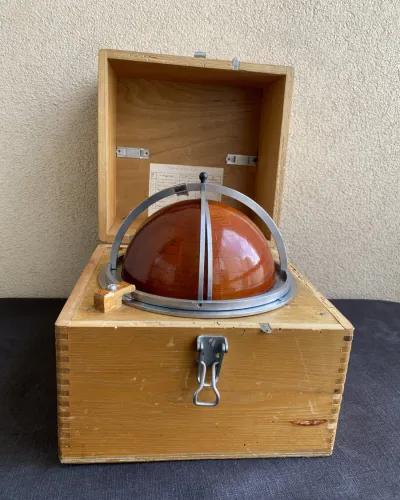
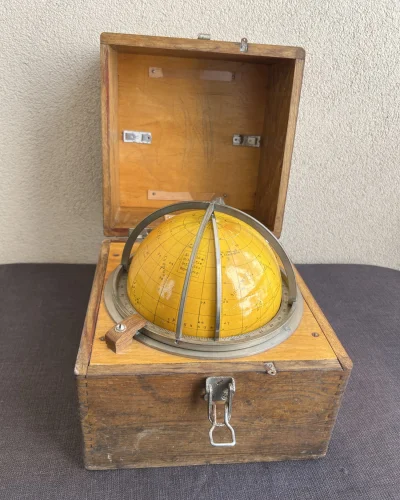
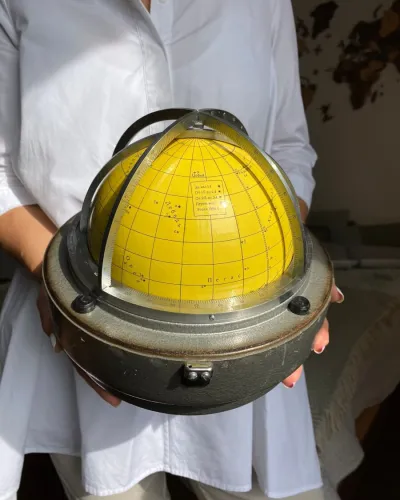
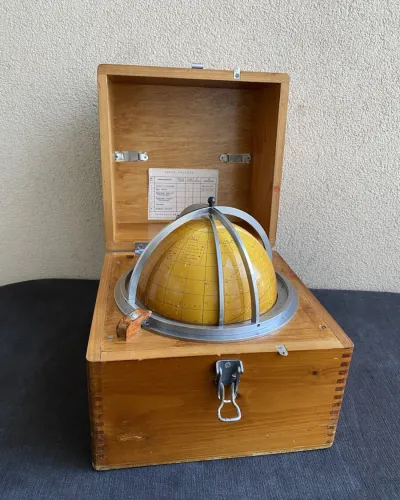
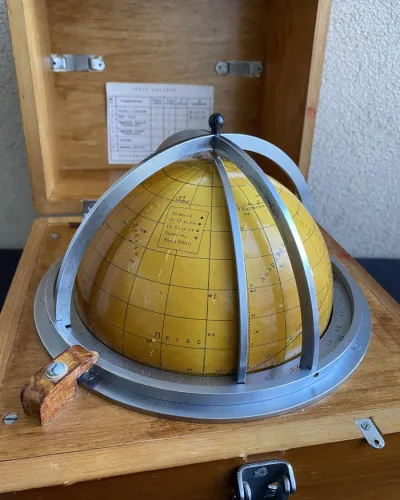
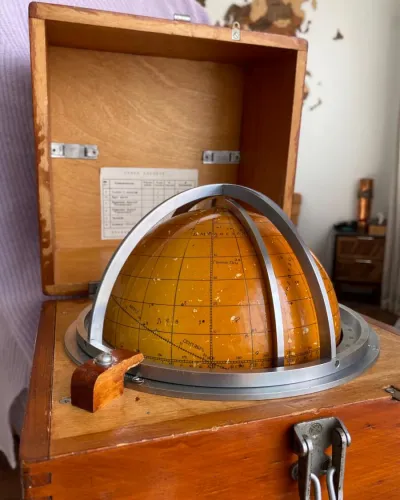
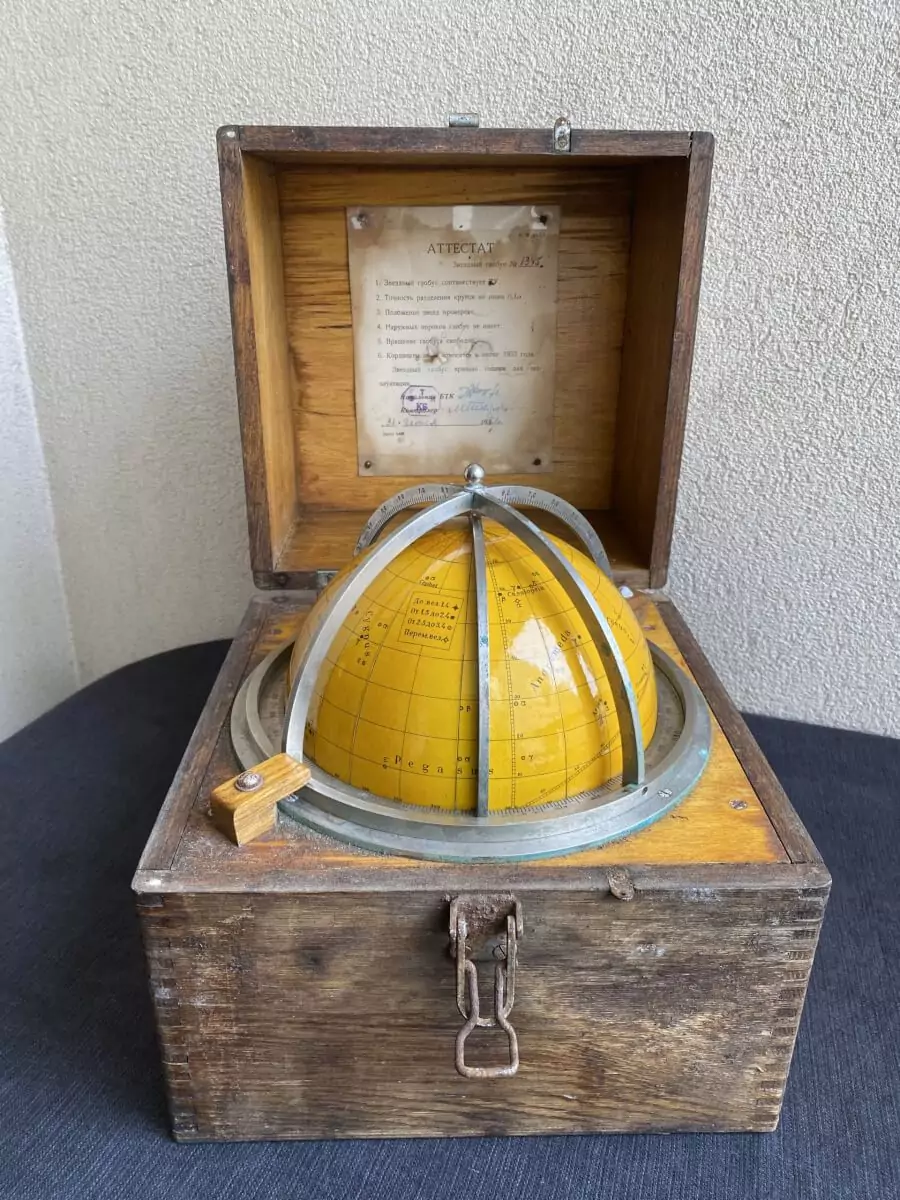
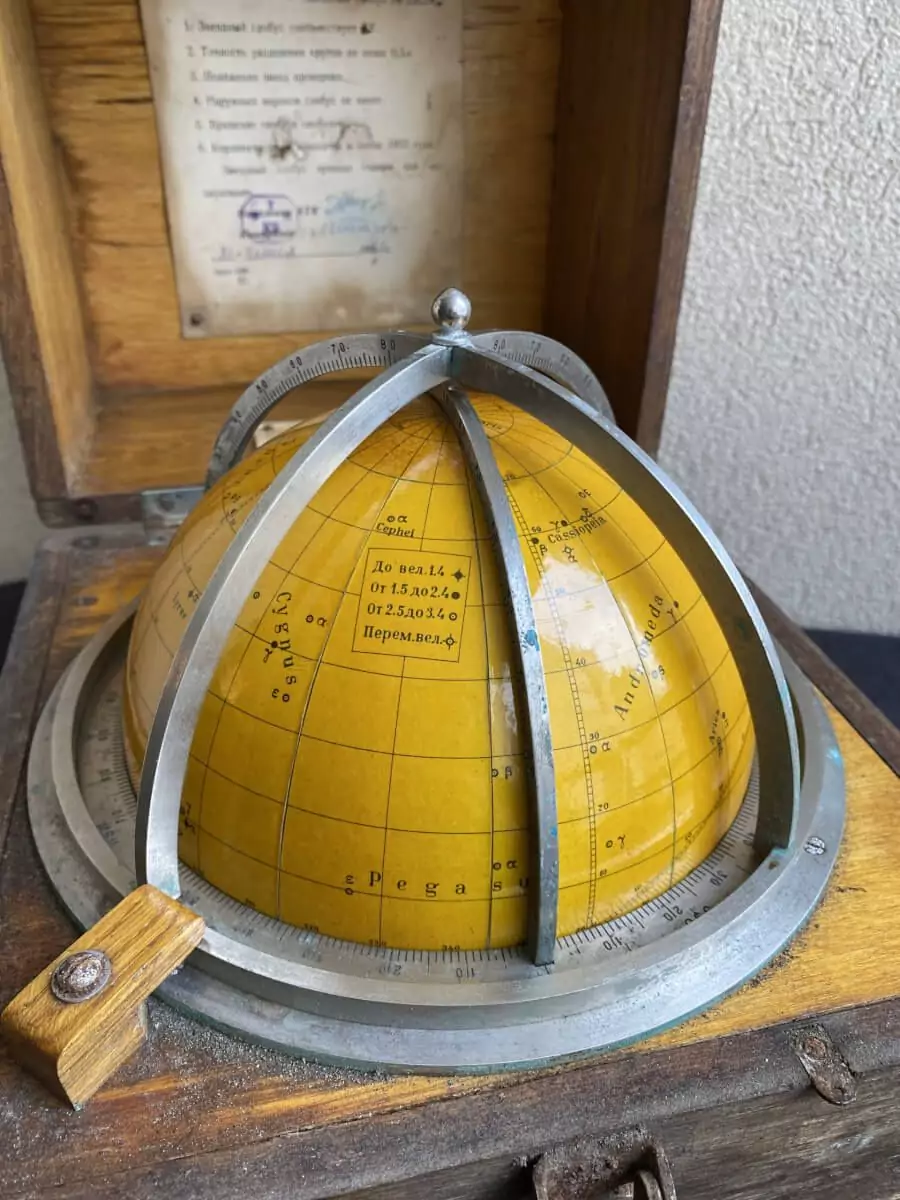
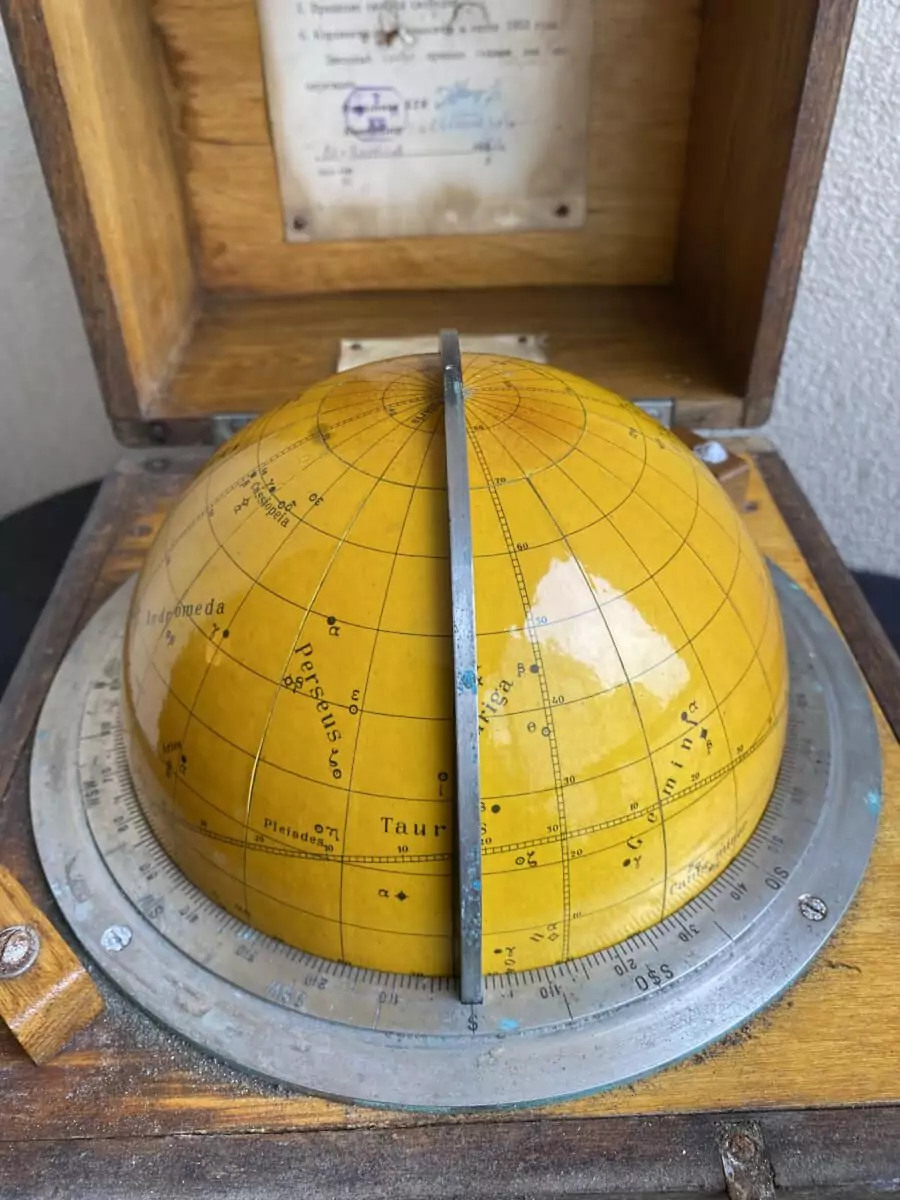
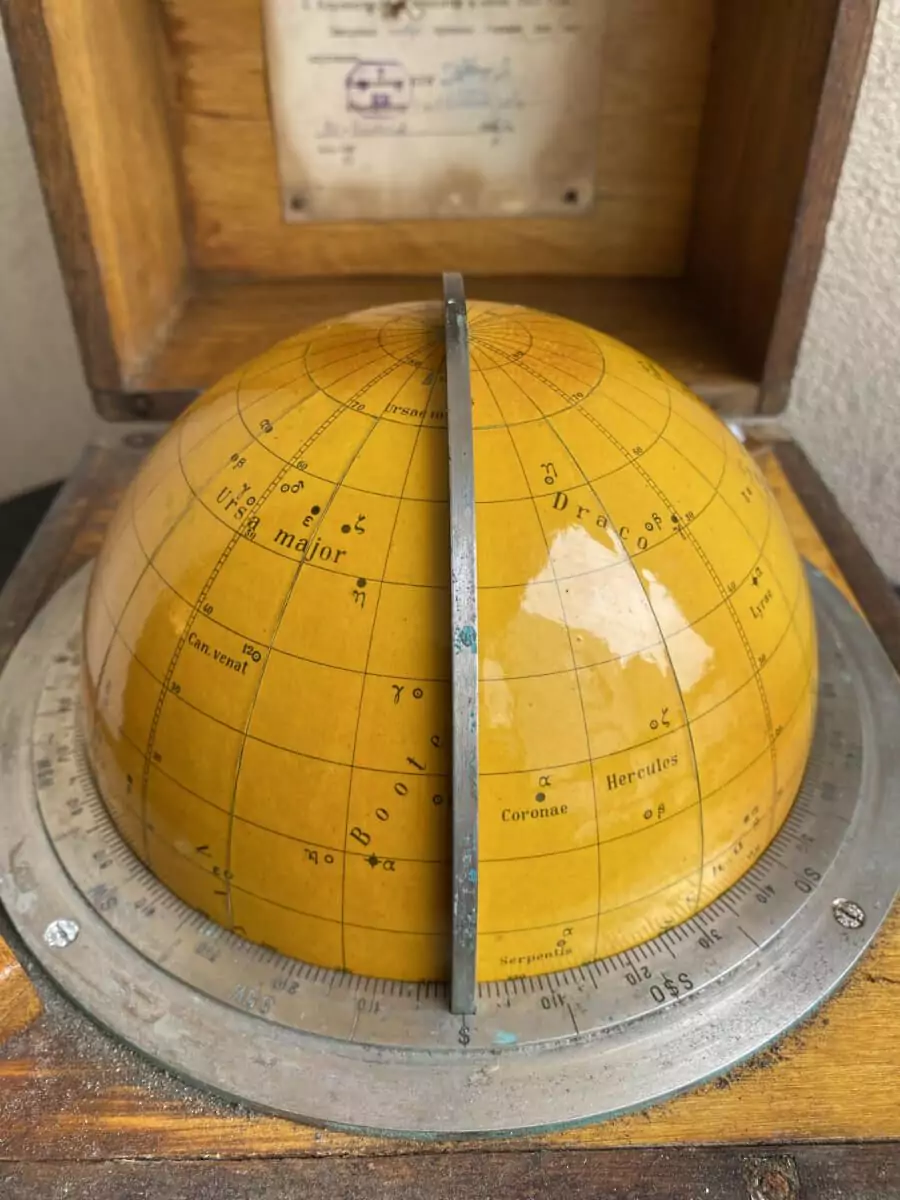
Soviet ZG celestial navigation globe no. 1345, used by the Soviet Navy (VMF), dated 1961, as new. Constellations in Latin, azimuth ring and altitude circle, wooden case with its inspection certificate bearing the same number and its packing list.
1 in stock
Message received, dear comrade.
Our information desk usually replies within 24 hours at the address provided.Flight of Yuri Gagarin, the first man in space, on 12 April. Construction of the Berlin Wall.

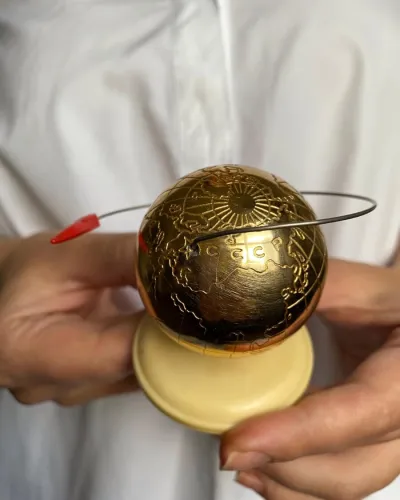

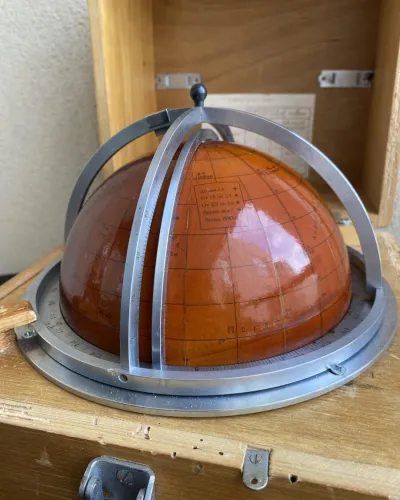
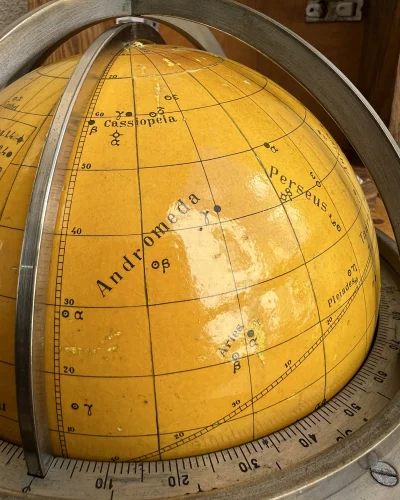
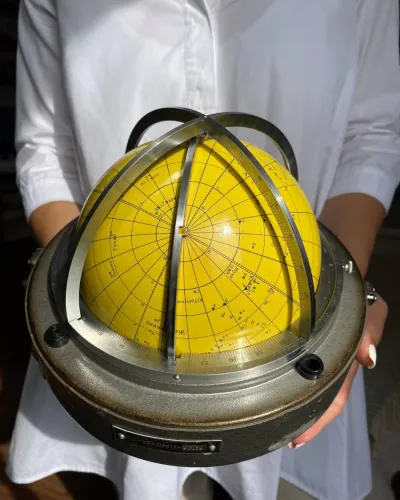
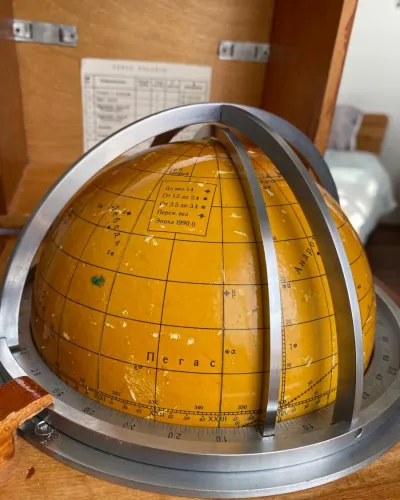
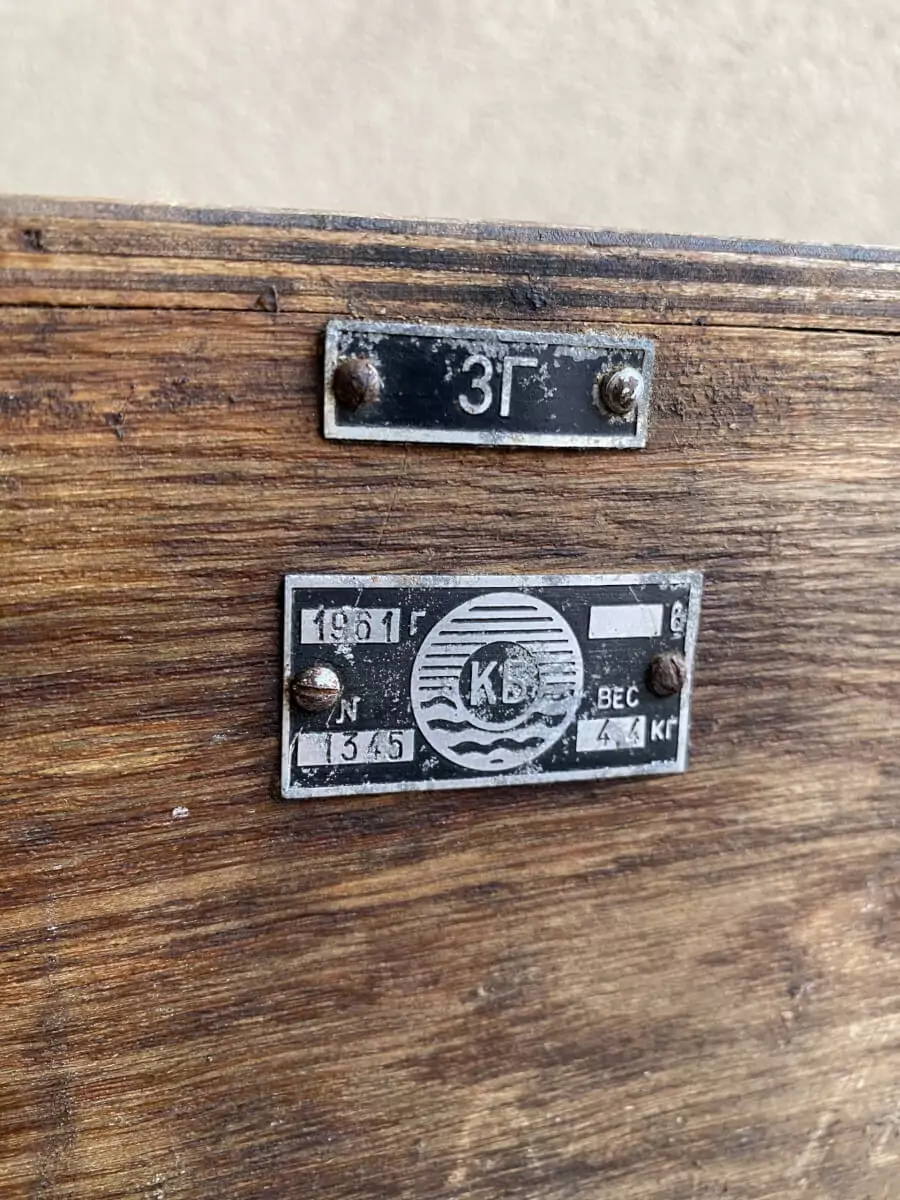
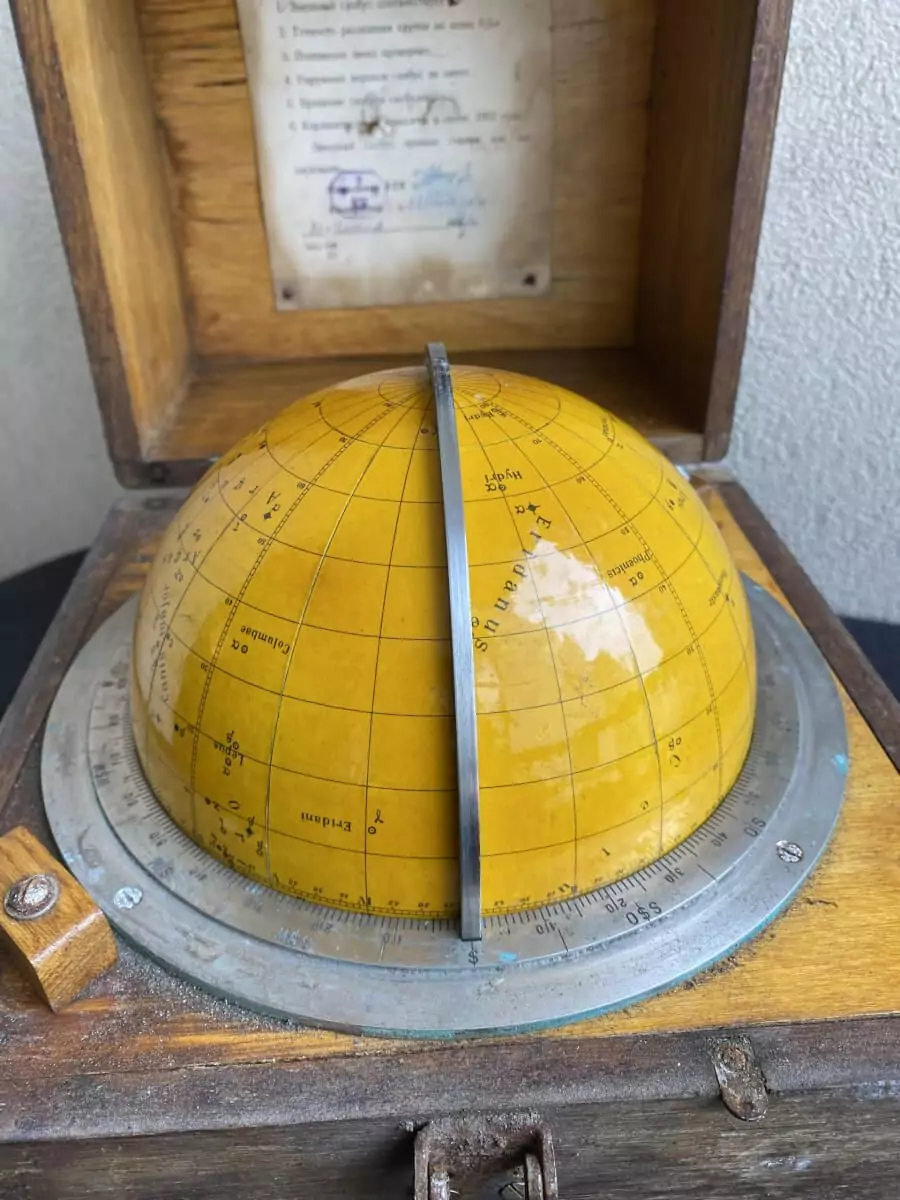
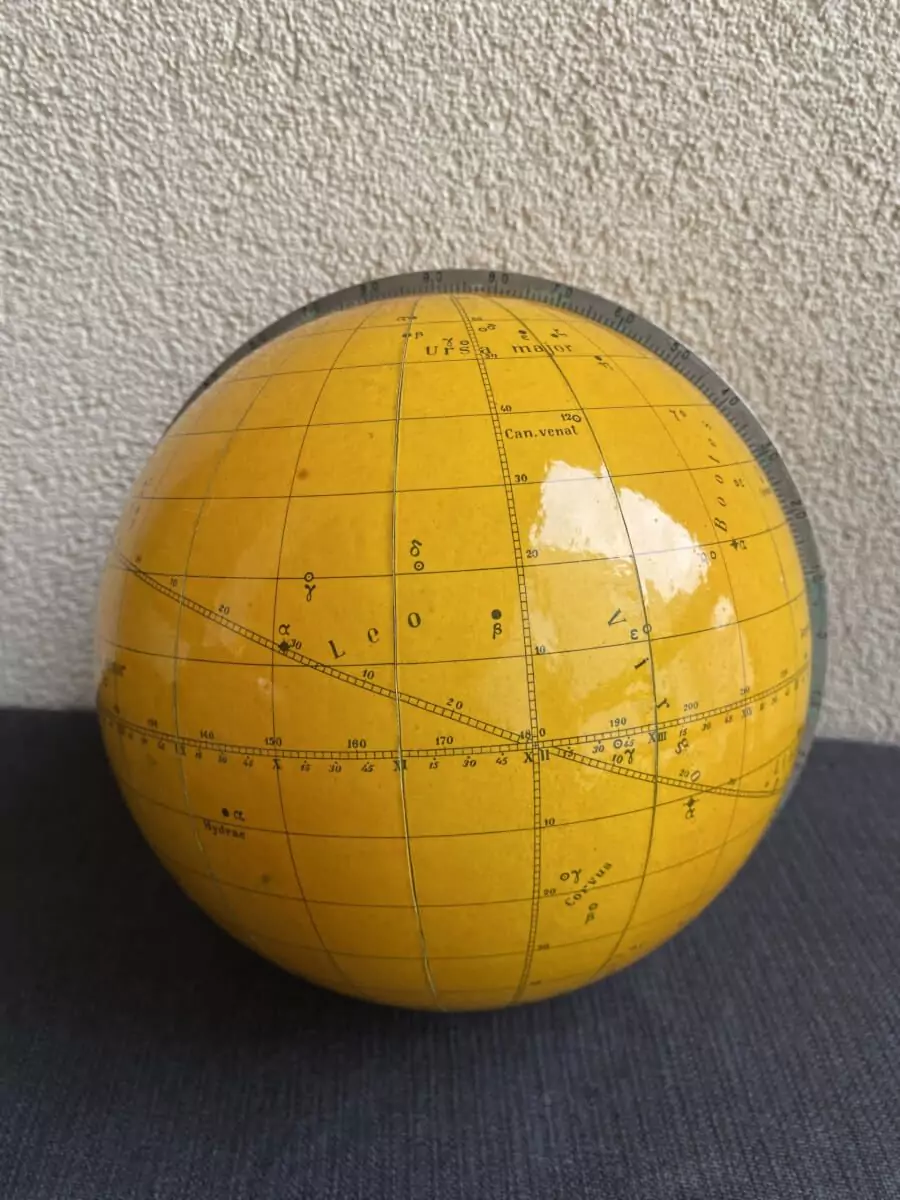
Soviet celestial navigation globe used by the Soviet Navy (VMF), designated ЗГ (ZG, for zvyozdny globus, star globe). The case carries the ЗГ (ZG) plate and a plate with the КБ (KB) mark surrounded by waves, dated 1961 and numbered 1345. The yellow varnished globe shows the constellations in Latin, as on international star charts: Pegasus, Andromeda, Cassiopeia, Ursa Major, Draco, Hercules, Leo, Taurus with the Pleiades, and in the southern hemisphere Centaurus, Argus, Eridanus, Pavo and Tucana. Only the magnitude cartouche is in Russian. The ecliptic and the equator are graduated, the equator in hours marked in Roman numerals. The globe is as new.
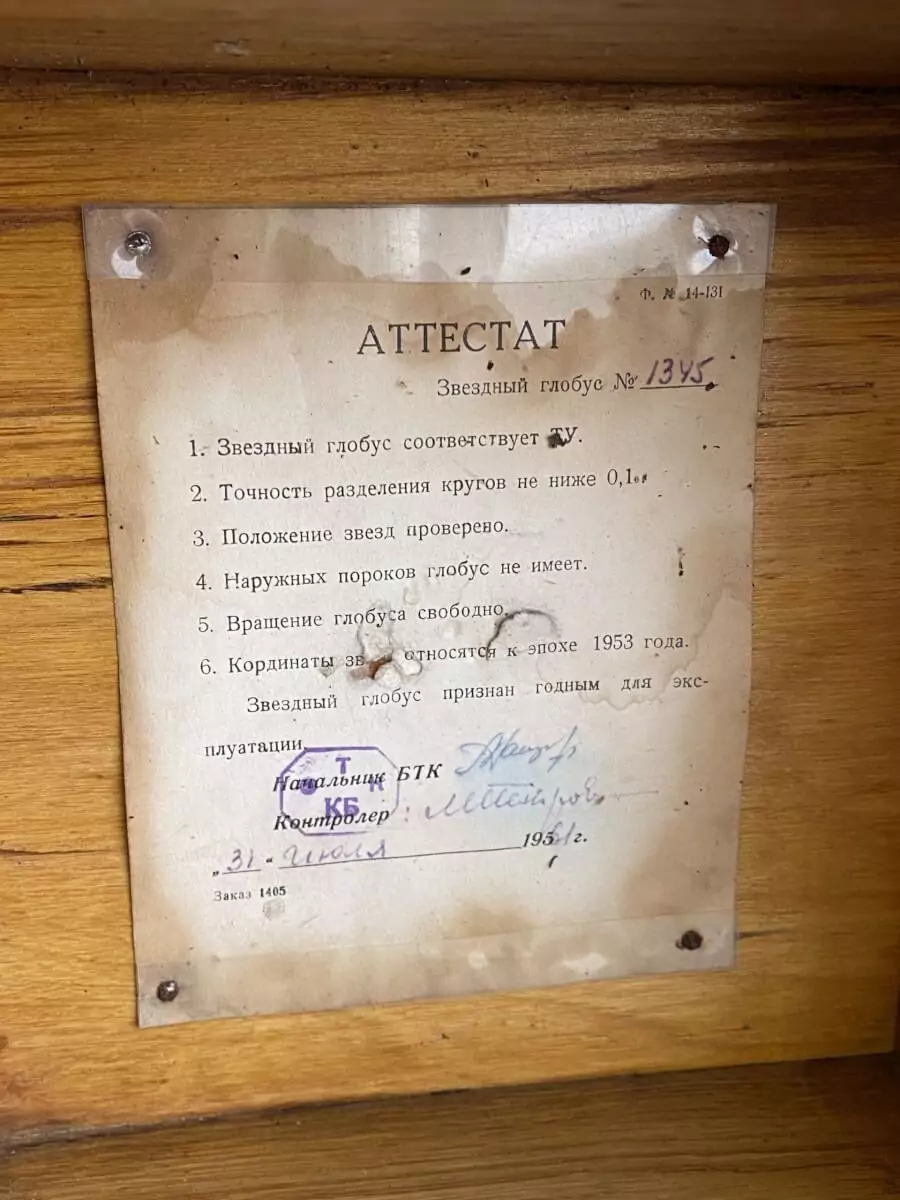
It turns inside a ring graduated in degrees and marked with the cardinal points, under the altitude circle, a cage of graduated metal half circles topped by a ball. The lid keeps its АТТЕСТАТ (inspection certificate) for globe no. 1345: globe compliant with technical specifications, circle graduation accuracy of 0.1°, star positions checked, free rotation, star coordinates referred to the epoch 1953, globe declared fit for service. It is signed by the head of the technical control bureau and the inspector, stamped КБ (KB) and dated 31 июля (31 July). A Ведомость укладки (packing list) details the contents: globe with ring, altitude circle, red and black Стеклограф (Steklograf) pencils, flannel cloth. It includes a box for the военпред (military acceptance representative).
A star globe is used to prepare sextant sights. Set to the latitude and sidereal time, it gives the approximate altitude and azimuth of the navigational stars, so the navigator can choose which stars to observe at twilight. This 1961 example is stored in its dark wooden case with finger-jointed corners, closed by a metal latch.
Additional information
| Weight | 5 kg |
|---|---|
| Dimensions | 40 × 40 × 40 cm |