Soviet Navy Celestial Navigation Star Globe ZG - USSR 1979 - No. 9047
$512.99Unique piece
Soviet Navy Celestial Navigation Star Globe ZG - USSR 1979 - No. 9047
$512.99Unique piece
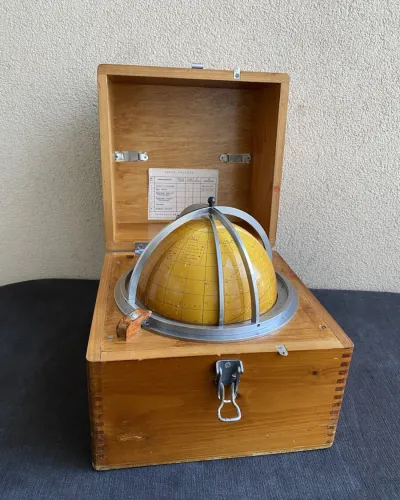
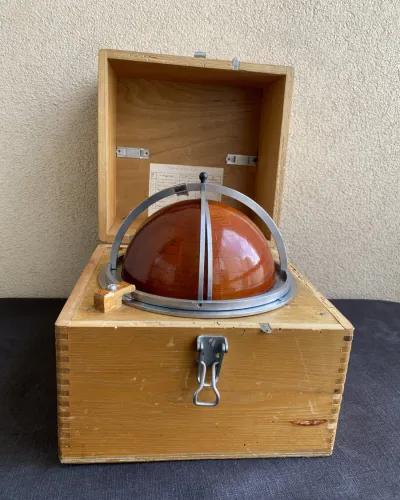
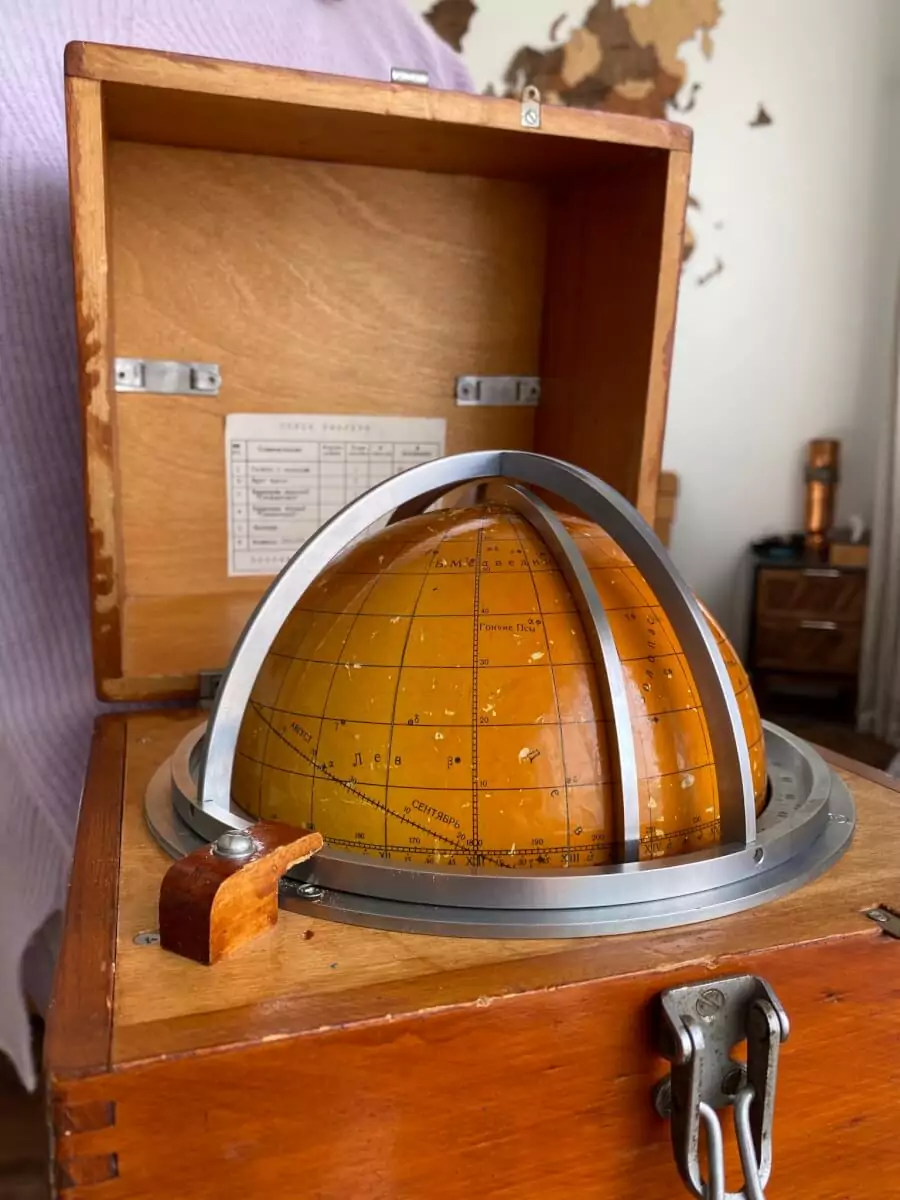
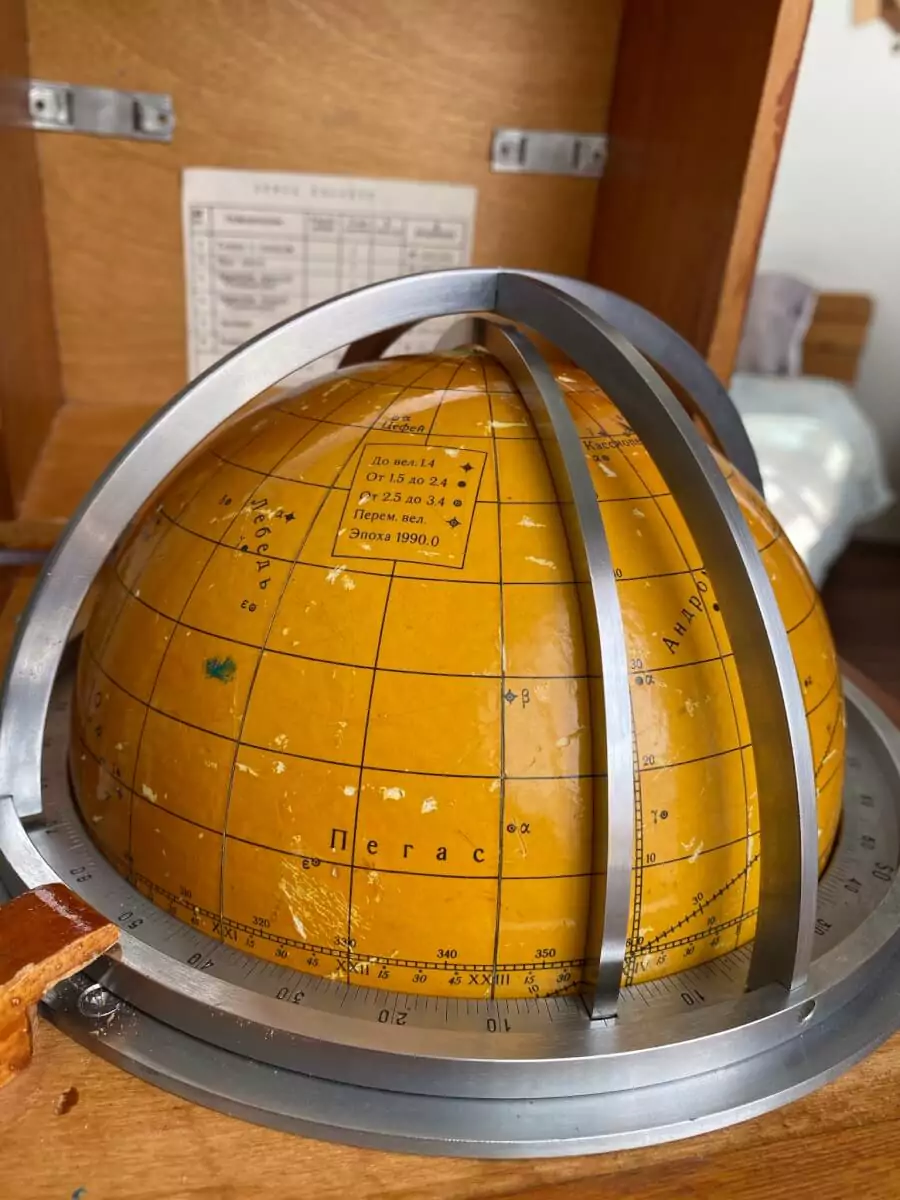
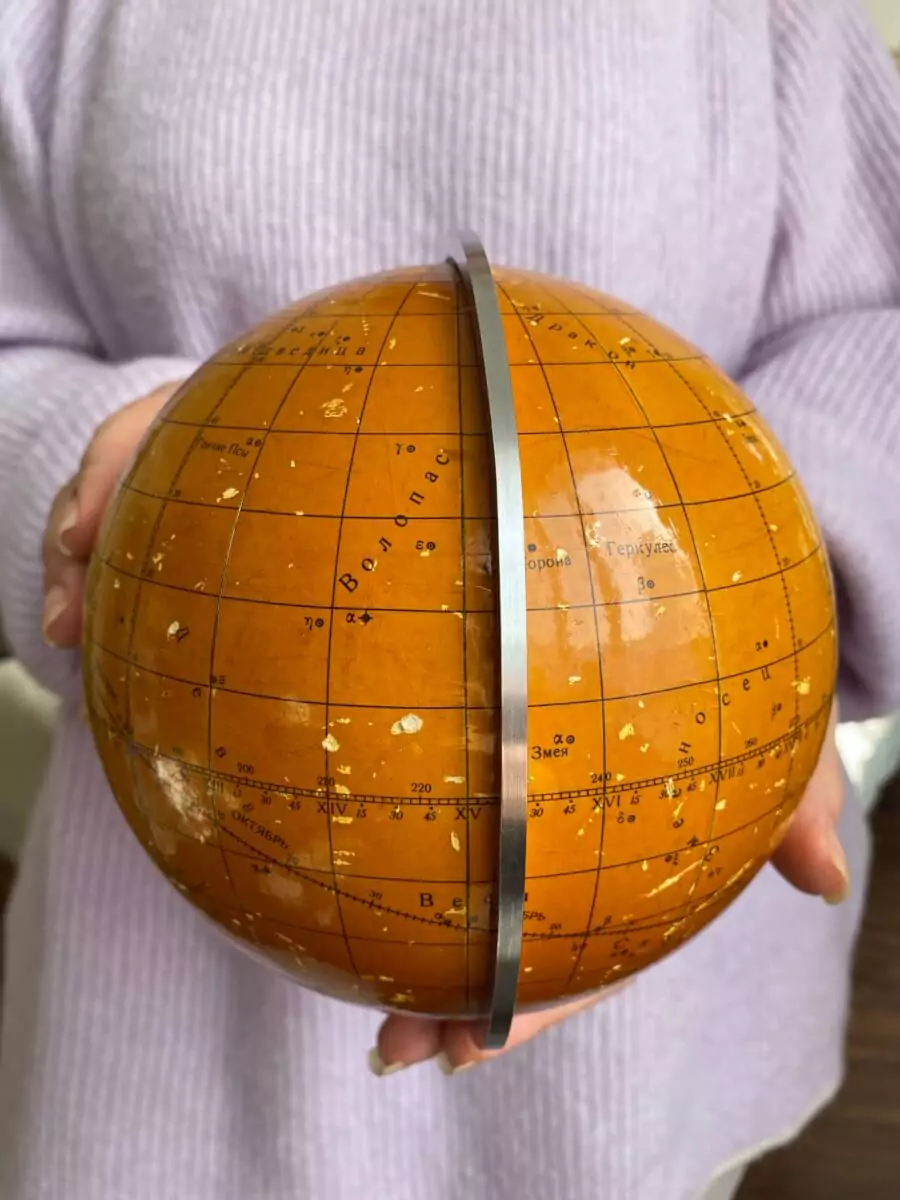
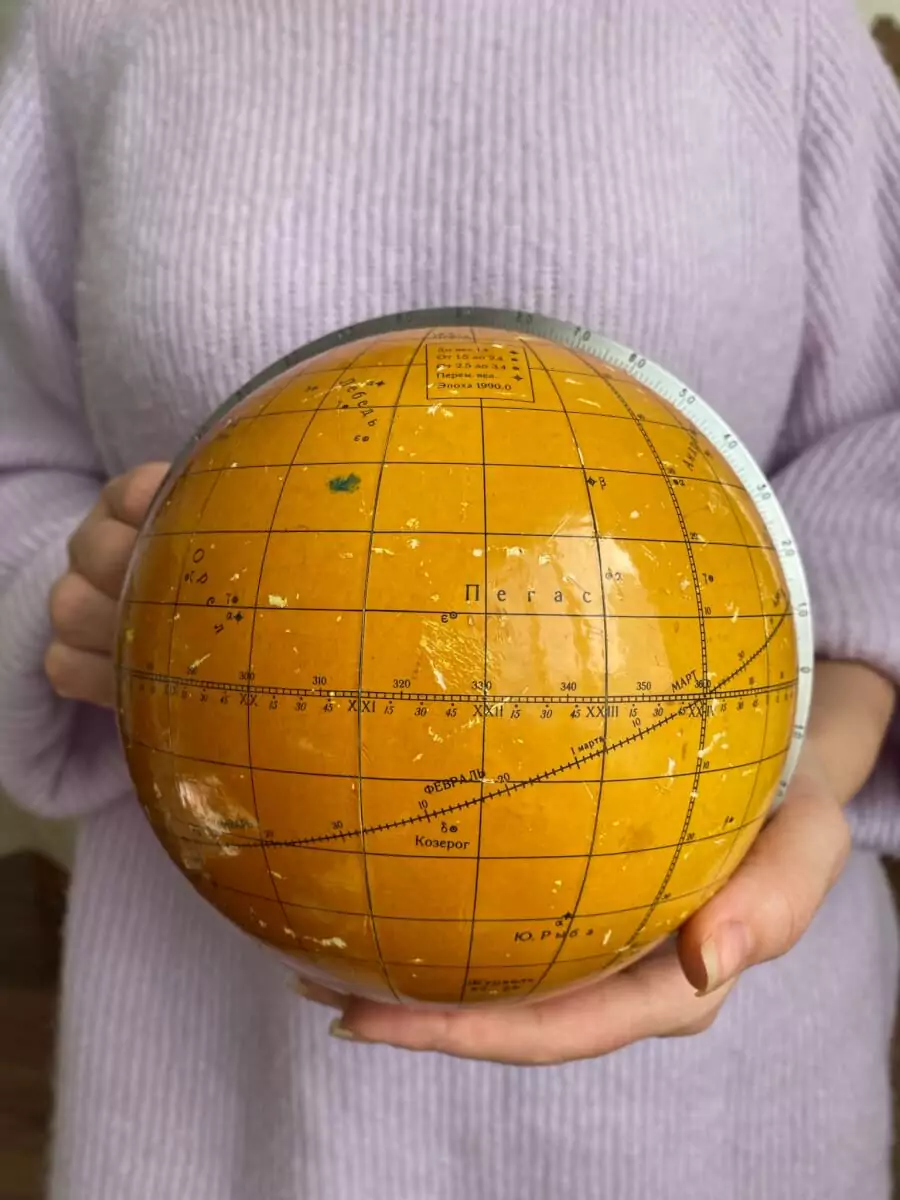
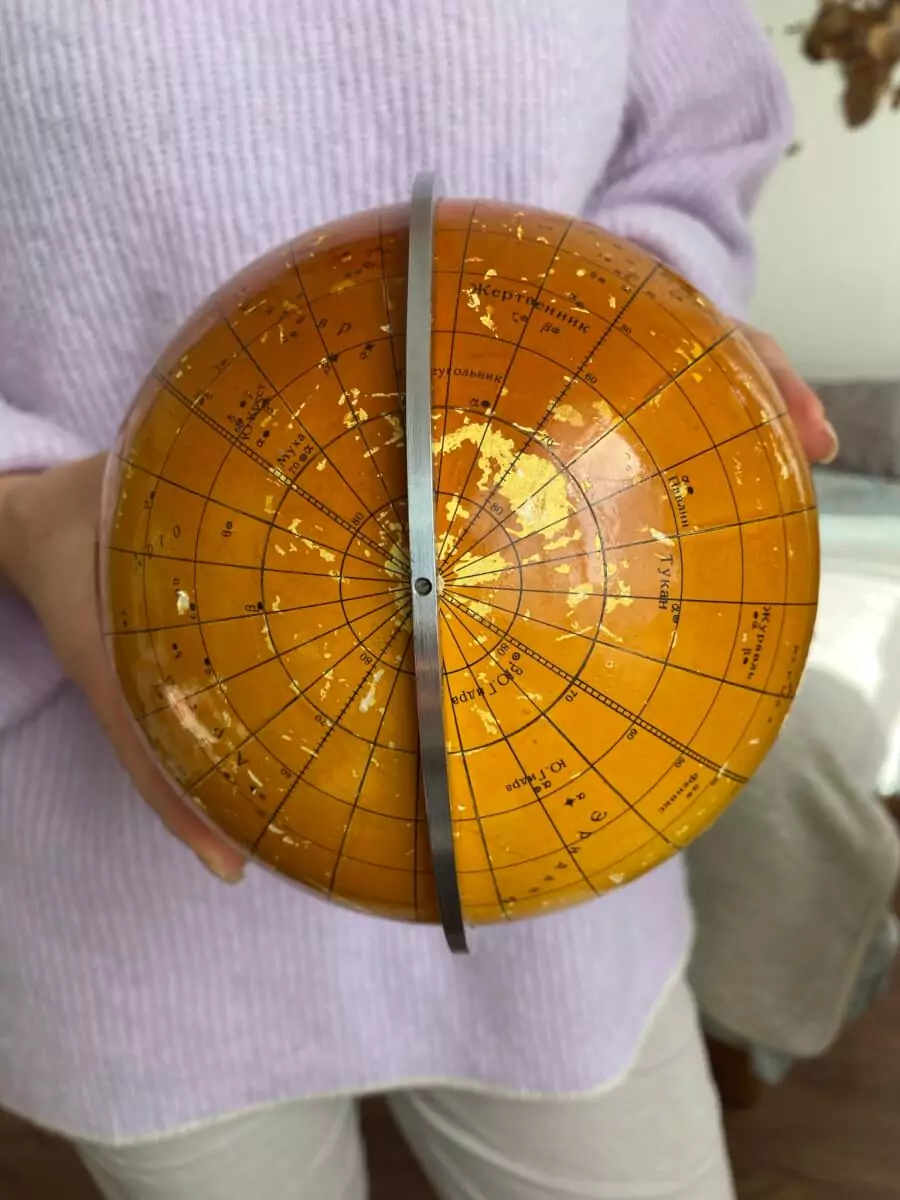
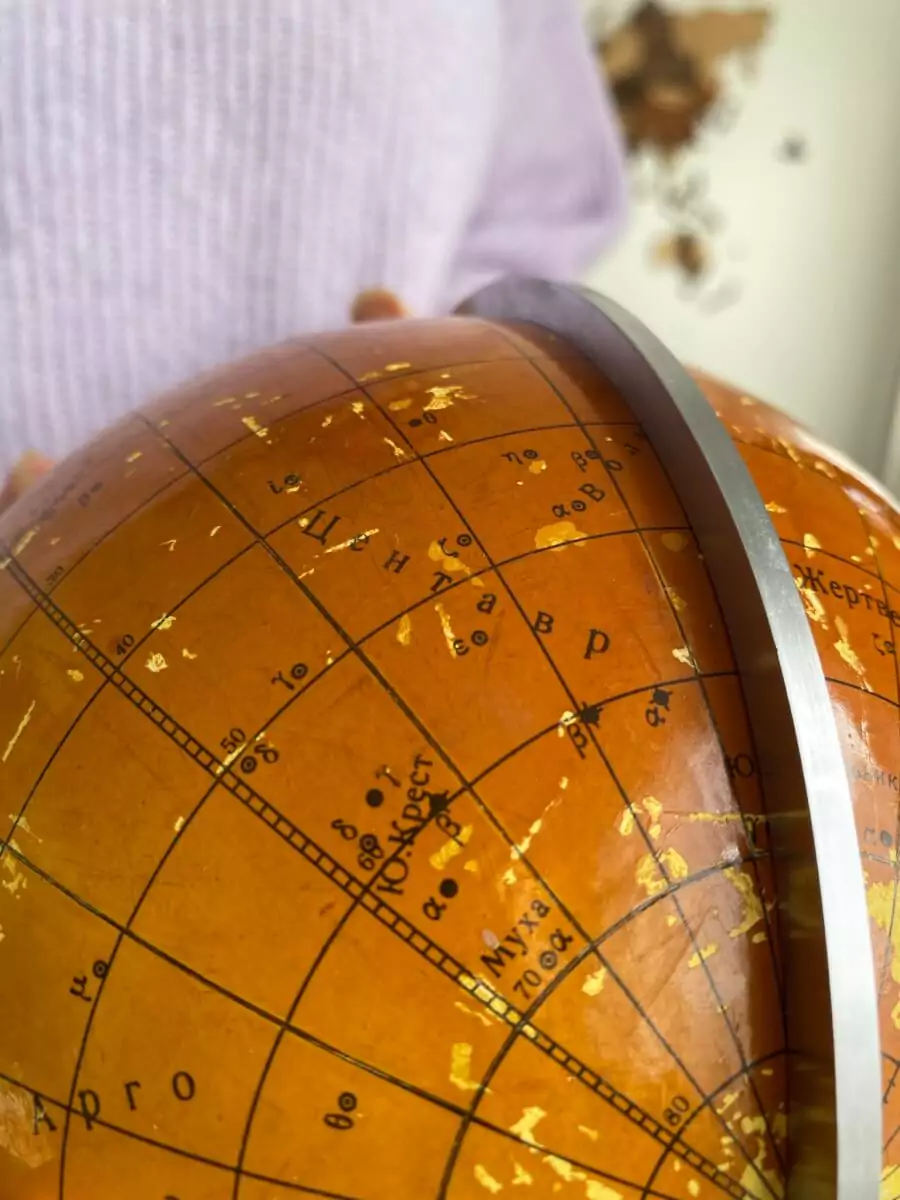
ЗГ (ZG) star globe used by the Soviet Navy (VMF) for celestial navigation, dated 1979, number 9047. Celestial sphere with constellations in Russian, graduated horizon ring and altitude arcs, in its box-jointed wooden case with its packing list.
1 in stock
Message received, dear comrade.
Our information desk usually replies within 24 hours at the address provided.Soviet invasion of Afghanistan in December. Beginning of the end of detente.

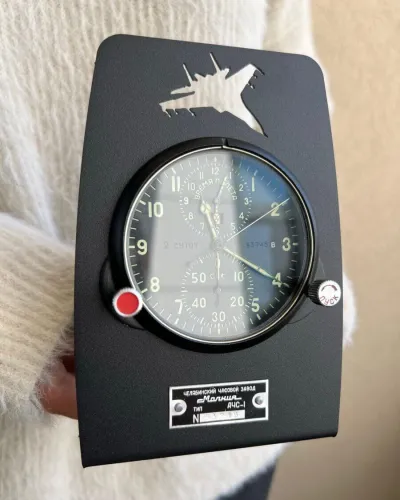
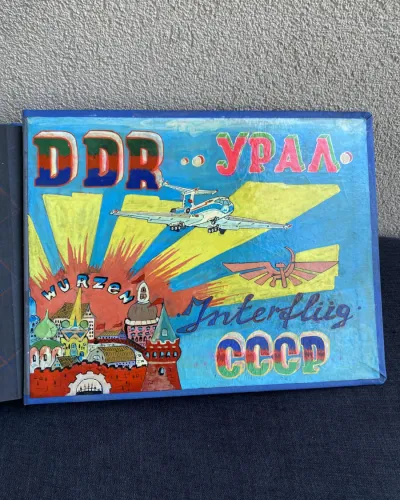
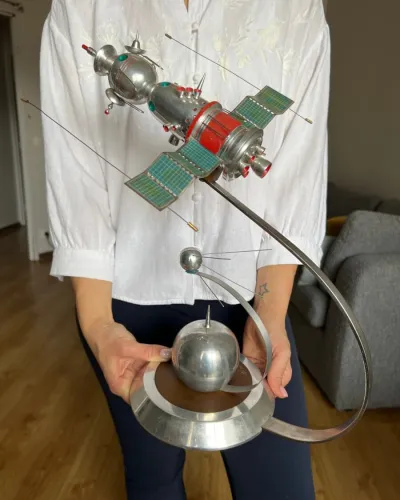
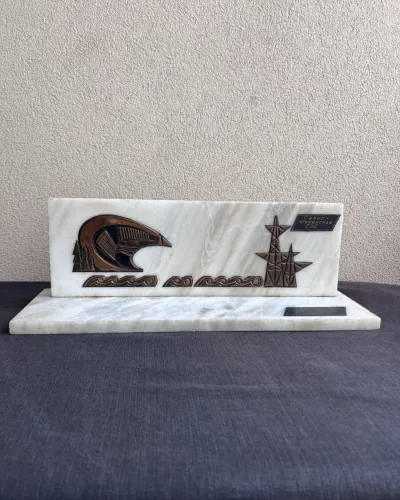
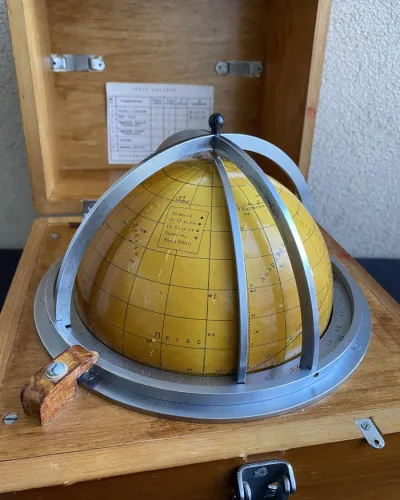
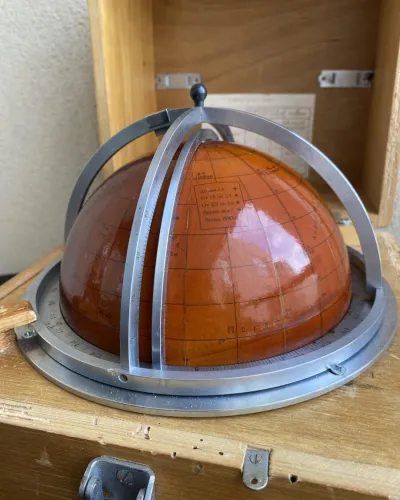
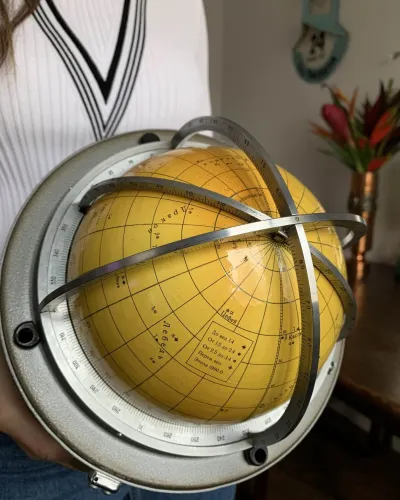
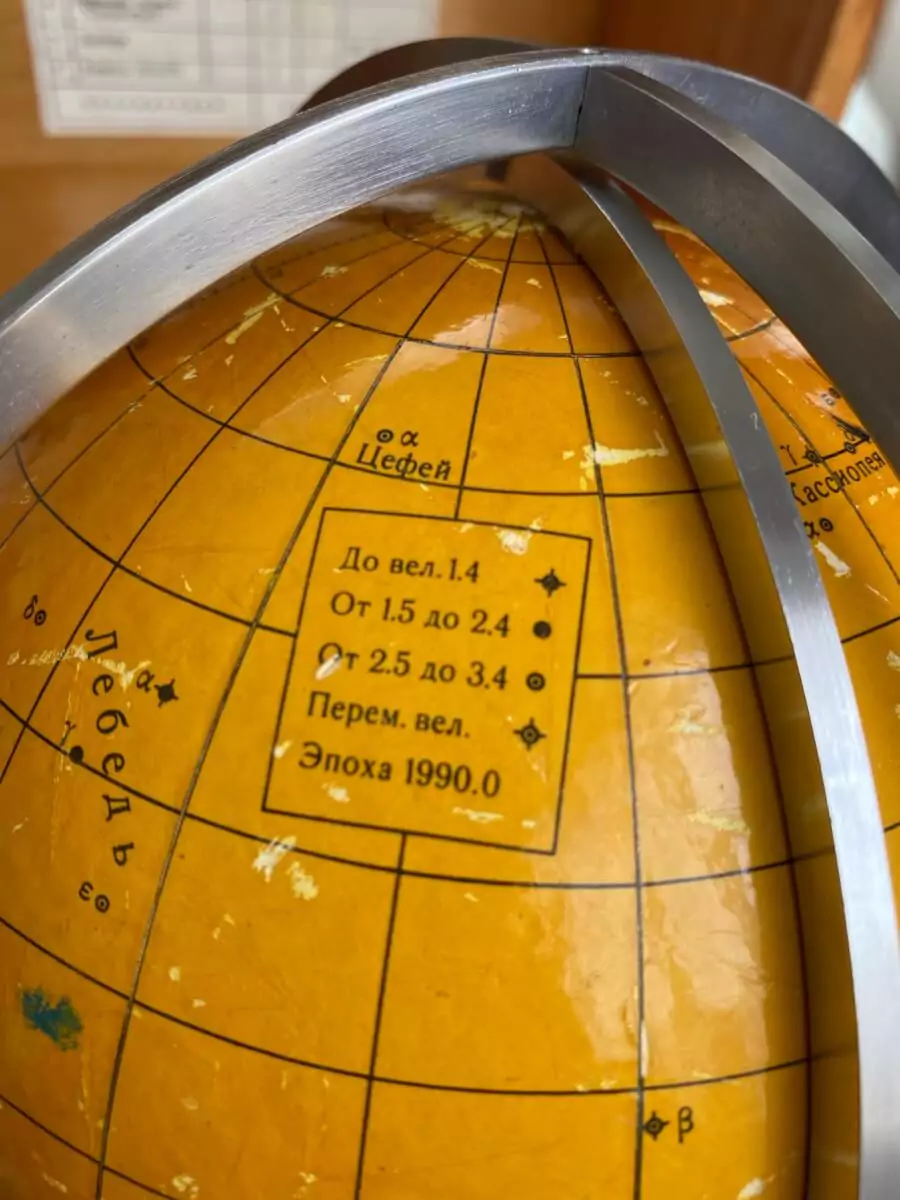
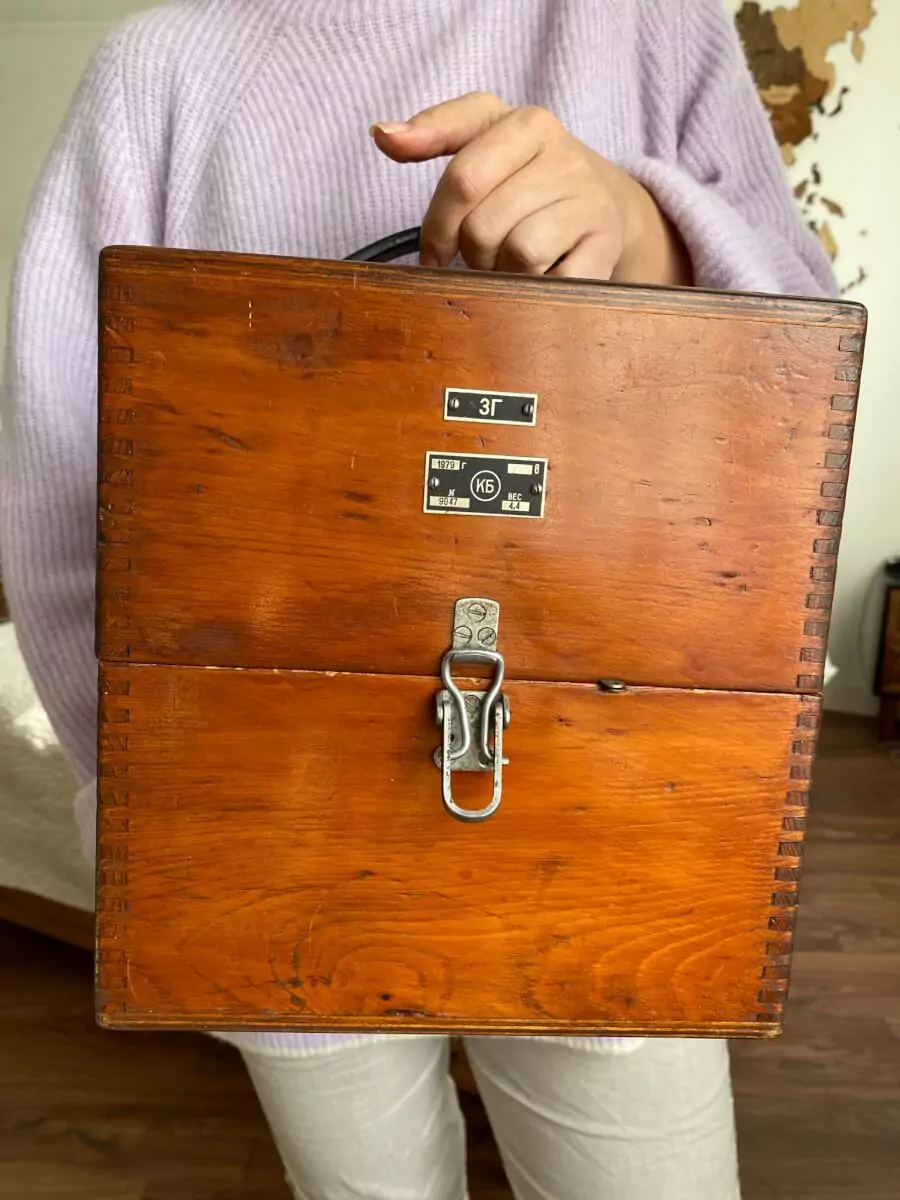
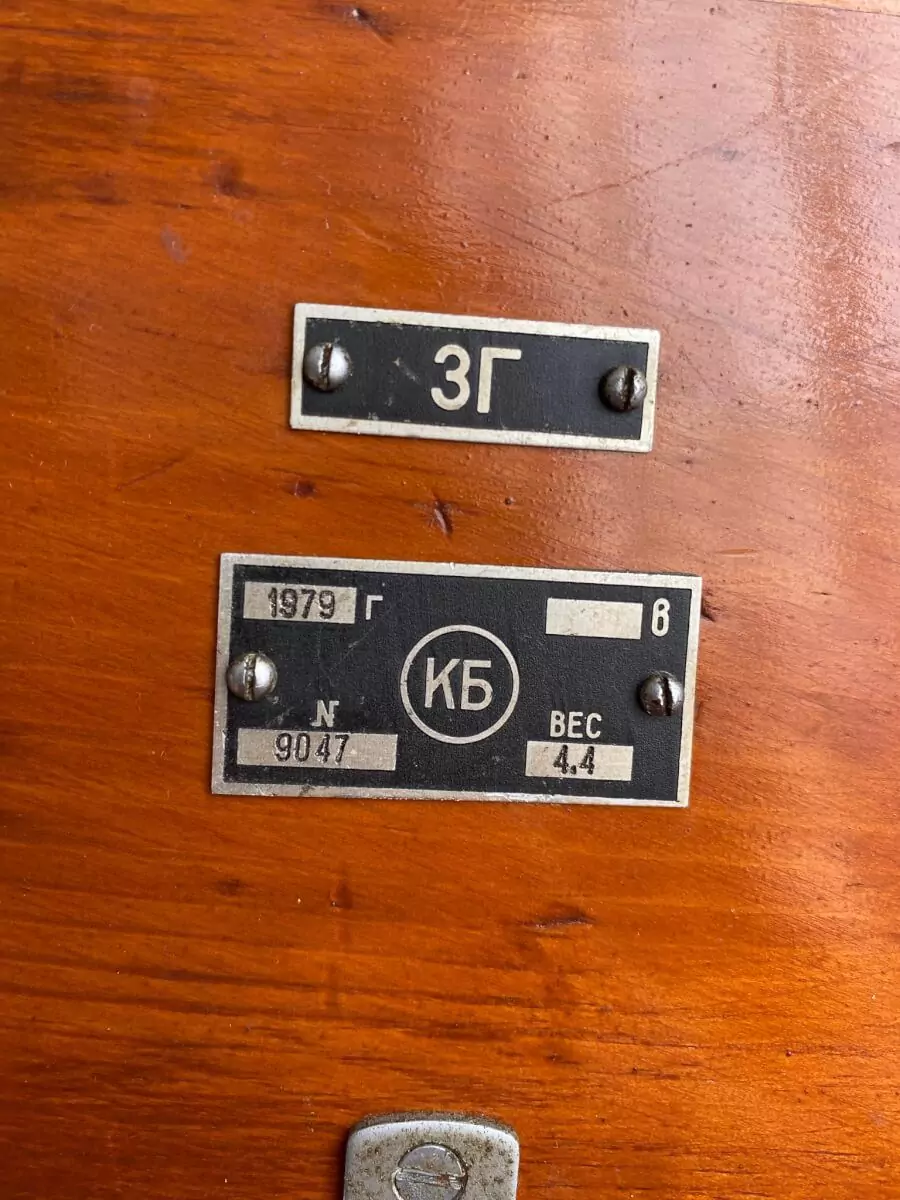
Soviet celestial navigation globe used by the Soviet Navy (VMF). The globe bears the designation ЗГ (ZG). On the case, one plate gives the year 1979, the number 9047 and the initials КБ (KB), a second plate bears the name ЗГ (ZG). The celestial sphere is painted orange with a grid of right ascension and declination. The constellations are named in Russian: Лебедь (Cygnus), Пегас (Pegasus), Кассиопея (Cassiopeia), Волопас (Bootes), Ю. Крест (Southern Cross), Центавр (Centaurus), among many others. The ecliptic is graduated with the months of the year. A cartouche gives the key to star magnitudes and the epoch of the positions, Эпоха 1990.0 (epoch 1990.0).
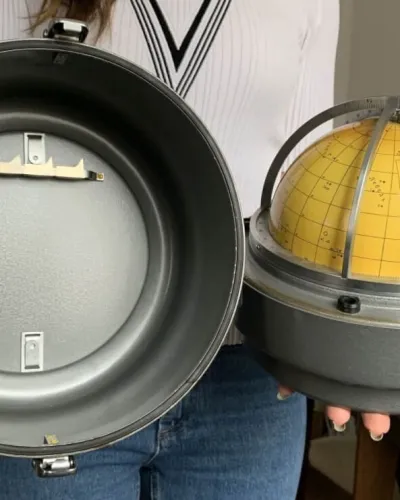
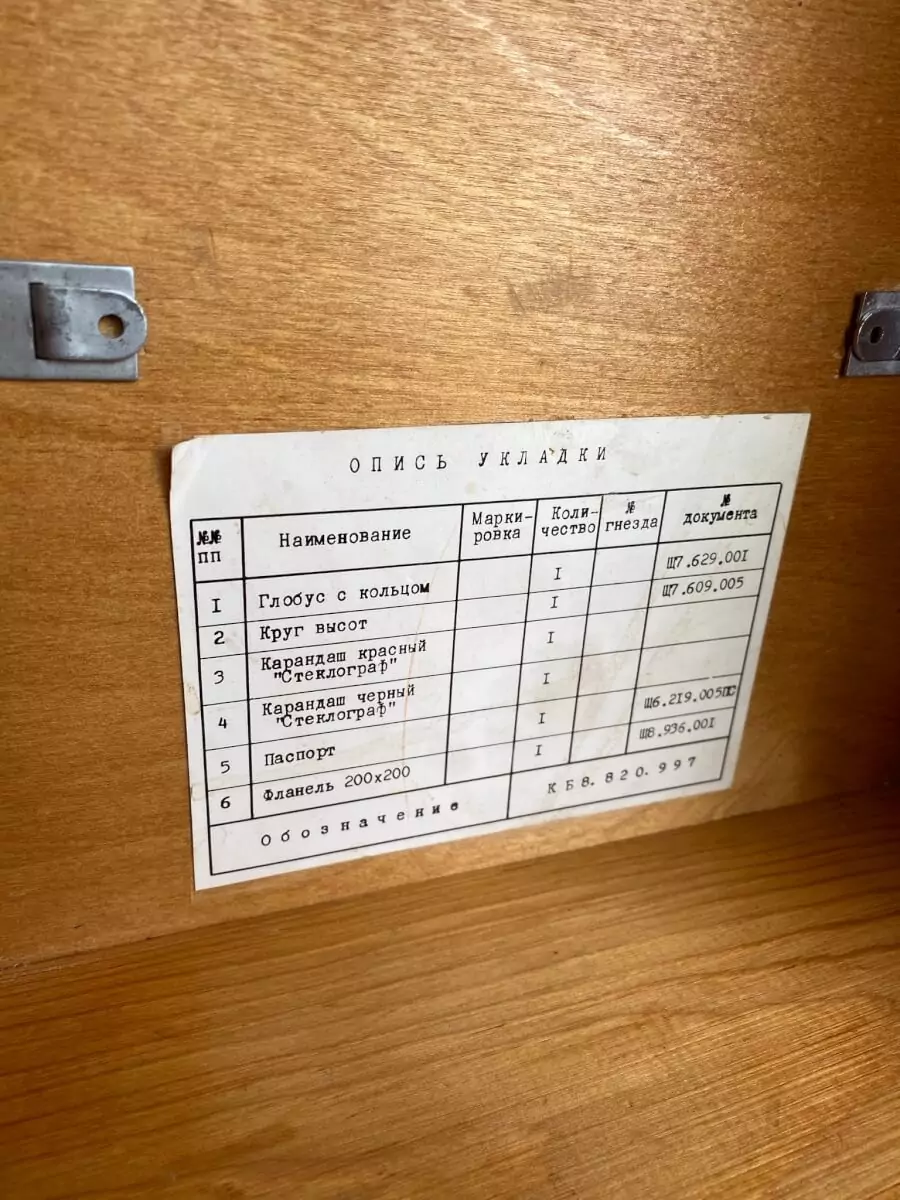
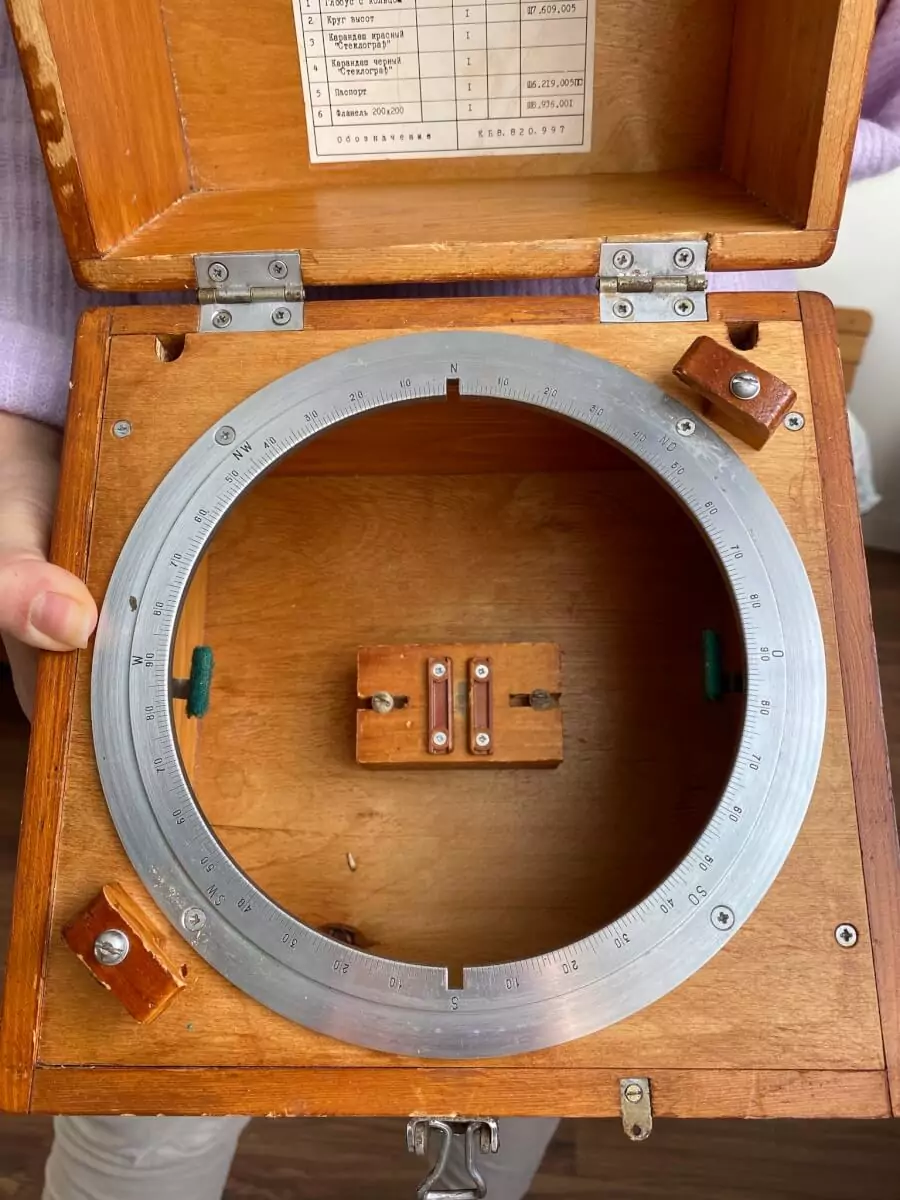
The globe turns in a meridian ring and sits in a horizon ring graduated in degrees with the cardinal points, under two crossed altitude arcs. The box-jointed wooden case closes with a metal latch and has a carrying handle. Inside the lid, the Опись укладки (packing list) lists the globe with its ring, the altitude circle, two red and black Стеклограф (Steklograf) grease pencils for writing on the sphere, the instrument passport and a flannel cloth.
Before sextant observations at dawn and dusk, the navigator set the globe to the ship’s latitude and time to know which stars would be visible, at what altitude and in which direction. After the observation, the globe was also used to identify a star that had been measured. These instruments equipped the ships of the Soviet fleet until satellite navigation became standard.
This one was used for a few years but remains in good condition. Supplied in its wooden case.
Additional information
| Weight | 5.5 kg |
|---|---|
| Dimensions | 50 × 40 × 30 cm |