Rare Soviet ZG Star Globe - Latin Names - 1960 - No. 0848
$680.99Unique piece
Rare Soviet ZG Star Globe - Latin Names - 1960 - No. 0848
$680.99Unique piece
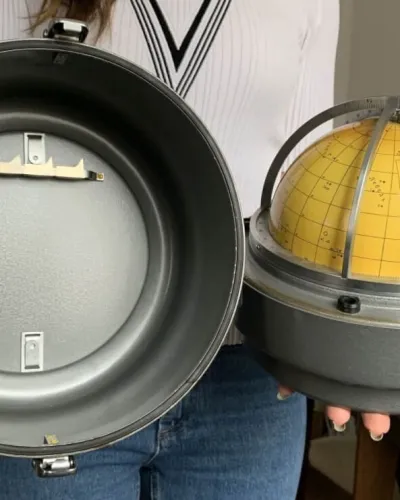
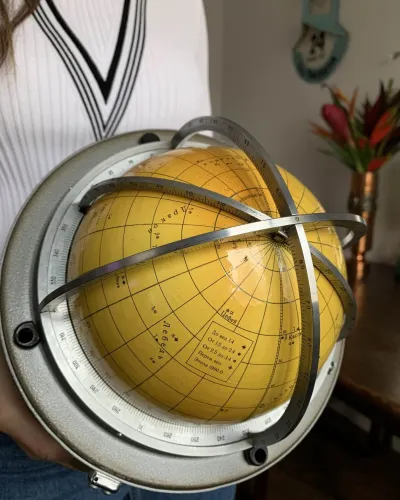
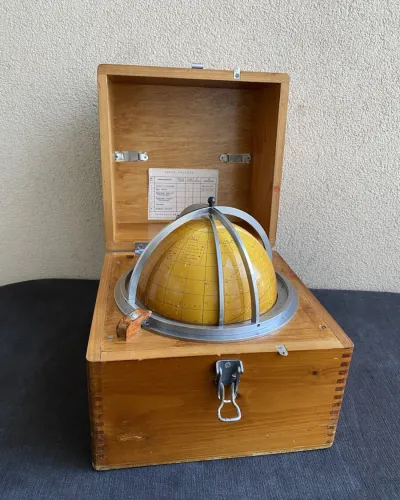
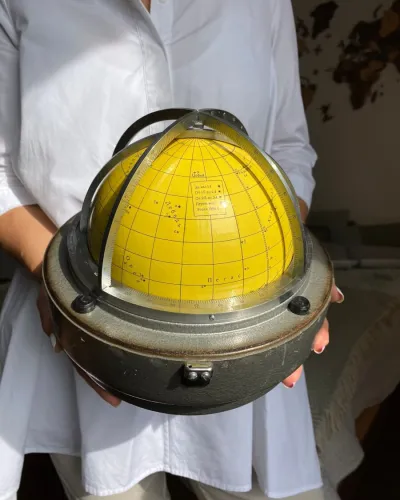
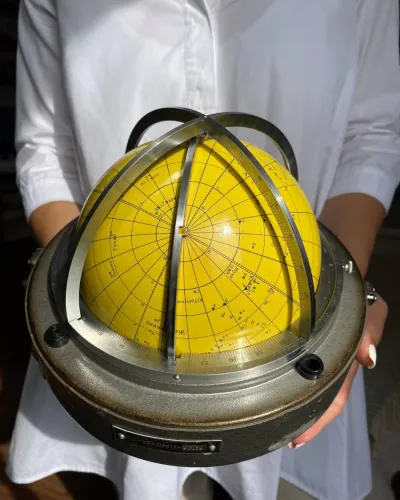
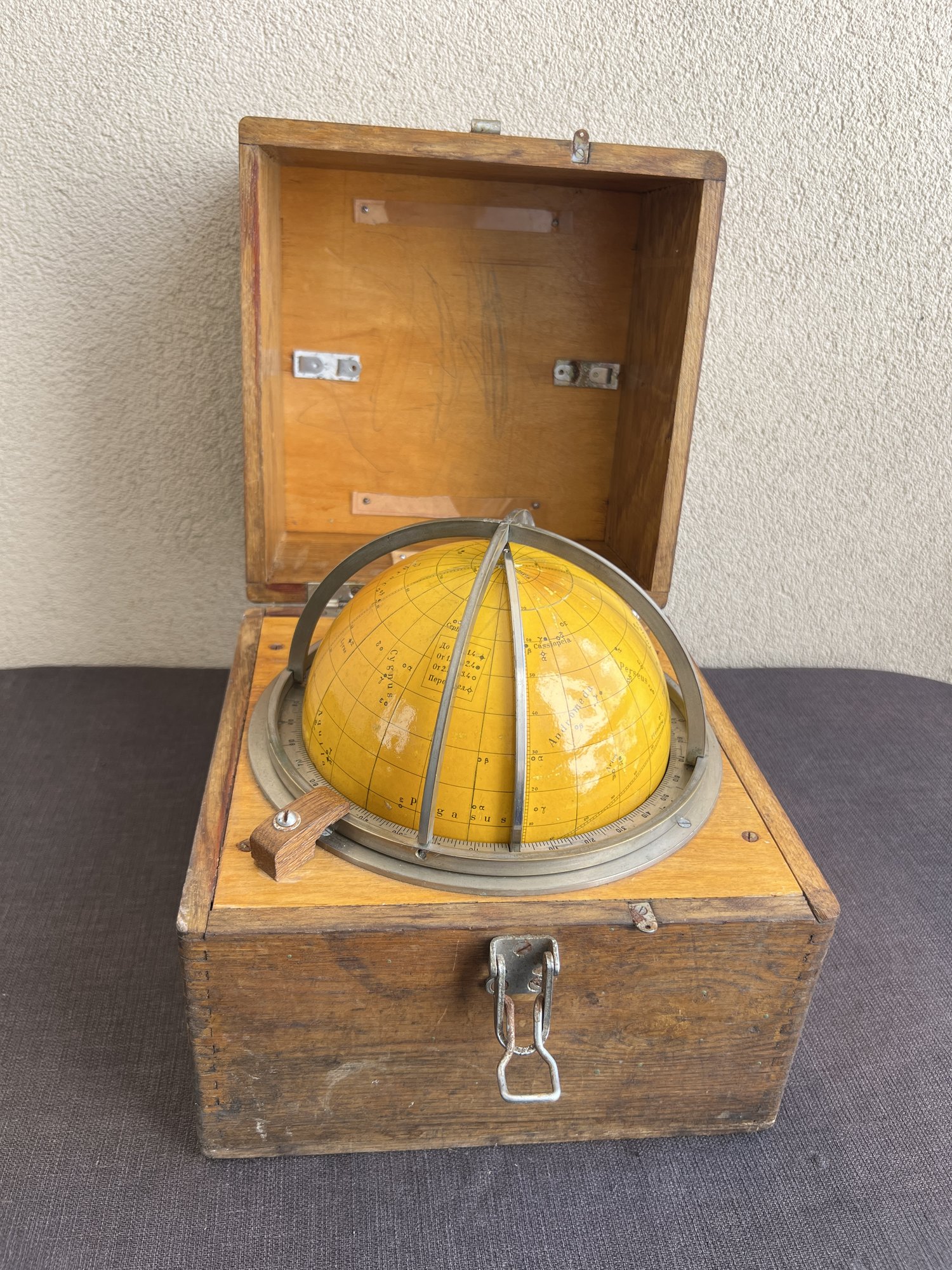
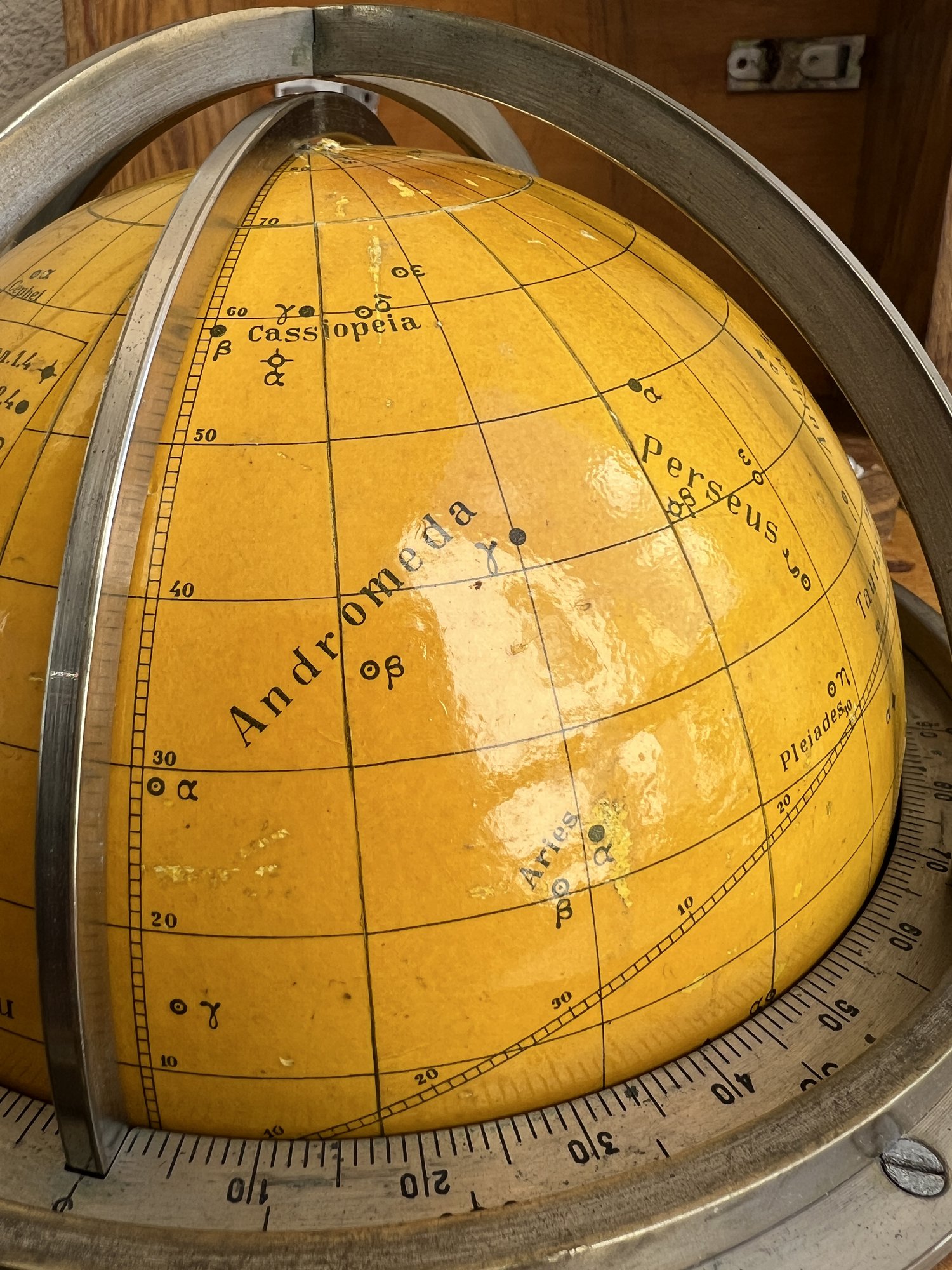
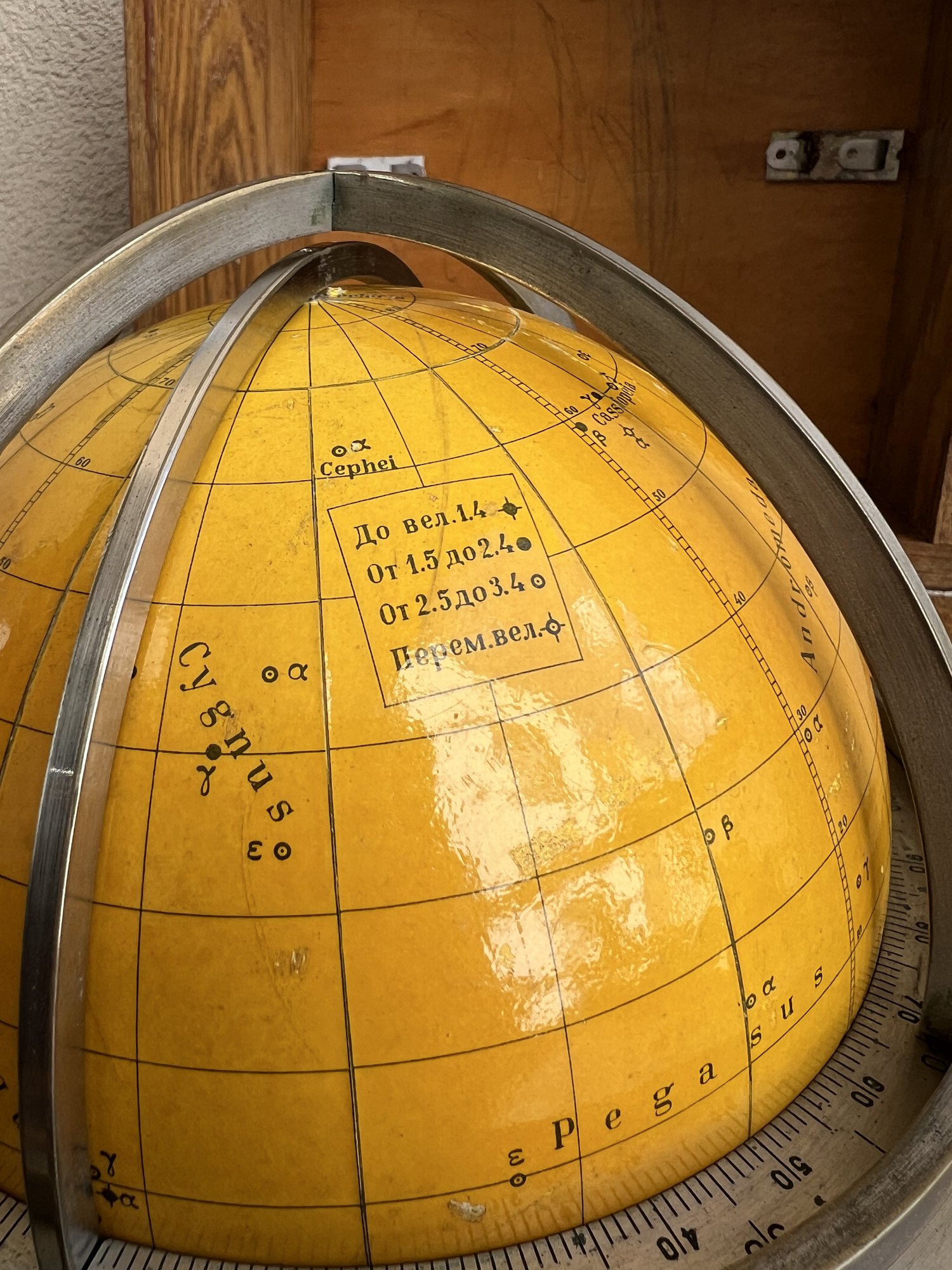
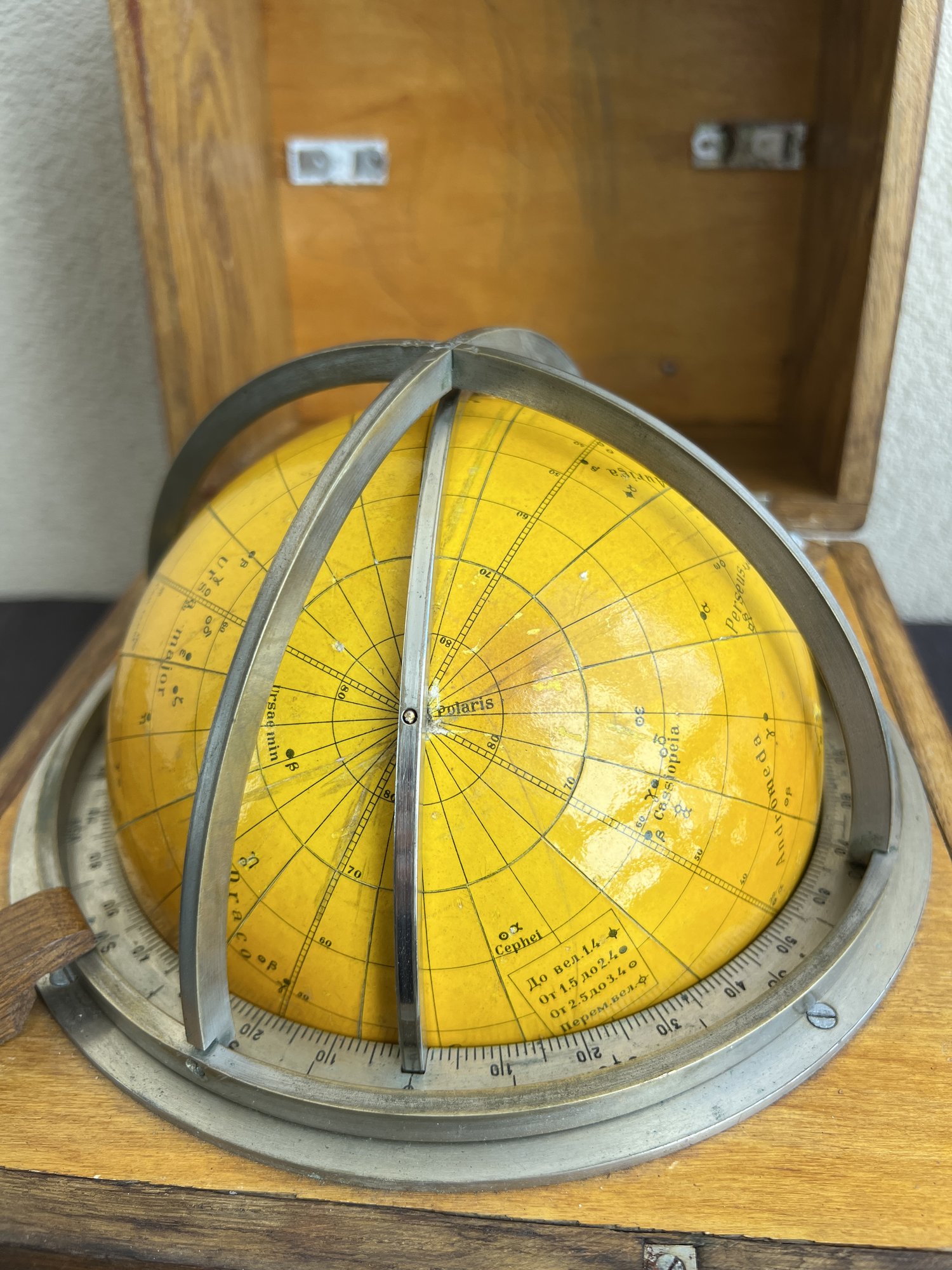
Soviet ЗГ star globe, dated 1960 on its maker’s plate, used for celestial navigation aboard Soviet ships. A rare version with Latin rather than Russian constellation names, with the factory packing list still fixed inside the lid.
1 in stock
Message received, dear comrade.
Our information desk usually replies within 24 hours at the address provided.The U-2 spy plane shot down over the Urals. Sino-Soviet split.





ЗГ star globe (звёздный глобус, “star globe”), the celestial navigation instrument carried aboard Soviet ships. A scale model of the celestial sphere, it let the officer of the watch identify an unknown star from its altitude and azimuth, pick the best-placed stars for a fix, and work out the azimuth and time of sunrise or sunset. It was also used to teach nautical astronomy.
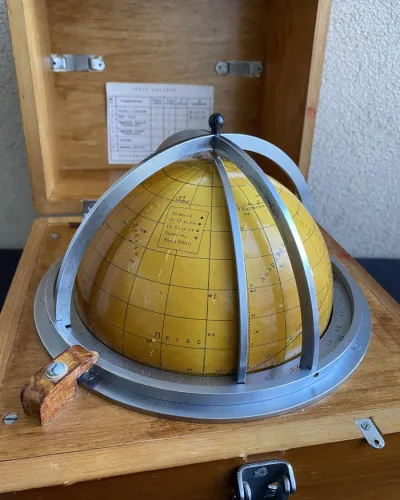
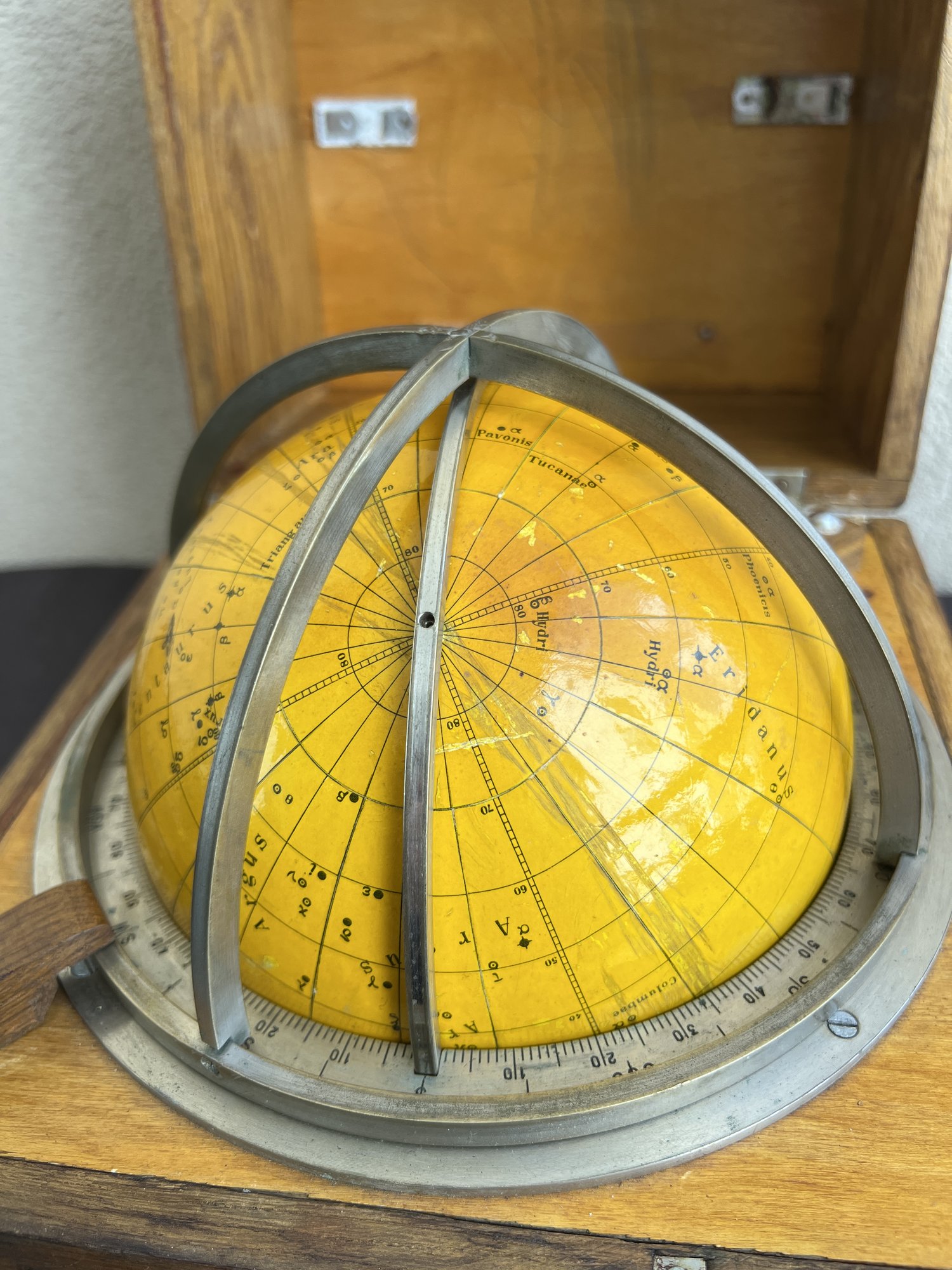
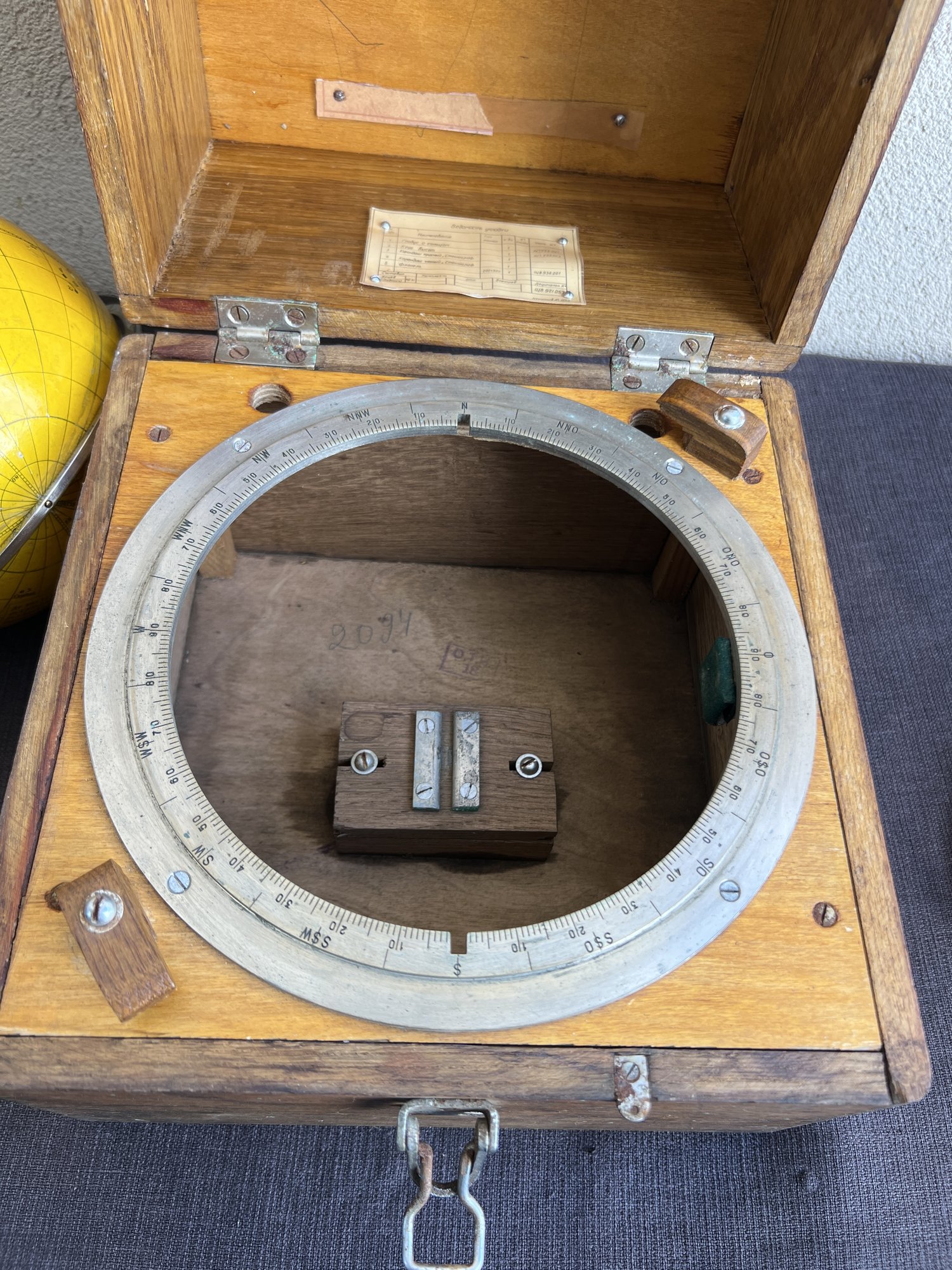
The constellations are named in Latin (Andromeda, Cassiopeia, Pegasus, Tucanae) rather than Russian, a rare version: most ЗГ globes in circulation carry Russian names. Only the magnitude key is in Russian. The globe still shows Argus, the ship Argo, a constellation the International Astronomical Union declared obsolete in 1930, replacing it with Carina, Puppis and Vela. The horizon ring follows the Russian naval compass rose, where O (ost) stands for east, a terminology borrowed from Dutch in the early eighteenth century.
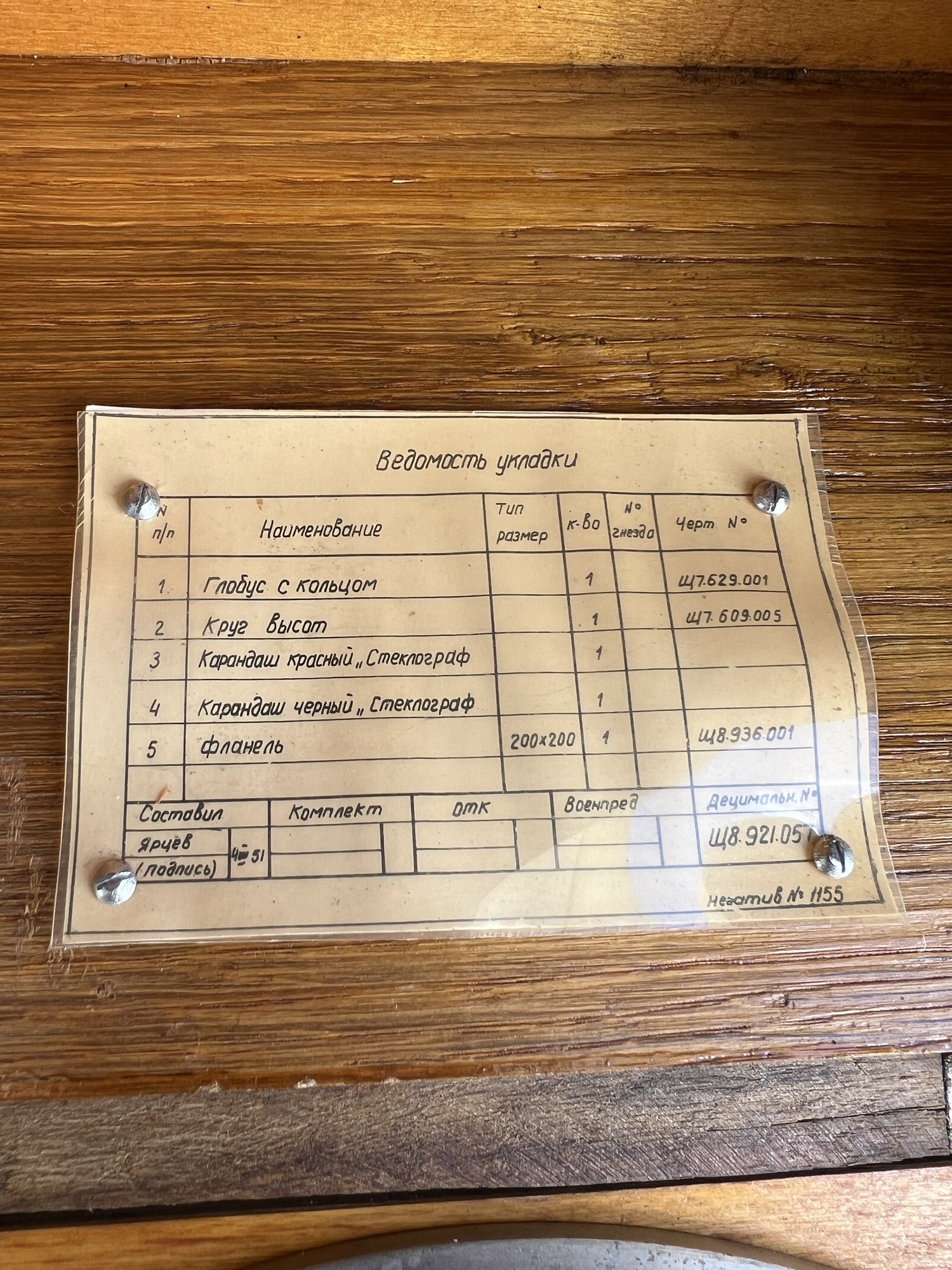
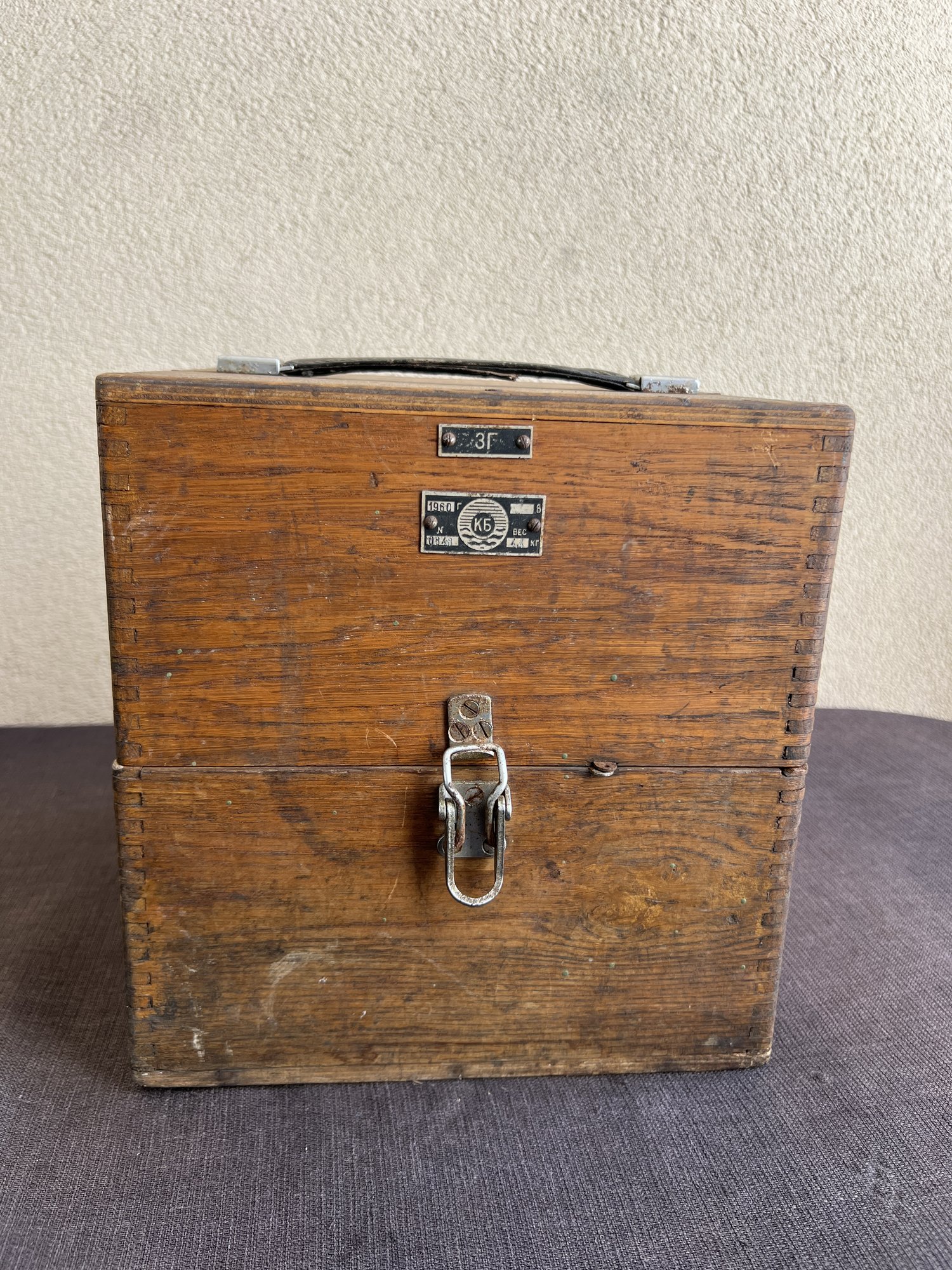
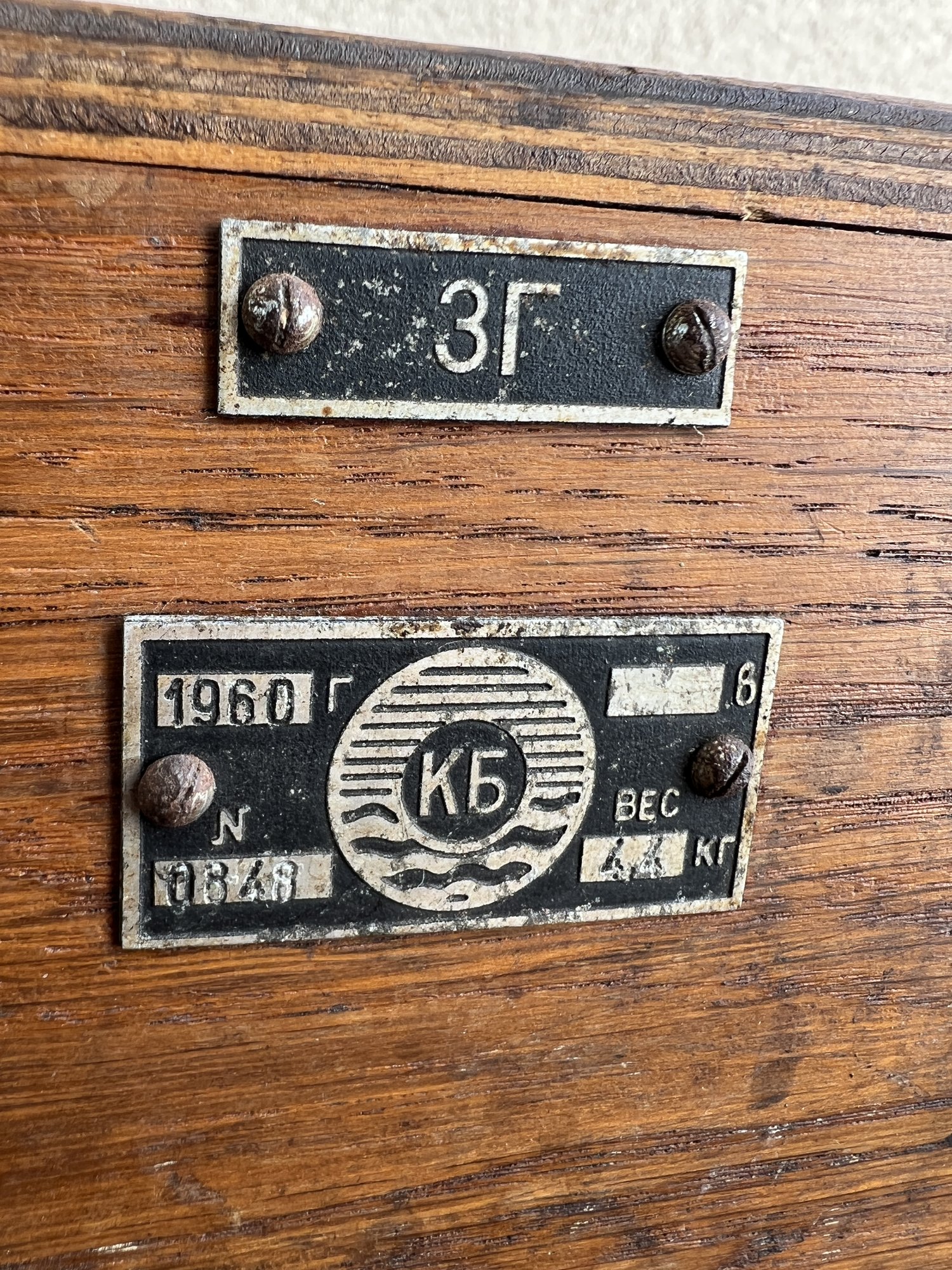
The maker’s plate on the case gives the year of manufacture, 1960 (1960 г.), the number 0848 and the weight of the set, 4.4 kg. The packing list (ведомость укладки) fixed inside the lid sets out the factory kit: the globe with its ring, the altitude circle (круг высот), two Стеклограф glass-marking pencils, red and black, for plotting the planets on the sphere, and a flannel cloth to wipe them off. The pencils and flannel are not included. The sphere turns freely and the altitude circle seats correctly. The form has a box for the военпред, the military acceptance officer, which probably means these globes were also supplied to the Soviet Navy.
Star positions on such a globe are computed for a given epoch; because of the precession of the equinoxes, a globe was not meant to stay in service for more than thirty years. Cubic case, 24 cm on each side.
Additional information
| Weight | 5.0 kg |
|---|---|
| Dimensions | 32.0 × 32.0 × 32.0 cm |