Soviet Navy Star Globe ZG-OM1.1 - Celestial Navigation - USSR 1990
$518.99Only 2 left
Soviet Navy Star Globe ZG-OM1.1 - Celestial Navigation - USSR 1990
$518.99Only 2 left
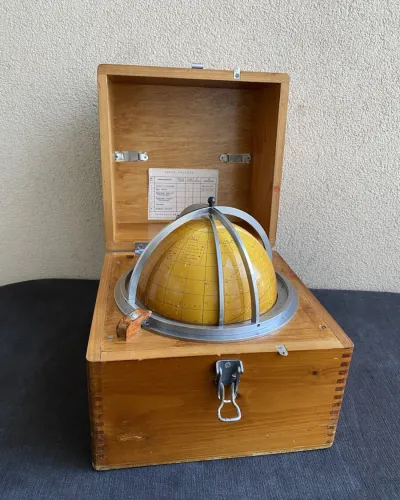
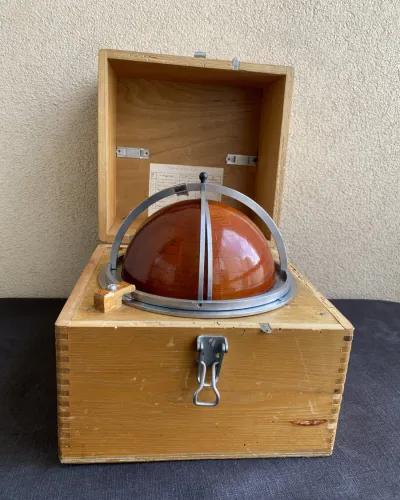
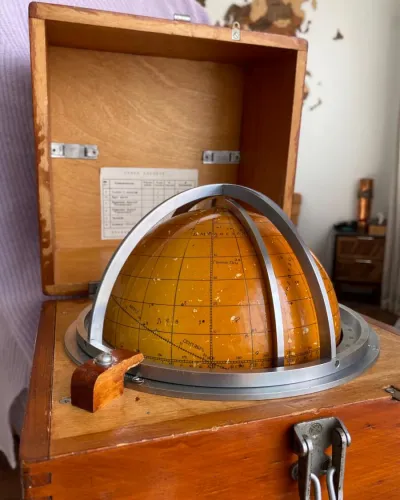
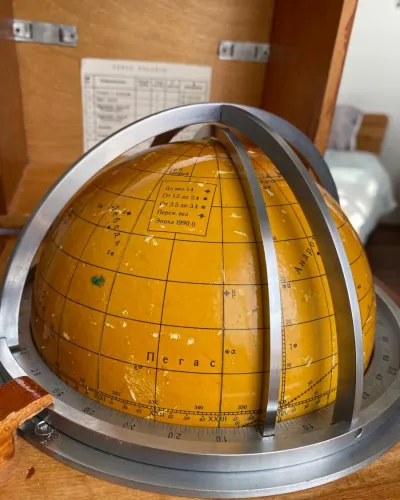
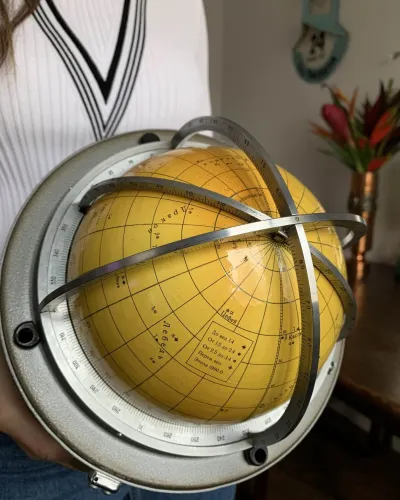
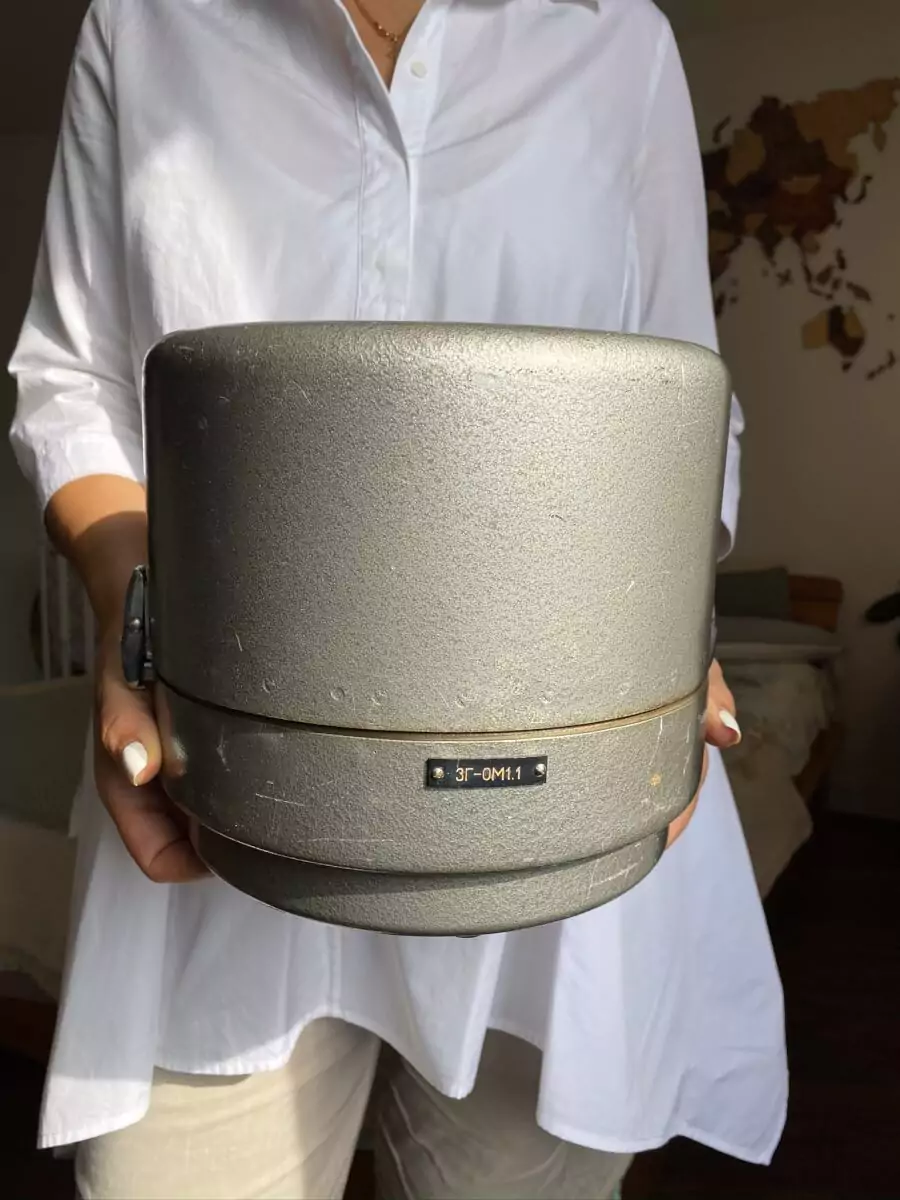
Soviet celestial navigation star globe ZG-OM1.1 no. 90039, used by the Soviet Navy (VMF). Yellow sphere computed for epoch 1990.0, graduated meridian arcs and horizon ring, supplied in its metal carrying case.
2 in stock
Message received, dear comrade.
Our information desk usually replies within 24 hours at the address provided.Independence of the Baltic republics. Major economic crisis.
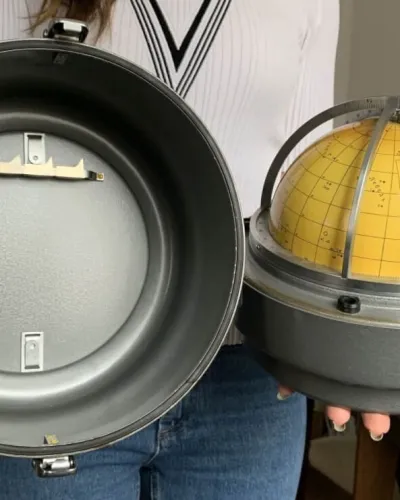
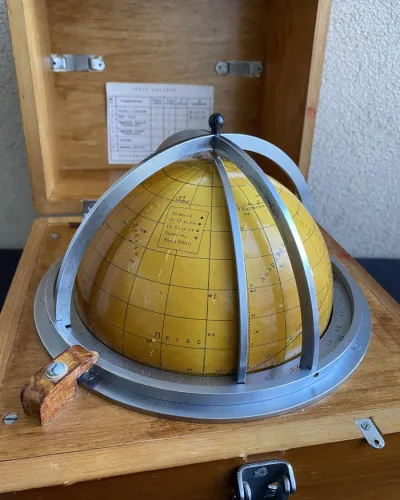
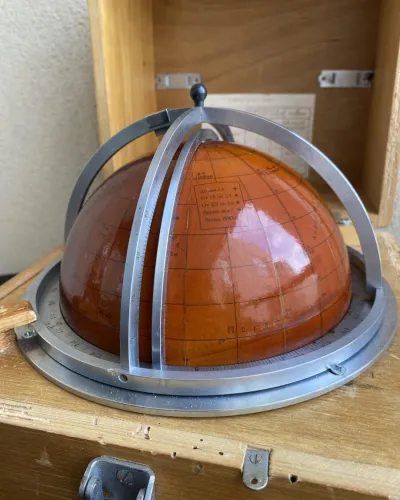
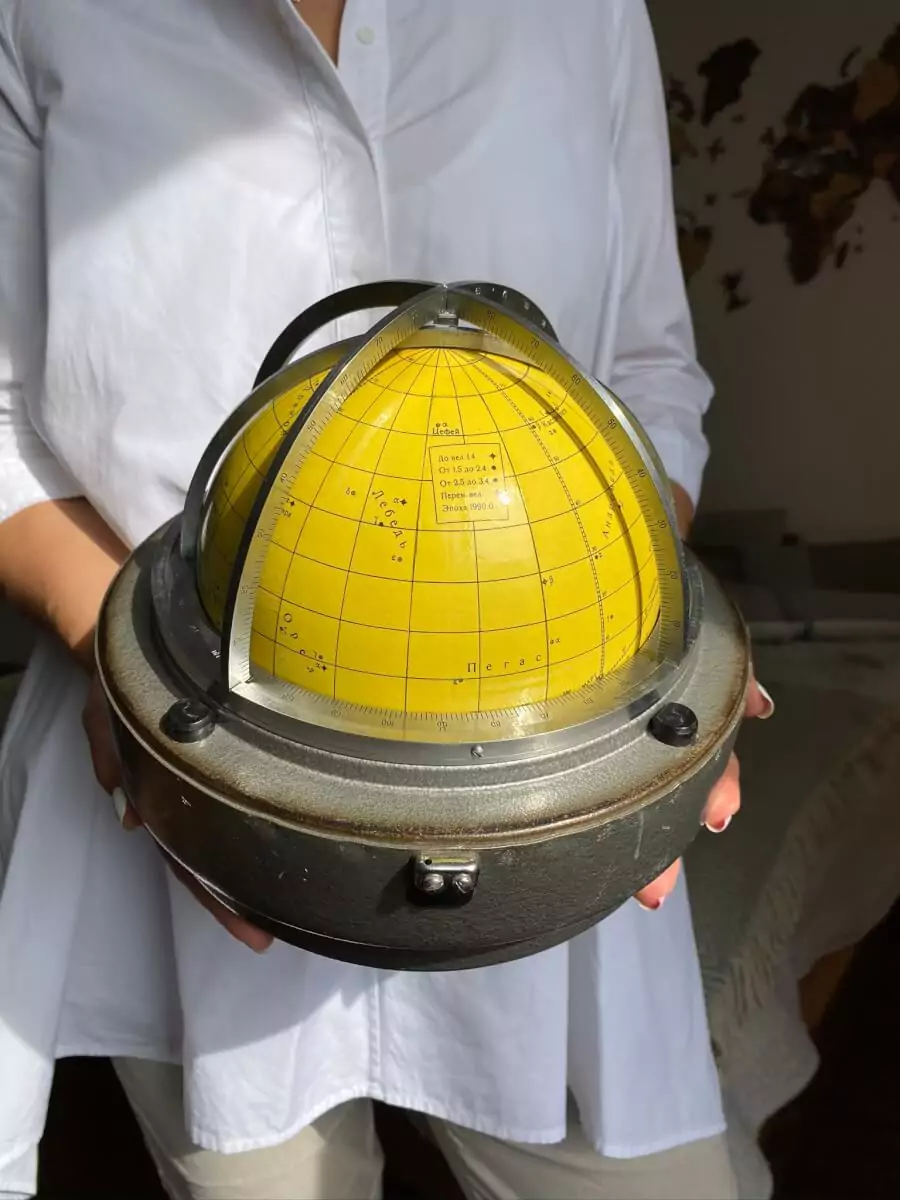
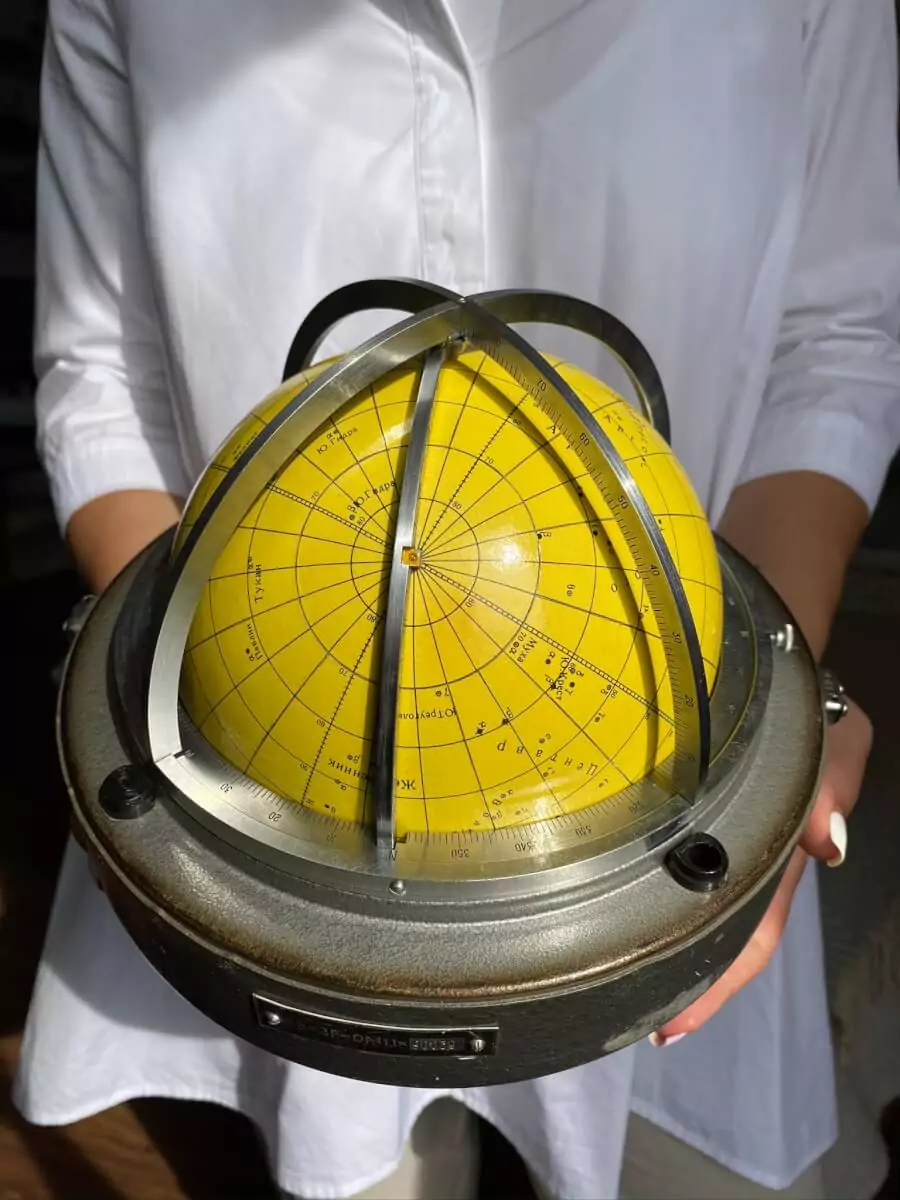
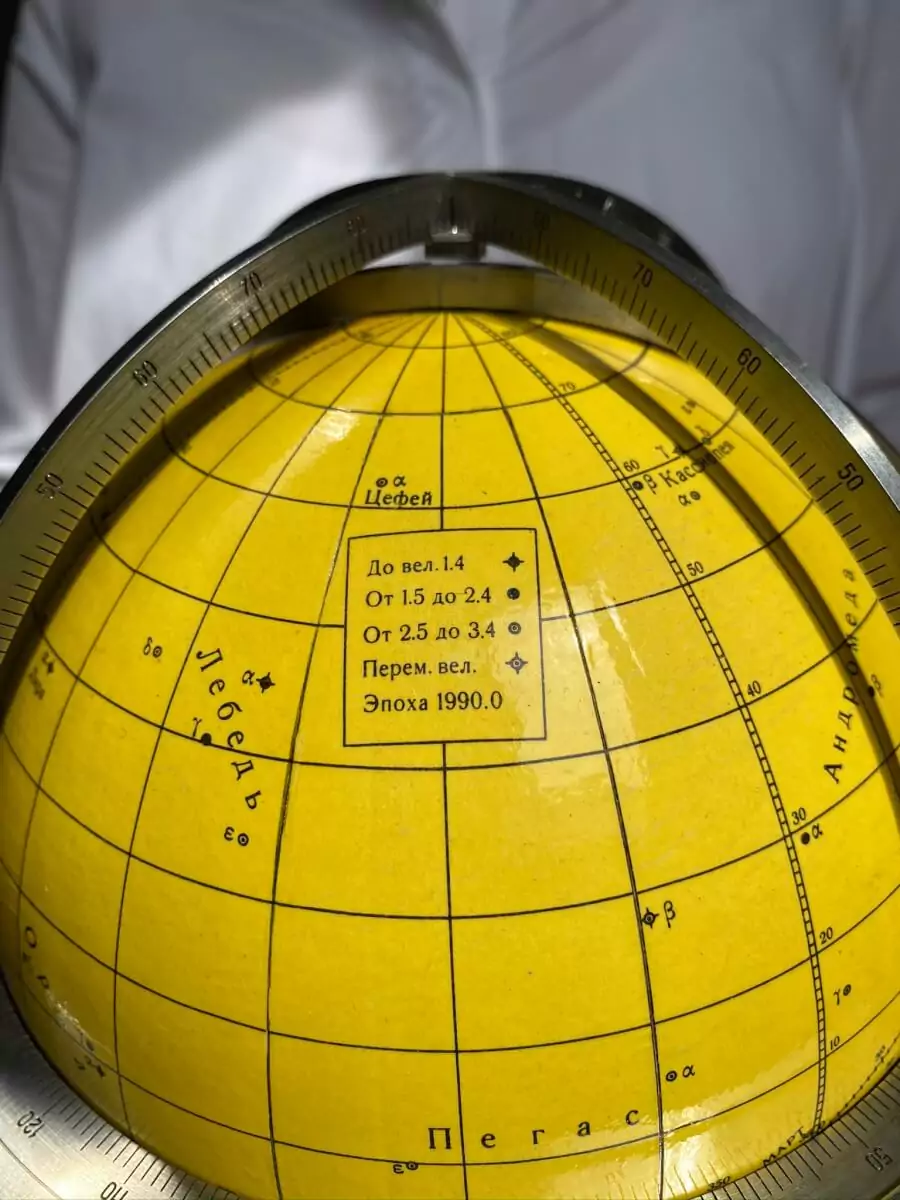
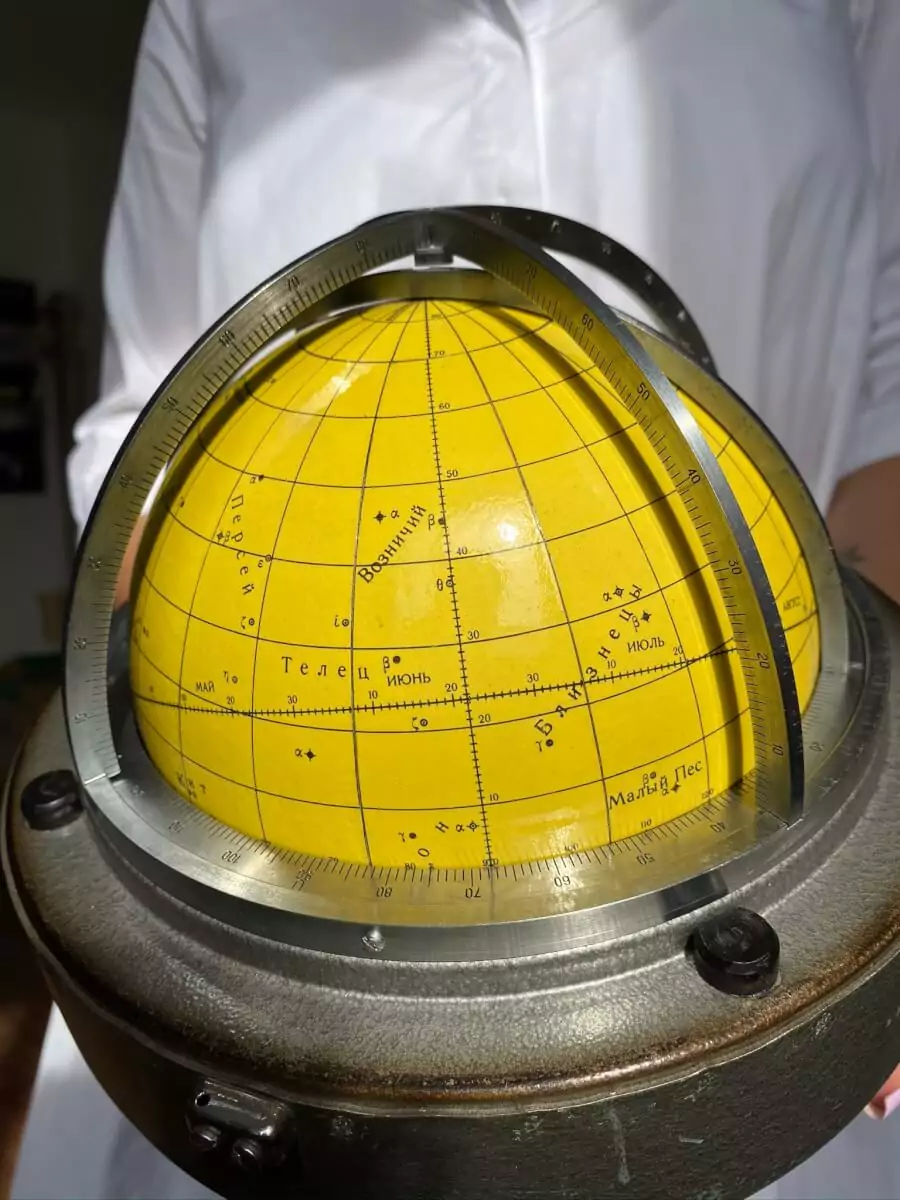
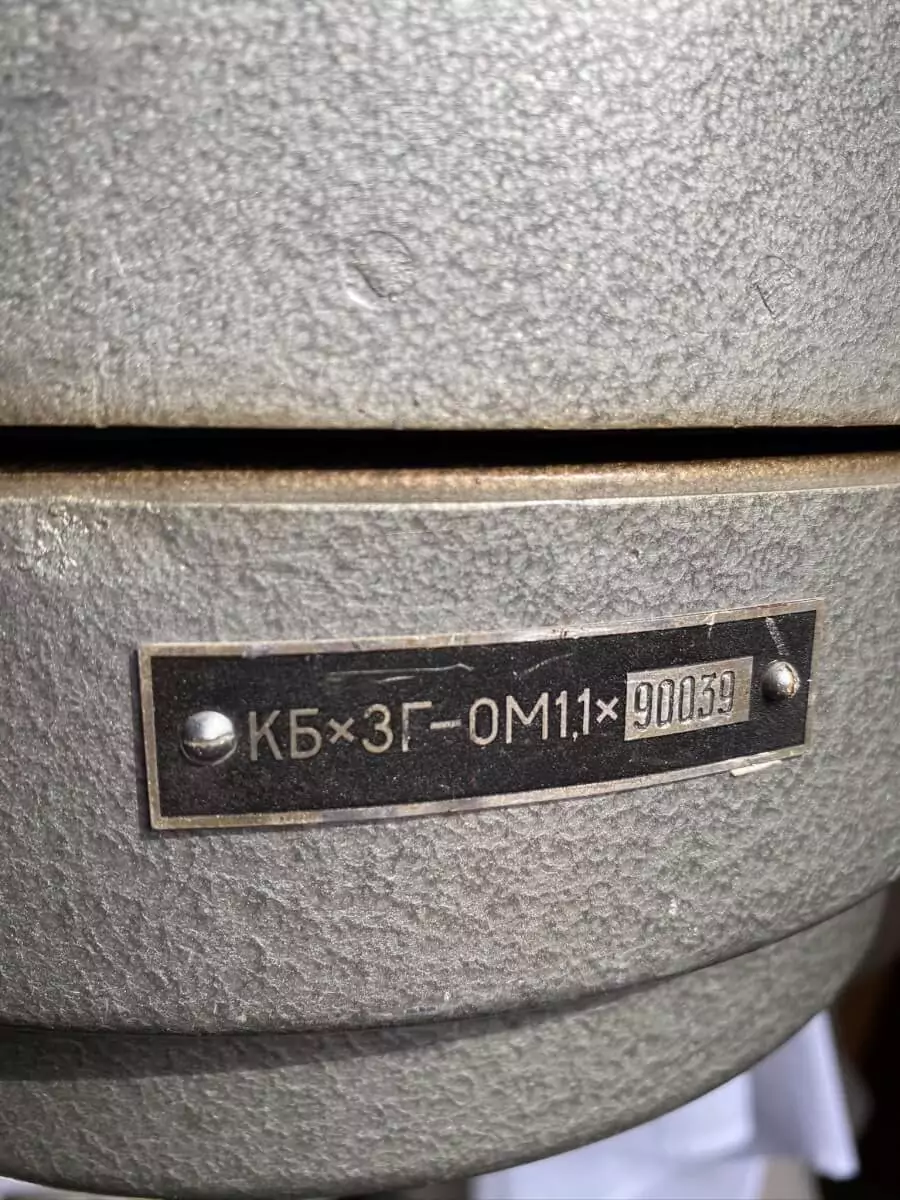
Soviet celestial navigation star globe, used by the Soviet Navy (VMF). The riveted plate on the base reads КБ×ЗГ-ОМ1,1×90039, and a second plate reading ЗГ-ОМ1.1 is fixed on another side of the base. ЗГ stands for звёздный глобус (star globe). The yellow sphere is printed in black with the celestial coordinate grid, the graduated ecliptic and the months (МАРТ, МАЙ, ИЮНЬ, ИЮЛЬ, АВГ., March to August). Constellation names from both hemispheres can be read: Цефей (Cepheus), Кассиопея (Cassiopeia), Лебедь (Cygnus), Андромеда (Andromeda), Пегас (Pegasus), Персей (Perseus), Возничий (Auriga), Телец (Taurus), Близнецы (Gemini), Малый Пес (Canis Minor), Центавр (Centaurus), Тукан (Tucana), Павлин (Pavo), Муха (Musca).
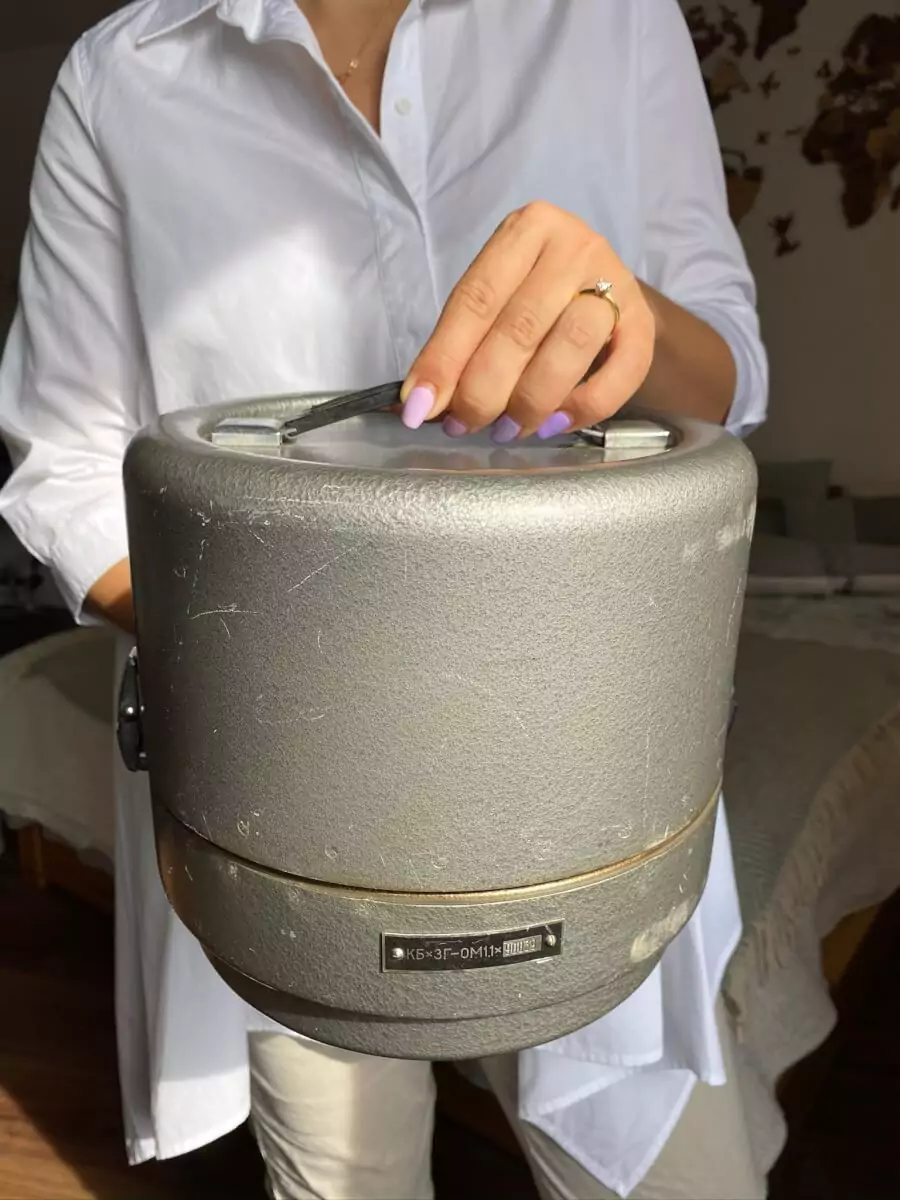
The cartouche gives the star legend by magnitude: До вел. 1.4 (up to magnitude 1.4), От 1.5 до 2.4 (from 1.5 to 2.4), От 2.5 до 3.4 (from 2.5 to 3.4), Перем. вел. (variable magnitude), and Эпоха 1990.0 (epoch 1990.0). The globe sits inside meridian arcs graduated from 0 to 90 degrees and a horizon ring graduated from 0 to 360 degrees, mounted on a grey hammertone base with two black knobs. A lid with a handle and two side latches turns the whole into a carrying case.
Navigators used the star globe to identify stars and read their approximate altitude and azimuth before taking a sextant sight. Because star positions shift slowly over time, each sphere is computed for a given epoch, here 1990, which places this example at the very end of the Soviet period.
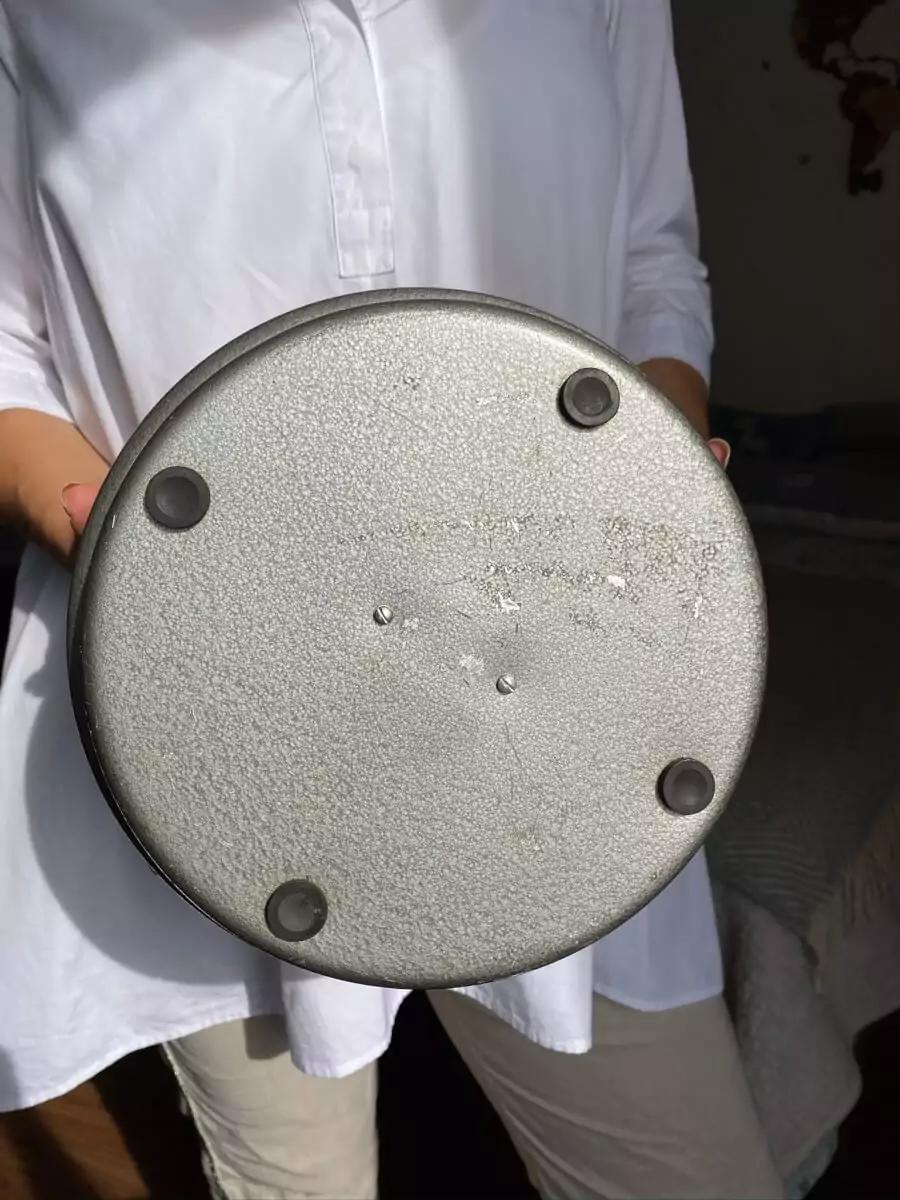
This example dates from 1990 and is in excellent condition. The sphere and arcs are clean. Four rubber feet under the base.
Additional information
| Weight | 3.5 kg |
|---|---|
| Dimensions | 50 × 40 × 30 cm |