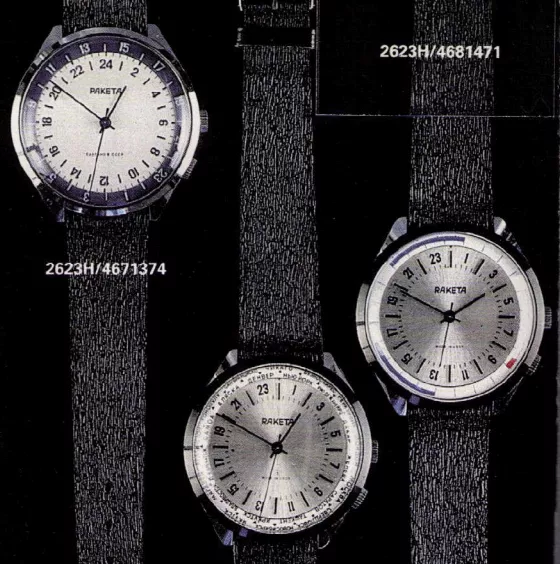
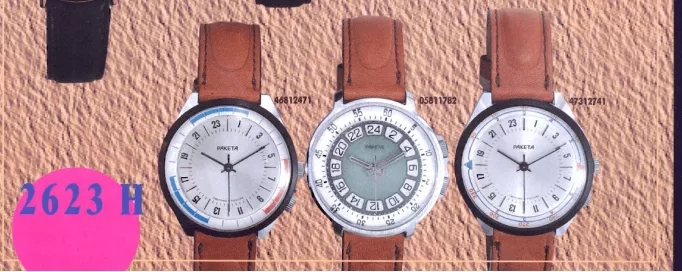
How do we set the price of a vintage Soviet watch? Using the Raketa 24 hours, one of the most popular models in our catalogue, as an example: from the purchase price to model-specific features, by way of the condition of the movement and the strap, here are the criteria that guide our pricing.
SEPTEMBER 2025•3 MINUTE READ
by Marwen Yahyaoui
In this article, we will take the example of one of the most popular models in our catalogue of vintage Soviet watches, the Raketa 24 hours.
Criteria for setting the price of a vintage Soviet watch:
– The purchase price
Our purchase price is the first criterion that guides us when setting the selling price. Thanks to many years of experience, we know how to buy a watch at the right price according to its condition, its model, its particular features (commemorative model, accompanying documents, original strap, and so on) and the state of its movement. These are therefore the same criteria we apply when we buy a watch and when we put it up for sale.
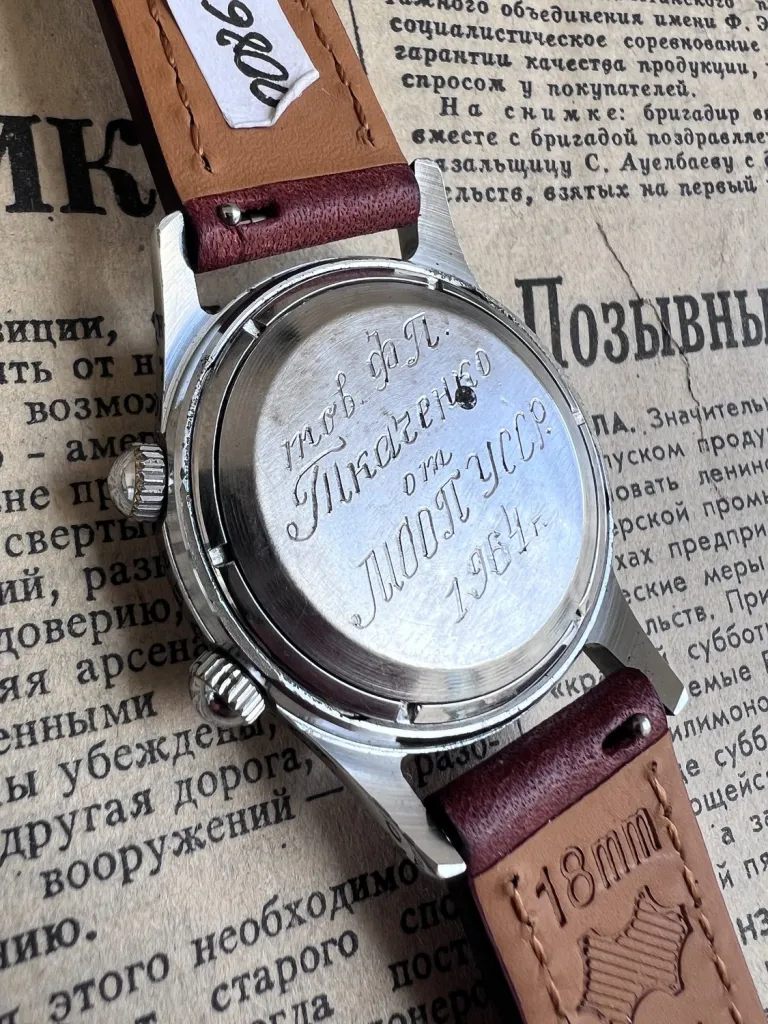
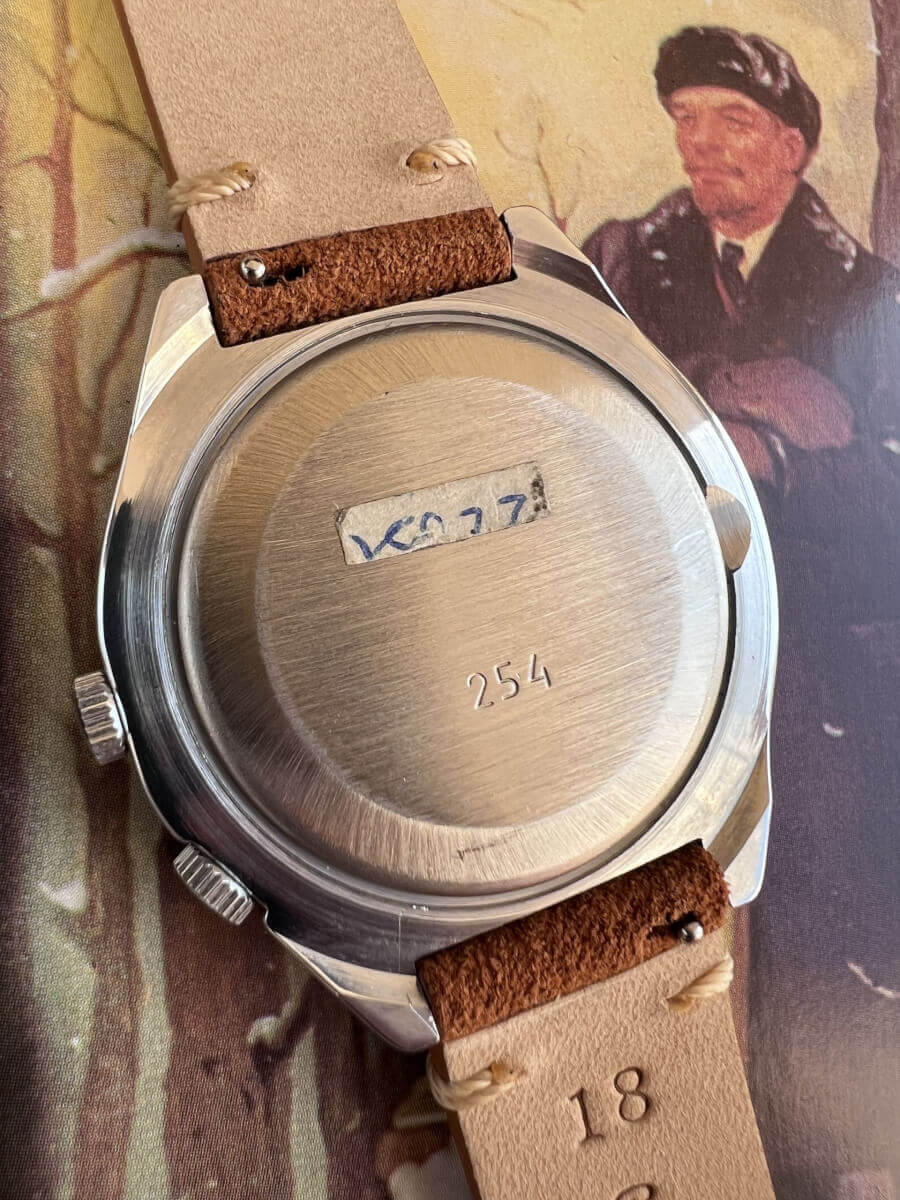
Sometimes it is even possible to find cases still carrying the sticker of the factory that made them, along with the code of the employee who assembled them. This is another indication that the watch remains in new condition thirty years on.
Be careful, though, stickers were not applied systematically, so no conclusion can be drawn from their absence
Numbered sticker on the case back
– Condition
As far as the condition of a watch is concerned, we focus on three elements as a priority, the condition of the case, the condition of the crown and the working condition of the movement that drives the watch.
– Case, crown and dial
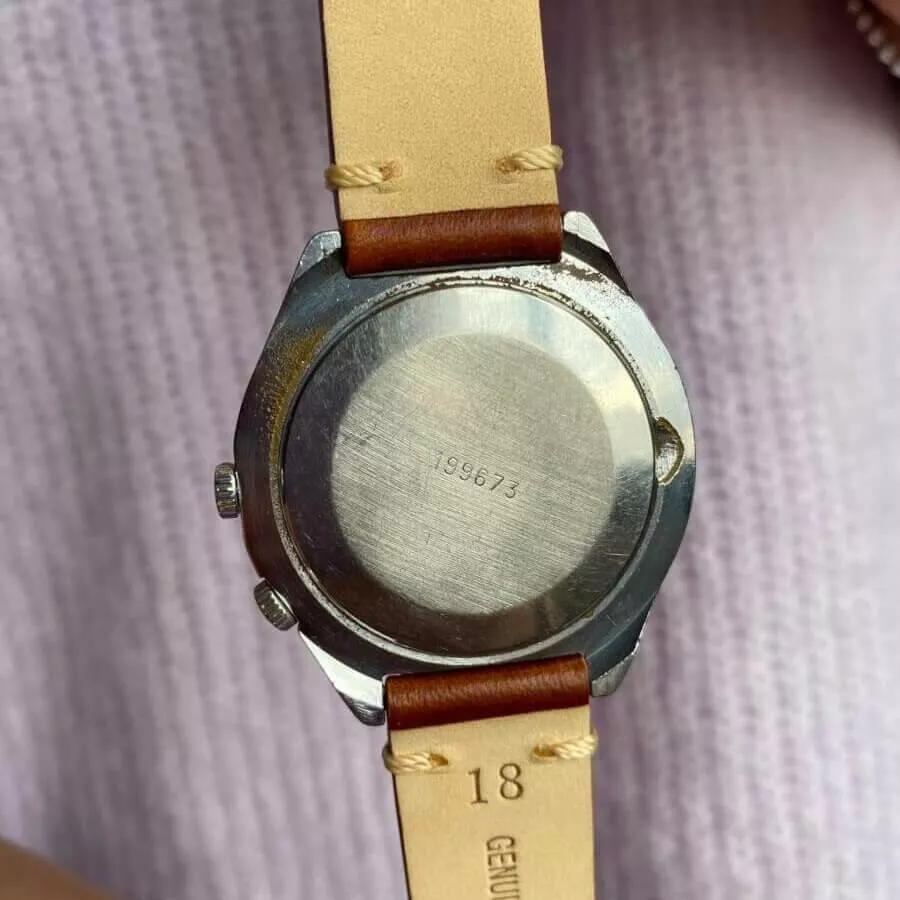
The condition of the case and of the crown lets us work out the “mileage” of a watch, the more a watch has been worn the more the case will be marked. On the Raketa 24 hours, with its chrome-plated or gold-plated case, the chrome layer is the first victim of wear, in contact with the skin, with perspiration or with sunlight it gradually wears away to reveal the brass case underneath. The same phenomenon occurs on gold-plated watches, whereas on a steel case you will find scratches or knocks instead.
Case worn by time
It is possible to apply new chrome or new layers of gold to recover the initial shine, but this work requires many steps and a great deal of labour, which makes the option too expensive for almost all Soviet watches.
The condition of the crown goes hand in hand with that of the case if it has not been replaced, so it is also an excellent indicator. On the Raketa 24 hours the crown is either gold-plated brass or chrome-plated.
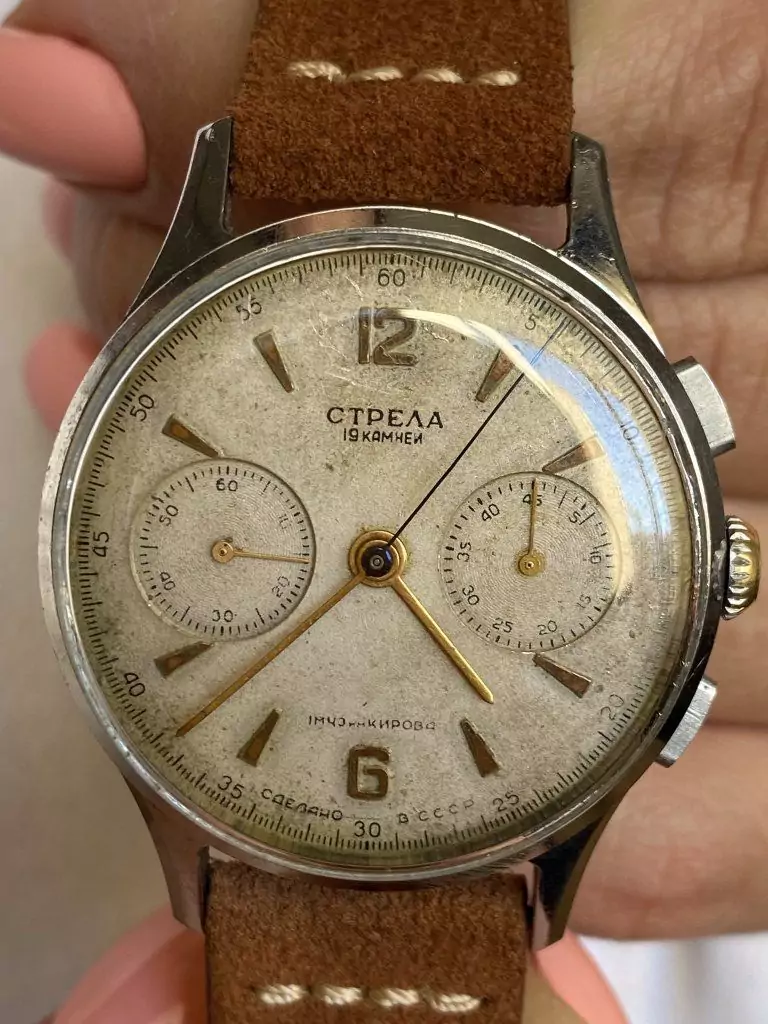
The condition of the dial is probably the first thing the wearer of a watch will notice, and it is also the only element that cannot be fully restored. At most we can clean it very carefully, which is why, apart from the occasional exception (a very rare model), we choose watches with dials in excellent condition.
– The movement
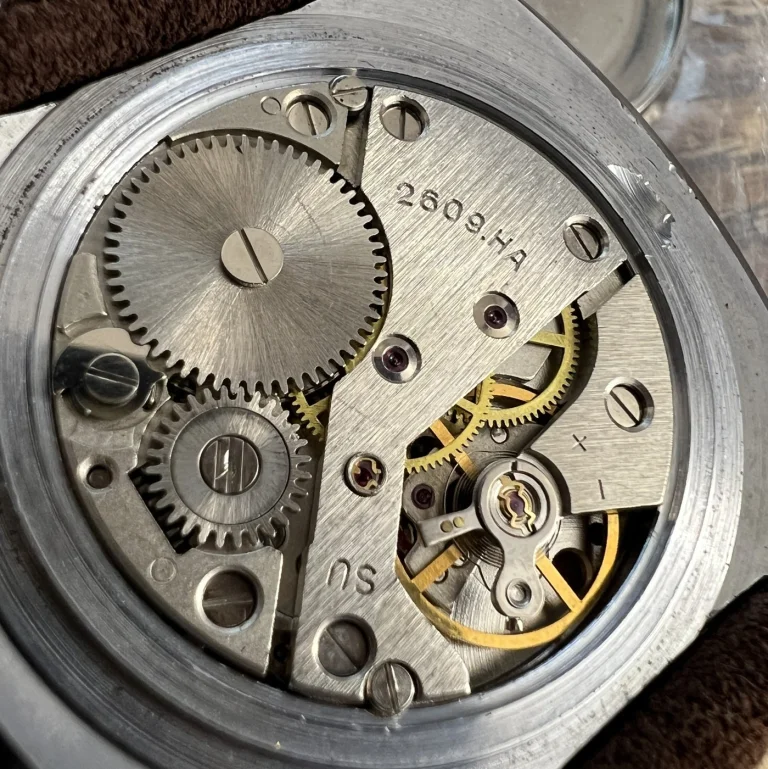
In the vast majority of cases, we only sell watches with movements in perfect condition, and in 90% of cases they have had a full service by our master watchmaker, with every damaged part replaced.
Most of the watches we select have been worn very little and their movements are in near-new condition, yet they still need to be fully serviced, oiled and regulated, because the oils applied in the Soviet period have had time to set.
– The collecting side
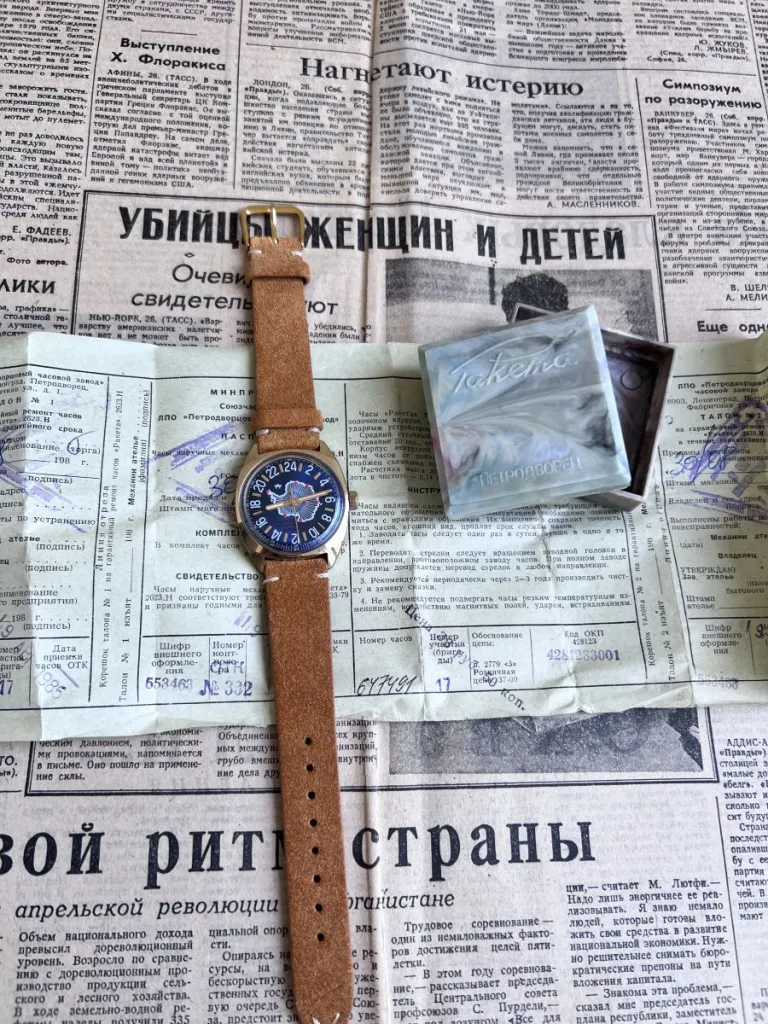
For many of us who collect watches, but also for those who want to buy a watch in the most complete condition possible, it matters to obtain the documents, the box or the original strap of a watch.
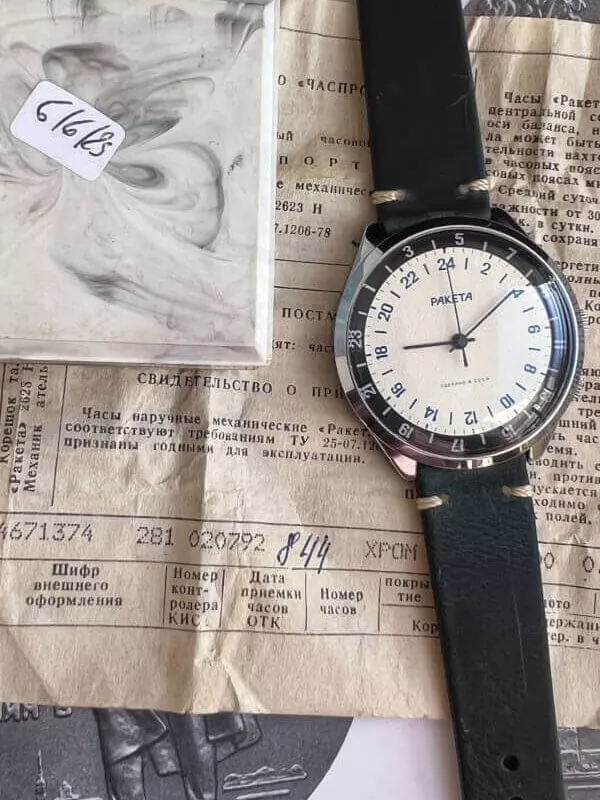
In the case of the model we are looking at here, it was sold without a strap, but with a square box holding the watch and a document stating its provenance, its exact date of manufacture, its technical characteristics, its serial number (which must match the one on the case back) and its model number.
The presence of these elements can double or even triple the price of a watch, because it is something rare whatever the model. The watch has to have been bought and then left in a drawer for 40 or 50 years without ever being worn.
Raketa 24 hours watch with its original document and box
– Commemorative features
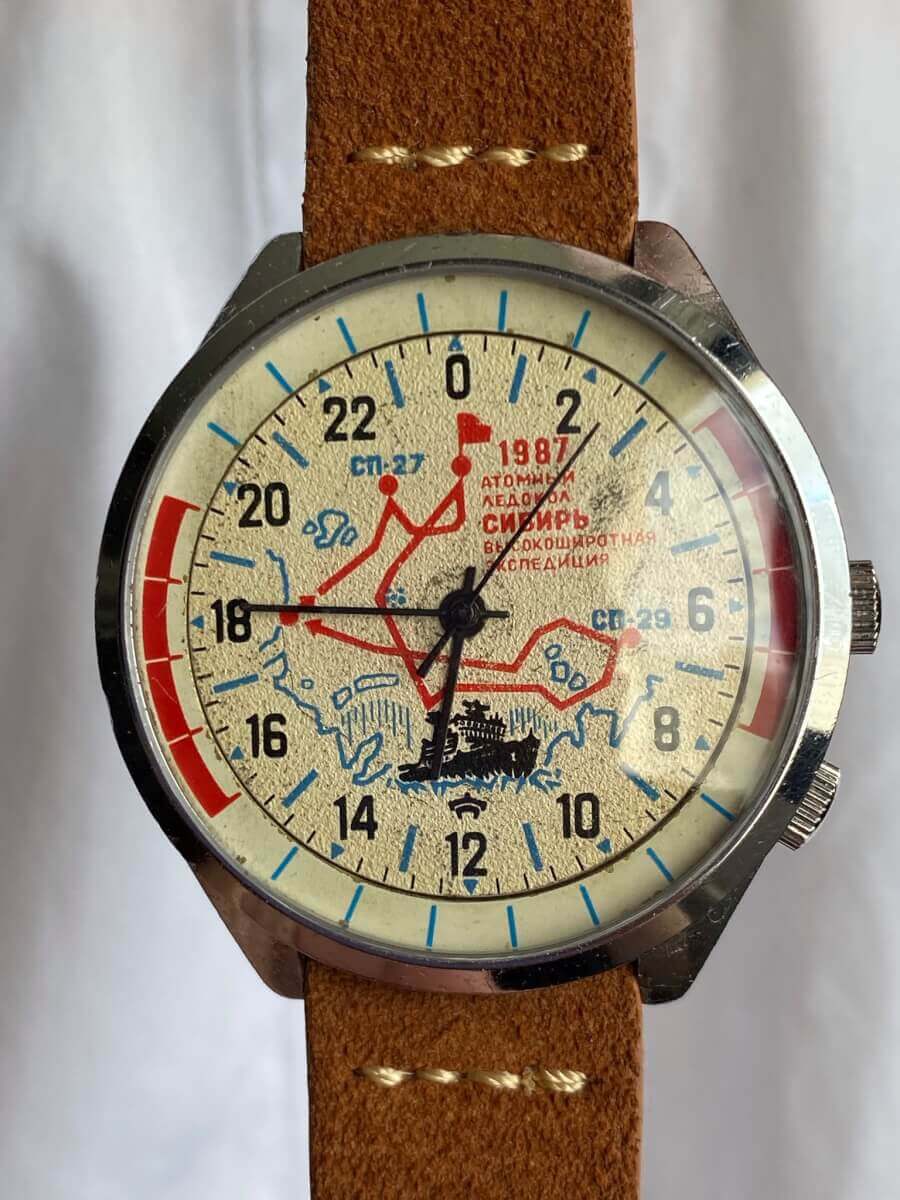
The last criterion that guides our decision is the presence of commemorative features (this is our speciality), whether on the dial, the case or even the strap.
These features are often linked to a political event, a sporting event or a jubilee. They are rare by definition, because production was limited to the duration of the event or to a specific year.
Raketa watch – Sibir Nuclear Icebreaker – 1987
To conclude, when you buy a watch from Sovietinparis, the higher the price, the more you get for your money. Even with our most affordable watch, you will have a watch in good cosmetic condition and in perfect working order, and above all a period piece, because that is one thing on which we never compromise.
A few watches available at the moment:
Pick a budget and a type of watch. The pieces shown are the ones in stock right now.
The ДП-5В (DP-5V) is the field radiometer of Soviet civil defence: a green Bakelite console, a probe with a rotating gamma, beta and check-source shield, headphones and a manual that explains operation and maintenance. The one in this article served in an industrial bakery in Chișinău and was serviced in March 1991. Its owner shared his photos and documents with us, and we turned them into a tool that lets you operate it on screen, step by step.
The Moscow Games, from 19 July to 3 August 1980, boycotted by some sixty countries, produced more objects than any Soviet event: a bear cub, Misha, drawn by Viktor Chizhikov, an emblem made of running tracks, five thousand torches, watches from every factory, platinum coins, rings, tea glass holders, posters. This guide tells the story of the Games and reviews the objects, with the marks that authenticate them and the prices.
The 3017 chronograph of the First Moscow Watch Factory carries a five-digit number on the balance cock. The most common dating method reads it as a single series, from 1959 to 1979. Four factory passports show there are two, and that the same number can point to two watches made ten years apart. Here is how to read the number, the dial, the logo and the bridge, with a decoder to date your Strela, Poljot or Sekonda.
This website uses cookies to improve your experience while you navigate through the website.
Out of these cookies, the cookies that are categorised as necessary are stored on your browser as they are essential for the working of basic functionalities of the website.
We also use third-party cookies that help us analyse and understand how you use this website.
These cookies will be stored in your browser only with your consent.
You also have the option to opt out of these cookies.
But opting out of some of these cookies may affect your browsing experience.
Necessary cookies are absolutely essential for the website to function properly. This category only includes cookies that ensure basic functionalities and security features of the website. These cookies do not store any personal information.
Cookies that are not strictly necessary for the website to work and that are used specifically to collect personal data through analytics, ads and other embedded content are called non-necessary cookies. User consent is required before these cookies run on the website.
✕
Soviet in Paris
Online. We answer in person, no AI and no chatbot. Reply right away, 20 min at most.
Hello 👋 A question about an item, an order or shipping? Write to us.
Your email is used only to reply to you.
Subscribe to our newsletter and get 10% off your first order.
Subscribe
★ New pieces before anyone else
★ New blog articles
★ Soviet in Paris news and updates
Join the Party
10% off your first order
Receive your welcome card and our next arrivals.
Your code appears here and is also sent to you by email. You can leave the Party in one click, at any time.







 Strane Mira