



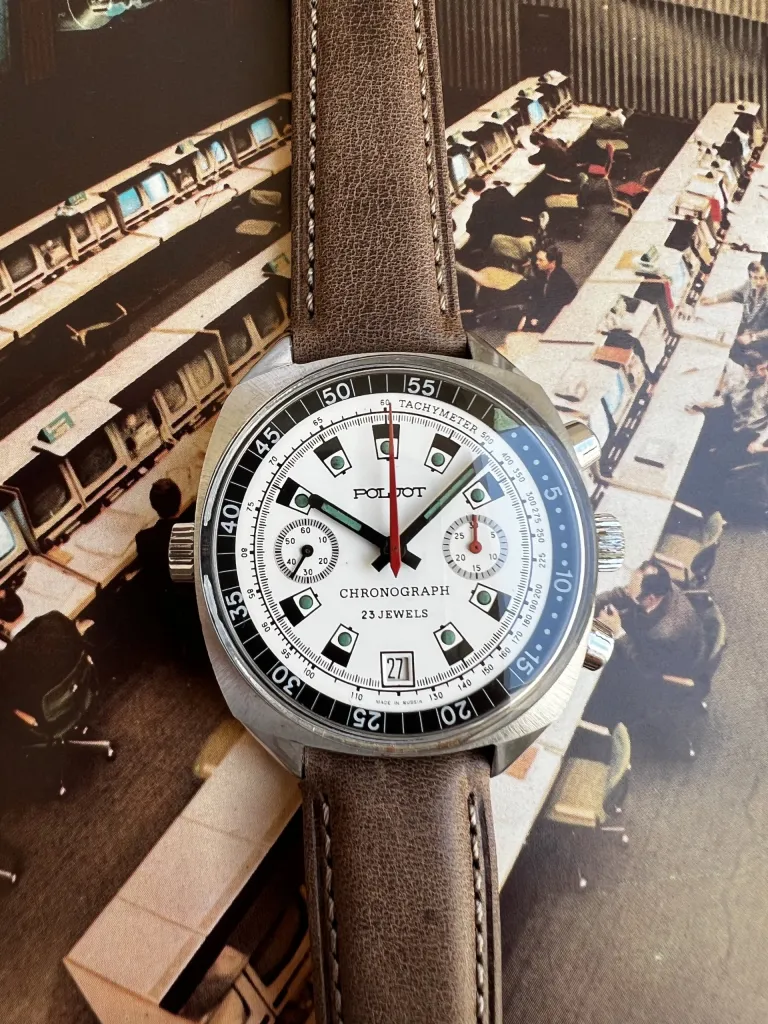
Poljot 3133 Cosmonauts chronograph: overall view, white "CHRONOGRAPH 23 JEWELS" dial on a leather strap - Soviet in Paris
Clocks & Watches

How to Use a Chronograph: Pushers, Reading, Telemeter and Tachymeter

A chronograph is a watch that also measures durations: two pushers control a large central hand, independent of the time. This guide explains how to start, stop, resume and reset a measurement, how to read the result, and what the telemeter and tachymeter scales are for. An animated Poljot 3133 chronograph lets you try each operation, with an atomic explosion and a racing car to practise on.
Read more »
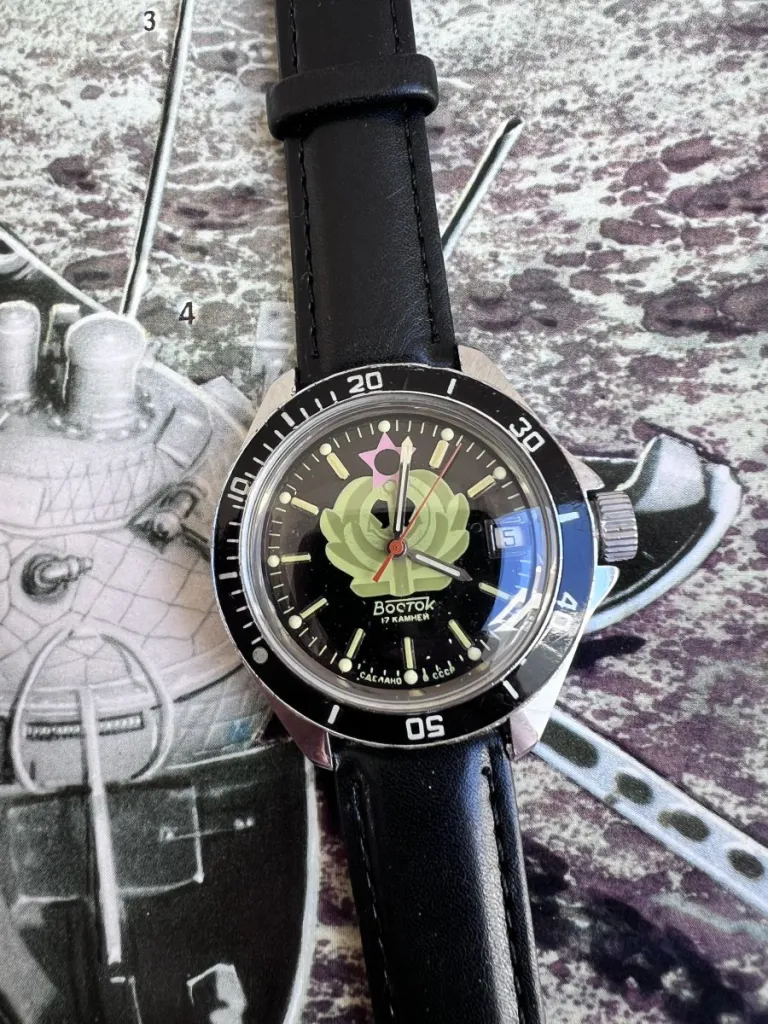
Vostok Amphibia 041776 watch: overall view, black dial with emblem, graduated bezel and black strap - Soviet in Paris
Clocks & Watches

The Vostok Amphibia and Komandirskie Crown: Why It Wobbles and How to Use It

You unscrew the crown of your Vostok and it starts moving in every direction: the watch is not broken. This wobbly crown is a deliberate feature of the Amphibia and Komandirskie. This guide explains why it is built this way, with a 3D cutaway, then how to wind the watch, set the time and date, screw the crown back and use the rotating bezel.

Read more »
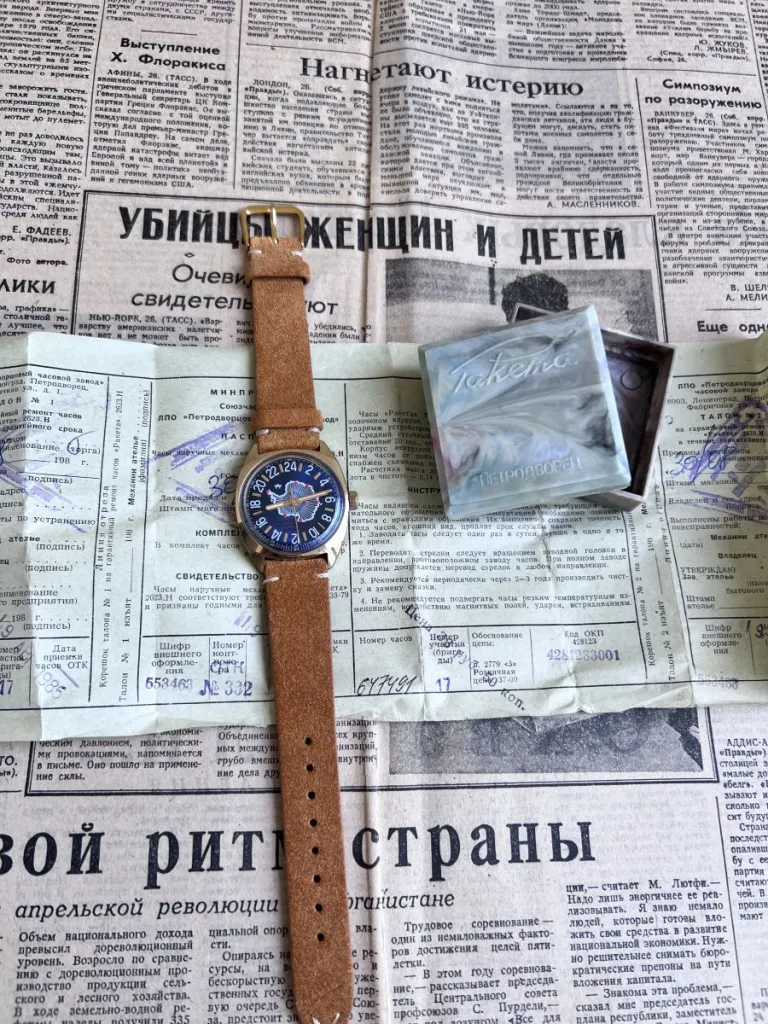
Raketa Antarctic watch: watch, factory passport and "Ракета ПЕТРОДВОРЕЦ" box laid on a newspaper - Soviet in Paris
Clocks & Watches

Mechanical, Automatic or Quartz Watch: The Differences Explained with Animated Diagrams

A mechanical watch draws its energy from a spring that is wound by hand. An automatic watch is a mechanical watch that winds itself on the wrist. A quartz watch runs on a battery. This guide explains how each one works with animated diagrams and a 3D movement, based on Soviet calibres, then answers the most common questions: winding, accuracy, stopping overnight, servicing.

Read more »

