



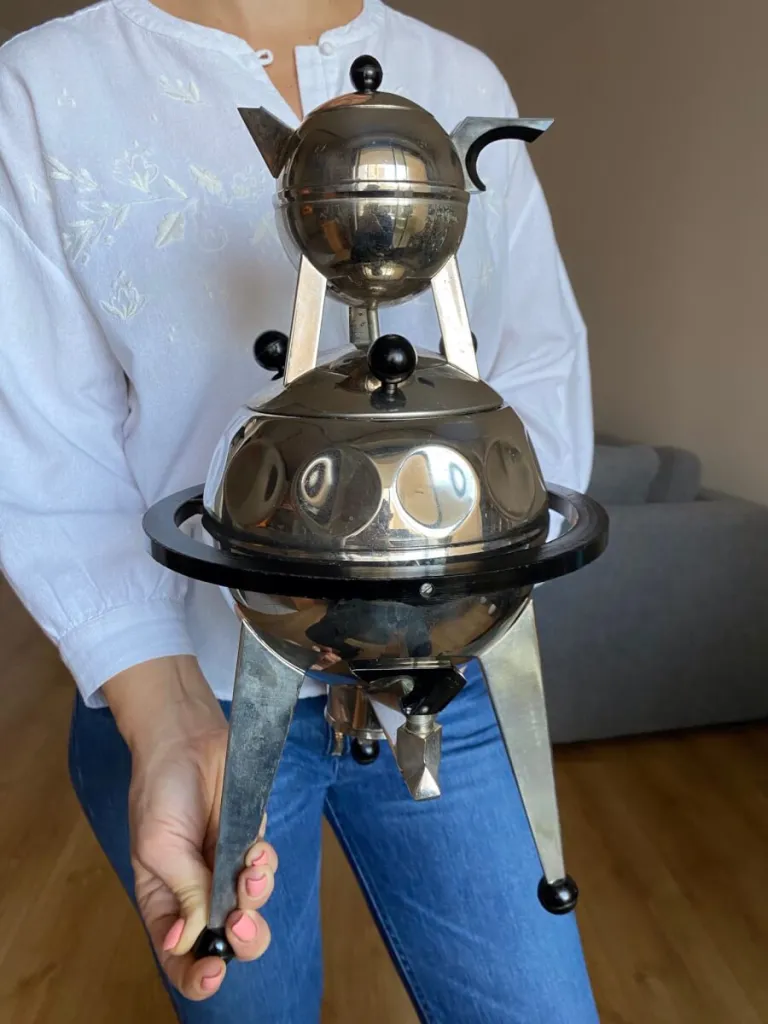
Sputnik samovar: full view held in hand, round teapot on three legs above the body circled by a black ring - Soviet in Paris
History & Propaganda

Soviet Sputnik Samovar: How It Works, Its History and What to Check Before Buying

A nickel-plated sphere on three legs, circled by a black ring, with a round teapot on top: the Sputnik electric samovar was designed by the painter Konstantin Sobakin and made in Suksun, in the Urals, from 1976. It keeps the idea of the charcoal samovar, a store of hot water with a brewing teapot sitting above it, but swaps the fire for a heating element. This guide covers how it works, where it came from, how to read its markings and what to check before buying one.
Read more »
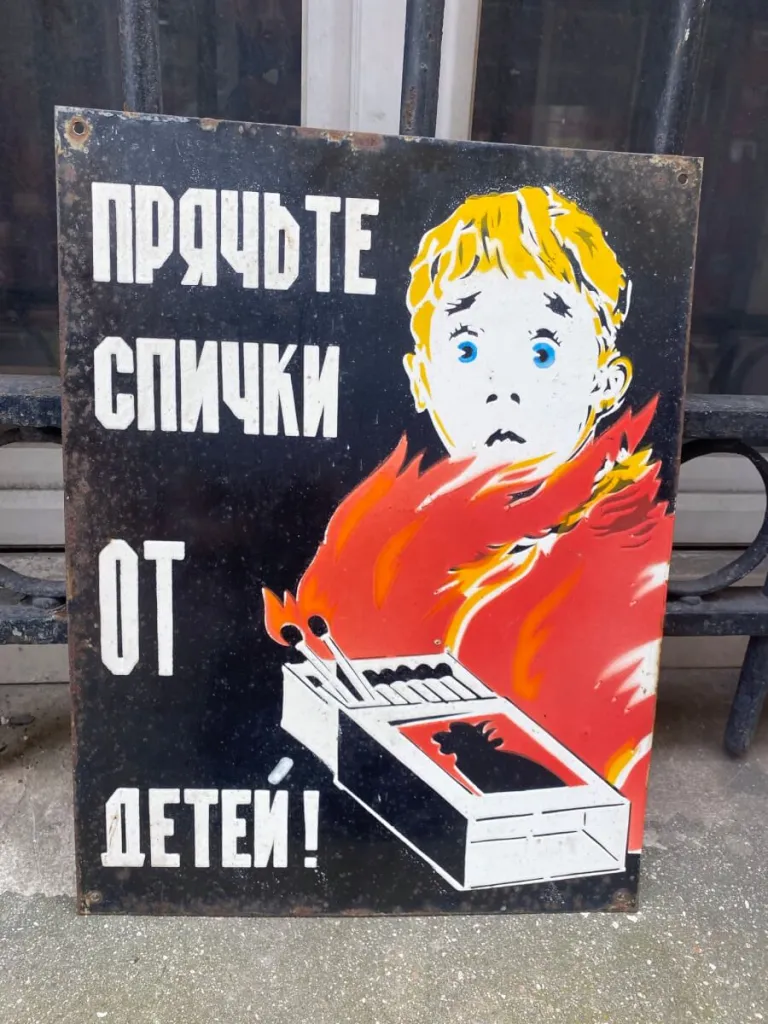
Soviet enamel sign "ПРЯЧЬТЕ СПИЧКИ ОТ ДЕТЕЙ!": full view, blond child and red flames - Soviet in Paris
History & Propaganda

Soviet Enamel Signs: How They Were Made and How to Date One

In Soviet towns, street names, the entrance of the savings bank and the warning on an electricity pole were written in glass. An enamel sign is not painted: every colour is a layer of glass fired onto the metal. This guide explains how Soviet enamel signs were made, how to read the inscription and the back, and which clues help you date one before buying, using the signs that have passed through our shop.

Read more »
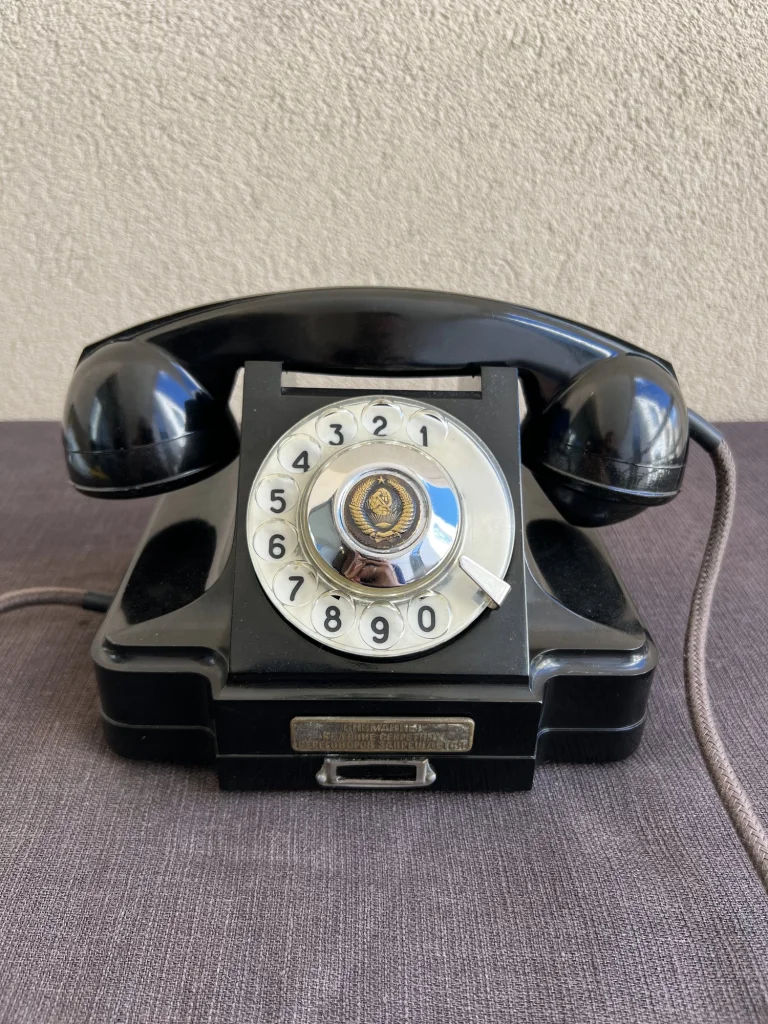
Soviet Desk Telephone TAN-5 - USSR Coat of Arms - 1959 - Soviet in Paris
History & Propaganda

Soviet Telephones: Rotary Dial, KGB Phones, Ship and Mine Phones Explained

On a Soviet telephone, three details nearly always place the piece. The dial, or the blanking plate fitted in its place, tells you what kind of exchange it was wired to. The plate or the moulding gives the model. The year is stamped under the base or on the plate. From Bakelite desk sets to battery-free ship phones and mine phones, this guide shows how they worked and what to check before you buy one.

Read more »

