Soviet Heavy Diver Inclinometer - USSR Military Factory 28, 1984 - Brass
$184.99Only 2 left
Soviet Heavy Diver Inclinometer - USSR Military Factory 28, 1984 - Brass
$184.99Only 2 left
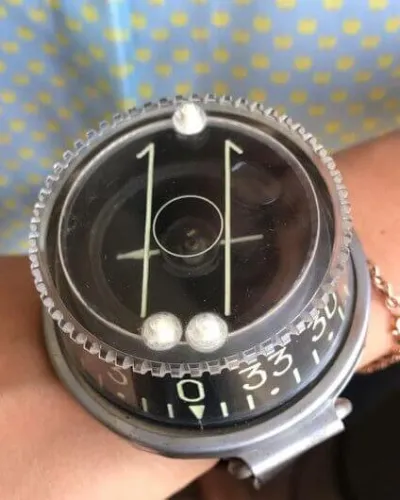
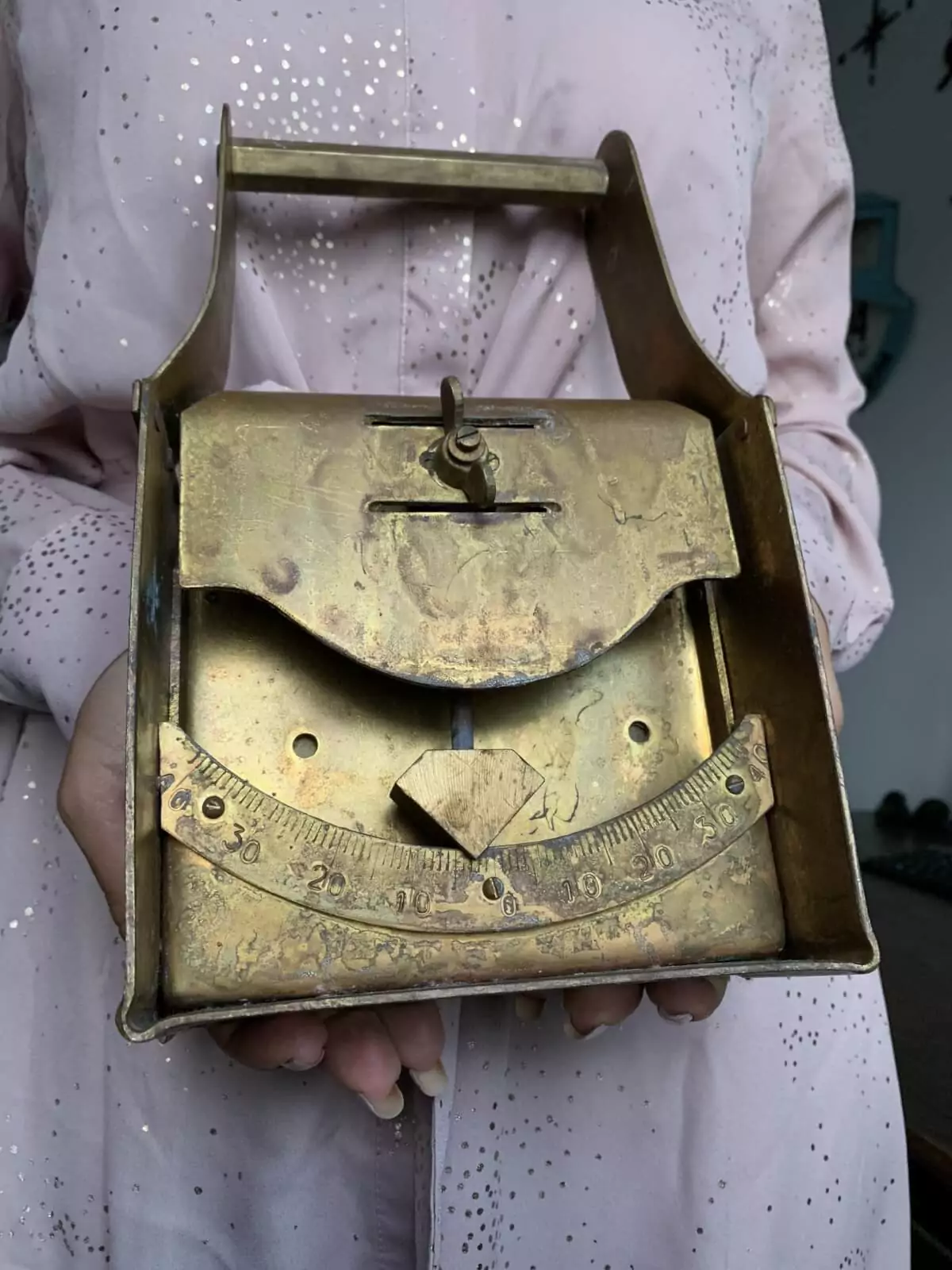
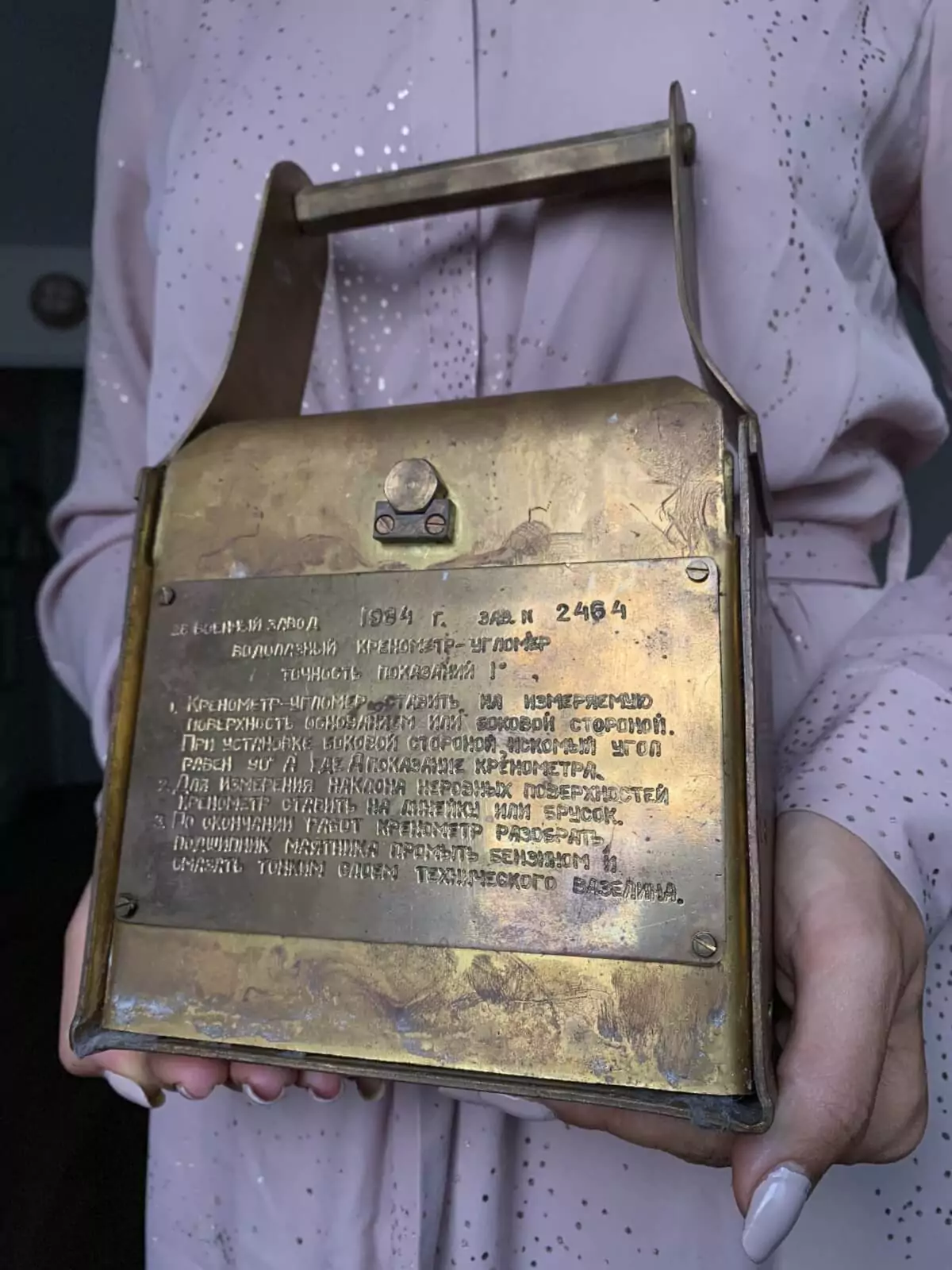
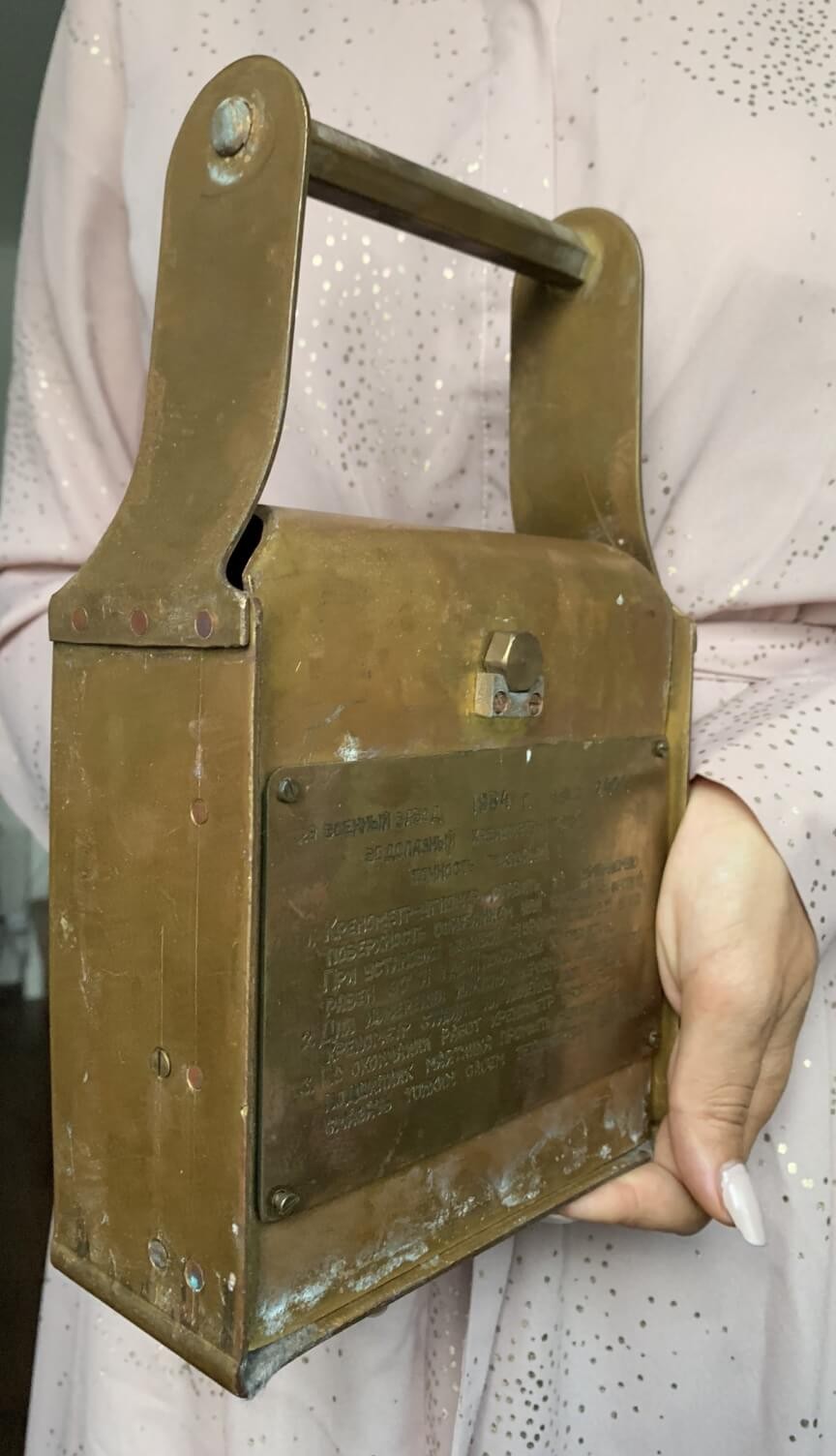
Brass heavy diver inclinometer, engraved « Водолазный кренометр-угломер » (diving inclinometer-protractor), military factory No. 28, 1984. Pendulum over a scale graduated from 0 to 40 degrees, engraved instructions on the back, untouched patina.
2 in stock
Message received, dear comrade.
Our information desk usually replies within 24 hours at the address provided.Death of Andropov. Chernenko briefly succeeds him. Boycott of the Los Angeles Olympics.


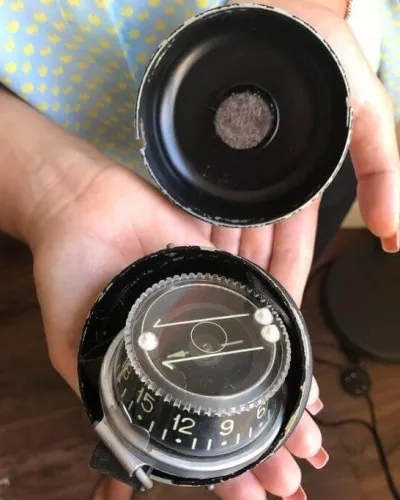
Soviet heavy diver inclinometer, used during underwater work to measure the inclination of a surface. The instrument is a brass case with a stirrup handle, assembled with copper-coloured rivets and screws. On the front, a pendulum ending in a diamond-shaped pointer swings in front of a scale graduated from 0 to 40 degrees on each side of zero, with one mark per degree. The upper cover, cut with two slots, carries a wing screw.
On the back, a screwed engraved plate identifies the instrument: « 28 военный завод » (military factory No. 28), « 1984 г. » (year 1984), « зав. № 2464 » (serial number 2464), « Водолазный кренометр-угломер » (diving inclinometer-protractor) and « точность показаний 1° » (reading accuracy 1°). Three instructions follow: place the device on the surface to be measured by its base or by its side, in which case the angle sought equals 90° minus the reading; for an uneven surface, set it on a ruler or a block; after work, dismantle the device, wash the pendulum bearing with petrol and grease it with a thin layer of technical petroleum jelly.
The word кренометр (inclinometer) comes from maritime vocabulary, where крен (list) refers to the sideways tilt of a ship. In the USSR, heavy divers, wearing the helmet suit and weighted boots, worked on harbour structures, bridge foundations, ship hulls and salvage operations. This instrument allowed them to check on the bottom the inclination of a wall, a pile or a part being set in place. The plate gives only the factory number, not its name.
The inclinometer is in working order. The brass keeps its untouched patina. The back plate remains fully legible.
Additional information
| Weight | 3 kg |
|---|---|
| Dimensions | 30 × 25 × 20 cm |