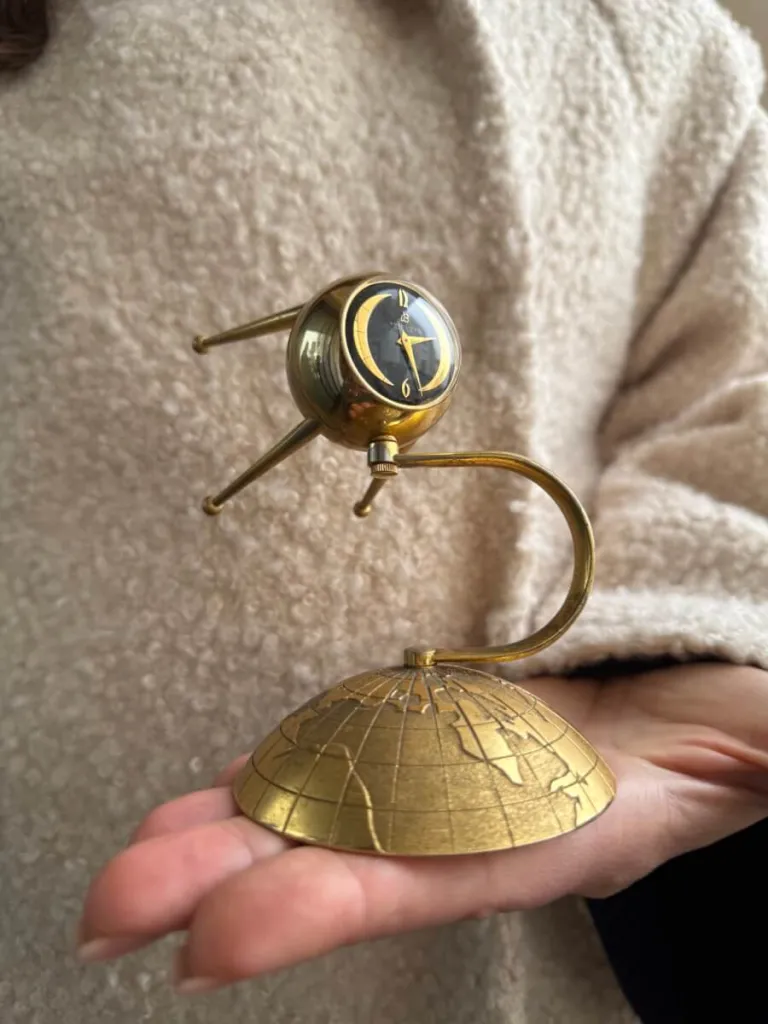
Breitling Bébé-Lune Sputnik clock: antenna sphere on its curved stem above the engraved globe base - Soviet in Paris
History & Propaganda

Breitling Baby Moon, Sputnik, Gagarin: The Objects the World Made for Soviet Spaceflight

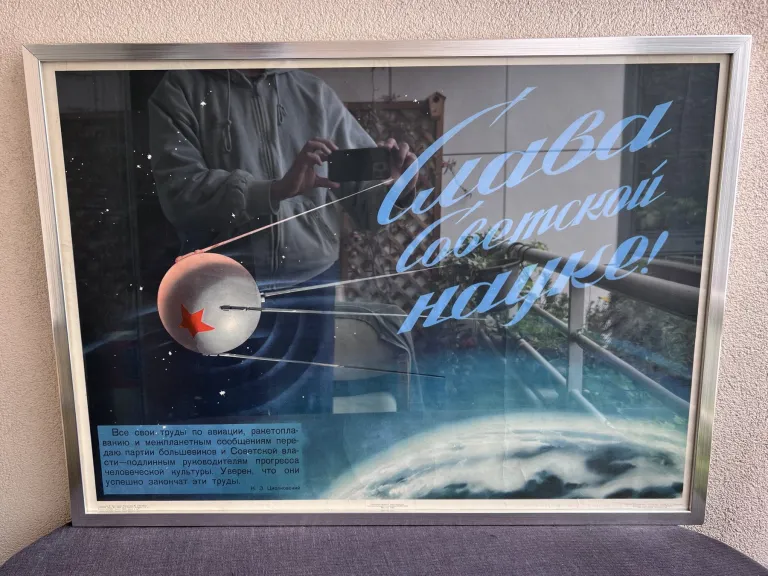
On 4 October 1957 the USSR put the first artificial satellite into orbit. The French nicknamed it the bébé-lune, the baby moon, and in Geneva Breitling turned it into a desk clock. It was not alone. Gien earthenware, BN biscuits, German toys, Italian records, Romanian stamps, a Chinese alarm clock: from 1957 to the 1970s the whole world made objects for Sputnik, Laika and Gagarin. This article lists them, country by country.
Read more »
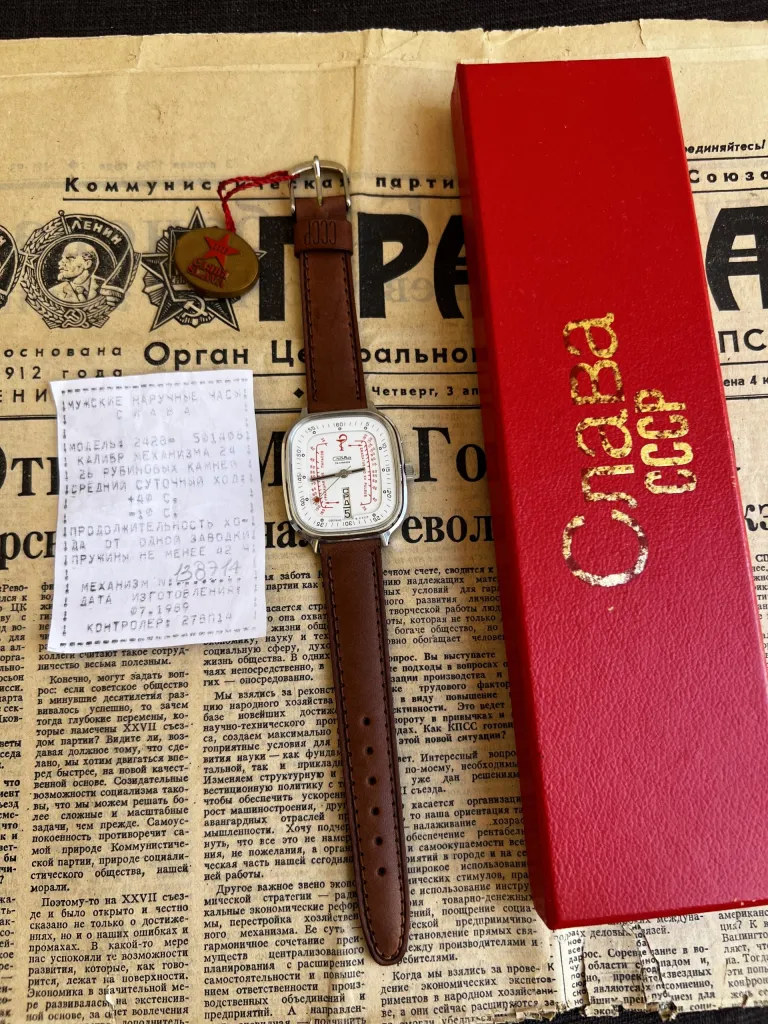
Slava Doctor's Pulsometer watch: full set with red Слава СССР box, factory passport and brand medallion - Soviet in Paris
Clocks & Watches

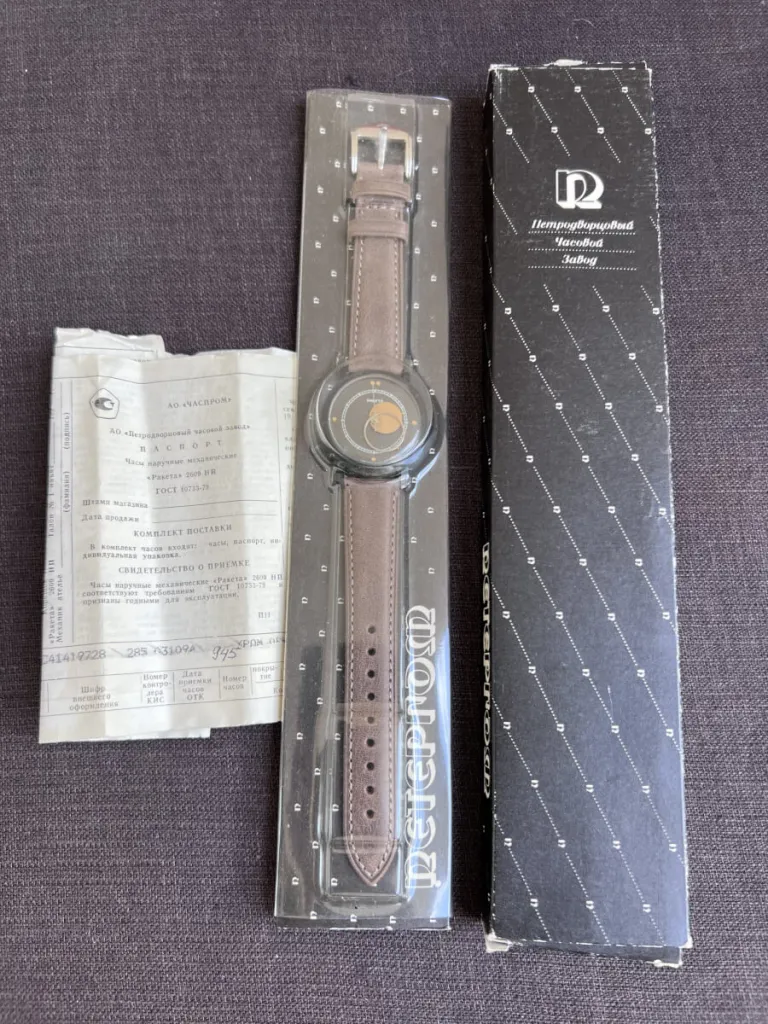
Soviet Doctor's Watches: the Slava Medical and Its Pulse Scale

On a Slava Medical, the doctor counts fifteen beats, looks where the seconds hand is and reads the pulse per minute straight off. These watches from the Second Moscow Watch Factory are among the most sought-after Slavas. This guide covers how they work, their versions, and a puzzle that is still open: the three letters KFG.

Read more »
Vostok Komandirskie Zakaz MO watch: full view on brown strap with white stitching - Soviet in Paris
Clocks & Watches

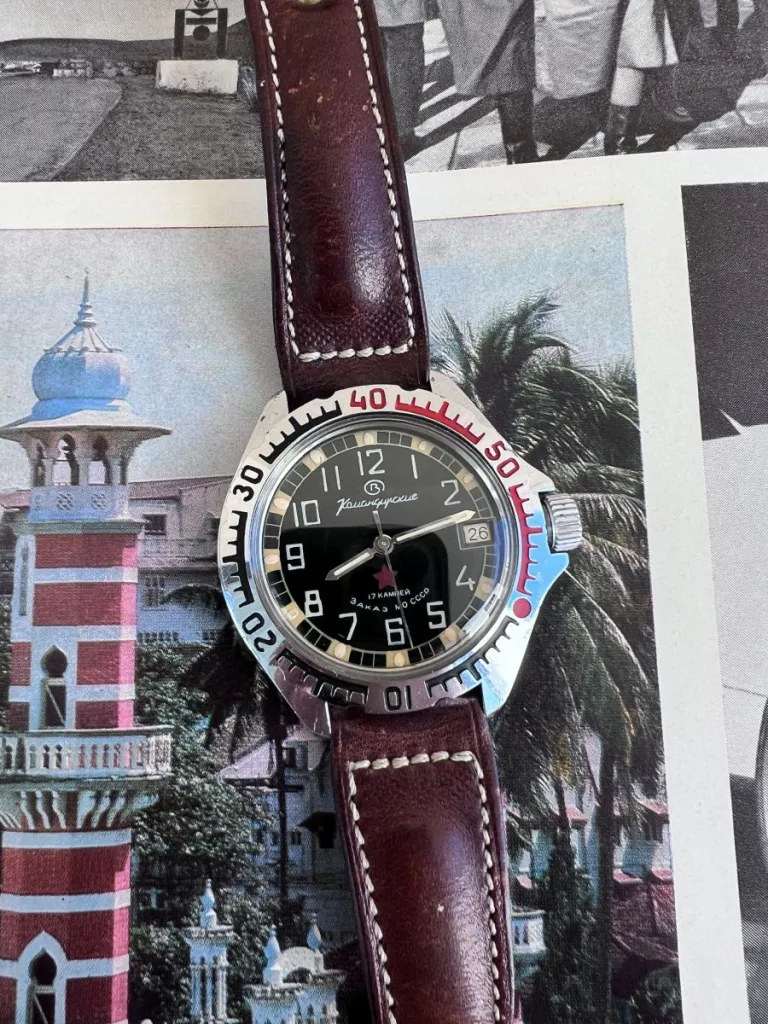
Vostok Komandirskie: The Officer's Watch and the "Zakaz MO SSSR" Marking

In 1965 the Chistopol factory became the official watch supplier to the Soviet Ministry of Defence. The Komandirskie, literally the commander’s watch, was born that year. Some carry the dial marking « Заказ МО СССР », ordered by the USSR Ministry of Defence. This guide explains what the marking means, how the watch changed up to 1991, and what sets a period piece apart.

Read more »
Vostok Amphibia watch: front view with black and white dial and brown leather strap - Soviet in Paris
Clocks & Watches

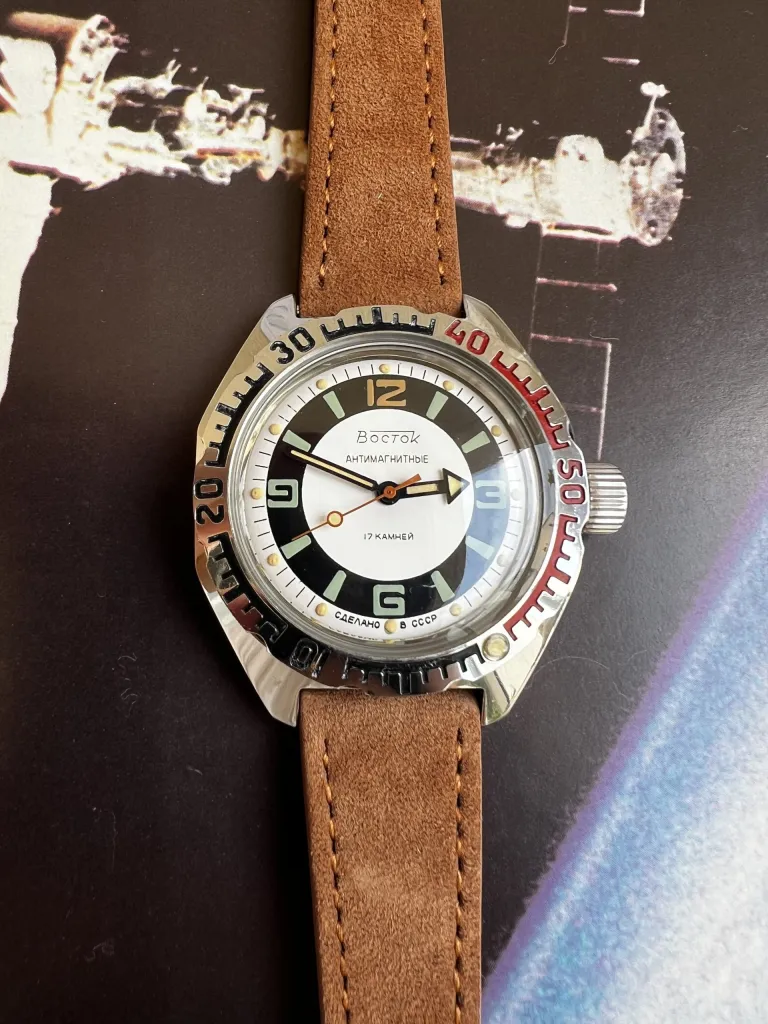
Vostok Amphibia: History, Versions and How to Spot a Soviet-Era Piece

In 1967 the Chistopol factory designed a dive watch that turned the problem around: instead of resisting water pressure, the case uses it to seal itself. The Amphibia was made through the last Soviet decades and then in Russia, under dozens of dials. This guide covers where it comes from, its main versions, and what separates a Soviet piece from a later one.

Read more »
Shturmanskie 31659 watch: overall view with its hand-annotated paper tag - Soviet in Paris
Clocks & Watches

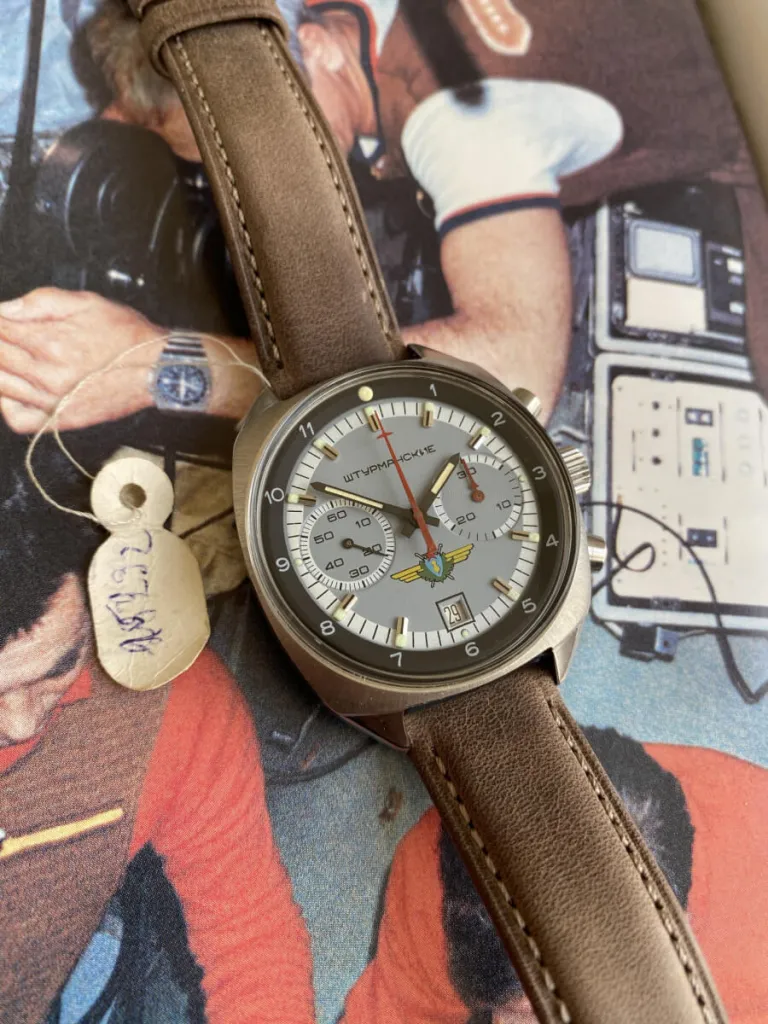
Poljot 3133 Chronograph: Telling Poljot, Shturmanskie and 31659 Apart

The Poljot 3133 calibre from the First Moscow Watch Factory powered Soviet, then Russian, chronographs for close to thirty years. One movement, very different watches: Poljot models sold in shops, Shturmanskie pieces that went through military acceptance, the Okean for the Navy, and later the 31659 made for air force crews. This guide covers where the calibre comes from, what sets these versions apart, and what to check on a watch before buying it.

Read more »