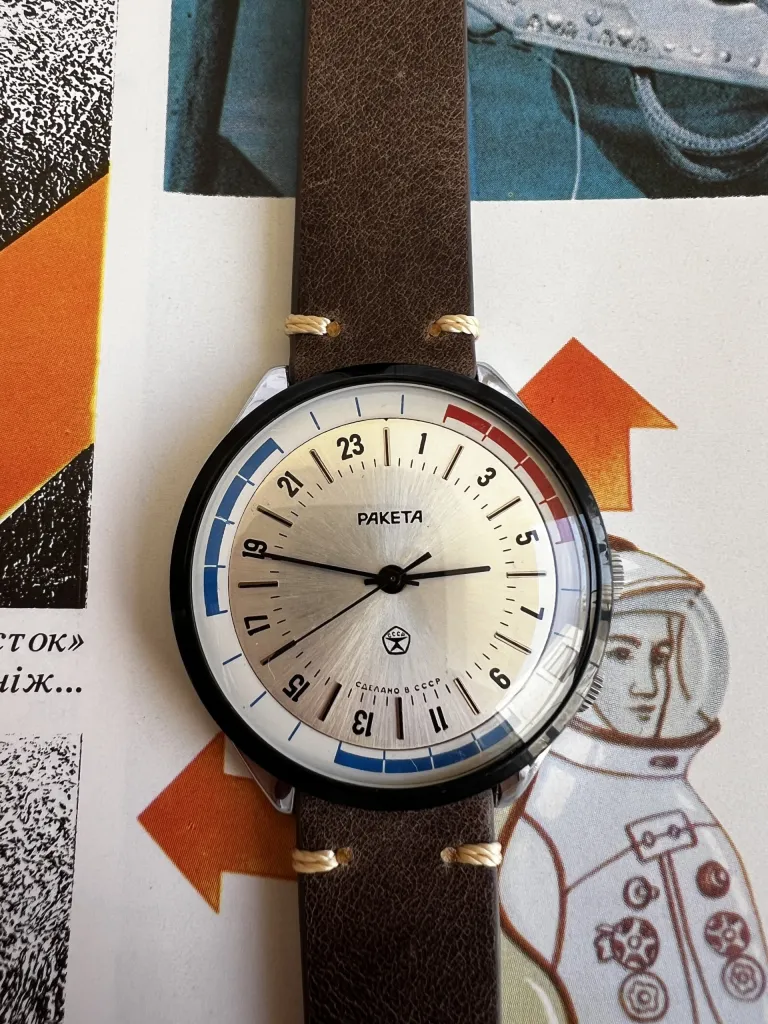
Raketa Submariner 2623N watch: front view of the 24-hour dial with red and blue watch-period ring - Soviet in Paris
Clocks & Watches

How to Use a Raketa 24-Hour Watch: the Rotating Ring and the Second Crown

On a two-crown Raketa 24-hour watch, the second crown does not set the time: it turns a ring placed under the crystal. The factory passport describes three versions of it, the first to time a four-hour watch at sea, the second to read the hour of a second time zone, the third to read the hour in twenty-four cities of the world. Here is how to use each of them, with three watches you can set on screen.
Read more »
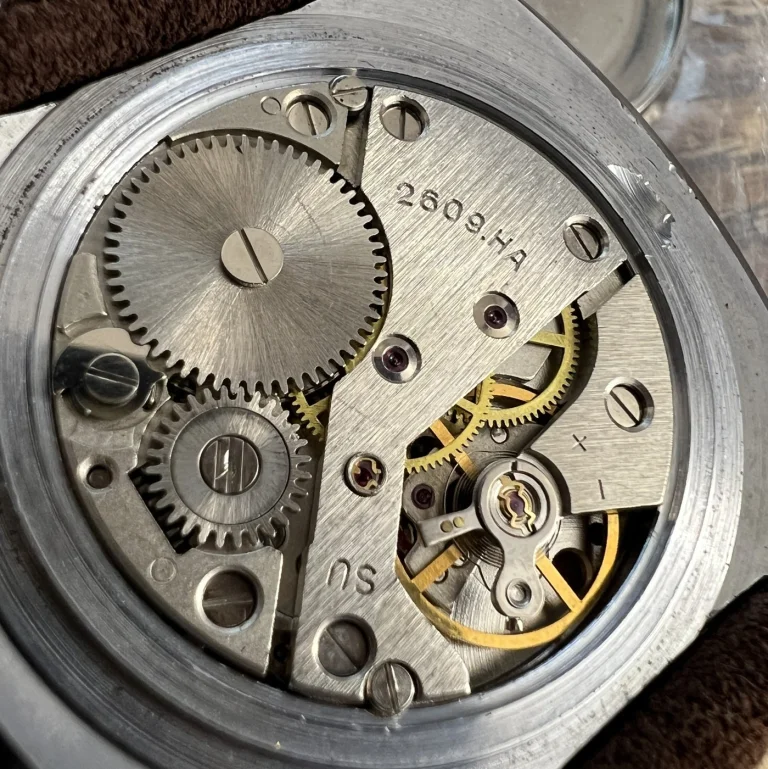
Raketa 2609.НА movement, seen from the back.
Clocks & Watches

Servicing a Soviet Mechanical Watch: When and How

The oils in a movement age even when the watch is not worn. This guide gives the recommended service interval, what factory passports said, the official rate tolerances, how repair shops worked in the USSR, the warning signs and everyday habits, with a Soviet movement in 3D.

Read more »
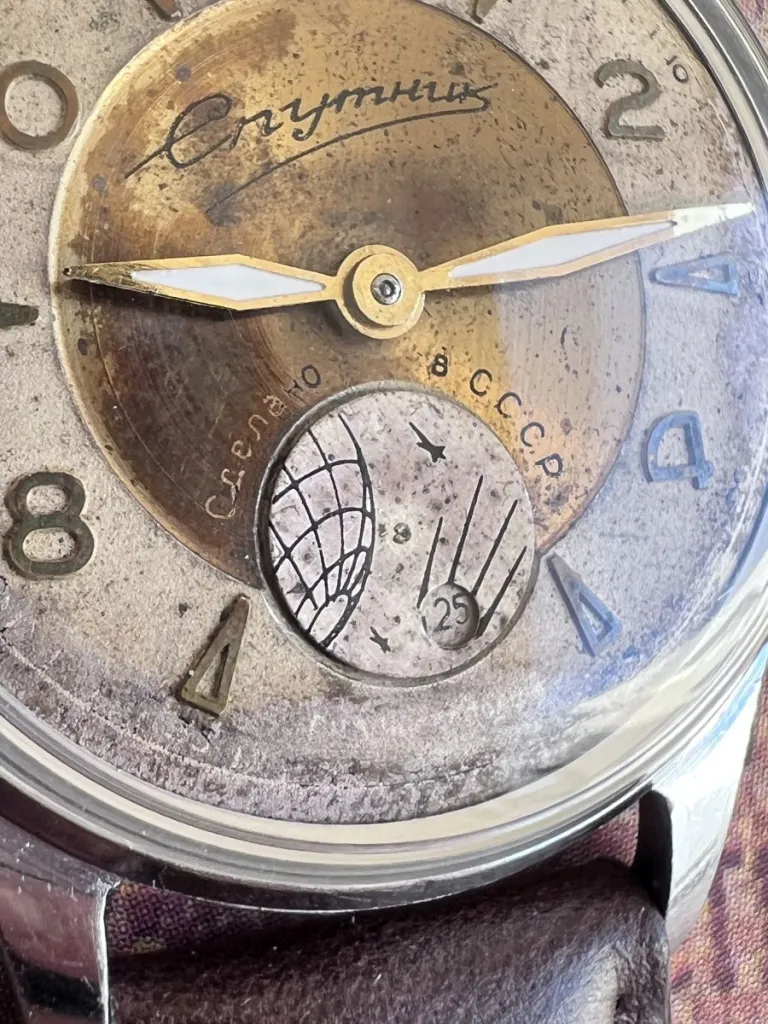
Sputnik ChChZ watch: close-up of the seconds disc with globe, satellites and number 25 in the window - Soviet in Paris
Clocks & Watches

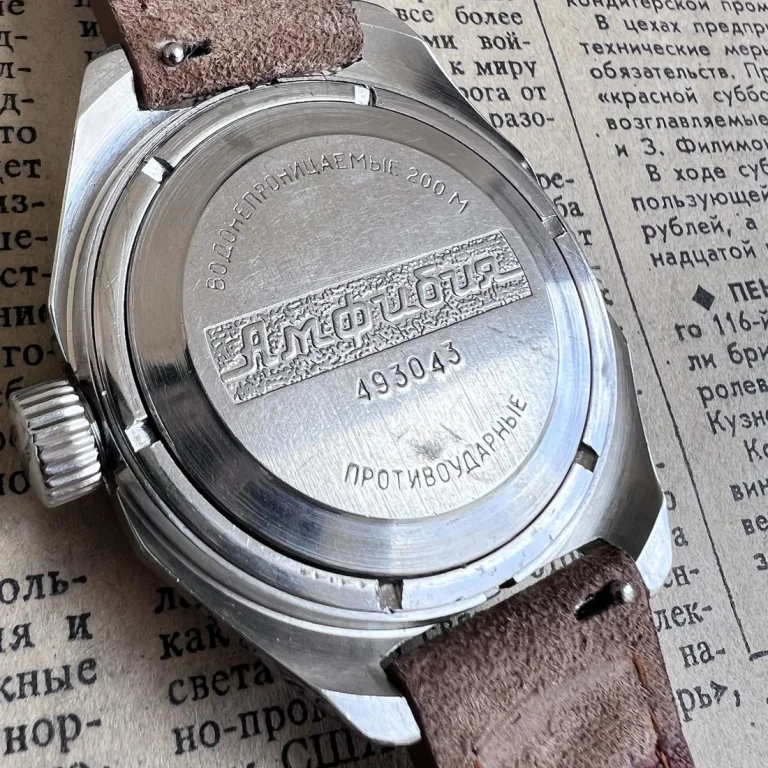
How to Read the Cyrillic on a Soviet Watch Dial

The Cyrillic markings on a dial, a case back or a passport help identify a Soviet watch and place it in time. This guide explains each of them on three tap-to-read photos, decodes the four-digit calibre code and sets out what the Soviet standard actually required to be written.

Read more »
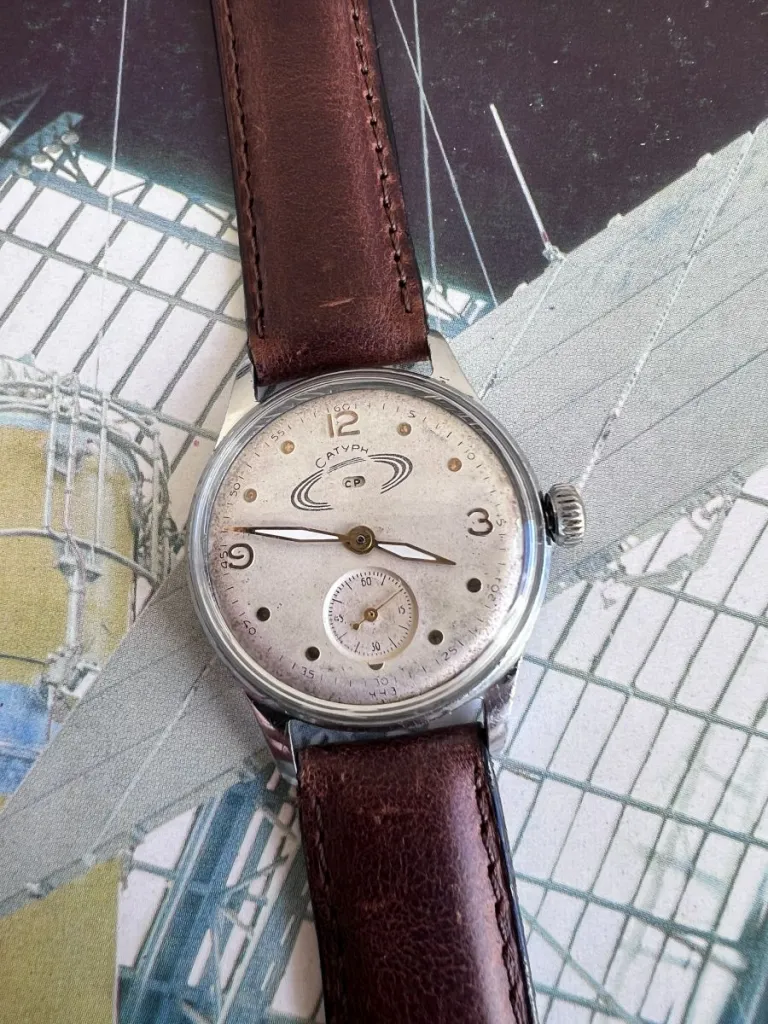
Saturn watch: overall view, "САТУРН" (Saturn) dial with planet logo and brown leather strap - Soviet in Paris
Clocks & Watches

Vostok Watches: The History of the Chistopol Factory, Model by Model

Vostok watches come from a factory born of an evacuation: in October 1941 the Second Moscow Watch Factory was sent to Chistopol, in Tatarstan. It set up in a distillery, made mine mechanisms, then Pobeda watches, before becoming the watch supplier of the Ministry of Defence in 1965. The story of the factory, from the war to today, and one landmark for each model family.

Read more »
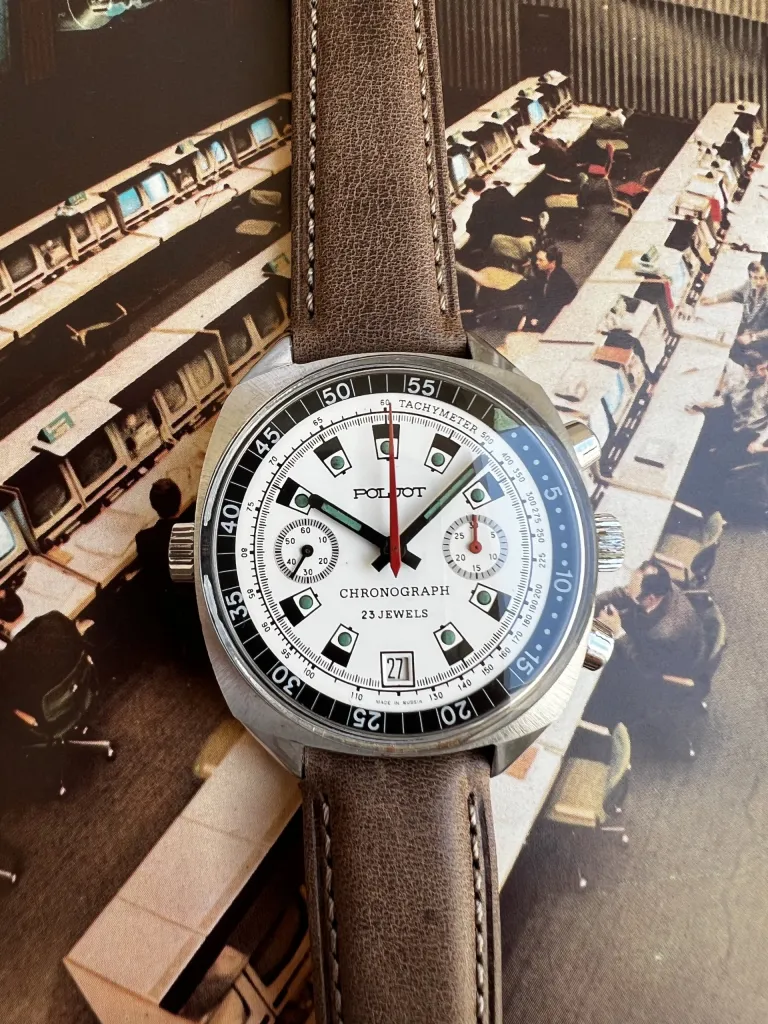
Poljot 3133 Cosmonauts chronograph: overall view, white "CHRONOGRAPH 23 JEWELS" dial on a leather strap - Soviet in Paris
Clocks & Watches

How to Use a Chronograph: Pushers, Reading, Telemeter and Tachymeter

A chronograph is a watch that also measures durations: two pushers control a large central hand, independent of the time. This guide explains how to start, stop, resume and reset a measurement, how to read the result, and what the telemeter and tachymeter scales are for. An animated Poljot 3133 chronograph lets you try each operation, with an atomic explosion and a racing car to practise on.

Read more »
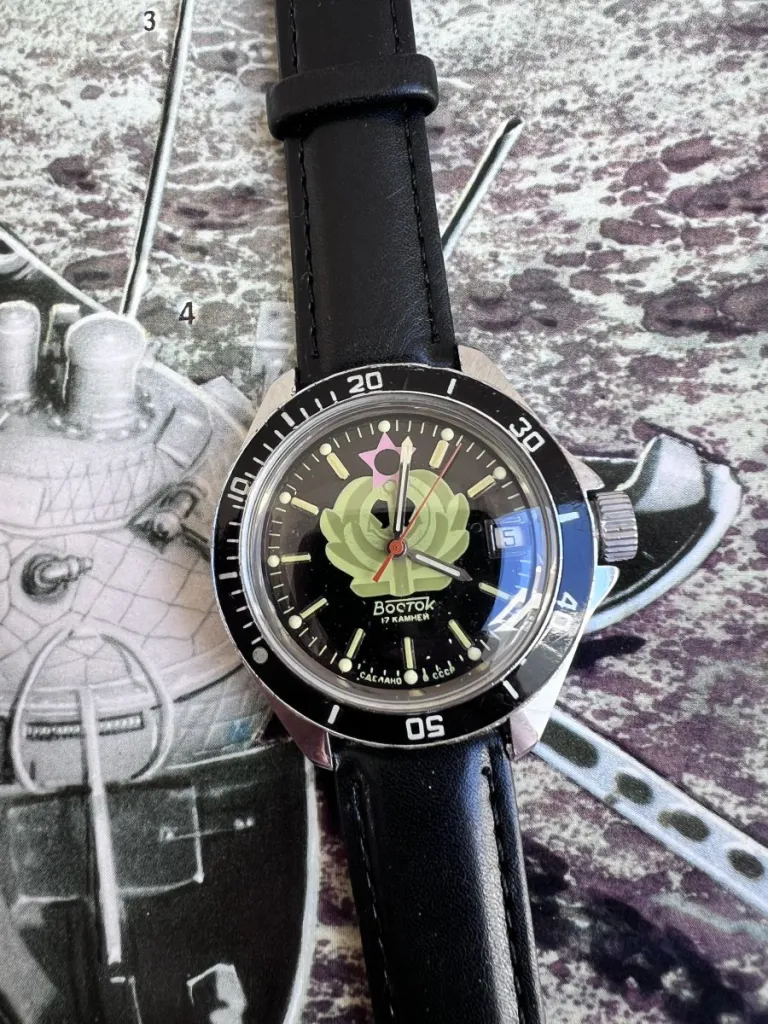
Vostok Amphibia 041776 watch: overall view, black dial with emblem, graduated bezel and black strap - Soviet in Paris
Clocks & Watches

The Vostok Amphibia and Komandirskie Crown: Why It Wobbles and How to Use It

You unscrew the crown of your Vostok and it starts moving in every direction: the watch is not broken. This wobbly crown is a deliberate feature of the Amphibia and Komandirskie. This guide explains why it is built this way, with a 3D cutaway, then how to wind the watch, set the time and date, screw the crown back and use the rotating bezel.

Read more »
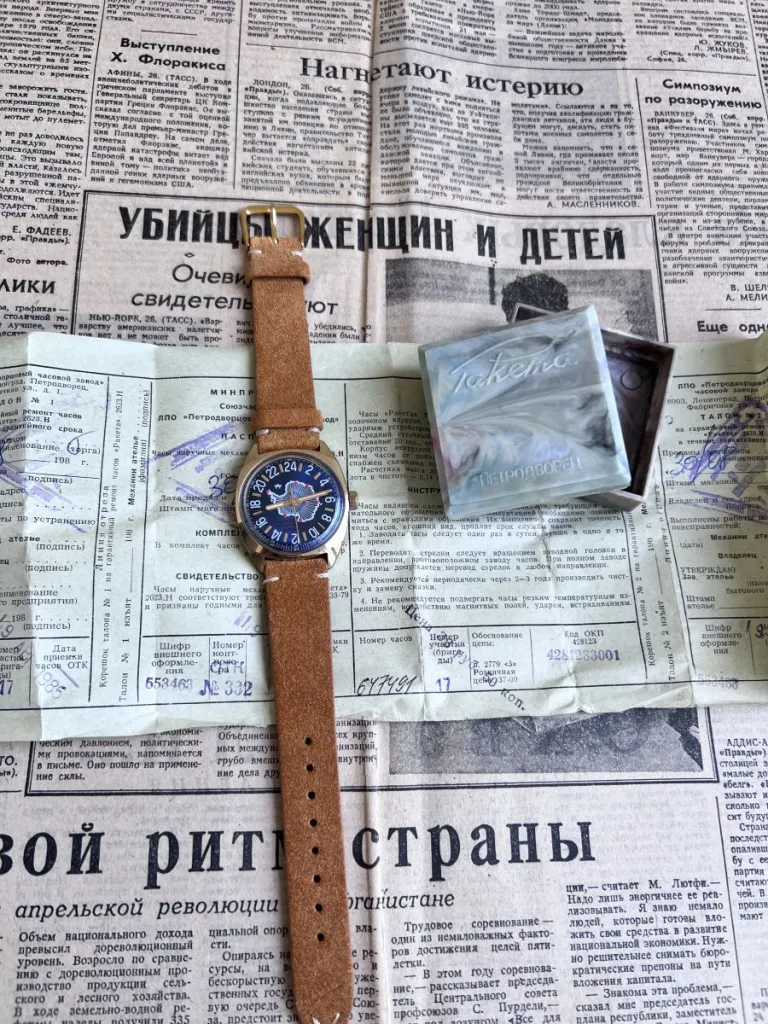
Raketa Antarctic watch: watch, factory passport and "Ракета ПЕТРОДВОРЕЦ" box laid on a newspaper - Soviet in Paris
Clocks & Watches

Mechanical, Automatic or Quartz Watch: The Differences Explained with Animated Diagrams

A mechanical watch draws its energy from a spring that is wound by hand. An automatic watch is a mechanical watch that winds itself on the wrist. A quartz watch runs on a battery. This guide explains how each one works with animated diagrams and a 3D movement, based on Soviet calibres, then answers the most common questions: winding, accuracy, stopping overnight, servicing.

Read more »
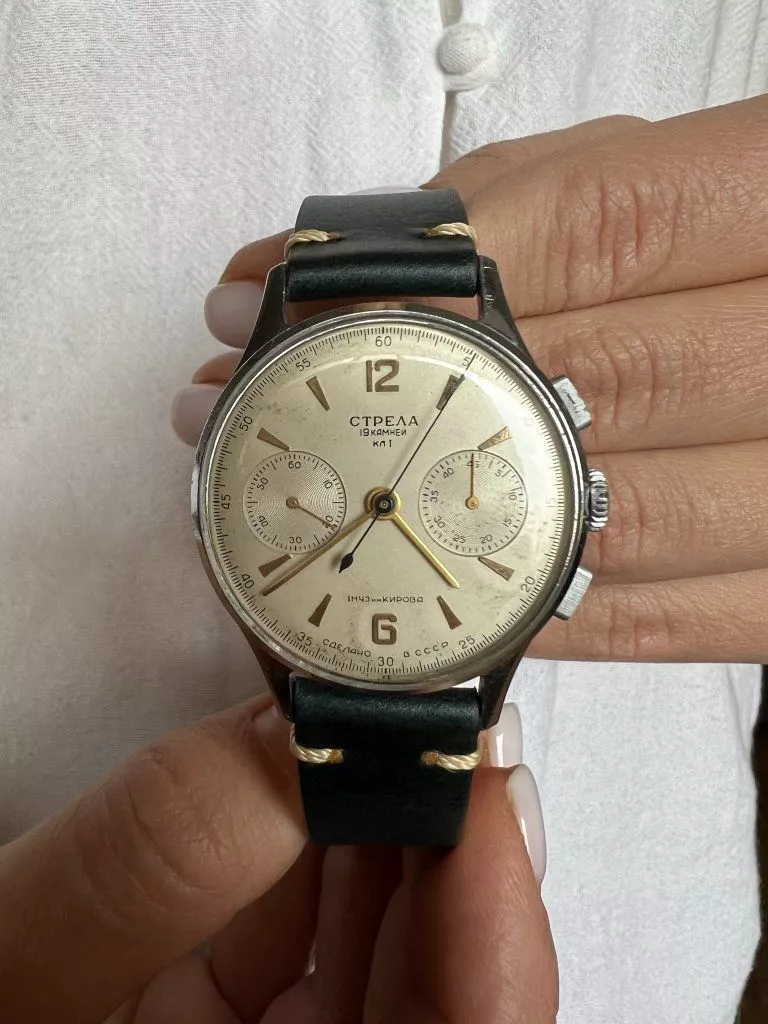
Cosmonaut Strela 3017 Watch - Poljot - Chronograph
Clocks & Watches

Poljot Watches: History, Models and Calibres of the First Moscow Watch Factory

Poljot watches come from the First Moscow Watch Factory, founded in 1930 with the machinery of an American manufacturer. The factory made the Pobeda, the pilots’ Sturmanskie, the first Soviet automatic, the first alarm wristwatch and an ultra-thin watch awarded in Leipzig, before bringing its whole output under the Poljot name in 1964. This guide traces that history, presents the models and their calibres, and gives the points to check before buying.

Read more »
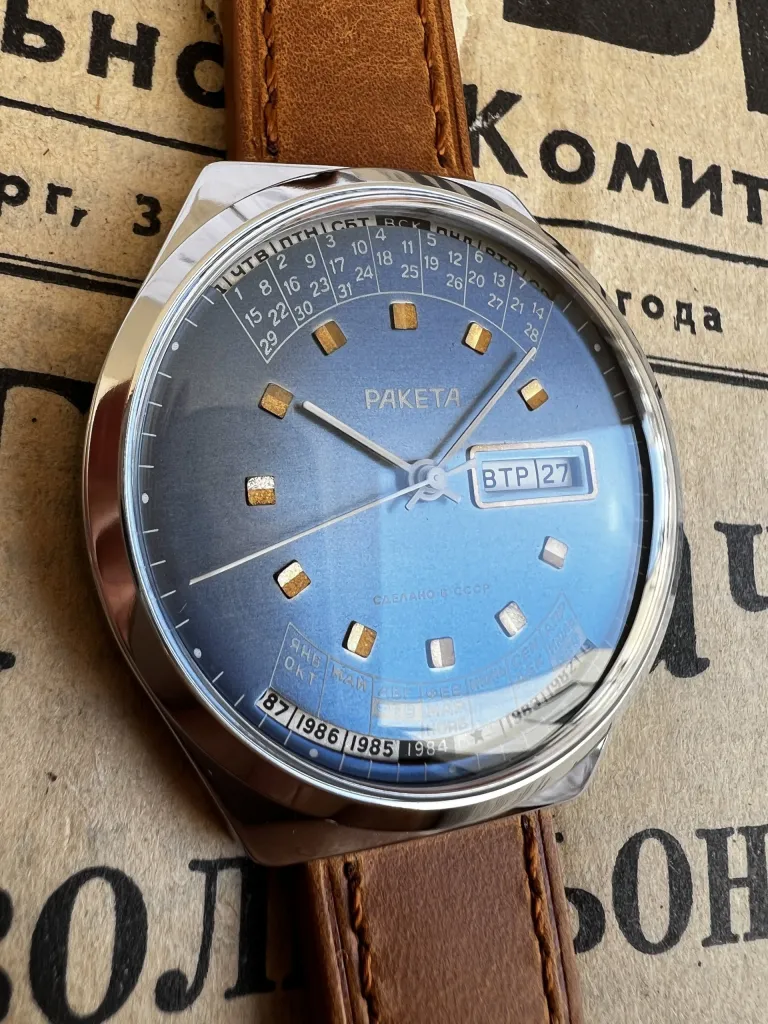
Raketa Perpetual Calendar watch with blue dial: dial at an angle, "ВТР 27" day-date window and years 1982 to 1987 - Soviet in Paris
Clocks & Watches

Raketa Perpetual Calendar: How It Works and How to Use It

The Raketa perpetual calendar is a Soviet watch whose dial carries a full calendar: a movable disc, set by a second crown, gives the day of the week for any date. The printed years stop at 2000, but the calendar still works, because each year has a twin on the disc. This guide explains how it works step by step, with a simulator, and shows which year to set up to 2040.

Read more »