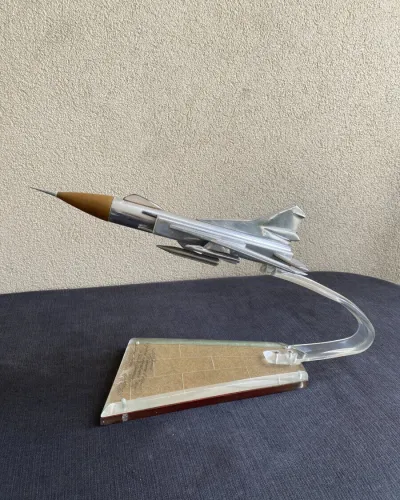
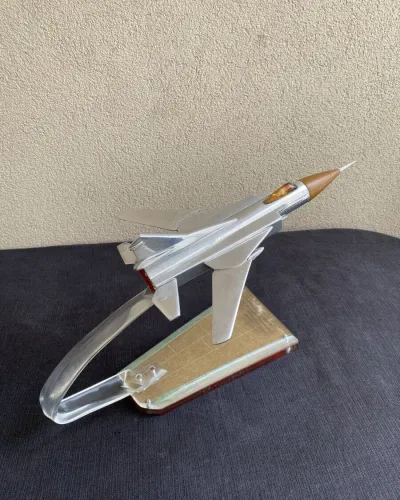
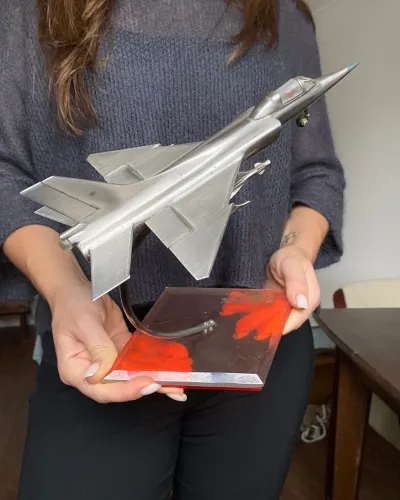
MiG-21 Aluminium Desk Model with Missiles - USSR 1980s
$414.99Unique piece
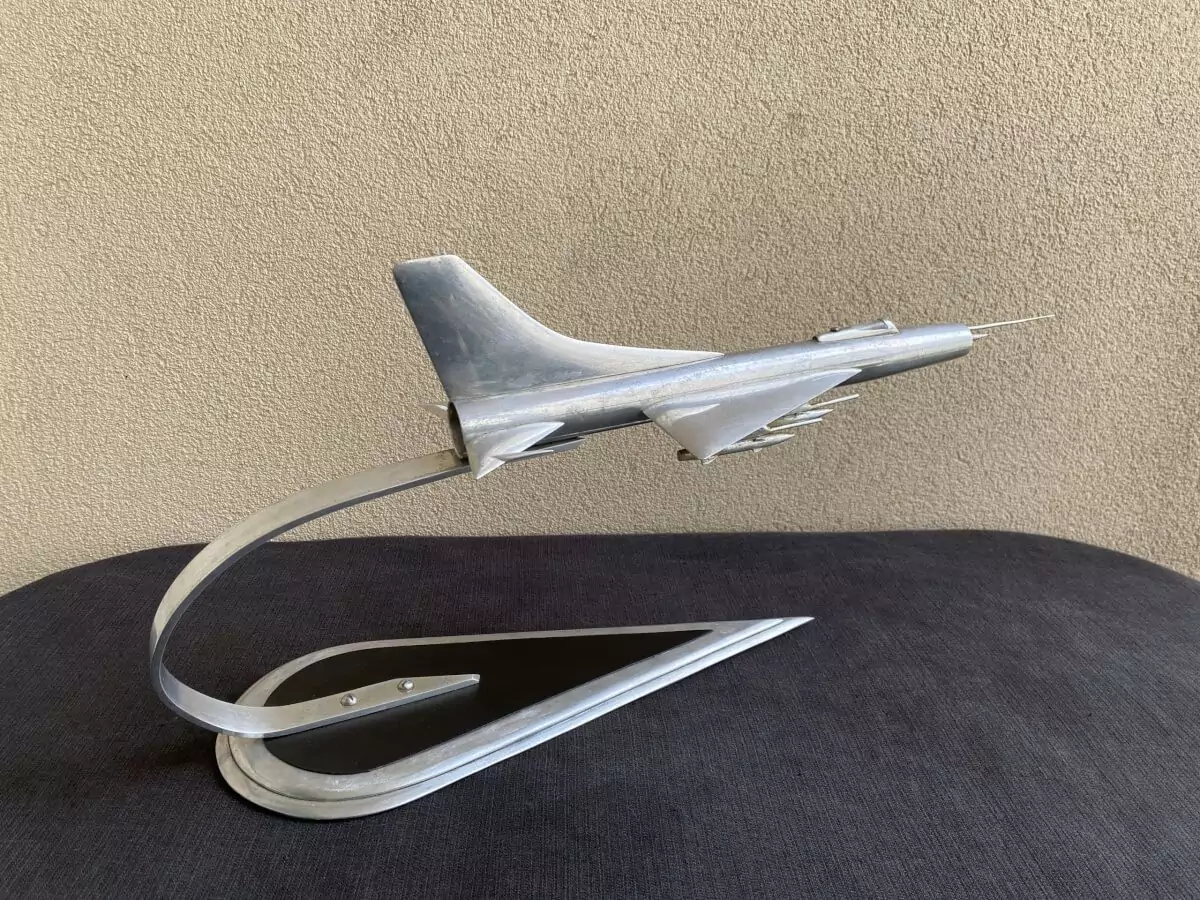

MiG-21 Aluminium Desk Model with Missiles - USSR 1980s
$414.99Unique piece
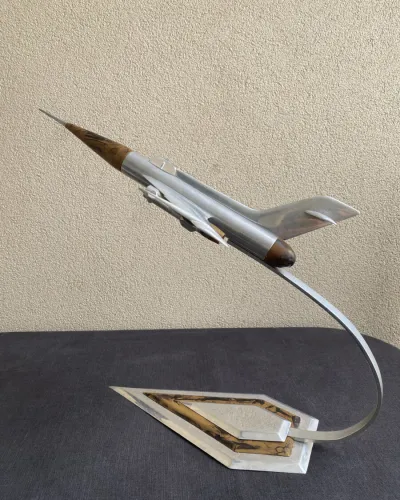
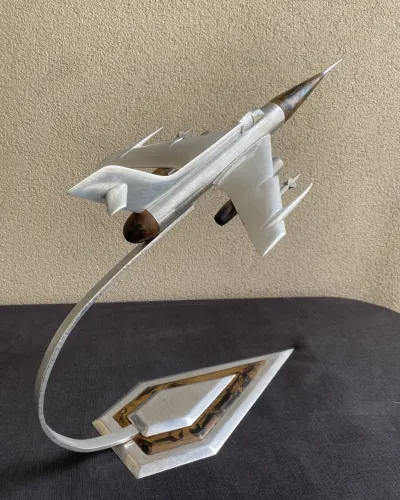
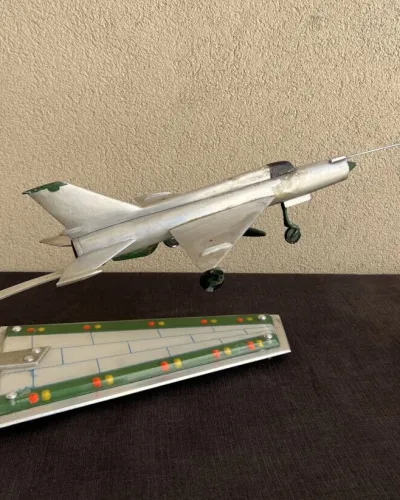
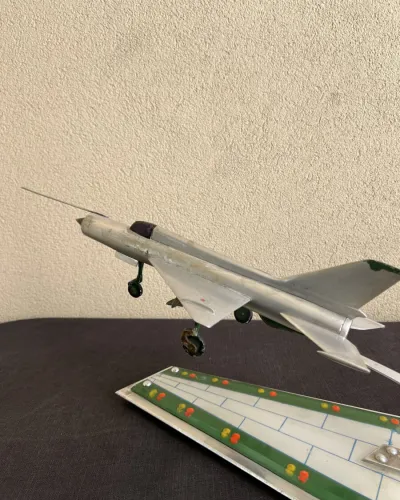
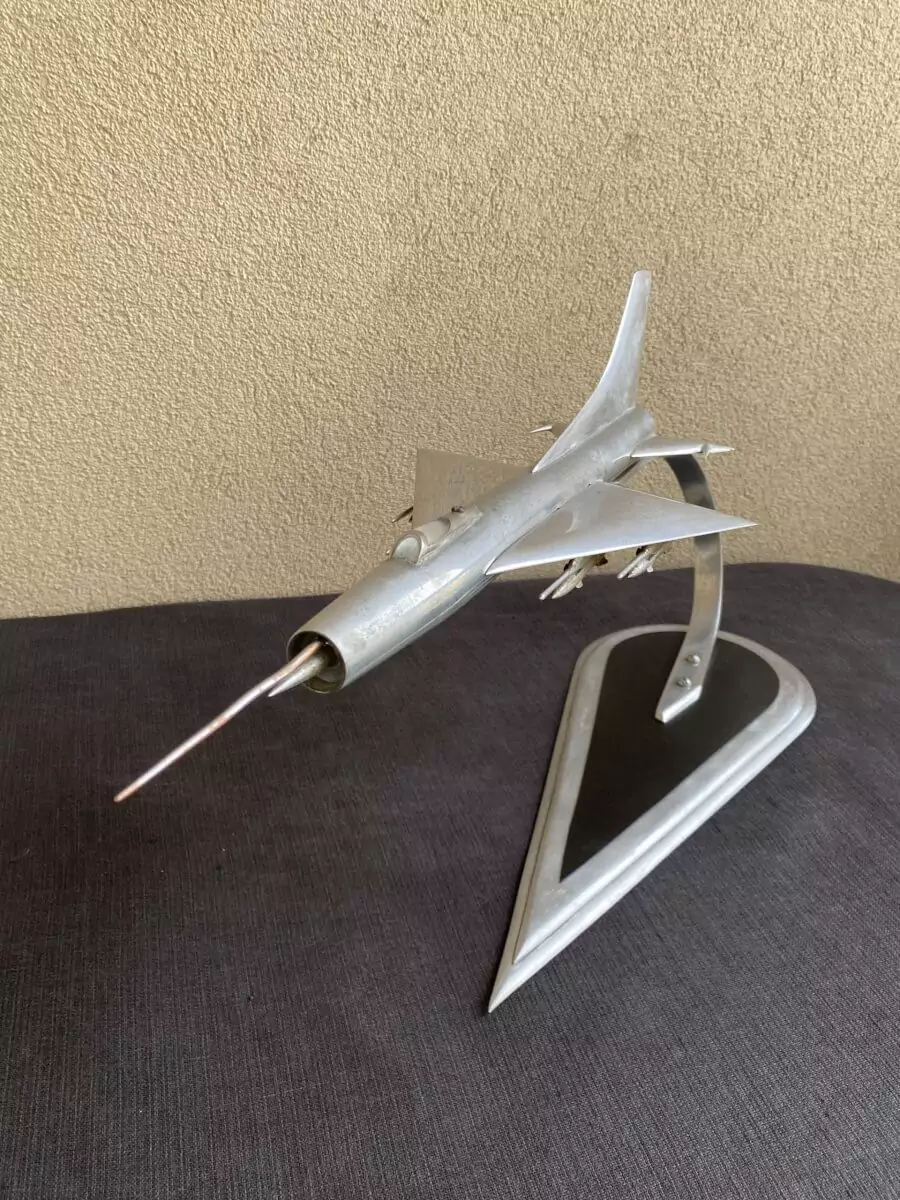
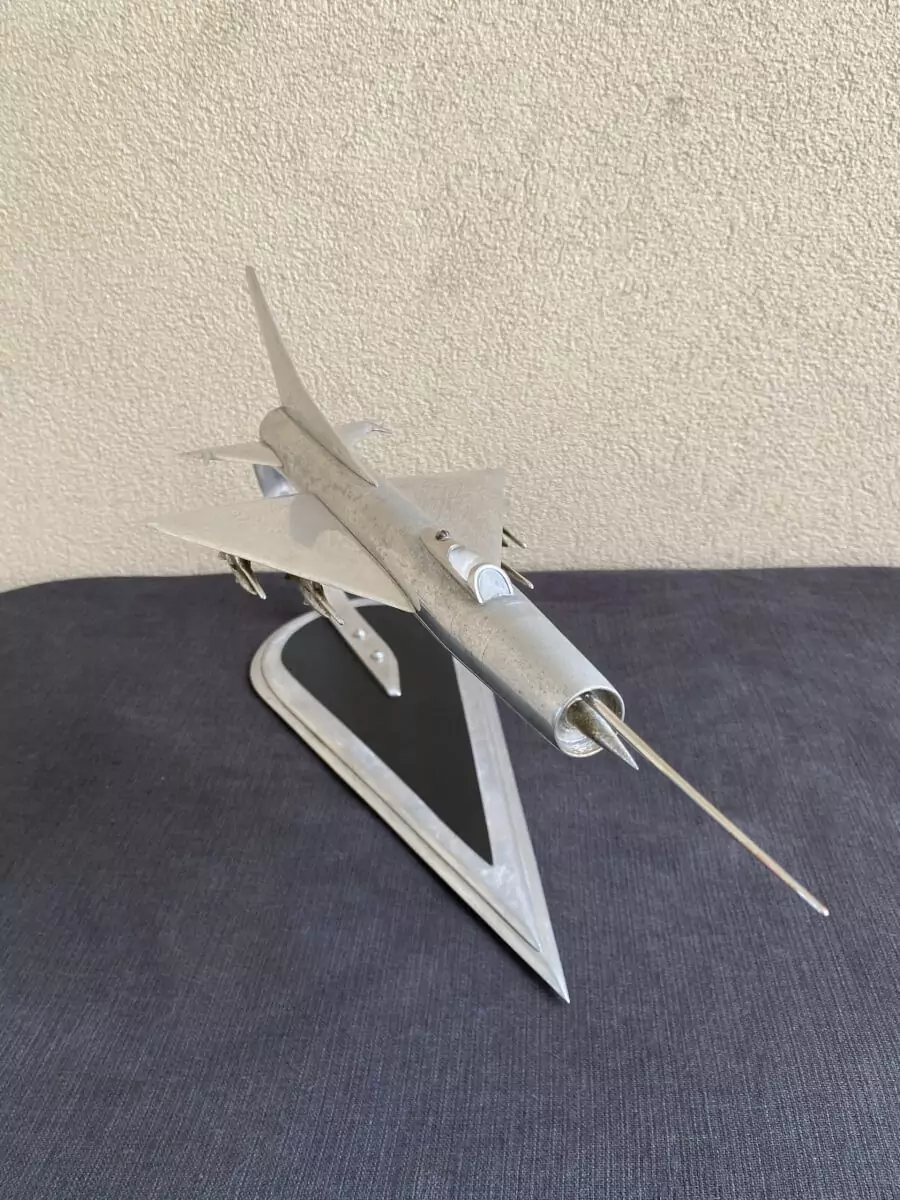
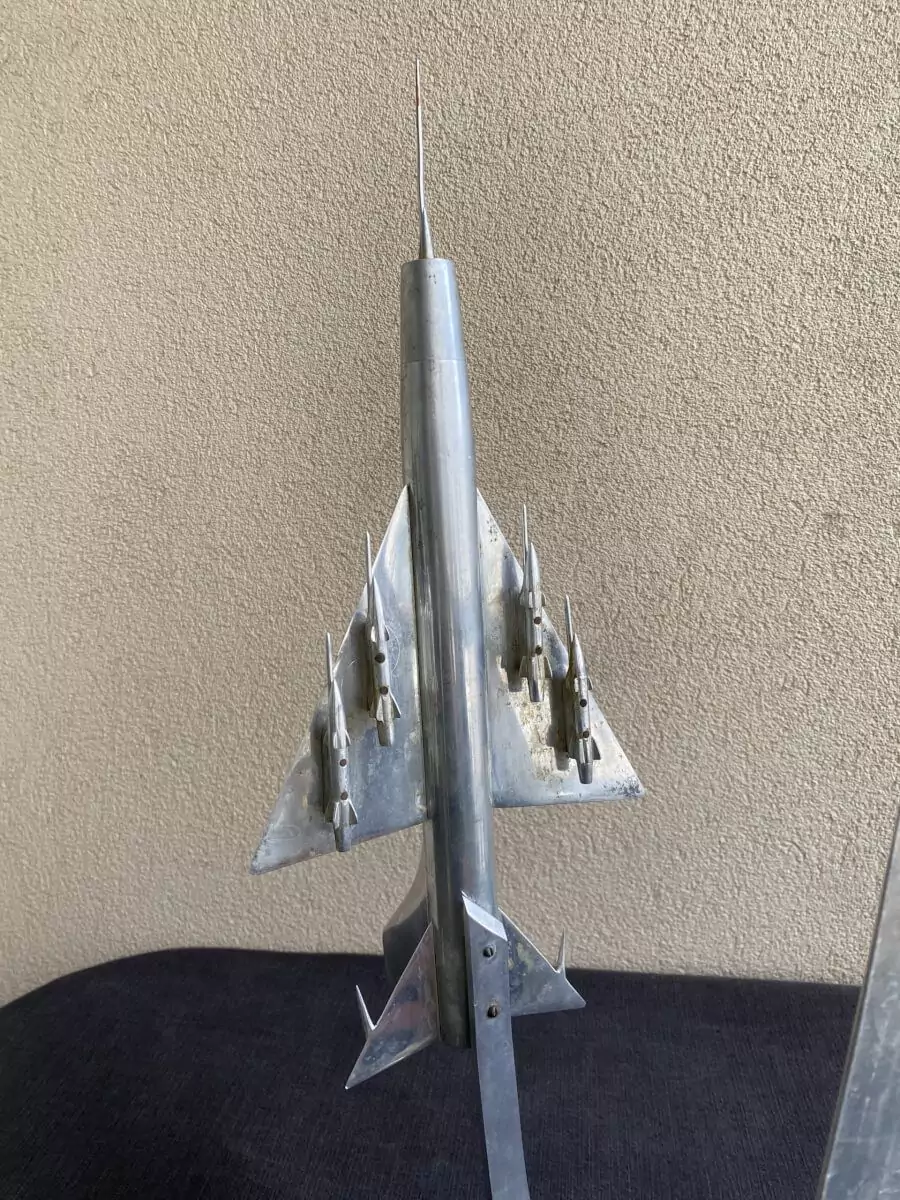
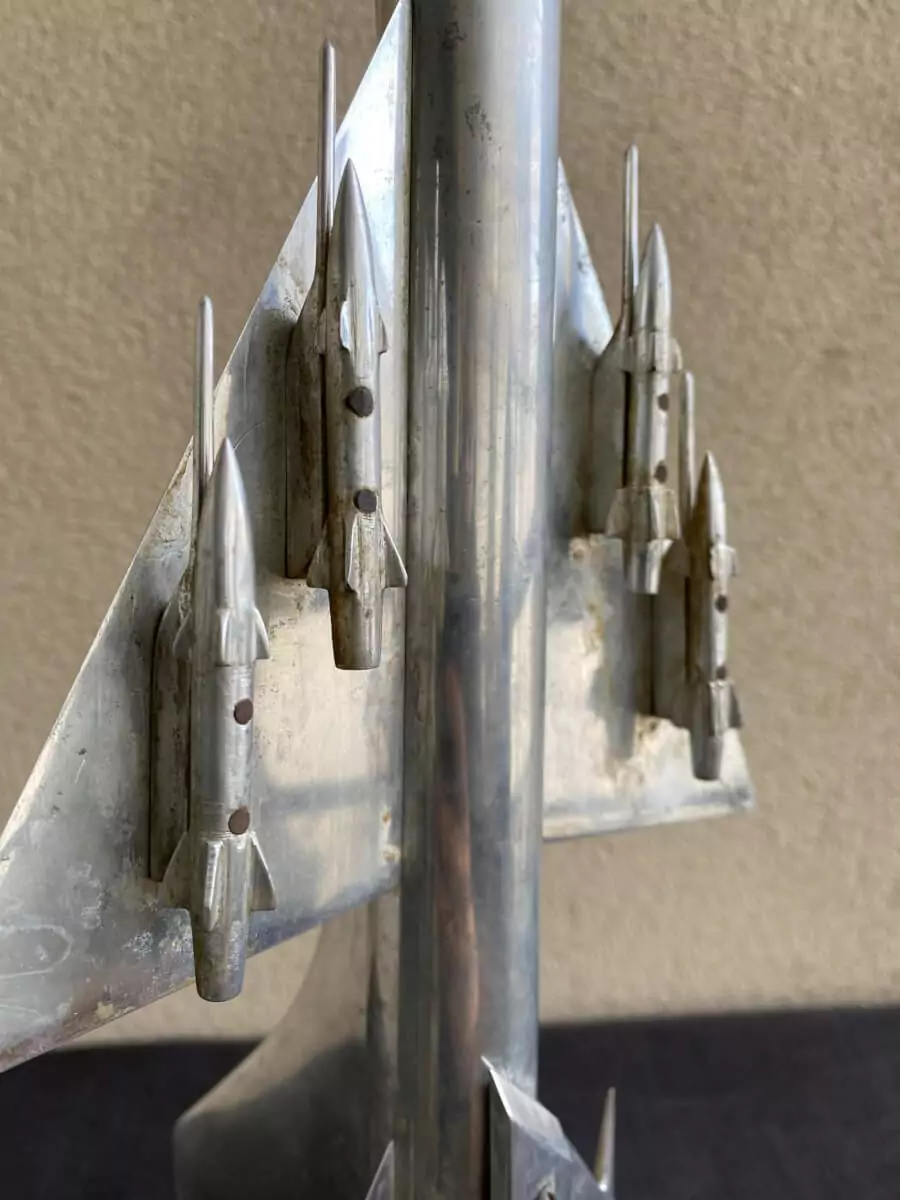
Aluminium desk model of a MiG-21 fighter, armed with four missiles under the wings, mounted in flight on a curved aluminium strip. Aluminium and bakelite base, 1980s.
1 in stock
Message received, dear comrade.
Our information desk usually replies within 24 hours at the address provided.Invasion of Afghanistan (1979), boycotted Moscow Olympics (1980). Gorbachev comes to power in 1985, launching Perestroika and Glasnost. Chernobyl in 1986.


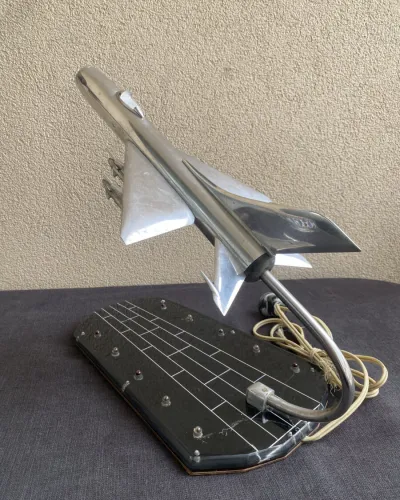
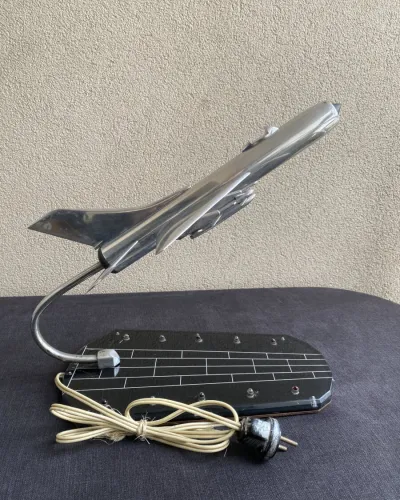
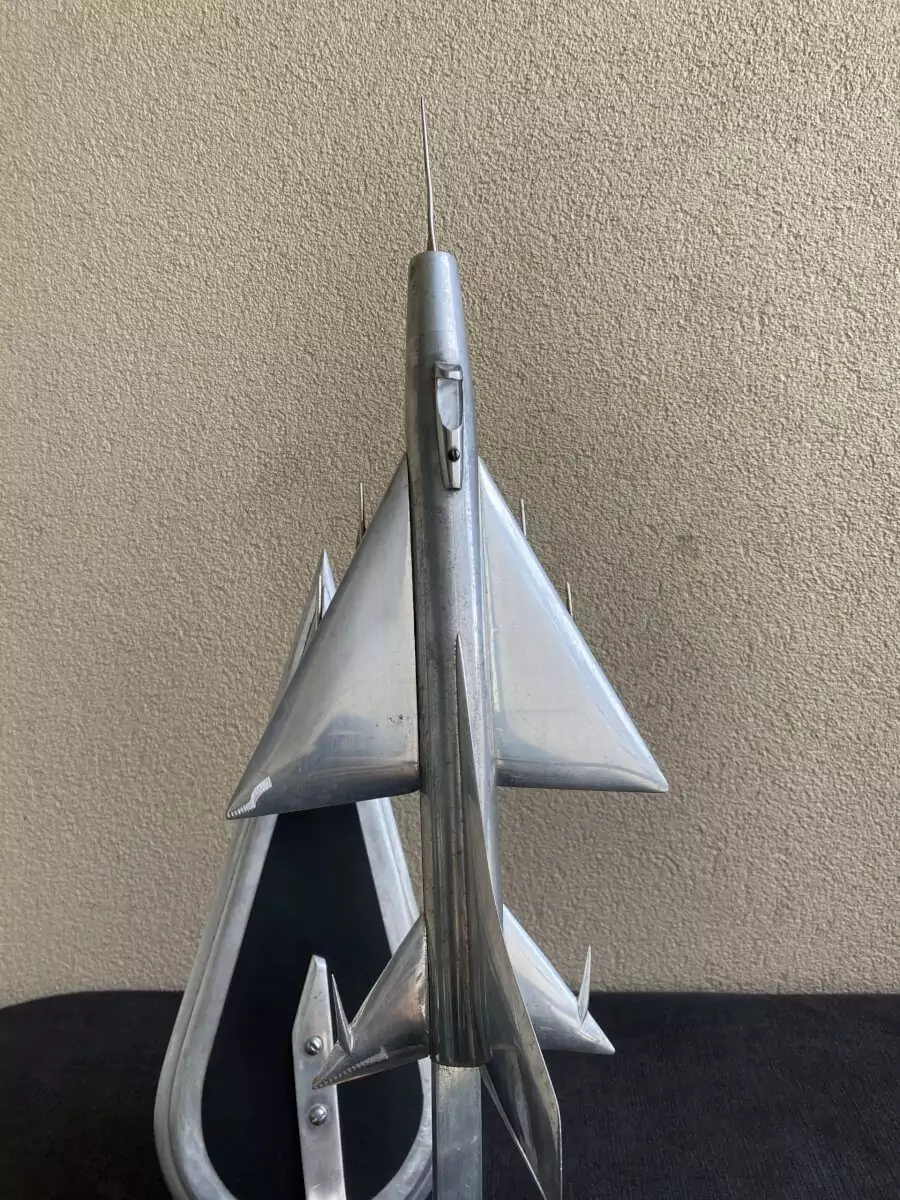
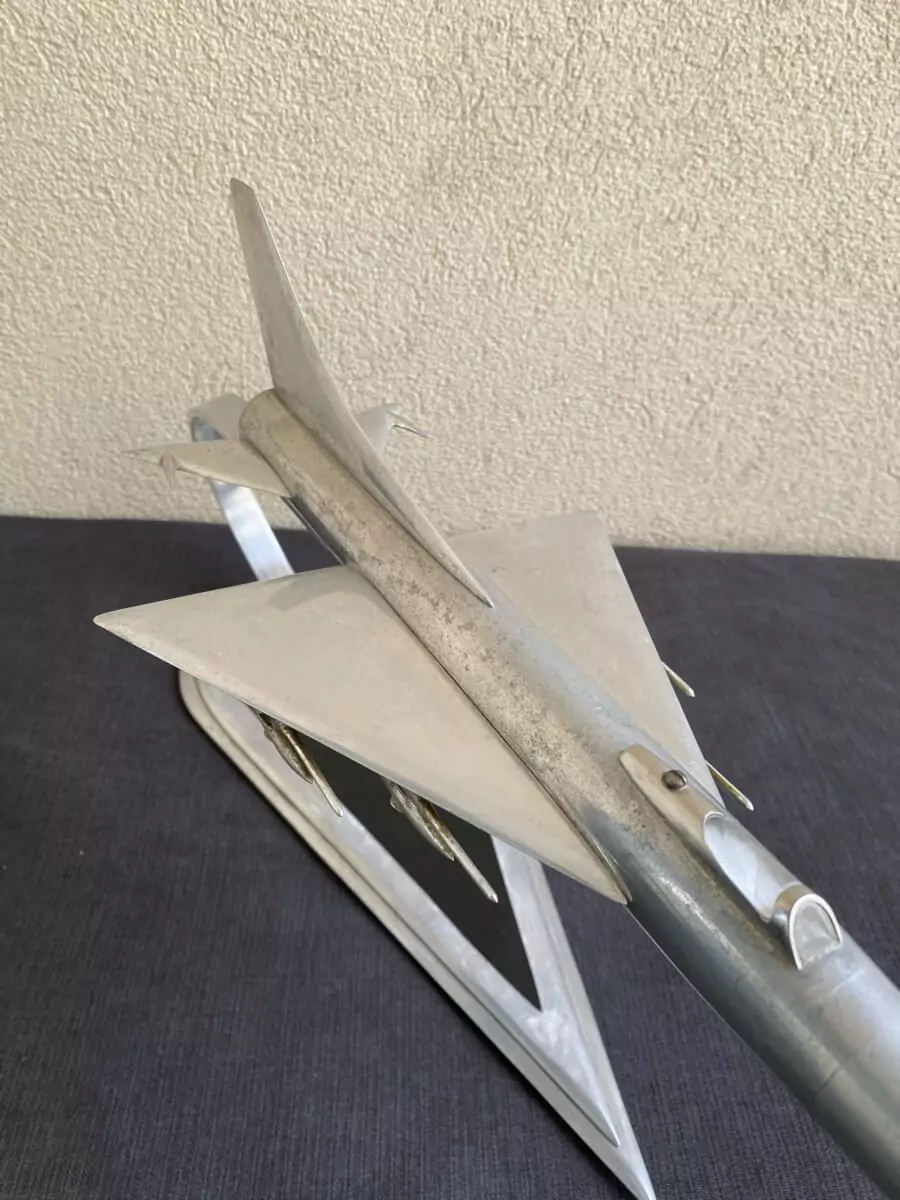
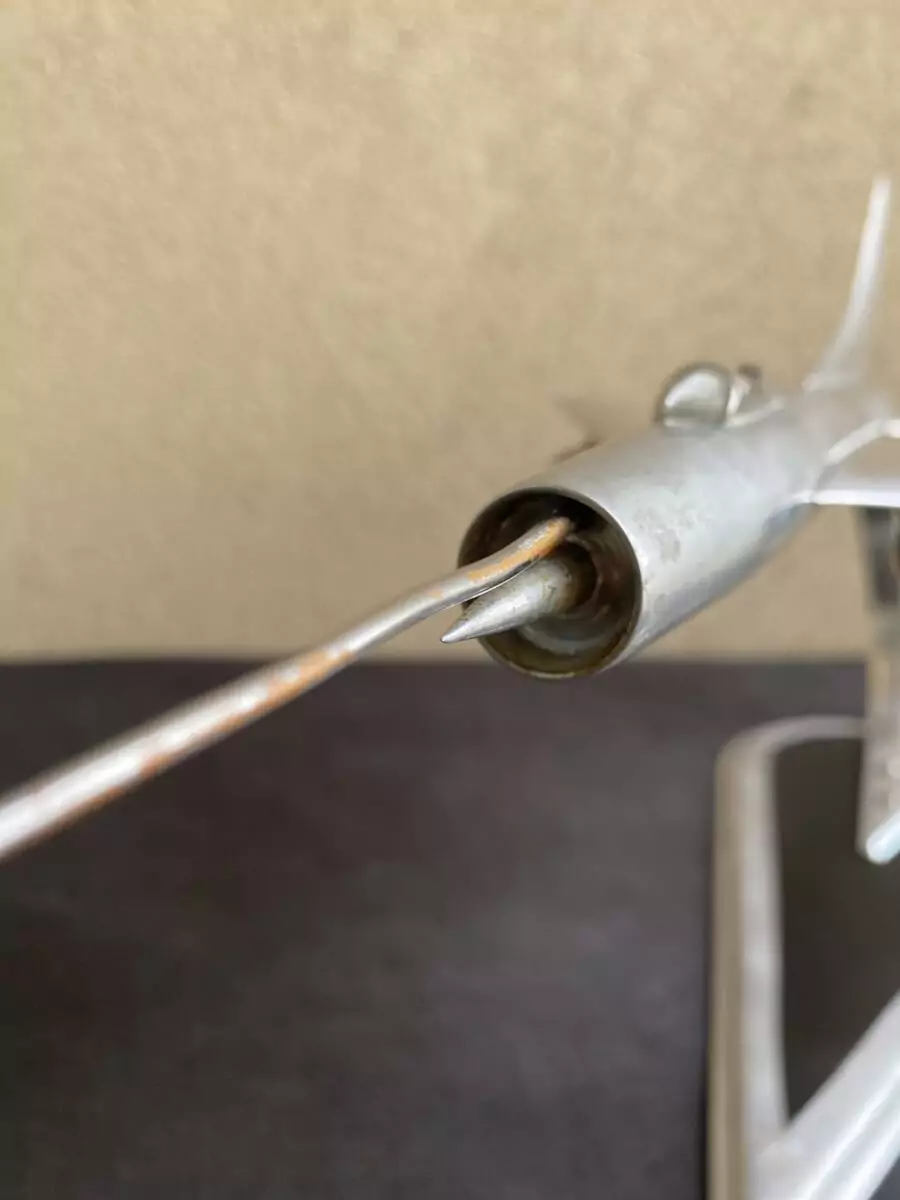
Desk model of a MiG-21 fighter aircraft, 1980s, in aluminium and bakelite. The aircraft is shown in flight, nose up, at the end of a curved aluminium strip rising from the base. All the MiG-21 features are there: tubular fuselage, nose air intake with its central shock cone, long nose probe, canopy, delta wing and swept tail with a tall fin. The aircraft is fitted with its munitions: four air to air missiles are mounted under the wings, two on each side, each with its fins.
The teardrop shaped base has a stepped aluminium frame around a black bakelite panel, to which the stand is fixed with two screws. The whole model, aircraft and stand, is in bare polished metal, unpainted, in the style of Soviet presentation models.
The MiG-21 was designed by the Mikoyan and Gurevich design bureau. The first prototype flew in 1955 and the aircraft entered service with the Soviet Air Force in the late 1950s. Built in more than ten thousand examples in the USSR and under licence, it is the most produced supersonic combat aircraft in history. It served with the air forces of the Warsaw Pact, India, Egypt, Vietnam and dozens of other countries, and took part in most of the conflicts of the Cold War.
An aluminium desk piece, complete with its stand and armament.
Additional information
| Weight | 3 kg |
|---|---|
| Dimensions | 50 × 40 × 20 cm |