Soviet Ejection Seat Parachute Harness - Straps and Ripcord Handle - 1988
$138.99Unique piece
Soviet Ejection Seat Parachute Harness - Straps and Ripcord Handle - 1988
$138.99Unique piece
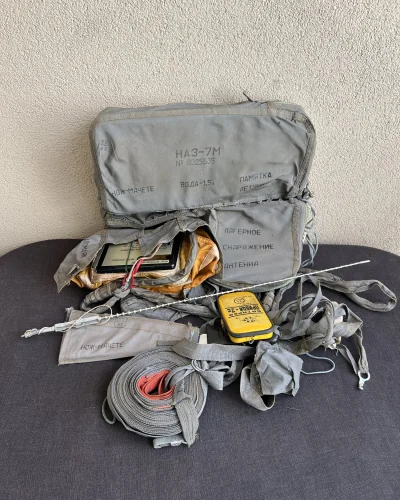
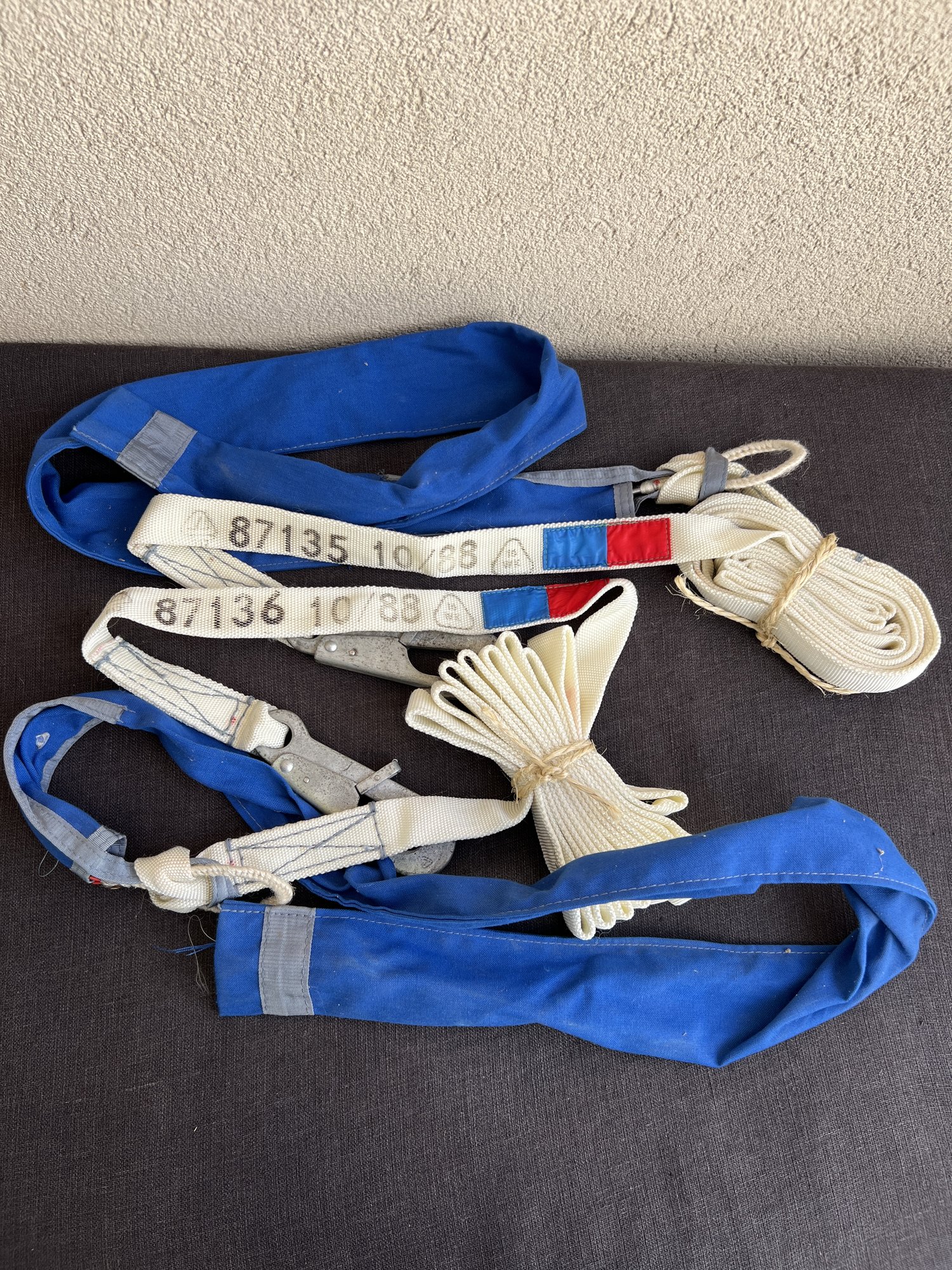
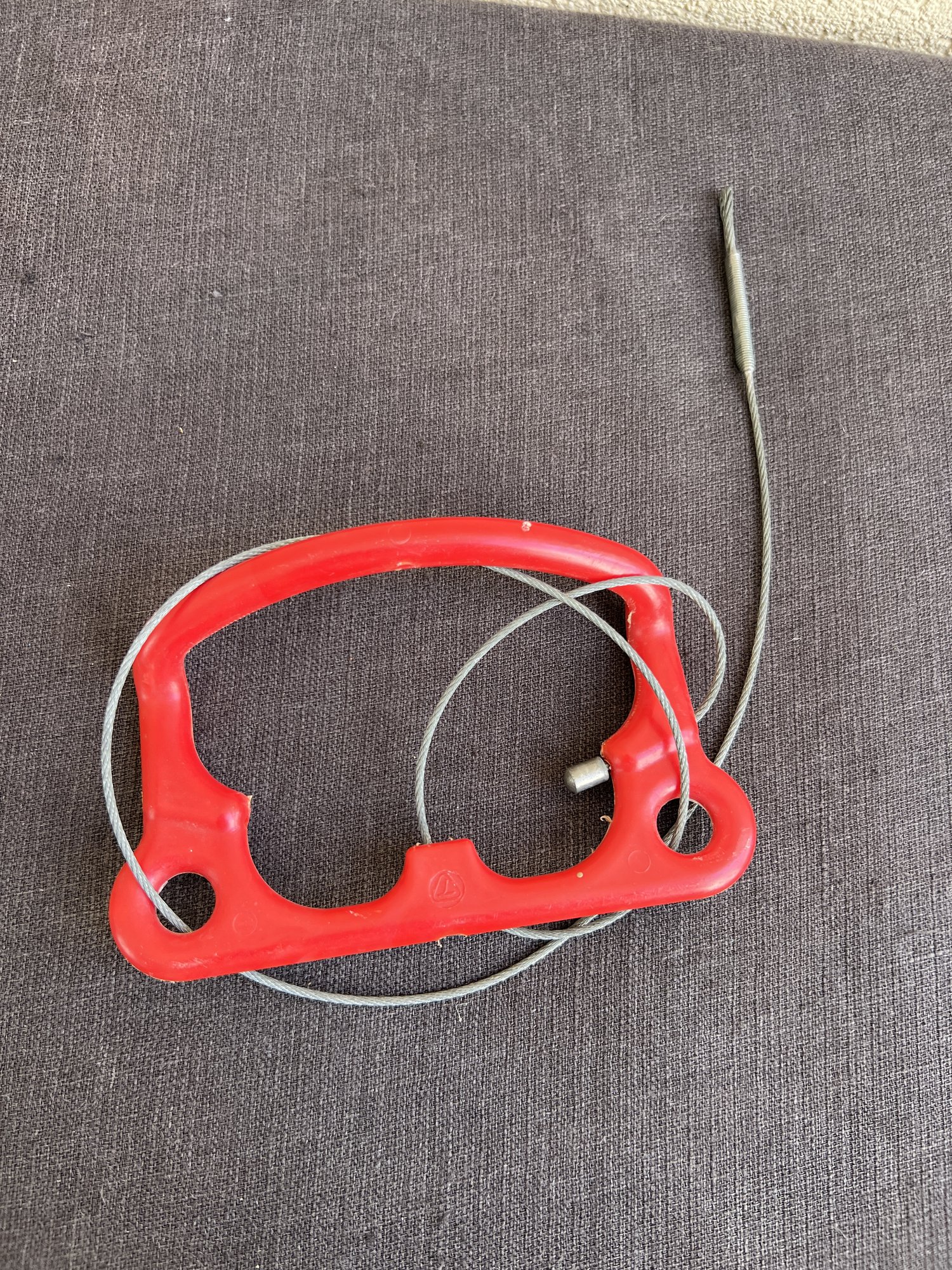
Soviet Air Force ejection seat parachute harness parts: numbered straps woven with the date 10/88, locking snap hooks and a ripcord handle with its cable.
A piece from the era of the K-36D seat fitted to the MiG-29 and Su-27.
1 in stock
Message received, dear comrade.
Our information desk usually replies within 24 hours at the address provided.CPSU conference. Constitutional reform. The coming collapse of Europe's communist regimes.


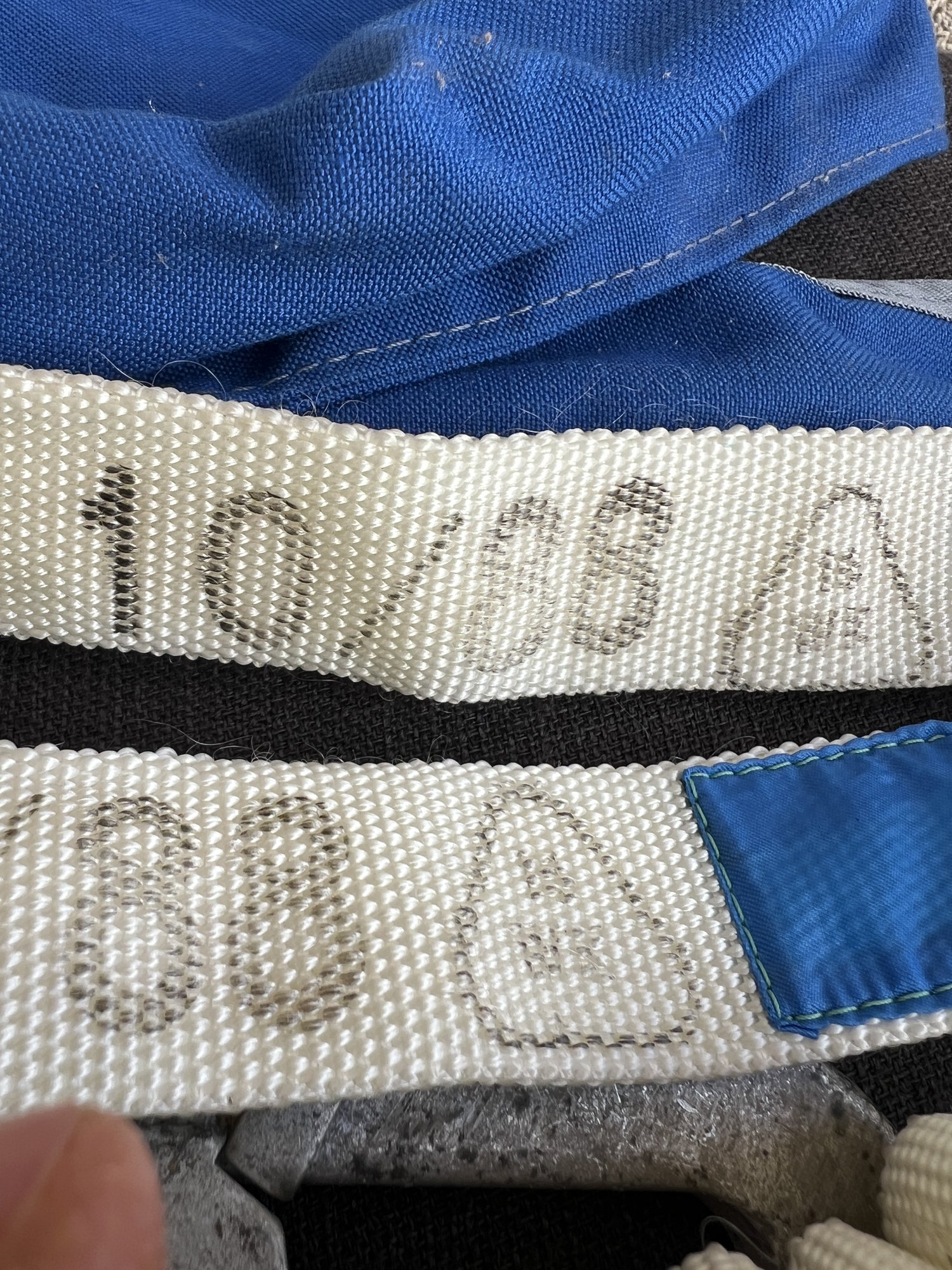
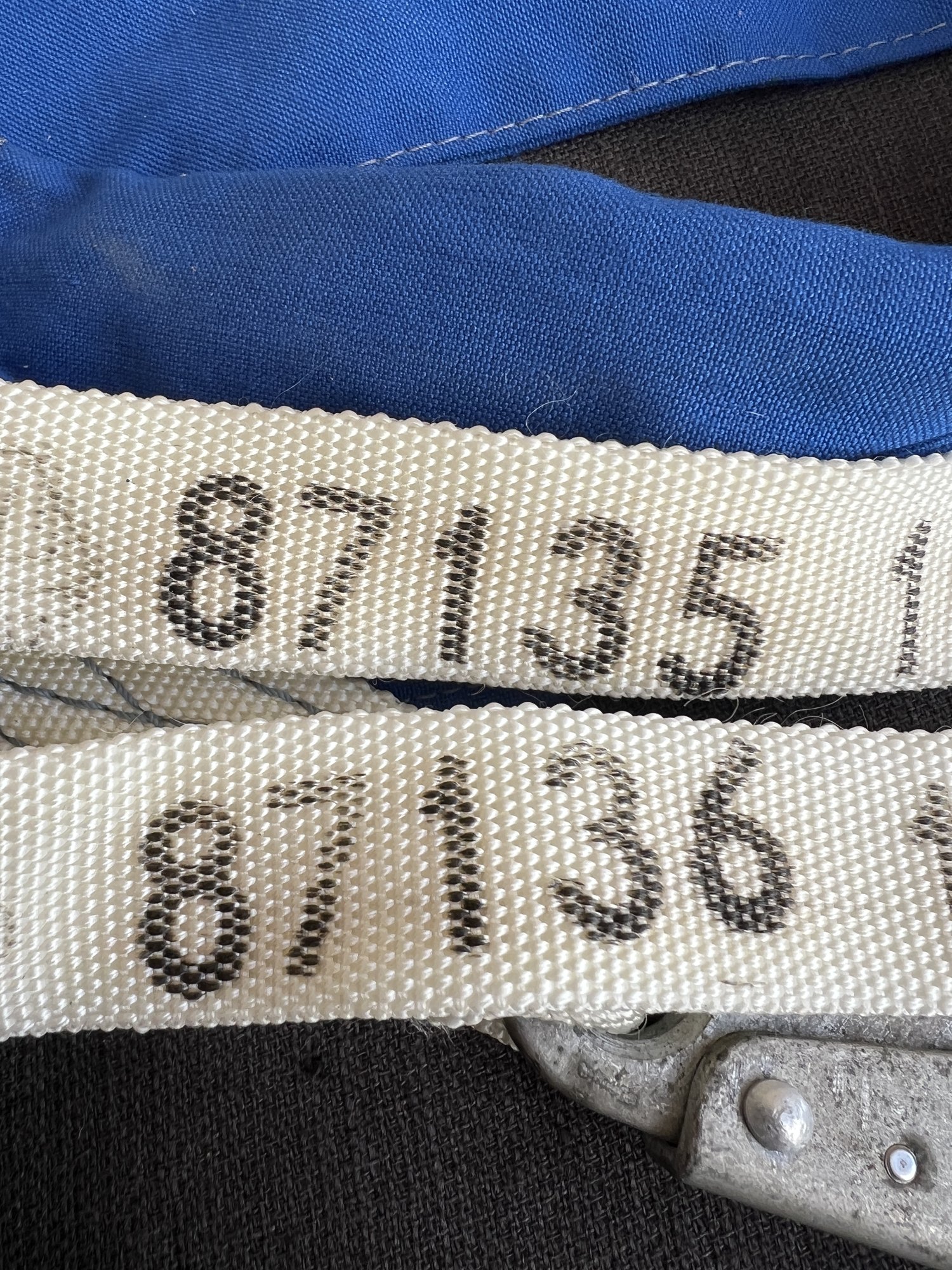
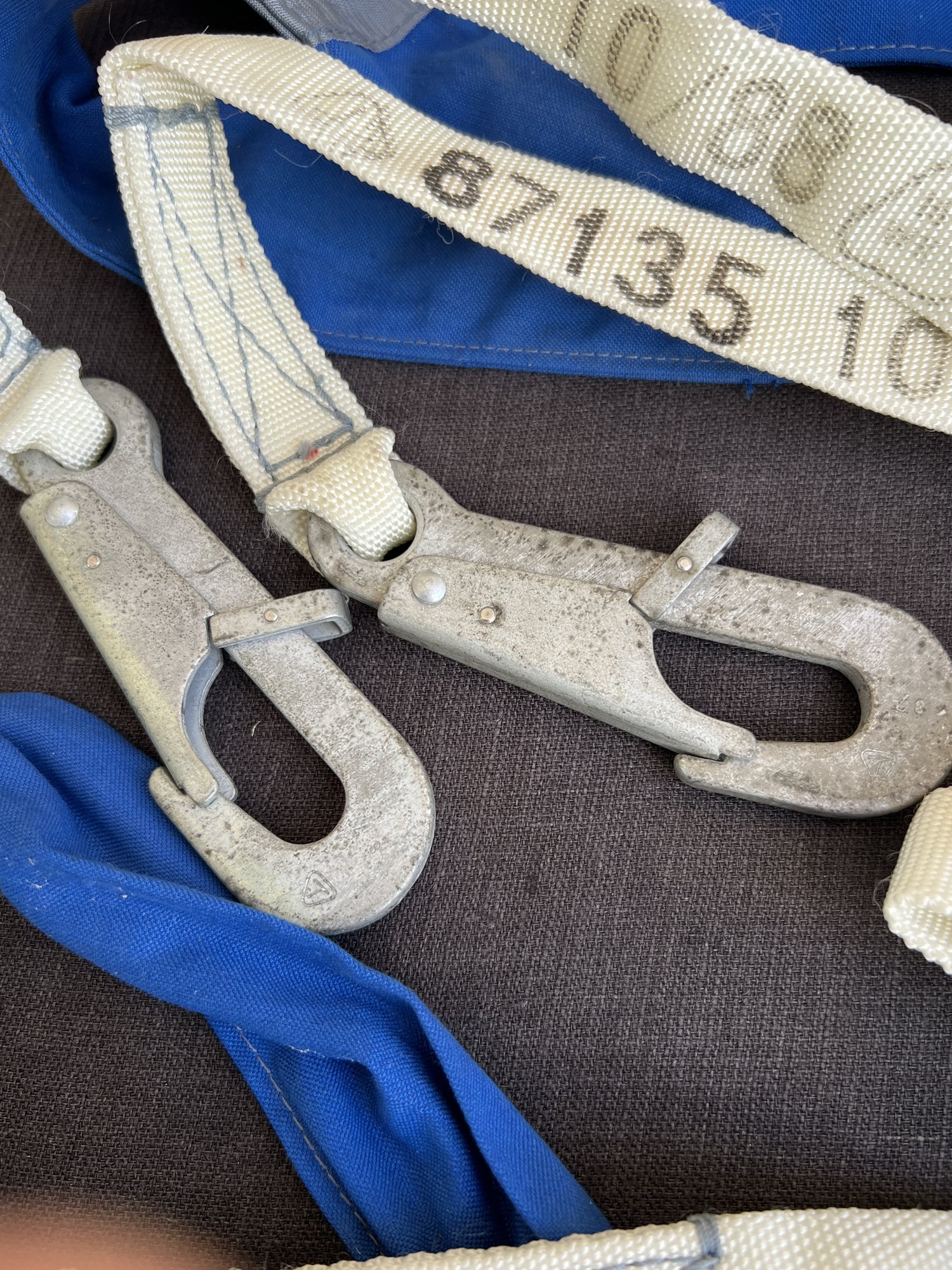
A set of parachute harness components from a Soviet military aviation ejection seat, dated October 1988. It includes two main woven straps numbered 87135 and 87136, each followed by the date 10/88 and ending in a steel locking snap hook, their canvas protective sleeves, two lengths of unused webbing still tied with string, and a ripcord handle with its cable and pin. The snap hooks and the handle carry an inspection stamp inside a triangle.
In a combat aircraft the pilot does not wear the parachute on the back like a paratrooper. The canopy is packed inside the seat, and the harness buckled on before the flight connects the pilot to both the parachute and the seat. During ejection the sequence runs automatically. The cable handle is the manual release: pulling it draws out the pin that keeps the pack closed and frees the canopy.
In 1988 the new Soviet MiG-29 and Su-27 fighters flew with the K-36D ejection seat from the Zvezda bureau in Tomilino, near Moscow. The seat became famous when Anatoly Kvochur ejected at very low altitude in front of the Paris Air Show crowd on 8 June 1989 and walked away unhurt. One hypothesis: two straps with consecutive numbers, never fitted together on an aircraft, point to a spares stock from a regiment or a maintenance workshop, which the unused tied webbing suggests.
Good used condition, supple webbing, working snap hooks.
This piece comes from the reserve collection of a military museum in Germany, from the same lot as a Soviet MiG-21 built from 1968 onwards.
Additional information
| Weight | 1.5 kg |
|---|---|
| Dimensions | 40.0 × 30.0 × 15.0 cm |