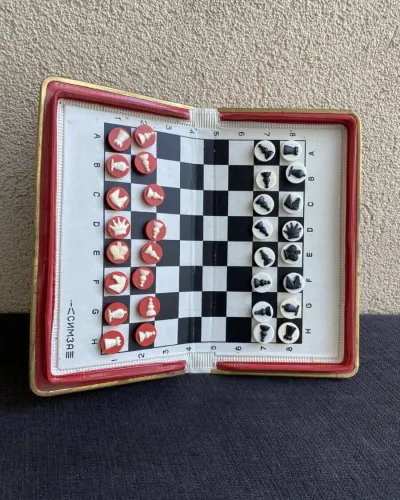
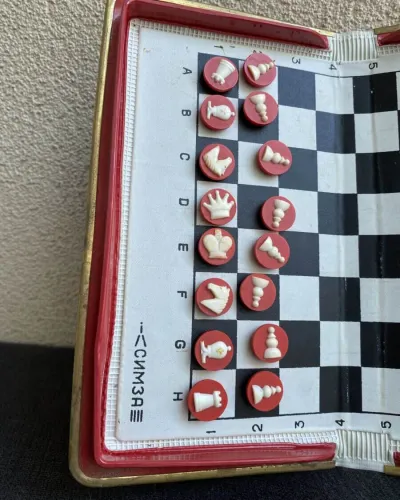
Chess Set - Kaliningrad Amber - Riga 1979
$633.99Unique piece
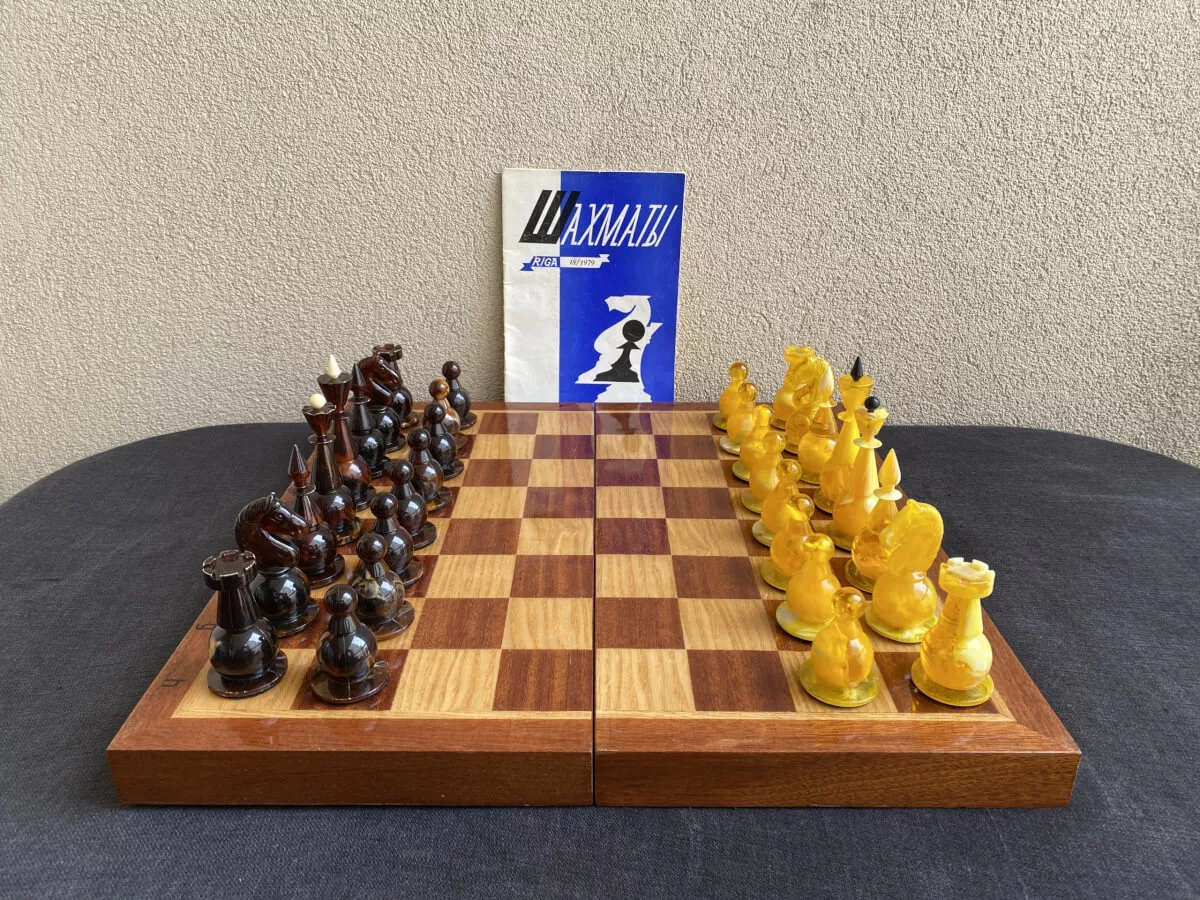
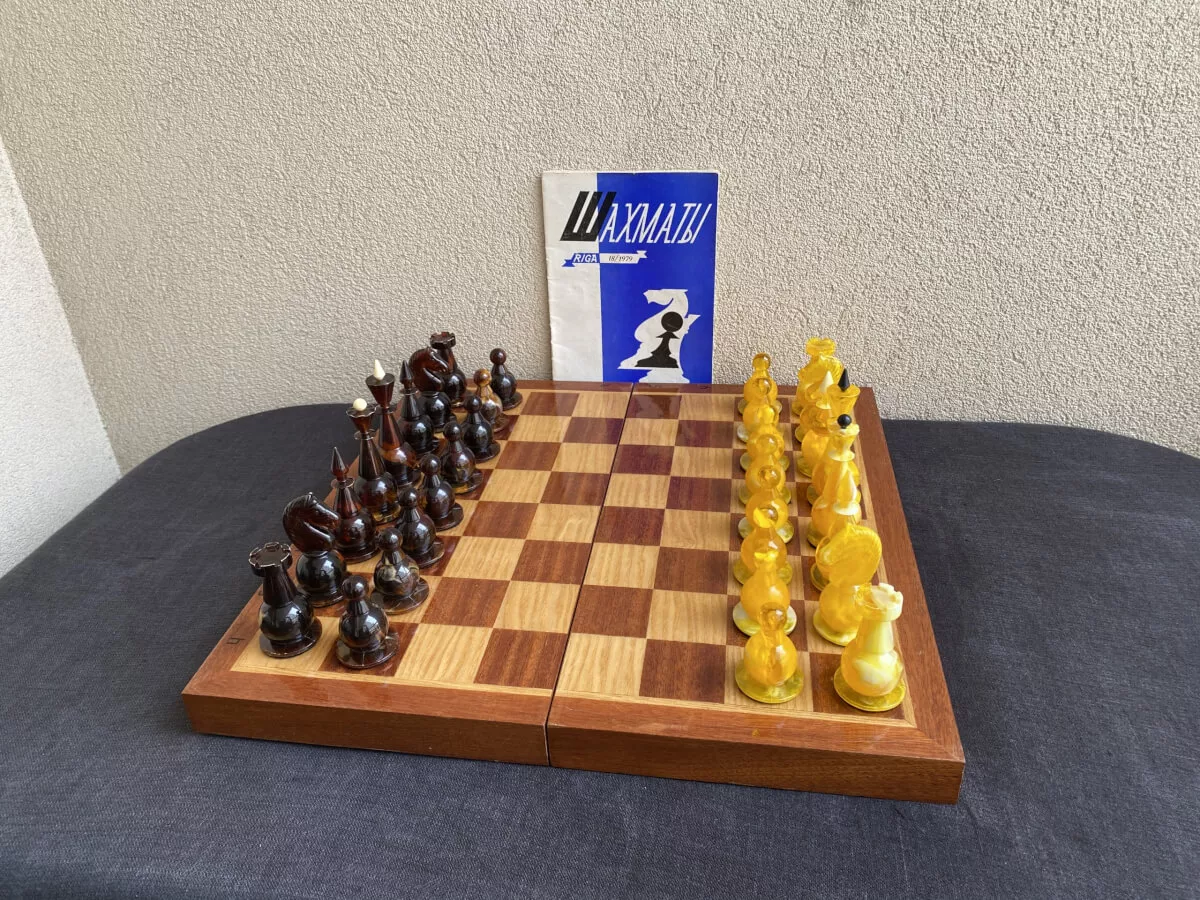


Chess Set - Kaliningrad Amber - Riga 1979
$633.99Unique piece
Amber chess set produced by the Kaliningrad amber factory, in pressed amber (ambroid). About 120,000 sets of this kind were produced in the time of the USSR. Oak board 41 x 41 x 3 cm, total weight 2,029 grams.
1 in stock
Message received, dear comrade.
Our information desk usually replies within 24 hours at the address provided.Soviet invasion of Afghanistan in December. Beginning of the end of detente.
Amber chess set produced by the Kaliningrad amber factory.
The Soviet Union, which mined amber on a large scale, developed technologies for pressing amber crumb and filled the domestic market with cheap, high quality ambroid products. The quality was such that Soviet ambroid is no longer considered fake amber.
Its status is that of a gemstone of reduced quality. Whatever the debate around such a description, ambroid is 100% fossilised resin, petrified in the ground over millions of years.
About 120,000 chess sets of this kind were produced in the time of the USSR.
Manufacturing method: the amber was ground into a powder and placed in a mould. At a pressure of 1,000 atmospheres and a temperature of 180-220°C, the powder turned into a viscous mass. Under a specific pressure regime with the addition of colourants, pressed amber (ambroid) of varying colour and structure was obtained. The technology is no longer used today because of its very high energy cost.
Dimensions of the pieces:
King: 10.1 cm tall, base diameter 3.6 cm, weight 31.6 grams
Queen: 9.1 cm tall, base diameter 3.6 cm, weight 29.5 grams
Knight: 7.4 cm tall, base diameter 3.6 cm, weight 27.5 grams
Rook: 6.2 cm tall, base diameter 3.6 cm, weight 26.5 grams
Pawn: 5.1 cm tall, base diameter 3.6 cm, weight 18.2 grams
The board is oak, measuring 41 cm x 41 cm x 3 cm.
The vertical and horizontal lines of the board are marked with the first letters of the Latin alphabet or with numbers.
The set weighs 2,029 grams.
Additional information
| Weight | 2.5 kg |
|---|---|
| Dimensions | 41 × 41 × 3 cm |