Baikonur Rocket Desk Model - Launch Pad Soil - USSR 1979
$414.99Unique piece
Baikonur Rocket Desk Model - Launch Pad Soil - USSR 1979
$414.99Unique piece
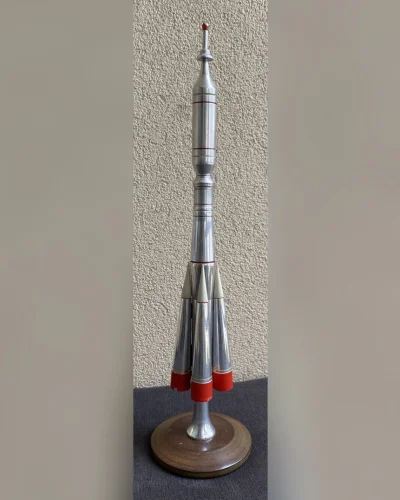
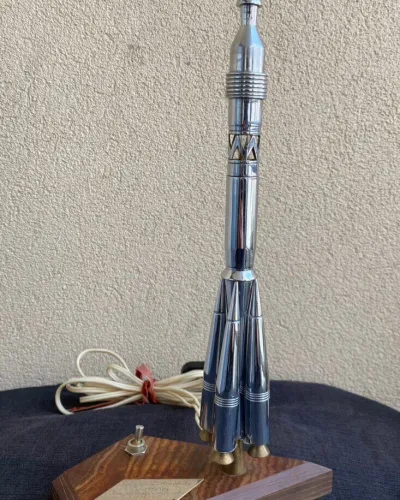
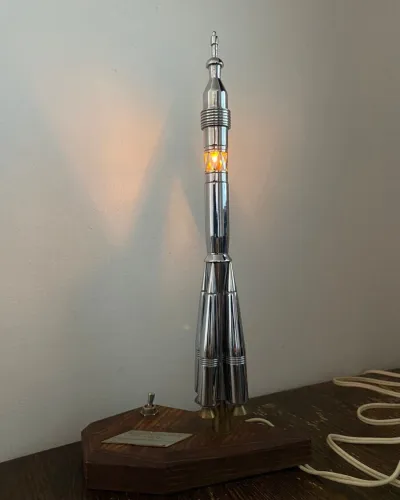
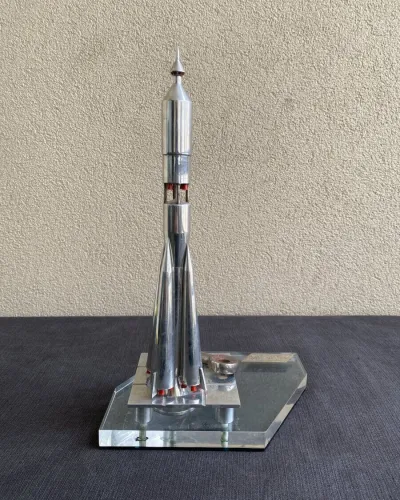
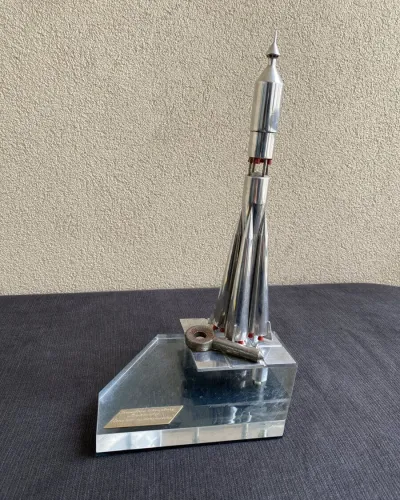
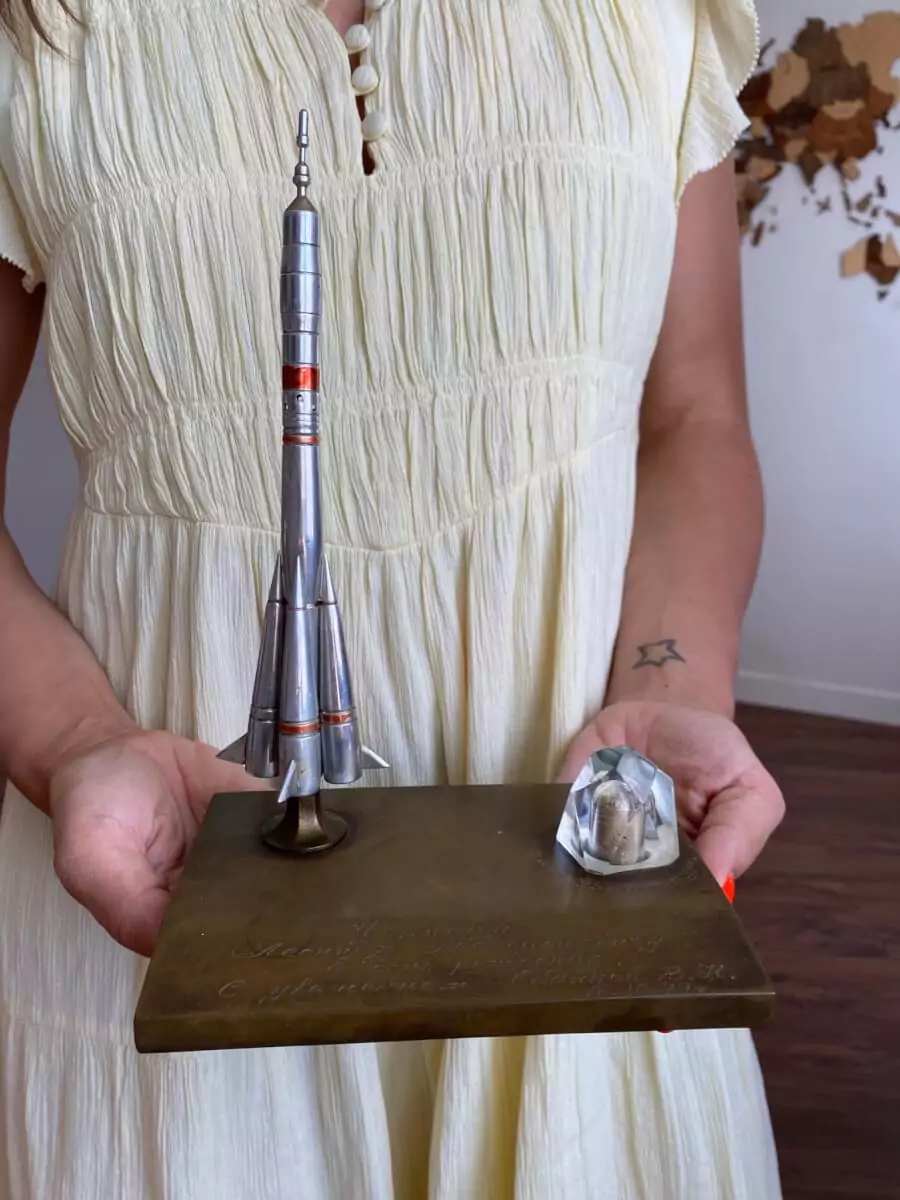
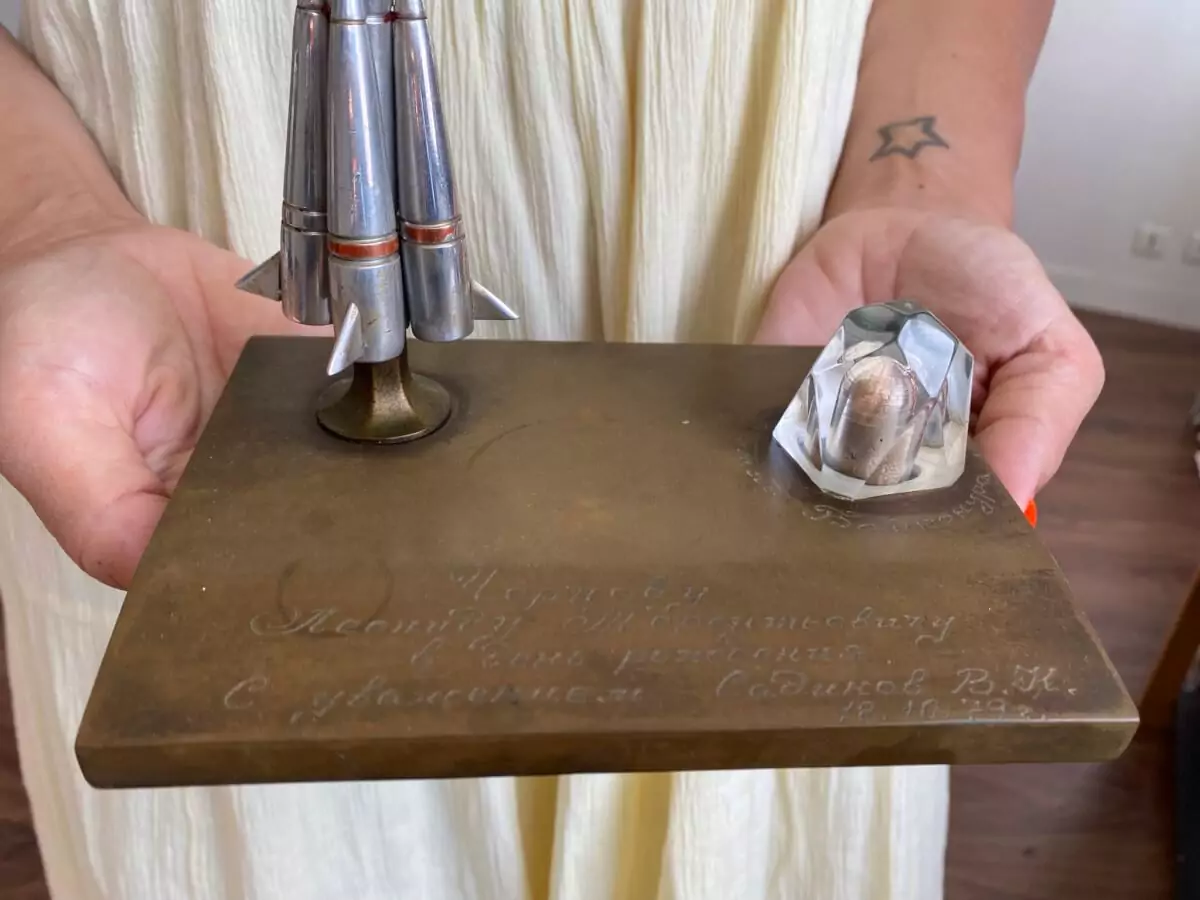
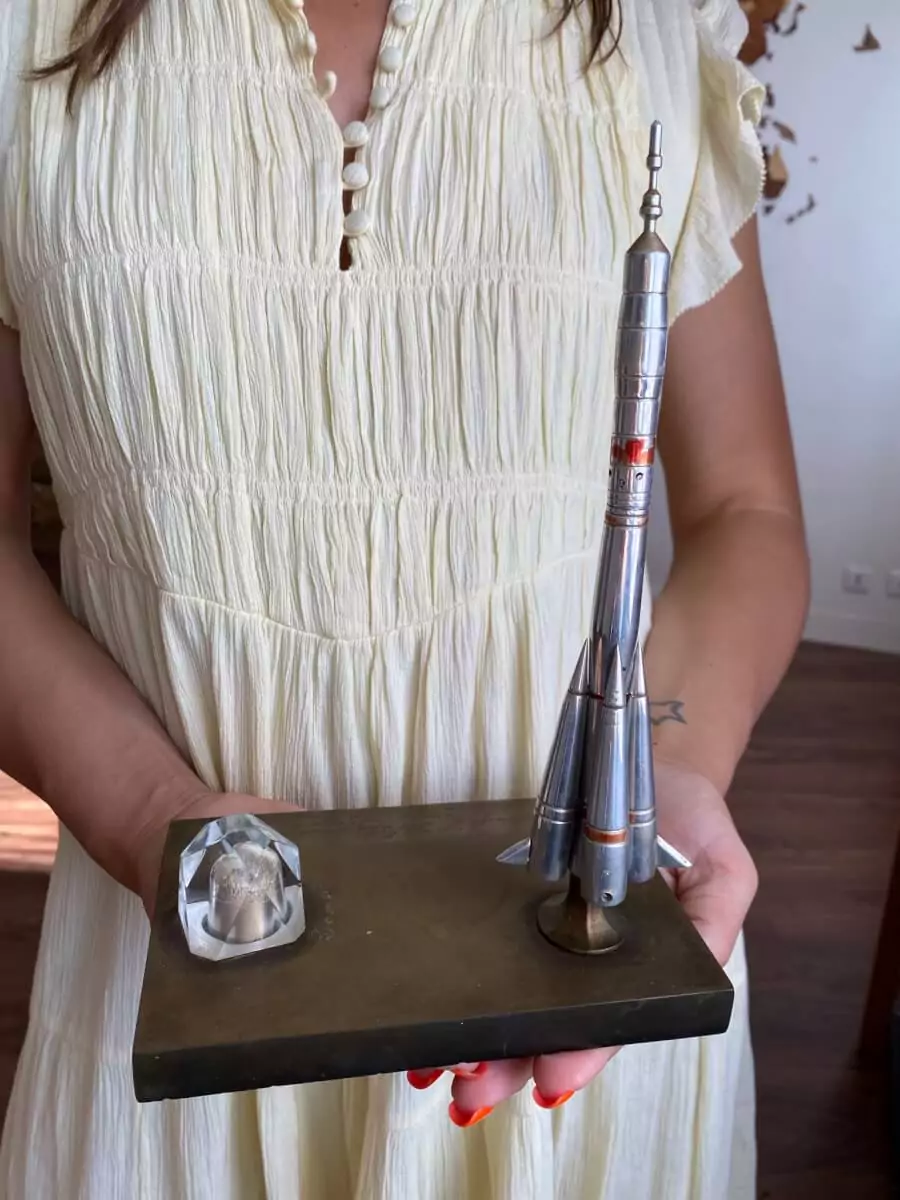
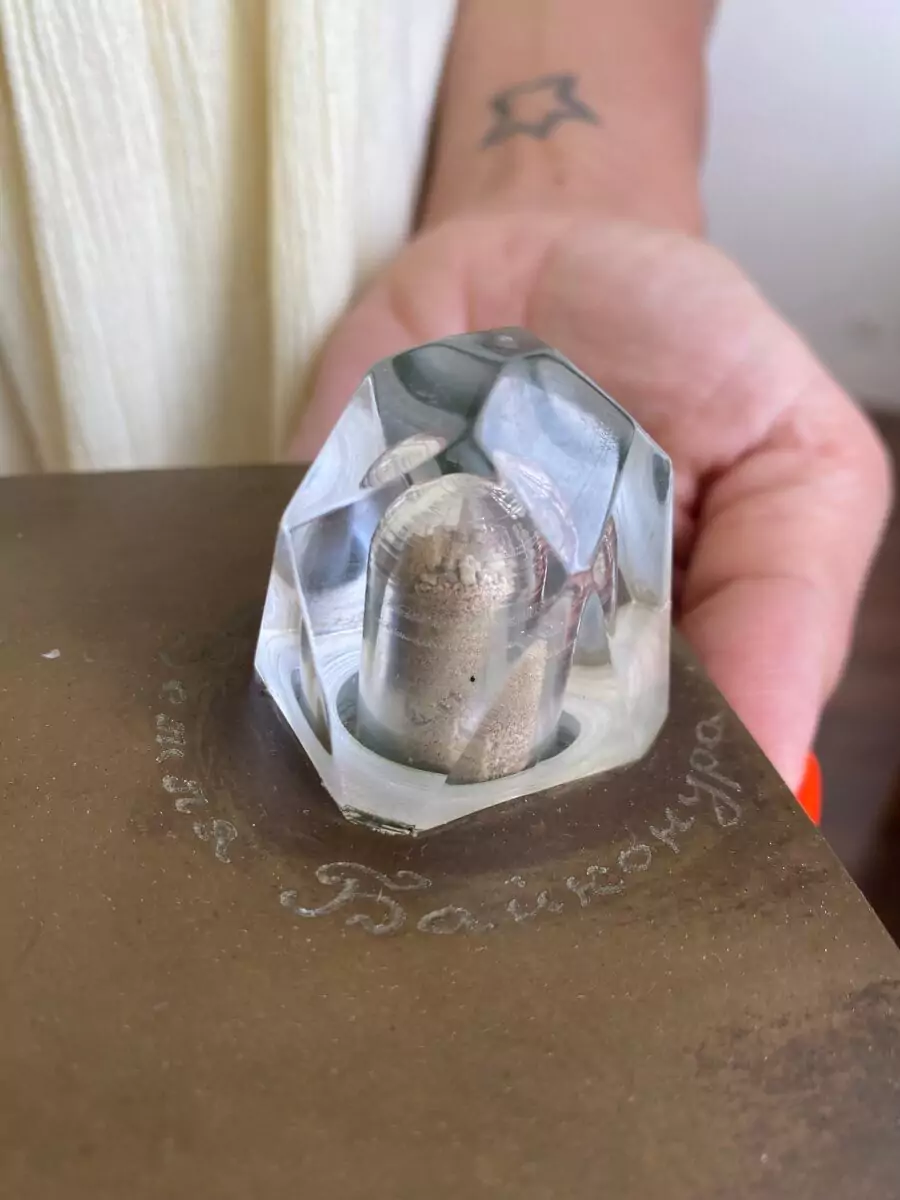
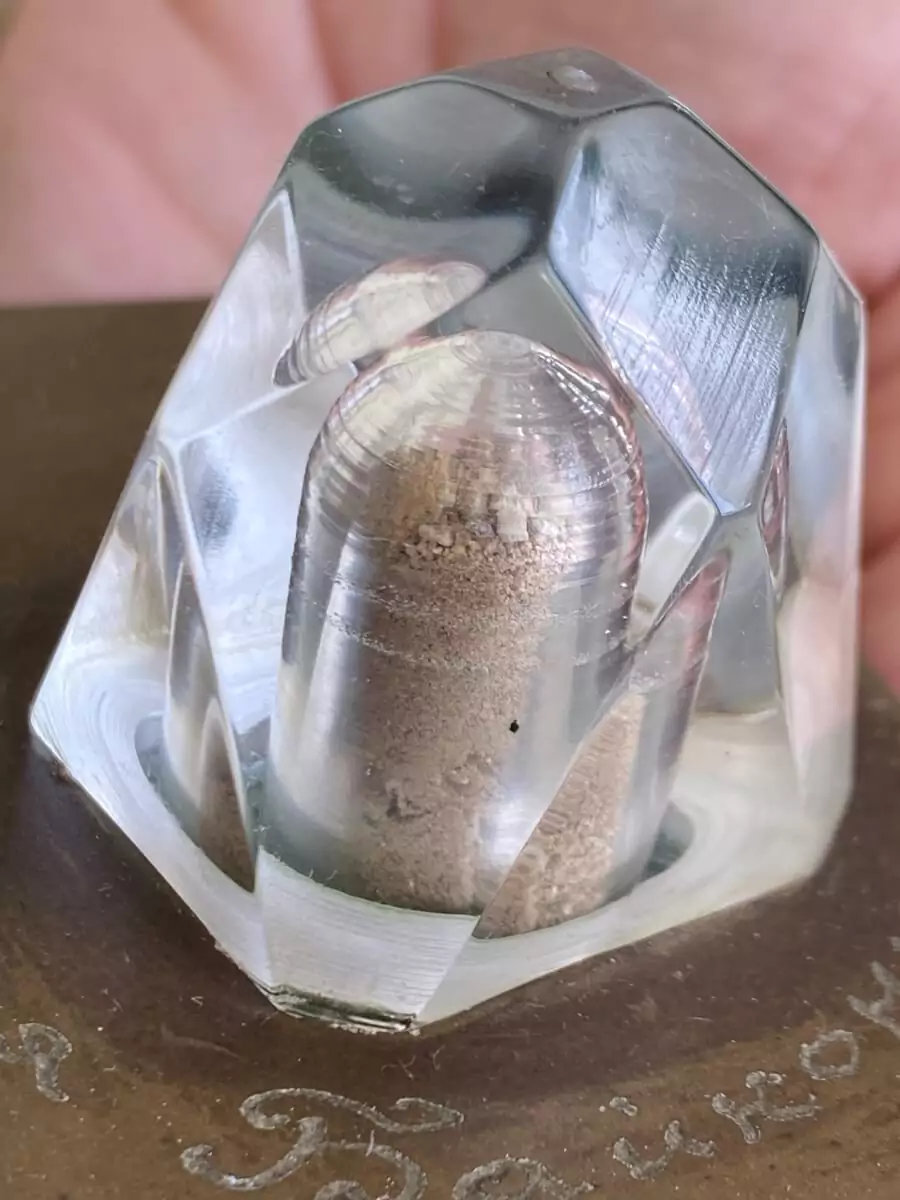
Soviet rocket model made at Baikonur, on a bakelite base, with a capsule of soil from the launch pad area engraved “Земля Байконура” (Baikonur soil) and a birthday dedication dated 18 October 1979.
1 in stock
Message received, dear comrade.
Our information desk usually replies within 24 hours at the address provided.Soviet invasion of Afghanistan in December. Beginning of the end of detente.
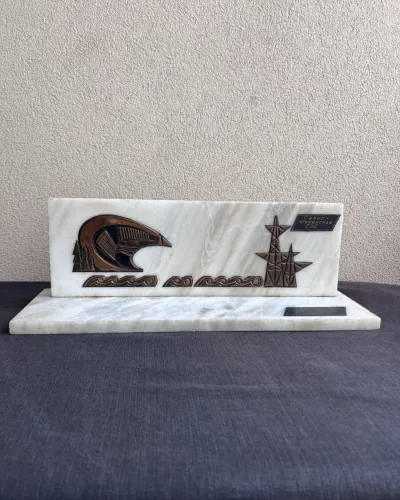
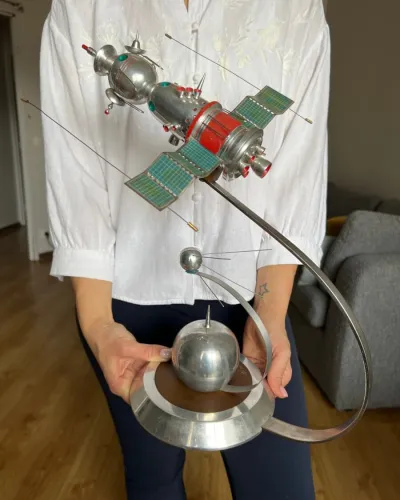
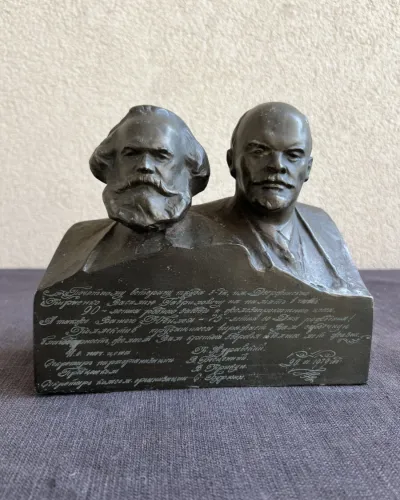
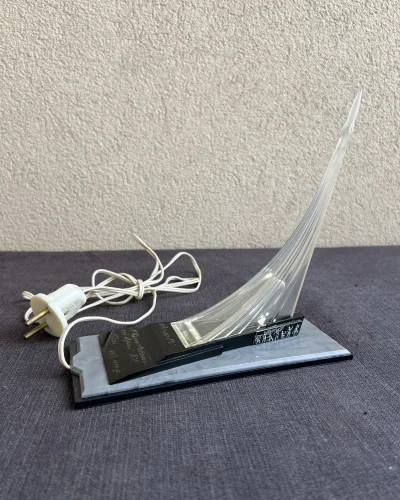
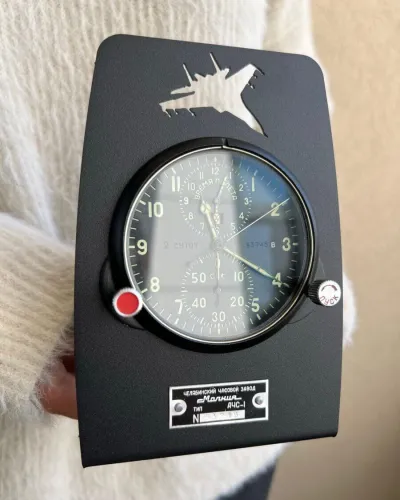
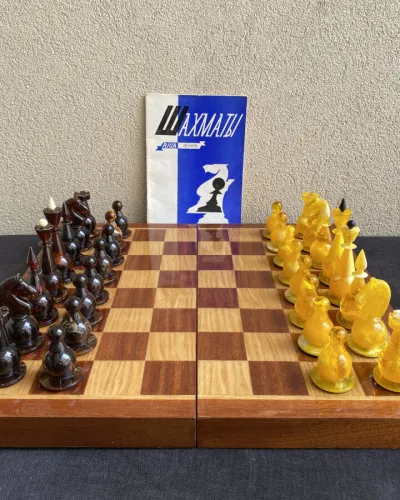
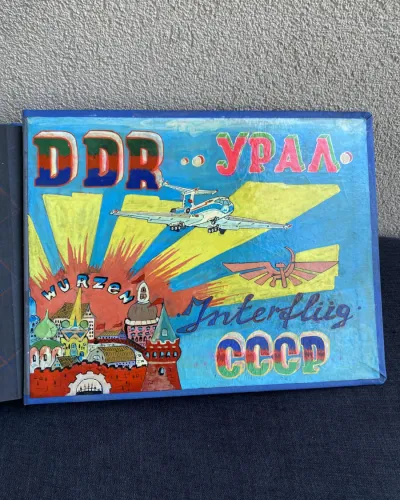
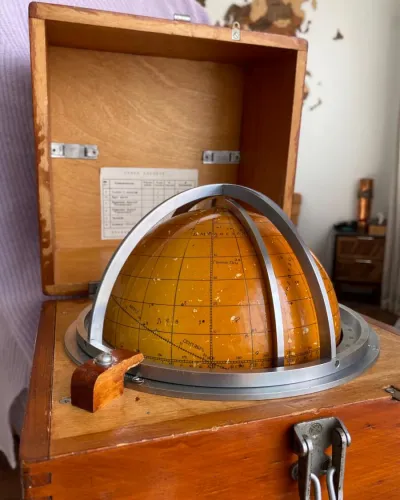
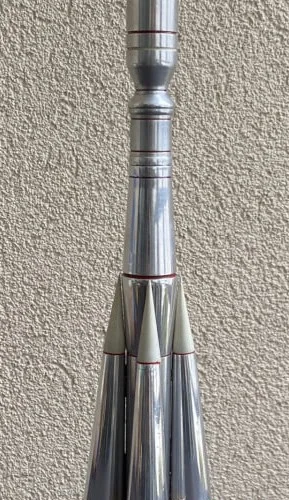
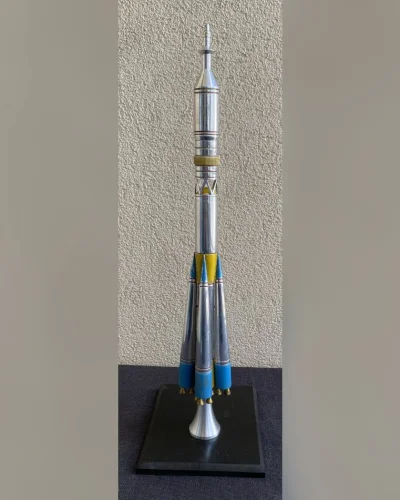
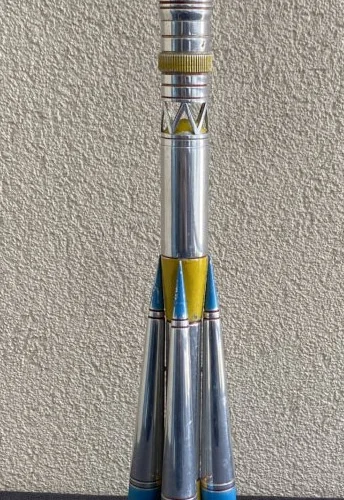
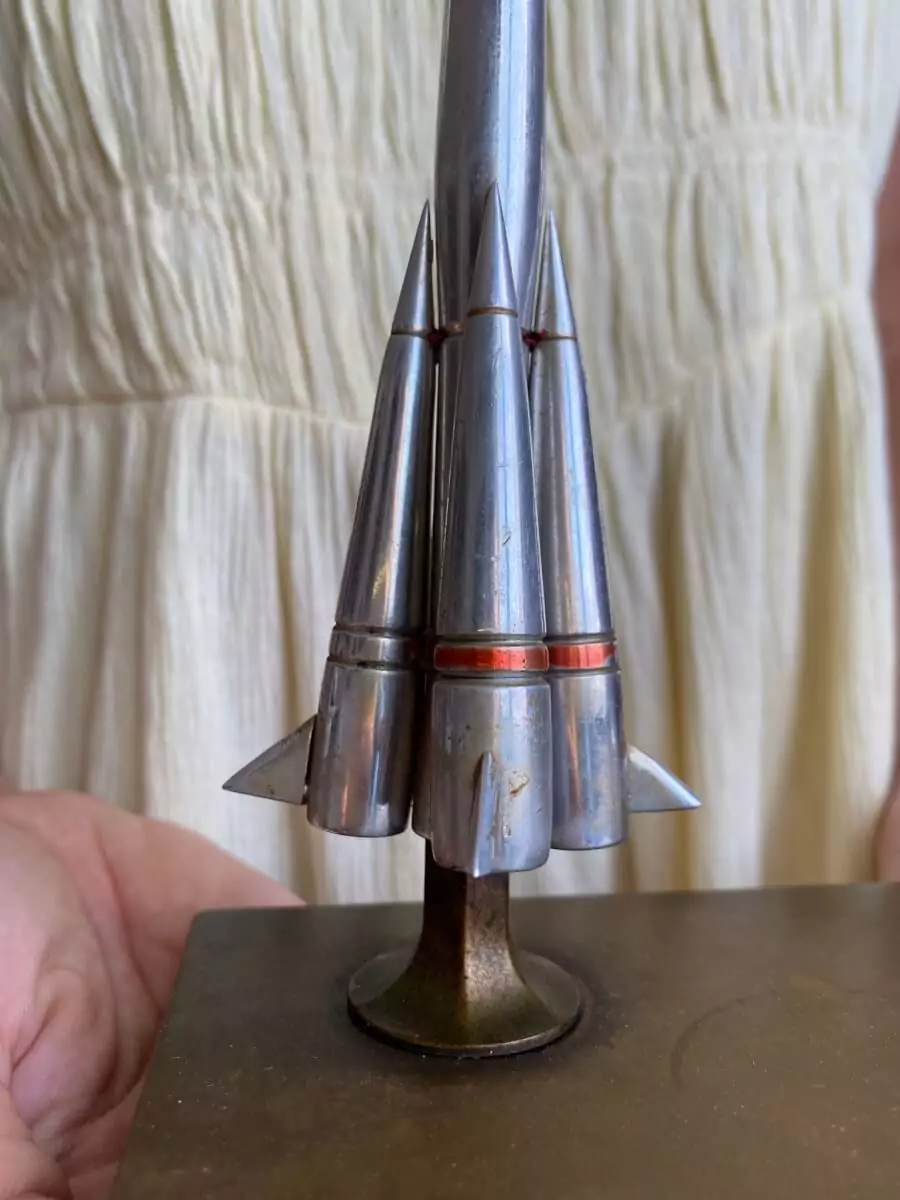
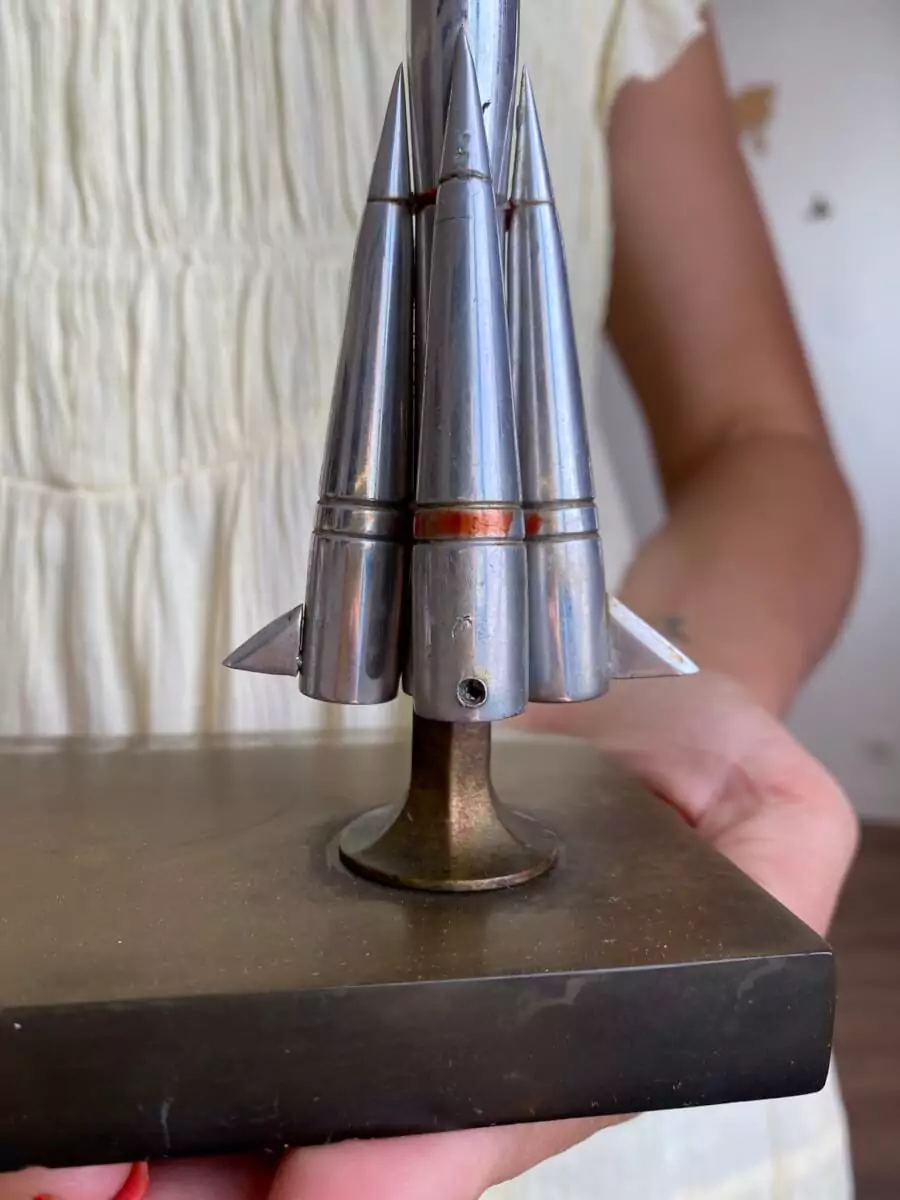
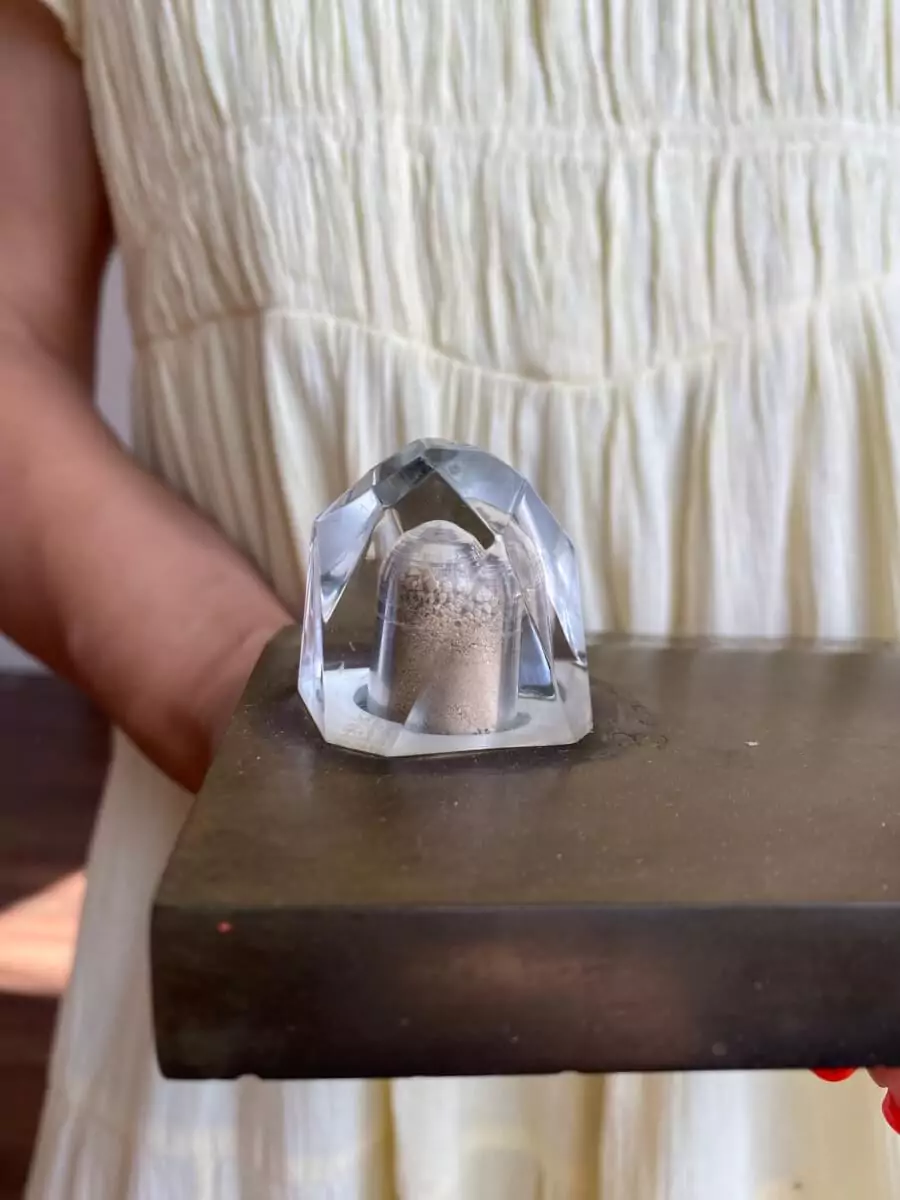
Soviet rocket model made at Baikonur, incorporating soil from the launch pad area. The aluminium rocket follows the outline of the R-7 family of launchers: a tapered central body with red bands, four conical side boosters with fins, and a thin spike at the top. It stands on a gilt foot, on a bakelite base. At the other end of the base, a faceted transparent block holds a capsule filled with soil, surrounded by the engraved inscription “Земля Байконура” (Baikonur soil).
The base carries a dedication engraved in cursive: “Чернову Леониду Терентьевичу в день рождения. С уважением Садинов В.К. 18.10.79 г.” (To Leonid Terentievich Chernov on his birthday. With respect, V.K. Sadinov, 18 October 1979).
The Baikonur cosmodrome, in the Kazakh SSR, is the site from which Sputnik was launched in 1957 and Yuri Gagarin in 1961. Launchers of the R-7 family, from which the Vostok and Soyuz rockets derive, were still lifting off there in the late 1970s for crewed flights to the Salyut stations. Soil from the launch pads was kept and set into souvenirs, as shown by a souvenir held at the Polytechnic Museum in Kyiv, a capsule of “soil from Gagarin’s start”. This example, made on site and personalised with an engraved dedication, was a birthday present.
In good condition, personalised with a named and dated dedication.
Additional information
| Weight | 1 kg |
|---|---|
| Dimensions | 30 × 20 × 15 cm |