On the instrument panel of a Tupolev TB-7, one dial carries the signature of a Swiss manufacture that seems improbable in Stalinist aviation: Jaeger. A rare family of chronographs made for the USSR at the turn of the 1930s, the missing link between classic Swiss horology and Soviet aviation.
MAY 2026•7 MINUTE READ
by Marwen Yahyaoui
Somewhere above the Urals, in the cabin of a Tupolev TB-7, the hand of a chronograph creeps forward in invisible steps towards the end of the eighth hour of flight. The pilot does not look at it straight away. He glances at the minute counter, checks that the stopwatch is properly at zero, then returns to the main dial. On the matt black face, two languages meet: Jaeger Fabriqué en Suisse in French, Время полета in Cyrillic. The year is 1937, or perhaps 1938, and the clock keeping time on this mission was ordered from Paris.
This piece belongs to a rare and largely forgotten family: a handful of cockpit chronographs produced by Jaeger for Soviet aviation at the turn of the 1930s. Their interest is not only aesthetic. They are the missing link between classic Swiss aviation horology and the whole of postwar Soviet military production, right through to the AChS-1M still fitted today in certain MiG and Su aircraft.
A meeting nobody expected
In the early 1930s, the Soviet Union embarked on an unprecedented strategic bomber programme. The four-engined Tupolev TB-3 and TB-7 (the latter renamed Pe-8 in 1942), along with the single-engined ANT-25 of Chkalov’s transpolar flights, all shared one requirement: to fly for a long time, sometimes more than forty hours without a stop, and to know precisely how much time was left before the return leg. Soviet watchmaking of the period, still in its infancy, could not build aviation chronographs.
The order therefore went to Switzerland, and more precisely to one of the historic suppliers of European aviation. The political context allowed it: this was the narrow window, between 1932 and 1937, in which industrial cooperation between the USSR, France and Switzerland was still possible. The Franco-Soviet treaty of mutual assistance, signed on 2 May 1935, would mark its diplomatic high point. War then interrupted these industrial flows. After 1945, the USSR would produce its own aviation chronographs. In the meantime, however, 8-day chronographs with bilingual dials were leaving Switzerland for Moscow.
Jaeger, and not yet Jaeger-LeCoultre
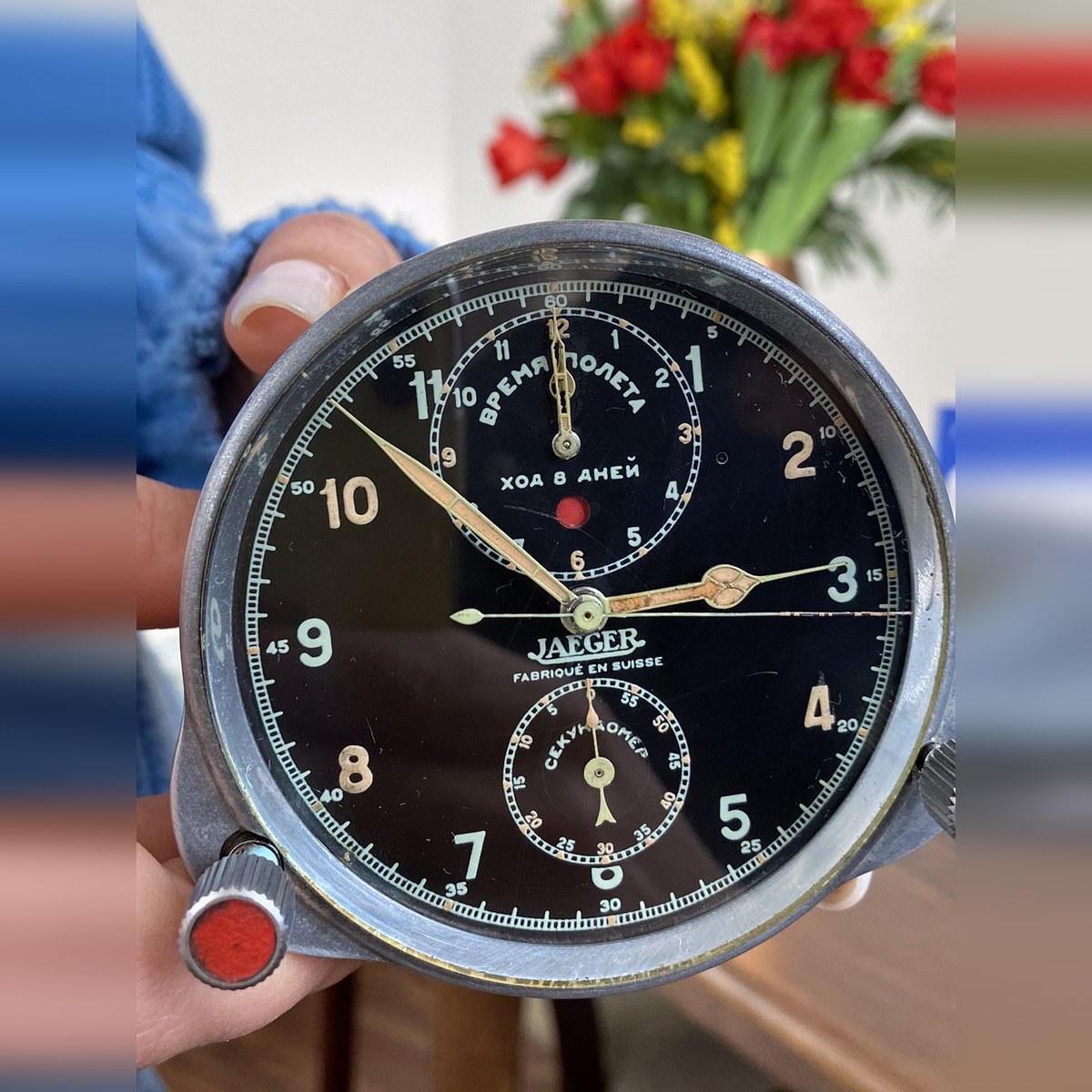
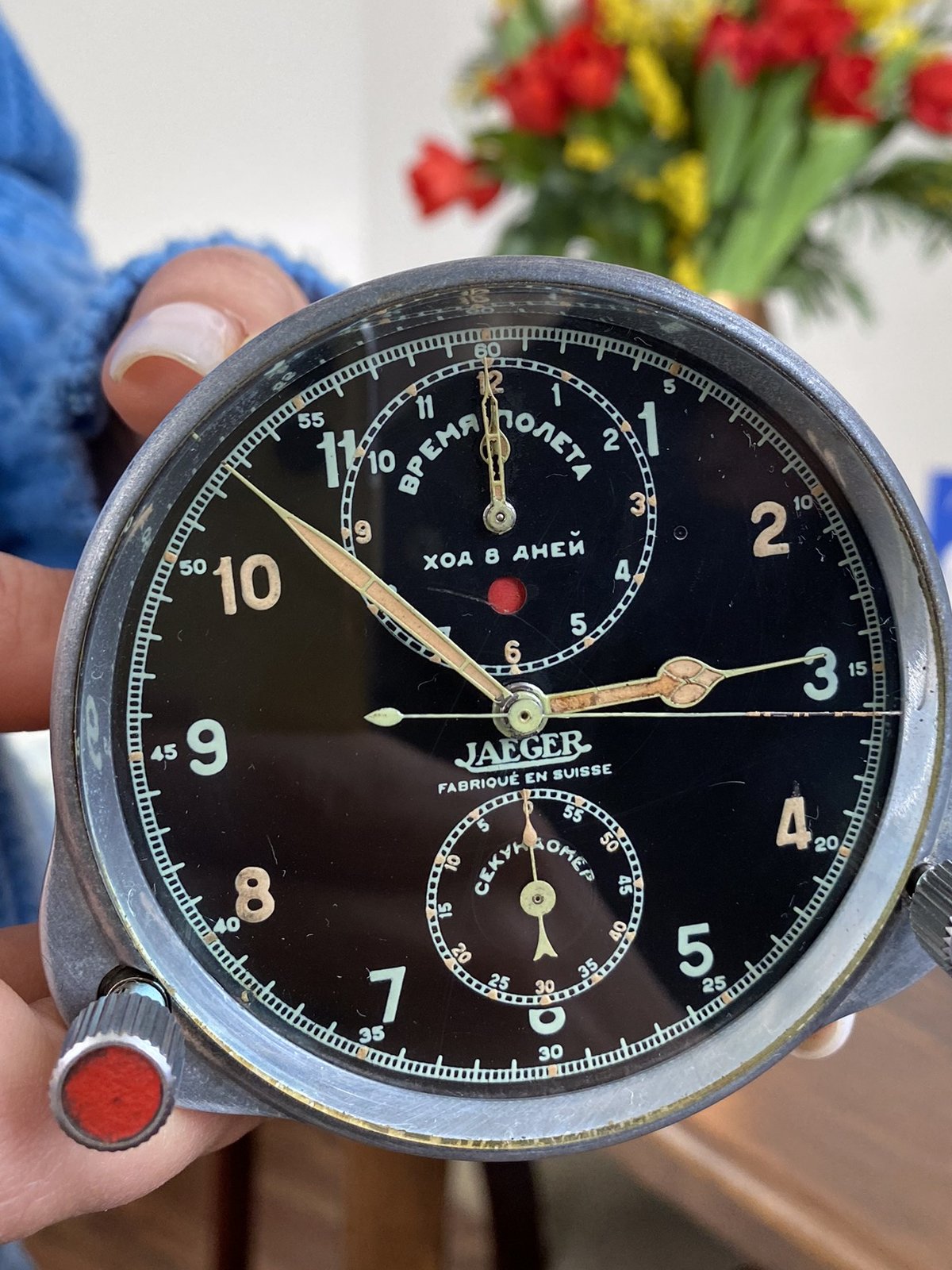
Dial detail. The upper subdial shows flight time (Время полета) on an 8-day movement (Ход 8 дней). The lower subdial carries the word Секундомер, stopwatch.
On the dial of these pieces one always reads JAEGER FABRIQUÉ EN SUISSE. Never Jaeger-LeCoultre. The detail may seem trivial. It is not.
In the early 1930s, Jaeger and LeCoultre were still two legally separate entities, linked by a collaboration agreement dating back to 1903. Edmond Jaeger, in Paris, ran a French company making instruments for cars, boats and aircraft. LeCoultre & Cie, at Le Sentier in the Vallée de Joux, made the movements. The official merger, and the birth of the joint Jaeger-LeCoultre brand as we know it today, would only be sealed in 1937.
A clock signed simply Jaeger, with the wording Fabriqué en Suisse, can therefore only date from before that merger. The signature itself is a chronological marker. And it fits precisely with the window of the major Soviet orders.
The language of the cockpit
The dial is black, matt, almost austere. Luminous Arabic numerals mark the hours, framed at the periphery by a minute scale graduated every five points. At the centre, two main leaf hands. At twelve o’clock, a subdial shows cumulative flight time in hours and minutes. At six o’clock, a seconds counter for the chronograph function.
What stands out is the dial’s dual identity. All the technical markings are in Russian, printed for the Soviet pilot: ВРЕМЯ ПОЛЕТА (flight time) and just below it ХОД 8 ДНЕЙ (8-day running) on the upper subdial, СЕКУНДОМЕР (stopwatch) on the lower subdial. At the centre, however, the maker’s signature remains in French: JAEGER and FABRIQUÉ EN SUISSE. Everything is printed from new, at the factory. The two typefaces, the Cyrillic in sans serif and the French in a finer roman, unmistakably date from the same period and the same dial. No later addition has altered this arrangement.
The French is not surprising here. It is simply the standard Jaeger signature, the house marking JAEGER FABRIQUÉ EN SUISSE applied to all its dials at the time, whatever the destination market. The Soviet customers did not ask for a bilingual dial in any conceptual sense: they asked for the technical markings to be printed in Russian for their pilots, and the manufacturer added its signature as it did everywhere else. The bilingual dial is therefore the mechanical result of a foreign order meeting a watchmaker’s internal habit: usual practice at Jaeger, technical specification on the Soviet side.
Under the case
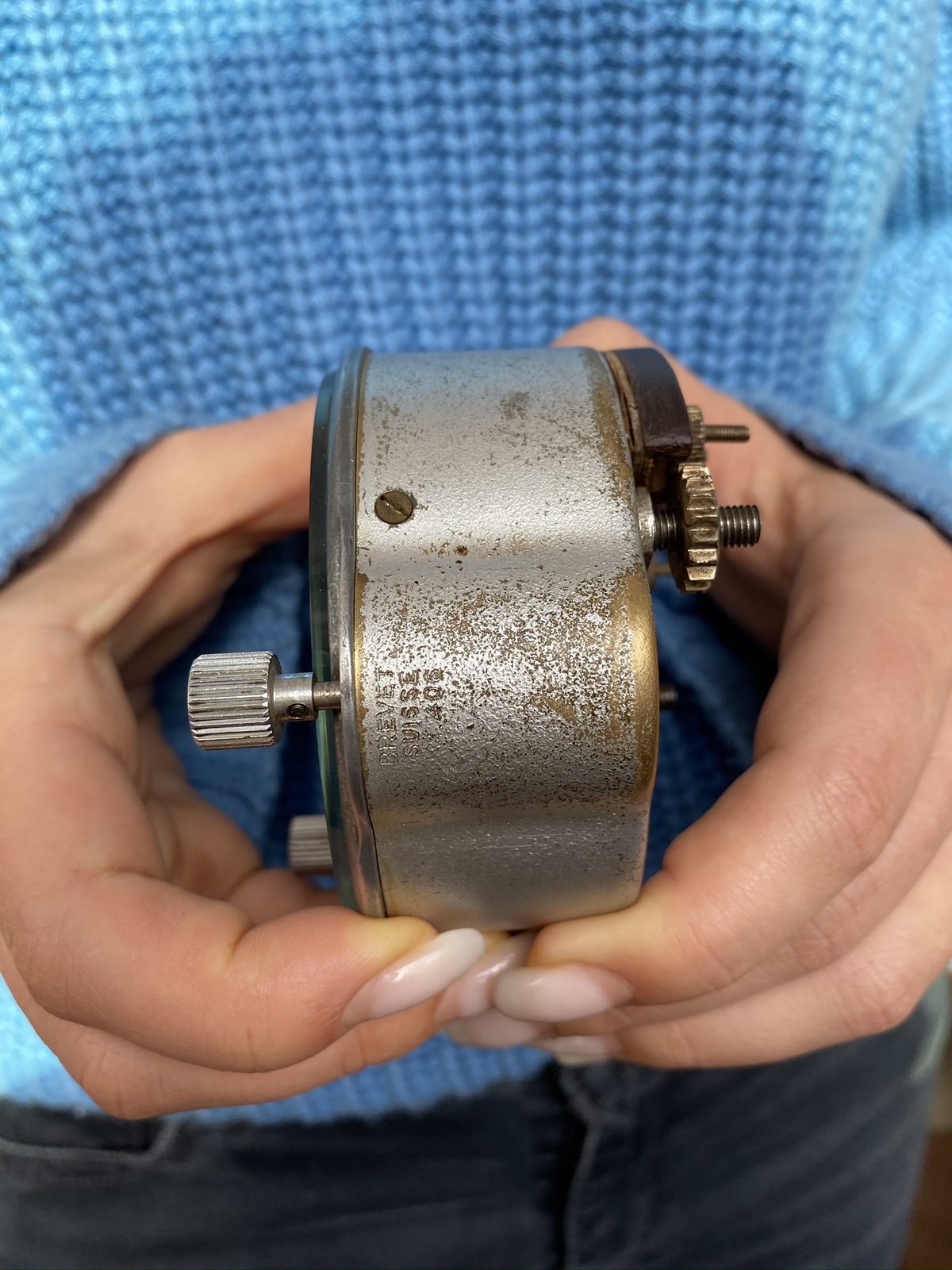
The inscription BREVET SUISSE 111.406 engraved on the case, near the chronograph control button. It is the recurring technical signature of this Jaeger series.
The movement is an 8-day LeCoultre calibre. On the side of the case, near the chronograph button, a recurring inscription identifies the lineage at once: BREVET SUISSE 111.406. It is the technical signature of Jaeger chronographs of this period, the number an informed collector looks for before even turning the piece over.
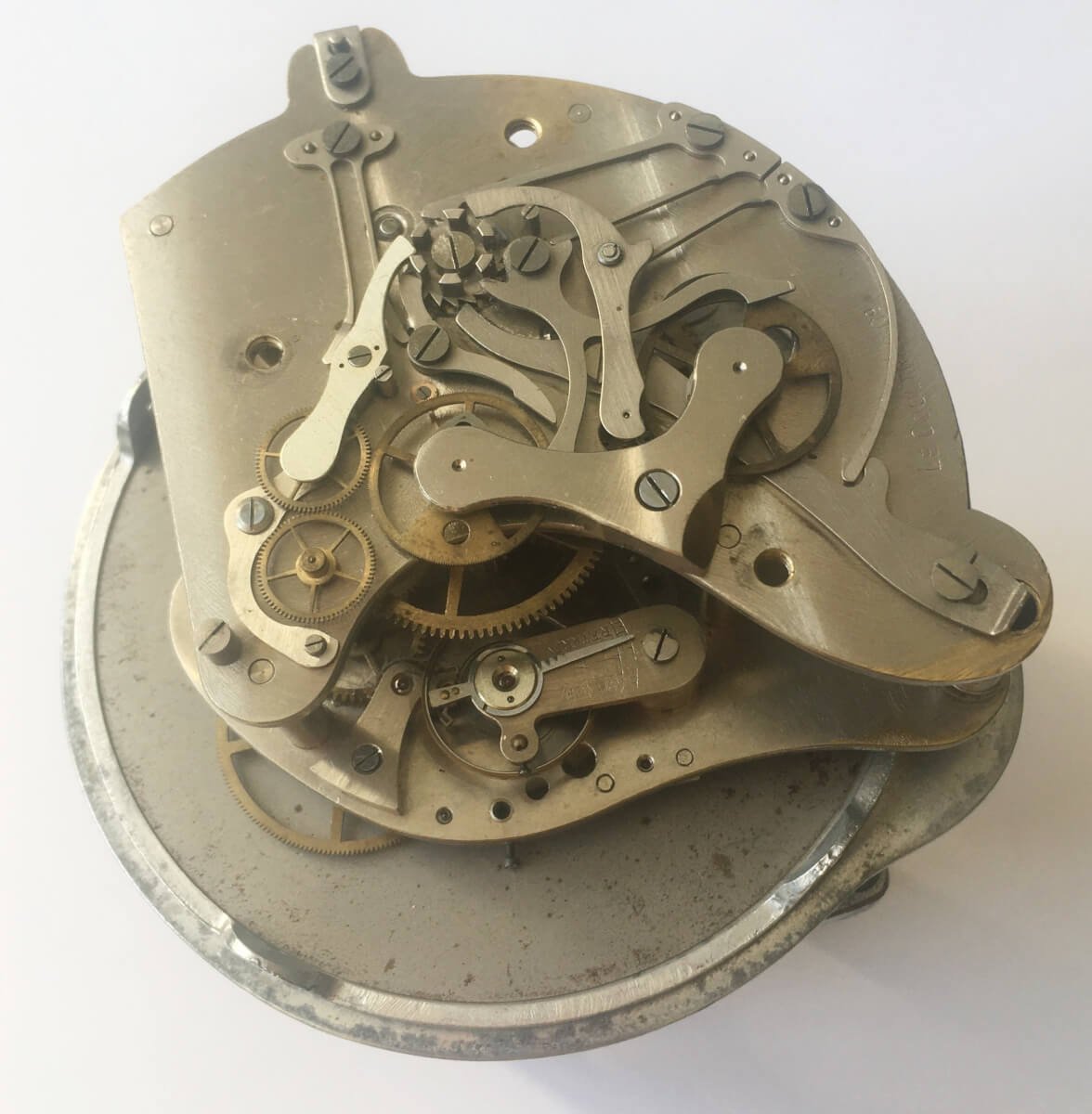
View of the chronograph bridges, movement removed. The characteristic architecture of LeCoultre calibres of the period.
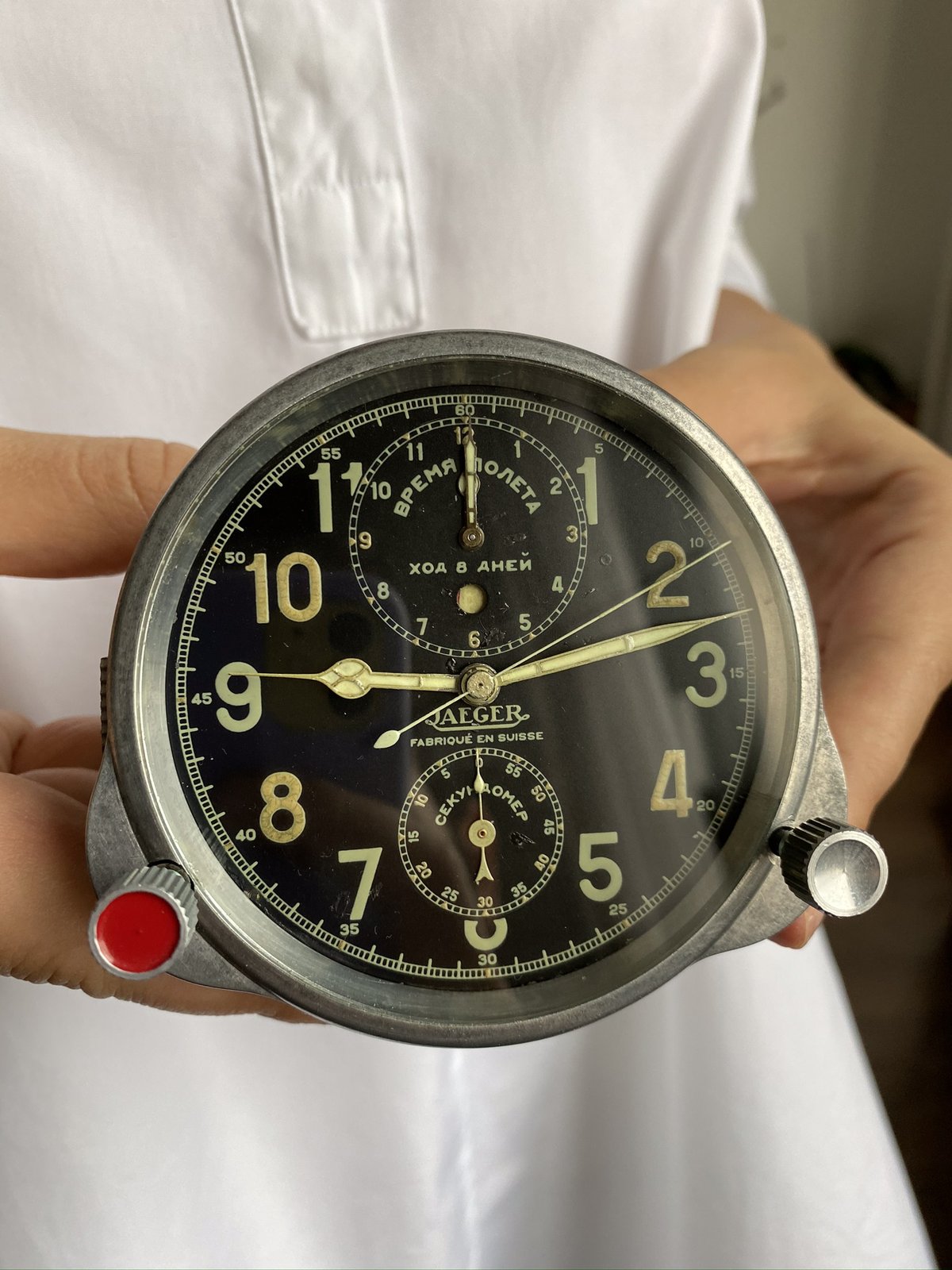
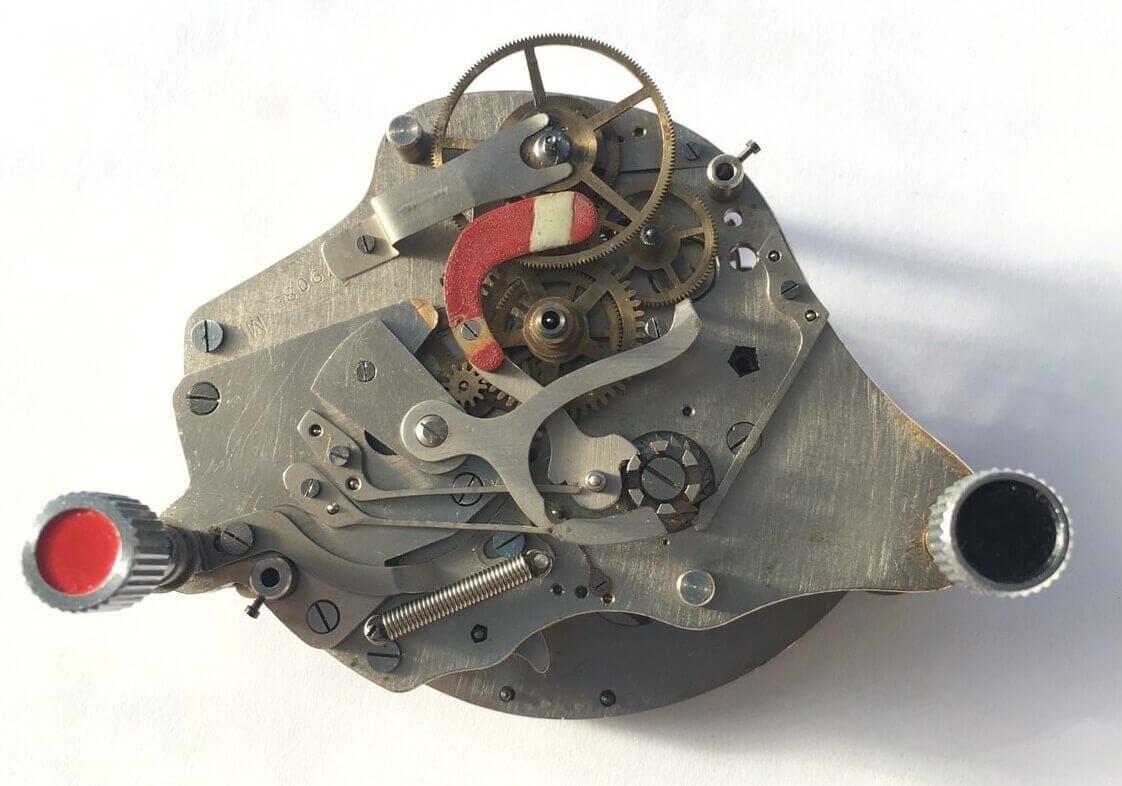
View from the winding side. On the left, the red crown is used for setting the time, winding and operating the flight time counter. On the right, the black crown controls the chronograph.
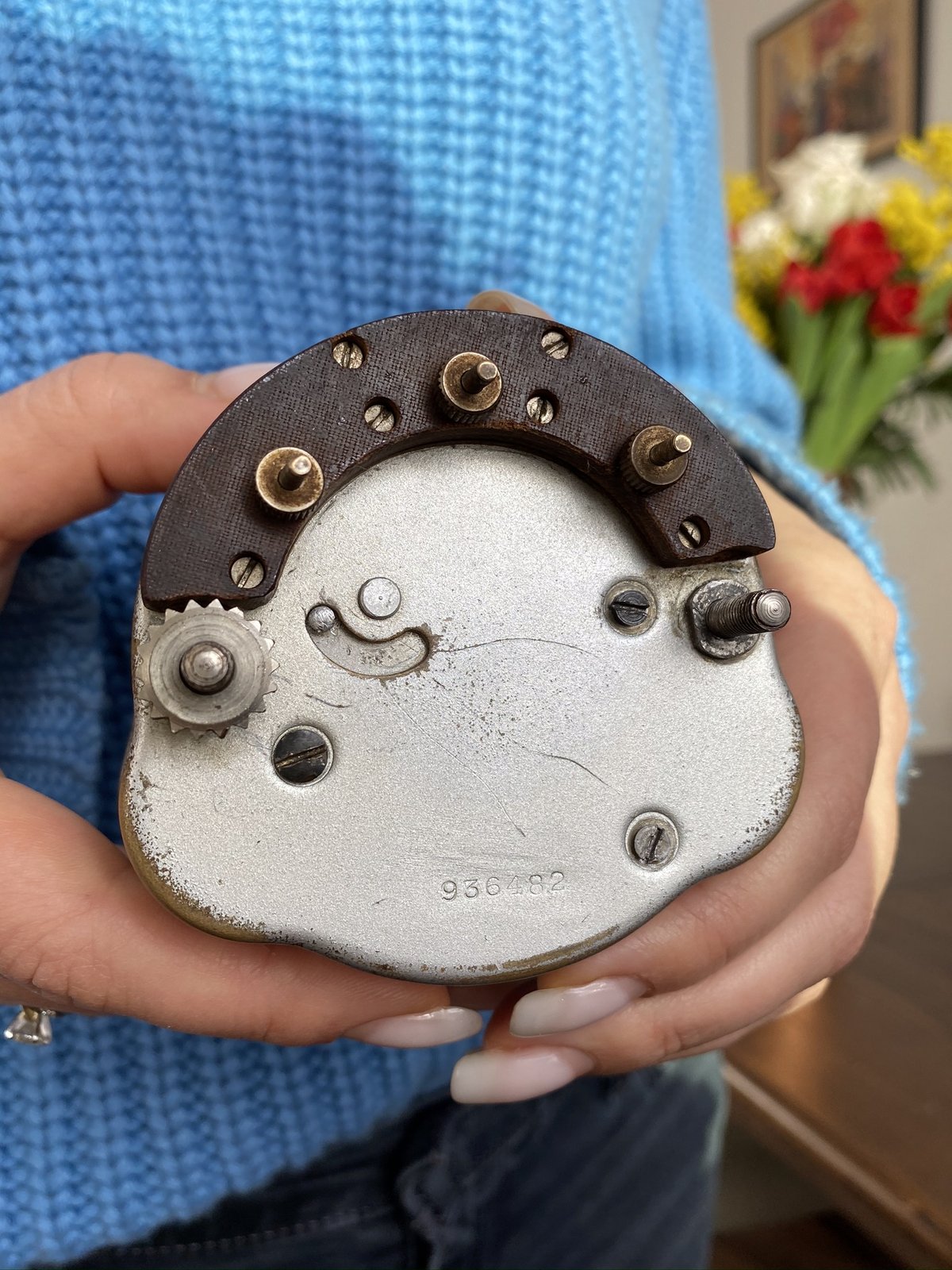
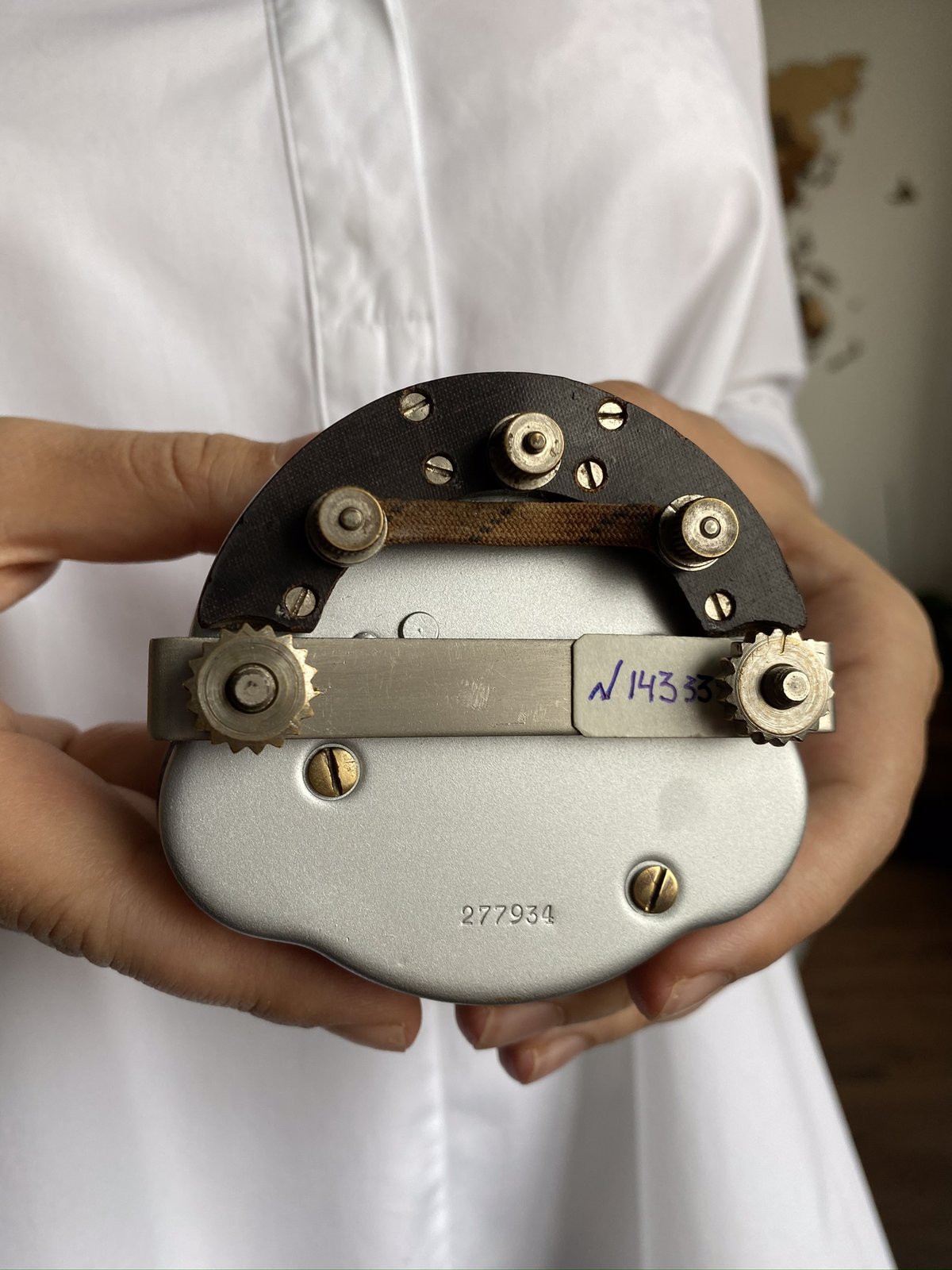
Movement number engraved on the back. Each example carries a distinct number, consistent with the production runs of the first half of the 1930s.
On the back, the serial number engraved directly into the metal of the case allows the manufacture to be dated more precisely. The examples we have handled, all three differently numbered, remain within a consistent window in the mid-1930s. Remarkably, after a careful service by our master watchmaker in Ukraine, these ninety-year-old movements still keep an average rate of the order of plus or minus six to nine seconds a day.
The quiet father of a whole lineage
The story does not end in 1939. During the Second World War, the same LeCoultre calibre, by then signed Jaeger-LeCoultre, was produced under licence in the United States under the reference A-10 Chronoflite, and equipped American aviation during the war. In Britain, Smiths produced it as the Mk II and Mk IIIA for Spitfires from 1941. Three branches, three countries, one Swiss ancestor.
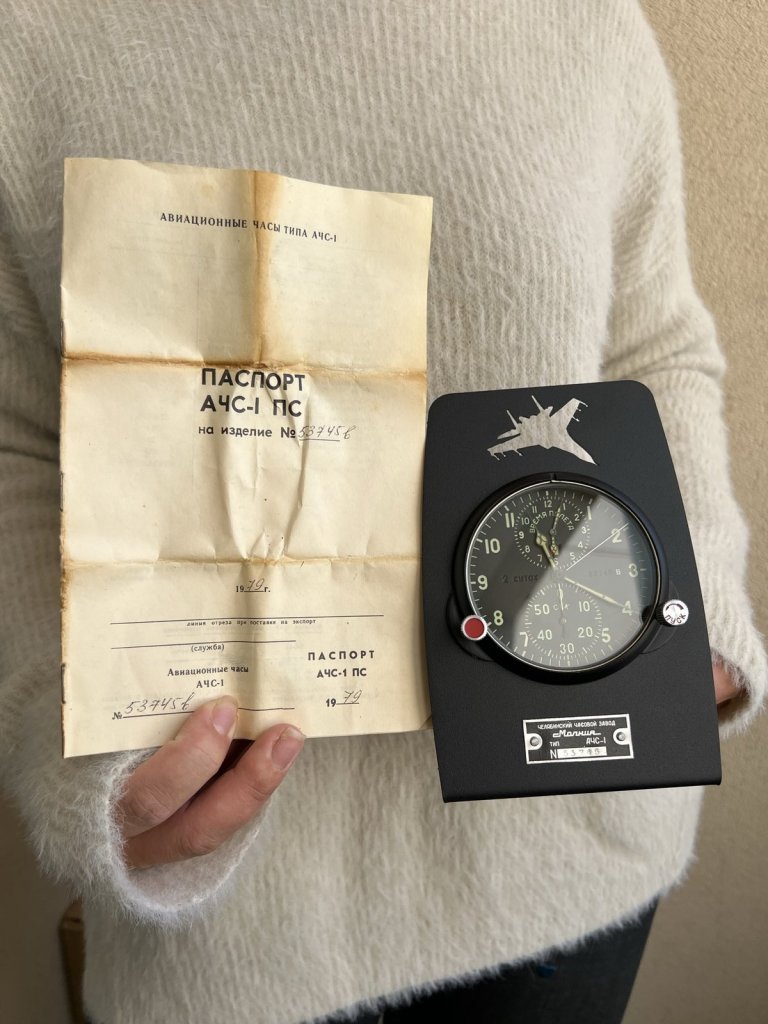
The fourth branch is the Soviet Union. After 1945, Soviet engineers reverse-engineered the mechanism from the Jaeger examples still in circulation. The First Moscow Watch Factory, evacuated during the war to Zlatoust in the Urals, passed on its expertise to the new Molnija factory founded at Chelyabinsk in 1947. Molnija then became the main manufacturer of cockpit clocks for Soviet aviation. The result was the AChS, the first Soviet series-production aviation chronograph, which equipped the MiG-15 from the late 1940s. Its descendants, the AChS-1 and then the AChS-1M, would go on to fly in the MiG-21, MiG-23, MiG-29 and Su-27, and some variants still equip contemporary Russian military aircraft today.
The whole lineage of cockpit clocks that we regularly offer in the shop therefore has its origin not in Chelyabinsk, but in Paris and in the Vallée de Joux, in an order placed ninety years earlier by a state that no longer exists.
On the market today
Another example from the same Soviet Jaeger series, coming from Soviet military stocks. Three separate pieces have passed through Soviet in Paris over the years.
Across the TB-3 and TB-7 bombers, the few ANT-25s and the other elite Soviet aircraft fitted at the time, it is estimated that only a few hundred Jaeger clocks were installed in cabins. Most were destroyed during the war, lost in crashes, or simply replaced after 1945 by the first Soviet AChS units once local production started. Surviving examples, complete, in working order and with their factory bilingual dials, number in the dozens. When one appears on the specialist collectors’ market, it sells quickly.
At Soviet in Paris, we have been fortunate enough to have three of them in our hands over the years. Three different numbers, three different provenances from the countries of the former USSR, three full services by our Ukrainian watchmaker. All found a buyer among collectors.
Faced with a piece like this, it is easy to be absorbed by the technical details. The patent, the calibre, the number of jewels, the accuracy of the stopwatch. But what makes these Soviet Jaeger clocks fascinating is what they say about a time when industrial borders were still porous, when Stalin could order flight instruments from Paris and the Vallée de Joux, and when a Parisian instrument maker could print Cyrillic on his dials without anyone finding it incongruous.
Ninety years later, the cockpit of a contemporary Russian fighter is still lit, in its technical DNA, by a light that comes from the Vallée de Joux. It is a paradoxical continuity, traced through a war, a cold war, and several successive collapses. And it is exactly the kind of object, mechanical and silent, that we like to place back in the hands of collectors.
The cockpit clocks currently available in our selection, from Soviet AChS-1 and AChS-1M models to rarer pieces from the same family, are gathered in our dedicated category. Each example is tested over several days on the timegrapher, serviced by our master watchmaker in Ukraine if needed, and comes with its history.
The ДП-5В (DP-5V) is the field radiometer of Soviet civil defence: a green Bakelite console, a probe with a rotating gamma, beta and check-source shield, headphones and a manual that explains operation and maintenance. The one in this article served in an industrial bakery in Chișinău and was serviced in March 1991. Its owner shared his photos and documents with us, and we turned them into a tool that lets you operate it on screen, step by step.
The Moscow Games, from 19 July to 3 August 1980, boycotted by some sixty countries, produced more objects than any Soviet event: a bear cub, Misha, drawn by Viktor Chizhikov, an emblem made of running tracks, five thousand torches, watches from every factory, platinum coins, rings, tea glass holders, posters. This guide tells the story of the Games and reviews the objects, with the marks that authenticate them and the prices.
The 3017 chronograph of the First Moscow Watch Factory carries a five-digit number on the balance cock. The most common dating method reads it as a single series, from 1959 to 1979. Four factory passports show there are two, and that the same number can point to two watches made ten years apart. Here is how to read the number, the dial, the logo and the bridge, with a decoder to date your Strela, Poljot or Sekonda.
This website uses cookies to improve your experience while you navigate through the website.
Out of these cookies, the cookies that are categorised as necessary are stored on your browser as they are essential for the working of basic functionalities of the website.
We also use third-party cookies that help us analyse and understand how you use this website.
These cookies will be stored in your browser only with your consent.
You also have the option to opt out of these cookies.
But opting out of some of these cookies may affect your browsing experience.
Necessary cookies are absolutely essential for the website to function properly. This category only includes cookies that ensure basic functionalities and security features of the website. These cookies do not store any personal information.
Cookies that are not strictly necessary for the website to work and that are used specifically to collect personal data through analytics, ads and other embedded content are called non-necessary cookies. User consent is required before these cookies run on the website.
✕
Soviet in Paris
Offline right now. Leave your message and your email, we reply within 24 hours.
Hello 👋 A question about an item, an order or shipping? Write to us.
Your email is used only to reply to you.
Subscribe to our newsletter and get 10% off your first order.
Subscribe
★ New pieces before anyone else
★ New blog articles
★ Soviet in Paris news and updates
Join the Party
10% off your first order
Receive your welcome card and our next arrivals.
Your code appears here and is also sent to you by email. You can leave the Party in one click, at any time.





 Strane Mira