




Blast Furnace Sculpture - Shock Brigade - 1947 - Bronze
Blast Furnace Sculpture - Shock Brigade - 1947 - Bronze
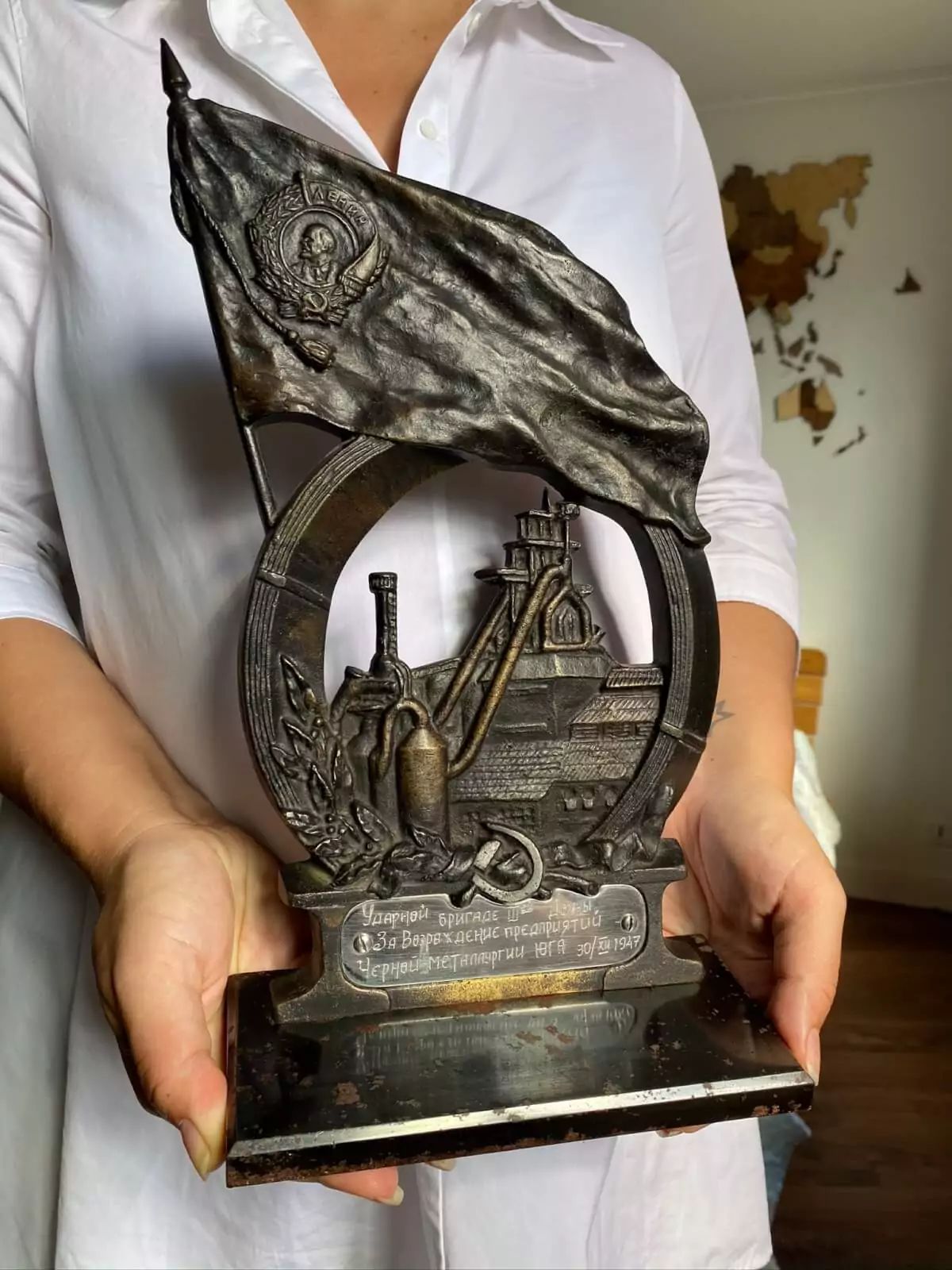
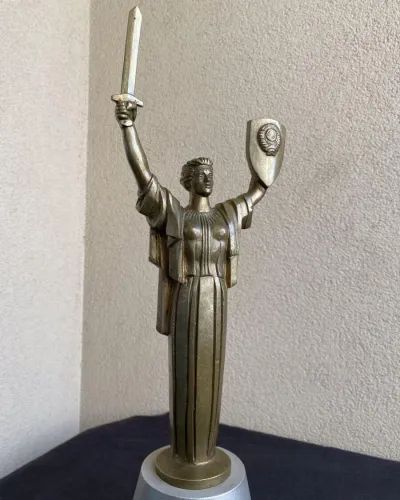
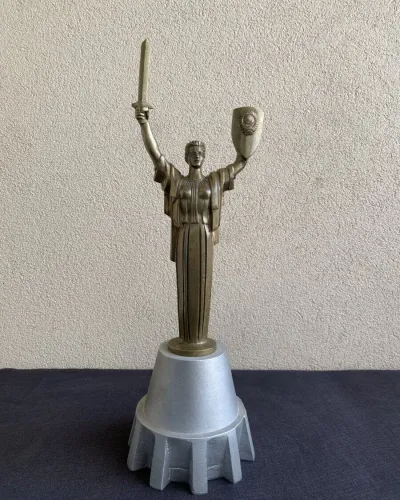
Bronze sculpture presented on 30 December 1947 to the shock brigade of blast furnace No. 3, for rebuilding the iron and steel industry of the Soviet South after the war. On a chromed cast iron base, 4.8 kg, 33 x 19 x 13 cm.
Sold
Sale price
For newsletter subscribers. One price per month.
Like this model?
We sometimes find another one. Leave your email and we will let you know when it is listed.
Blast Furnace SculptureOne email per arrival of this model, one-click unsubscribe. Your address is used for nothing else.
Message received, dear comrade.
Our information desk usually replies within 24 hours at the address provided.Related products
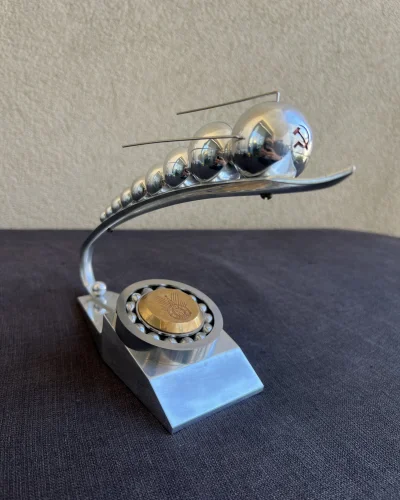
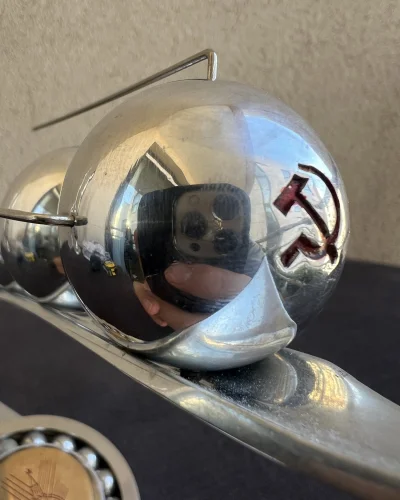
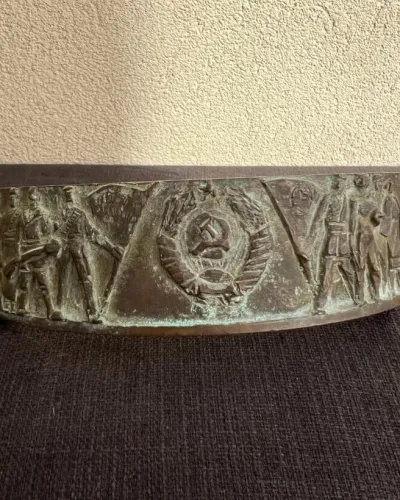
Creation of the Cominform. Truman Doctrine and Marshall Plan.
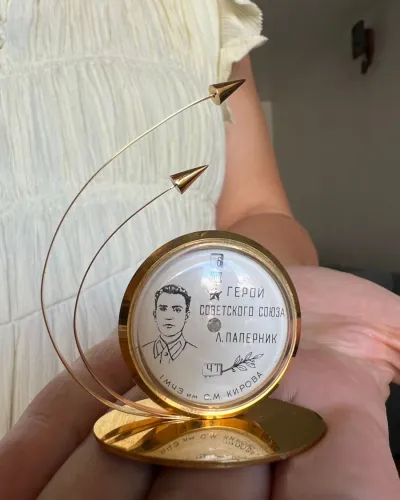
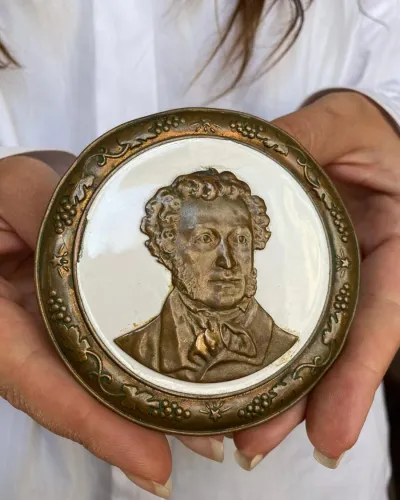
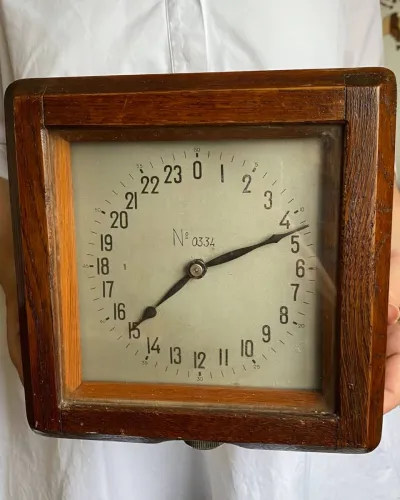
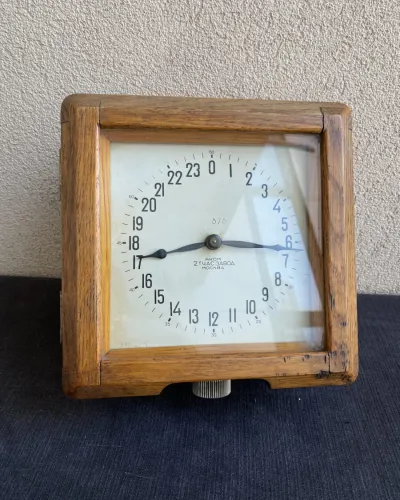
1945: the USSR has won the war, but the country lies in ruins. Factories, bridges, schools and nearly all of its infrastructure have been destroyed or damaged. The iron and steel industry of the South was among the hardest hit: losing it early in the war had cost the country 68 per cent of its pig iron capacity and 58 per cent of its steel capacity.
The USSR made restarting metallurgy a priority, and that began with repairing the works. Under the command of the scientist and metallurgist Nikolai Nikolaevich Dobrokhotov, shock teams were sent to the southern regions of the USSR worst hit by the fighting. They had no more than two years to repair the plants and restart production, and they reached their goal: over 1944 and 1945, thirteen blast furnaces, forty-nine open-hearth furnaces, twenty-nine rolling mills and sixty-eight coke-oven batteries were brought back into service.
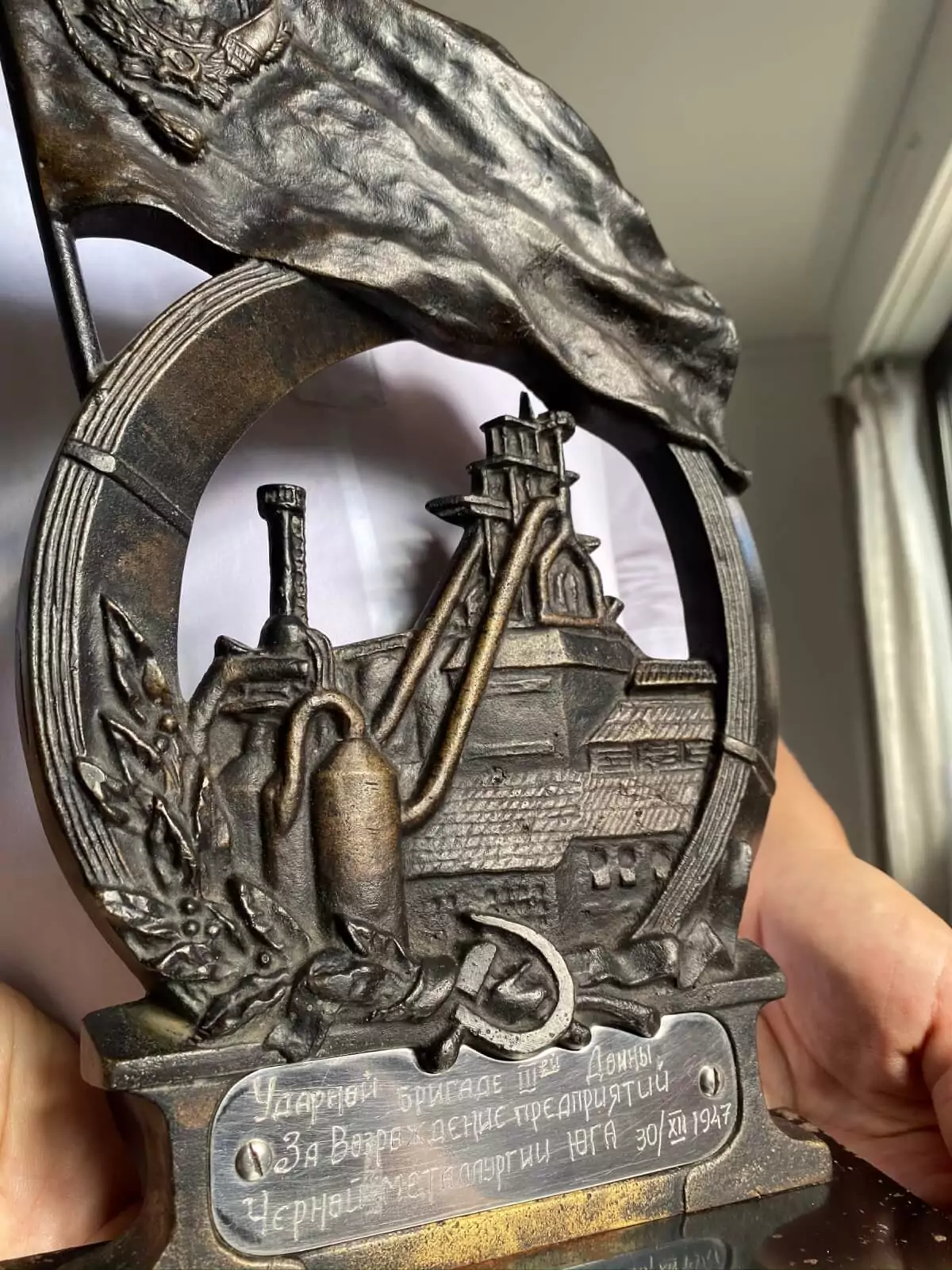
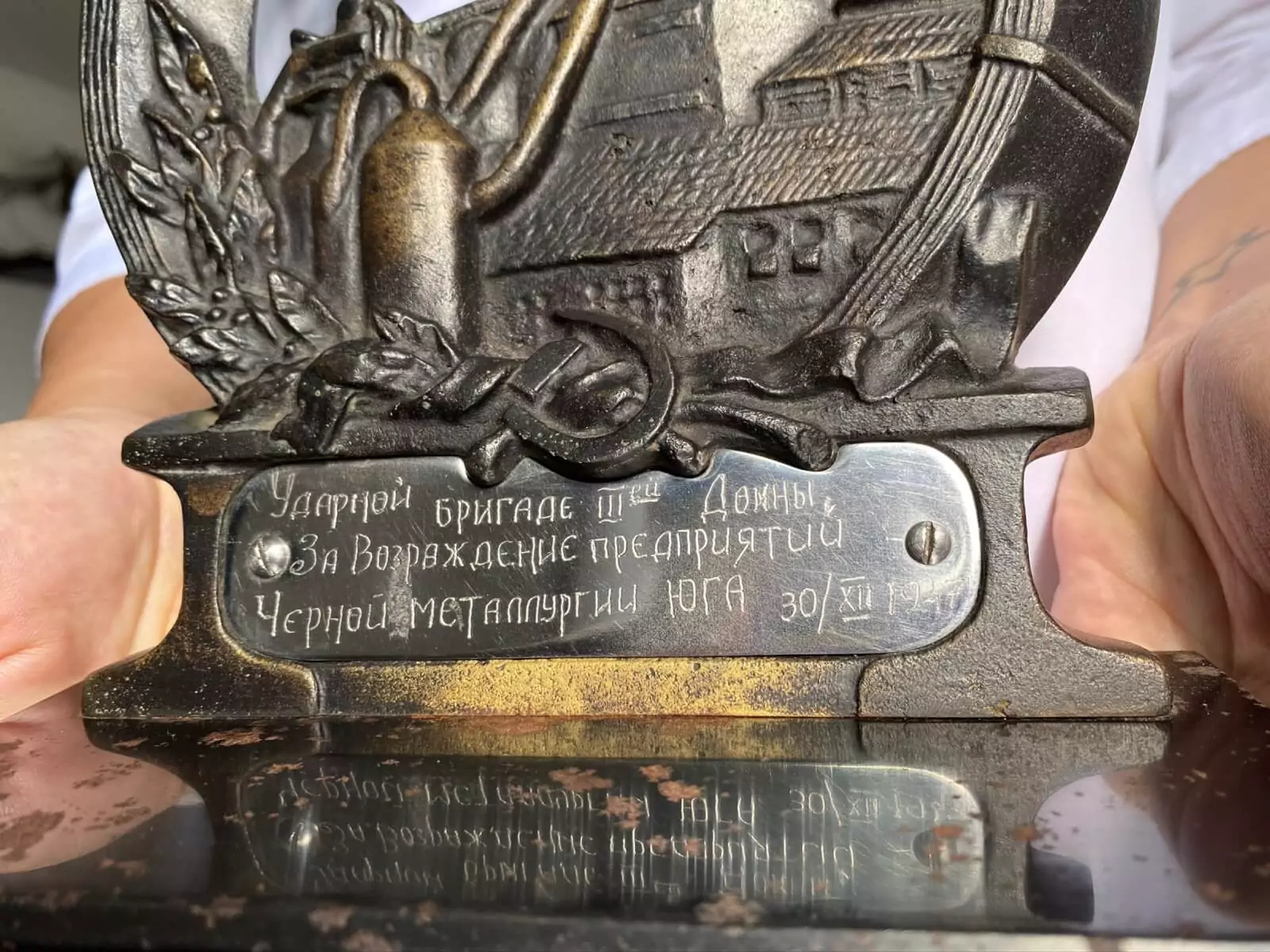
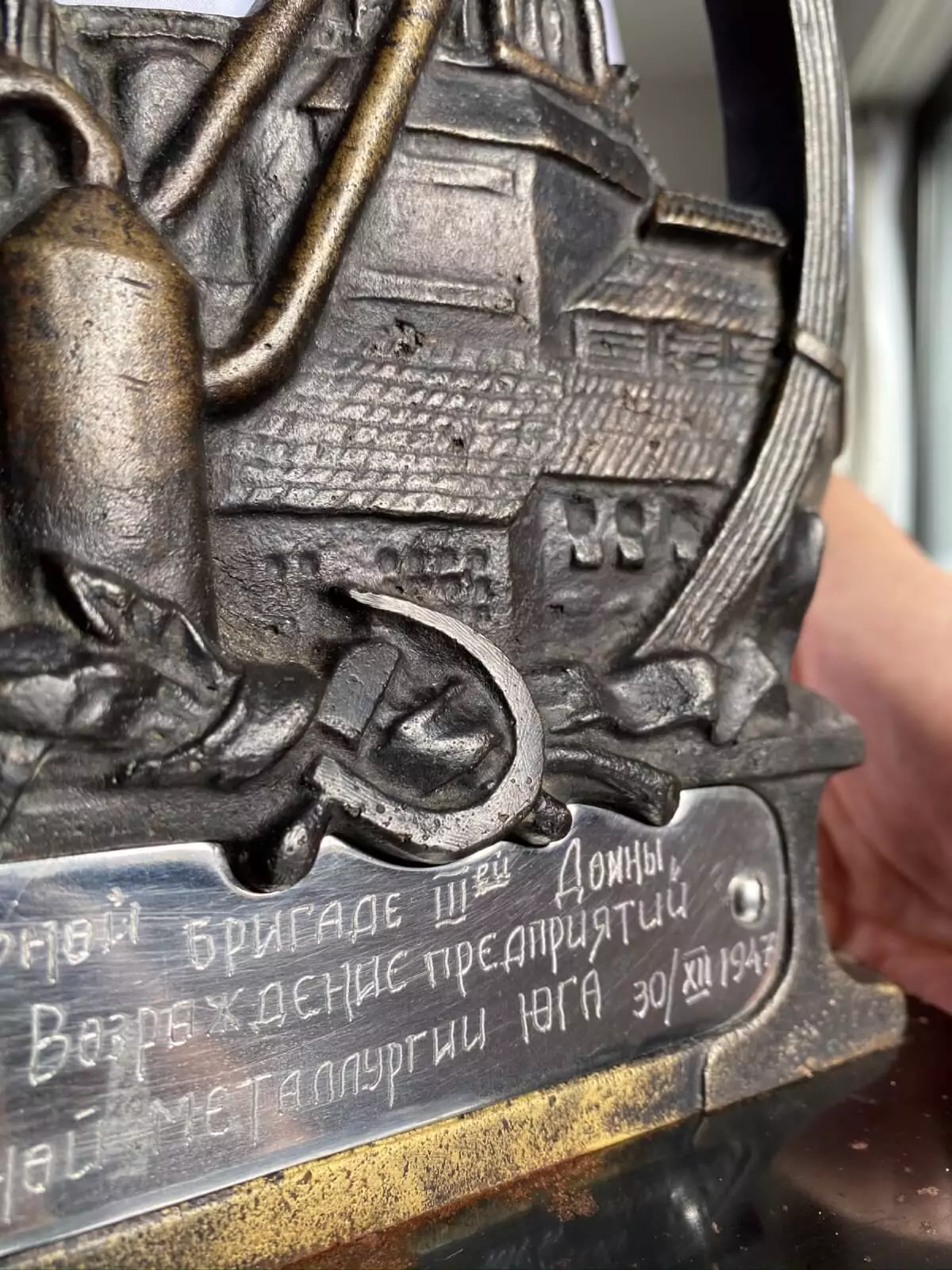
One of these shock teams received this sculpture. The hand-engraved plaque screwed to the plinth carries the dedication “Ударной бригаде III-ей домны за возрождение предприятий черной металлургии Юга 30/XII 1947” (To the shock brigade of blast furnace No. 3, for the revival of the ferrous metallurgy enterprises of the South, 30 December 1947). The works is not named, and the piece came to us from a seller in the Donbas. One lead, without certainty: at Zaporizhstal, next to the Donbas, it was blast furnace No. 3, the first restored after the war, that gave the rebuilt plant its first iron, on 30 June 1947.
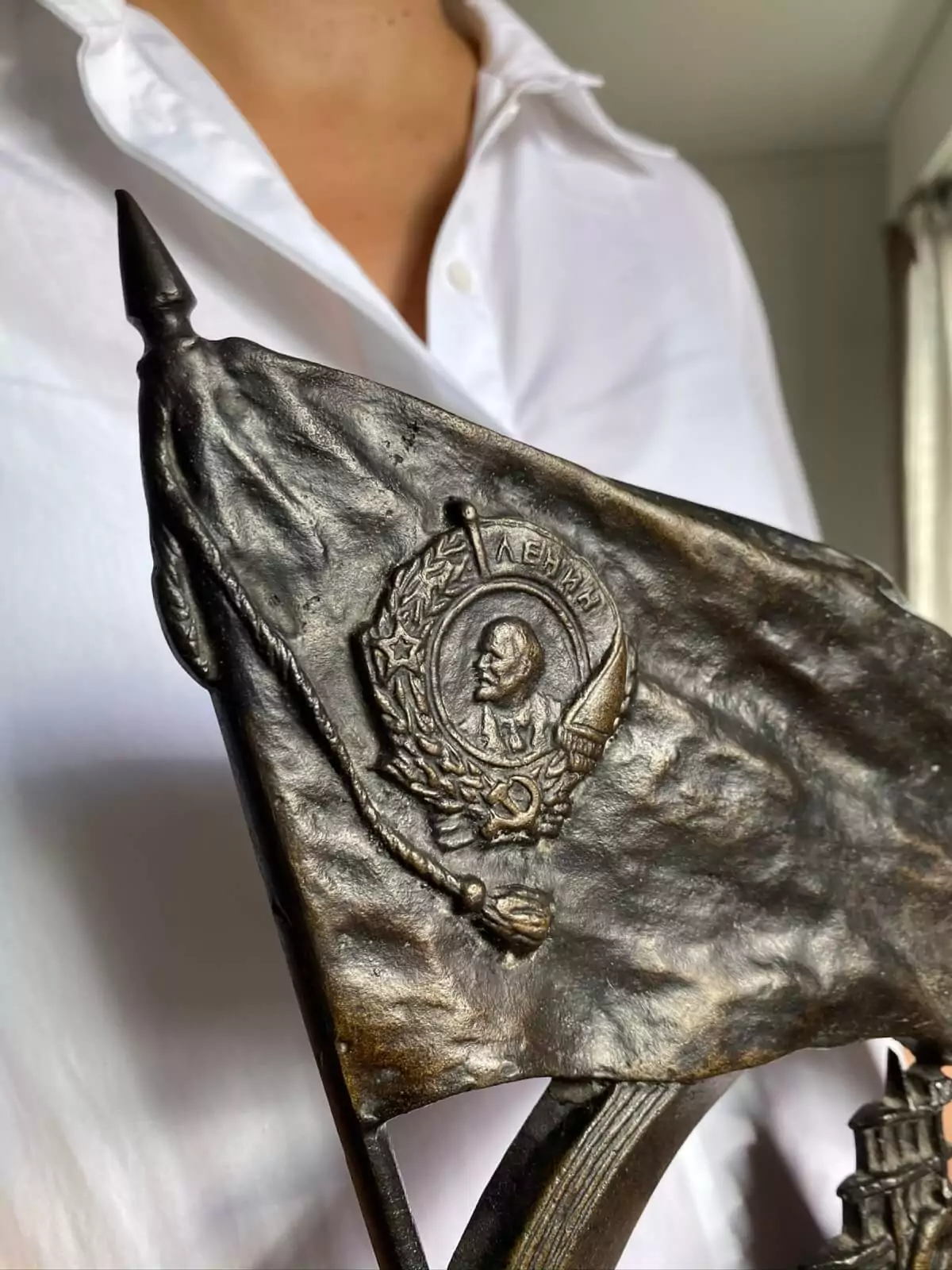
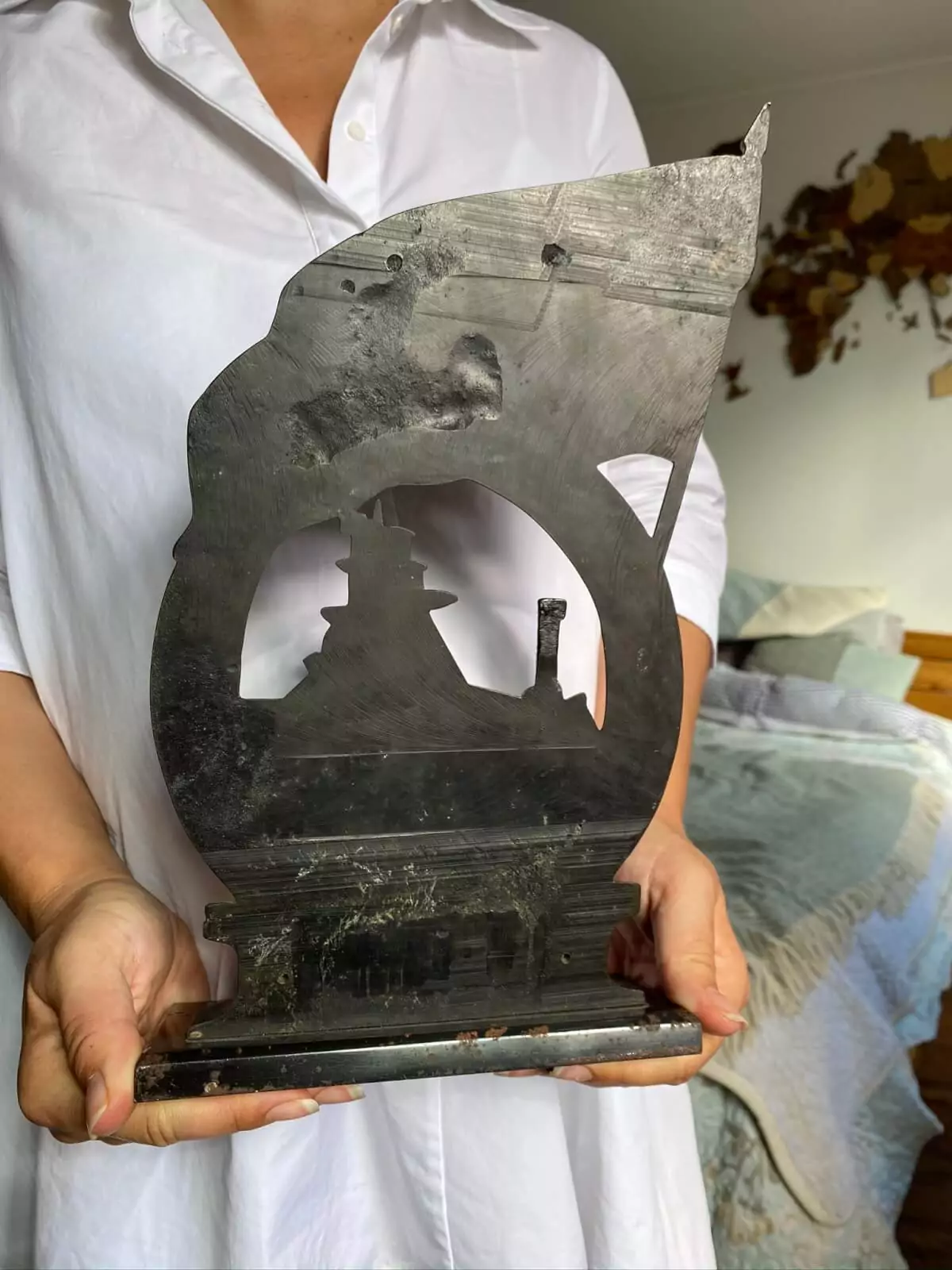
The relief shows a blast furnace and its plant, framed by a large ring and branches, with the hammer and sickle at the base. Above it flies a banner bearing the Order of Lenin in relief.
Five months later, on 18 May 1948, the USSR instituted the medal “For the Restoration of the Black Metallurgy Enterprises of the South”, awarded to around 68,700 people. Its obverse also shows a rebuilt blast furnace, and the wording on our plaque is very close to its title.
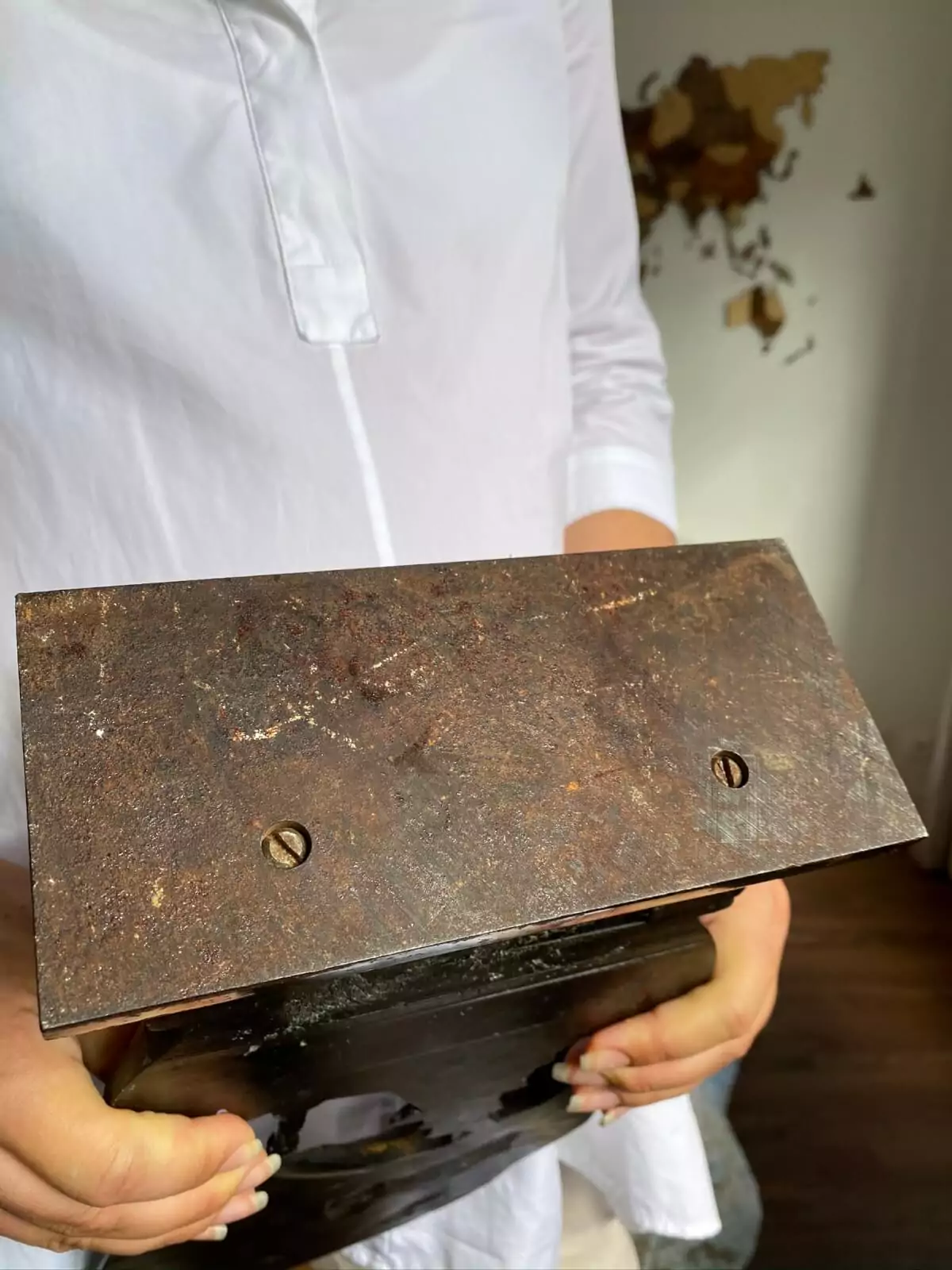
The bronze sculpture stands on a chromed cast iron base. The whole weighs 4.8 kg and measures 33 cm high, 19 cm wide and 13 cm deep. The base shows spots of rust. A unique piece that tells an important story of the post-war USSR.
Additional information
| Weight | 6 kg |
|---|---|
| Dimensions | 13 × 19 × 33 cm |

