Sputnik in Ball Bearings - 1GPZ Moscow Factory Sculpture - USSR
$1,556.99Unique piece
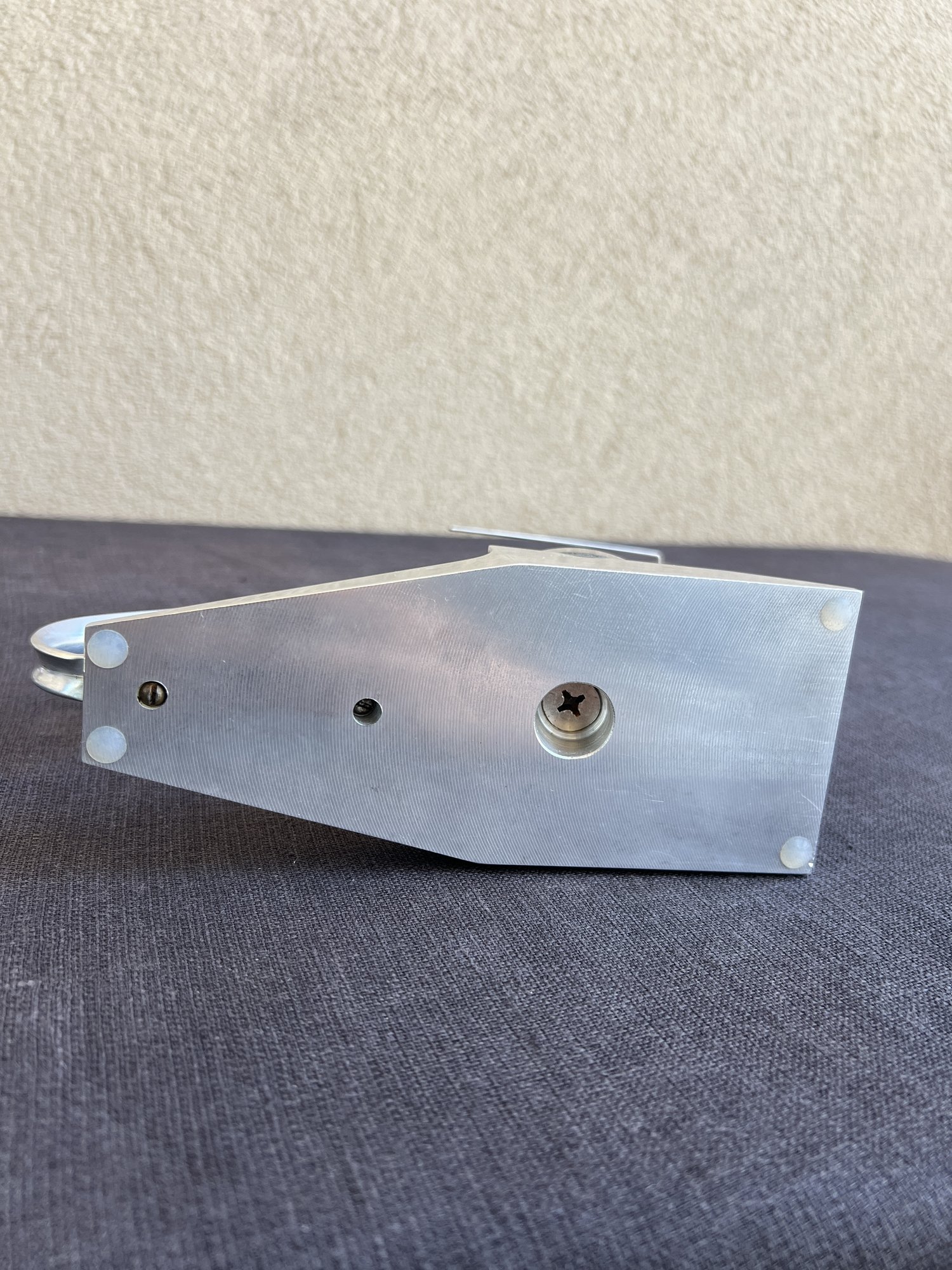
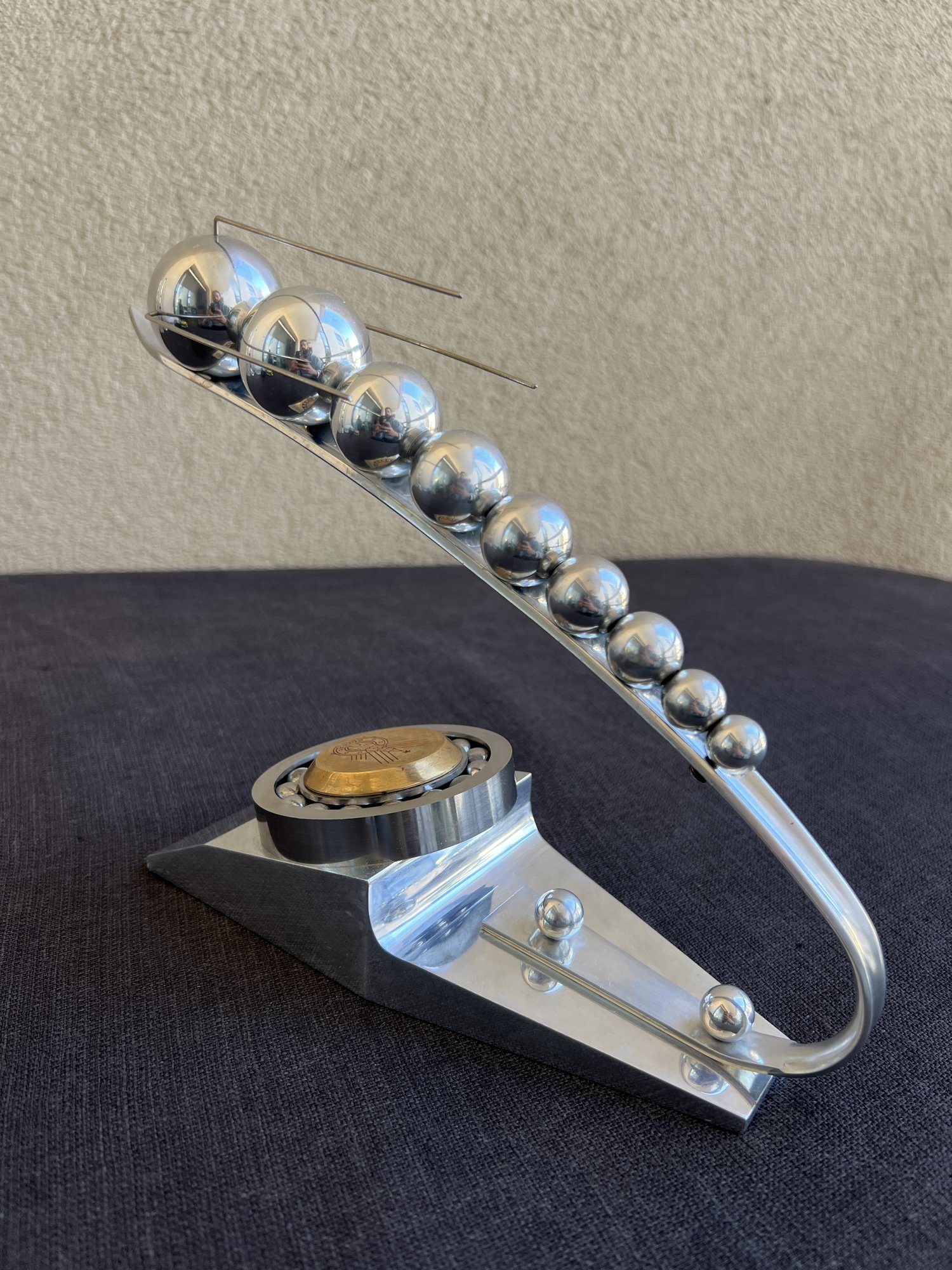
Sputnik in Ball Bearings - 1GPZ Moscow Factory Sculpture - USSR
$1,556.99Unique piece
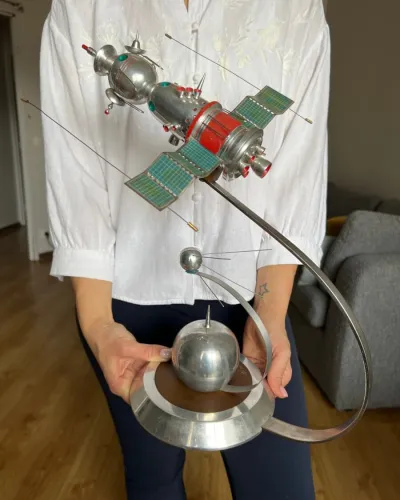
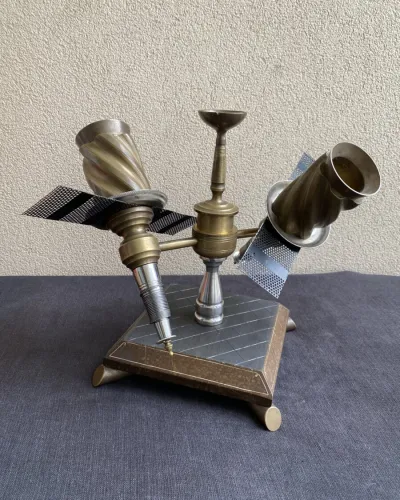
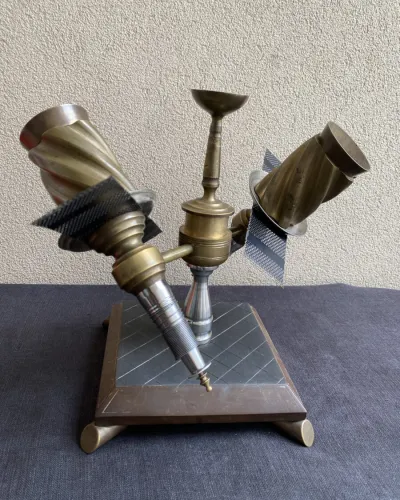
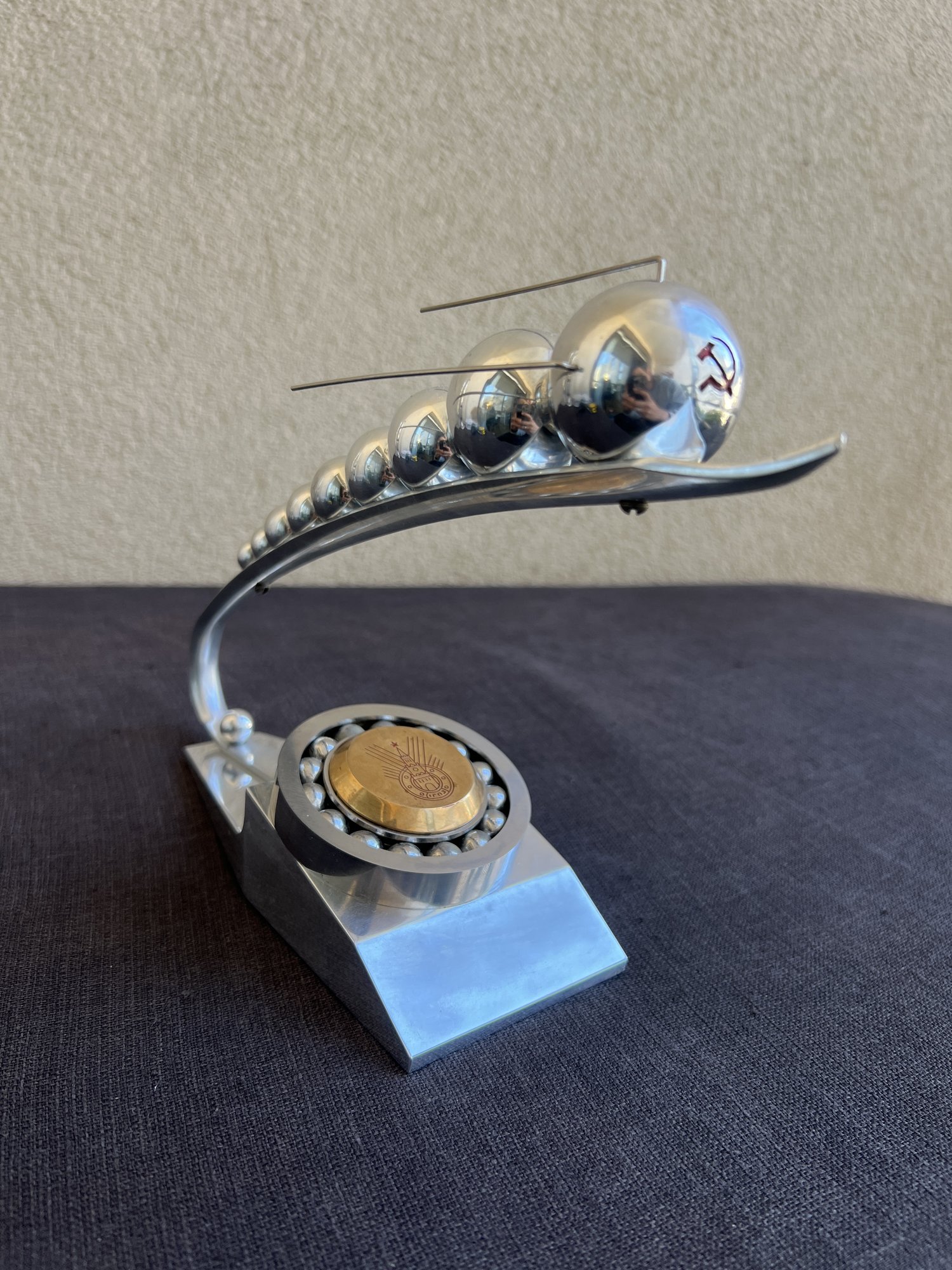
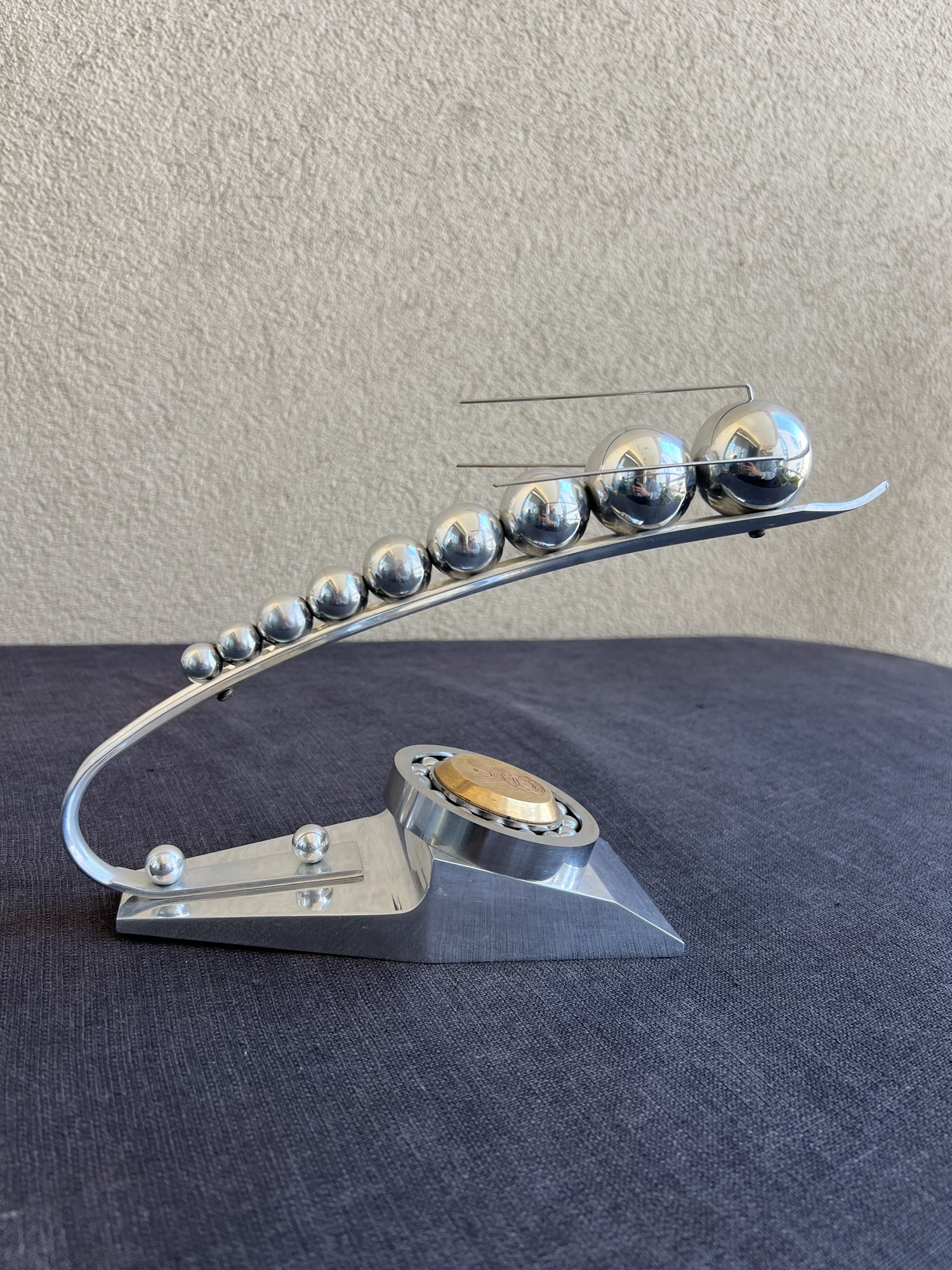
A presentation desk piece from the 1GPZ ball bearing plant in Moscow, made in the 1970s.
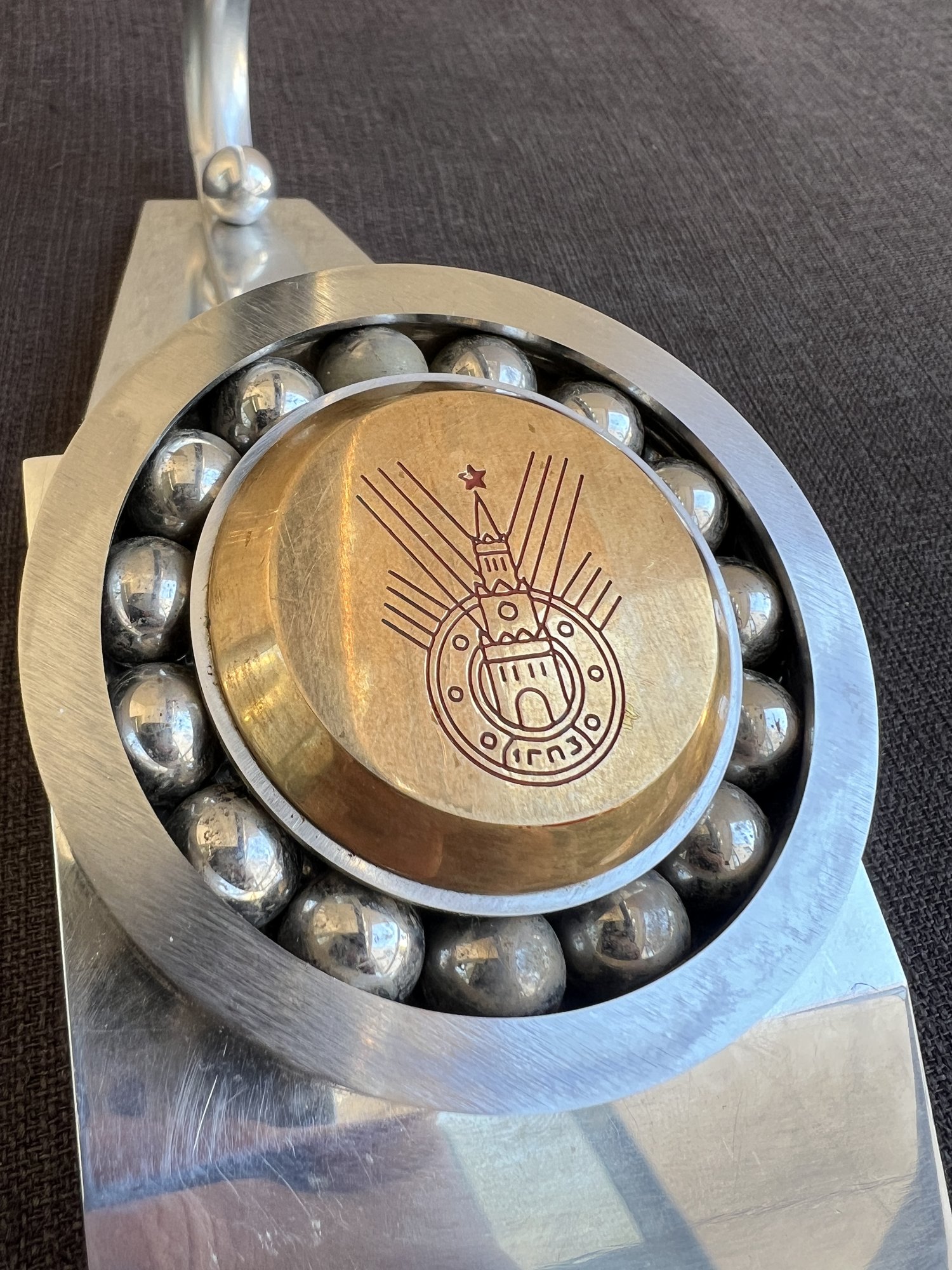
Built around one of the factory’s production bearings, it leads from production bearing to Sputnik 1 and carries the 1ГПЗ initials under the Kremlin’s Spasskaya Tower.
1 in stock
Message received, dear comrade.
Our information desk usually replies within 24 hours at the address provided.The Brezhnev era. Détente with the West, SALT treaties, the Apollo-Soyuz mission. Economic stagnation and growing corruption.
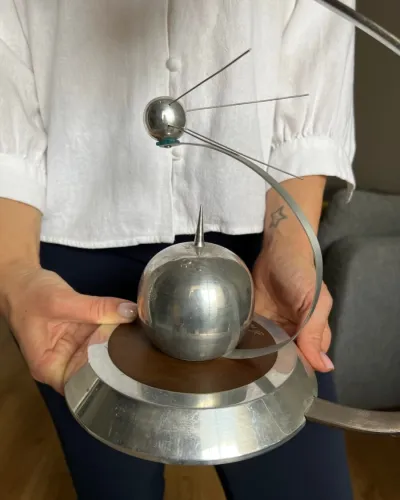
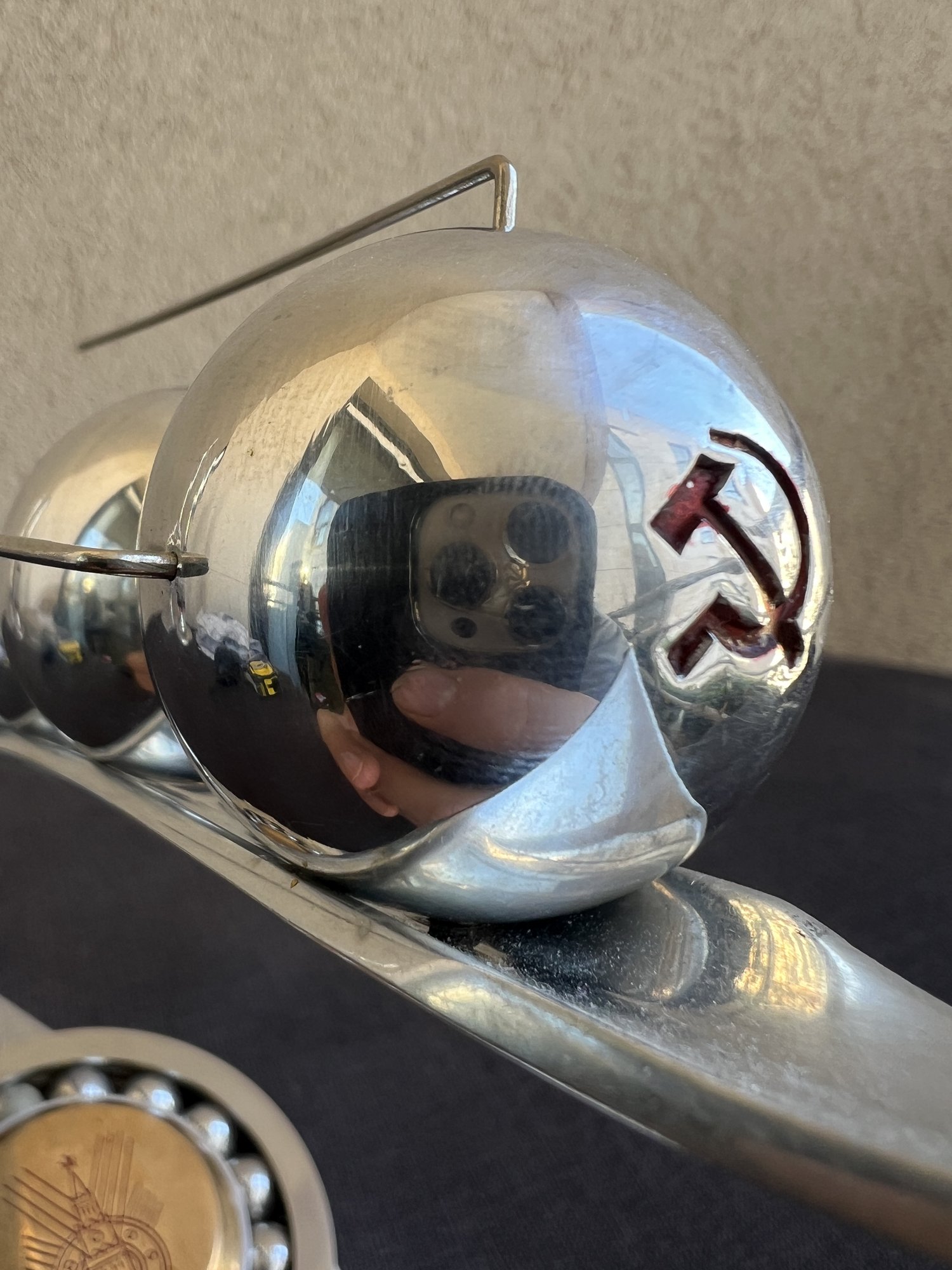
A Soviet desk sculpture with a space theme, presented by the First State Ball Bearing Plant in Moscow. The engraved medallion on the central cap identifies it: the Kremlin’s Spasskaya Tower topped with its star, set inside a stylised bearing above the initials 1ГПЗ (1GPZ, First State Bearing Plant). The piece is built from the factory’s own products: a production ball bearing holds the emblem, and a row of balls of increasing size leads to a sphere marked with the hammer and sickle and fitted with antennas, almost certainly a nod to Sputnik 1.
Approved in 1929 and built at Kozhukhovo, south-east of Moscow, 1GPZ assembled its first ten bearings on 19 January 1932 and went into service on 29 March 1932, the date kept as its founding; its first delivery went to the Stalingrad tractor plant. It was the first large bearing plant in the USSR. In the autumn of 1941 its lines were evacuated to Kuibyshev, Saratov, Tomsk and Sverdlovsk, where they became plants GPZ-3 to GPZ-6, while the shops left in Moscow made mine detonators and parts for Katyusha rocket launchers. After the war the plant opened the country’s first fully automated shop in 1956, won the Grand Prix at the 1958 Brussels World’s Fair, received the Order of Lenin in 1966 and reached 124 million bearings a year in 1986, from a 40-gram model to a 6.5-tonne one. Its palace of culture, built in the mid-1970s, became the Dubrovka theatre.
The launch of Sputnik 1 on 4 October 1957 turned space into a favourite subject for prestige objects. For 1GPZ the theme was more than decoration: nothing turns without bearings, not launch vehicles, not gyroscopes, not test rigs or launch tables, and the country’s first supplier of precision bearings had its share in the chain that led to the first satellite. By lining up its own balls all the way to Sputnik, the plant tells that story in its own language, from production bearing to satellite. Workshops in large Soviet plants made pieces like this one in small numbers for company anniversaries, visiting delegations or distinguished workers, often using their own output. This example probably dates from the 1970s.
Length 28 cm, height 18 cm.
Additional information
| Weight | 2.0 kg |
|---|---|
| Dimensions | 35.0 × 25.0 × 25.0 cm |