Soviet Trench Art Tins - RKKA - WW2 1944 - Hand Painted, Dedicated
$207.99Unique piece
Soviet Trench Art Tins - RKKA - WW2 1944 - Hand Painted, Dedicated
$207.99Unique piece
Two soldier-made tins from August 1944, lids painted with the Soviet air force emblem, dedicated to Маруся (Marusya) by Sasha Rotkin in the Carpathian foothills, with a small photographic portrait.
1 in stock
Message received, dear comrade.
Our information desk usually replies within 24 hours at the address provided.The Red Army liberates Soviet territory and enters Eastern Europe.
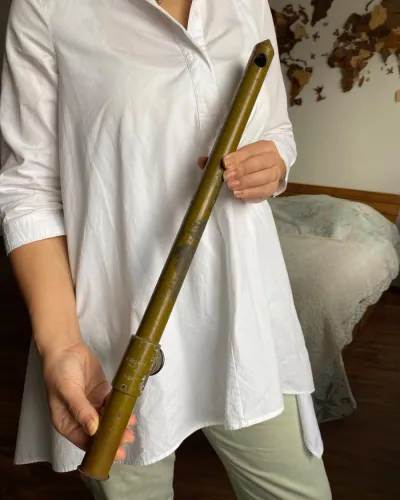


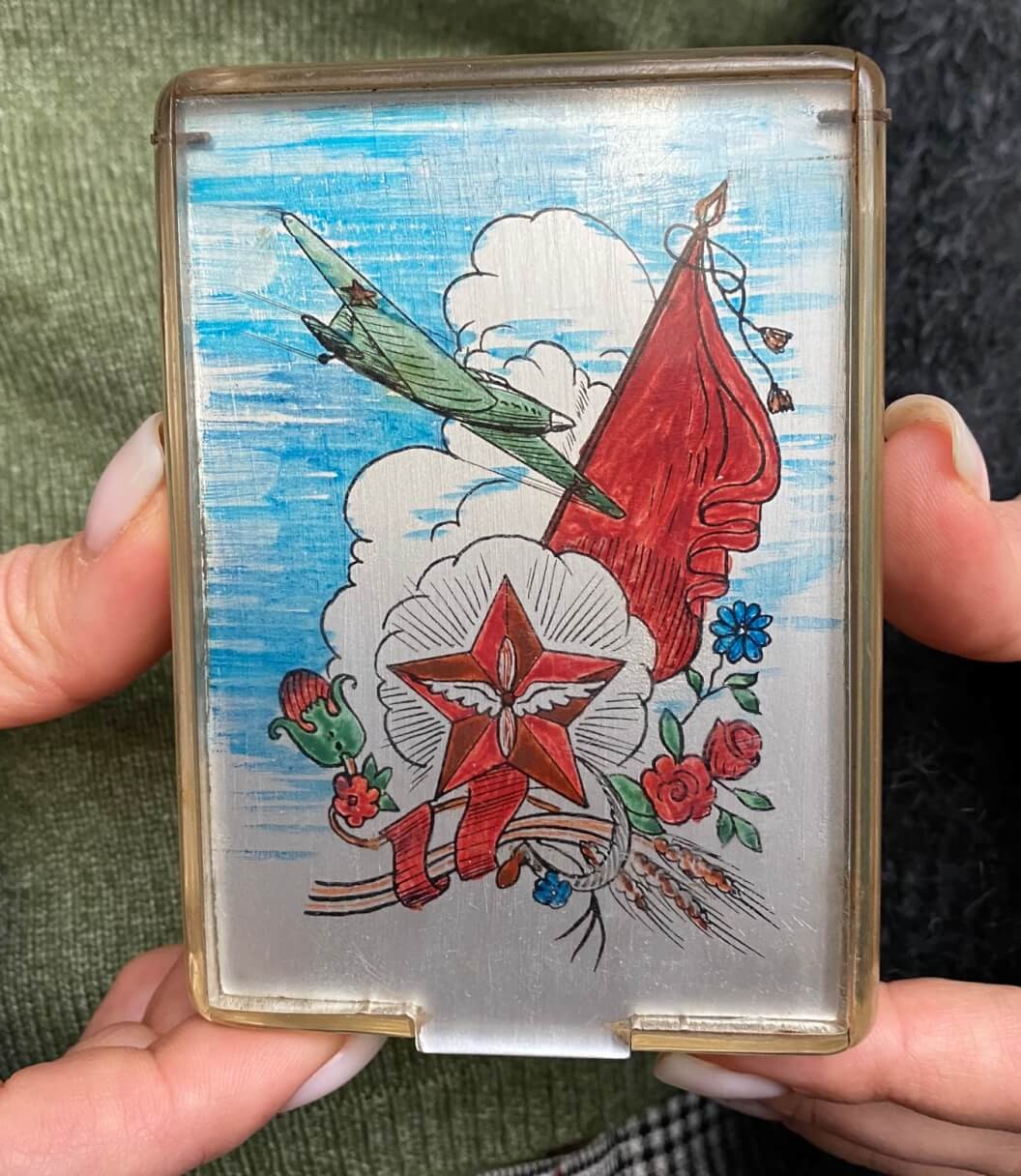
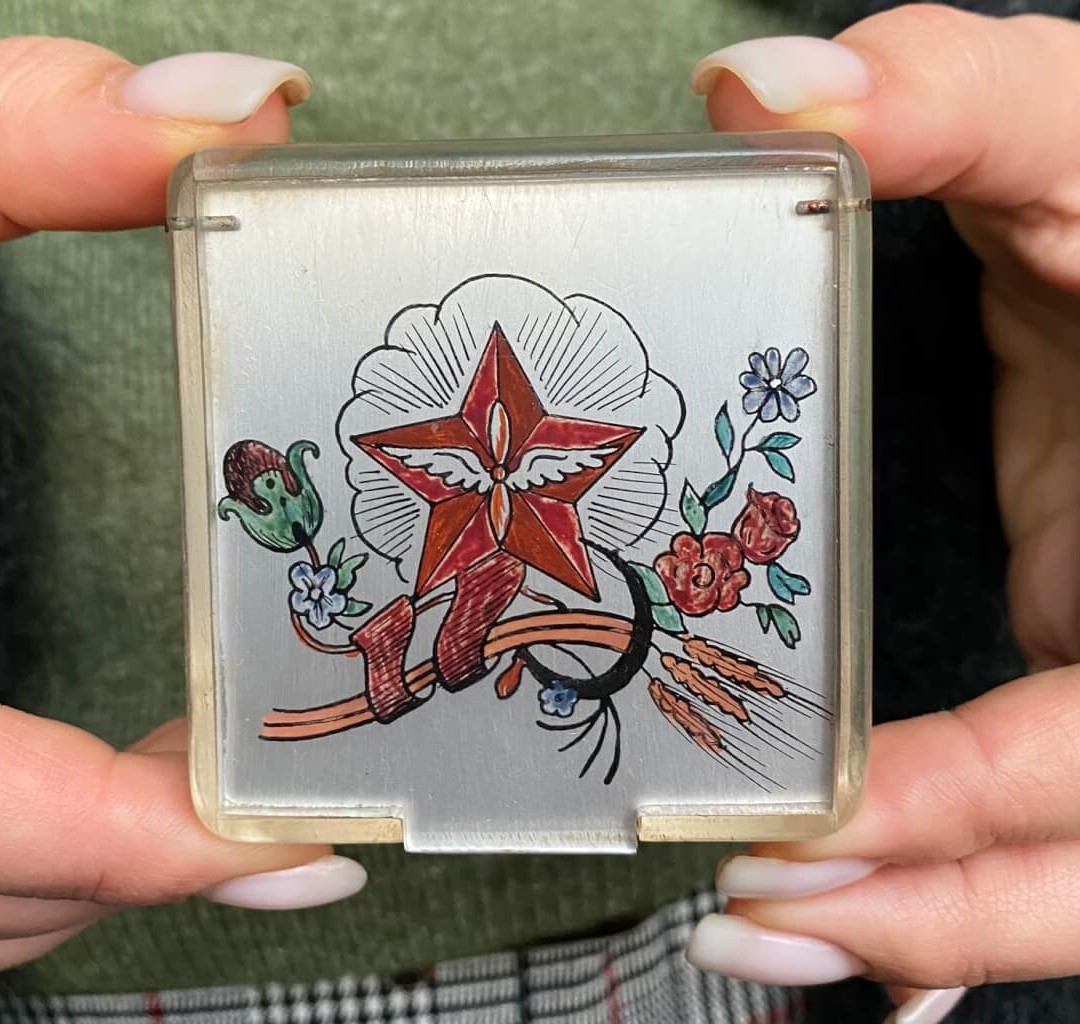
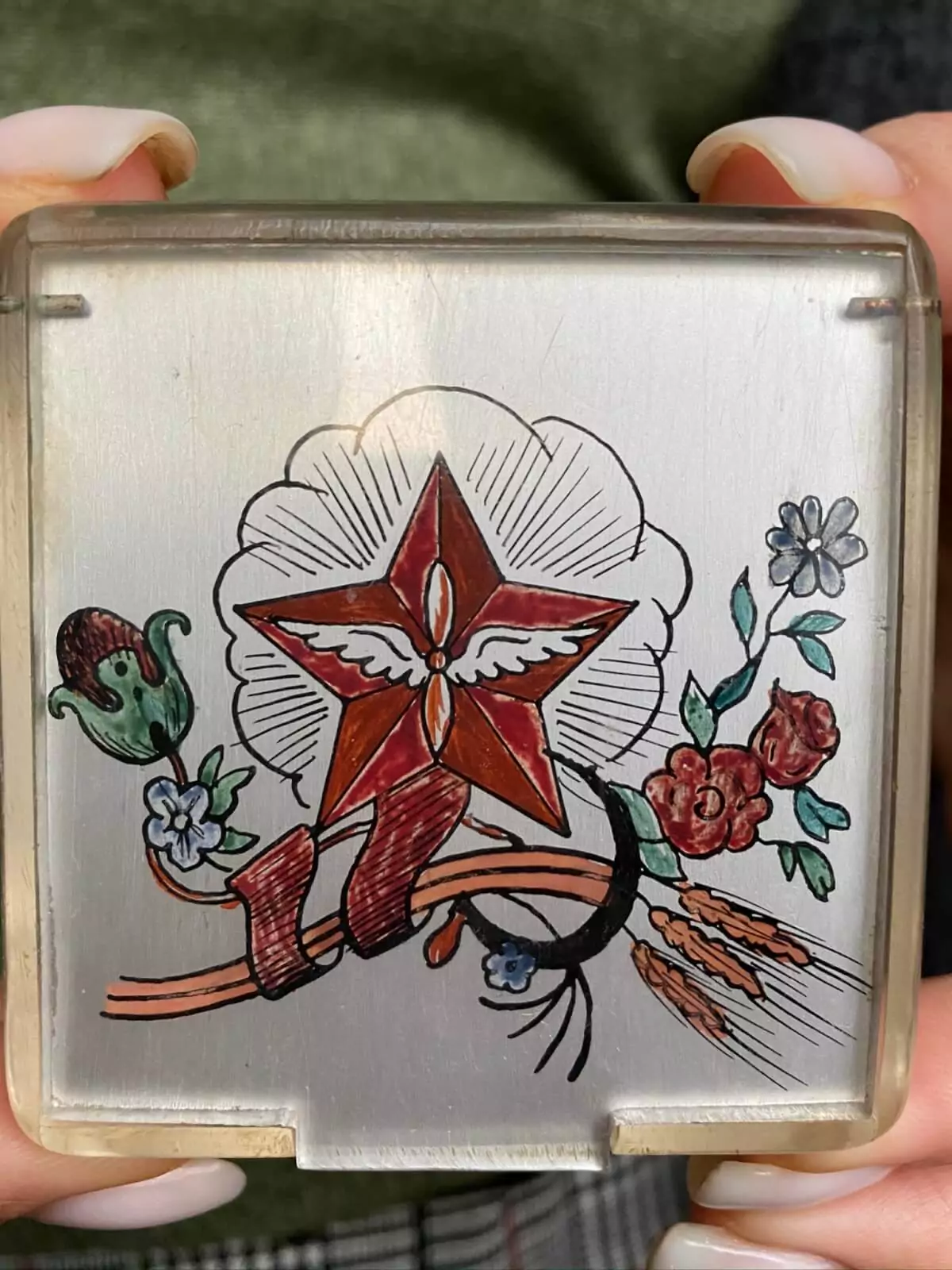
A set of two tins made and hand painted on the Eastern Front in August 1944. Each one has a clear plastic body, most likely plexiglass, closed by a silver metal lid that pivots on two small pins and opens with a tab. According to the seller, soldiers used such tins to keep tobacco, soap and small personal items.
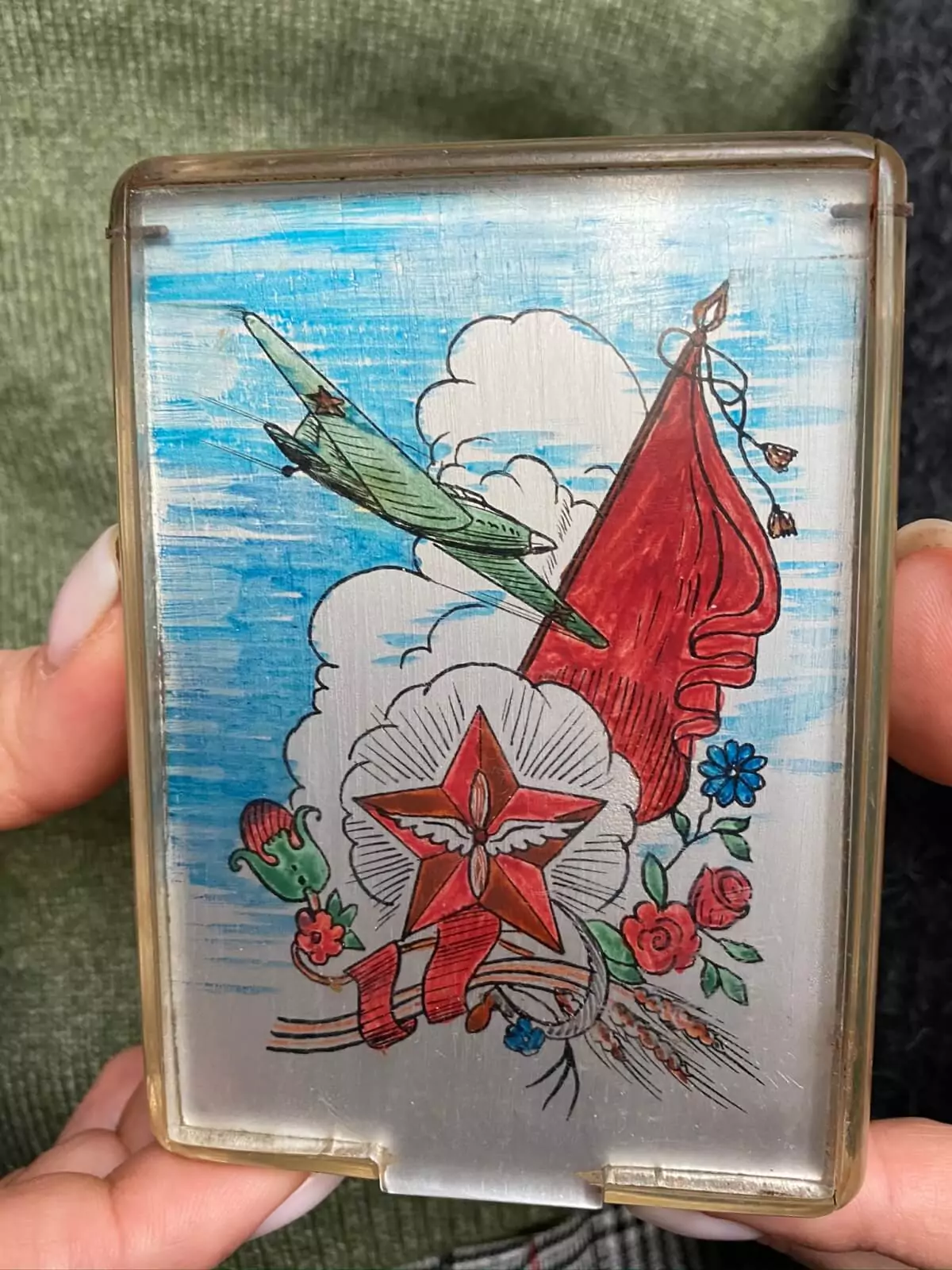
The larger tin carries a colour scene: a green aircraft with the red star in a blue sky, a red flag with tassels and, in the centre, the red star with wings and propeller, emblem of the Soviet military air force, surrounded by flowers, wheat ears, a sickle and an orange and black striped ribbon. The smaller tin repeats the winged star, the flowers, the sickle and the ribbon.
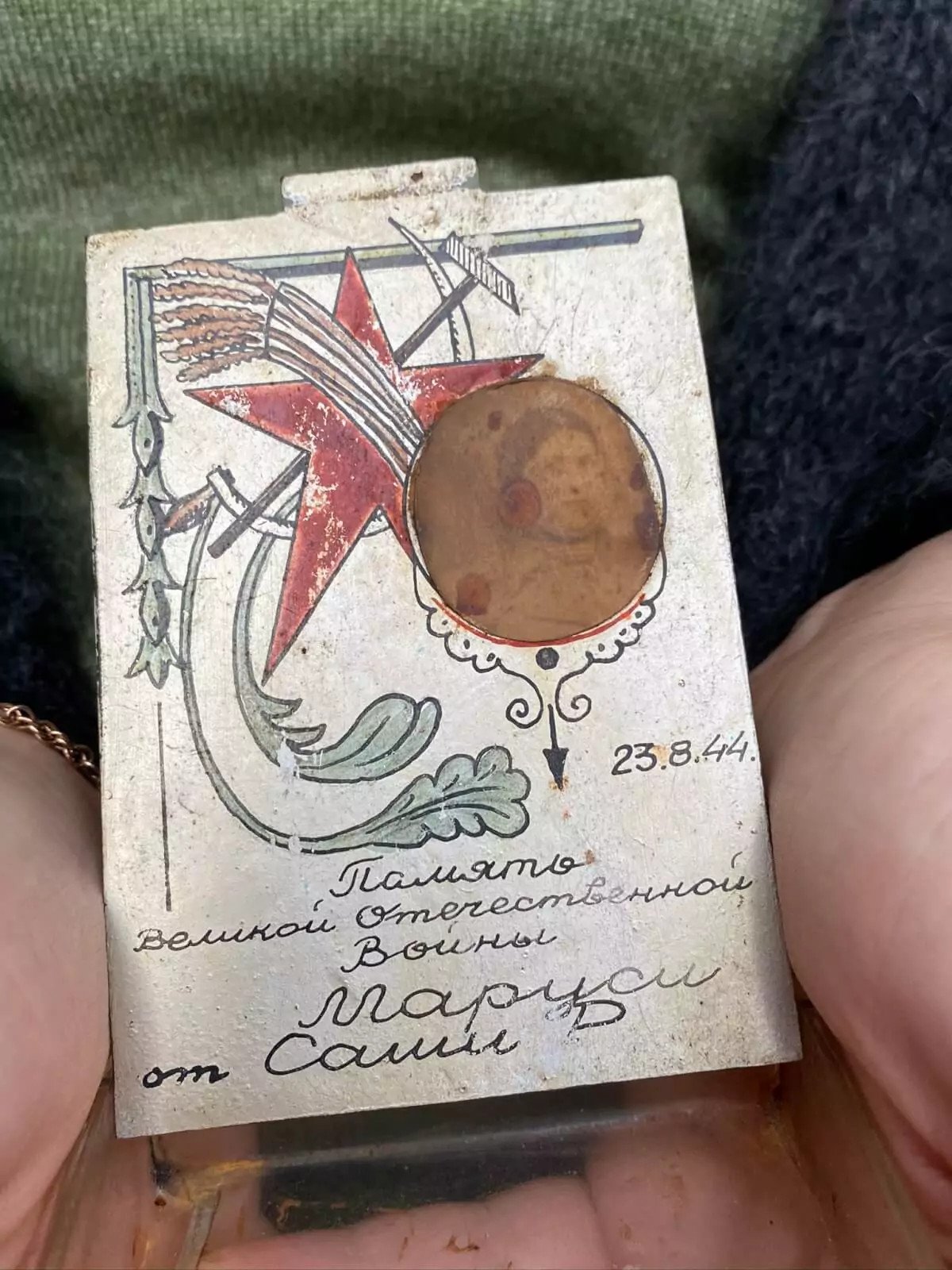
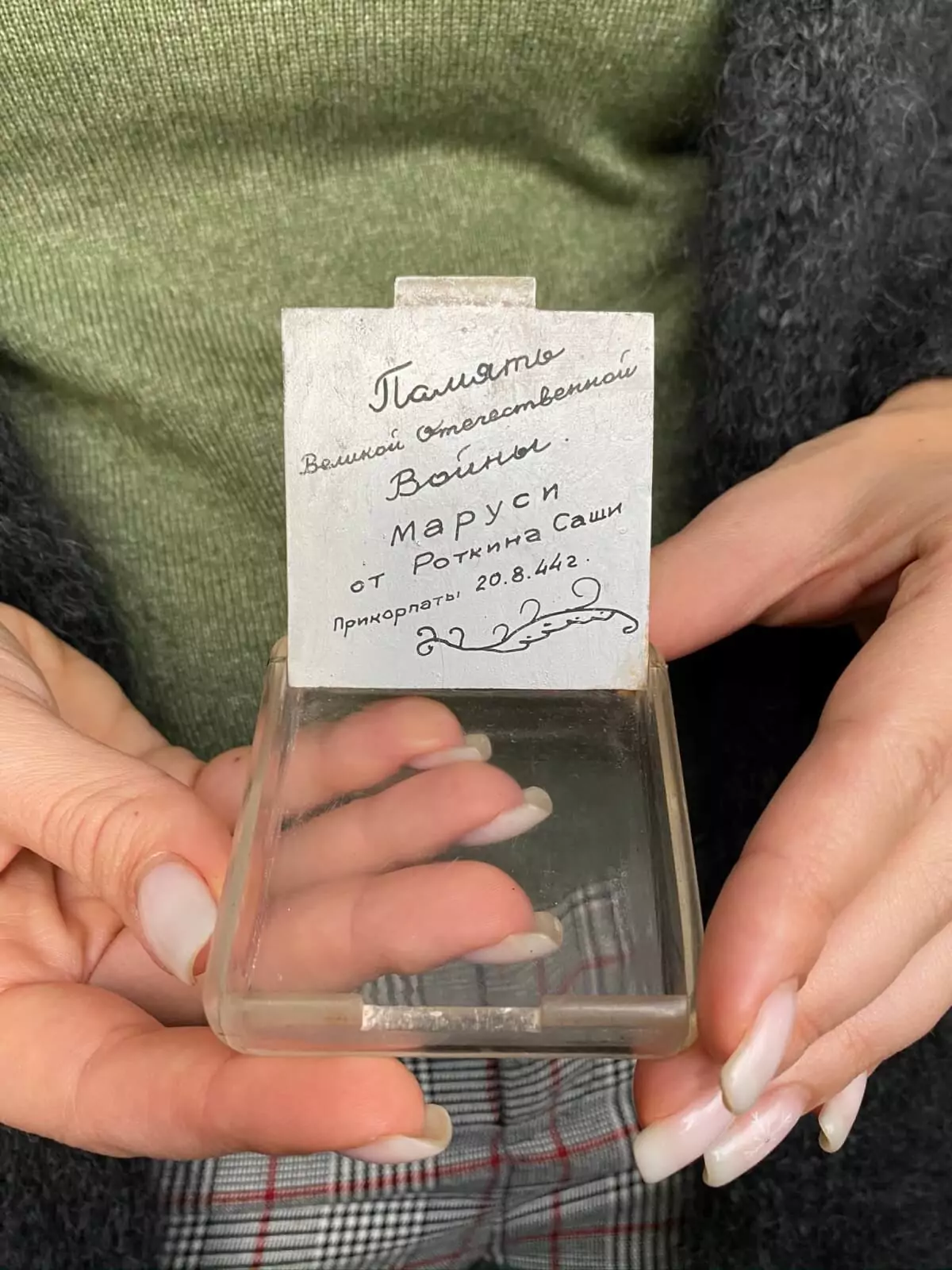
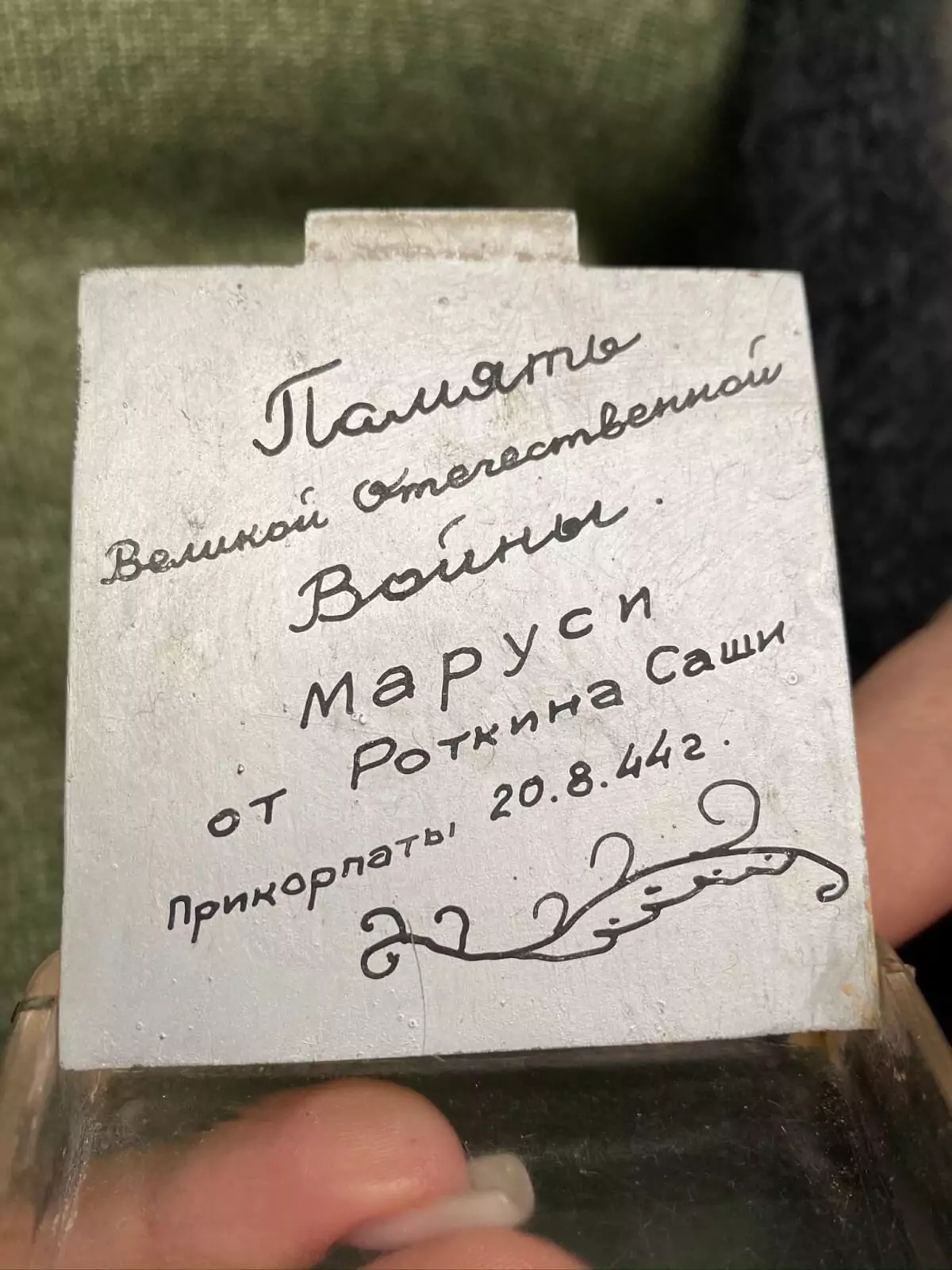
The inside of each lid bears a handwritten dedication. On the small tin: “Память Великой Отечественной Войны” (In memory of the Great Patriotic War), “Маруси от Роткина Саши” (To Marusya, from Sasha Rotkin), “Прикорпаты 20.8.44г.” (Carpathian foothills, 20 August 1944), followed by a flourish. On the larger tin, dated 23.8.44, the same wording “Маруси от Саши” (To Marusya, from Sasha) accompanies a small photographic portrait of a woman set in a painted medallion, with a red star, a sheaf of wheat, a sickle and oak leaves.
“Прикорпаты” is an approximate spelling of Прикарпатье (Prykarpattia), the Carpathian foothills of western Ukraine. In July and August 1944 the Red Army was fighting the Lvov-Sandomierz offensive there, and the 4th Ukrainian Front was set up in early August 1944 from the left wing of the 1st Ukrainian Front, ahead of the operations in the Carpathians. The air force emblem painted on both lids suggests the maker served in an aviation unit, without certainty.
Additional information
| Weight | 0.25 kg |
|---|---|
| Dimensions | 20 × 15 × 10 cm |