USSR Space Propaganda Porcelain - Sputnik Figurine Kokchetav Kazakhstan
$149.99Unique piece
USSR Space Propaganda Porcelain - Sputnik Figurine Kokchetav Kazakhstan
$149.99Unique piece
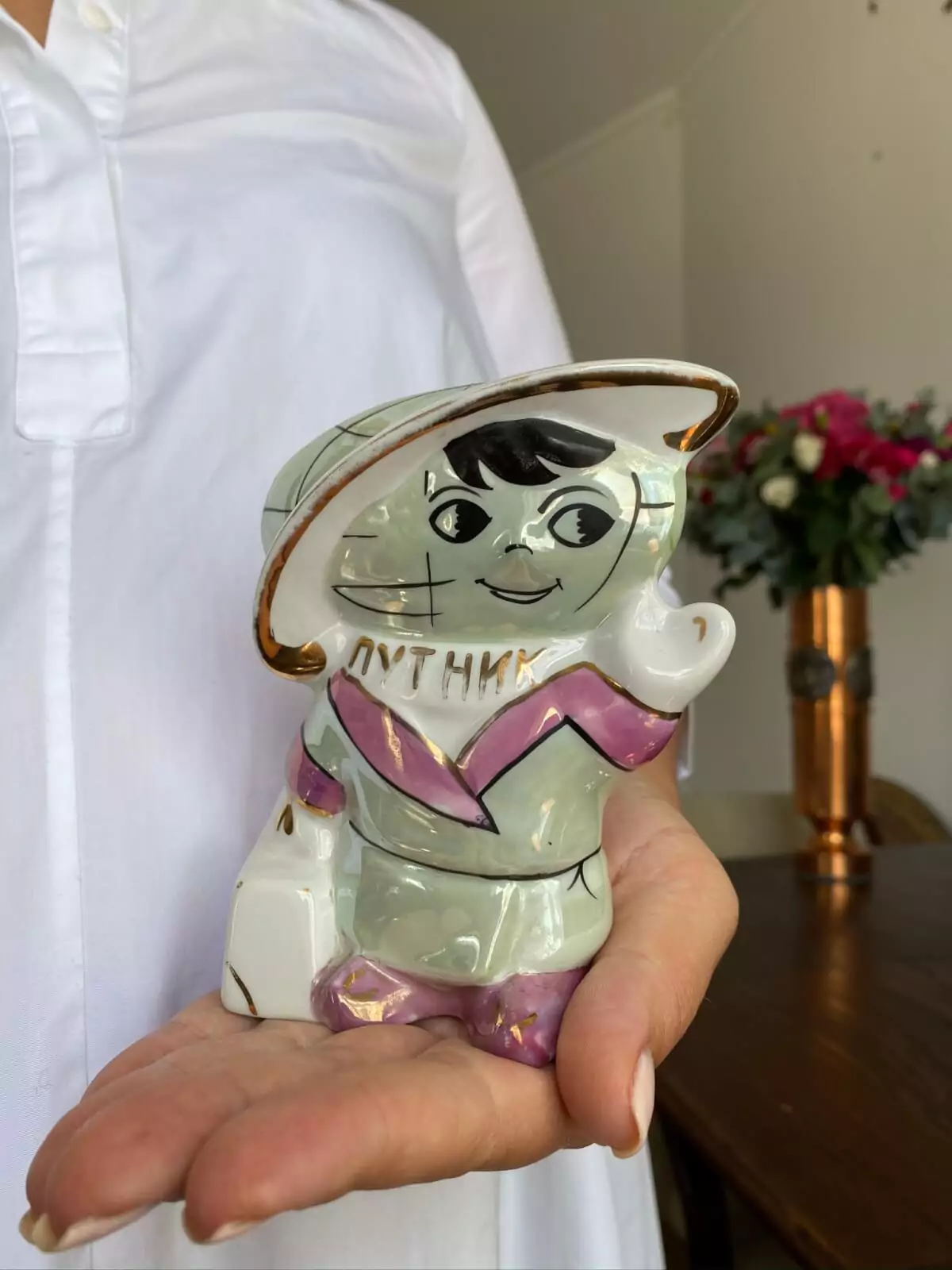
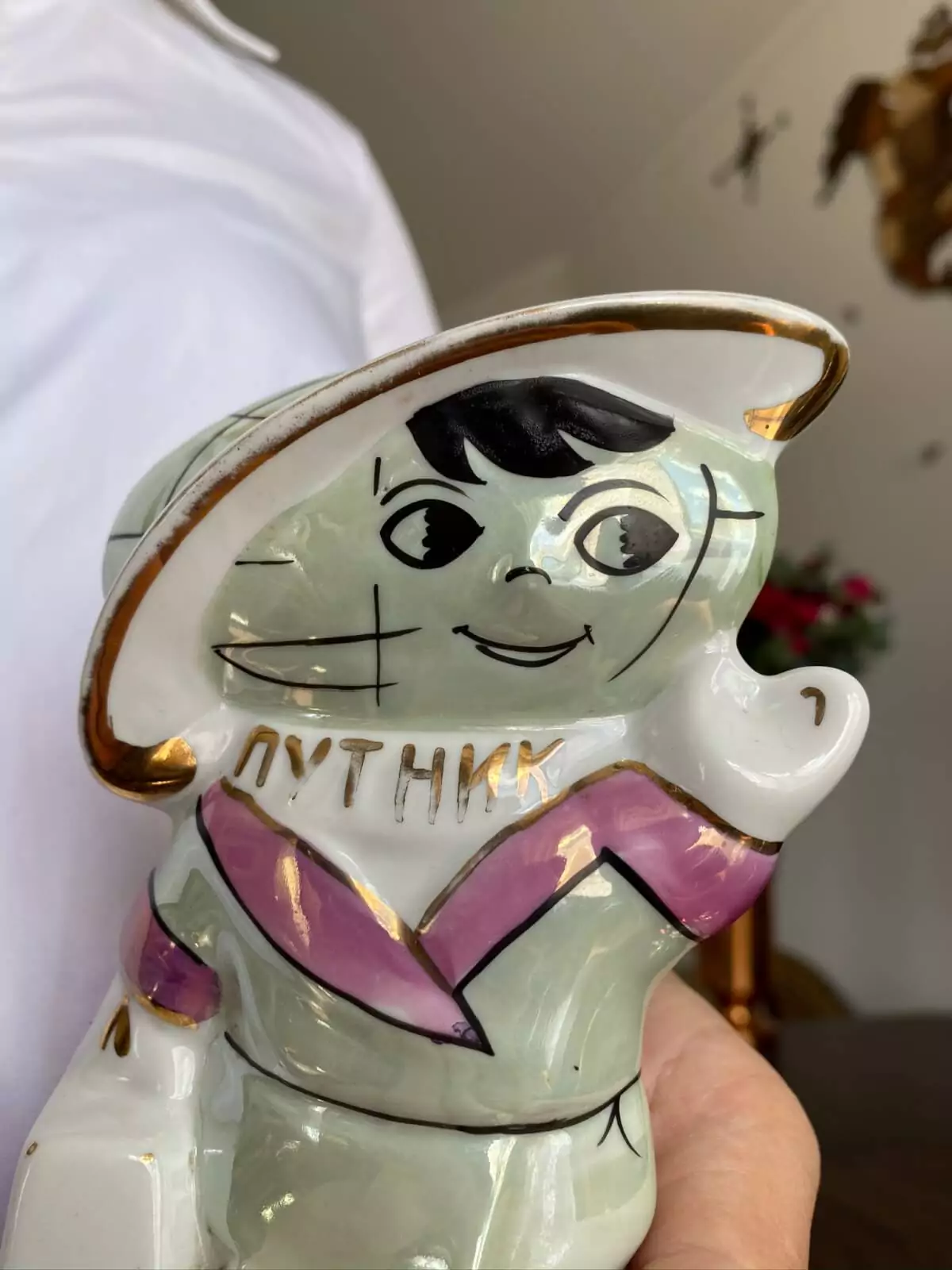
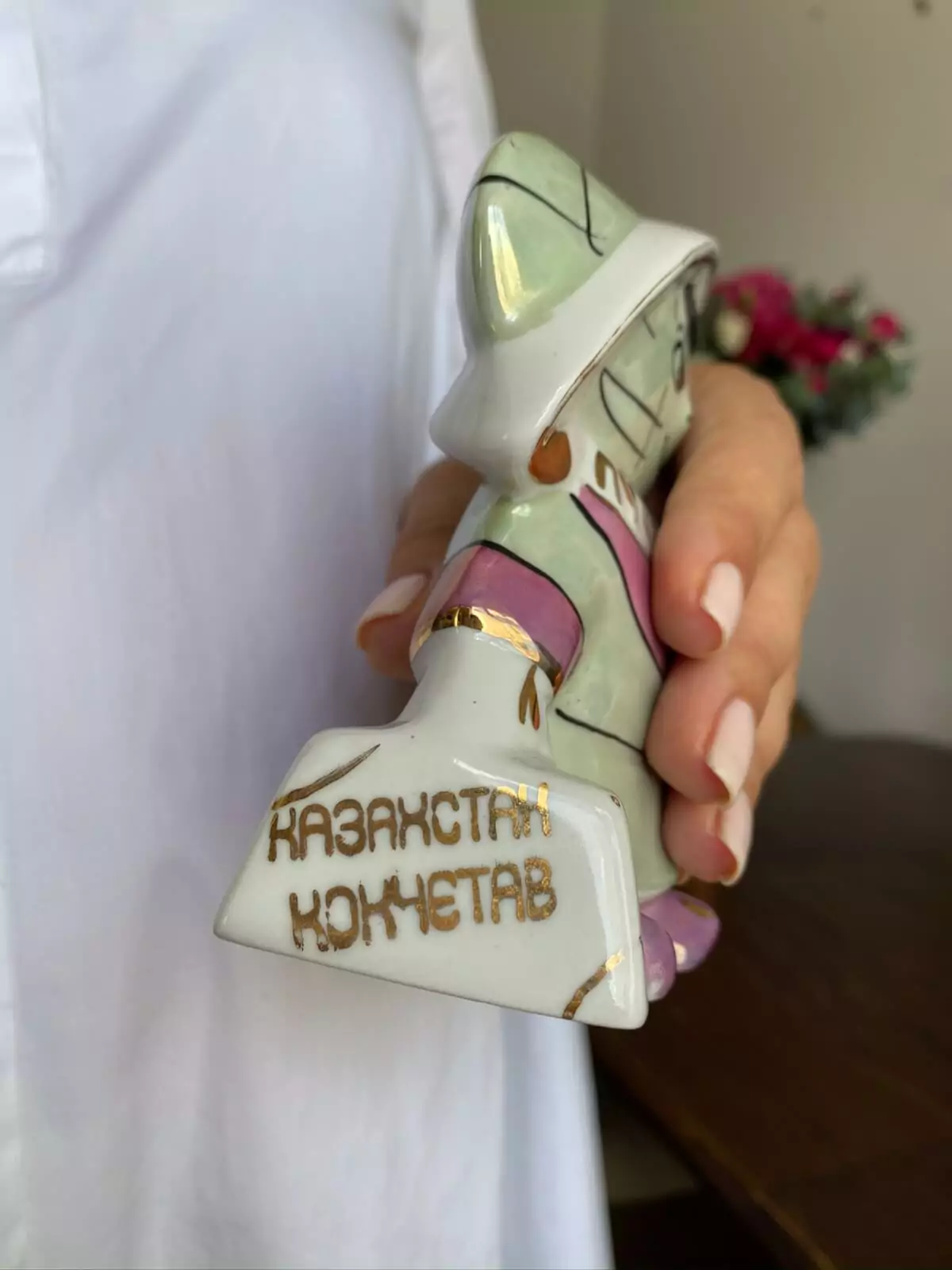
Soviet lustre porcelain figurine with gilding: a globe-headed traveller marked СПУТНИК (Sputnik), holding a suitcase inscribed КАЗАХСТАН КОКЧЕТАВ (Kazakhstan Kokchetav). A Soviet Kazakhstan souvenir on the theme of the first satellite.
1 in stock
Message received, dear comrade.
Our information desk usually replies within 24 hours at the address provided.Peak of the space race won by the USSR: Sputnik 1 (1957), Gagarin's flight (1961), Tereshkova the first woman in orbit (1963). Khrushchev leads de-Stalinisation until 1964, then Brezhnev ushers in stagnation. Scientific and cultural high point.
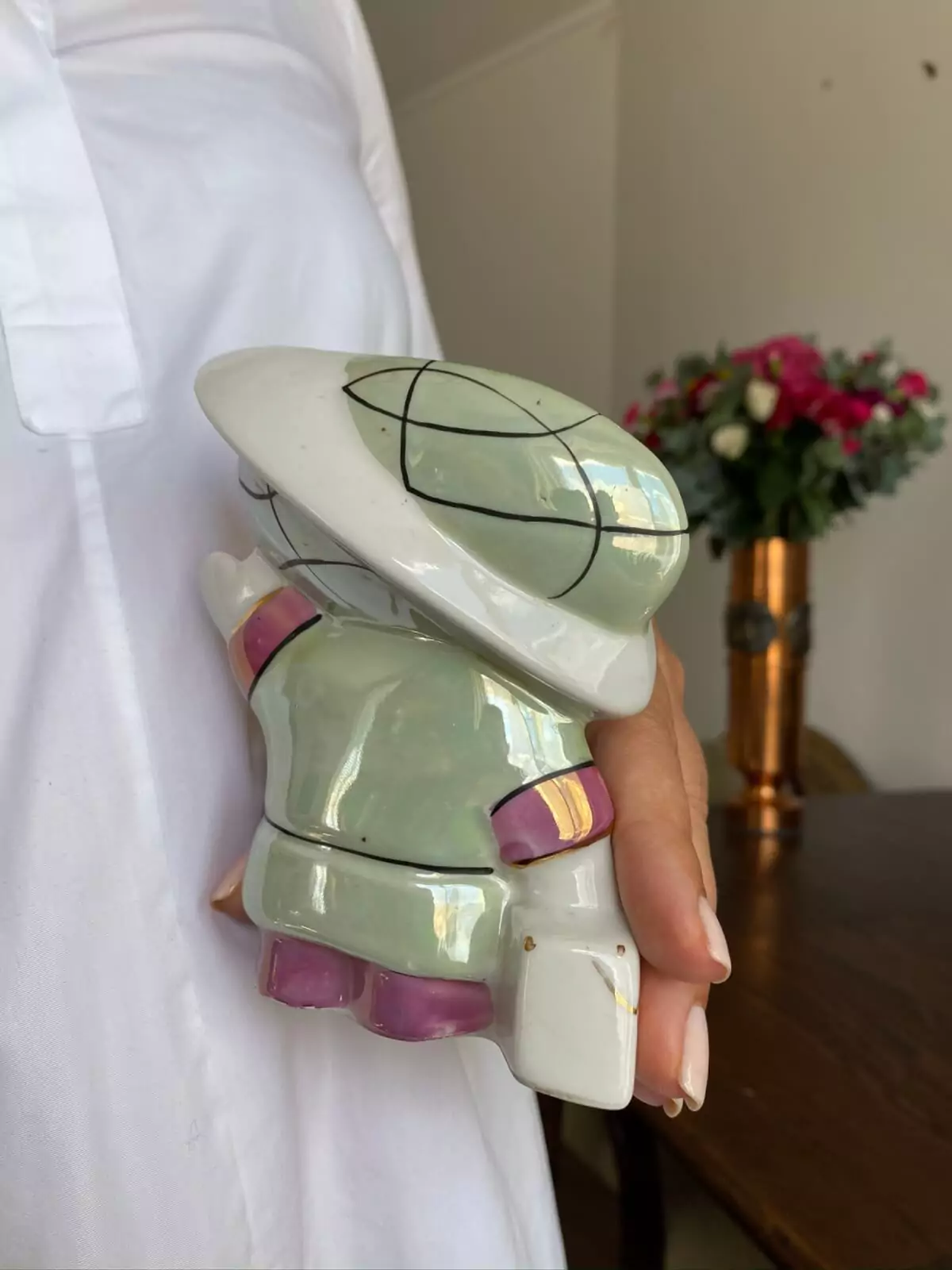
Soviet glazed porcelain figurine with a pale green and pink lustre finish and gilding, on the Sputnik theme. The figure’s head is a globe drawn with black meridians, circled by a wide gold-lined ring that suggests a satellite orbit. On the chest, the gold letters ПУТНИК complete this ring, whose end forms the initial С, so that it reads СПУТНИК (Sputnik). He raises one arm in greeting and holds in the other hand a white suitcase inscribed in gold letters КАЗАХСТАН КОКЧЕТАВ (Kazakhstan Kokchetav).
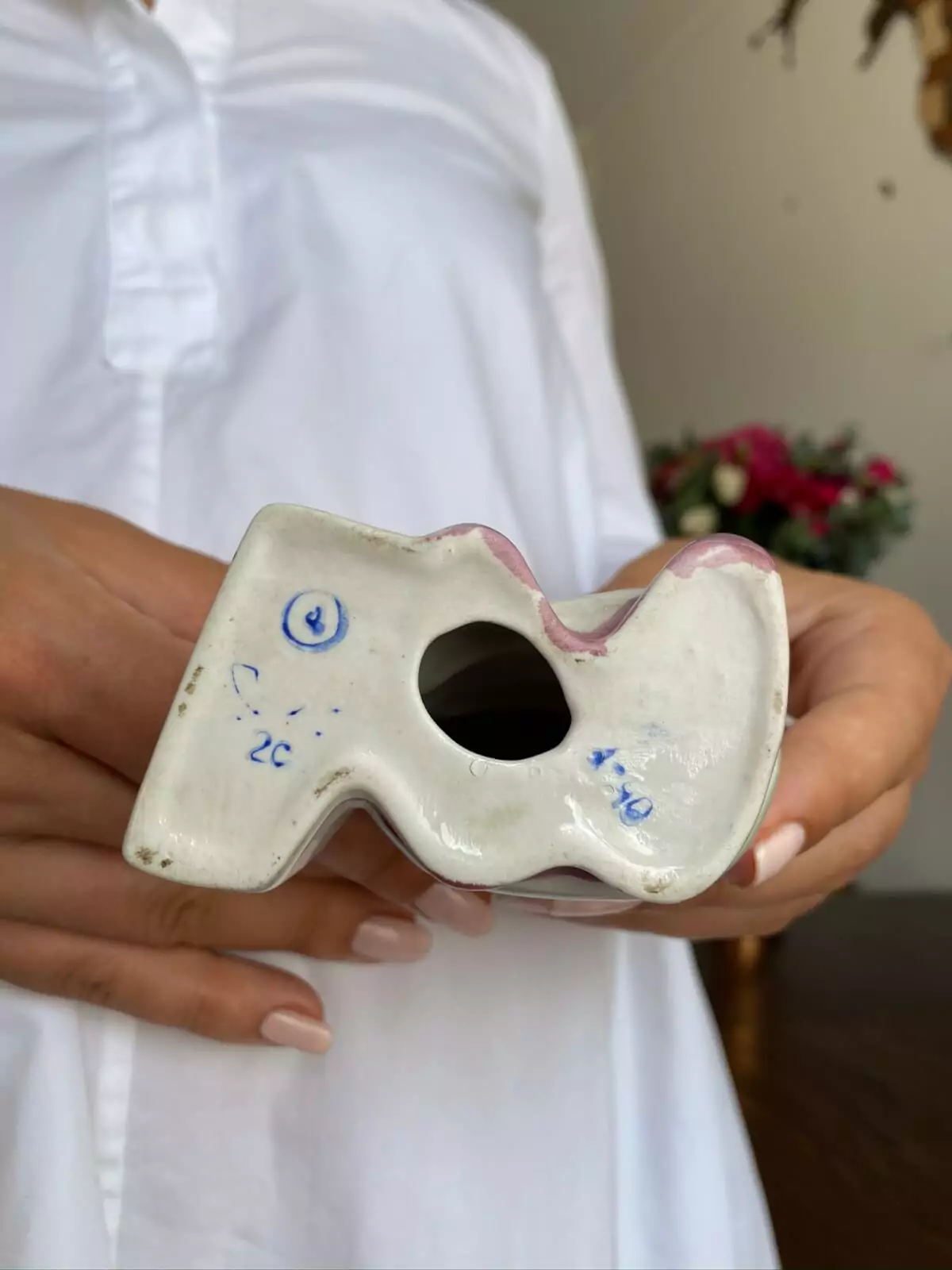
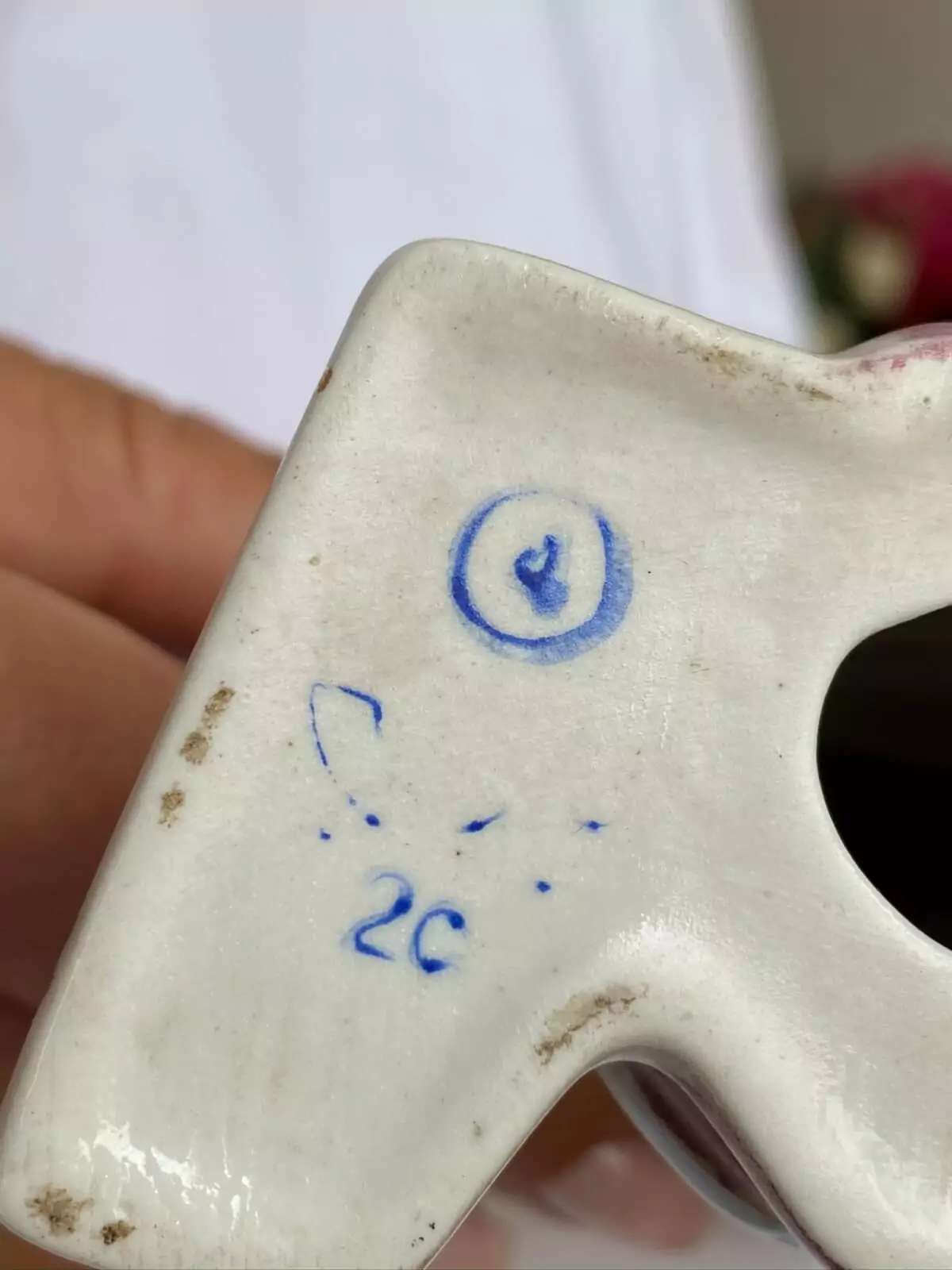
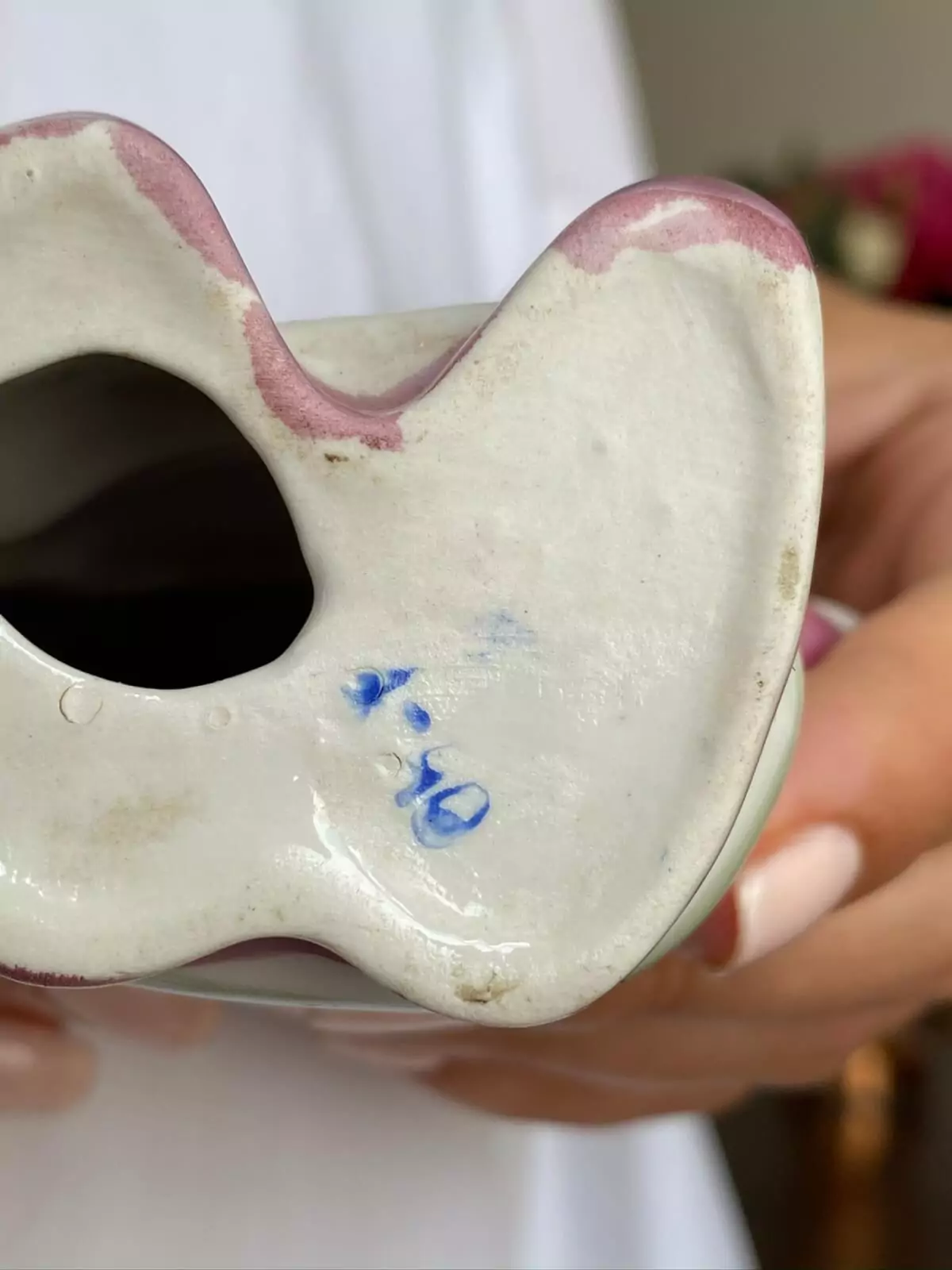
The base, which has an opening, carries marks painted in blue: a round stamp, the inscription “2с” and a number.
The launch of Sputnik 1 on 4 October 1957, from the Baikonur cosmodrome in the Kazakh SSR, turned the word спутник (satellite) into a symbol of Soviet achievement, used on a wide range of everyday objects and souvenirs. In Russian, спутник also means travelling companion, a double meaning taken up by this small traveller with his suitcase. Kokchetav (Кокчетав), renamed Kokshetau in 1993, was the administrative centre of a region in northern Soviet Kazakhstan, and the inscription makes this figurine a souvenir of the town.
Additional information
| Weight | 0.2 kg |
|---|---|
| Dimensions | 20 × 15 × 10 cm |