Propaganda Vase - Sputnik, Aurora, Reichstag - USSR - Copper
€1,150.00Unique piece
Propaganda Vase - Sputnik, Aurora, Reichstag - USSR - Copper
€1,150.00Unique piece
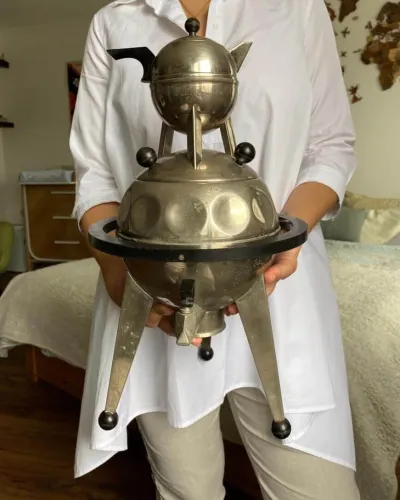
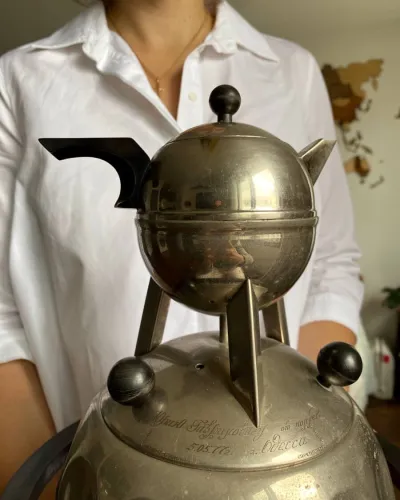
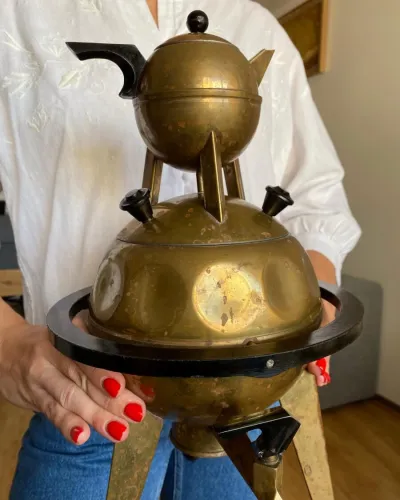
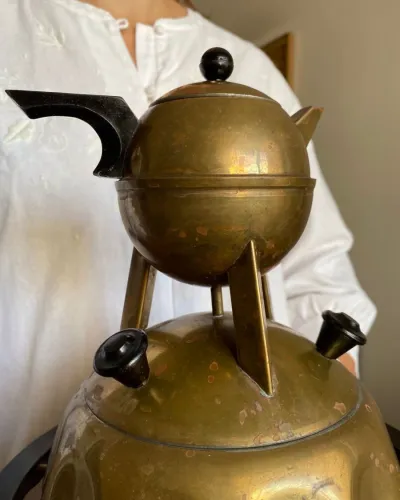
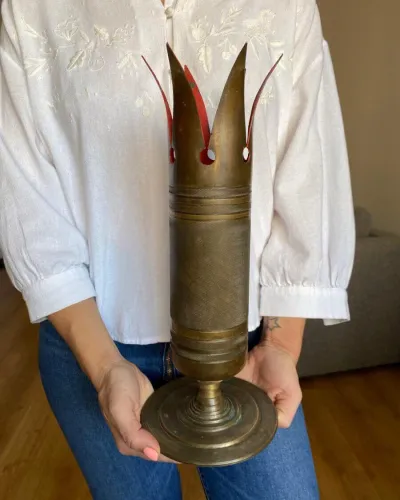
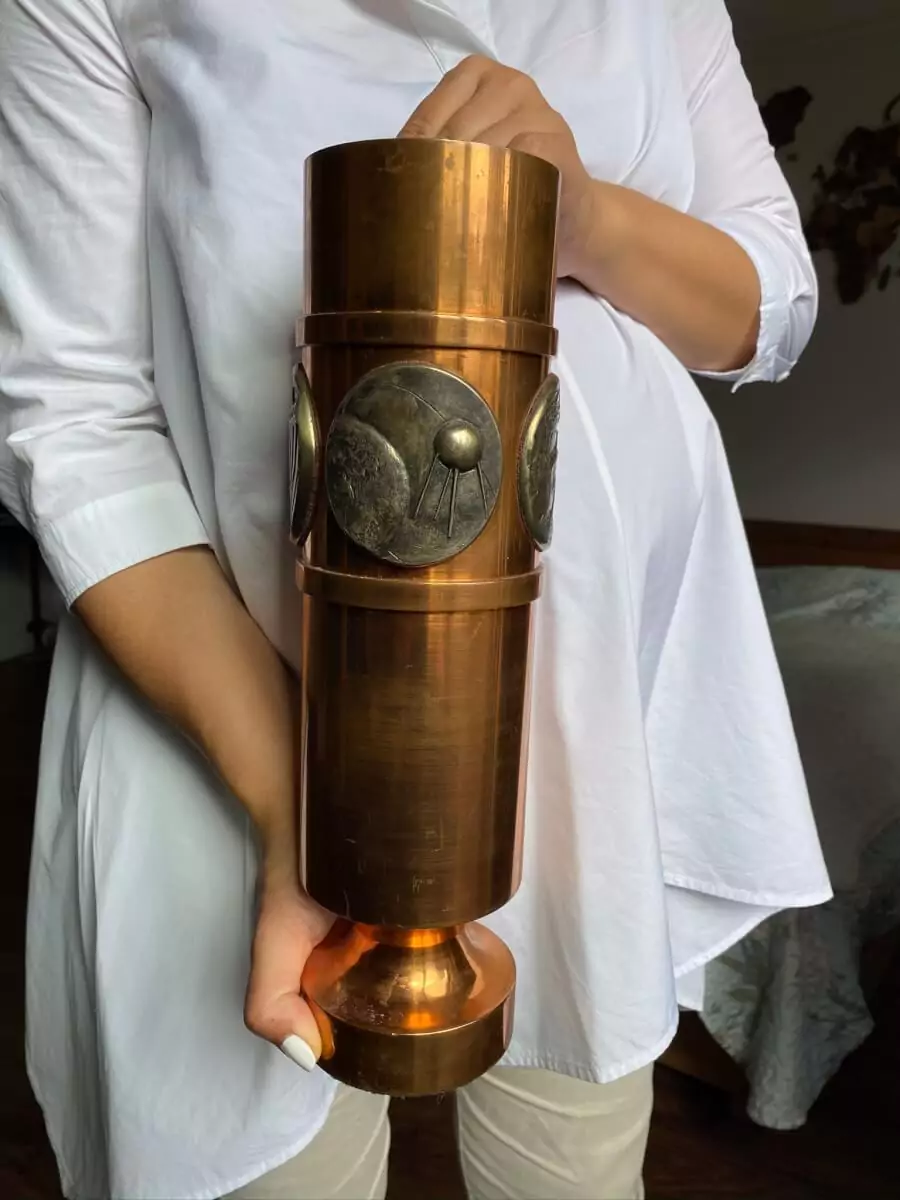
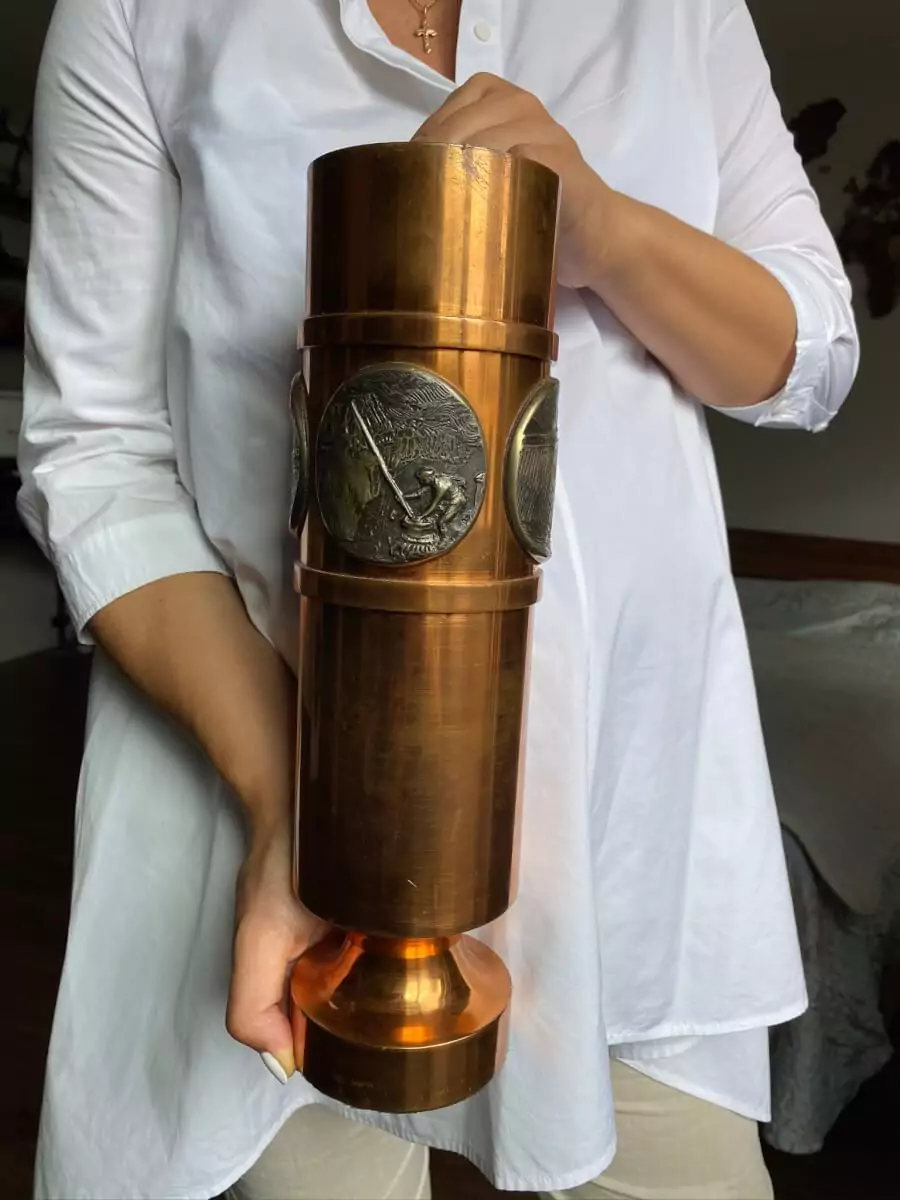
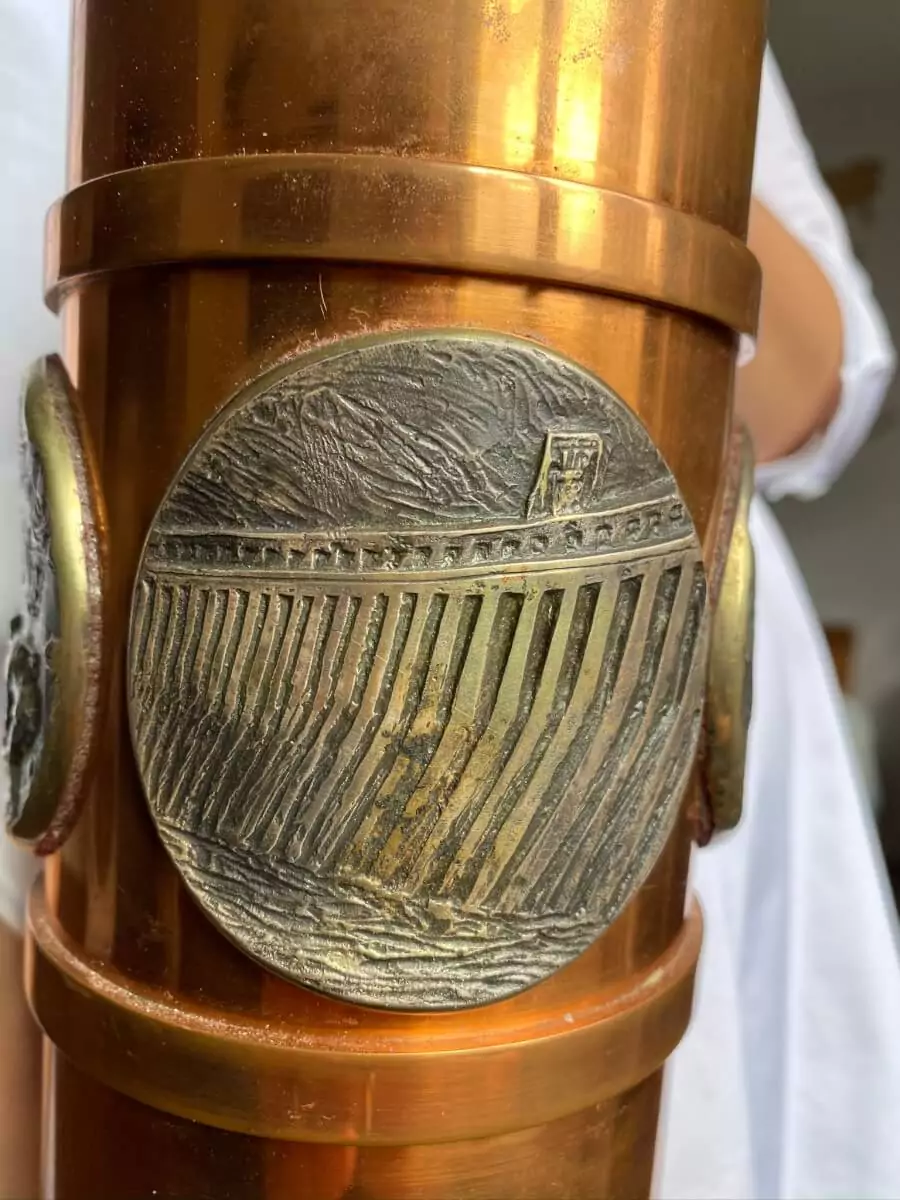
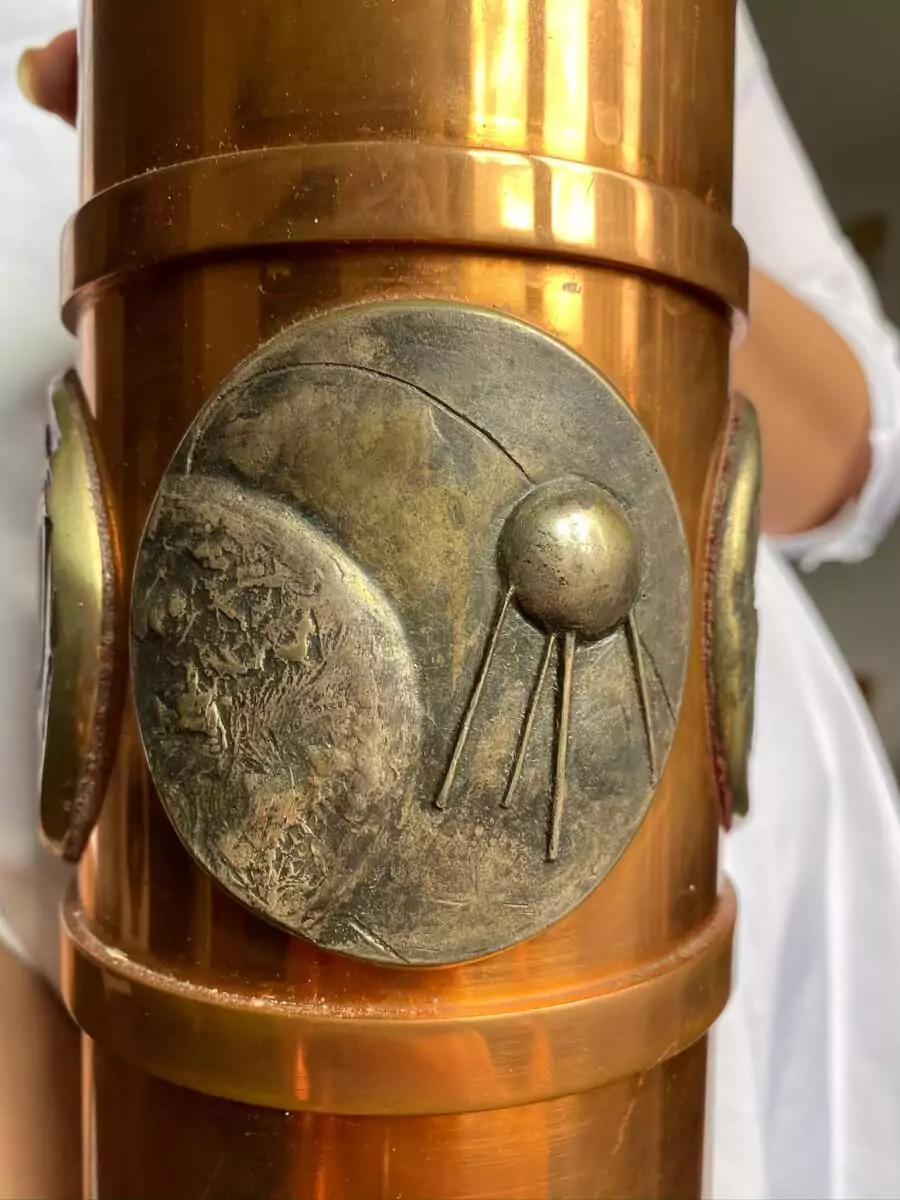
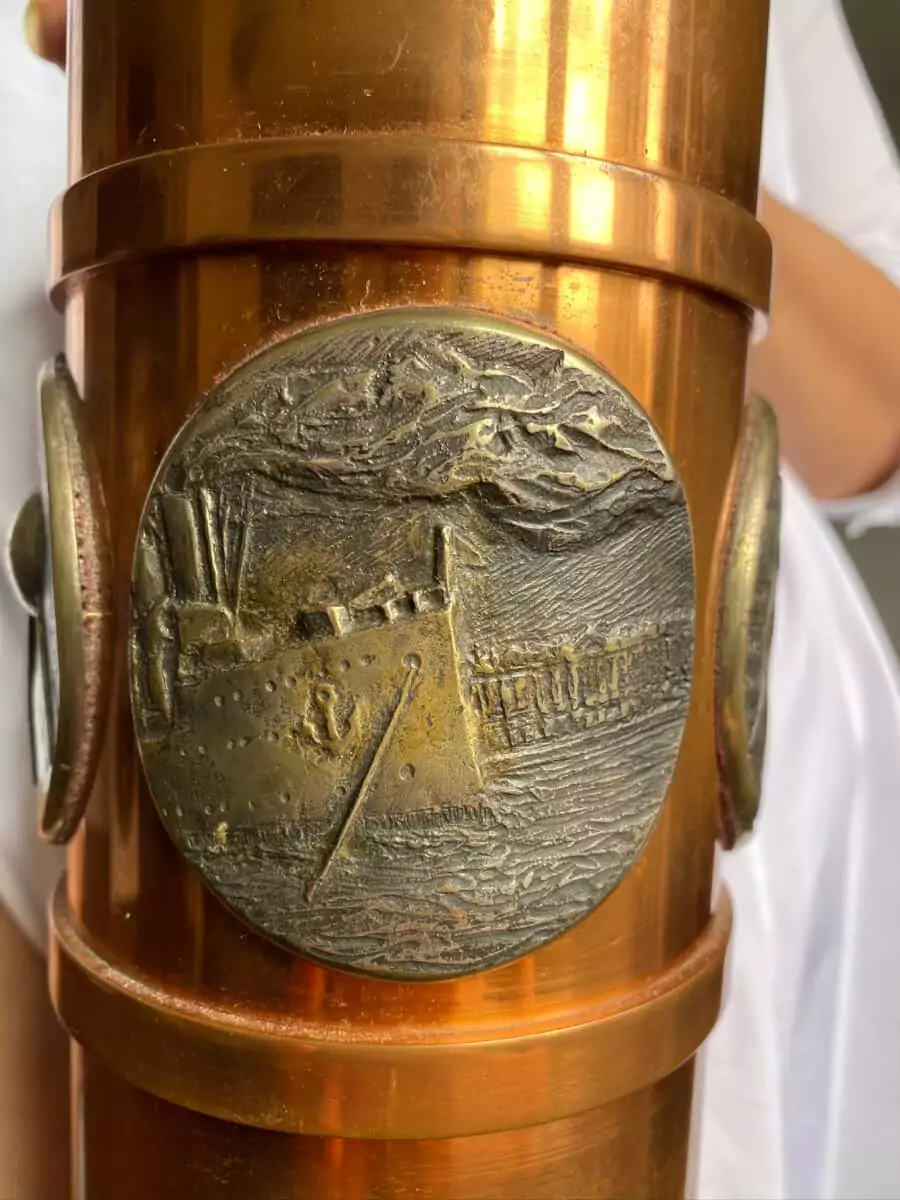
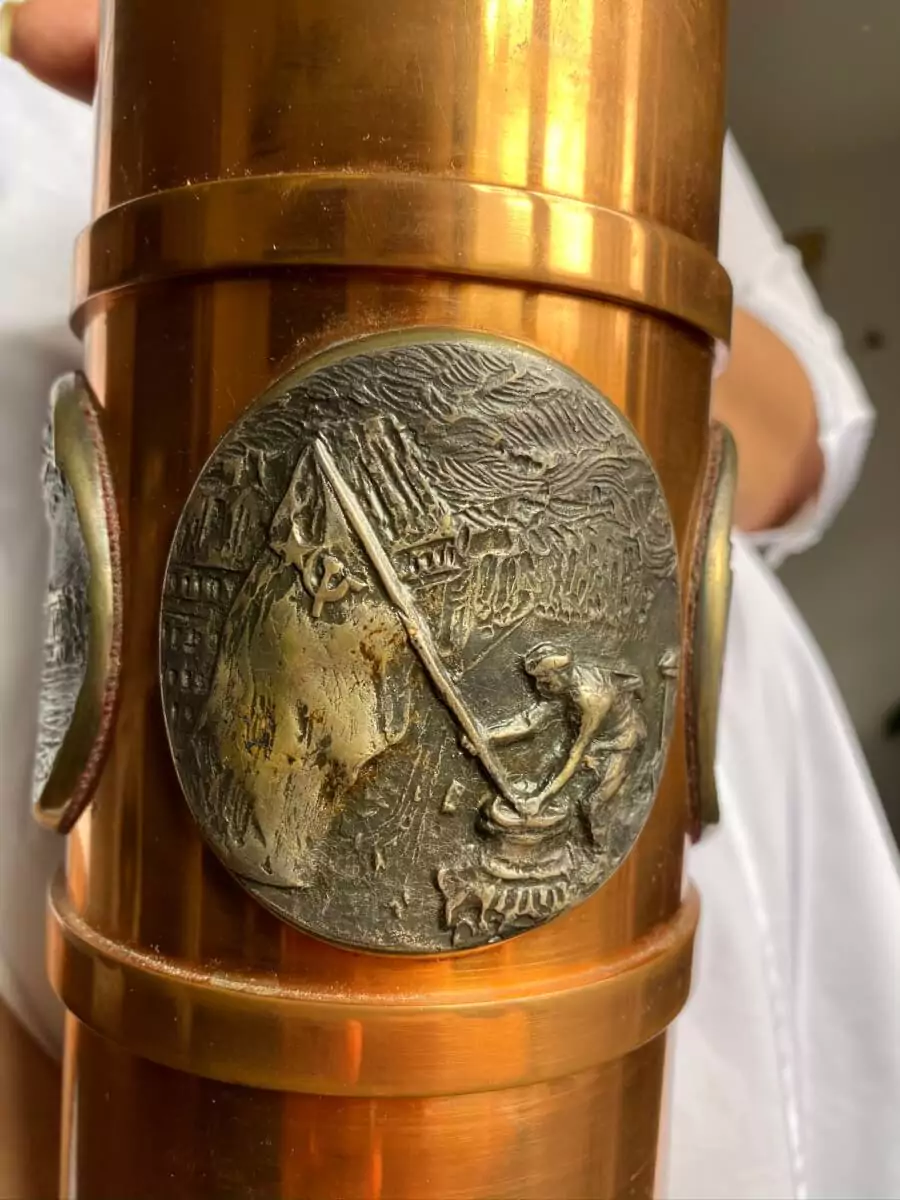
Soviet propaganda vase in copper, set with four bas-relief medallions: Sputnik, the Dnieper dam, the taking of the Reichstag and the cruiser Aurora. 37 cm high, 10 kg.
1 in stock
Message received, dear comrade.
Our information desk usually replies within 24 hours at the address provided.Peak of the space race won by the USSR: Sputnik 1 (1957), Gagarin's flight (1961), Tereshkova the first woman in orbit (1963). Khrushchev leads de-Stalinisation until 1964, then Brezhnev ushers in stagnation. Scientific and cultural high point.


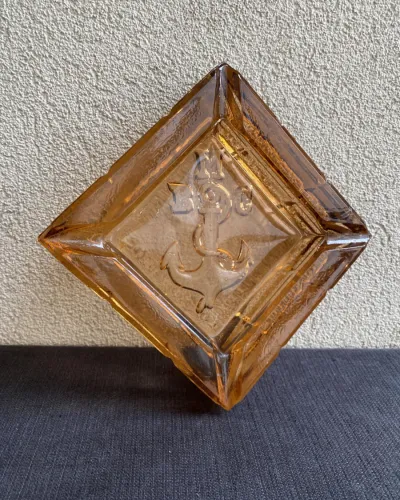
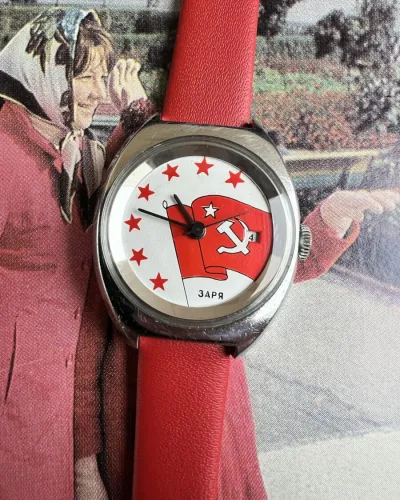
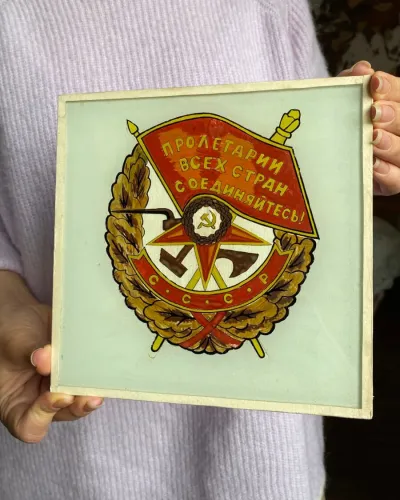
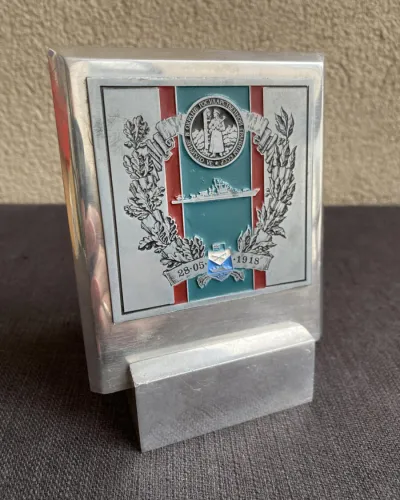
A unique Soviet propaganda piece in the form of a copper vase, set with four bas-relief medallions showing landmark moments in the history of the Soviet Union: the Sputnik satellite orbiting the Earth, the hydroelectric dam on the Dnieper, the taking of the Reichstag in the Second World War and the cruiser Aurora during the October Revolution of 1917.
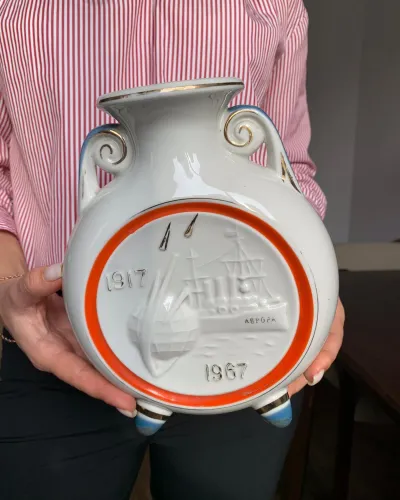
The Aurora, launched in 1900 for the Imperial Russian Navy, fired a single blank round from the Neva in Petrograd at 21:40 on 25 October 1917 (7 November in the Western calendar). The shot served as the signal for the storming of the Winter Palace. The ship became a museum in Leningrad in 1956.
The Dnieper hydroelectric station (DniproHES) at Zaporizhzhia was begun in 1927 and brought into service in 1932, one of the largest power stations in the USSR. Its 760-metre dam was destroyed in 1941 and rebuilt, with the work completed in 1950.
On the Berlin medallion a soldier plants the flag bearing the star, hammer and sickle in front of a building, probably the Reichstag, over which the Victory Banner was raised in 1945. Sputnik 1, the first artificial satellite, was launched by the USSR on 4 October 1957.
The Sputnik launch makes 1957 the earliest possible date for the vase. The heavily textured modelling of the medallions and the shape of the vase point probably to the 1960s.
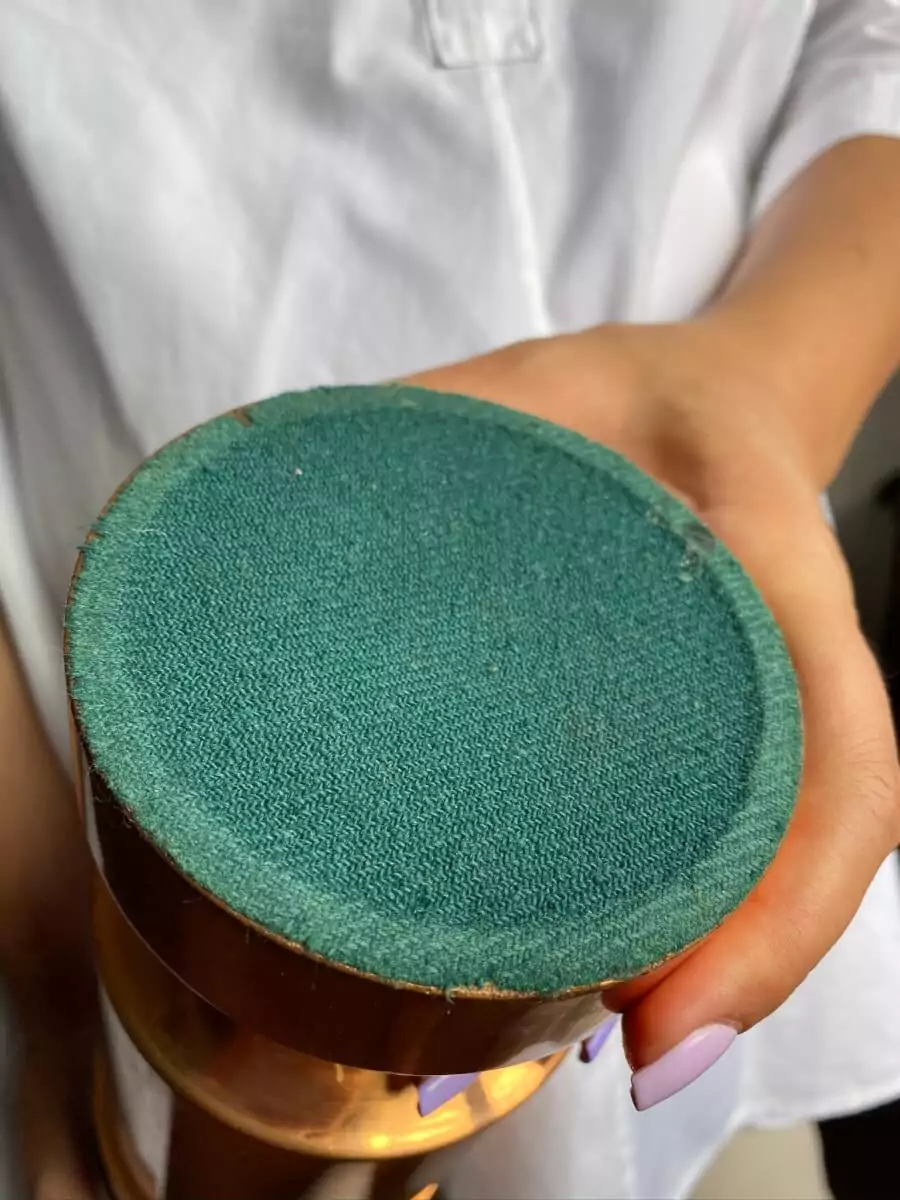
The vase is copper. The medallions, which a magnet does not hold to, are most likely chrome-plated brass. It stands 37 cm high with a diameter of 11 cm and weighs 10 kg. The base is lined with fabric so that it does not scratch the surface it stands on. The body shows scratches and signs of use, and the medallions have a dark patina in the recesses. As far as we know, only one example of this vase exists.
Additional information
| Weight | 11 kg |
|---|---|
| Dimensions | 11 × 11 × 37 cm |