Soviet S-200 Missile Desk Model - SA-5 Gammon - Aluminium on Wood Base
$333.99Unique piece


Soviet S-200 Missile Desk Model - SA-5 Gammon - Aluminium on Wood Base
$333.99Unique piece
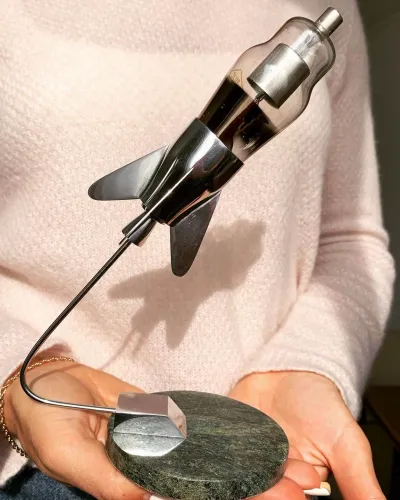
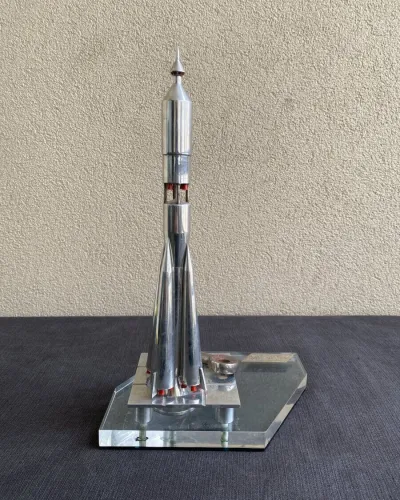
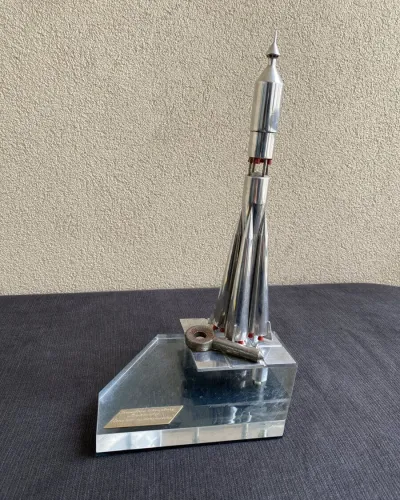
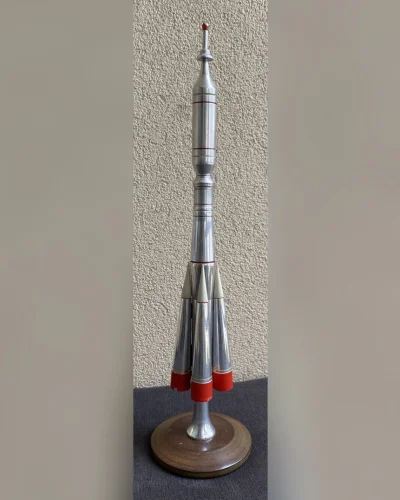
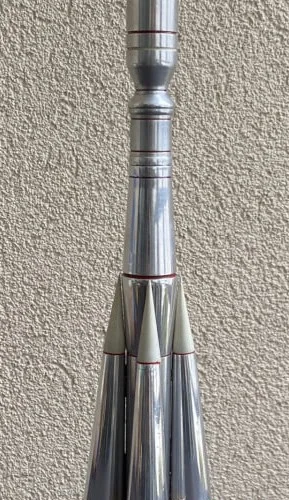
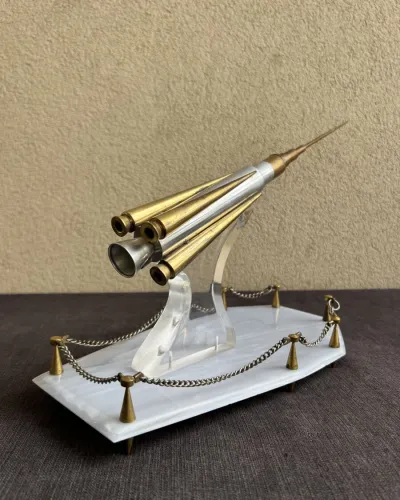
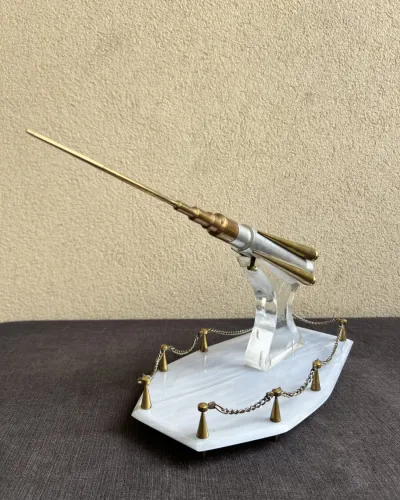
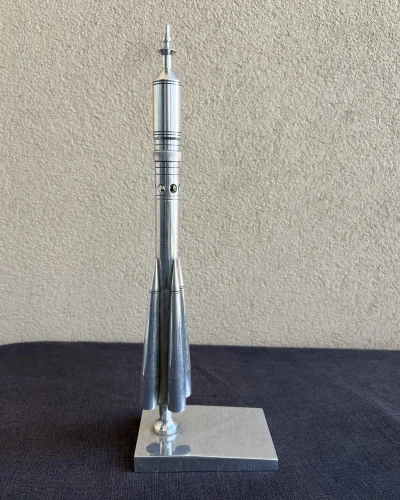
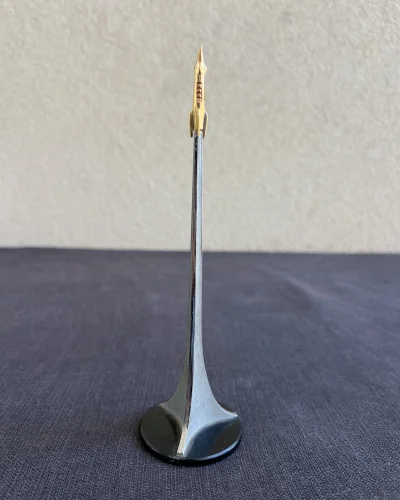
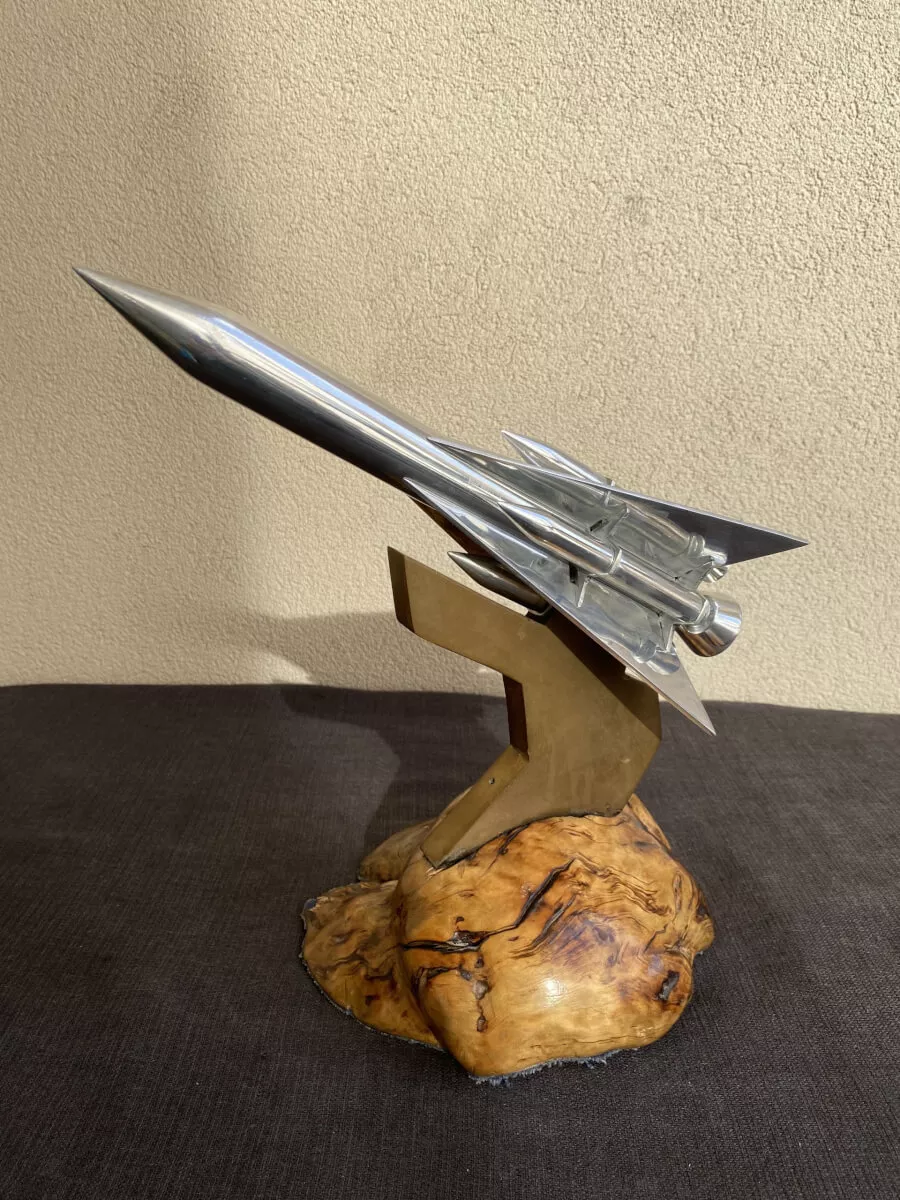
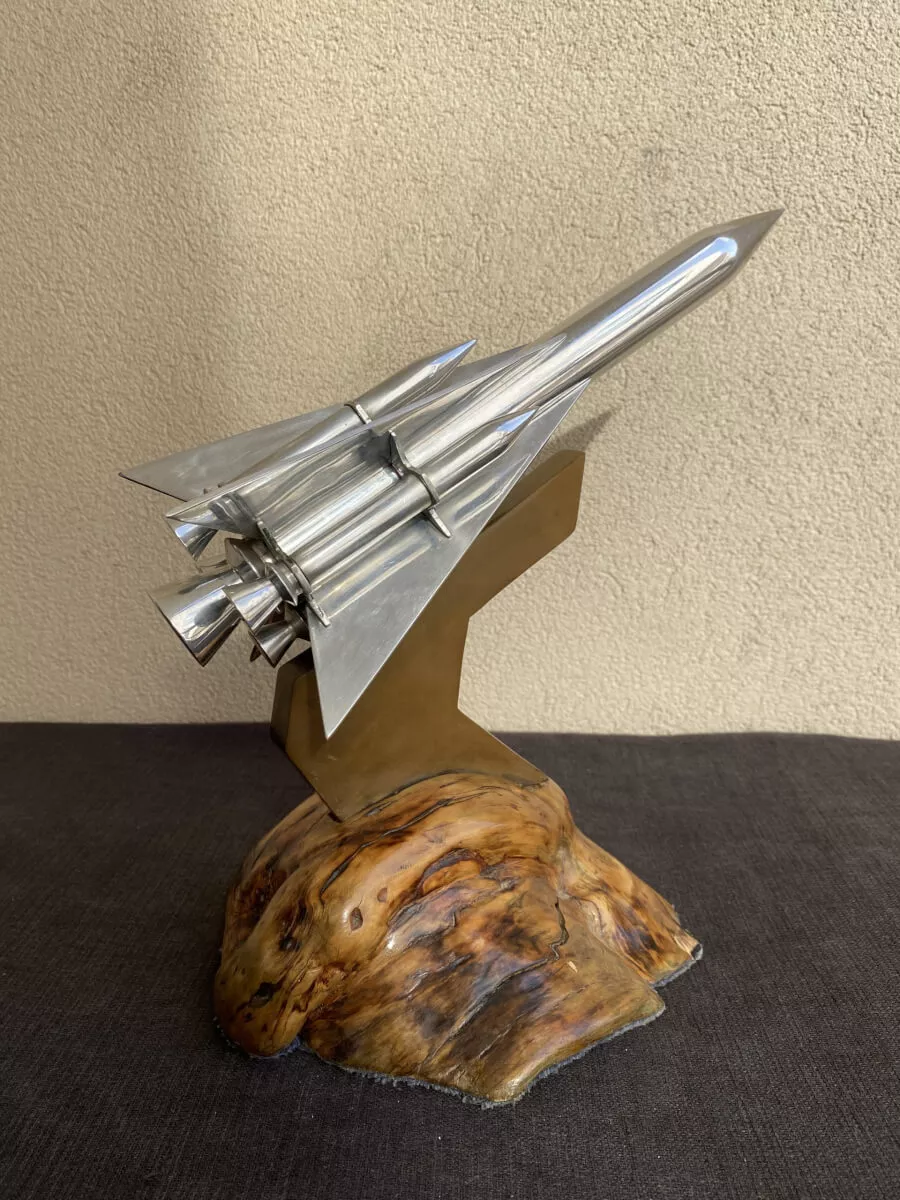
Soviet desk model of the S-200 air defence missile (SA-5 Gammon) in polished aluminium, with its four strap-on boosters and delta wings, mounted on a Z-shaped support and a burl wood base.
1 in stock
Message received, dear comrade.
Our information desk usually replies within 24 hours at the address provided.Peak of the space race won by the USSR: Sputnik 1 (1957), Gagarin's flight (1961), Tereshkova the first woman in orbit (1963). Khrushchev leads de-Stalinisation until 1964, then Brezhnev ushers in stagnation. Scientific and cultural high point.
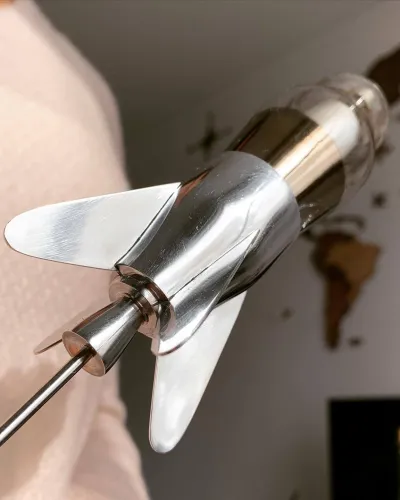
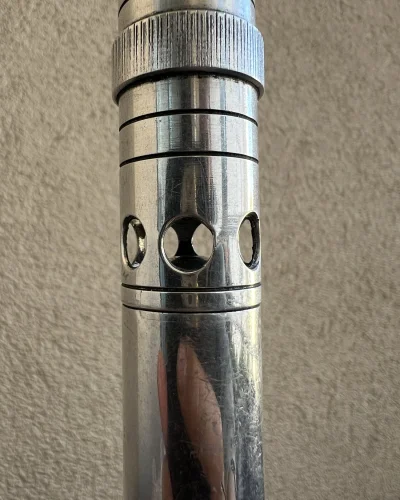
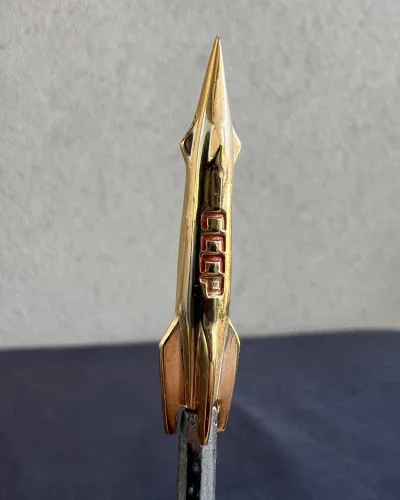
Desk model of the Soviet S-200 surface-to-air missile, shown in launch position with the nose pointing skywards. The missile body, its four delta wings and the four strap-on boosters clustered around the main body, fitted with small fins, are in polished aluminium. Each booster is held by its collars and ends in a nozzle, as on the full-size missile. The model sits on a stylised Z-shaped support fixed to a base cut from burl wood with strong grain, lined with blue felt underneath. Materials: aluminium, bakelite, wood.
The S-200, known to NATO as the SA-5 Gammon, was designed in the USSR in the early 1960s to intercept bombers and reconnaissance aircraft at long distance. It entered service in 1967 and became the longest-range air defence system in the Soviet arsenal: 160 km for the first version, up to 300 km for the S-200M and S-200D. Its 5V21 missile is launched by four solid-fuel boosters that drop away after lift-off, after which the main engine takes over.
The system was exported to many countries allied with the USSR and is still in service in several of them today, including Iran, Syria, Kazakhstan, Turkmenistan and Ukraine. Very good display condition.
Additional information
| Weight | 2 kg |
|---|---|
| Dimensions | 40 × 30 × 20 cm |