Bronze Plaque Makarov - Yuzhmash Director - R-36 SS-18 Missiles
$1,482.99Unique piece
Bronze Plaque Makarov - Yuzhmash Director - R-36 SS-18 Missiles
$1,482.99Unique piece
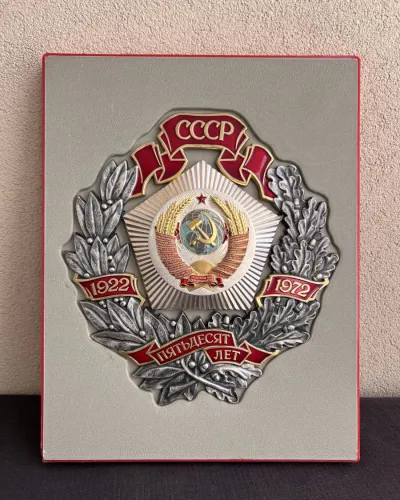
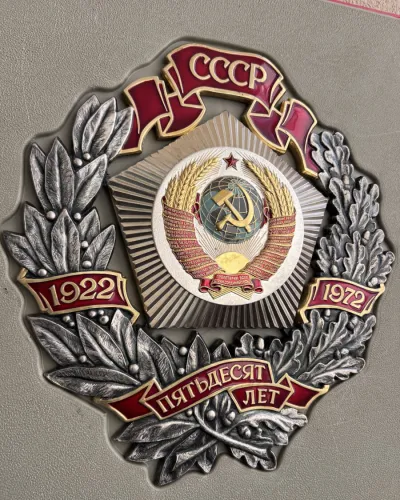
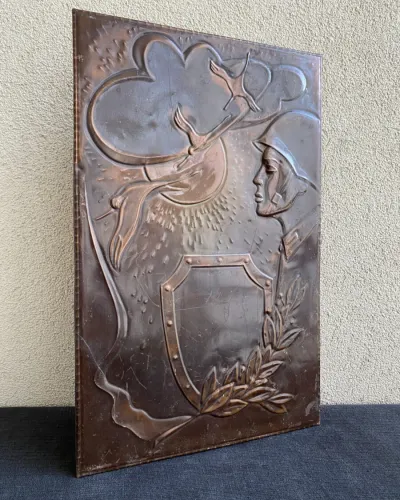
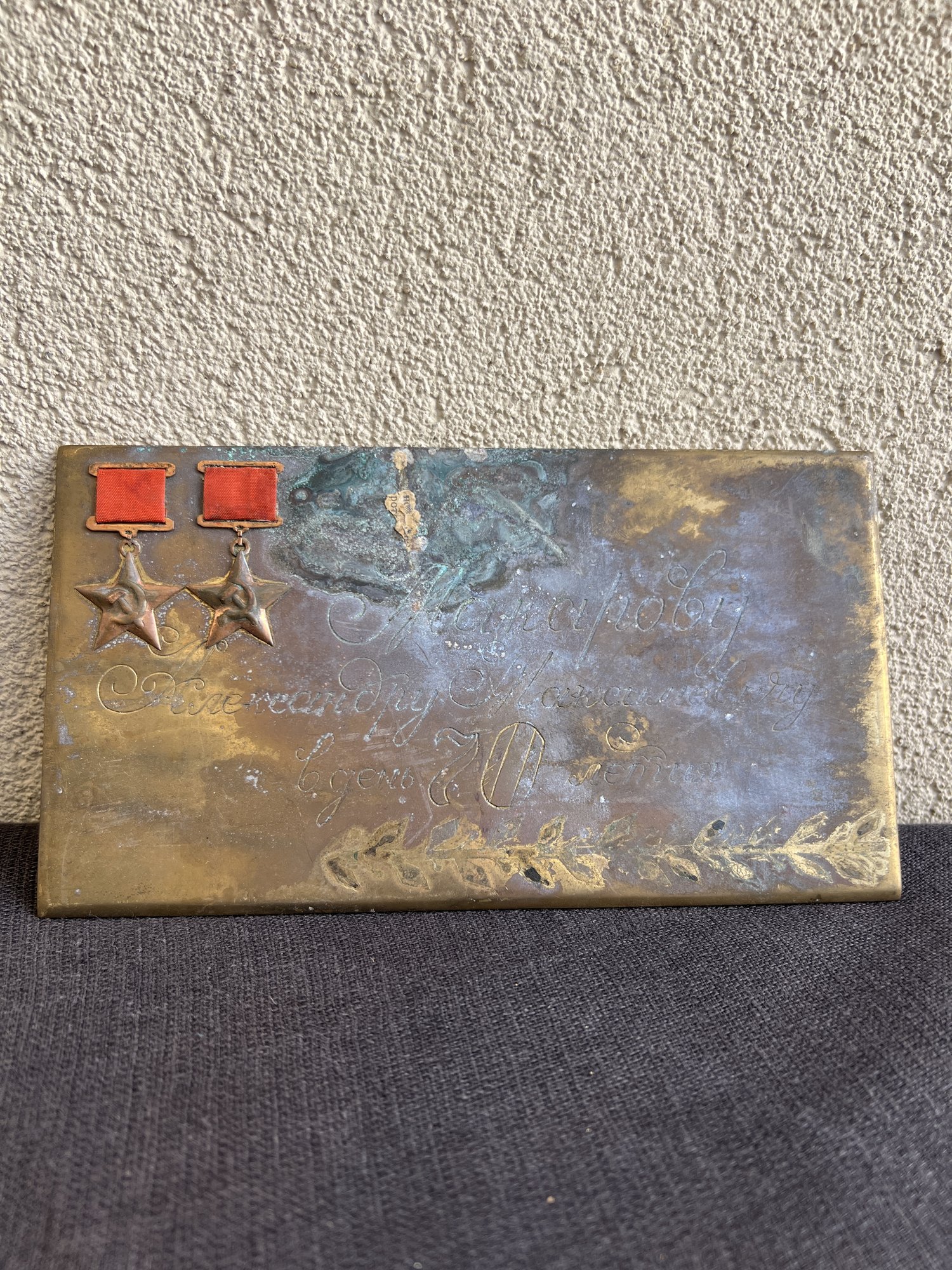
Hand engraved Soviet bronze plaque marking the 70th birthday of Aleksandr Maksimovich Makarov, twice Hero of Socialist Labour.
He was the director of the Yuzhmash missile and launcher plant, whose second star and 70th birthday both fell in 1976. A one-off piece with heavy period patina.
1 in stock
Message received, dear comrade.
Our information desk usually replies within 24 hours at the address provided.The Brezhnev era. Détente with the West, SALT treaties, the Apollo-Soyuz mission. Economic stagnation and growing corruption.
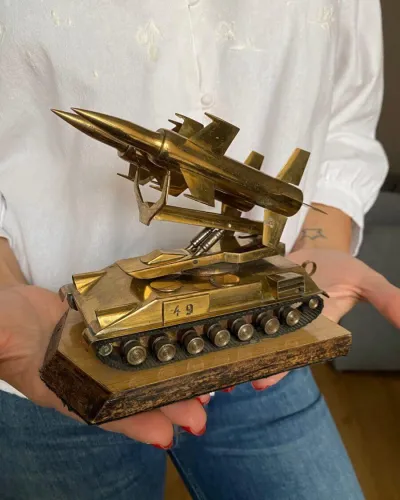
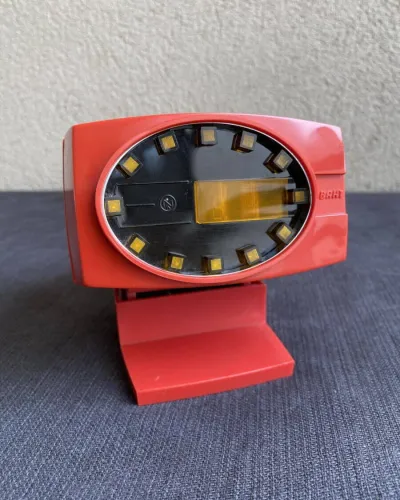
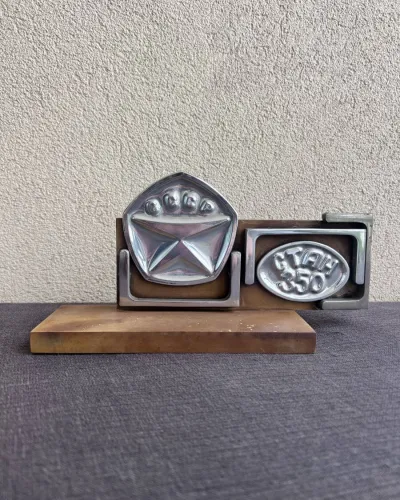
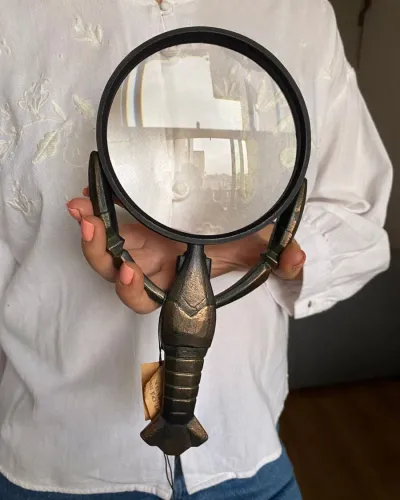
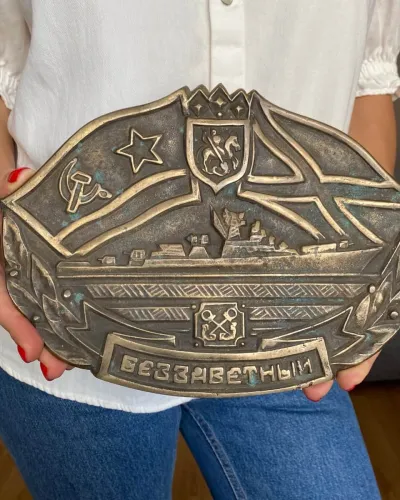
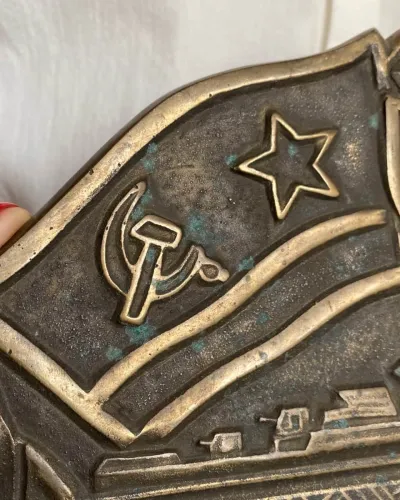
Soviet bronze presentation plaque measuring 20 x 11 cm, hand engraved with the dedication « Макарову Александру Максимовичу в день 70-летия » (To Makarov Aleksandr Maksimovich, on his 70th birthday). The two applied stars bearing the hammer and sickle stand for the Hammer and Sickle medal of a Hero of Socialist Labour, the highest civilian award in the USSR, meaning the recipient held the title twice.
The name, patronymic and double star point to Aleksandr Maksimovich Makarov, born on 12 September 1906 in the Don region and died in 1999 in Dnipropetrovsk, chief engineer and then, from March 1961 to November 1986, director of the Yuzhmash plant (Southern Machine-Building Plant). This closed factory, with up to 65,000 employees under him, built the intercontinental ballistic missiles designed by Mikhail Yangel’s bureau, the R-16, R-36 and later SS-18, and the Kosmos, Tsiklon and Zenit space launchers. Makarov was made Hero of Socialist Labour in 1961, a few months after Gagarin’s flight, and again in 1976, the very year he turned 70, with five Orders of Lenin in all. The plaque therefore probably dates from September 1976, a gift from a team at the plant.
While Mikhail Yangel and then Vladimir Utkin designed the rockets at the neighbouring Yuzhnoye design bureau, Makarov was the man who got them out of the factory, in series and on time: for twenty-five years he was the industrial organiser of the Soviet space and missile programme. Under him Yuzhmash built the light Kosmos launchers derived from early missiles, the Tsiklon family known for its automated launch sequence and reliability, and in the 1980s the Zenit, one of the most refined liquid-propellant launchers of its day, whose first stage also served as the strap-on booster of the Energia rocket in the Buran programme. The plant also produced some 400 satellites in 70 versions: the Intercosmos series open to scientists from allied countries, the Okean radar satellites watching ice and oceans, the Meteor weather satellites. Dnipropetrovsk, closed to foreigners, was the Rocket City built around his plant, and Makarov ran it.
His life was that of a survivor: sentenced in 1940 to eight years in the camps for defective output, sent to the Vorkuta railway works beyond the Arctic Circle, released in 1942 and rehabilitated in the 1950s. In Dnipro he was nicknamed the great builder for the housing, the Meteor stadium and the ice rink the plant put up, and a bronze bust was raised to him in his lifetime in 1981, an honour reserved for twice Heroes. His successor in 1986 was Leonid Kuchma, the future president of Ukraine.
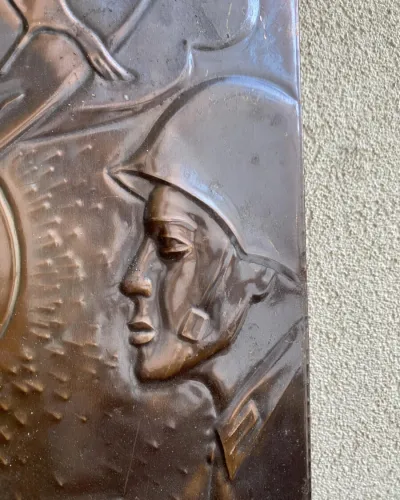
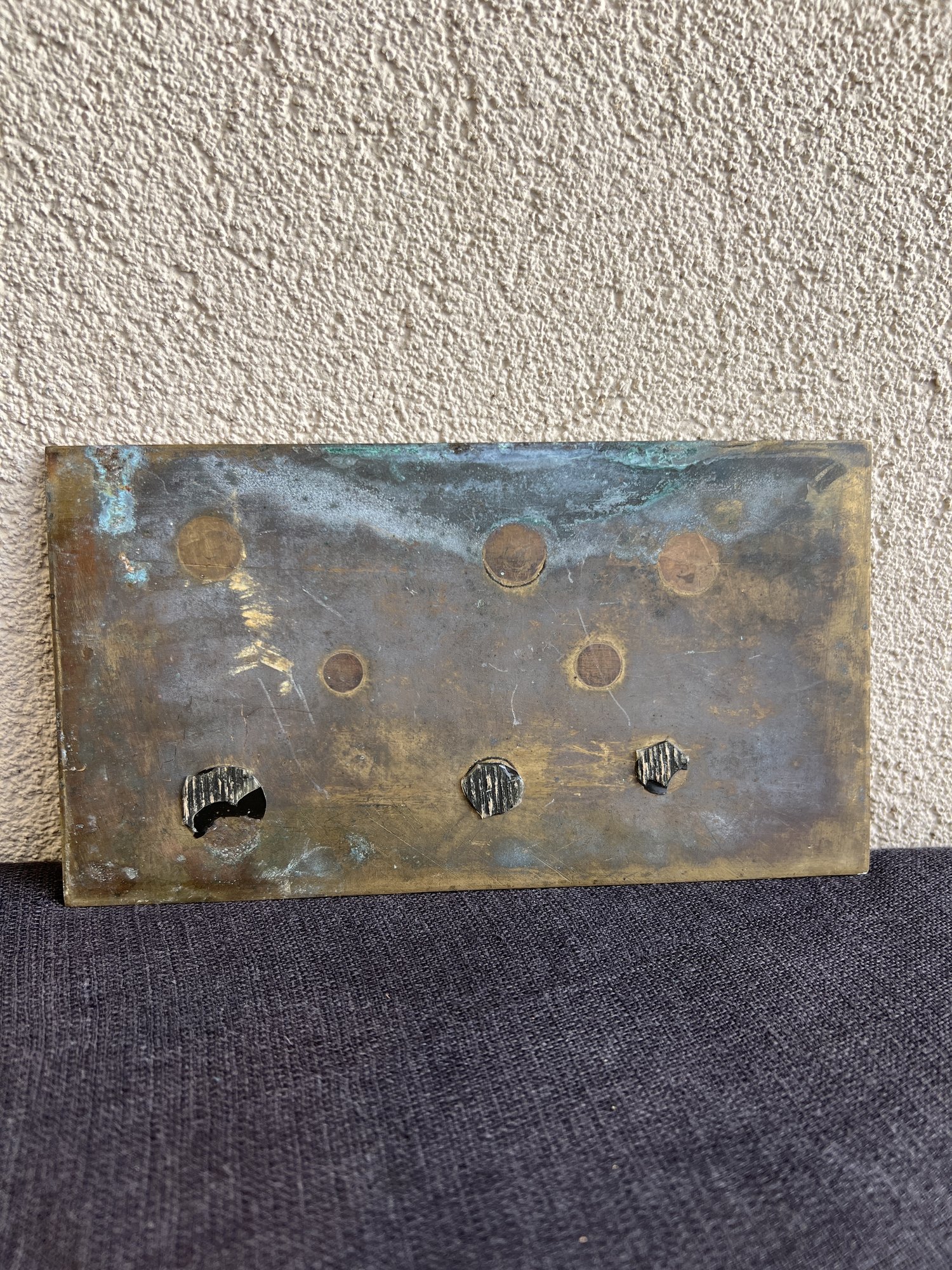
A one-off piece with no maker’s mark. The two insignia are separate pieces fixed to the plaque, their patina matching that of the bronze. Heavy patina and oxidation, some verdigris, and a fragment of newspaper stuck to the front. The back shows round marks and remains of fixings, indicating the plaque was once mounted on a base or presentation board.
Additional information
| Weight | 1.2 kg |
|---|---|
| Dimensions | 30.0 × 20.0 × 10.0 cm |