Tupolev Tu-134 Control Yoke - Soviet Airliner Cockpit - USSR
$1,093.99Unique piece

Tupolev Tu-134 Control Yoke - Soviet Airliner Cockpit - USSR
$1,093.99Unique piece
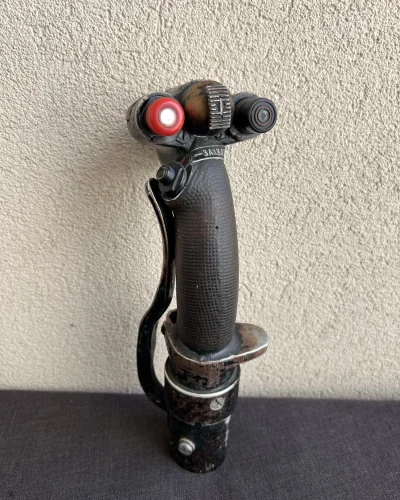
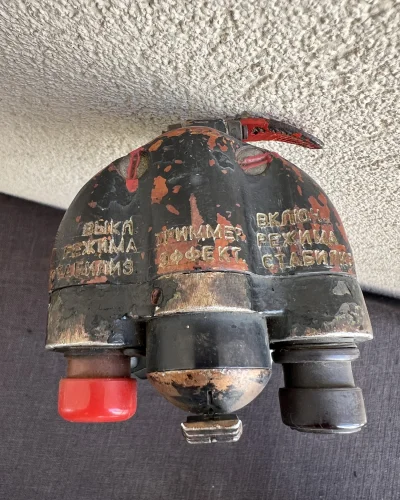
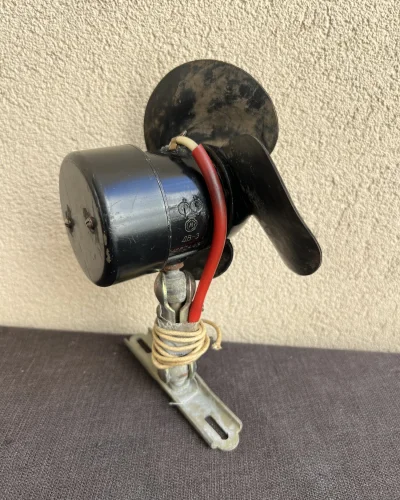
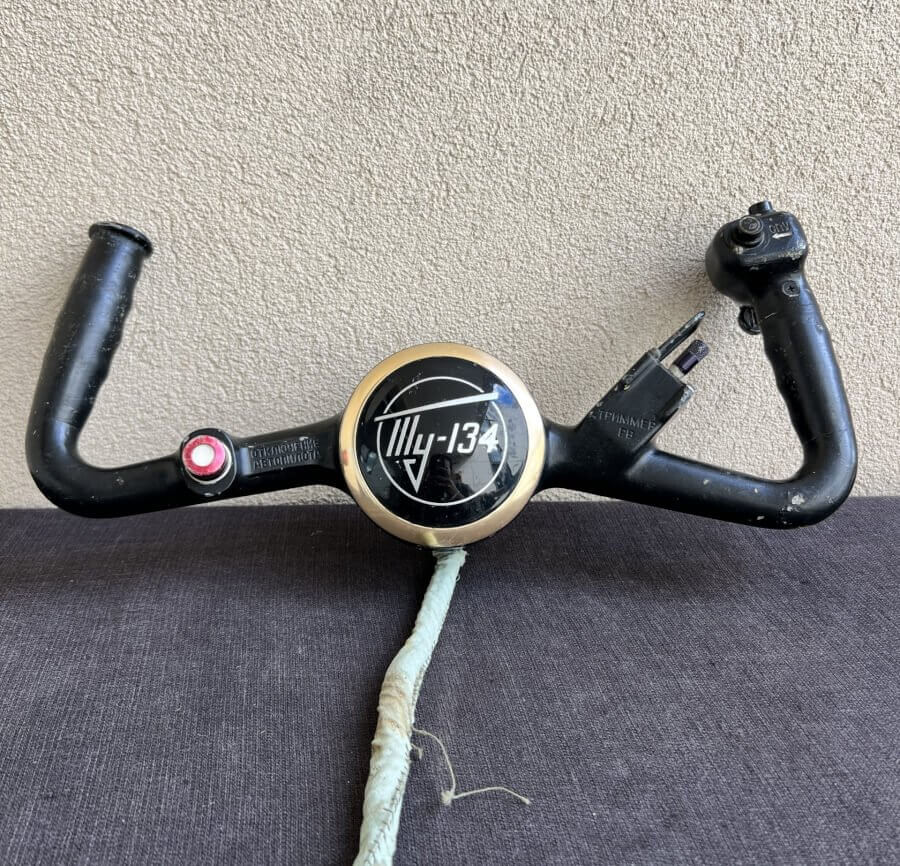
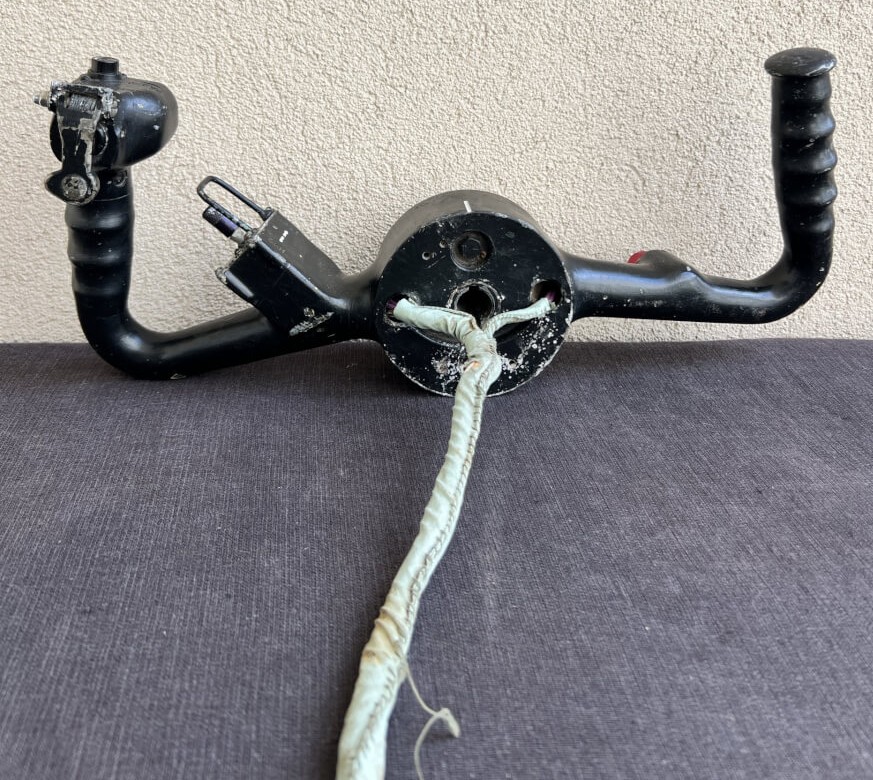
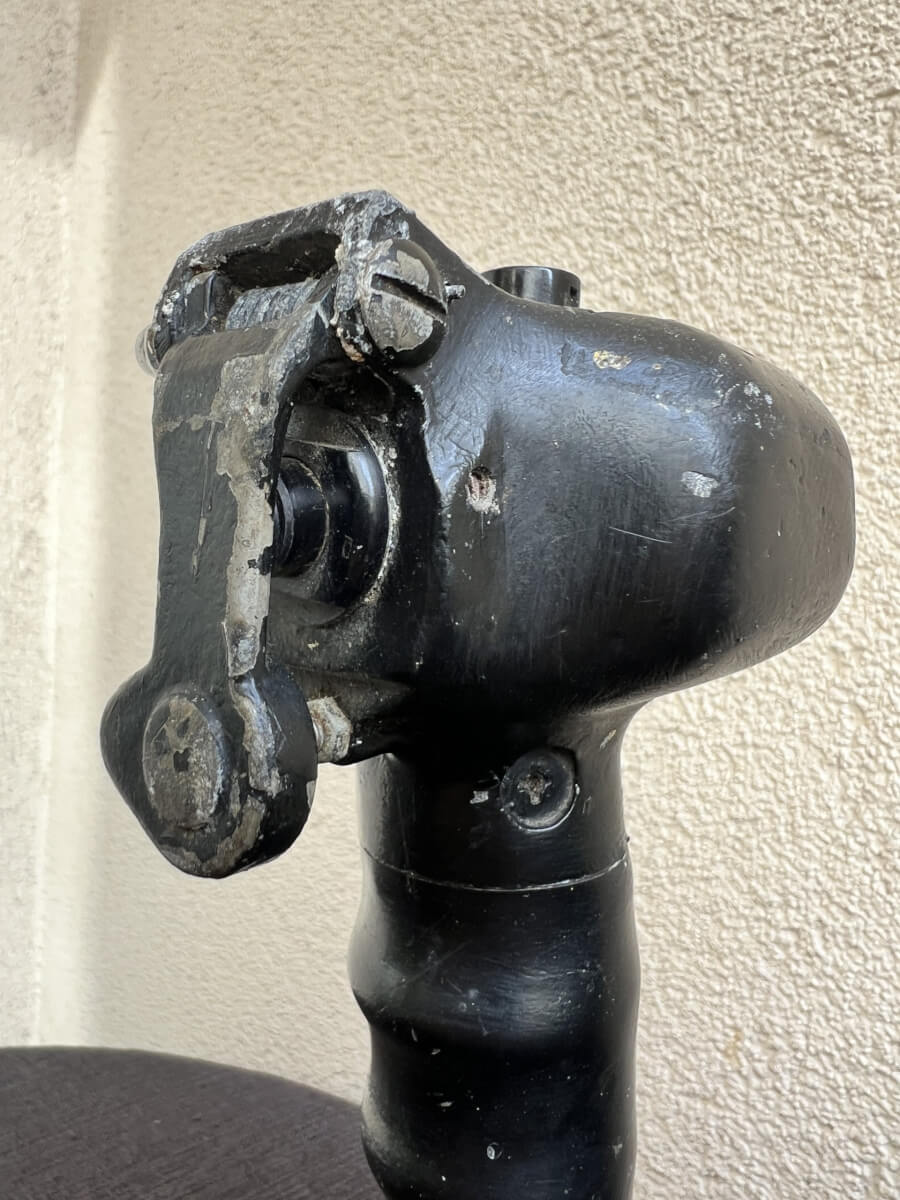
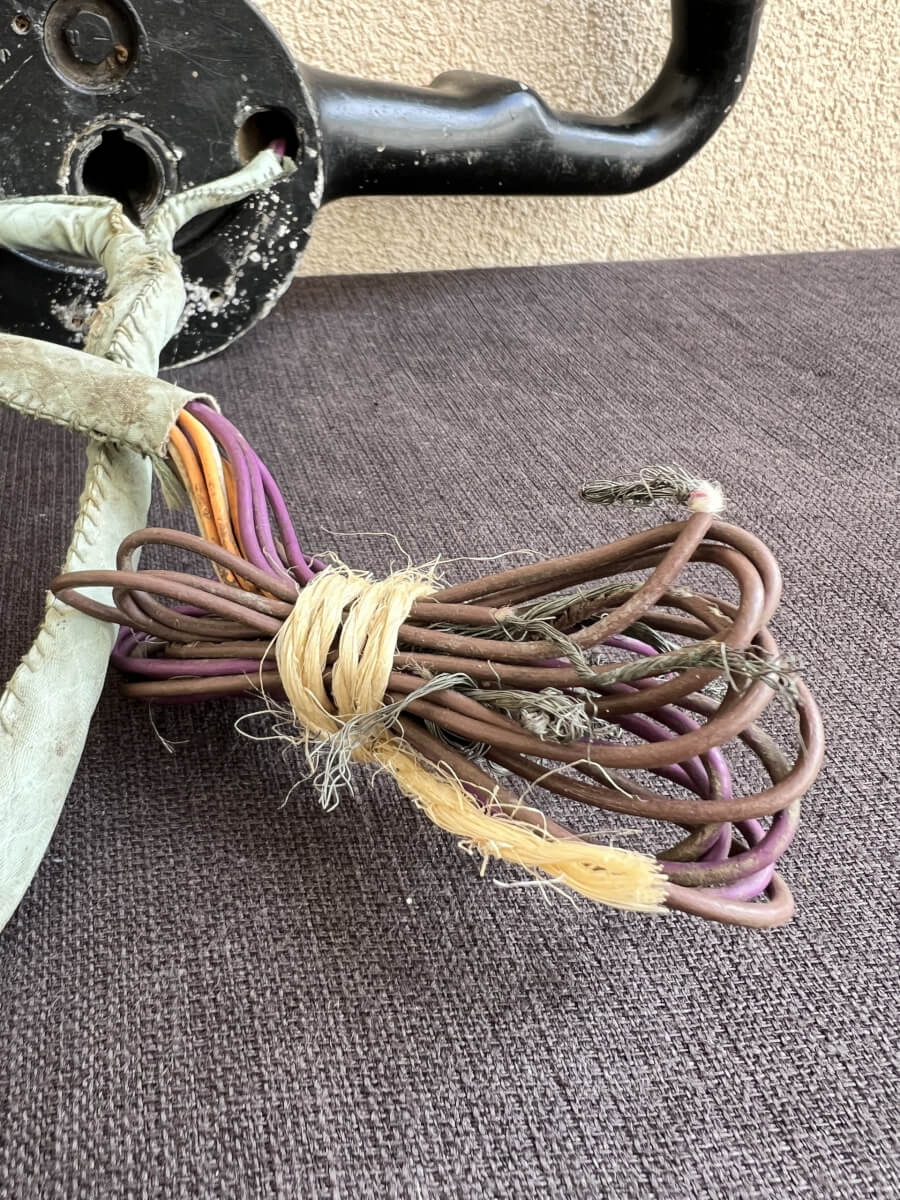
Control yoke from a Tupolev Tu-134, the Soviet airliner widely flown across the Warsaw Pact countries. Hub with the Tupolev emblem, autopilot disconnect button, trim and intercom button, wiring harness still attached. Good condition.
1 in stock
Message received, dear comrade.
Our information desk usually replies within 24 hours at the address provided.The Brezhnev era. Détente with the West, SALT treaties, the Apollo-Soyuz mission. Economic stagnation and growing corruption.

Control yoke from a Tupolev Tu-134, one of the airliners most used by the Warsaw Pact countries. The central hub carries a black disc set in a gold coloured ring, with the emblem of the Tupolev design bureau and the inscription “Ту-134” (Tu-134) in white. Both grips are ribbed for a firm hold.
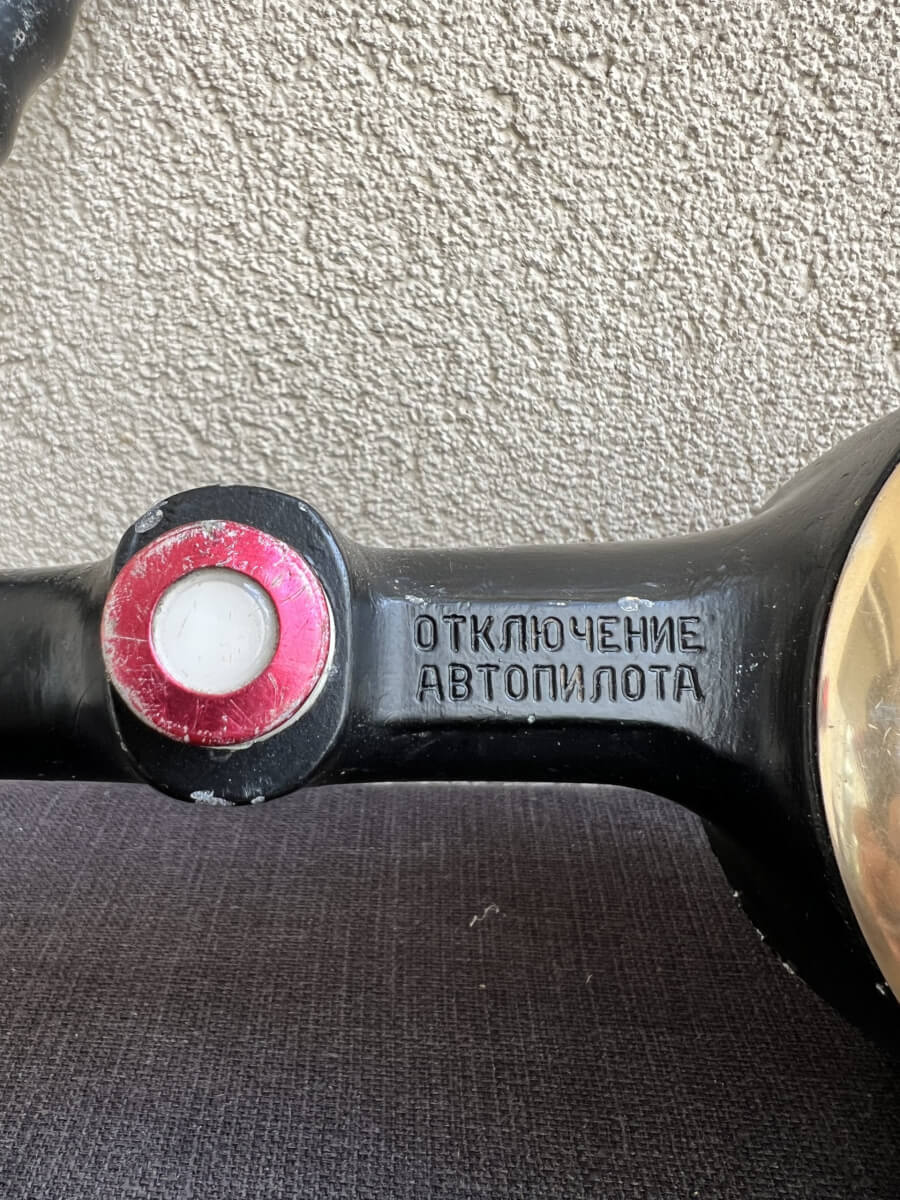
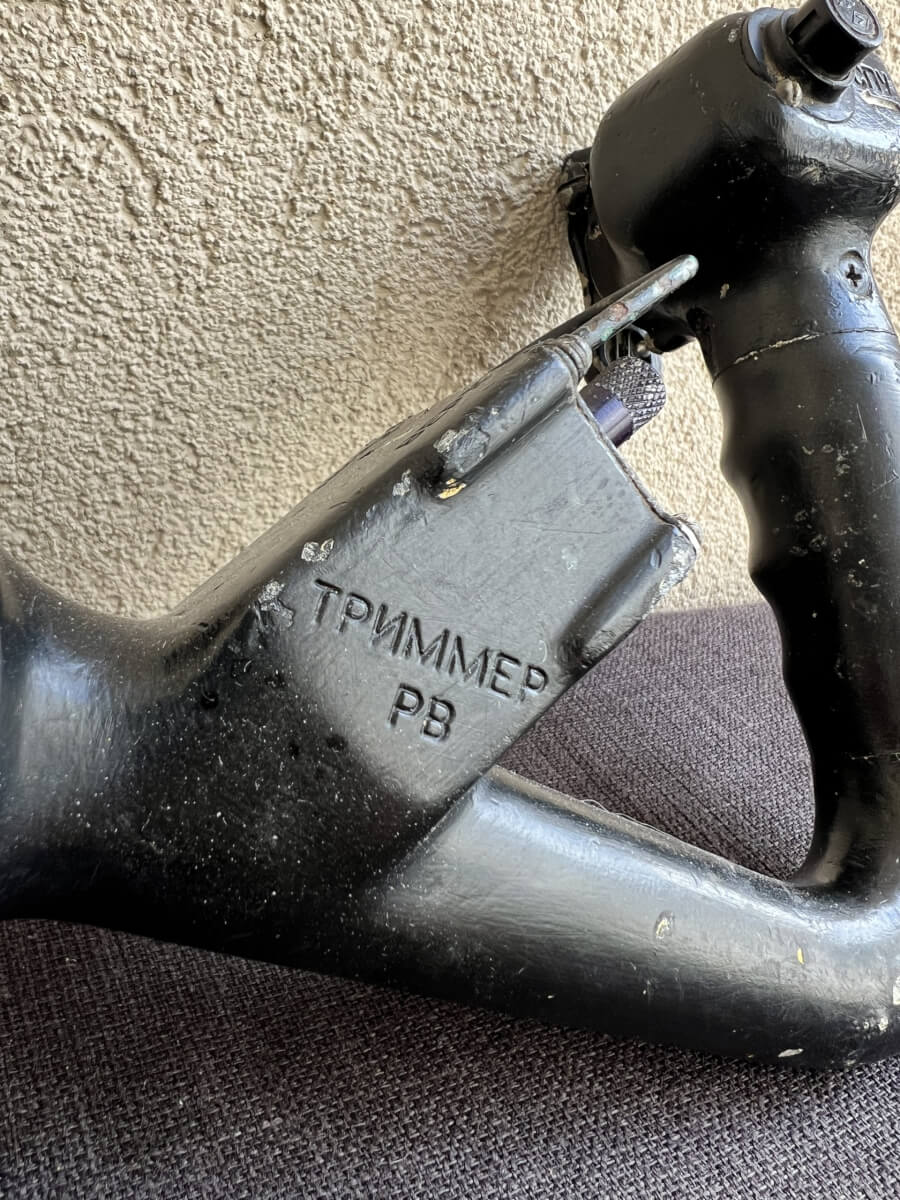
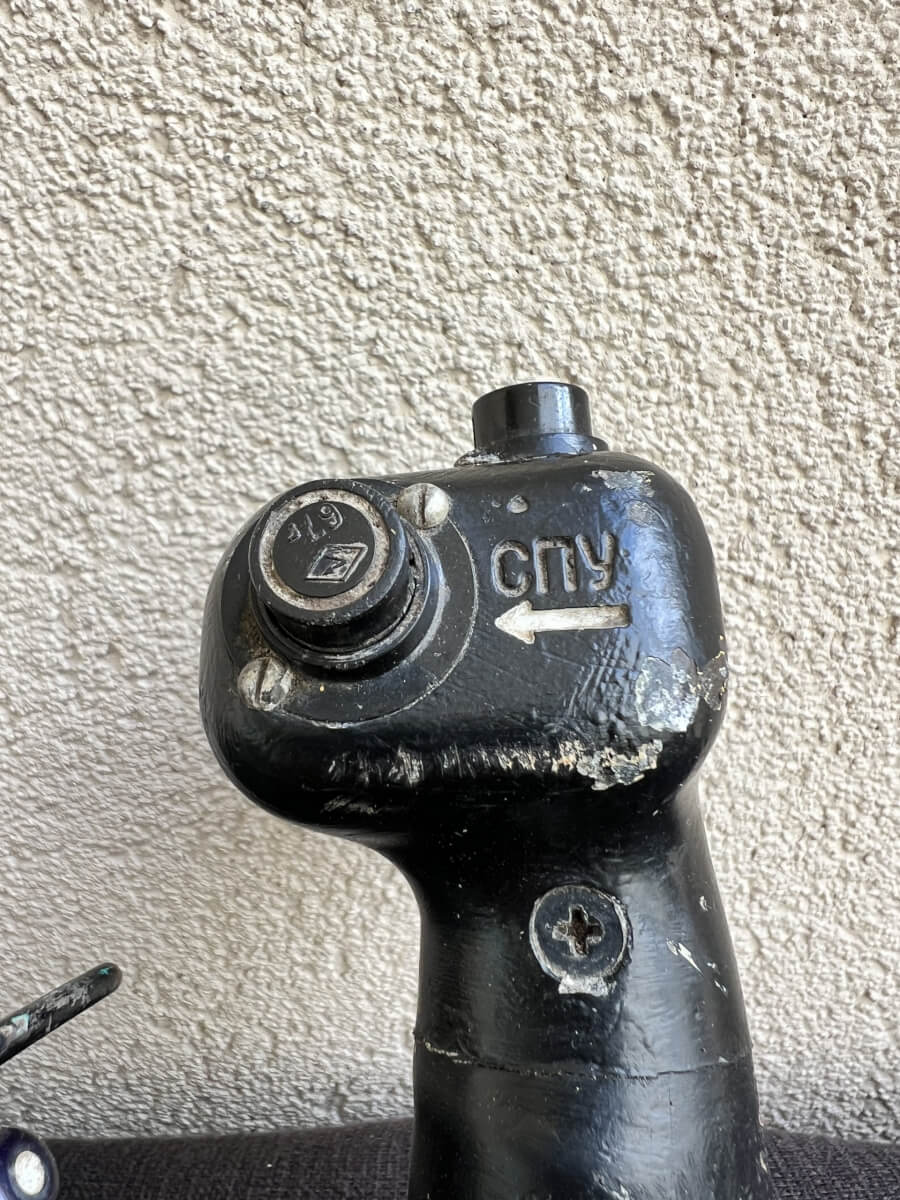
The pilot’s controls are still in place, with their raised markings. On the left, a red and white button marked “ОТКЛЮЧЕНИЕ АВТОПИЛОТА” (autopilot disconnect), which hands control back to the pilot. On the right, the “ТРИММЕР РВ” (elevator trim) unit with its lever and knurled knob. On top of the right grip, the marking “СПУ” (aircraft intercom) and an arrow point to the crew intercom button. At the back, the wiring harness still runs out of the hub in its fabric sleeve, with its coloured wires.
The Tu-134 is a rear engined twinjet, often compared to the French Caravelle and the American DC-9. Developed from the Tu-124, it was designed to be the workhorse of Aeroflot and was built in the Soviet Union from 1966 to 1984. It flew in the colours of many Eastern Bloc airlines, such as Interflug in East Germany and LOT in Poland. Early aircraft had a glazed nose for the navigator, inherited from bombers, and a brake parachute that made up for the lack of thrust reversers. The Tu-134A kept the glazed nose, while the Tu-134B replaced it with a solid nose.
A cockpit piece that displays easily on a desk or a shelf. The yoke is in good condition.
Additional information
| Weight | 1.5 kg |
|---|---|
| Dimensions | 40 × 30 × 20 cm |