Soyuz Rocket Model USSR - 1970s - Aluminium Bakelite Brass
$311.99Unique piece


Soyuz Rocket Model USSR - 1970s - Aluminium Bakelite Brass
$311.99Unique piece
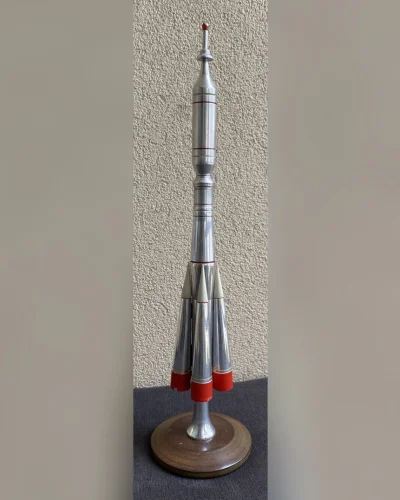
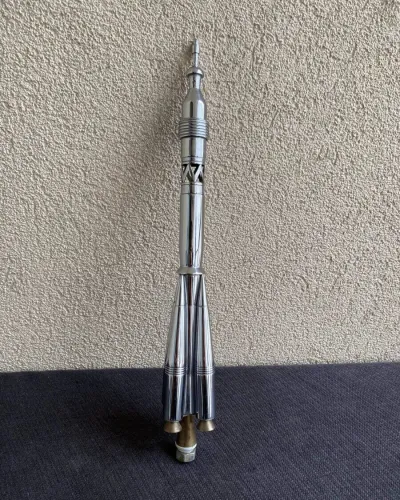
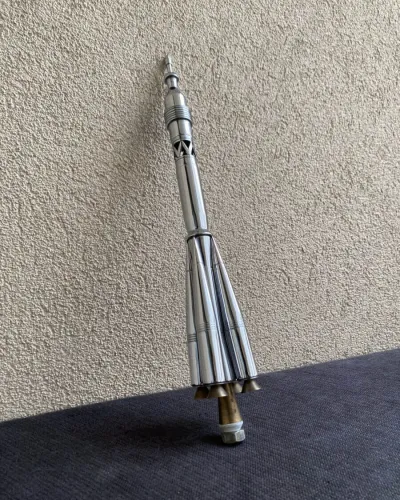
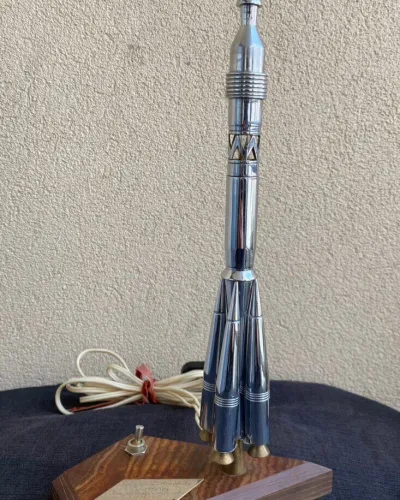
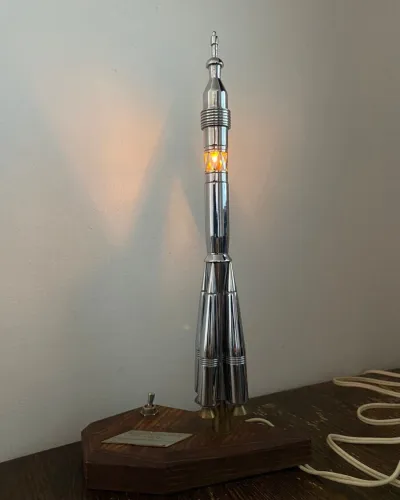
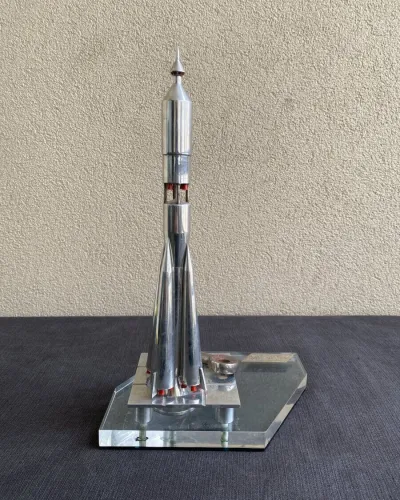
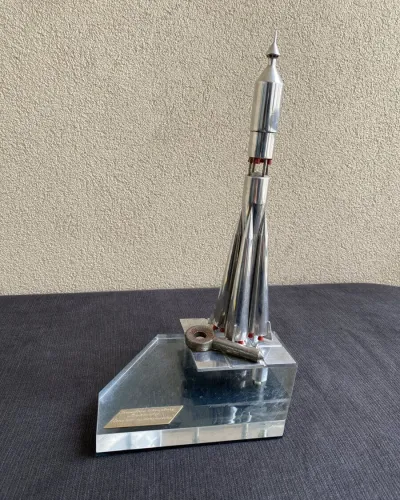
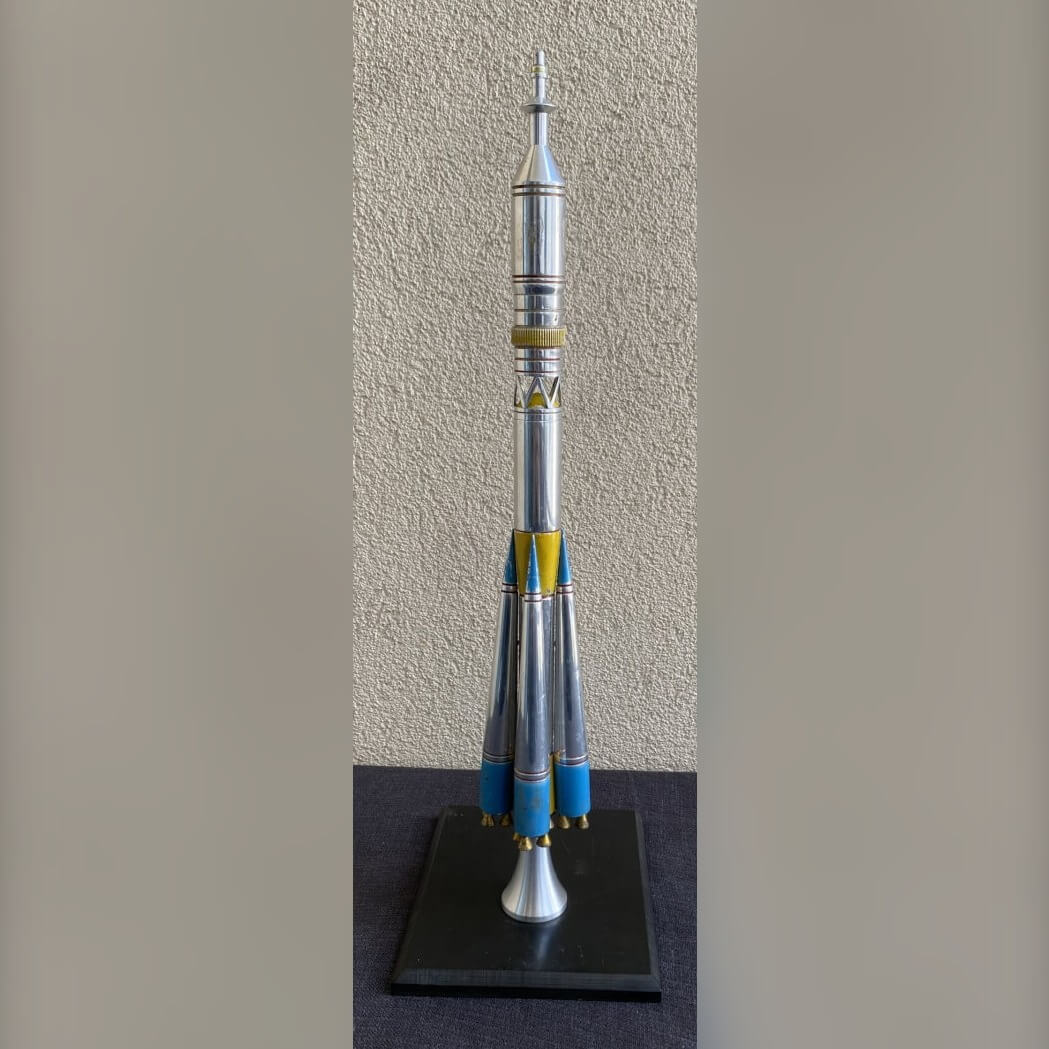
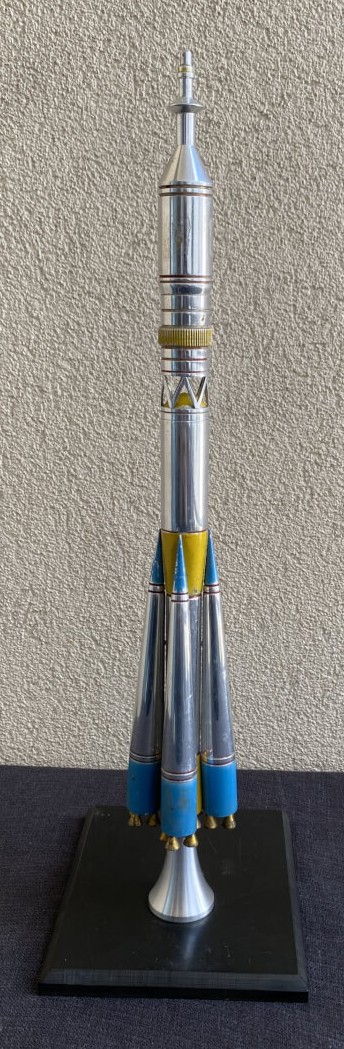
Desk model of the Soyuz launch vehicle, 1970s, aluminium and brass on a bakelite base. Blue painted boosters, brass nozzles, launch escape tower. Given to an officer of the Baikonur base by a colleague.
1 in stock
Message received, dear comrade.
Our information desk usually replies within 24 hours at the address provided.The Brezhnev era. Détente with the West, SALT treaties, the Apollo-Soyuz mission. Economic stagnation and growing corruption.
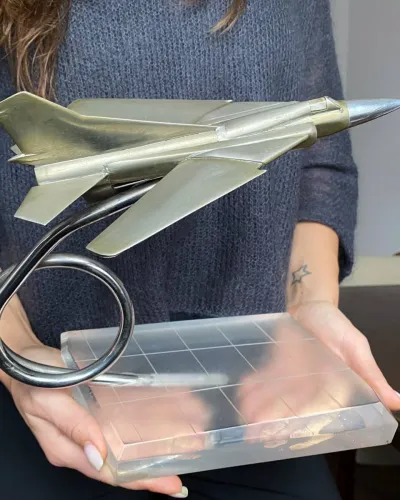
Desk model of the Soviet Soyuz launch vehicle, made in the 1970s. It was given to an officer working at the Baikonur base by one of his colleagues. The rocket is made of polished solid aluminium and brass, mounted on a turned stand and set on a rectangular black bakelite base.
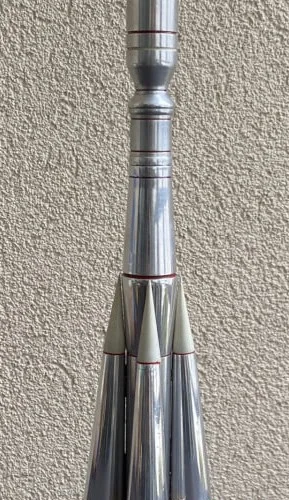
All the distinctive parts of the launcher are reproduced. The four conical strap-on boosters surround the core stage, with their tips and skirts painted blue and fine red bands. The junction with the core stage is painted yellow. Under each booster and under the core stage, four nozzles are shown as small brass cones, twenty in all. Higher up, the open lattice that links the second and third stages is cut into the metal, followed by a knurled brass ring, the spacecraft fairing and the launch escape tower at the top.
Soyuz is derived from the R-7, the missile designed by Sergei Korolev’s bureau that launched Sputnik in 1957 and Yuri Gagarin in 1961. Introduced in the late 1960s to fly the crewed spacecraft of the same name, it became the most launched rocket in space history and is still flying today. All its Soviet crewed missions left from the Baikonur cosmodrome in Kazakhstan. Desk models of this kind circulated within the space industry and the military, where they were given between colleagues or at events.
Additional information
| Weight | 0.8 kg |
|---|---|
| Dimensions | 30 × 20 × 15 cm |