On 1 July 1993 a Soyuz rocket left Baikonur carrying two Russians and a Frenchman. For that flight, the First Moscow Watch Factory made 250 Poljot watches with a white dial, the Mir station drawn above two crossed flags. This is the story of the Altaïr mission, its crew and the station, and of what the certificate, passport and launch-day stamp that came with watch N°481581 have to say.
OCTOBER 2026•7 MINUTE READ
by Marwen Yahyaoui
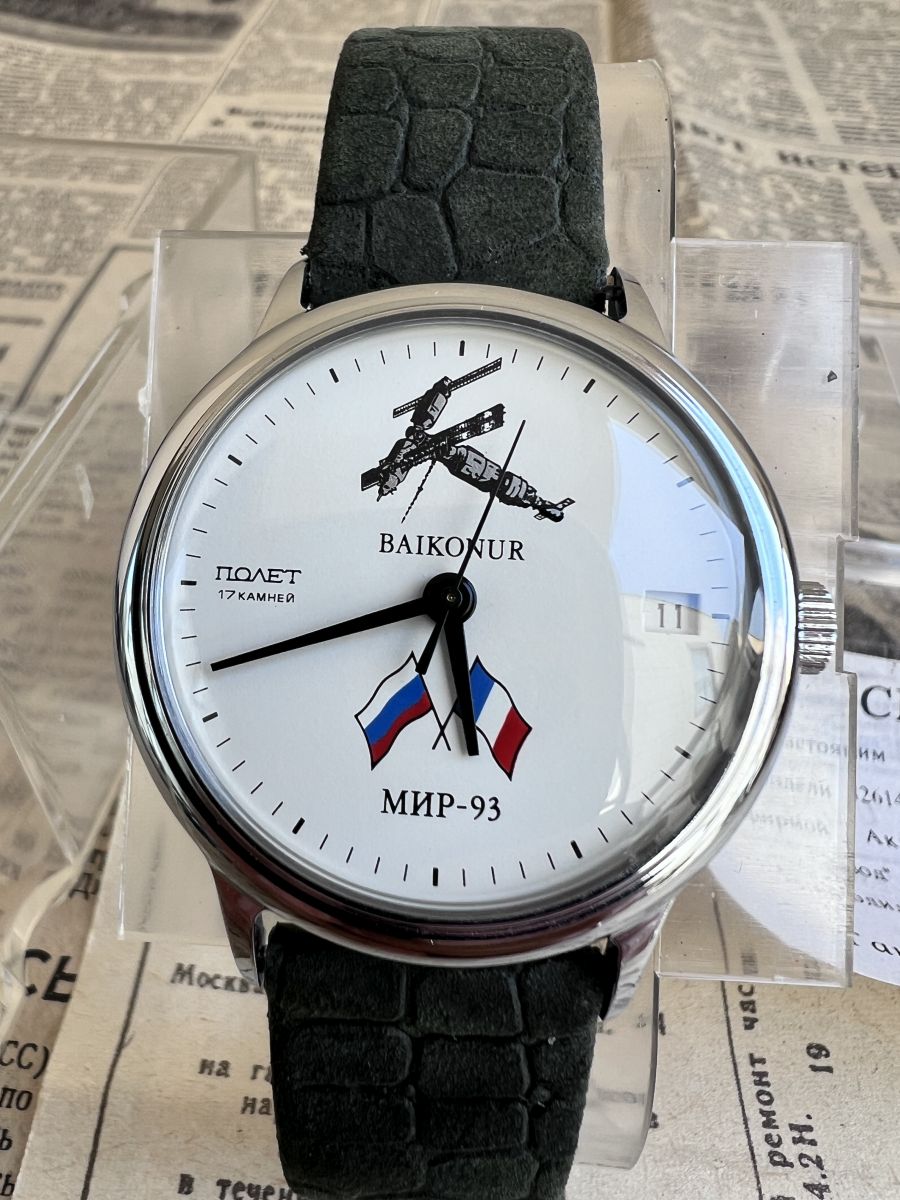
The Poljot МИР-93 (Mir-93) N°481581: white dial, Mir station, Russian and French flags.
The dial tells the story in four elements. At the top, the Mir station in black, solar panels spread. In the middle, BAIKONUR in Latin capitals. Below, the Russian and French flags crossed, then the inscription МИР-93 (Mir-93). Left of centre, the signature ПОЛЕТ 17 КАМНЕЙ (Polyot, 17 kamney: Poljot, 17 jewels). A date window sits at 3 o’clock. The chromed case measures 36 mm without the crown.
This is not a standard watch decorated after the fact. It was made for one event, in 250 pieces, and it has come down to us with everything that left the factory with it.
July 1993: the Altaïr flight
Altaïr was the fourth flight of a Frenchman aboard a Soviet, then Russian, spacecraft. Before it came Jean-Loup Chrétien’s flight to Salyut 7 in 1982, Chrétien again on the Aragatz mission in 1988, and Michel Tognini on Antarès in 1992. The name comes from Altair, the brightest star in the constellation Aquila, the Eagle.
The launch took place on 1 July 1993 at 14:32 UTC from Baikonur, on a Soyuz-U2 rocket. Aboard Soyuz TM-17: commander Vasily Tsibliyev, on his first flight, flight engineer Aleksandr Serebrov, on his fourth and last, and Jean-Pierre Haigneré, research cosmonaut of the French space agency CNES. The spacecraft docked with Mir on 3 July, where Gennady Manakov and Aleksandr Poleshchuk, the resident crew, welcomed them.
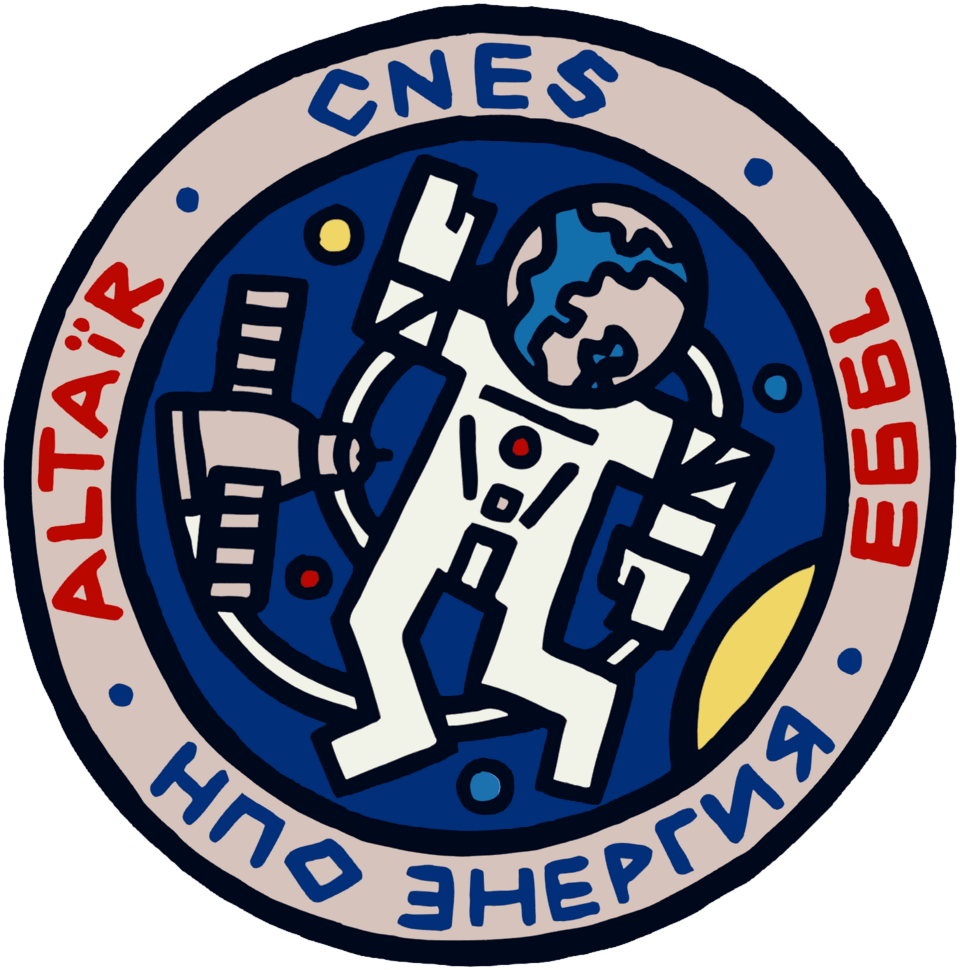
The official patch of the Altaïr mission, bearing the names of CNES and НПО Энергия (NPO Energia), builder of Soyuz and Mir. Rosaviakosmos, public domain, via Wikimedia Commons.
Haigneré spent twenty days aboard. The French science programme had ten experiments, mostly in physiology: the heart and blood vessels in weightlessness (Orthostatisme), perception and movement (Viminal, Illusions), muscle synergies, the biological effects of cosmic radiation (Biodose), immunity, fluids near their critical point (Alice), the effect of heavy ions on electronic components (Exeq), fine measurement of microgravity inside the station, and a remote assistance trial in which a doctor on the ground guided the cosmonaut through an experiment.
On 22 July 1993 Haigneré came home aboard Soyuz TM-16 with Manakov and Poleshchuk. His flight had lasted 20 days, 16 hours and 8 minutes. Tsibliyev and Serebrov stayed on as Mir’s fourteenth resident crew, for close to six and a half months.
Jean-Pierre Haigneré, test pilot turned cosmonaut
Born in Paris on 19 May 1948, Haigneré graduated as an engineer from the French Air Force Academy in 1971 and qualified as a fighter pilot in 1973. He flew Mirage jets until 1980, went through the Empire Test Pilots’ School at Boscombe Down in 1981, then joined the French flight test centre at Brétigny as project test pilot for the Mirage 2000N, becoming chief test pilot in 1983.
CNES selected him in September 1985. He was Michel Tognini’s backup for Antarès in 1992, then named for Altaïr. His training at Star City, outside Moscow, began on 1 November 1992 and ended with a final exam on 4 June 1993, less than a month before launch.
He went back to Mir in 1999 on the Perseus mission: nearly 189 days in space, including a spacewalk, the longest stay by a non-Russian astronaut at the time. He later headed the European astronaut corps in Cologne.
Mir, the station on the dial
The drawing on the dial shows a station that was already large. In 1993 Mir was seven years old. Its core module was launched in February 1986, followed by Kvant in 1987, Kvant-2 in 1989 and Kristall in 1990. That four-module station is the one the Altaïr crew reached in July 1993.
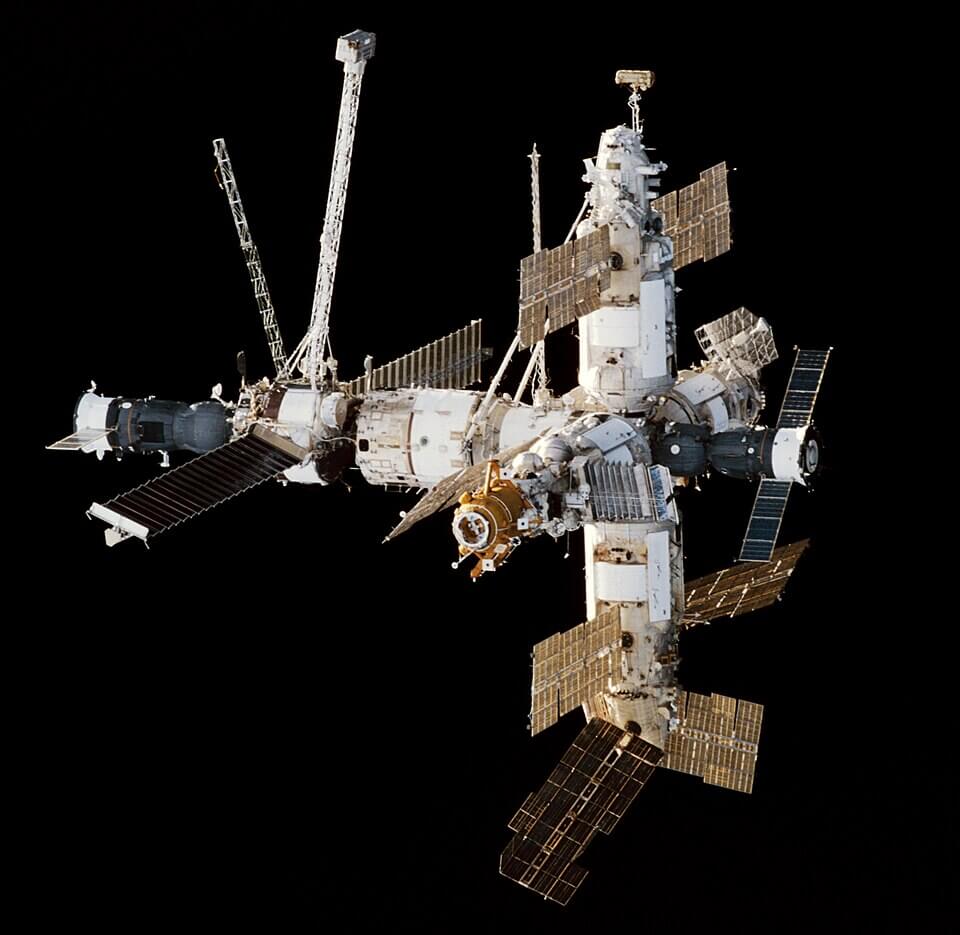
Mir photographed from the Space Shuttle Endeavour on 28 January 1998, in its completed form, with the modules added after 1993. NASA, public domain, via Wikimedia Commons.
Over its life the station hosted more than a hundred people from twelve countries, six French missions among them between 1988 and 1999. For years it held the record for continuous human presence in space, almost ten years. Mir was deorbited on 23 March 2001 and its remains fell into the South Pacific.
Tsibliyev and Serebrov’s flight ended eventfully. On 14 January 1994, as they undocked from Mir to come home, their Soyuz TM-17 struck the Kristall module twice, two seconds apart. A switch had been left in the wrong position, disabling the hand controller Tsibliyev was using. He managed to steer clear of the solar panels and antennas with the other controller. The spacecraft was not seriously damaged and the crew landed in Kazakhstan the same day, after 196 days in space.
Baikonur, a USSR stamp in 1993
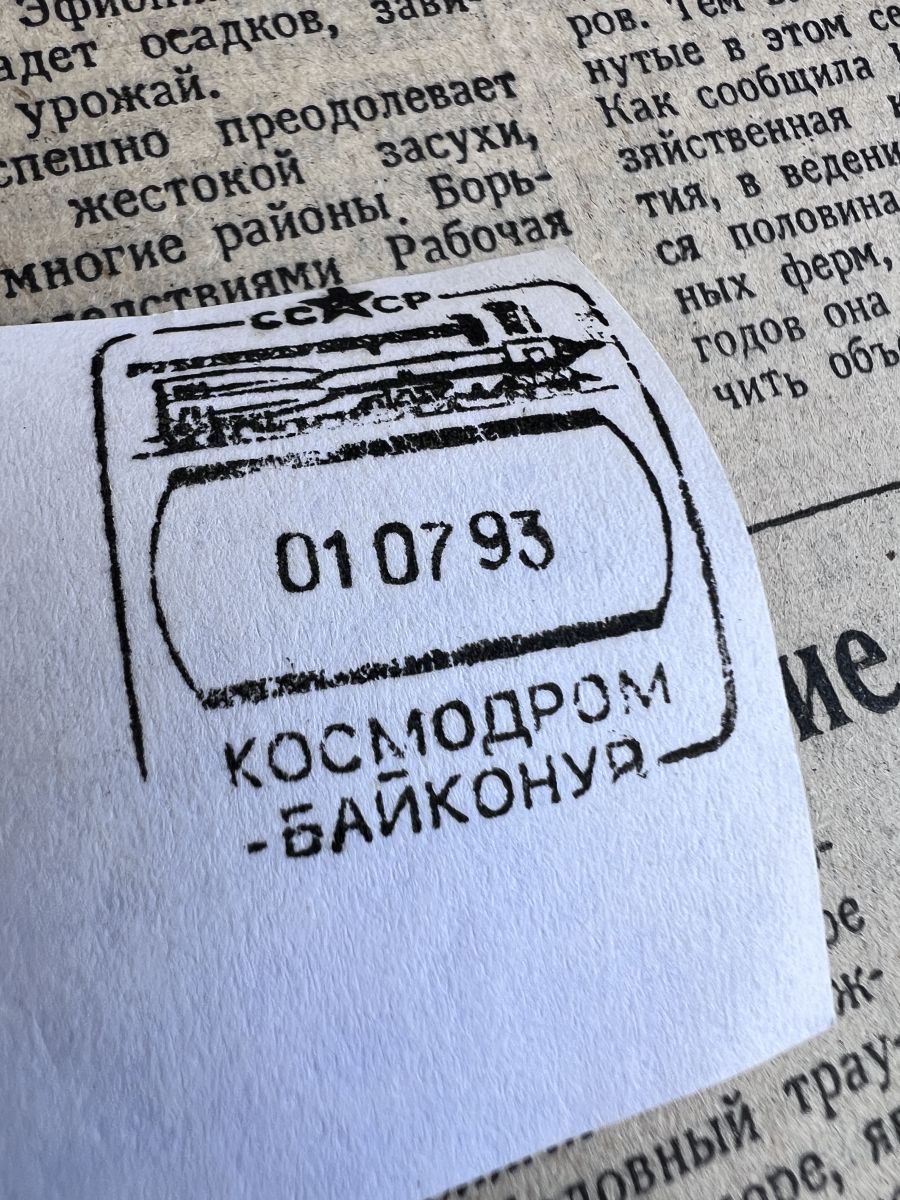
The Baikonur cosmodrome stamp dated 1 July 1993, launch day. The letters СССР are still cut into the stamp.
The set includes a Baikonur cosmodrome stamp dated 01 07 93, the day of the launch. Above the date, a rocket lies on its transfer railcar, the way it is rolled out to the pad, under the letters СССР (SSSR, USSR) and a star. The Soviet Union had ceased to exist on 26 December 1991. Eighteen months later the cosmodrome, now in an independent Kazakhstan, was still using its Soviet stamps.
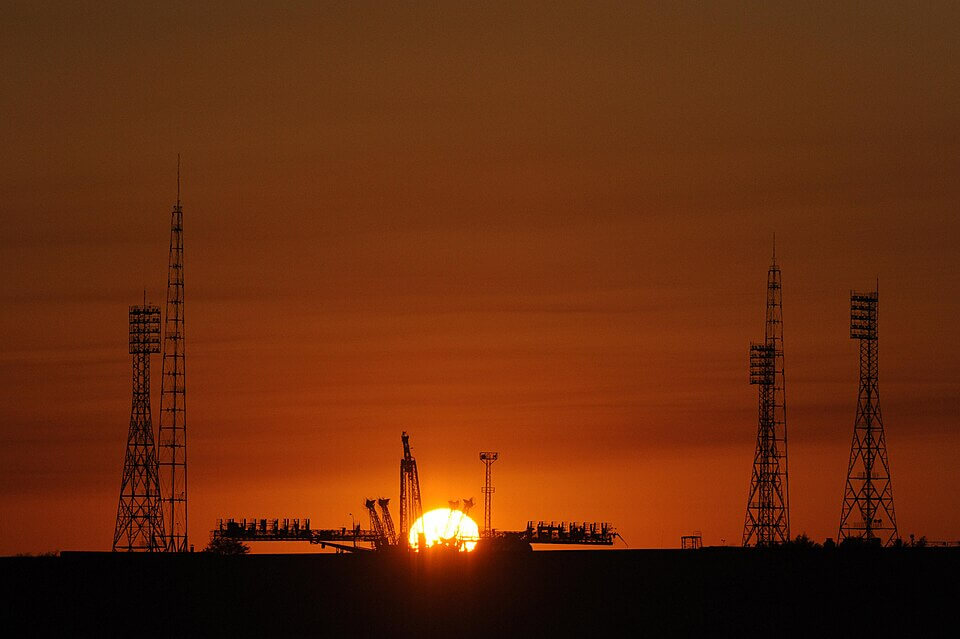
Baikonur launch pad 1, known as Gagarin’s Start, where crewed Soyuz flights depart. Photo Bill Ingalls, NASA, 2008, public domain, via Wikimedia Commons.
The name BAIKONUR, written in Latin letters on the dial, has its own story. The cosmodrome is not at Baikonur but near Tyuratam, several hundred kilometres from the Kazakh village whose name it borrowed, a choice made at the time to mislead. The name stuck.
What certificate N°160 says
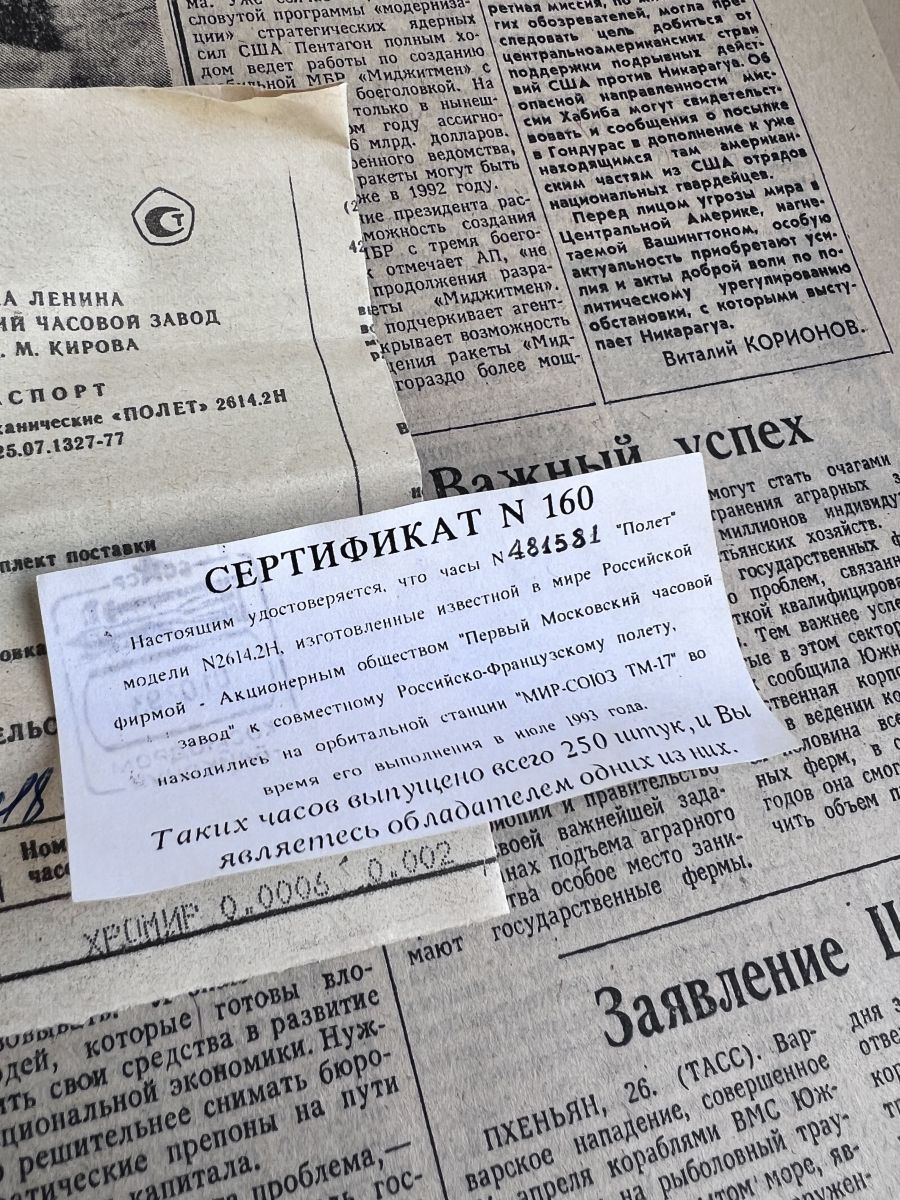
Certificate N°160, with the watch number 481581 handwritten.
The printed certificate that comes with the watch is in Russian. In translation it reads roughly as follows: it is hereby certified that the “Poljot” watch N°481581, model 2614.2Н, made by the world-famous Russian company, the joint-stock company “First Moscow Watch Factory”, for the joint Russian-French flight, was aboard the orbital station “Mir-Soyuz TM-17” during the flight in July 1993. Only 250 watches of this type were made, and you are the owner of one of them.
Two things stand out. The first is the statement that the watches of the series were aboard the station during the flight. That is what the factory certificate says; we found no other source describing it, neither in mission accounts nor in the factory’s records.
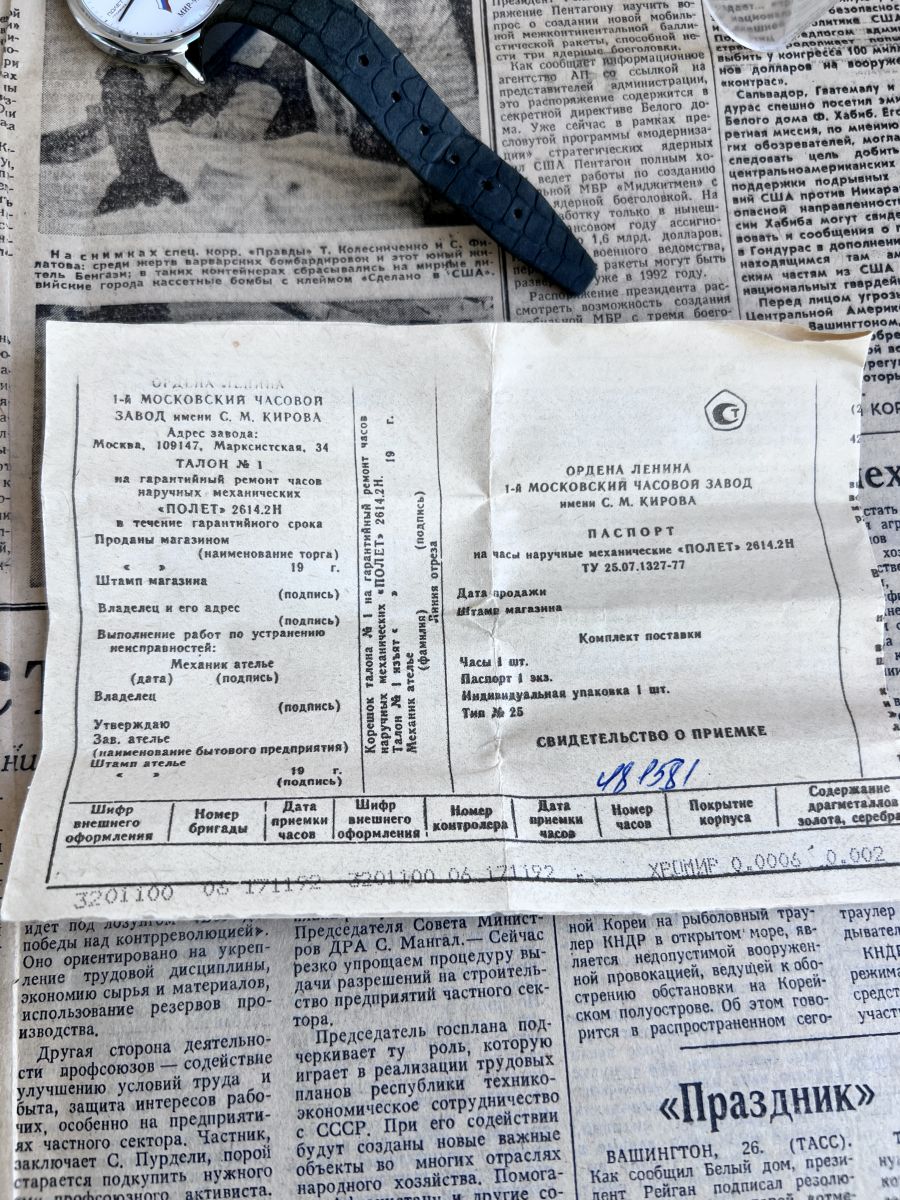
The second is the factory’s name. In 1993 the First Moscow Watch Factory presents itself as a joint-stock company, a sign that the privatisation of state enterprises had already reached it. The technical passport of the same watch still carries the Soviet heading: “Ордена Ленина 1-й Московский часовой завод имени С. М. Кирова” (Ordena Lenina 1-y Moskovsky chasovoy zavod imeni S. M. Kirova), the Order of Lenin First Moscow Watch Factory named after S. M. Kirov, 34 Marksistskaya Street. The certificate was printed for the occasion; the passport probably comes from a stock of forms printed before the end of the USSR.
The technical passport of the Poljot 2614.2Н, under the Kirov factory heading, with the watch number written by hand.
The factory behind the watch
The First Moscow Watch Factory is the oldest of the great Soviet watch factories. It was founded in 1930 with the machinery of the Dueber-Hampden Watch Company of Canton, Ohio, bought after its bankruptcy and shipped to the USSR together with some twenty American technicians who came to train the workers. It took Kirov’s name in 1935, was evacuated to Zlatoust during the war, then returned to Moscow.
Its history has been tied to space from the start. Yuri Gagarin wore one of its Shturmanskie navigator’s watches, and Alexei Leonov had a Strela chronograph on his wrist during the first spacewalk in 1965. The name Poljot (Полёт, Polyot) itself means “flight”. For the full story of the factory and its calibres, see our guide Poljot watches: history, models and calibres.
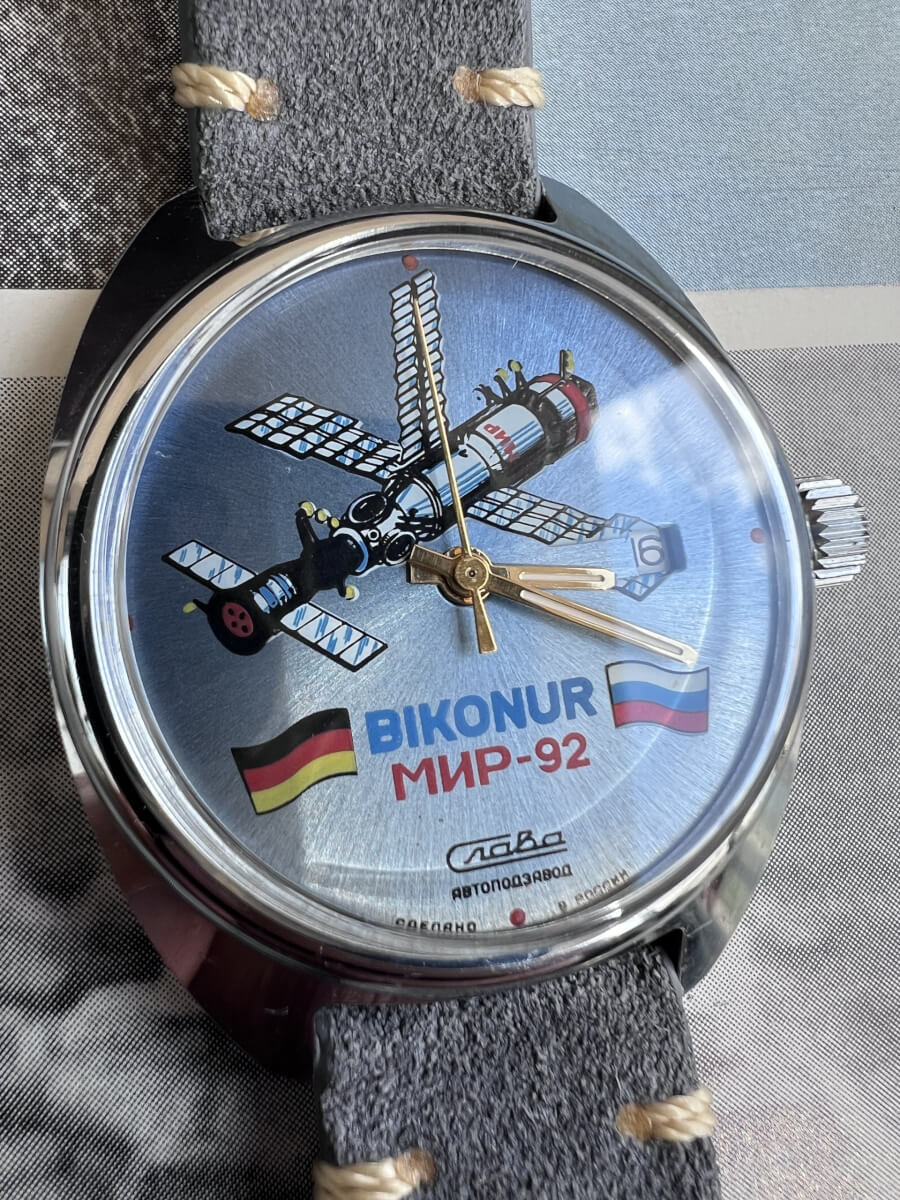
In the early 1990s the Moscow factories made commemorative series for foreign guest flights to Mir. The Second Moscow Watch Factory, Slava, made one for the German Klaus-Dietrich Flade’s flight in 1992, and another for this same Altaïr flight. Several of these Slava watches have passed through Soviet in Paris. The Poljot МИР-93 is the First Moscow factory’s answer to the same event.
The Slava made for the 1993 Altaïr flight, blue dial and Mir in colour.
A Slava made for Klaus-Dietrich Flade’s flight to Mir, 1992.
Watch N°481581
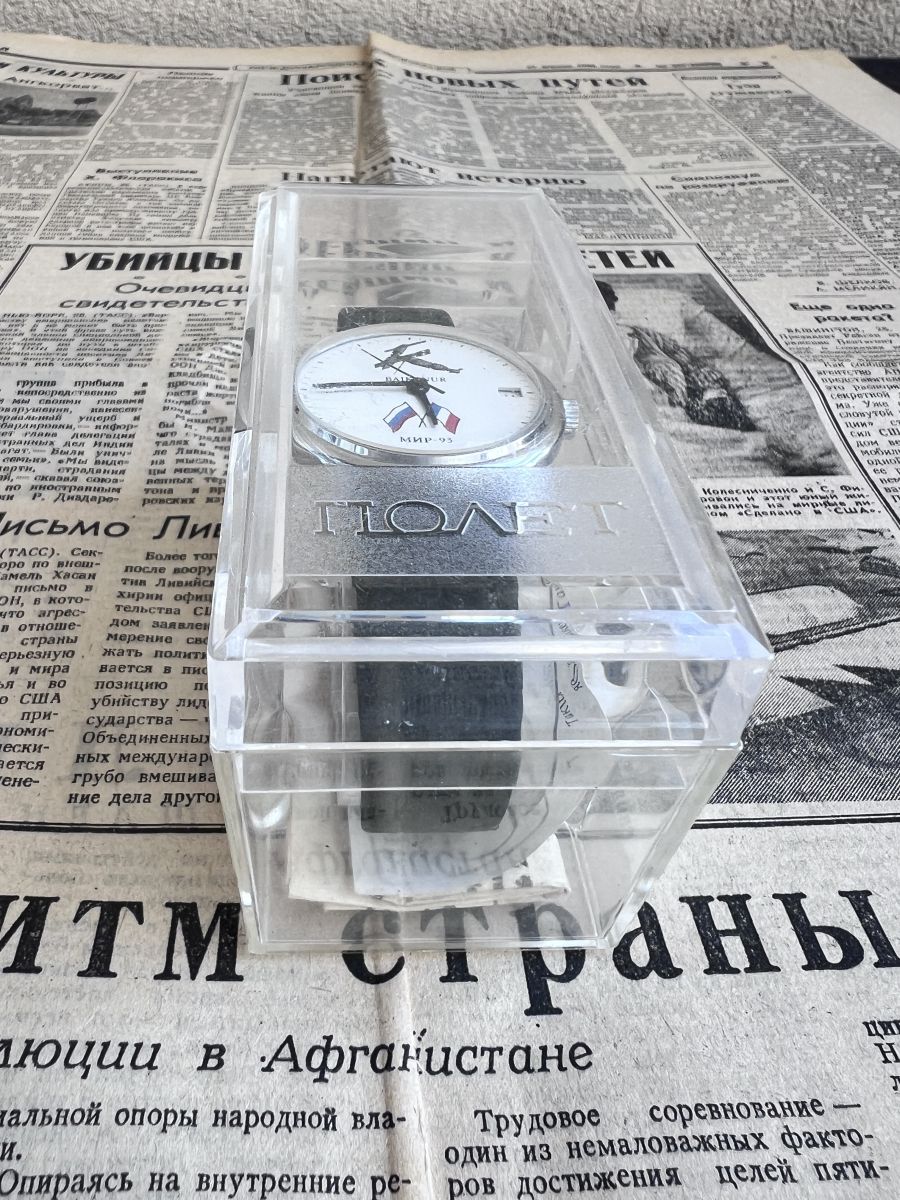
The watch in its clear box marked ПОЛЕТ (Polyot).
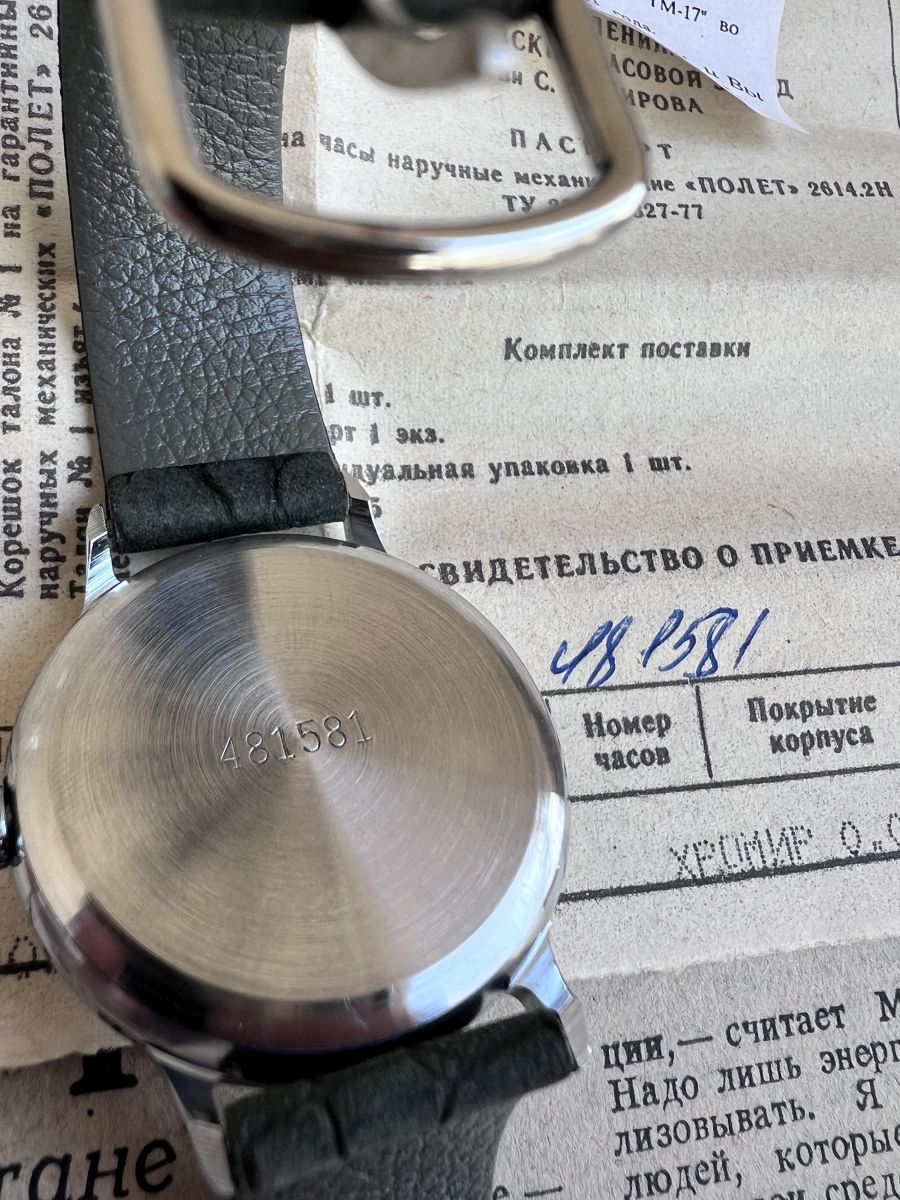
This example has kept everything that makes a full set: the clear box stamped ПОЛЕТ (Polyot), certificate N°160, the technical passport with case number 481581 handwritten, and the Baikonur stamp of 1 July 1993. The brushed case back carries the same number. The textured grey-green leather strap is the period one.
The brushed case back, engraved 481581.
The watch was serviced by our watchmaker on 22 December 2025: movement serviced, crystal polished, case, hands and dial cleaned.
Of 250 watches made, how many have kept their certificate, passport and stamp together thirty-three years later? We do not know. This one has.
The ДП-5В (DP-5V) is the field radiometer of Soviet civil defence: a green Bakelite console, a probe with a rotating gamma, beta and check-source shield, headphones and a manual that explains operation and maintenance. The one in this article served in an industrial bakery in Chișinău and was serviced in March 1991. Its owner shared his photos and documents with us, and we turned them into a tool that lets you operate it on screen, step by step.
The Moscow Games, from 19 July to 3 August 1980, boycotted by some sixty countries, produced more objects than any Soviet event: a bear cub, Misha, drawn by Viktor Chizhikov, an emblem made of running tracks, five thousand torches, watches from every factory, platinum coins, rings, tea glass holders, posters. This guide tells the story of the Games and reviews the objects, with the marks that authenticate them and the prices.
The 3017 chronograph of the First Moscow Watch Factory carries a five-digit number on the balance cock. The most common dating method reads it as a single series, from 1959 to 1979. Four factory passports show there are two, and that the same number can point to two watches made ten years apart. Here is how to read the number, the dial, the logo and the bridge, with a decoder to date your Strela, Poljot or Sekonda.
This website uses cookies to improve your experience while you navigate through the website.
Out of these cookies, the cookies that are categorised as necessary are stored on your browser as they are essential for the working of basic functionalities of the website.
We also use third-party cookies that help us analyse and understand how you use this website.
These cookies will be stored in your browser only with your consent.
You also have the option to opt out of these cookies.
But opting out of some of these cookies may affect your browsing experience.
Necessary cookies are absolutely essential for the website to function properly. This category only includes cookies that ensure basic functionalities and security features of the website. These cookies do not store any personal information.
Cookies that are not strictly necessary for the website to work and that are used specifically to collect personal data through analytics, ads and other embedded content are called non-necessary cookies. User consent is required before these cookies run on the website.
✕
Soviet in Paris
Online. We answer in person, no AI and no chatbot. Reply right away, 20 min at most.
Hello 👋 A question about an item, an order or shipping? Write to us.
Your email is used only to reply to you.
Subscribe to our newsletter and get 10% off your first order.
Subscribe
★ New pieces before anyone else
★ New blog articles
★ Soviet in Paris news and updates
Join the Party
10% off your first order
Receive your welcome card and our next arrivals.
Your code appears here and is also sent to you by email. You can leave the Party in one click, at any time.